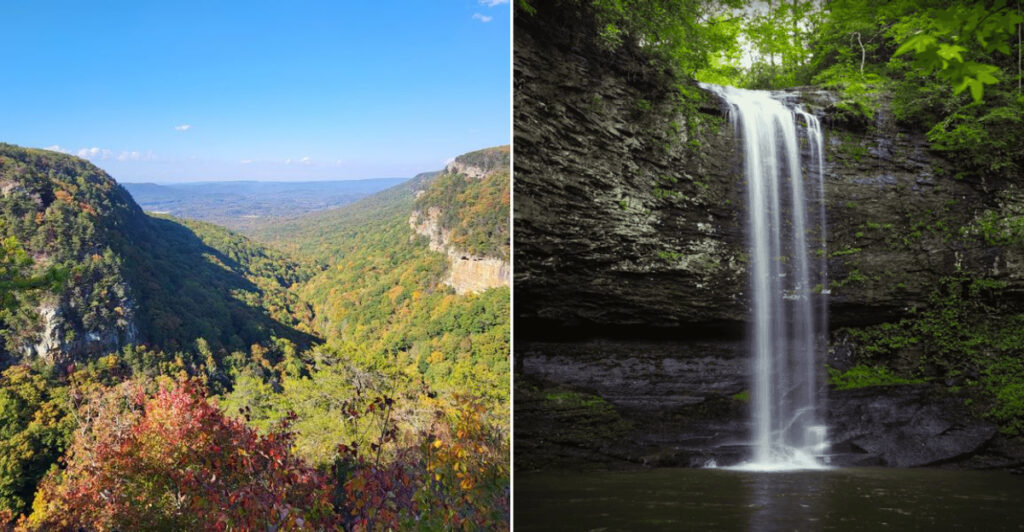
There is a canyon tucked into the northwestern corner of Georgia that most people outside the region have never heard of, and that oversight is genuinely hard to explain. The cliffs drop hundreds of feet, two separate waterfalls pour through the forested gorge below, and the trail system winds through terrain that feels nothing like the flat Georgia most people picture.
This is not a hidden secret so much as an underappreciated giant. Thos park delivers canyon views, waterfall hikes, camping, and wildlife in one well-maintained package that keeps people coming back season after season.
Whether this is your first time hearing about it or your tenth visit, there is always something new to discover here.
The Canyon Itself Is the Main Event
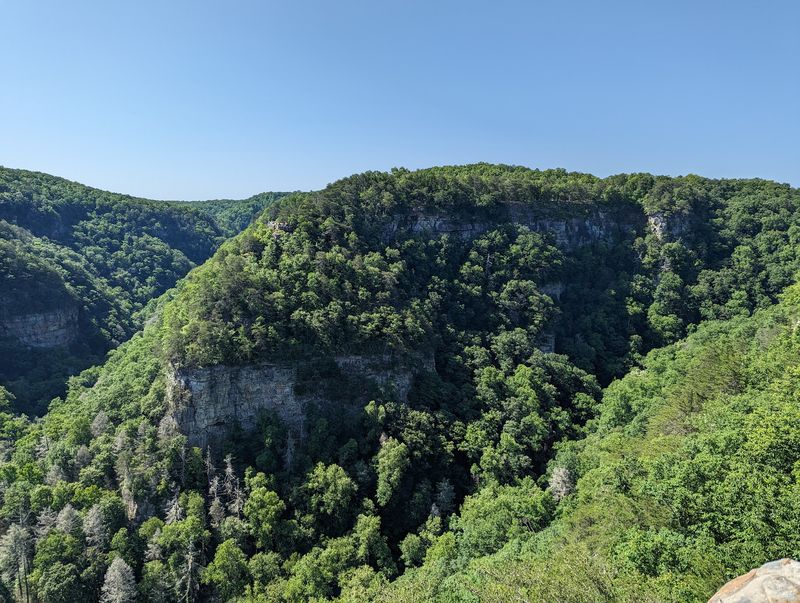
The canyon at the heart of this park is carved by Sitton Gulch Creek, which has spent thousands of years cutting through layers of sandstone and shale on Lookout Mountain. The result is a dramatic gorge with walls that plunge several hundred feet straight down into dense tree cover below.
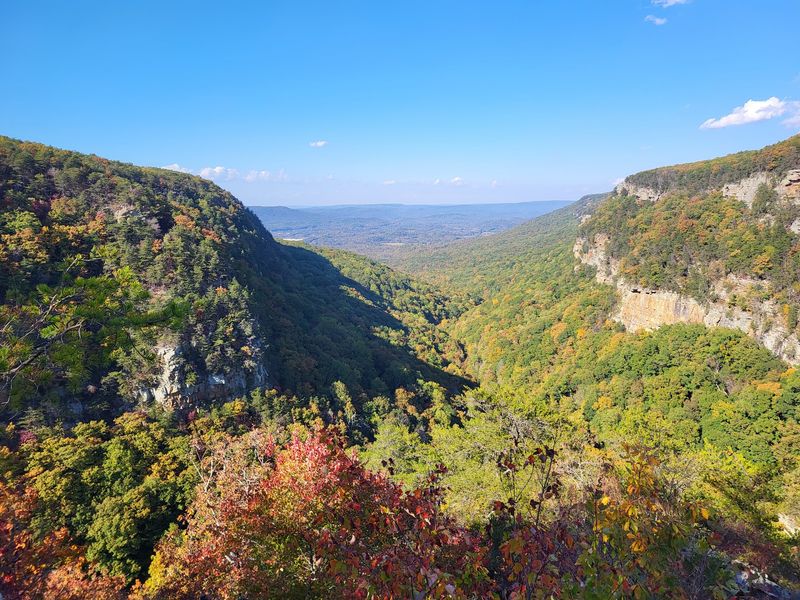
Standing at the main overlook for the first time tends to stop people mid-sentence. The drop is sudden, the width is substantial, and the forested valley below looks almost impossibly green against the exposed rock faces on either side.
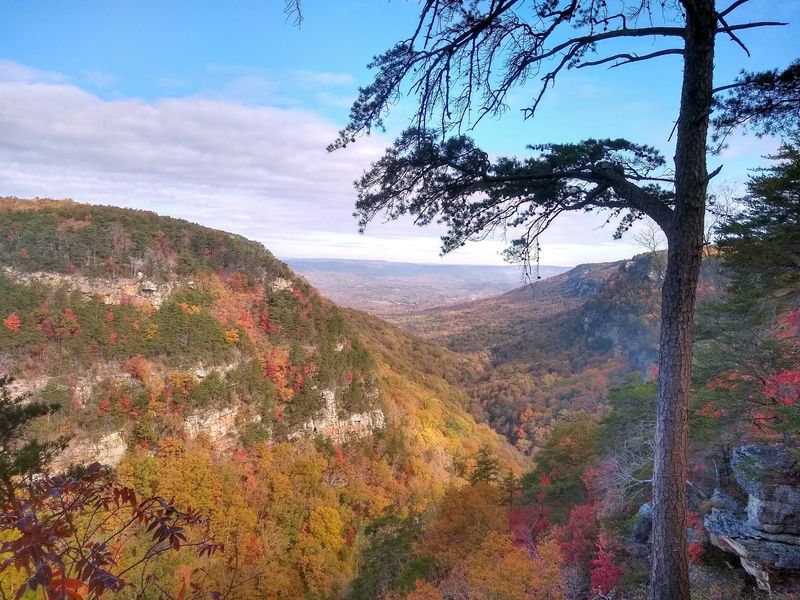
The canyon is wide enough that you can see multiple ridgelines from a single viewpoint, which gives the overlook platforms a feeling of real geographic scale. Several overlook points are accessible along the rim, each offering a slightly different angle on the gorge.
Photographers tend to linger here far longer than they planned, and that is completely understandable.
Cherokee Falls: The First Waterfall Stop
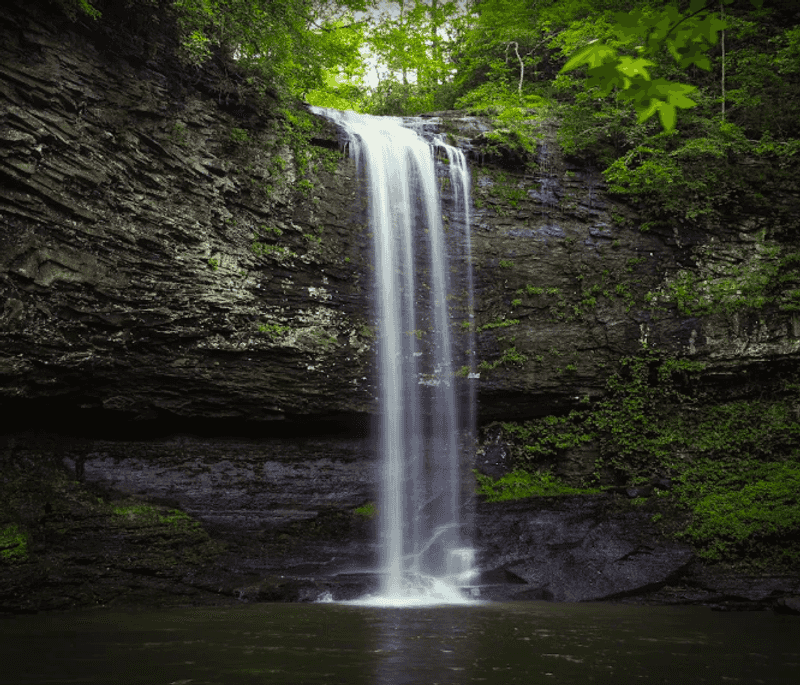
Cherokee Falls is the first waterfall hikers reach on the Waterfall Trail, and it earns its reputation as an excellent experience even for those who do not push on to the second falls. The water drops over a wide rocky ledge into a pool below, framed by the canyon walls and thick forest growth on all sides.
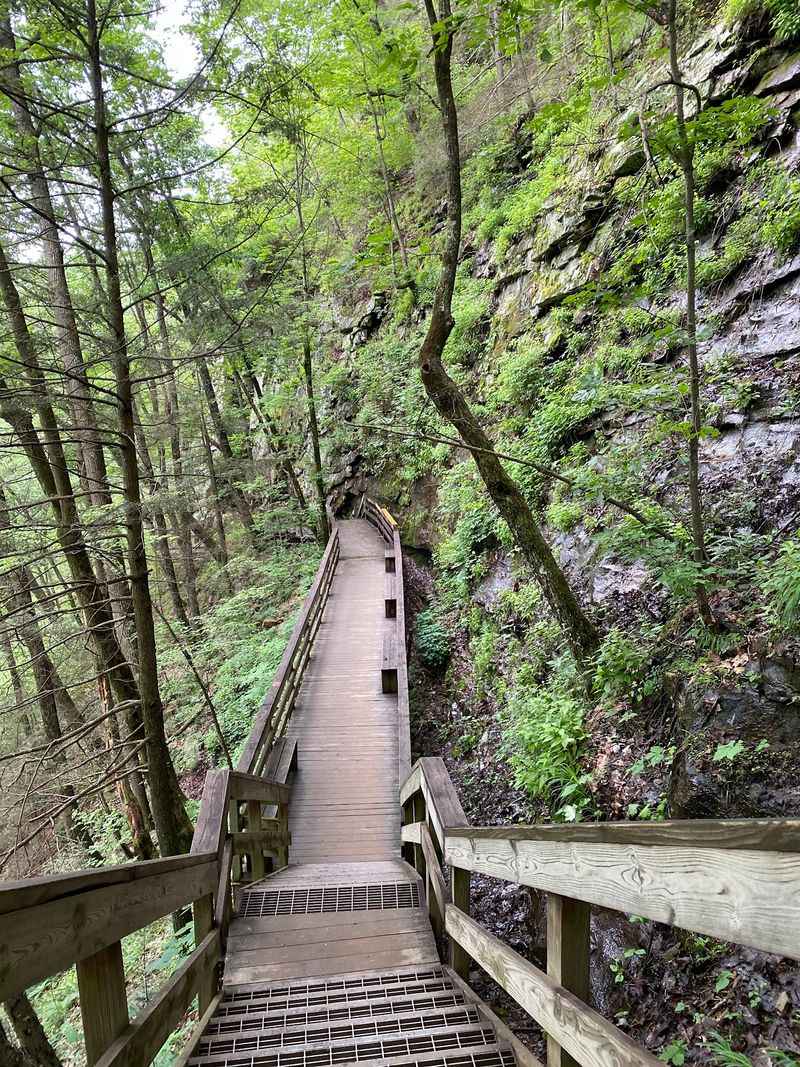
The trail down to Cherokee Falls involves a significant staircase descent, so comfortable footwear and a reasonable fitness level make the trip much more enjoyable. Coming back up is the part that reminds you just how deep the canyon actually goes.
Families with children have completed this hike successfully, including kids as young as five years old, so it is not out of reach for most active families. Bringing water is strongly recommended because the climb back out generates real effort.
The reward at the bottom more than justifies the work getting there and back.
Hemlock Falls: Worth Every Step Down
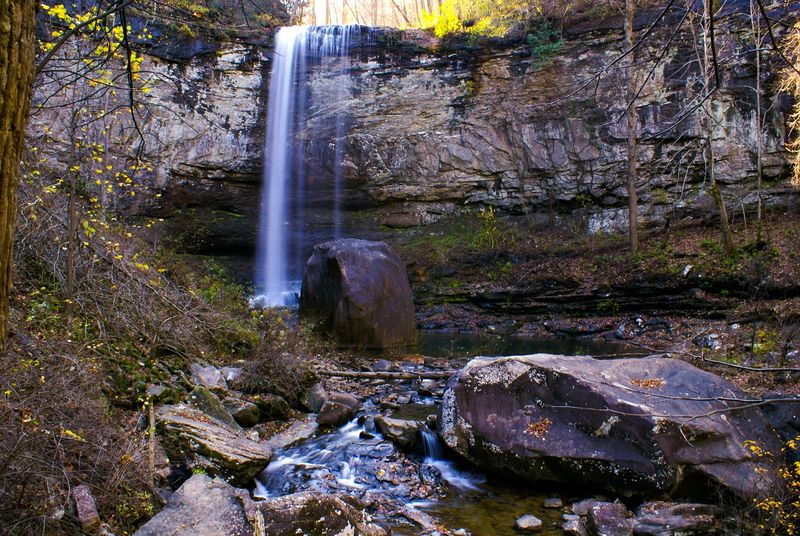
Hemlock Falls sits deeper in the canyon than Cherokee Falls, requiring hikers to continue past the first waterfall and descend further into the gorge. The additional effort filters out casual visitors, which means the second waterfall often feels quieter and more secluded than the first.
The falls themselves drop through a narrow slot in the canyon wall, and the surrounding rock faces create a natural amphitheater around the base. The height of the surrounding walls makes the space feel enclosed in a way that is genuinely dramatic without being claustrophobic.
Children as young as eight have made it to Hemlock Falls and back without major difficulty, though the hike is more demanding than the Cherokee Falls portion alone. Hikers who push through to both falls often describe the full loop as one of the more rewarding physical efforts they have put into a day hike.
The stair count is real, but so is the payoff at the bottom.
The Waterfall Trail and What to Expect
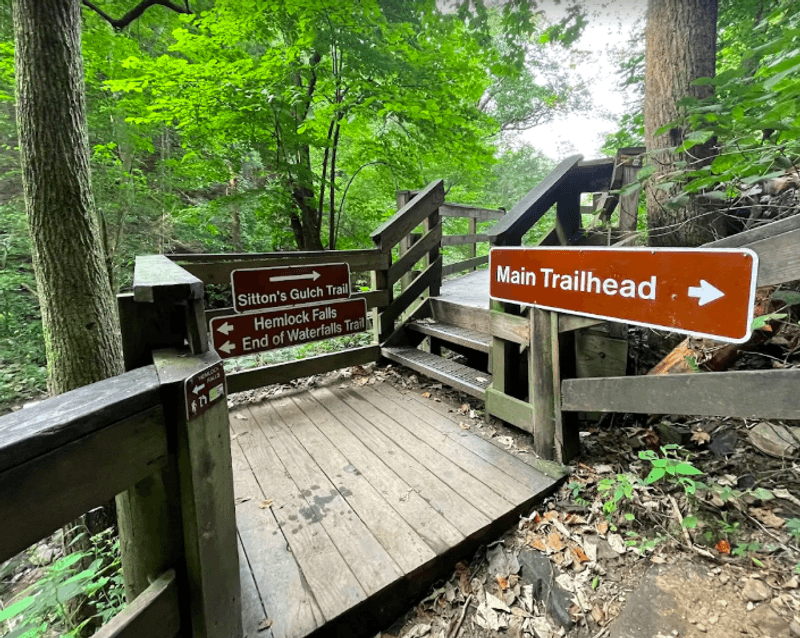
The Waterfall Trail at Cloudland Canyon is not a casual stroll, and the park does not pretend otherwise. The trail descends into the canyon via a long series of constructed staircases, which some estimates put well into the hundreds of steps each way.
The descent is manageable at a steady pace, but the return climb is where legs really start to protest.
Trail markers are clearly posted throughout the route, so navigation is straightforward even for those who do not hike regularly. The path passes through shaded forest for most of its length, which helps keep the temperature reasonable even on warmer days.
Packing water, a light snack, and wearing proper footwear are the three most consistent pieces of advice from anyone who has done this trail. Good boots with ankle support make a noticeable difference on the rocky sections near the base of the falls.
Plan for at least two to three hours for the full out-and-back waterfall experience.
West Rim Loop: The Trail That Keeps Delivering
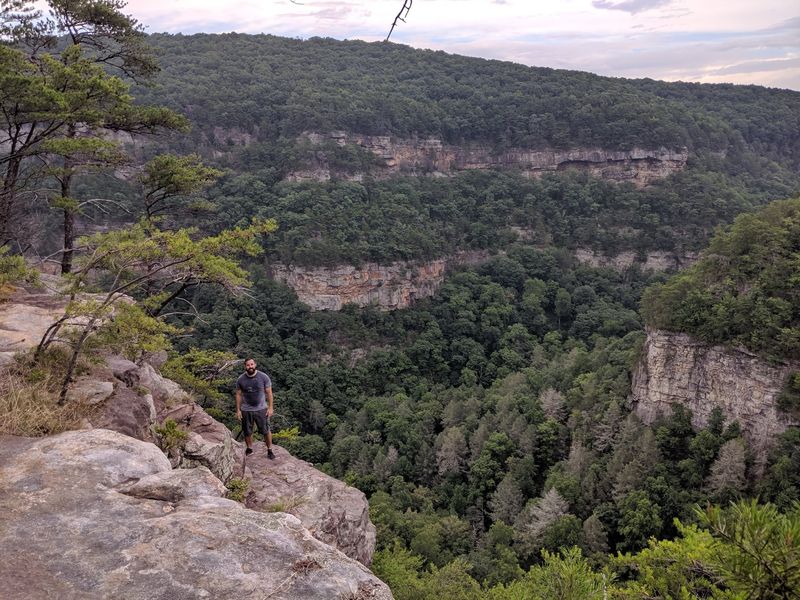
The West Rim Loop is the trail that most regular visitors to Cloudland Canyon consider their personal favorite, and the reasons are easy to understand. The loop follows the western edge of the canyon rim, offering repeated overlook views of the gorge below without the punishing stair descent of the Waterfall Trail.
A newer walkway section along part of the rim includes seating areas and well-positioned lookout spots that make the trail accessible and enjoyable for a wide range of fitness levels. The total loop covers enough ground to feel like a real hike rather than a quick walk, and the terrain stays interesting throughout.
Cabins on the western side of the park are positioned right next to the West Rim Loop trailhead, which makes morning hikes before breakfast a genuinely easy option for overnight guests. The trail is rated moderate, and most active adults and older children complete it without significant difficulty.
Bring water regardless of how short the trip looks on a map.
Sittons Gulch Trail Along the Creek
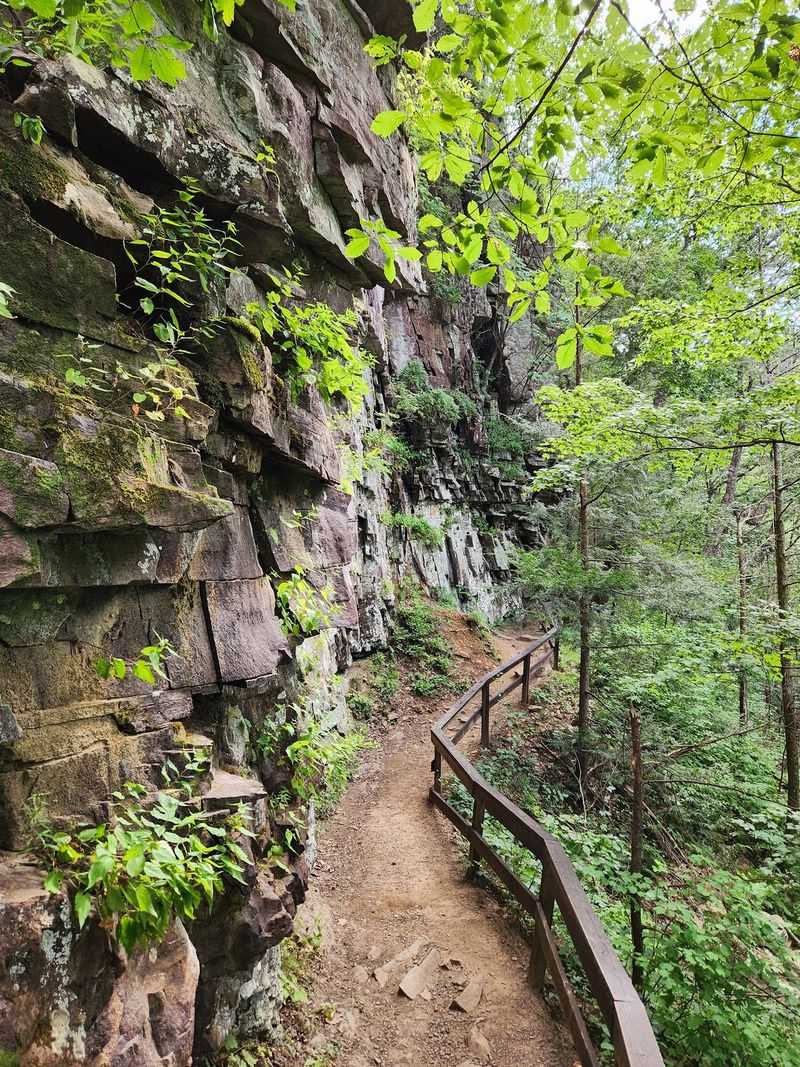
Sittons Gulch Trail offers a completely different perspective on the canyon compared to the rim trails. This route descends into the gorge and follows Sitton Gulch Creek along the canyon floor, passing through narrow sections where the rock walls rise steeply on both sides.
The creek-level view of the canyon is something that overlook visitors never see, and it adds a layer of understanding to just how deep and complex the gorge actually is. The trail passes through sections of old-growth forest and rocky creek crossings that keep the route engaging from start to finish.
This trail connects to the Waterfall Trail once inside the canyon, giving experienced hikers the option to combine routes for a longer day out. The terrain is more rugged than the rim trails, and the footing near the creek requires attention on wet days.
Anyone who has already done the Waterfall Trail and wants more should put Sittons Gulch on the list for the next visit.
Overlook Points That Require Almost No Effort
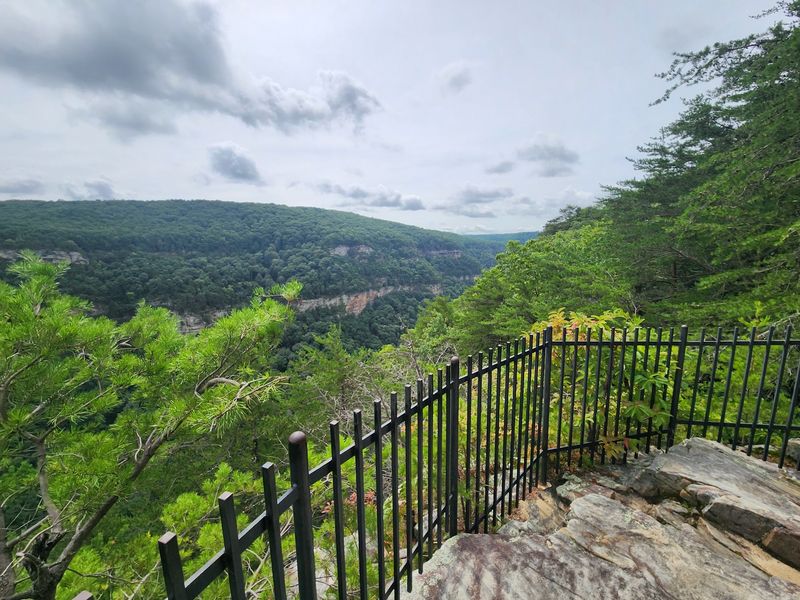
Not every great view at Cloudland Canyon requires a strenuous hike to reach. The park has several overlook points along the rim that are accessible with minimal walking, including at least one paved and wheelchair-accessible path that leads to a genuine canyon panorama.
These accessible overlooks make the park a strong option for visitors who cannot manage steep trails or long descents. Grandparents, young toddlers, and anyone recovering from an injury can still stand at the canyon edge and take in the same dramatic drop that makes this place so memorable.
The main overlook area near the park entrance is also a popular spot for watching the canyon change character at different times of day. Morning light hits the far canyon walls at a low angle that photographers specifically plan around.
Even a 20-minute stop at the overlooks, without hiking a single trail, gives visitors a clear sense of why Cloudland Canyon has the reputation it does.
Camping Options From Tents to Cabins
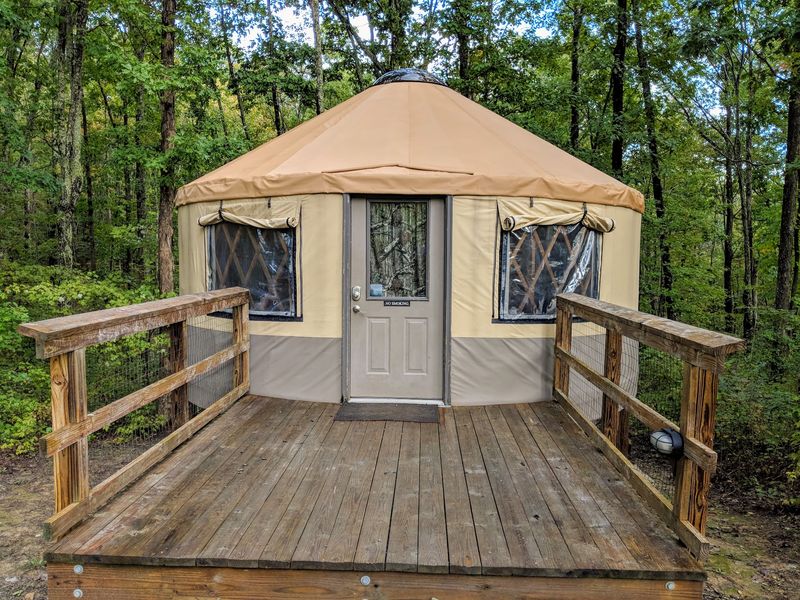
Cloudland Canyon offers a camping setup that covers almost every preference, from basic tent sites to fully equipped cabins and yurts. The West Rim campground is consistently favored over the East Rim by campers who value privacy, as the sites are more spread out and the atmosphere is noticeably quieter.
The cabins at the park are positioned deep in the wooded western section and come stocked with kitchen utensils, towels, bedding, a coffee maker, and an ice maker, which removes a lot of the logistical burden from an overnight trip. Screened-in porches with rocking chairs make morning coffee a genuinely relaxing ritual.
Walk-in tent sites offer more seclusion from the main campground areas, and the extra distance from the parking area keeps those sites from feeling crowded. Bathhouses throughout the campgrounds are maintained at a high standard and were described by multiple campers as among the cleanest they had encountered at any state park.
Cabin Stays on Top of the Mountain
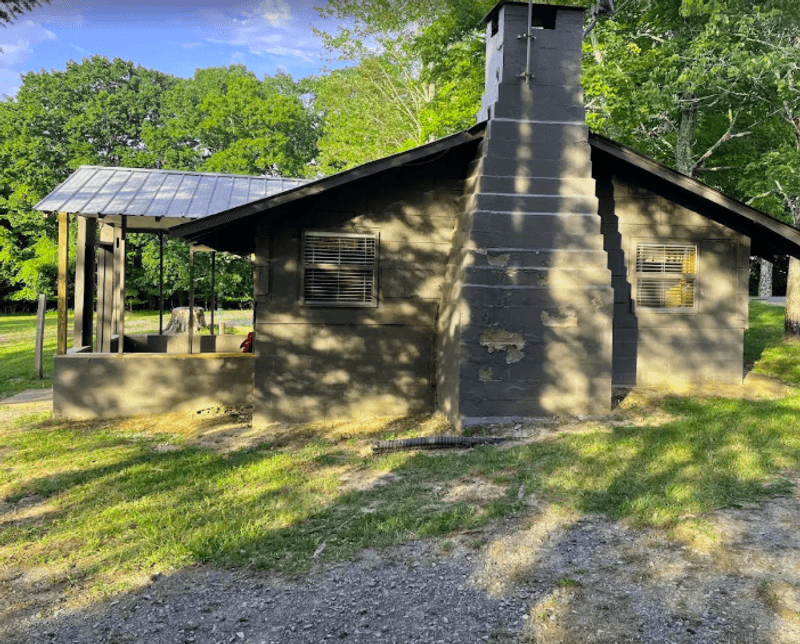
The cabins at Cloudland Canyon sit in the far back section of the park, tucked into the forest away from the main campground traffic. That isolation is part of the appeal, and guests consistently mention how quiet and private the experience feels despite being inside a busy state park.
Inside, the cabins are equipped well enough that most guests do not feel like they are roughing it. Comfortable beds, full kitchen equipment, bath supplies, and a coffee maker are all included.
The screened porches face the surrounding forest, and the early morning bird activity in that area is consistent and active.
The West Rim Loop trailhead sits directly adjacent to the cabin area, which means guests can step off the porch and onto a canyon-rim hike within minutes. For couples or families who want a nature stay without the full tent-camping commitment, the cabins represent a practical middle ground that delivers on both comfort and location.
Reservations are recommended well in advance.
Cave Tours and Nature Programs
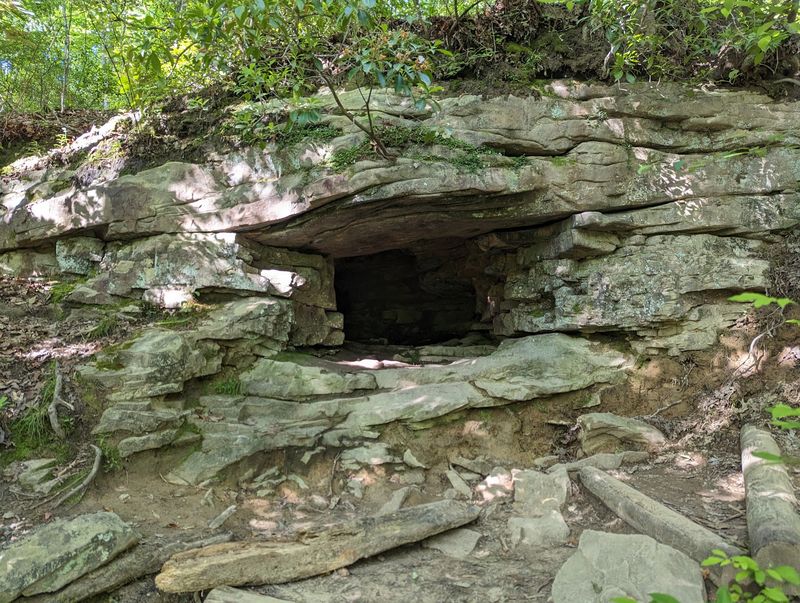
Cloudland Canyon is not just a hiking and camping destination. The park also offers cave tours on select days, giving visitors a look at the underground geology that sits beneath the canyon landscape above.
Pre-registration is typically required for cave tours, so checking the park schedule before arrival is a practical first step.
Nature walks led by park staff are also available on certain days and cover topics ranging from local plant life to wildlife and geological history. These programs are especially well-suited for families with curious kids who want more context than a trail map provides.
The mountain laurel and rhododendrons that bloom along the trails in late spring add a visual layer to the park that is separate from the canyon and waterfall experience. Seasonal wildflower blooms draw visitors who come specifically for the plant life rather than the geology.
The park rewards repeat visits because different seasons reveal completely different versions of the same landscape.
Best Times of Year to Visit
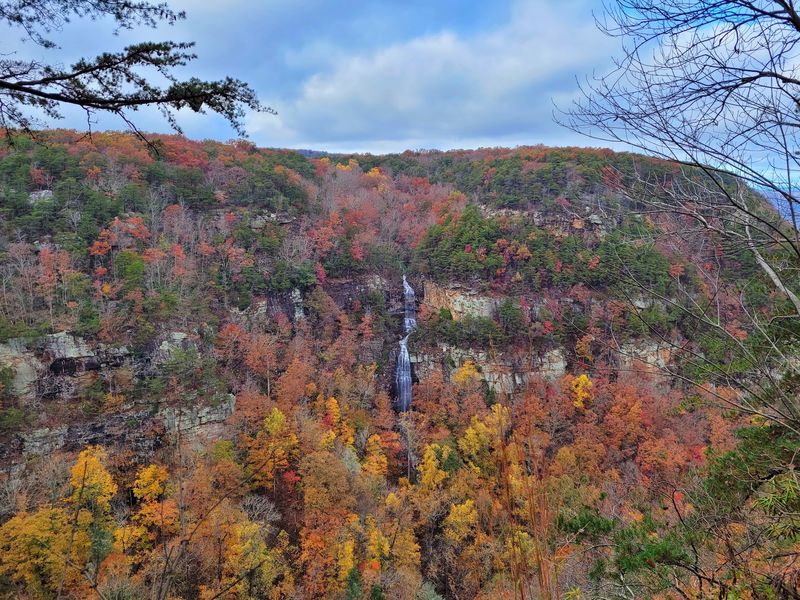
Cloudland Canyon rewards visitors in multiple seasons, and the best time to visit depends on what the trip is meant to deliver. Early spring brings blooming mountain laurel and rhododendrons along the trails, and the waterfalls tend to run with more volume after winter and early spring rainfall.
Fall is widely regarded as the most visually dramatic season at the park. The canyon fills with color as the deciduous trees change, and late October into early November is the window most consistently recommended for peak foliage.
Arriving early in the morning during fall weekends is advisable because the overlooks draw significant crowds during peak color season.
Summer visits are best managed with an early start to beat midday heat on the canyon trails, and cooler weather months make the stair climbs considerably less demanding. Mid-October campers have reported near-perfect hiking weather with trail privacy that summer crowds do not allow.
Any season offers something worth the drive.
Practical Tips Before You Go
A few practical details make a Cloudland Canyon visit go much more smoothly. The park opens at 7 AM daily and closes at 10 PM, which gives early risers the advantage of hitting the overlooks before crowds arrive.
Parking near the main trailheads fills up on busy weekends, so arriving close to opening time is a consistent recommendation from regular visitors.
The park store carries basic camping supplies, snacks, and gear essentials, so forgetting a minor item at home is not a trip-ending problem. Nearby grocery stores and gas stations are within a short drive of the park entrance, which is a convenience that the park’s remote mountain setting does not immediately suggest.
Construction on the visitor center and entry road has been underway, and the new facility is expected to improve the arrival experience significantly once complete. Trail maps are available at the park, and the website at gastateparks.org/CloudlandCanyon has current information on programs, reservations, and any temporary closures before a visit.
Why This Canyon Keeps Pulling People Back
Cloudland Canyon has a quality that is harder to define than trail length or waterfall height. The combination of scale, variety, and accessibility creates a park that works for solo hikers, couples, families with young children, and serious backpackers all at the same time.
Very few state parks manage that range without feeling unfocused.
The canyon itself is the anchor, but the trails, the camping, the wildlife, the seasonal plant life, and the cave programs give the park enough depth that a single visit rarely covers everything. Repeat visitors are the norm rather than the exception, and many families have made annual trips part of their routine.
The proximity to Chattanooga adds another layer of flexibility for multi-day trips that extend beyond the park itself. Rock City, Ruby Falls, and scenic drives through the surrounding mountain terrain are all within reach.
Cloudland Canyon is the kind of place that earns a spot on the permanent return list after just one visit.
Where Exactly Is This Canyon
Cloudland Canyon State Park sits at 122 Cloudland Canyon Park Rd, Rising Fawn, GA 30738, on the western edge of Lookout Mountain in the far northwestern corner of Georgia. The park is close enough to Chattanooga, Tennessee, to make it an easy day trip from that city, yet it feels completely removed from urban life once you pass through the entrance.
The park covers more than 3,500 acres, and driving from one end to the other takes a solid 15 minutes. That scale surprises most first-time visitors who expect a compact nature stop.
Nearby grocery stores and gas stations are within a reasonable distance, so campers do not have to haul every supply from home. The park is open daily from 7 AM to 10 PM, giving visitors a generous window to explore without rushing through the highlights.
Share this story