Oklahoma has a way of surprising people who think they know exactly what the state looks like. Tucked into the Arbuckle Mountains in south-central Oklahoma, there is a place where cold spring-fed water tumbles over rocky ledges into natural swimming holes surrounded by canyon walls and cedar trees.
Most visitors from the surrounding plains arrive expecting a modest creek and leave with their jaws still somewhere on the ground. Turner Falls Park is the kind of discovery that makes you rethink everything you assumed about the Sooner State.
A Park That Defies the Oklahoma Stereotype
Somewhere between the flat wheat fields and rolling red clay that most people picture when they think of Oklahoma, the Arbuckle Mountains rise quietly from the earth like a well-kept secret. Turner Falls Park sits right in the middle of this geological surprise, nestled along Honey Creek just off I-35 near Davis, Oklahoma.
The park covers hundreds of acres of rugged terrain, and the moment you pass through the entrance gate, the landscape shifts dramatically. Canyon walls close in, cedar and oak trees line the creek banks, and the sound of rushing water replaces the wind-swept silence of the surrounding plains.
For road-trippers cutting through Oklahoma on I-35, the park is practically roadside, yet it feels worlds away from the highway. Visitors who stumble upon it for the first time often describe the experience as stumbling into a completely different state.
The Arbuckle Mountains are ancient, among the oldest exposed rock formations in North America, and that age gives Turner Falls its dramatic, sculpted character that feels almost cinematic in person.
The Waterfall at the Heart of It All
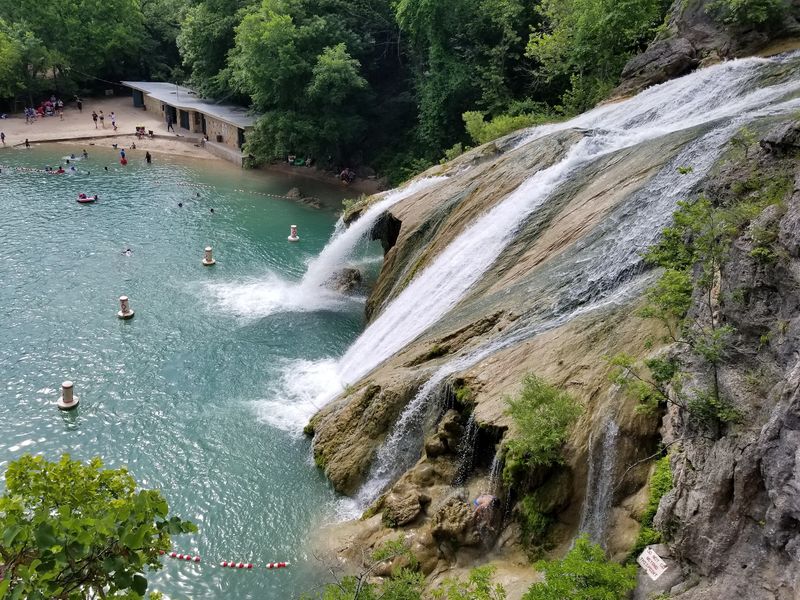
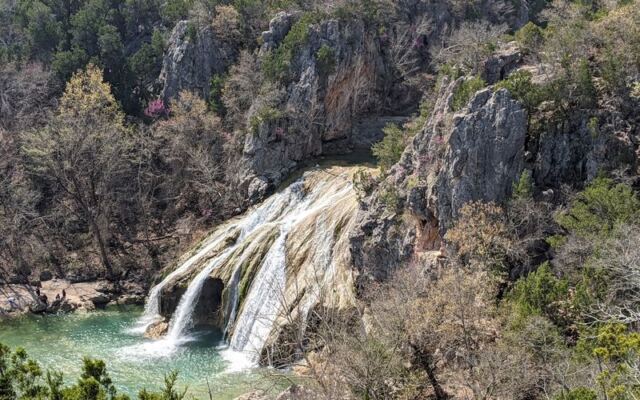
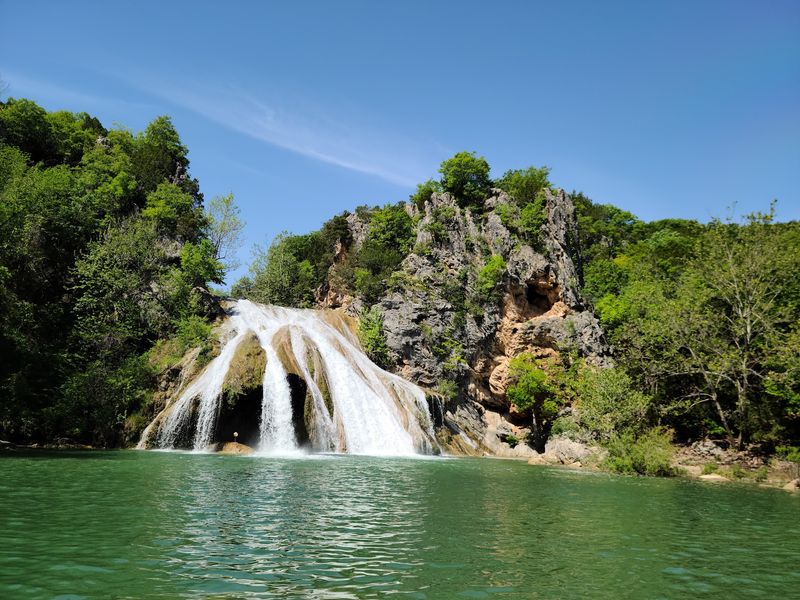
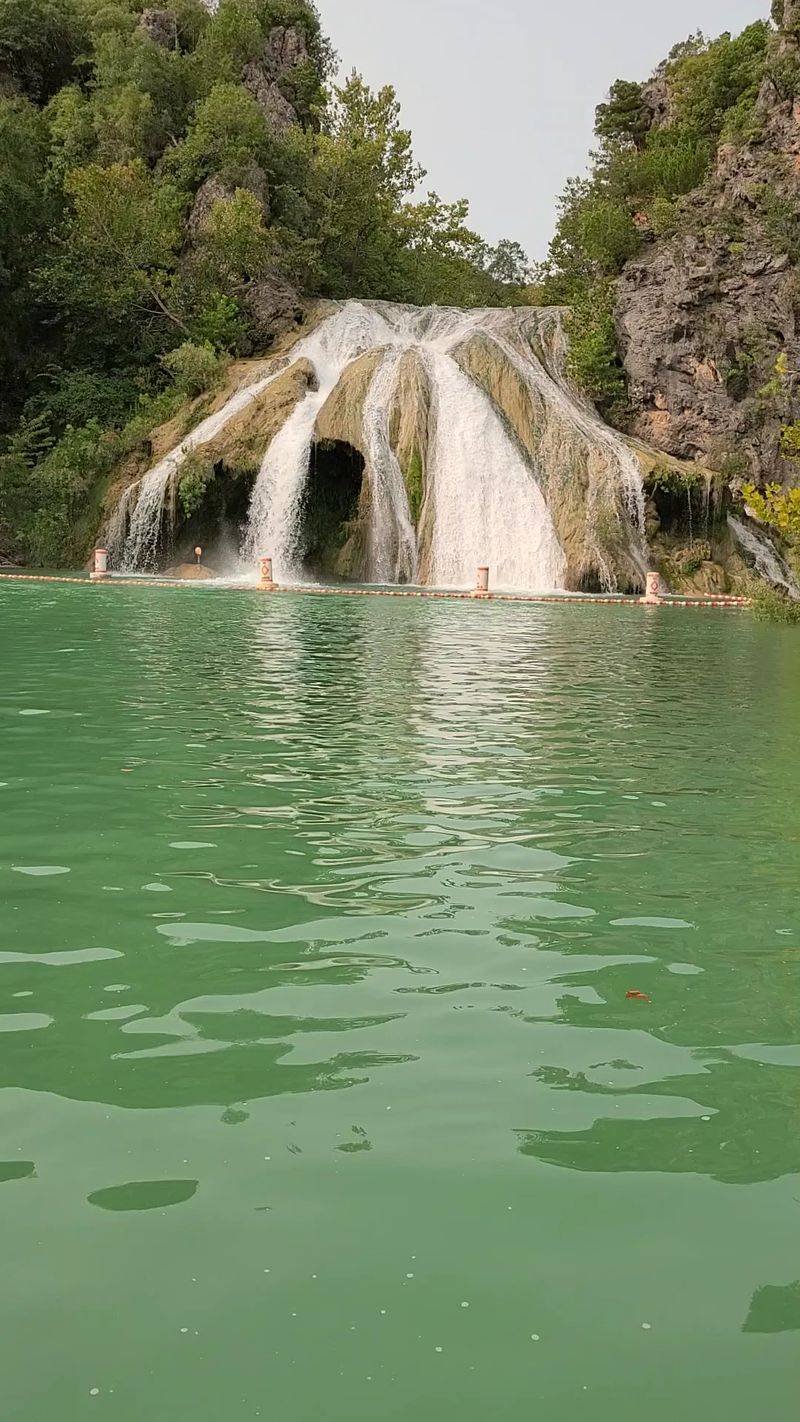
Standing roughly 77 feet tall, Turner Falls is the tallest waterfall in Oklahoma, and seeing it for the first time genuinely stops people mid-step. Water from Honey Creek rushes over a broad limestone ledge and crashes into the pool below with enough force to create a constant cool mist that drifts across the surrounding rocks and shoreline.
The waterfall earned over 250 mentions in visitor reviews, making it the single most talked-about feature of the entire park. During summer months, when the heat of southern Oklahoma settles in heavy and relentless, the mist from the falls becomes something close to magical.
Photographers set up along the rocky banks to capture the white curtain of water against the dark canyon walls. Families wade into the pool directly below the falls, letting the cold spring-fed water wash over them while the sound drowns out everything else.
The waterfall is fed by natural springs rather than rainfall alone, which means it flows year-round and maintains a consistent presence even during dry stretches that leave other Oklahoma waterways sluggish and low. Visiting in early July, as some guests have noted, rewards you with plenty of water and picture-perfect conditions.
Natural Swimming Holes Along Honey Creek
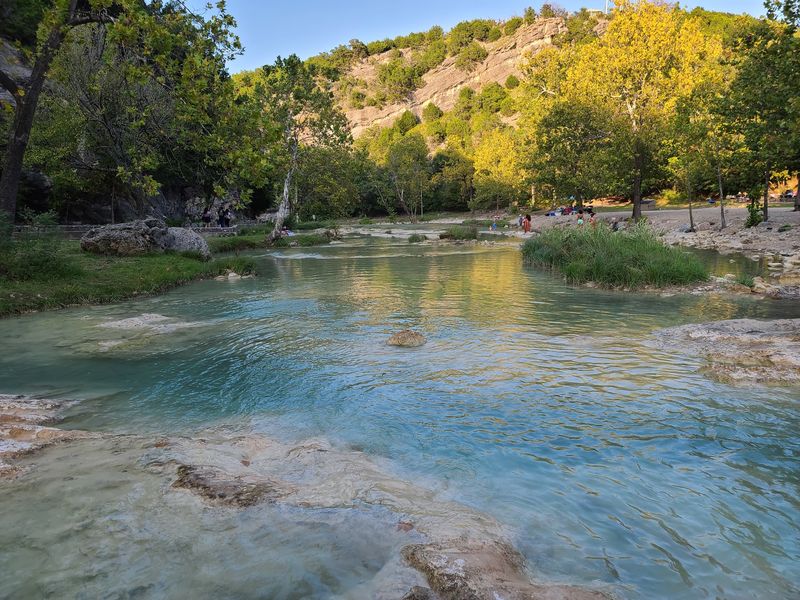
Beyond the main falls, Honey Creek winds through the park creating a series of natural swimming areas that range from shallow wading spots perfect for young children to deeper pools where older kids and adults can fully submerge. The creek water, fed by cold underground springs, stays refreshingly cool even during the peak of an Oklahoma summer.
Some visitors have noted the water clarity can vary depending on park traffic and recent rainfall, with certain areas appearing cleaner than others. The creek sections away from high-traffic zones tend to be noticeably clearer, and visitors who explored upstream reported finding quieter, cleaner pockets of water well worth the short walk.
Life vests are available for rent or purchase at the park store, and lifeguards are stationed at key swimming areas during peak season, which adds a meaningful layer of safety for families with younger children. Water shoes are strongly recommended by staff and seasoned visitors alike, as the creek bottom and surrounding rocks can be slippery.
The combination of natural pools, moving water, and shaded canyon banks makes Honey Creek one of the most genuinely refreshing swimming experiences available anywhere in Oklahoma without requiring a boat or a reservation.
The Stone Castle and Its Curious History
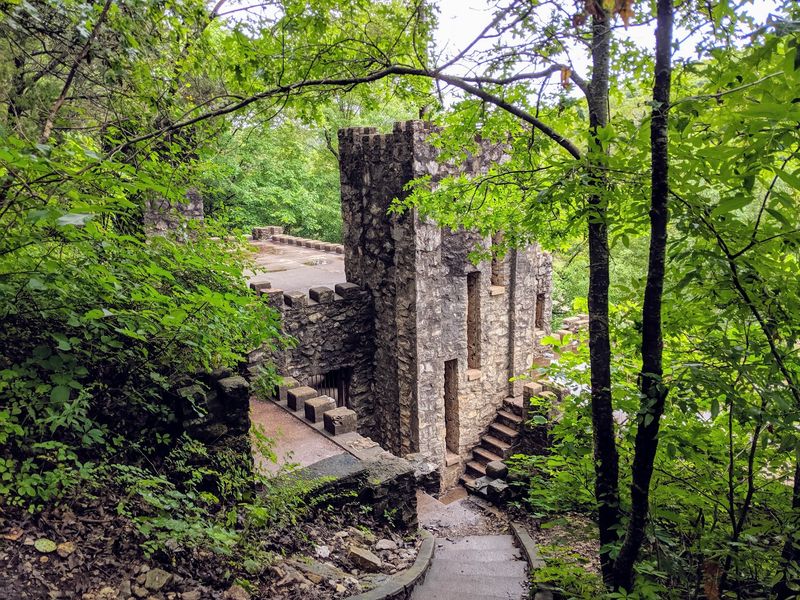
Perched on a rocky hillside above the canyon floor, the old stone castle at Turner Falls is one of those unexpected details that transforms a nice outdoor trip into something genuinely memorable. Built from native limestone during the 1930s by a local physician named Dr. Ellsworth Collings, the structure was originally intended as a private retreat and summer home.
Over the decades, the castle changed hands and purposes before eventually becoming part of the park. Today, visitors hike up to explore its stone rooms, carved benches, thick walls, and open archways that frame sweeping views of the canyon below.
The castle earns nearly as many mentions in visitor reviews as the waterfall itself, clocking in at 238 references, which tells you how much it captures the imagination of people who wander up to find it.
Kids absolutely love scrambling through the rooms and pretending they have stumbled into a fairy tale. Adults tend to linger a bit longer, running their hands along the rough stone walls and wondering what the place looked like when it was freshly built and full of life.
The hike up to the castle is moderate in effort but entirely worth it, offering one of the best elevated views in the park.
Caves Hidden Along the Canyon Walls
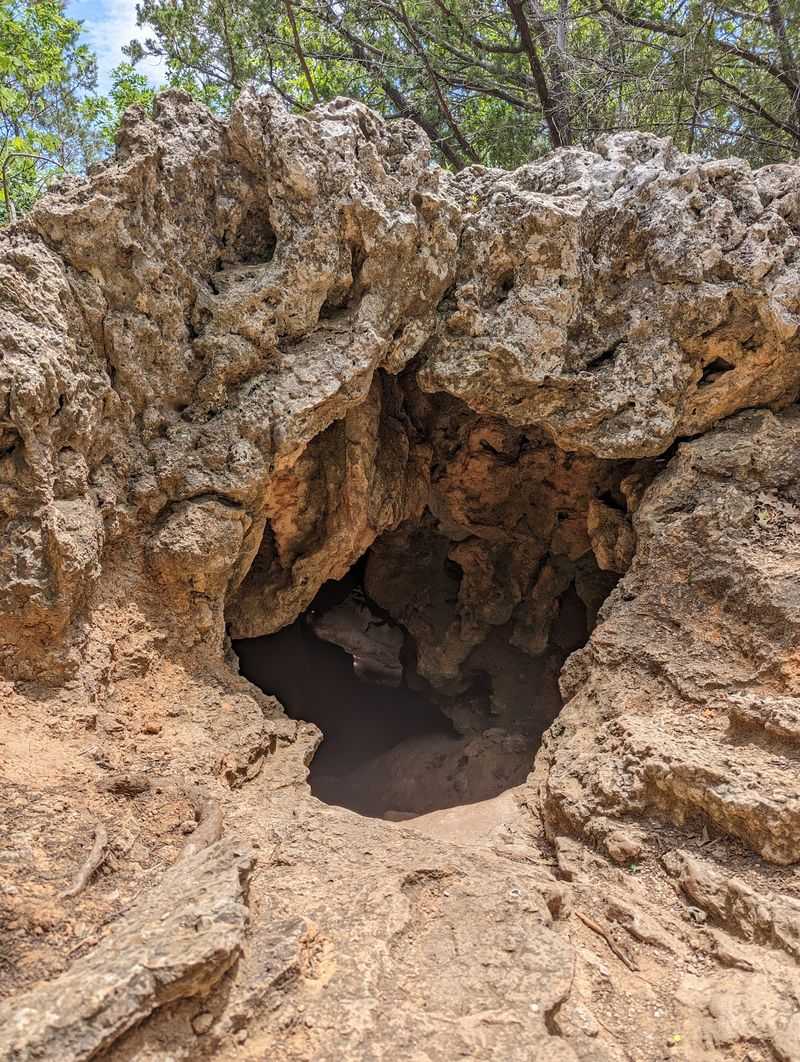
Not everyone knows about the caves tucked into the limestone canyon walls at Turner Falls, and that element of hidden discovery is a big part of what makes finding them so satisfying. These natural formations appear along the creek trail and near the main waterfall area, carved out over thousands of years by water working its way through the ancient Arbuckle rock.
Visitor reviews mention the caves 62 times, often with a note that they are not heavily marked on park maps, which means stumbling across them feels like a genuine adventure rather than a guided tour stop. Level 2 parking is particularly well-positioned for visitors who want to encounter the caves naturally on the way down to the falls, passing through them as part of the descent to the water.
The caves are not deep enough to require flashlights for basic exploration, but bringing one adds to the experience and lets you appreciate the rock textures and formations more fully. Families with curious kids find the caves to be a highlight that rivals the waterfall itself in terms of excitement generated per square foot.
For geology enthusiasts, the exposed rock layers visible inside and around the caves offer a quiet but fascinating lesson in deep time and ancient Oklahoma landscape history.
Hiking Trails Through the Arbuckle Terrain
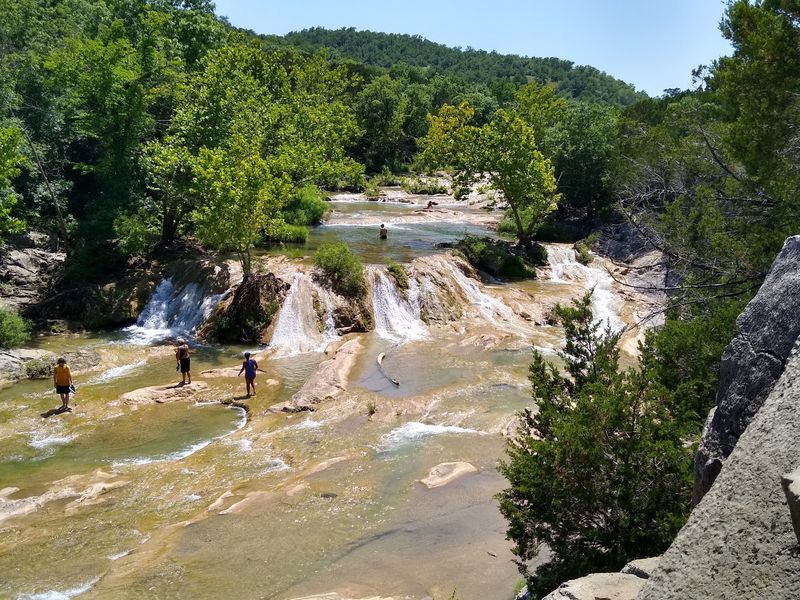
Hiking is the most frequently mentioned activity in Turner Falls visitor reviews, clocking in at 286 mentions and edging out even the waterfall in raw conversation volume. That tells you something important: the trails here are not just a way to get from the parking lot to the water.
They are a destination in themselves.
The terrain around Honey Creek is genuinely rugged, with rocky paths that wind through cedar groves, along canyon ridges, and down to creek-level viewpoints that most casual visitors never reach. One trail leads to the Robbers Cave area, a historic landmark that adds a layer of local lore and frontier history to the hike.
Visitors have noted that trail markings can be inconsistent in places, so downloading a map before arriving is a smart move.
The elevation changes throughout the park are modest by mountain standards but meaningful enough to make the hiking feel rewarding rather than flat. Morning hikes, before the midday heat settles in during summer, reward early risers with cooler temperatures, better wildlife sightings, and fewer crowds on the narrower paths.
For anyone who enjoys combining physical activity with natural scenery and a side of historical curiosity, the trail network at Turner Falls punches well above its weight compared to other Oklahoma outdoor destinations.
Camping and Cabins for an Overnight Stay
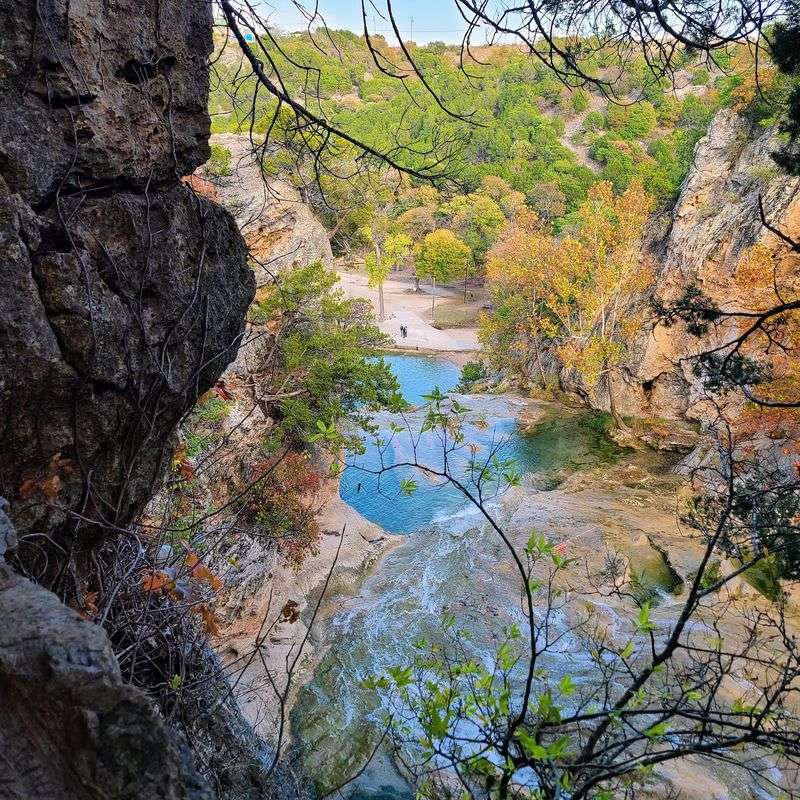
Spending a single day at Turner Falls is genuinely enjoyable, but staying overnight reveals a completely different side of the park. Once the day-trip crowds thin out in the late afternoon, the canyon settles into a peaceful quiet that feels almost surreal given how busy the main swimming areas can get during peak hours.
The park offers primitive camping, tent camping, and cabin rentals, giving visitors a range of overnight options depending on comfort preferences and budget. Cabins are popular and tend to book up quickly during summer weekends, so planning ahead is essential.
Visitors who have stayed in the cabins suggest bringing essentially everything you need, as the on-site amenities are minimal and the park store has limited stock.
Primitive camping areas have been noted as well-maintained during quieter seasons, with sufficient bathroom access nearby. Spring break campers in particular have praised the scenery as one of the highlights of the entire experience.
One practical note that comes up repeatedly: the zip line activity on the property requires cash only, and the nearest ATM is several towns away, so bringing cash if you plan to try it is genuinely important advice rather than a minor footnote. The overnight experience, despite its rough edges, earns consistent appreciation from families who prioritize natural surroundings over polished resort amenities.
Who This Park Is Really Built For
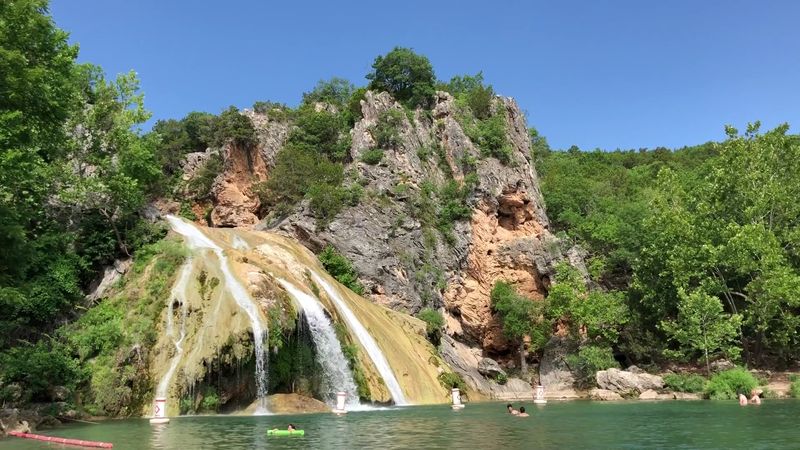
Turner Falls has a genuinely broad appeal that is rare for a single outdoor destination. Families with school-age children tend to get the most out of the park, with the combination of swimming holes, castle exploration, cave hunting, and trail hiking keeping kids engaged for a full day without anyone running out of things to do.
Couples looking for a scenic outdoor escape from Dallas, Oklahoma City, or other nearby metros find the canyon setting romantic in a rugged, unpretentious way. The overlook area above the falls offers some of the most photogenic views in the park, and visitors who time their arrival for a weekday or early morning on weekends report a dramatically more relaxed experience than those who arrive on a busy Saturday afternoon.
Self-described non-outdoors people have shown up skeptically and left converted, surprised by how accessible and visually rewarding the park is even without serious hiking experience. That said, visitors who have mobility challenges or are pregnant will find some areas of the park difficult to navigate due to the rocky, uneven terrain.
The swimming areas themselves are reachable and enjoyable for a wide range of physical abilities, with lifeguards on duty during peak season providing an added layer of reassurance for families with younger swimmers.
Admission, Parking, and Getting There
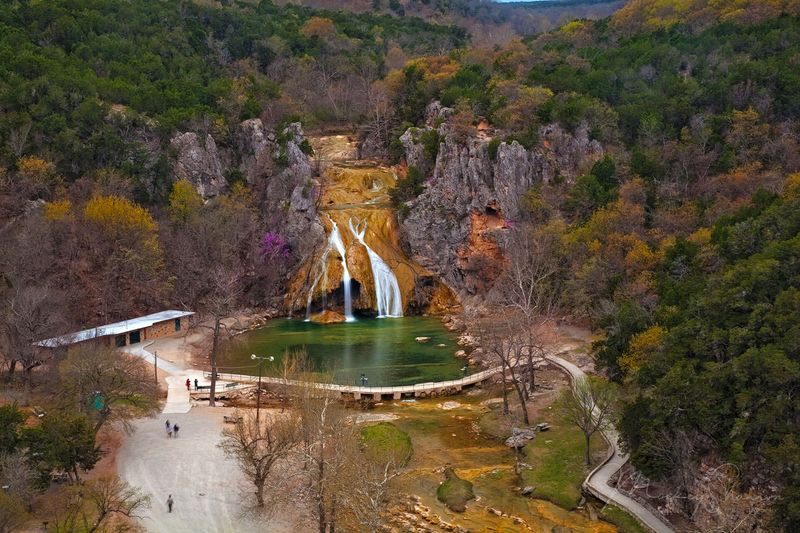
Located right off I-35 and US-77 near Davis, Oklahoma, Turner Falls Park is one of the most accessible natural attractions in the state for anyone driving through on the way between Oklahoma City and Dallas. The drive from Oklahoma City takes roughly an hour and a half, and from Dallas it is closer to two and a half hours, making it a realistic day trip from either direction.
Admission pricing has been a consistent point of conversation among visitors, with weekend rates running high enough that some families have expressed surprise at the total cost once parking fees are added. Parking is offered at multiple levels, with Level 1 providing the closest access to the castle and main waterfall, while Level 2 puts visitors near the cave trail descent.
Free parking lots exist but require a longer walk, and the park has been known to offer shuttle service between areas.
The park phone number is 580-369-2988, and the official website at turnerfallspark.com is the best source for current hours, pricing, and any seasonal closures. Arriving on a weekday rather than a peak summer weekend makes a significant difference in both crowd levels and overall experience quality.
Bringing cash is strongly advised for activities like the zip line, which does not accept cards.
The Honest Verdict on Turner Falls Park
Turner Falls Park is the kind of place that earns its reputation through sheer natural beauty while simultaneously leaving room for improvement in the operational details. The waterfall, the swimming holes, the castle, the caves, and the hiking trails form a combination that is genuinely hard to match anywhere else in Oklahoma.
On that front, the park delivers something remarkable.
Where the experience gets more complicated is in the areas of facility maintenance, crowd management on peak weekends, and pricing transparency. Visitors who arrive expecting polished infrastructure comparable to a well-funded state park may find the gap between admission cost and facility condition frustrating.
Those who arrive focused on the landscape and natural features, and who choose their visit timing wisely, tend to leave far more satisfied.
Going on a weekday, arriving early, bringing cash, packing your own supplies, and wearing water shoes are the practical adjustments that separate a great Turner Falls visit from a disappointing one. The natural setting earns consistent praise even from reviewers who had complaints about everything else, which is its own kind of endorsement.
For anyone in Oklahoma or passing through the state who has never made the detour off I-35 to see what is hiding in the Arbuckle Mountains, the answer is simple: the detour is worth it.
Share this story