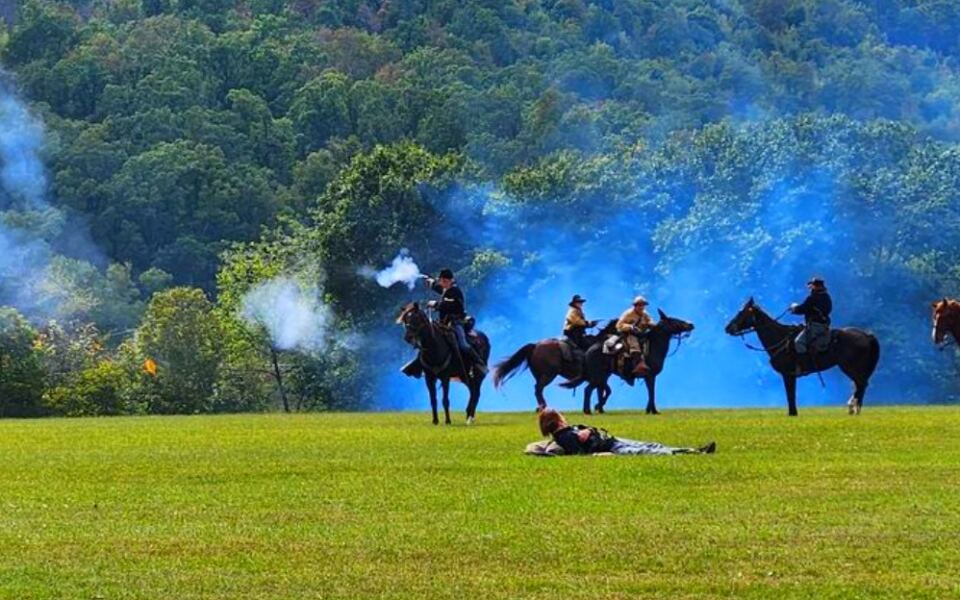
One Missouri battlefield still holds the remains of an earthen Civil War fort, including the crater left behind when retreating Union soldiers blew up its powder magazine before escaping under cover of darkness.
The battle unfolded in September 1864, when roughly 1,500 Union troops faced a much larger Confederate force during one of the final major campaigns for control of Missouri. Visitors today can walk around the surviving earthworks, see the explosion crater, explore a museum filled with Civil War artifacts, and follow the story of the garrison’s remarkable nighttime escape.
The surrounding Ozark valley adds another layer to the visit, with mountain scenery, walking trails, picnic areas, and a nearby former mining site that now protects endangered bats. What looks like a quiet patch of Missouri countryside holds a surprisingly dramatic chapter of Civil War history.
Stepping Onto Sacred Ground in Arcadia Valley
The address is straightforward enough: 118 Maple St, Pilot Knob, MO 63663, tucked into the Arcadia Valley of Iron County, Missouri, cradled by the ancient St. Francois Mountains. But nothing about what awaits you here feels ordinary once you step out of your car and take in the surroundings.
Missouri State Parks manages this site with clear dedication, and that care shows in every detail, from the mowed grounds to the thoughtfully placed interpretive markers. The valley sits between the small towns of Ironton and Pilot Knob, and on a clear afternoon, the mountains frame the landscape in a way that makes the whole scene feel almost painted.
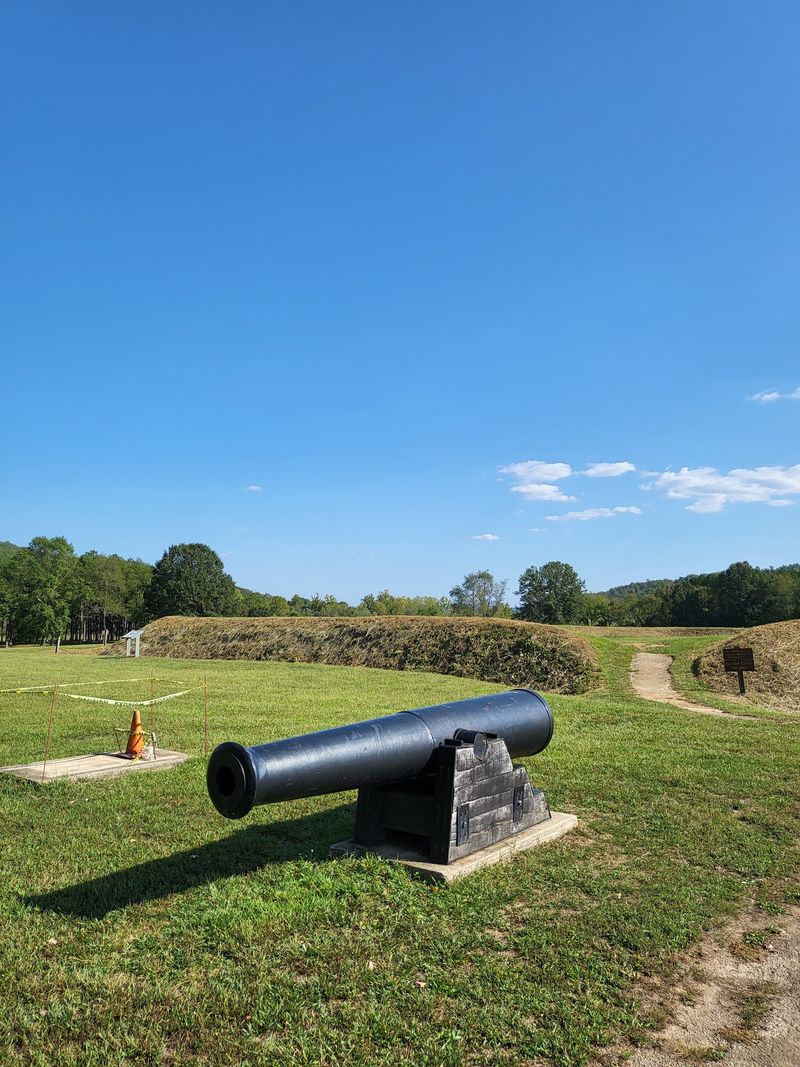
Fort Davidson, the hexagonal earthwork fortification at the heart of the site, anchors the experience. Its distinctive shape and the open fields surrounding it immediately signal that this is not a typical roadside stop.
The strategic importance of this valley, guarding the Ironton gap and the Iron Mountain Railroad terminus, becomes obvious the moment you survey the land.
The Clash That Shook the Trans-Mississippi Theater
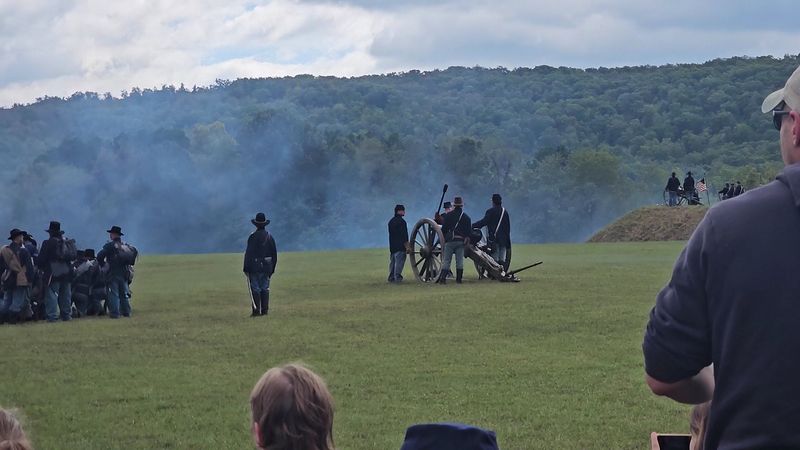
On September 27, 1864, Confederate Major General Sterling Price led a force estimated between 8,000 and 12,000 cavalrymen toward the modest Union outpost of Fort Davidson. Brigadier General Thomas Ewing Jr. commanded the defense with roughly 1,500 troops, creating a numerical disadvantage that seemed almost laughably lopsided in Price’s favor.
Price’s plan was to capture the fort quickly and press on toward St. Louis and Jefferson City, hoping to reclaim Missouri for the Confederacy. What he got instead was a furious, costly repulse.
Confederate brigades launched coordinated infantry assaults while artillery on Shepherd Mountain pounded the fort, yet the Union garrison answered with four large cannons and a withering volume of fire.
One Confederate brigade actually reached the dry moat surrounding the fort, only to be met by Ketchum hand grenades hurled from above. The roughly 20-minute main assault left approximately 1,000 Confederate soldiers killed or wounded, while Union casualties numbered fewer than 100.
That ratio alone tells you everything about the ferocity of the defense.
The Midnight Escape That Changed Everything
By nightfall on September 27, Ewing knew his ammunition, particularly for the cannons, was nearly exhausted. Holding the fort through another assault was not a realistic option, so he chose a move that was either brilliantly audacious or completely reckless, depending on how you look at it.
Under cover of darkness, the entire Union garrison slipped silently past the surrounding Confederate lines, taking a couple of cannons along for good measure. A small rear guard stayed behind just long enough to ignite the fort’s powder magazine before following their comrades into the night.
The resulting explosion was enormous, reducing much of Fort Davidson to rubble and destroying all remaining supplies. When Price’s forces investigated at dawn, they found an empty, smoldering fort and no enemy in sight.
This costly delay and the staggering losses at Pilot Knob forced Price to abandon his primary objectives entirely, effectively ending the last major Confederate offensive push into Missouri. The escape was not just clever; it was campaign-altering.
What the Earthworks Still Tell You Today
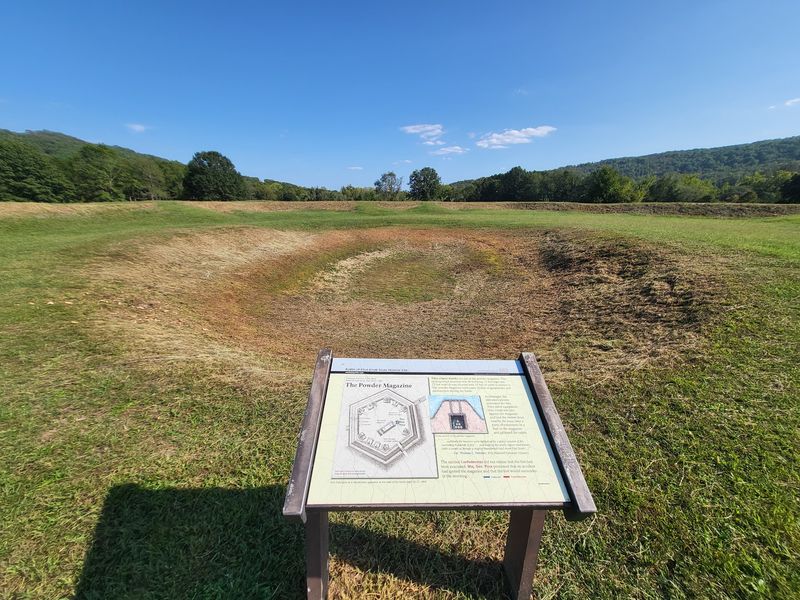
Few things in American history are as tangible as standing beside a 19th-century earthwork and realizing it has barely moved in 160 years. The hexagonal walls of Fort Davidson, originally standing nine feet high and ten feet thick, remain largely intact, giving you an immediate sense of the fort’s scale and defensive logic.
Walking the perimeter, you can trace the dry moat that once stopped Confederate attackers in their tracks. The sheer effort required to cross that moat under cannon and rifle fire, with hand grenades raining down from above, becomes viscerally clear when you see the geometry of the place in person.
At the center of the fort, the massive crater left by the powder magazine explosion is still plainly visible. It is not a subtle dip in the ground; it is a genuine, bowl-shaped reminder of the force unleashed that night in September 1864.
Visitors often stand at its edge for a long, quiet moment before moving on, which feels like exactly the right response.
Inside the Visitor Center and Museum
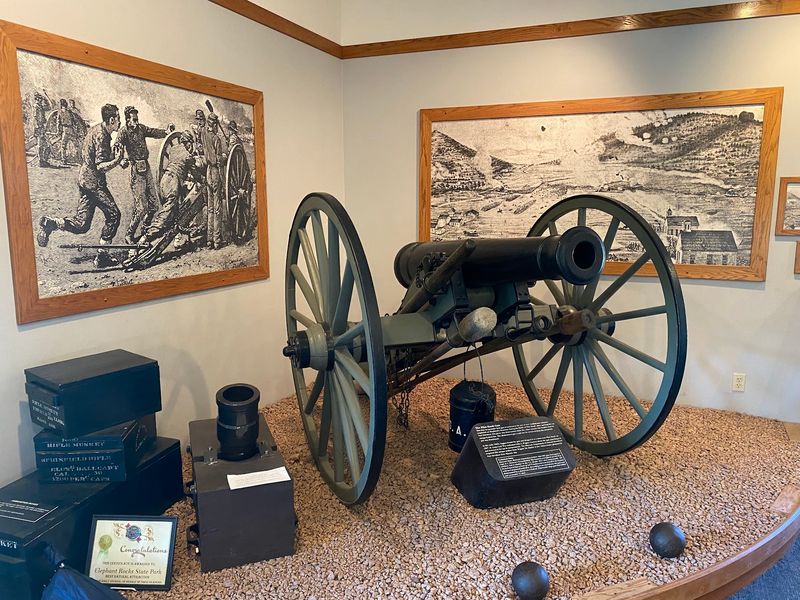
The visitor center earns its place at the start of any tour here. Rather than offering a generic overview, it builds a specific, layered picture of the 1864 battle and its place within the broader Civil War in Missouri, connecting local events to the larger national conflict in ways that genuinely surprise most visitors.
The fiber optics diorama of the battle is the standout feature, illuminating troop movements and tactical decisions in a way that makes the chaos of that September day suddenly comprehensible. A 22-minute audiovisual presentation adds depth, walking you through the key moments with archival imagery and narration that holds your attention.
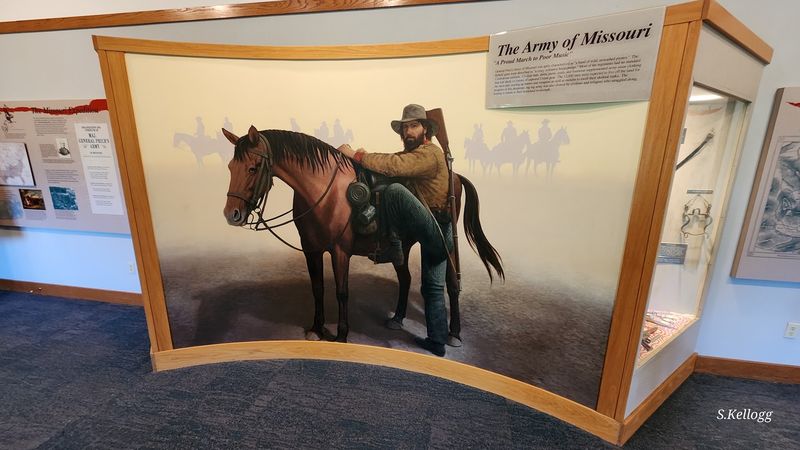
Among the artifacts on display, General Ewing’s field sword and the sword of Captain Pinckney Power, a Union officer who fought in the southern rifle pit, carry a quiet personal weight. Period rifles, infantry gear, and a restored six-pounder cannon round out the collection.
The museum is free to enter, cool in summer, and staffed by knowledgeable team members who genuinely enjoy talking about this history.
Trails, Picnic Spots, and Family-Friendly Features
History sites can sometimes feel like places where you quietly absorb information and then leave, but this one actively invites you to stay longer. Brogans Trail, a 0.5-mile asphalted pathway looping through the grounds, is dotted with exercise stations and designed for a comfortable, accessible walk that suits most fitness levels.
The picnic area sits within a reforestation of pine trees planted in the 1960s, creating a shaded, pleasant atmosphere that works beautifully for a midday break. Several shelters are available, some reservable in advance, with amenities including water, electricity, and clean restrooms nearby.
For younger visitors, a playground features a multi-function set, tot-swings, and a small replica fort structure that lets kids imagine their own version of the 1864 battle. It is a genuinely smart design choice, giving children a physical, playful way to connect with the site’s theme rather than simply reading about it.
The combination of history, fresh air, and recreational space makes this an easy destination for families with a wide range of ages and interests.
Living History Saturdays and the Triennial Reenactment
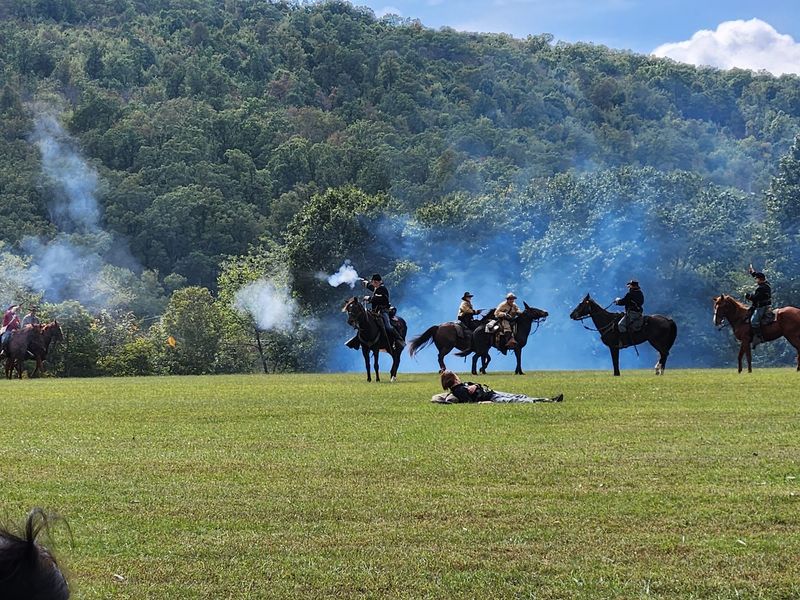
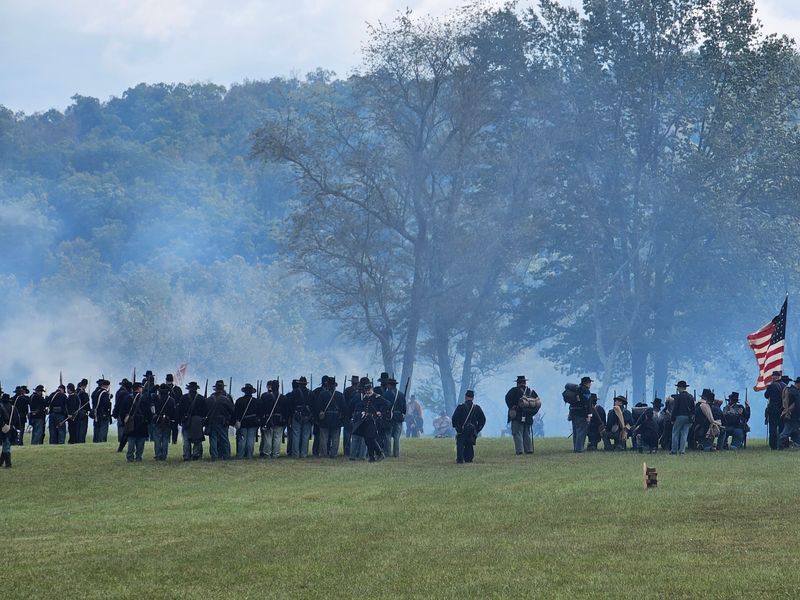
Every three years in late September, the Arcadia Valley transforms into something genuinely spectacular. The Battle of Pilot Knob Civil War Reenactment draws thousands of visitors and hundreds of reenactors who recreate the 1864 clash with serious attention to period detail, from cavalry charges to artillery volleys that you can feel in your chest.
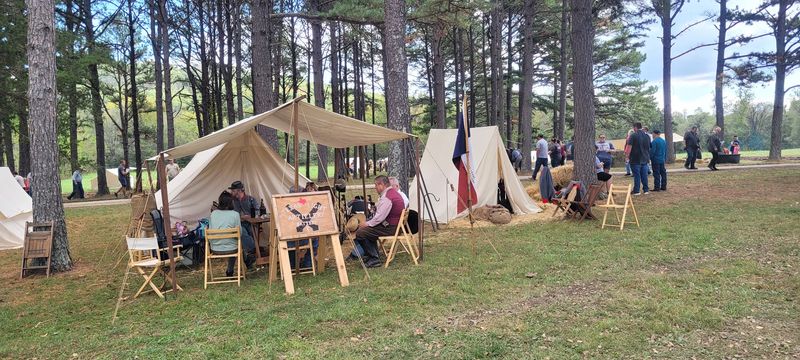
The next major reenactment is planned for September 2024, and if you can time your visit to coincide with it, the experience is on a completely different level from a standard day trip. Vendors, demonstrations, and living history camps surround the battlefield, turning the whole site into an immersive historical environment.
Between the triennial events, Living History Saturdays run from April through September, featuring site team members in period clothing who offer guided battlefield tours and sometimes provide samples of common soldier meals. Each month typically highlights different presentations and demonstrations, covering various aspects of Civil War life.
Collecting an event passport across multiple visits can even earn you VIP passes to the next big reenactment, which is a clever incentive to keep coming back.
Accessibility Features That Welcome Every Visitor
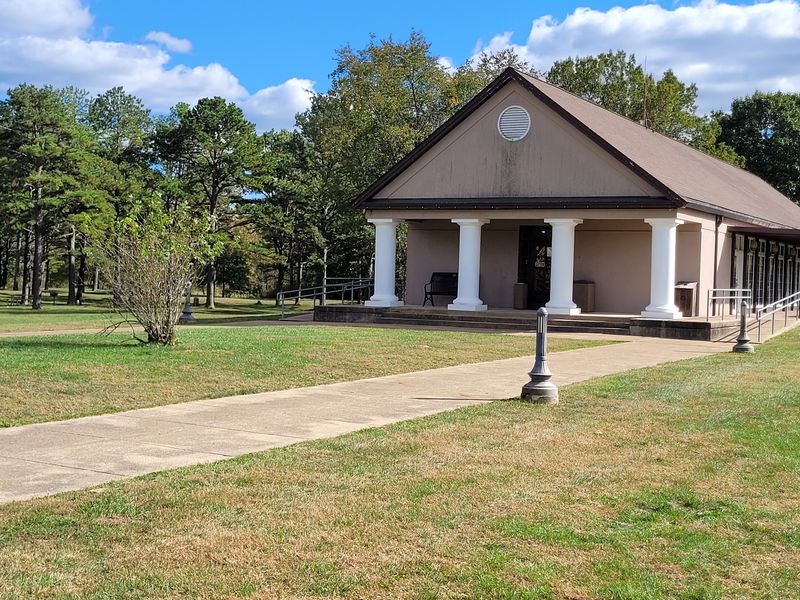
Missouri State Parks has put real thought into making this site welcoming for visitors with disabilities, and the results are evident from the moment you arrive. Handicap parking spaces sit directly beside a continuous concrete pathway leading to the entrance plaza, so the transition from car to visitor center is seamless and stress-free.
Inside, the building is fully ADA compliant, with accessible restrooms, a water fountain, and enough clear space to navigate comfortably. The fiber optics diorama and audiovisual presentation are both fully accessible, and written text versions of the diorama map are available on request, along with open-captioned copies of the video and flip-books of all the outdoor field markers.
Outdoors, the terrain of a historic battlefield naturally presents some challenges, but Brogans Trail’s gentle asphalt surface and the paved pathways connecting picnic shelters make a meaningful portion of the grounds navigable for wheelchair users. All four group shelters are considered accessible, with Shelter 1 offering an electrical outlet and a group grill, adding practical comfort to the historical experience.
Pilot Knob Mountain and Its Hidden Wildlife Secret
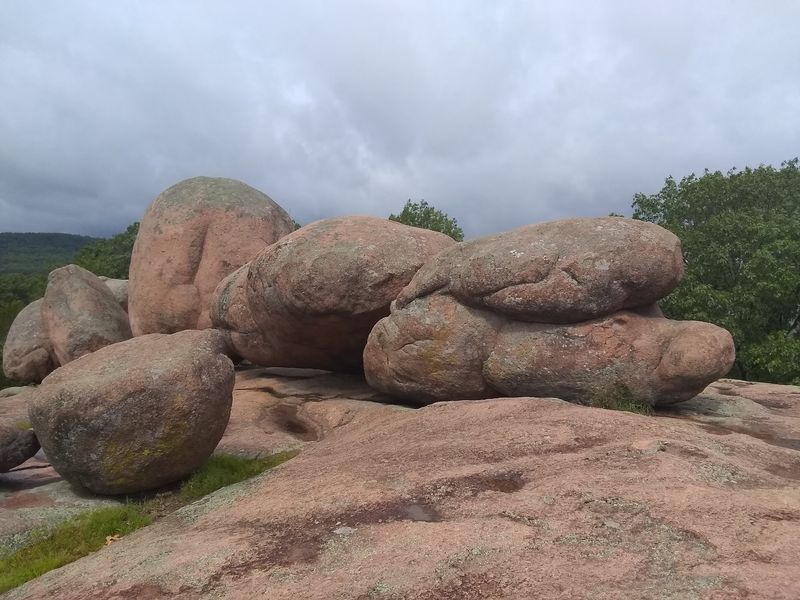
Rising to an elevation of 1,470 feet, Pilot Knob Mountain dominates the skyline above the battlefield and has guided travelers through this region since long before the Civil War. Its distinctive rounded shape gave the nearby town its name and served as a navigational landmark for generations of settlers moving through the Ozarks.
What most visitors do not expect is what lives inside the mountain today. The summit area contains abandoned iron ore mine shafts from 19th-century mining operations, and those shafts now shelter nearly one-third of the world’s population of endangered Indiana bats during their winter hibernation.
The 90-acre Pilot Knob National Wildlife Refuge, established after mining ceased, protects this critical habitat.
The refuge is currently closed to the public, surrounded by an eight-foot chain link fence that keeps people safely away from the old mine openings. The land was donated for conservation in 1987, and the contrast between the mountain’s industrial past and its current role as a bat sanctuary is one of those details that makes the whole area feel layered and endlessly interesting.
Keep reading, because the story of what surrounds this battlefield goes even deeper.
The Strategic Logic Behind the Fort’s Location
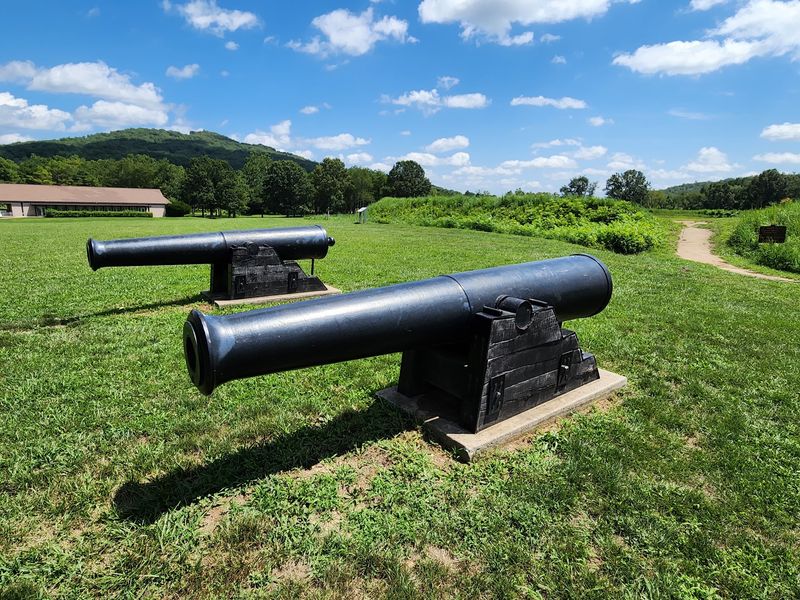
Fort Davidson was not built here by accident, and understanding why it existed in this specific valley makes the battle far more compelling. The Ironton gap, where the Arcadia Valley cuts through the St. Francois Mountains, was one of the few practical routes through this part of the Ozarks, making it a natural chokepoint for both armies.
The Iron Mountain Railroad terminated nearby, connecting this remote valley to St. Louis and the broader Union supply network. Controlling Pilot Knob meant controlling both the physical gap and the rail line, which is exactly why Price targeted it as the opening move of his Missouri Expedition.
Confederate artillery positioned on Shepherd Mountain had a commanding view of the fort, which should have made the assault straightforward. Instead, the fort’s hexagonal design allowed Union gunners to cover every approach, and the open ground between the treeline and the walls gave defenders a clear field of fire.
Price’s tactical advantage in numbers was largely neutralized by terrain and engineering, a lesson that cost his army dearly before the sun set on September 27.
Best Times to Visit and Practical Tips
Spring and fall are the most rewarding seasons to visit the Arcadia Valley, and the site’s outdoor spaces genuinely shine during those months. Mild temperatures, lower humidity, and the natural color changes of the Ozark hillsides add a visual richness to the experience that summer, with its heat and haze, simply cannot match.
The grounds are open from sunrise to sunset every day, and both the outdoor battlefield and the earthworks are always free to access. The visitor center operates on its own schedule, so checking the Missouri State Parks website or calling ahead at 573-546-3454 before your trip is a smart move, especially if you want to catch a Living History Saturday or confirm museum hours.
Pets are not permitted on the site, but service animals are welcome. Bringing water and comfortable walking shoes is a practical idea, since the outdoor areas cover meaningful ground.
The Fort Davidson Hotel sits directly across the street if you want to extend your stay and explore the broader Arcadia Valley, which offers its own scenic roads, local dining, and quiet Ozark charm worth savoring at a slower pace.
Share this story