Somewhere in the small town of Hugo, Oklahoma, there is a cemetery that doubles as one of the most unexpected and fascinating historical landmarks in the entire state. This is not your average burial ground with rows of simple stones and nothing else to see.
Here, you will find ornate monuments honoring circus performers, rodeo champions, and showpeople who traveled the world before calling this corner of Oklahoma their final home. The stories carved into these headstones read like chapters from the most colorful American history book you never had in school, and every visit feels like a personal tour through a world that very few people know still exists.
Finding Mt Olivet Cemetery in Hugo, Oklahoma
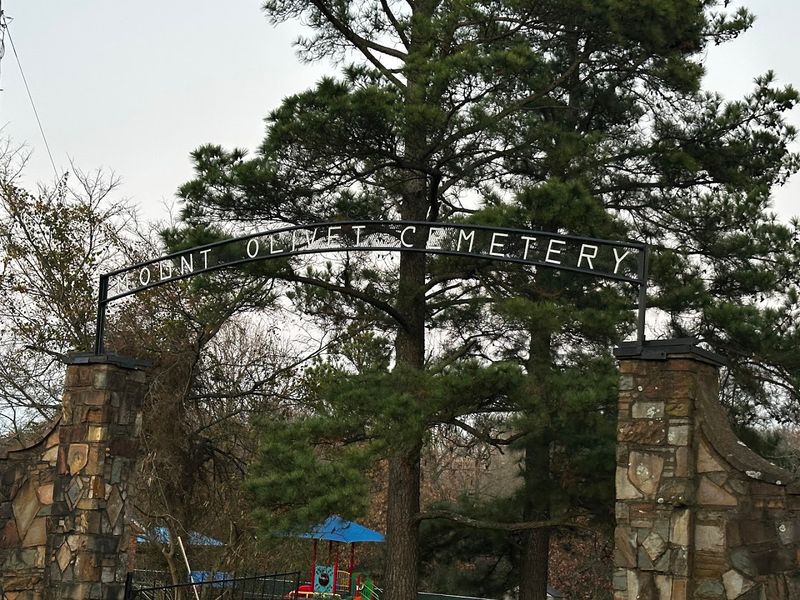
The address is 1198 S 8th St, Hugo, OK 74743, and the main entrance sits at the corner of 8th Street and Trice, about three blocks north of the junction of US-70 and 8th Street. A long, hedge-lined lane shaded by towering trees greets you as you pull through the gate, and the whole approach feels almost ceremonial.
Hugo is a small city in Choctaw County in southeastern Oklahoma, not far from the Texas border. It is the kind of town where history has quietly settled in, and Mt Olivet Cemetery is one of its most remarkable landmarks.
The cemetery covers a gently sloping landscape filled with majestic pine trees, well-maintained roads that loop through the grounds, and clear signage that makes navigation easy even for first-time visitors. A pavilion, an onsite office, and large maintenance facilities show just how seriously this place takes its responsibility to the people resting here.
You can visit any day of the week, at any hour, since the cemetery is open 24 hours a day.
Showmen’s Rest: The Heart of the Cemetery
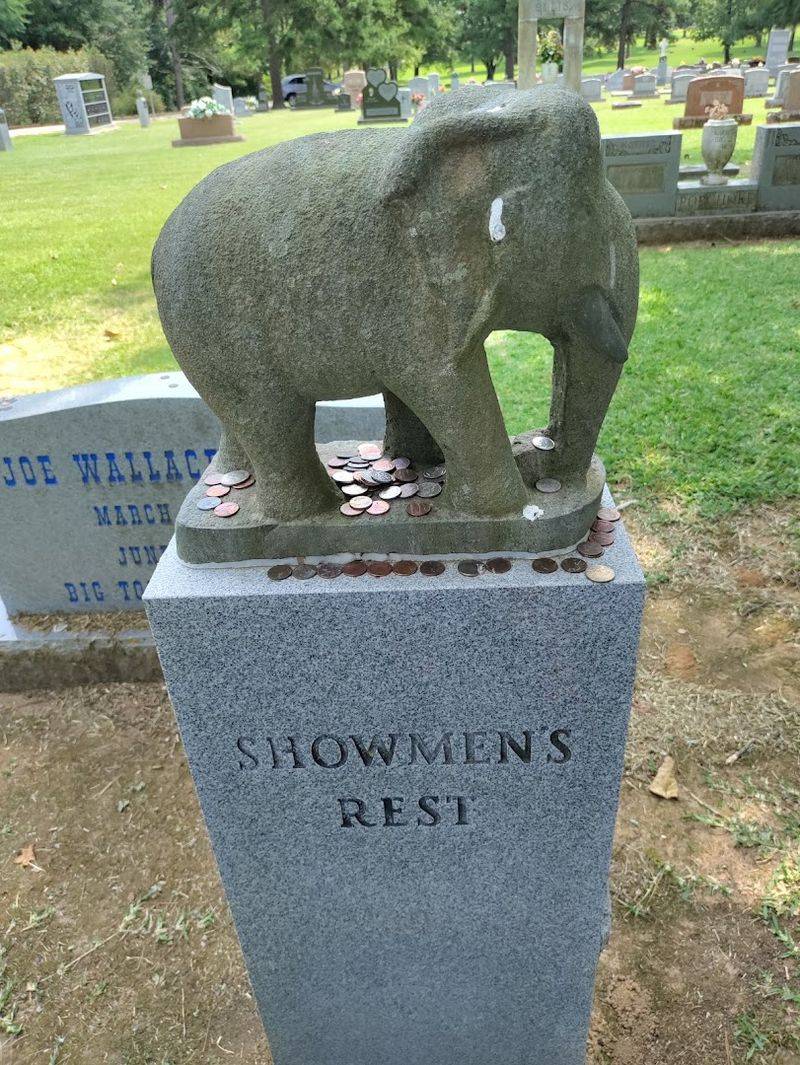
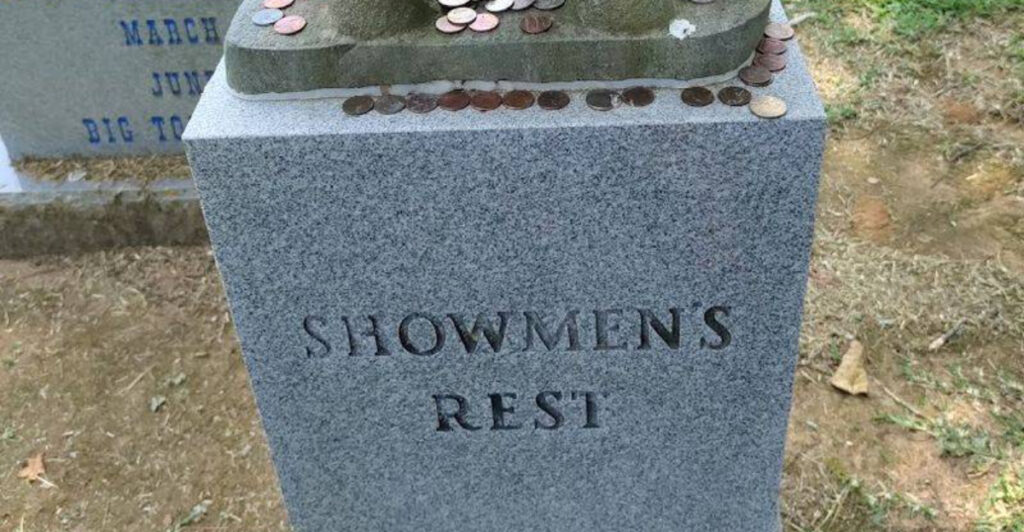
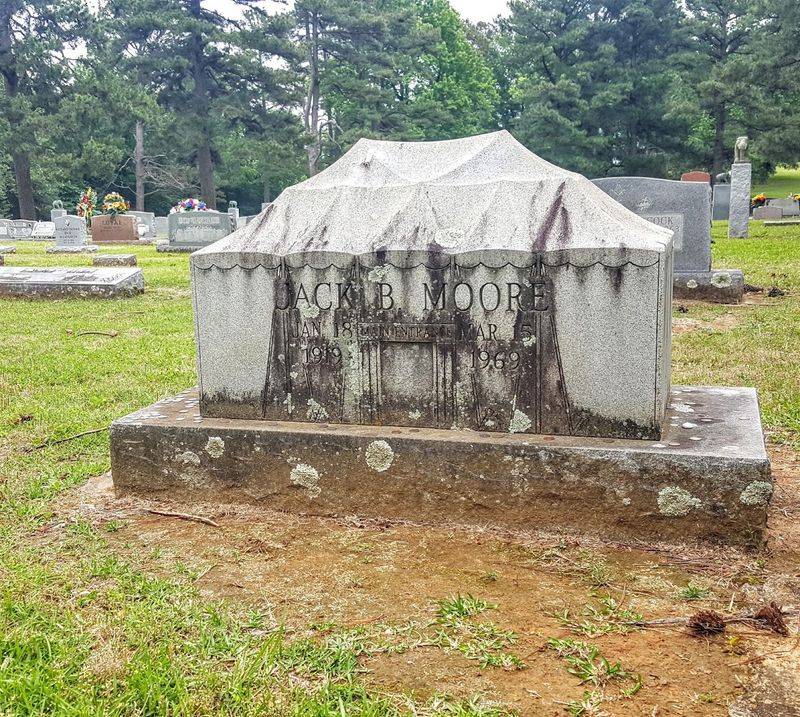
No section of Mt Olivet draws more attention or more wonder than Showmen’s Rest, a dedicated area where former circus professionals are laid to rest. The headstones here are unlike anything you will find in a typical cemetery, featuring large, elaborately carved monuments with photos, etchings of circus animals, and personal symbols that reflect each performer’s unique career.
Hugo earned its connection to the circus world because it served as the winter quarters for several major traveling shows during the 20th century. Carson and Barnes Circus, one of the largest traditional circuses in America, made Hugo its home base, and many performers and crew members settled here permanently.
Walking through Showmen’s Rest feels like flipping through a living scrapbook. You will see stones shaped like wagons, big tops, and even elephants, each one a tribute to a life spent under the bright lights of the circus tent.
The creativity and personality that defined these performers during their lifetimes clearly carried right into the way their families and communities chose to honor them. It is genuinely one of the most visually striking spots in all of Oklahoma.
The Elephant Guardians of Showmen’s Rest
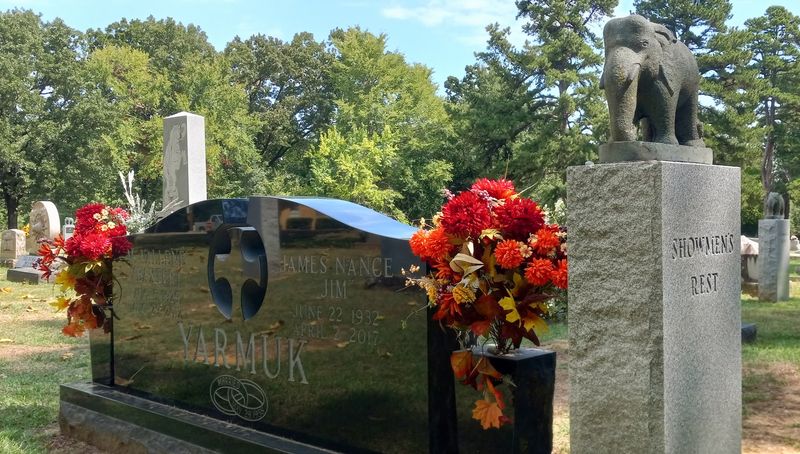
One of the most talked-about features of the Showmen’s Rest section is the presence of stone elephant statues that stand as guardians over the graves of circus performers. These figures have become iconic symbols of the section and are one of the first things visitors mention when they describe their experience here.
Elephants held a central role in traditional American circuses for decades, serving as both performers and symbols of the grandeur that made the traveling shows so beloved. Having them represented in stone at this cemetery is a fitting tribute to that legacy, and they give the section a distinct visual identity that sets it apart from every other burial ground in the region.
The statues are large enough to be impressive but placed with enough care that they feel respectful rather than theatrical. Visitors regularly leave small tokens and flowers near them, which shows that the affection people feel for the circus tradition is still very much alive.
Seeing these stone figures standing quietly among the pines on a calm Oklahoma afternoon carries a kind of quiet power that is hard to put into words but easy to feel.
Lane Frost: The Rodeo Legend Who Lives On
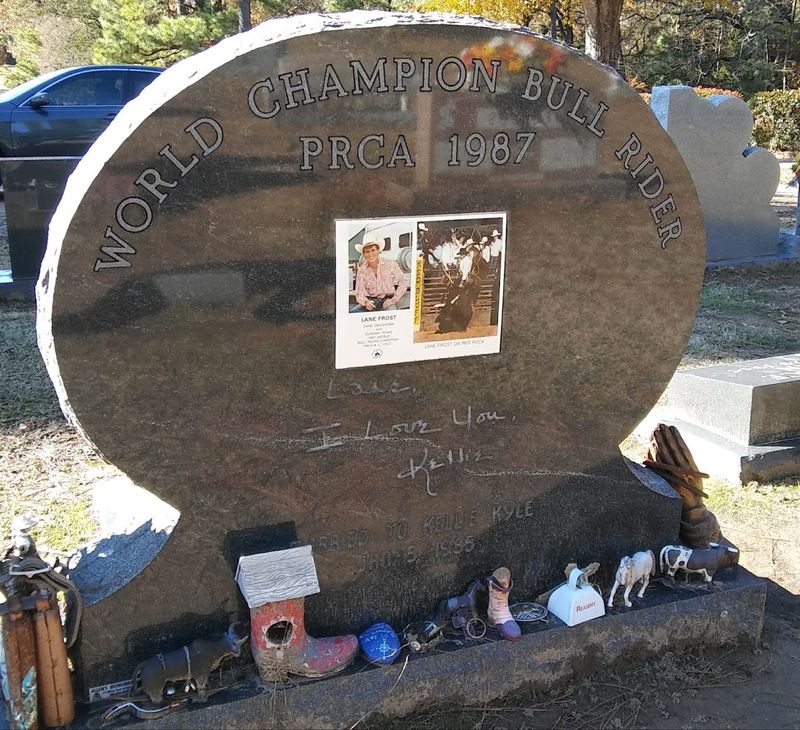
Lane Frost is one of the most celebrated figures resting at Mt Olivet, and his grave draws fans from across the country who grew up watching bull riding or who fell in love with his story through the 1994 film “8 Seconds.” He was a world champion bull rider who competed during the 1980s and became one of the sport’s most beloved figures before his passing at just 25 years old in 1989.
His headstone is one of the most visited in the entire cemetery, and fans regularly leave behind hats, belt buckles, flowers, and handwritten notes as tokens of their admiration. The outpouring of affection at his grave shows just how deeply he connected with people who love rodeo culture and the spirit of competition it represents.
Lane Frost grew up in Lane, Oklahoma, and his connection to southeastern Oklahoma made Hugo a natural resting place. Visiting his grave is a genuinely moving experience, especially if you know his story.
The headstone is detailed and personal, reflecting the kind of man his family and friends knew him to be. It is a stop that rodeo fans simply should not skip.
Freckles Brown: The Bull Rider Who Defied the Odds
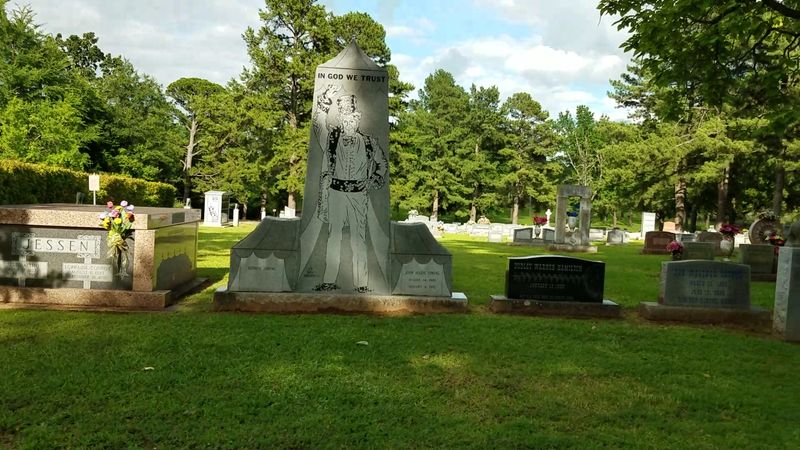
Freckles Brown is another rodeo legend whose name carries enormous weight in the world of bull riding, and his resting place at Mt Olivet is a pilgrimage spot for fans of the sport. He became famous for being the first person to successfully ride the legendary bull Tornado in 1967, a feat that had stumped riders for years and that cemented his place in rodeo history.
What makes Freckles Brown’s story even more remarkable is that he accomplished this ride at the age of 46, proving that determination and experience can outmatch youth and raw strength. He is remembered not just as a great athlete but as a symbol of persistence and grit that rodeo culture holds dear.
Visitors to his grave often find themselves in unexpected conversations with other fans who have made the same trip. One account from a visitor describes meeting an older couple at the gravesite who had actually ridden the circuit alongside Freckles Brown, turning a quiet cemetery visit into a personal history lesson.
That kind of spontaneous connection is part of what makes Mt Olivet so special as a destination for people who love the American West.
Hugo and Its Deep Circus History
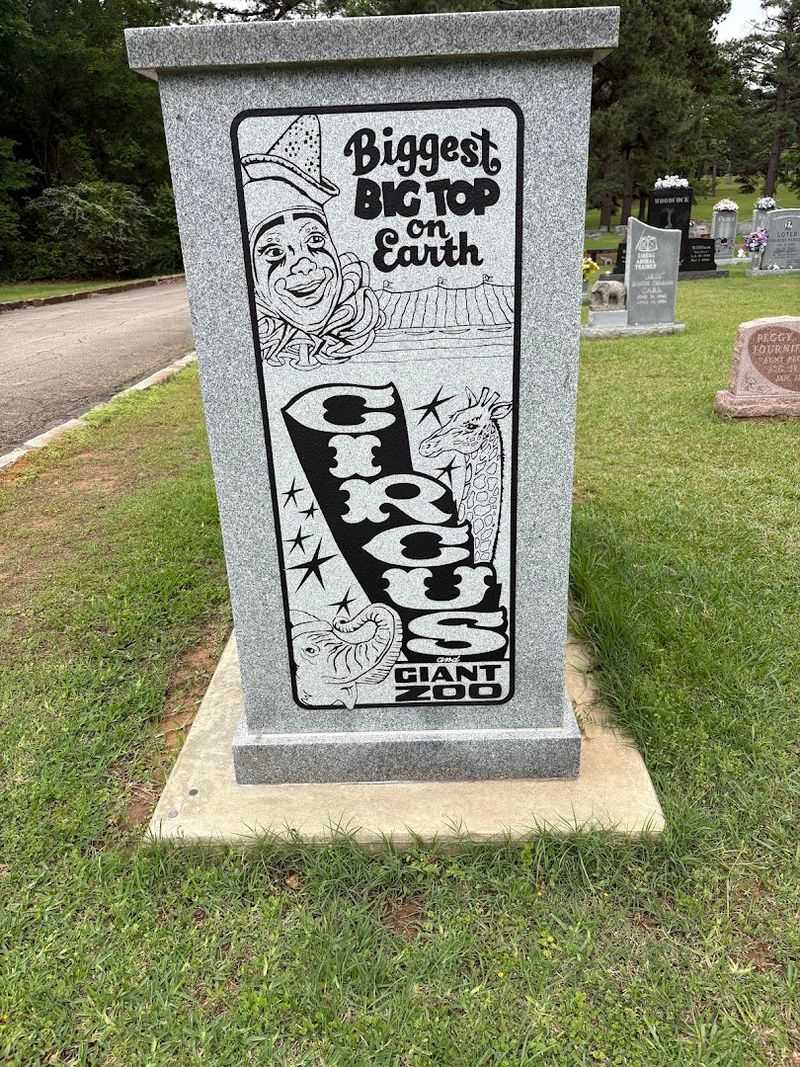
Hugo’s nickname, “Circus City USA,” is not just a fun label. It reflects decades of real history tied to the American circus industry.
The city served as the winter home for multiple traveling circuses throughout the 20th century, most notably Carson and Barnes Circus, which brought hundreds of performers, animal trainers, riggers, and crew members to the area each year.
When these shows were not on the road, Hugo became their base of operations. Workers lived in the community, children attended local schools, and the circus culture became deeply woven into the social fabric of the town.
Over time, many of those workers chose to settle permanently in Hugo, and when they passed, they were laid to rest at Mt Olivet.
That history is what gives the Showmen’s Rest section such authentic weight. These are not famous celebrities brought here for symbolic reasons.
These are real people who lived and worked in Hugo, who were part of the community, and whose lives happened to involve performing under a big top. The cemetery preserves that local history in a way that no museum exhibit could fully replicate, making it a genuinely important cultural site for the state of Oklahoma.
The Grounds: Beauty in Every Direction
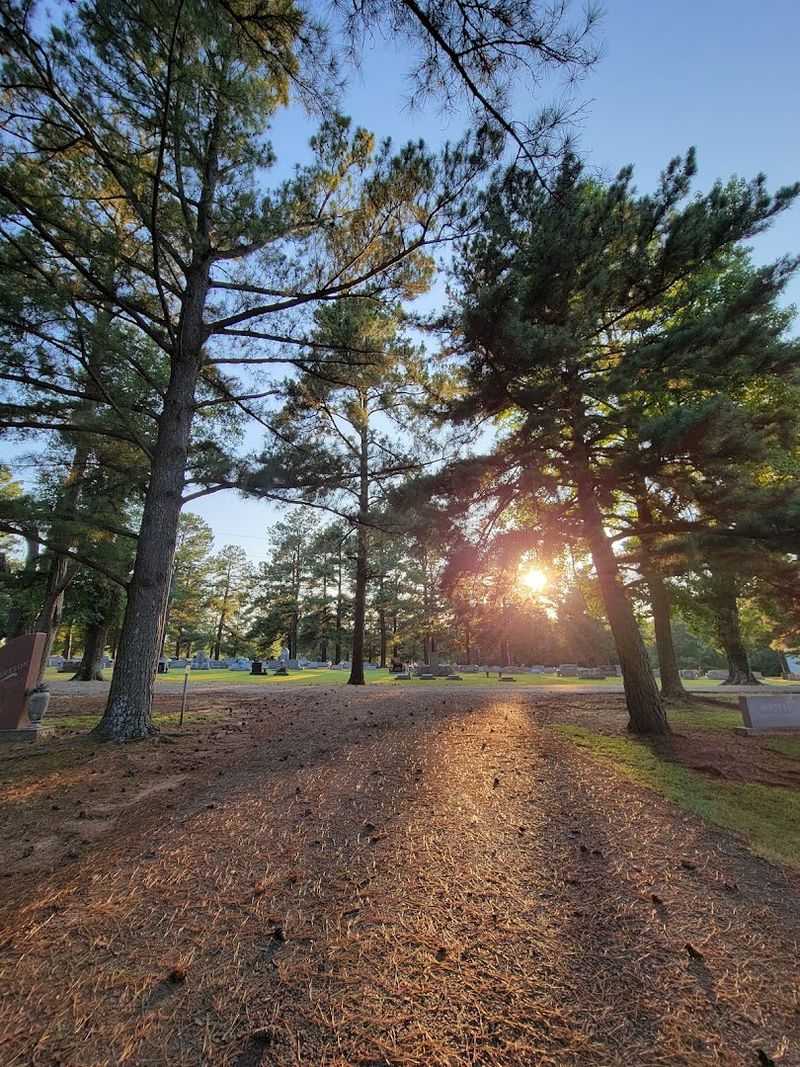
Beyond the famous sections, the overall landscape of Mt Olivet Cemetery is genuinely beautiful in a way that surprises most first-time visitors. Majestic pine trees create natural canopies throughout the property, casting shade over the gently sloping terrain and giving the whole place a calm, almost park-like quality.
The grounds are meticulously maintained, with trimmed grass, clean pathways, and headstones that are kept in excellent condition. Benches are placed throughout the cemetery, inviting visitors to sit and take in the surroundings at a comfortable pace rather than rushing through.
The combination of the natural landscape and the ornate monuments creates a visual contrast that keeps the eye moving from one interesting detail to the next. Tall pines frame views of elaborately carved stones, and the gentle hills give the property a sense of depth that flat cemeteries often lack.
Whether you are there specifically to visit famous graves or simply exploring on a quiet afternoon, the setting itself rewards attention. It is the kind of place where the surroundings feel like part of the tribute, not just a backdrop for it, and that makes every visit feel genuinely worthwhile.
Headstones That Tell Real Stories
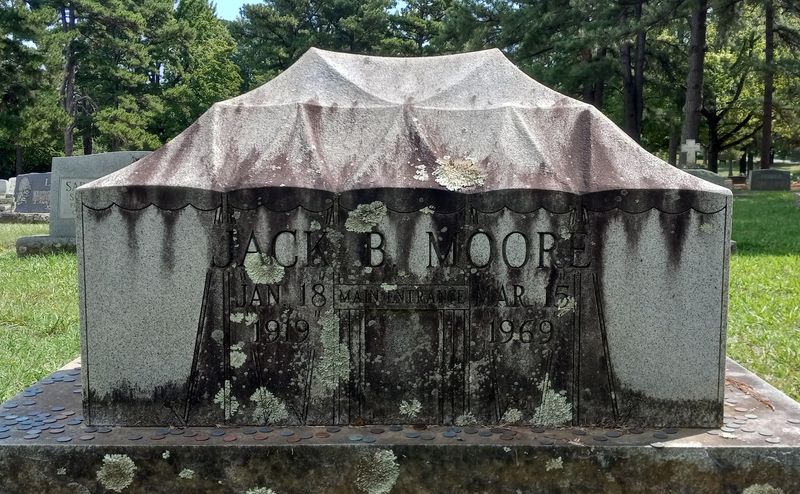
The headstones in Showmen’s Rest are a category unto themselves. Unlike the simple flat markers or standard upright stones you see in most cemeteries, these monuments were clearly designed to reflect the personalities, careers, and passions of the people beneath them.
Many stones feature hand-etched portraits of the deceased, sometimes in costume or mid-performance. Others include carvings of specific animals they worked with, circus equipment they used, or scenes from their acts.
Some include brief biographical details that read almost like mini-tributes, giving visitors a sense of who these people were beyond their professional titles.
The craftsmanship on many of these stones is genuinely impressive, and the personal detail packed into each one speaks to the strong sense of community that existed among circus workers. These were people who looked after one another on the road and continued to honor each other long after the shows ended.
Reading through the inscriptions and studying the carvings can easily take an hour or more, and every stone seems to have something new to offer. The headstones function as both memorials and as tiny windows into a world of American entertainment history that most people never fully knew existed.
Special Sections Beyond Showmen’s Rest
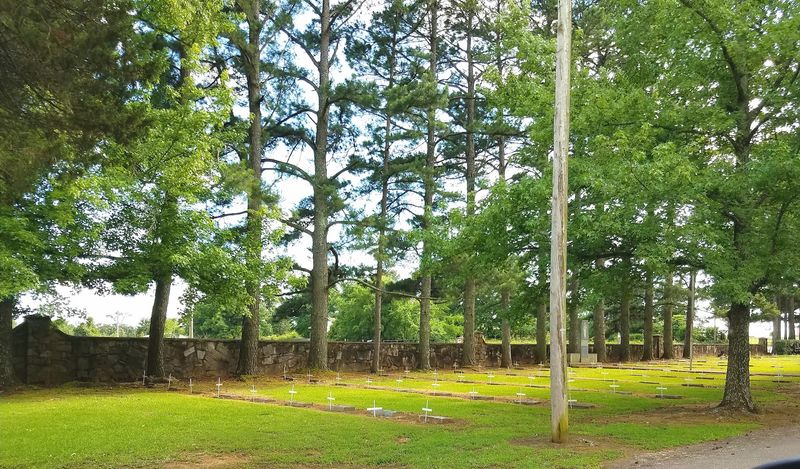
Showmen’s Rest gets most of the attention, but Mt Olivet Cemetery contains several other thoughtfully designed sections that reflect the full range of the community it serves. Baby Land is one of the most quietly moving areas, a section dedicated to infants and very young children, marked with small, tender monuments that carry an unmistakable sense of care and grief.
The Veterans section honors military service members from the Hugo area, with markers that recognize their branches of service and the conflicts in which they served. Seeing the rows of military headstones alongside the circus monuments and rodeo tributes gives the cemetery a layered quality that reflects the full breadth of human experience in this corner of Oklahoma.
According to FindAGrave records from 2019, the cemetery holds over 7,100 individual burials, which gives a sense of just how large and historically significant this place truly is. Each section has been planned with clear signage and logical layout, making it easy to move between areas without getting turned around.
The overall design of the cemetery shows genuine thoughtfulness, treating every burial with equal dignity regardless of whether the person buried there was famous or not.
What to Expect During Your Visit
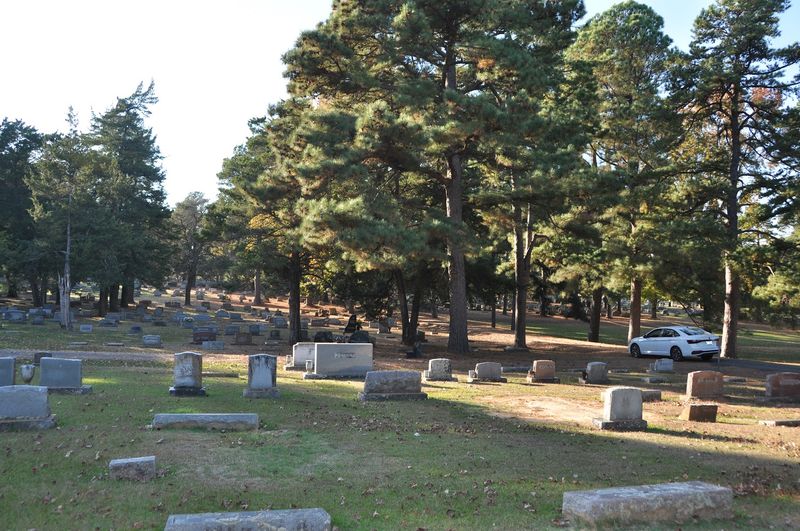
A visit to Mt Olivet Cemetery works best when you give yourself plenty of time, at least two to three hours if you want to explore the main sections thoroughly and read the headstones carefully. The grounds are easy to navigate by car, with well-maintained roads looping through the property, but the most rewarding parts of the visit happen on foot.
Comfortable walking shoes are a practical choice, especially if you plan to explore the sloping terrain around Showmen’s Rest and the other specialty sections. The shaded areas under the pine trees make the visit comfortable even on warmer days, though spring and fall tend to offer the most pleasant conditions overall.
The cemetery is open 24 hours a day, every day of the week, which means you have flexibility to visit at whatever time suits your schedule. Morning visits offer soft light that makes the carvings on the headstones easier to read and photograph.
The onsite office can be reached at 580-326-9263 if you have specific questions about locating particular graves before your visit. Going in with a short list of specific graves you want to find gives the experience a nice sense of purpose and direction from the moment you arrive.
Tokens of Affection Left Behind
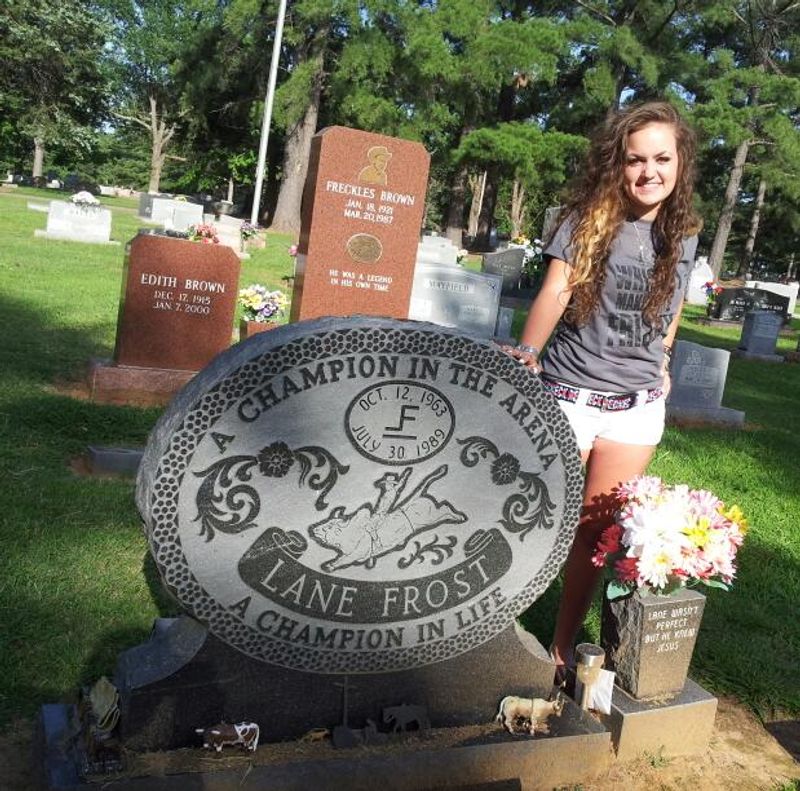
One of the most quietly touching aspects of visiting Mt Olivet is noticing what other visitors have left behind at the graves. At Lane Frost’s headstone, you might find belt buckles, cowboy hats, and handwritten letters from fans who drove hours just to pay their respects.
At Showmen’s Rest, small trinkets, flowers, and circus-themed tokens appear regularly at even the oldest headstones.
These offerings show that the connection between the living and the people resting here is still very much active, not just a historical footnote. Fans of rodeo, admirers of circus history, and descendants of performers all make their way to Hugo to leave something personal behind, turning the cemetery into a living memorial rather than a static monument.
That ongoing relationship between visitors and the graves gives Mt Olivet a warmth that is hard to find in most historic sites. The cemetery does not feel frozen in the past.
It feels like a place that is still being actively loved and tended to by the community of people who care about the traditions it represents. That energy, quiet but unmistakably present, is one of the most lasting impressions the place leaves on anyone who spends real time walking through it.
Why Mt Olivet Deserves a Spot on Your Oklahoma Road Trip
Not every worthwhile destination announces itself loudly, and Mt Olivet Cemetery is a perfect example of a place that rewards those who take the time to seek it out. Hugo is not a major tourist hub, but this cemetery has earned a reputation that draws visitors from across the country who are passionate about rodeo history, circus culture, and American heritage.
The combination of famous graves, extraordinary headstones, beautiful natural surroundings, and genuine historical depth makes Mt Olivet unlike any other stop you are likely to make on a road trip through southeastern Oklahoma. It is the kind of place where you arrive expecting to spend 30 minutes and end up staying for two hours without noticing the time passing.
Hugo sits within reasonable driving distance of several other interesting southeastern Oklahoma destinations, making it a natural anchor for a weekend trip through the region. The cemetery itself charges no admission fee, making it an accessible experience for any traveler.
Whether you are a lifelong rodeo fan, a circus history enthusiast, or simply someone who appreciates places with genuine character and depth, Mt Olivet Cemetery offers something that very few spots in Oklahoma, or anywhere else, can match.
Share this story