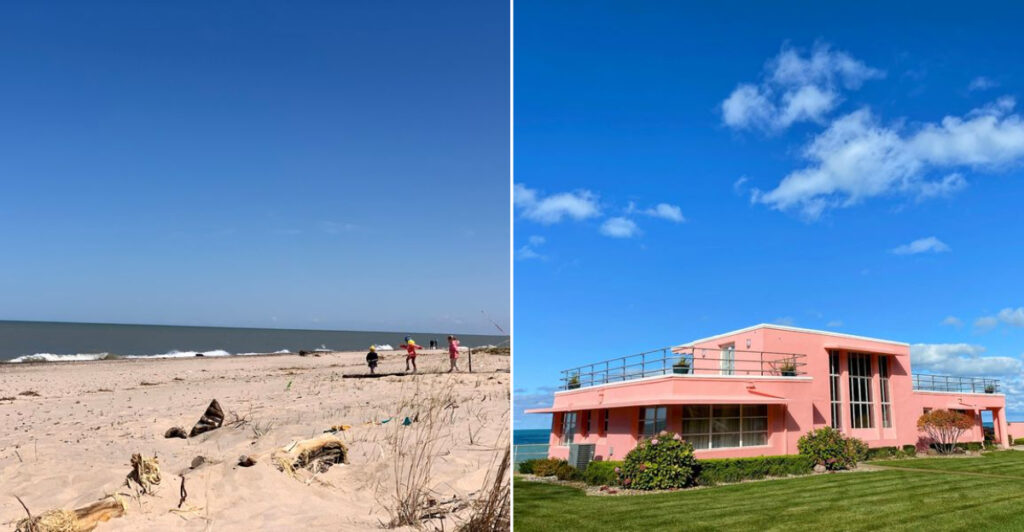
There is a stretch of shoreline in northwest Indiana where Lake Michigan stretches out wide enough to make you forget you are not standing on an ocean coast. The sand is clean, the parking lot is small by design, and tucked just steps away from the water are five houses that once starred at the 1933-1934 Chicago World’s Fair.
That combination of natural beauty and genuine American history is not something you find at every beach. Beverly Shores, Indiana holds onto this little secret surprisingly well, and once you know what is waiting there, it becomes very hard not to plan a trip.
The World’s Fair Houses Next Door
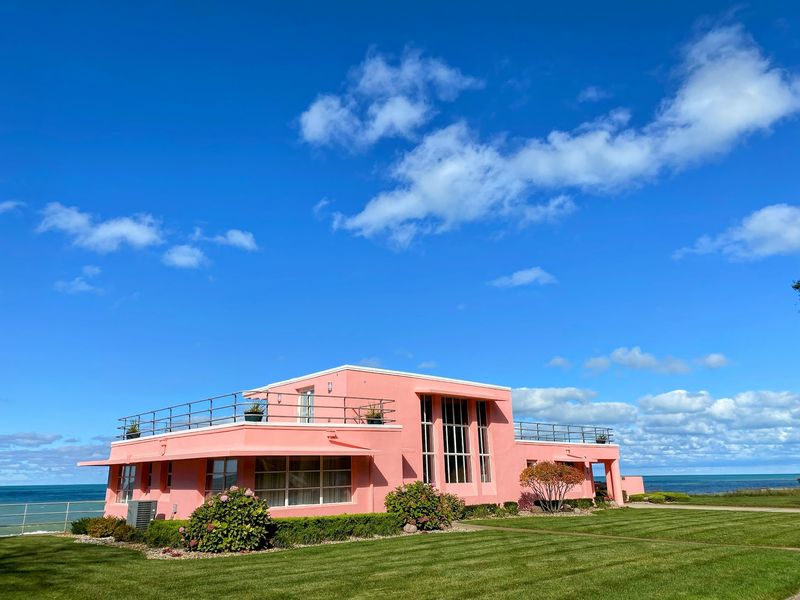
Few beaches in the United States can claim a next-door neighbor quite like this one. Five houses that were originally built for the 1933-1934 Century of Progress World’s Fair in Chicago were barged across Lake Michigan and placed in Beverly Shores, where they still stand today.
The homes showcase experimental architecture from that era, each one representing a different vision of what modern living could look like in the future. They were meant to inspire, and even nearly a century later, they still manage to do exactly that.
The Indiana Dunes National Park has worked to preserve these structures, and they are visible from the beach access road. Seeing a 1930s futurist house sitting quietly among dune grass and oak trees is the kind of unexpected detail that makes a visit to Dunbar Beach feel like more than just a day at the shore.
Swimming, Rip Currents, and What to Know Before You Wade In

Lake Michigan looks calm from the shore on many days, but Dunbar Beach has a noted history of stronger-than-expected rip currents. There are no lifeguards on duty here, which means every swimmer is responsible for their own safety.
Rip currents at this particular stretch of shoreline have been described as notably strong compared to nearby beaches. The standard advice applies: if caught in one, do not fight it by swimming directly back to shore.
Float on your back, move parallel to the shoreline, and work your way back gradually.
On calmer days, the swimming is genuinely enjoyable. The water stays clear and the sandy bottom near the shore is easy to walk on, though rocks closer to the water’s edge can make entry a bit uneven.
Water shoes are a smart addition to the beach bag, especially for younger kids or anyone with sensitive feet.
Sunsets That Justify the Drive

The orientation of Dunbar Beach gives it a northern-facing view across Lake Michigan, which sets up the kind of sunset that people drive hours to catch. As the sun drops toward the western horizon in the late afternoon, the light spreads across the water in a way that is genuinely hard to replicate with a camera.
Because the lot is small and the crowd stays manageable, there is usually enough space to find a quiet spot on the sand without fighting through a crowd of people also trying to get the perfect photo. That relative calm makes the experience feel more personal than at larger, busier beaches nearby.
Late summer and early fall tend to produce the clearest evening skies, and the colors that come with them are worth planning around. A visit timed for late afternoon into early evening turns a simple beach trip into something that stays in the memory for a long time.
Dogs Are Welcome Here
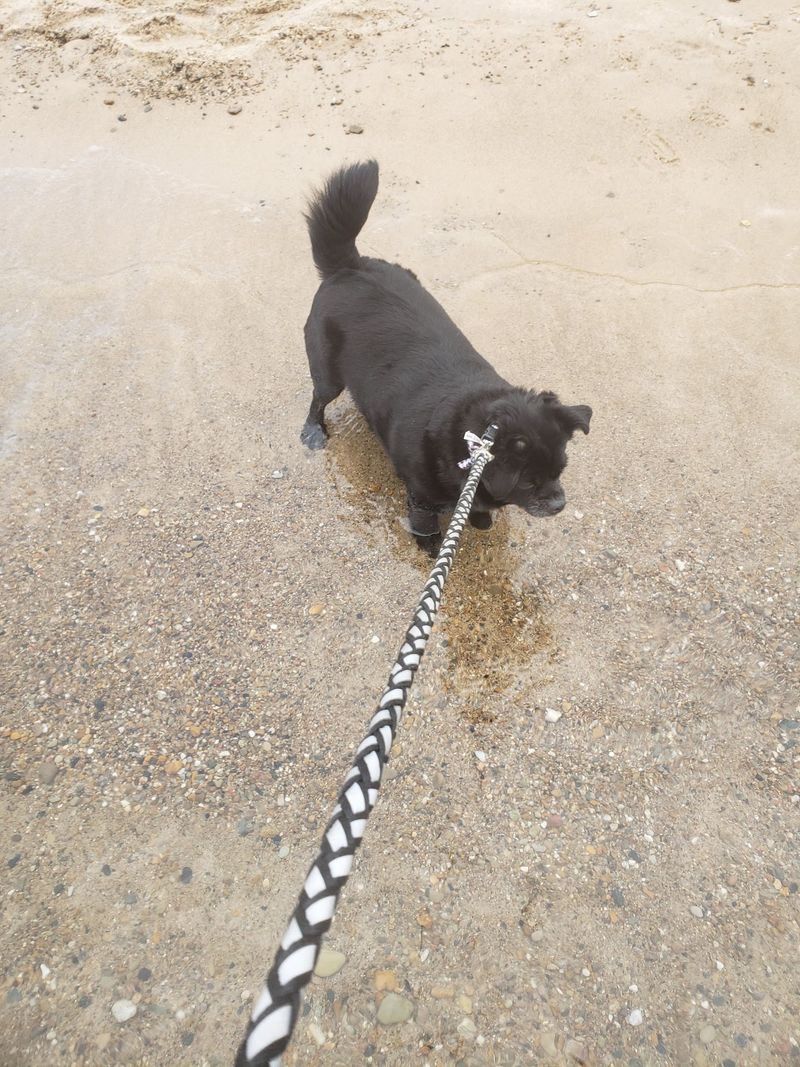
Finding a Lake Michigan beach that allows dogs is not always easy within the Indiana Dunes National Park system, which makes Dunbar Beach stand out for pet owners. Dogs are permitted on the beach, and the open sand gives them plenty of room to move around freely.
The beach stays clean, which matters when bringing animals into a shared public space. The foot-washing station near the restrooms also helps with the post-beach cleanup routine, which anyone who has tried to remove wet sand from a dog’s paws will immediately appreciate.
Families with dogs tend to find the atmosphere here more relaxed than at some of the larger, more regulated park beaches. There are no lifeguard whistles, the crowd is generally smaller, and the overall vibe leans toward easy and unhurried.
For dog owners who want a full beach day without leaving a pet at home, Dunbar Beach is one of the better options in the region.
The Stairway Down to the Shore
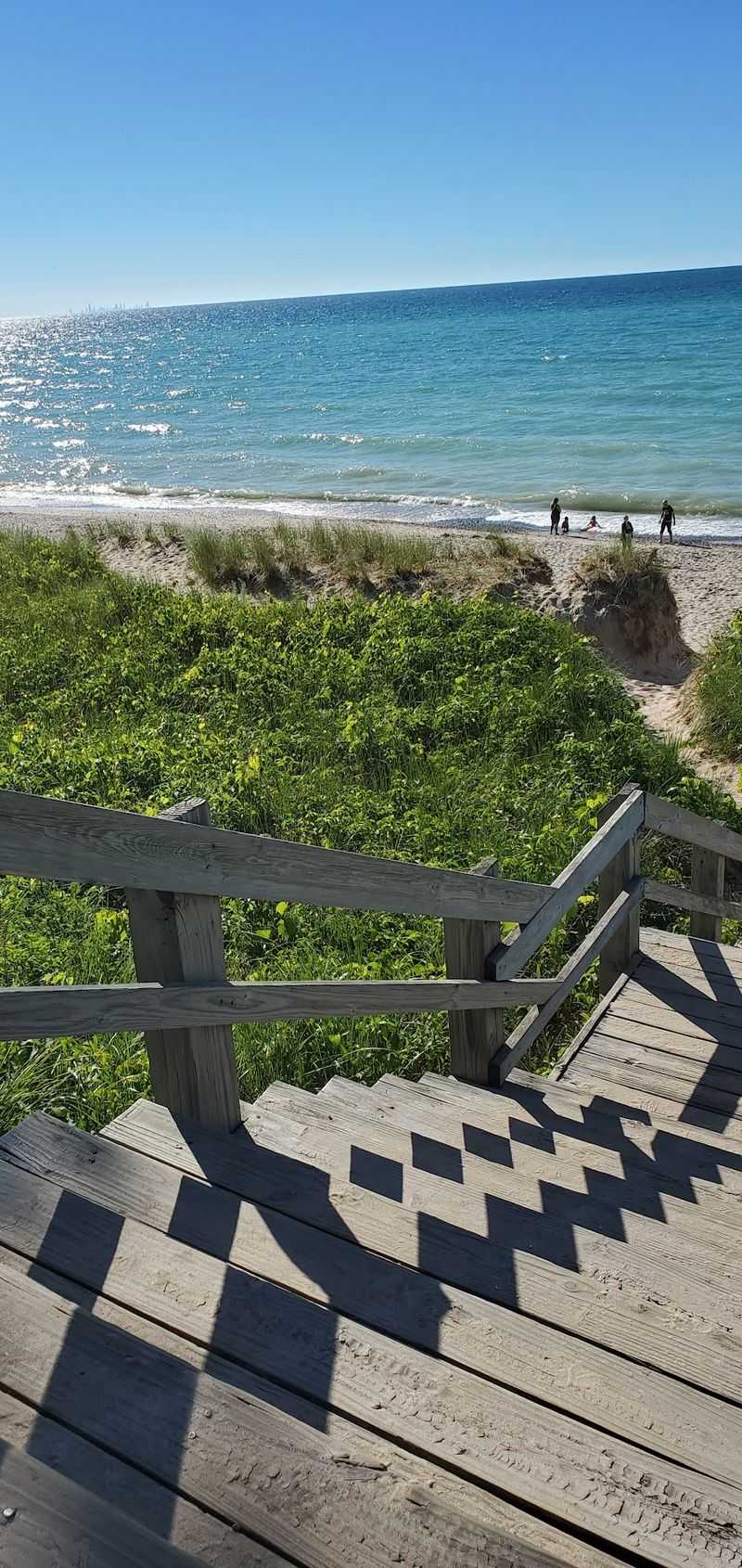
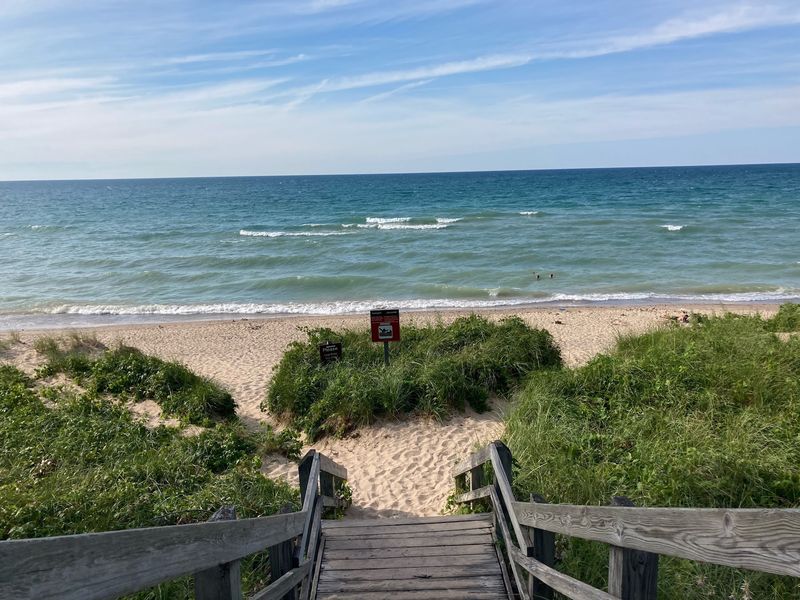
Getting from the parking lot to the water requires navigating a bridge and stairway structure that descends to the beach level. For most visitors, this is a quick and easy transition, but it is worth knowing about in advance if anyone in your group has mobility limitations.
The trail section between the restroom area and the beach has, at times, had fallen trees or debris that made navigation more challenging. Conditions can vary depending on recent weather and how recently the National Park Service has cleared the path, so checking ahead during storm season is a reasonable precaution.
Once past the stairway, the sand opens up wide and the transition to full beach mode happens quickly. The walk from the parking lot to the water is short enough that hauling gear does not feel like a workout, which is a genuine advantage over some of the longer hike-in beaches found elsewhere in the park.
Restrooms, Picnic Tables, and the Small Comforts
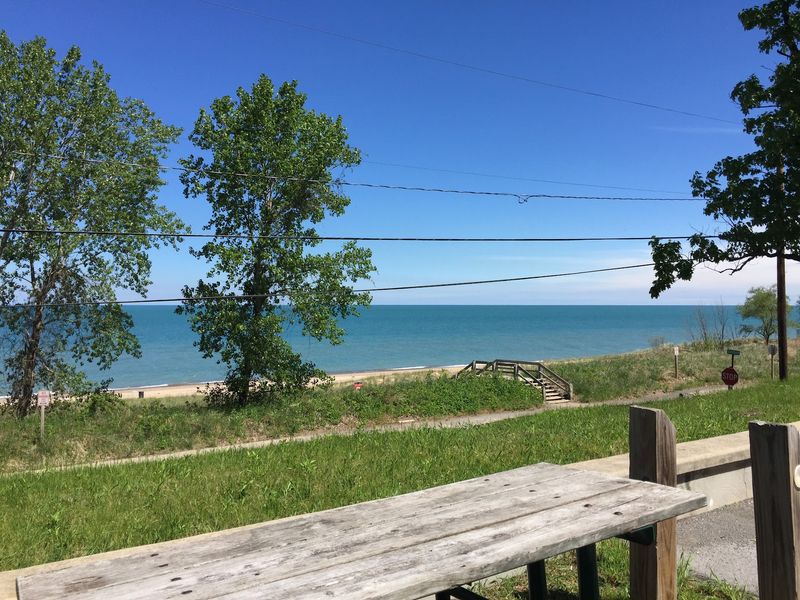
Dunbar Beach comes equipped with restrooms that are kept in notably good condition, along with a foot-washing station that proves surprisingly useful at the end of a sandy day. A few picnic tables are also available near the parking area, making it practical to eat a meal without sitting directly on the sand.
The cleanliness of the facilities here gets consistent attention from people who have visited multiple times. For a beach that does not charge an additional day-use fee beyond the standard National Park pass, the upkeep is genuinely solid.
Small details like a working foot shower and a clean restroom might not sound like headline features, but they make a real difference in how comfortable a full day at the beach actually feels. Families with young children especially tend to notice and appreciate these basics.
Tents for shade are also allowed, and people regularly set them up for longer stays.
How Crowded Does It Actually Get
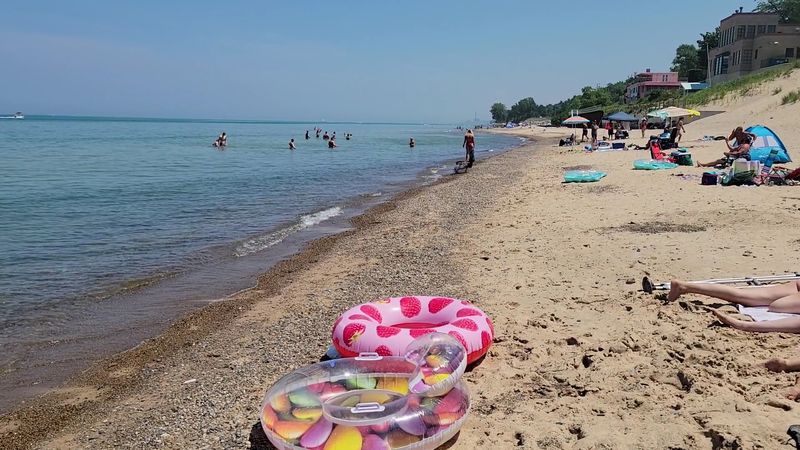
The small parking lot functions as a natural crowd-control mechanism at Dunbar Beach. Because only a limited number of cars can fit, the beach itself rarely reaches the packed, shoulder-to-shoulder conditions that can make larger public beaches feel overwhelming in peak summer months.
Weekdays in mid-summer offer the most relaxed experience. Weekend mornings before 10 a.m. are also manageable, but by midday on a sunny Saturday the lot tends to fill completely.
From that point on, finding a space becomes more about timing and luck than planning.
The trade-off is clear and consistent: less parking means fewer people, and fewer people means more space on the sand. For those who prioritize a quieter beach day over easy access, Dunbar Beach delivers reliably.
Nearby Kemil Beach and West Beach both offer significantly more parking if a larger group or a more guaranteed spot is the priority.
Fall Visits and Why the Off-Season Deserves More Credit

Summer gets most of the attention at Dunbar Beach, but the fall season makes a strong case for being the better time to visit. The drive in through the trees transforms in October, when the foliage turns and the road to the beach becomes genuinely worth slowing down for.
Foot traffic drops significantly after Labor Day, which means more room on the sand and no stress about the parking lot. The water stays swimmable into early September, and hiking along the beach becomes the main activity as temperatures cool through the autumn months.
The light in fall also tends to be cleaner and less hazy than in July and August, which makes the lake views sharper and the sunset colors more vivid. Anyone who has only visited Dunbar Beach in summer is missing a version of the place that feels calmer, more open, and in some ways more rewarding than the peak-season experience.
Rocks, Pebbles, and What the Shoreline Looks Like Up Close
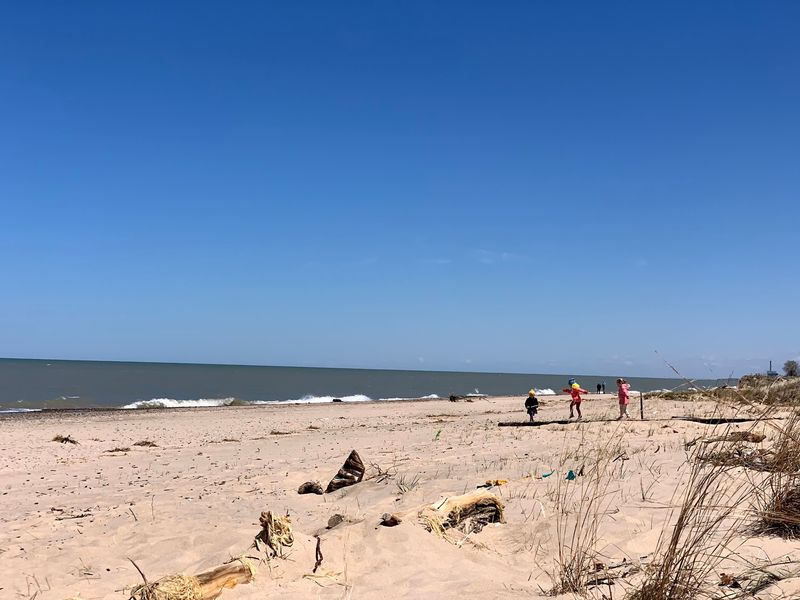
The sand at Dunbar Beach is clean and wide, but the area closest to the waterline introduces a mix of rocks and pebbles that changes the texture of the shoreline considerably. Some of these stones are smooth and colorful, the kind that end up in pockets and on windowsills back home.
The rocky zone right at the water’s edge can be a little tricky to walk through barefoot, particularly for younger kids. Water shoes solve this quickly and allow for a more comfortable entry into the lake without the awkward hop-and-wince routine.
Beyond the rocks, the lake bottom near shore is generally sandy and easy to navigate once you are actually in the water. The pebbles are part of what makes the shoreline feel distinct from the more uniformly sandy beaches nearby.
For anyone who enjoys collecting interesting stones, this stretch of shore offers a genuinely good selection to look through.
Planning Your Visit Right

A few practical details can make the difference between a great day at Dunbar Beach and a frustrating one. The beach is open until 11 p.m., which gives a wide window for evening visits.
Entry requires a National Park pass, so having one ready before arrival saves time at the gate.
The National Park Service operates a beach hotline with real-time updates on parking availability at Indiana Dunes locations, which is worth checking on busy summer weekends before making the drive. Arriving before noon on summer days is the most reliable way to secure a spot in the small lot.
Kayaking is allowed and people regularly bring their own equipment. Shade tents are permitted on the sand.
The combination of a clean beach, dog-friendly policy, manageable crowds, and genuine historical interest nearby makes Dunbar Beach one of the more well-rounded stops in the entire Indiana Dunes National Park system.
Where Exactly Dunbar Beach Sits
Beverly Shores is a small town tucked along the southern edge of Lake Michigan in Porter County, Indiana. Dunbar Beach sits within the Indiana Dunes National Park boundary at Beverly Shores, IN 46360, making it one of the more quietly placed access points in the entire park system.
The drive leading up to the beach winds through a stretch of trees and native plants that feels surprisingly removed from the surrounding suburban sprawl of northwest Indiana. That natural corridor sets the mood well before you ever see the water.
The beach itself sits along the southern shore of Lake Michigan, which means the water opens up to the north and the sky above it stays wide and unobstructed. For a town with fewer than 600 residents, Beverly Shores punches well above its weight when it comes to offering a genuinely rewarding outdoor destination.
Share this story