There is a park in Little Rock, Arkansas, that somehow manages to feel like a weekend road trip without requiring you to leave the city. Tall trees press in close along winding trails, a stocked pond glimmers through the branches, and the sound of kids laughing near a playground drifts across wide-open fields.
The whole place sits on roughly 243 acres, and yet it carries the kind of quiet that makes you forget you are technically still inside a major city. What really caught my attention before I even visited was the history baked into every stone structure on the grounds, buildings crafted by hand during the 1930s that still stand strong today.
Add mountain biking trails, fishing spots, community festivals, and some genuinely surprising wildlife sightings, and you start to understand why locals keep coming back. This article walks through everything that makes this sprawling green space worth your time, from its philanthropic origins to the best practical tips for planning your own visit.
A Generous Gift: The Origins and Address of Boyle Park
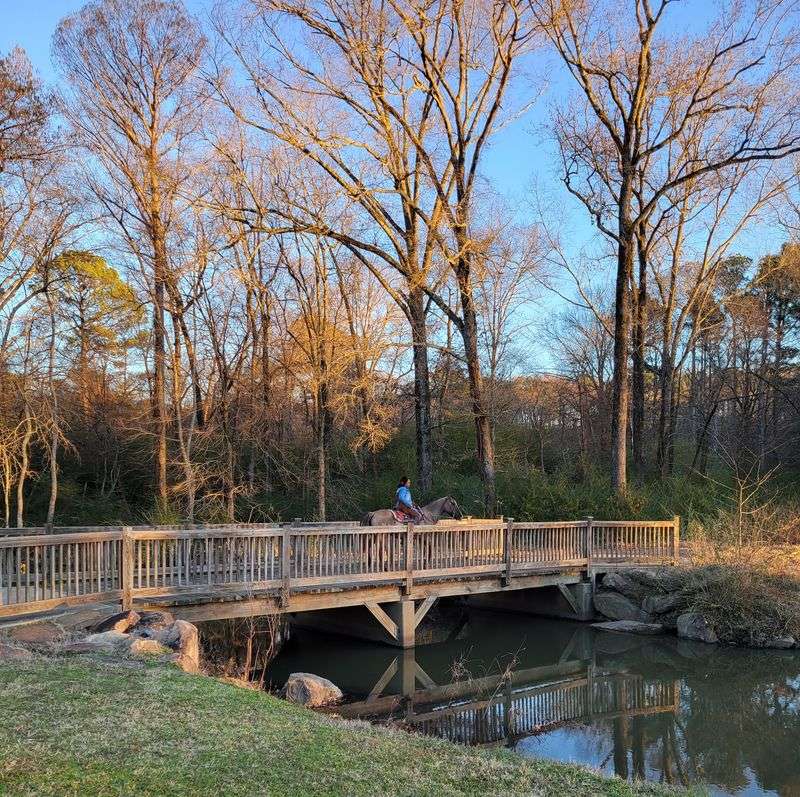
Not every park begins with a single person deciding to hand over nearly 250 acres to an entire city, but that is exactly how Boyle Park came to be. Dr. John F.
Boyle, a Little Rock physician who lived from 1874 to 1938, donated this substantial tract of land to the City of Little Rock in 1929. His deed included a firm condition: the land must be used for recreational purposes in perpetuity, a promise the city has honored ever since.
The park sits at 2000 Boyle Park Rd, Little Rock, Arkansas 72204, and covers approximately 243 acres of rolling, wooded terrain. That combination of size and legal protection has allowed it to grow into one of the most versatile outdoor destinations in central Arkansas.
Rock Creek winds through the property, and the park’s phone number is listed as 501-371-4770 for anyone planning ahead. Knowing the story behind this place makes every trail feel a little more meaningful.
Rolling Terrain and Dense Woodlands: The Landscape That Sets the Tone
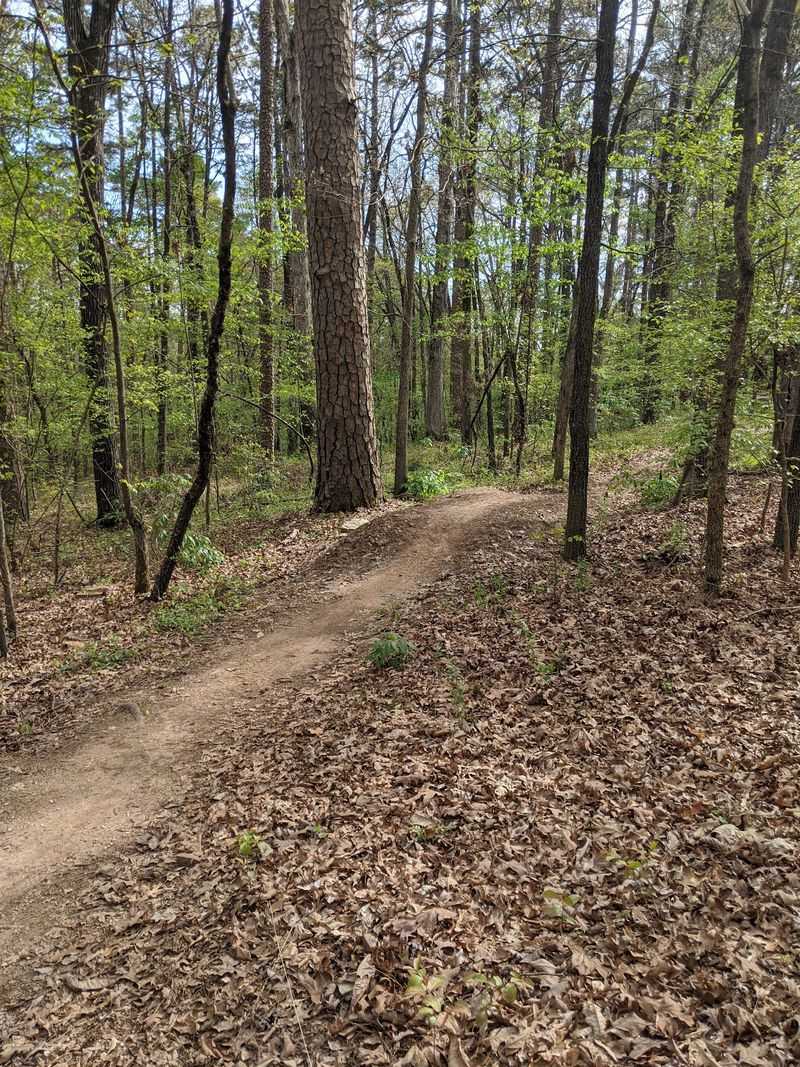
The first thing that registers when you step away from the parking area is how quickly the city disappears. Boyle Park is described officially as densely wooded, gently rolling land, and that description holds up completely in person.
Tall hardwood trees form a thick canopy overhead, and the terrain dips and rises just enough to keep every walk interesting without demanding serious effort.
Rock Creek cuts through the park in a way that feels deliberate, as if the landscape was designed around it rather than the other way around. Shaded corridors follow the creek’s path, offering cool, quiet stretches even during hot Arkansas summers.
Beyond the tree line, wide open fields spread out and invite everything from casual picnics to informal soccer games. That contrast between the enclosed woodland atmosphere and the bright, breezy meadows is one of the park’s most distinctive qualities.
You genuinely feel like you are moving through two different environments within a single afternoon.
Stone Structures That Have Outlasted Generations: The CCC Legacy
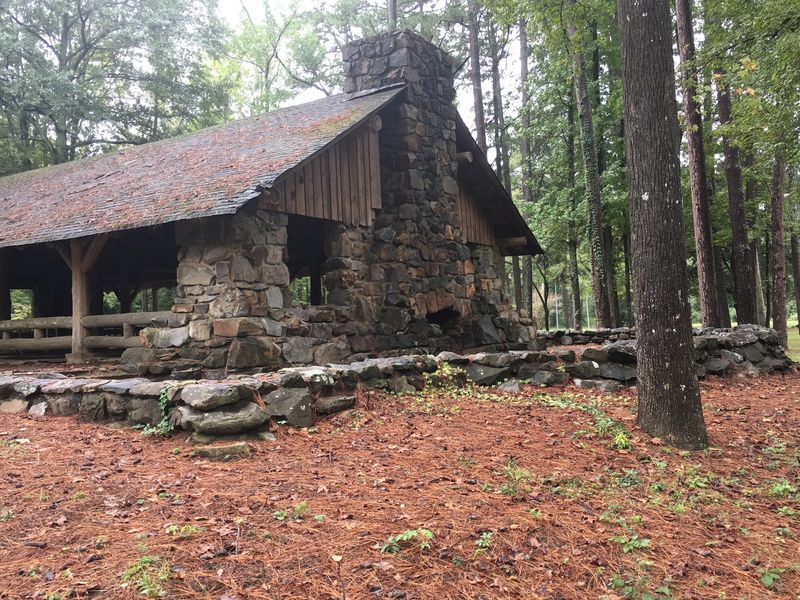
Some of the most quietly impressive features at Boyle Park are not the trails or the pond but the buildings themselves. The Civilian Conservation Corps, specifically CCC Company 3777, constructed a series of rustic stone structures here during the mid-1930s using native stone sourced from places like Bear Den Mountain.
By 1937, the crew had completed two pavilions, a spring house, a caretaker’s cabin, a water tower, a pump house, and a garage.
Every structure was built in the same rugged, naturalistic style, designed to blend into the surrounding landscape rather than dominate it. That philosophy is still visible today, and the buildings carry a warm, weathered charm that modern construction rarely replicates.
The quality was so recognized at the time that these structures were cited as model examples in a 1936 U.S. Department of the Interior manual.
Running your hand along one of those stone walls is a small but tangible connection to a remarkable chapter in American history, one built on collective effort and honest craft.
Trails for Every Pace: Where Walkers and Joggers Find Their Groove
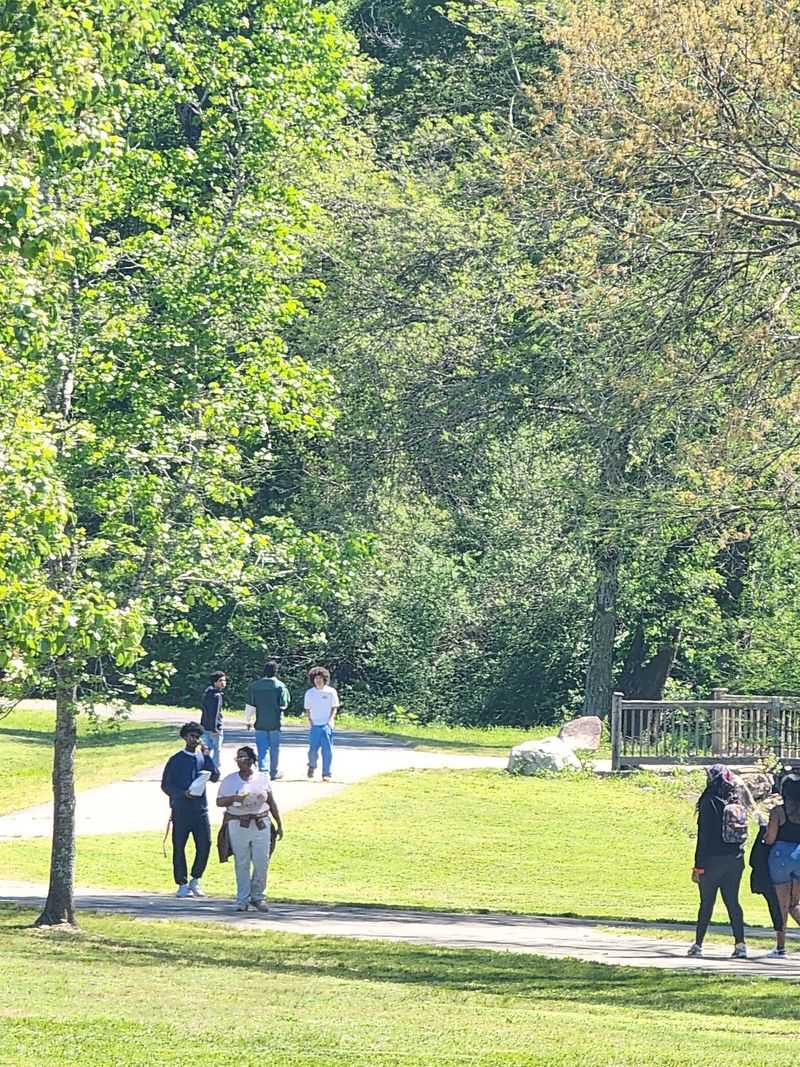
The trail network here is genuinely well thought out, which becomes obvious the moment you realize it caters to multiple speeds and preferences without feeling crowded or confusing. Paved paths run alongside smoother, more accessible sections of the park, making them suitable for strollers, casual walkers, and anyone who simply wants a scenic loop without worrying about uneven ground.
Further into the woodlands, earthen trails take over, winding past the creek and through patches of forest that feel surprisingly remote. I passed solo hikers, couples walking dogs on leashes, and small groups chatting as they moved at an easy pace.
The variety means you can plan a different route on each visit and still find something fresh.
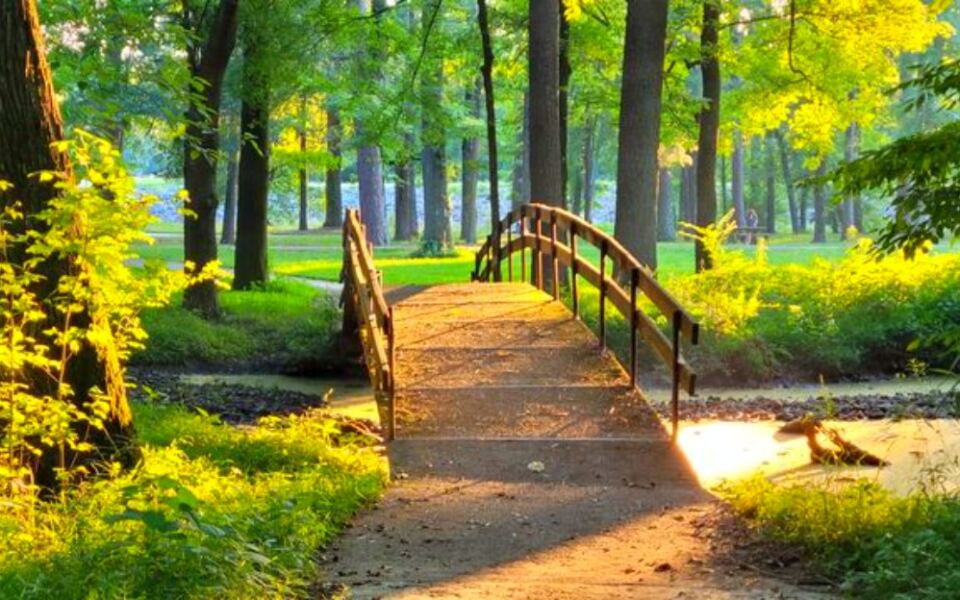
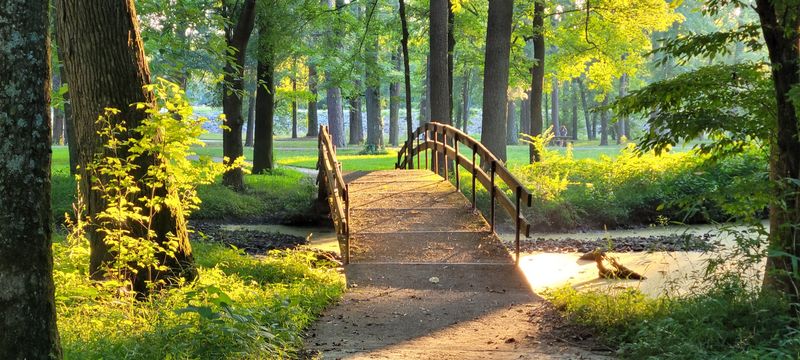
The trail system also connects both sides of Rock Creek, with bridges adding a scenic element to any crossing. One reviewer noted using the trails as a practical commute route between streets on opposite sides of the park, which says a lot about how well integrated these paths are into the surrounding neighborhood.
Mountain Biking Thrills: Over Three Miles of Purpose-Built Riding
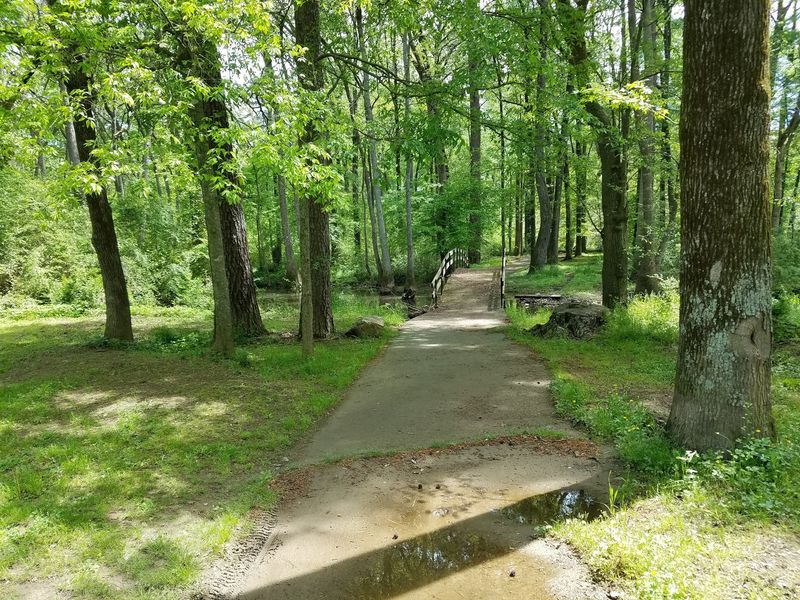
Boyle Park takes mountain biking seriously, and the trail system reflects that commitment with more than three miles of purpose-built riding spread across varied terrain. Beginners can ease into the experience on gentler sections, while more experienced riders can seek out technical challenges that include short steep climbs, switchbacks, and sections scattered with rocks and roots that demand real skill.
The park also features a dedicated bike skills area, a structured space where riders can practice specific techniques on purpose-built features before tackling the main trails. Sections with names like “Grilled” include tabletops, drops, rollers, and berms that reward riders who know how to use terrain features to their advantage.
The Central Arkansas Trail Alliance, commonly known as CATA, helps maintain these trails and organizes regular night rides for experienced participants, which adds a social element to what might otherwise be a solo sport. Riding through the trees at dusk sounds like a memorable experience, and it is the kind of detail that makes this park stand out well beyond its obvious family-friendly appeal.
Playgrounds and Open Fields: Built for Kids, Loved by Everyone
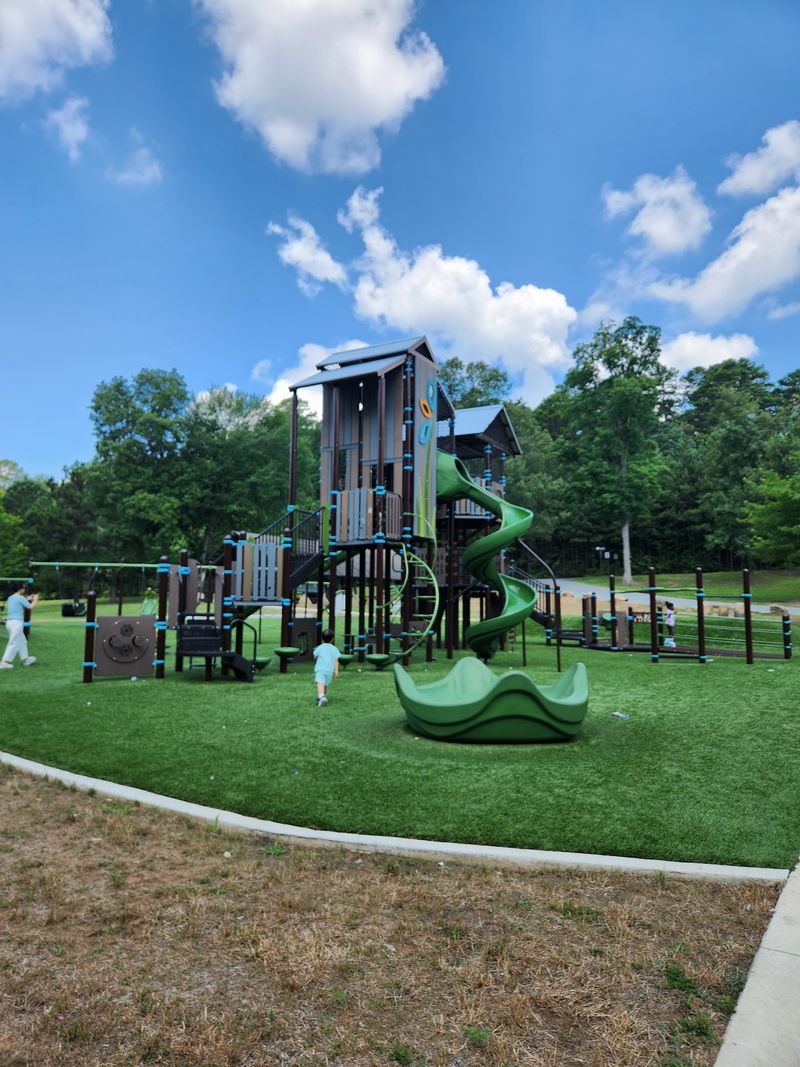
The playground situation at Boyle Park is genuinely impressive, which is not something that gets said about every city park. There are roughly two playground areas scattered across the grounds, each equipped with modern structures that include climbing features, slides, and swinging areas designed to accommodate different age groups.
Accessible design elements mean that more kids can participate without barriers.
The open fields adjacent to these play areas stretch out wide enough to accommodate informal soccer games, frisbee sessions, or just running around with no particular goal in mind. That kind of unstructured space is increasingly rare in urban parks, and it adds a quality of freedom that structured play equipment alone cannot provide.
Families clearly make up a significant portion of the park’s regular visitors, and the energy around the playground and fields reflects that. The sound of children from different backgrounds playing together in the same open space is one of those small, quietly uplifting details that sticks with you long after you have driven home.
Courts, Grills, and Pavilions: The Social Side of the Park
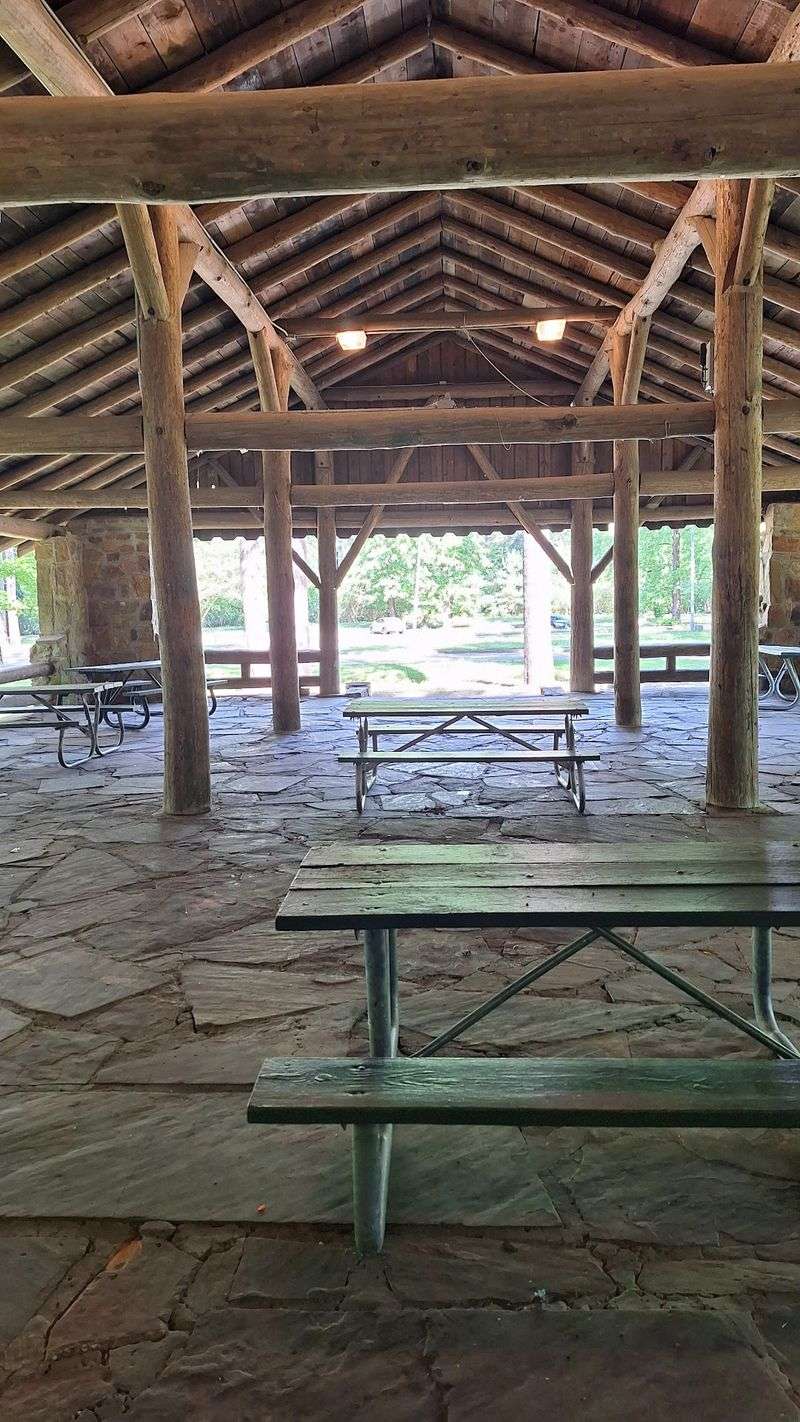
Beyond the trails and natural features, Boyle Park functions as a full-service social space, and the amenities support that role well. The historic stone pavilions built by the CCC remain in active use today, available for rental and popular for birthday parties, family reunions, and community gatherings.
Picnic tables and grills are scattered throughout, making a cookout as easy as showing up with food and a good playlist.
Basketball courts add another dimension to the recreational mix, and the park also includes tennis courts for those who prefer a racket in hand. A skateboard-friendly area rounds out the active options, giving teenagers a specific place to practice without competing for space with younger kids on the playground.
The variety of these facilities means the park rarely feels one-dimensional. On any given weekend afternoon, you might see a family grilling near a pavilion, a pickup basketball game in full swing nearby, and a group of skaters working on tricks a short distance away.
That layered energy is exactly what a well-designed public park should produce.
Wildlife and Birdwatching: Unexpected Encounters Along the Trails
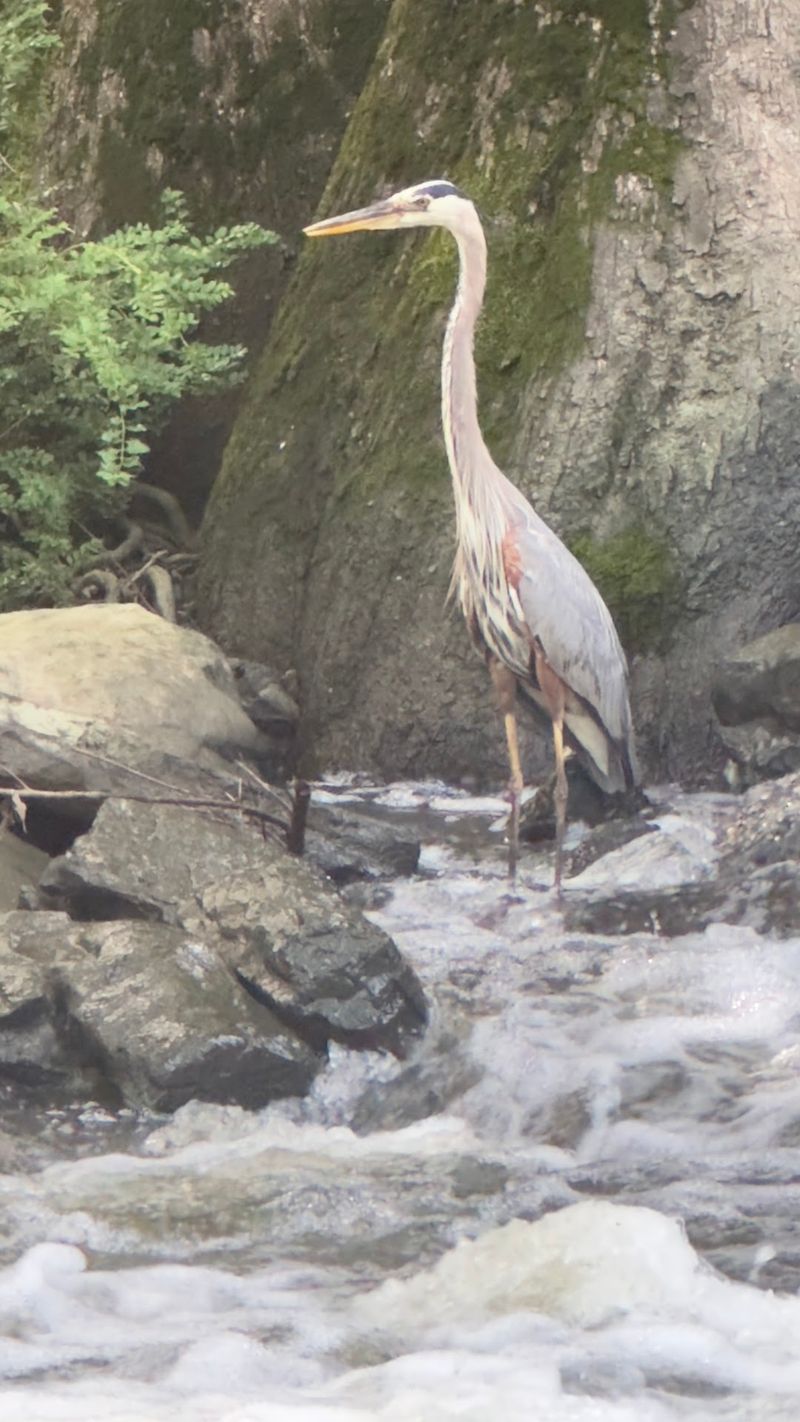
Urban parks often get overlooked as wildlife destinations, but Boyle Park challenges that assumption in a pleasant way. The combination of dense woodland, open meadow, and a year-round water source in Rock Creek creates a layered habitat that supports a surprising variety of creatures.
Birdwatching here is genuinely rewarding, with species moving through the canopy and along the creek banks throughout the seasons.
The pond is home to a small but visible duck population that has grown comfortable around people, friendly enough to approach if you stand still near the water’s edge. Soft-shell turtles have also been spotted in the fishing pond, adding an unexpected reptilian charm to the waterside experience.
The park’s tree-planting initiatives and general conservation focus suggest that wildlife presence is treated as a feature worth protecting rather than an afterthought. Spending a quiet morning on one of the less-traveled trails with a decent pair of binoculars is a completely different experience from the busy weekend atmosphere, and it is one that rewards the early riser who arrives before the crowds do.
Community Events and Festivals: When the Park Comes Alive
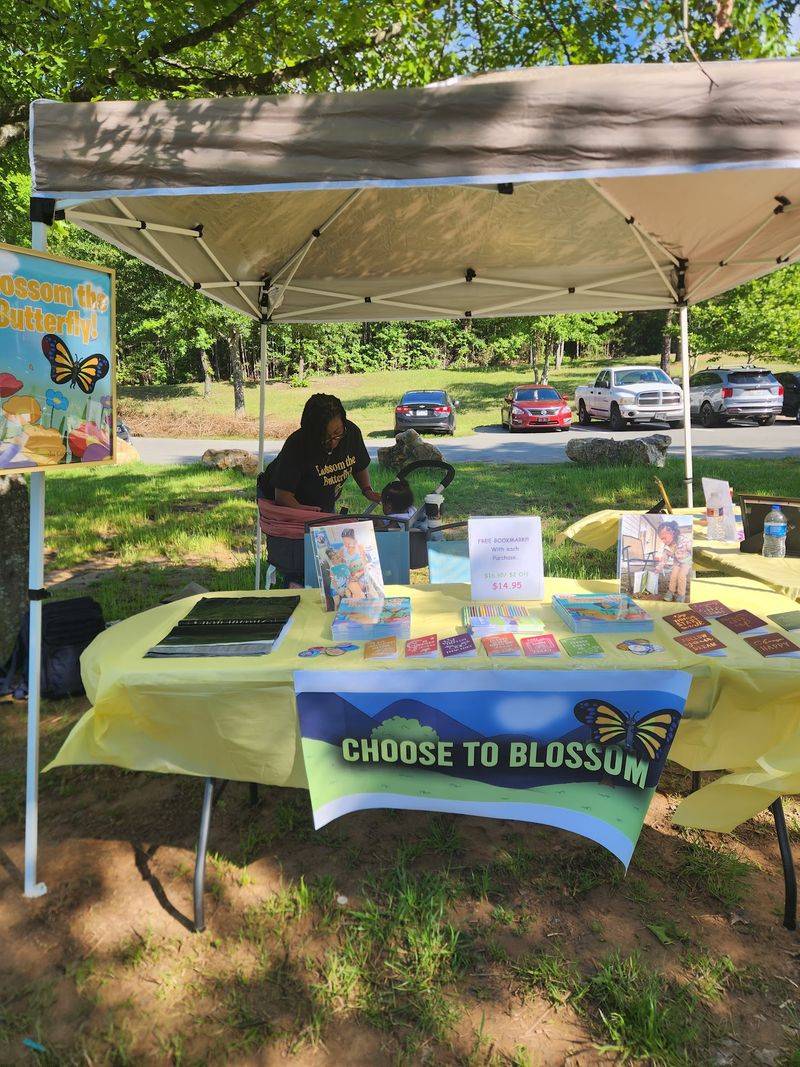
There are days at Boyle Park when the trails take a back seat to something bigger. The park hosts a rotating calendar of community events throughout the year, including outdoor concerts, cultural festivals, and movie nights that transform its open fields into shared gathering spaces.
These events draw a genuinely diverse crowd, reflecting the multicultural character of the surrounding neighborhoods.
Programs like the AABE Arkansas Family Day at the Park demonstrate how actively the community uses this space for more than just recreation. The local advocacy group Neighbors for Boyle Park also plays a visible role in supporting the park’s upkeep and organizing activities that keep residents engaged with the space year-round.
Attending one of these events offers a completely different perspective on the park compared to a solo trail walk. The energy shifts, the open fields fill with people, and the CCC pavilions suddenly look exactly as they were intended to look: full of life, noise, and shared enjoyment.
Checking the city’s parks calendar before your visit is always a smart move.
Rock Creek and the Low-Water Bridge: A Scenic Centerpiece
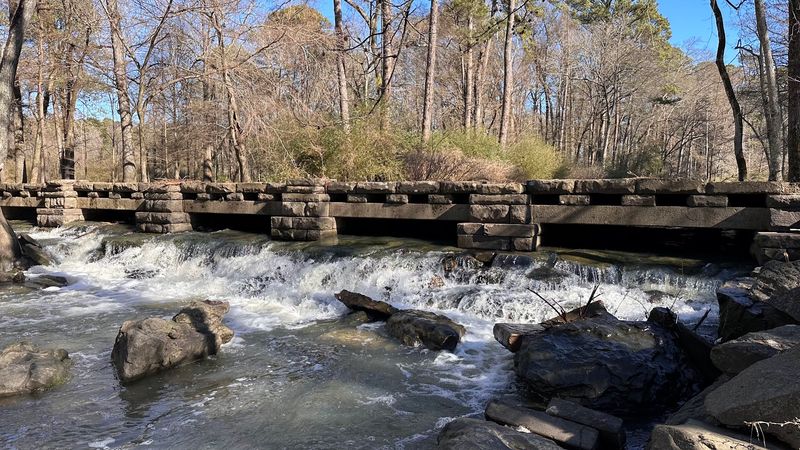
Rock Creek is not just a backdrop at Boyle Park; it is genuinely central to the experience. The creek moves through the park in a way that divides the grounds into distinct sections, each with its own character and set of trail options.
Crossing the low-water bridge on the east side is a highlight in itself, a simple concrete crossing that sits just above the water’s surface and rewards anyone willing to linger with the sound of flowing water and the sight of fish moving below.
After heavy rain, the bridge can flood and the east entrance may close temporarily, redirecting visitors to the west entrance instead. That is worth knowing before you go, particularly during Arkansas’s wetter seasons when creek levels can rise quickly.
The creek also provides natural swimming opportunities in some areas, and a few visitors have mentioned wading or even swimming in the cooler, shaded stretches. Whether you cross it, fish it, or simply sit beside it for a while, Rock Creek earns its status as the park’s most dynamic natural feature.
Practical Tips for Your Visit: What to Know Before You Go
A few practical details can make the difference between a smooth visit and an avoidable headache. Boyle Park is open most days, with Saturday hours running from 8 AM to 10 PM and Sunday listed as open around the clock.
Monday through Friday hours are currently listed as closed for organized programs, though the park’s public access schedule can change, so calling ahead at 501-371-4770 is a reliable way to confirm current hours.
Parking is plentiful and free, and restrooms are available on-site. The park is largely accessible for visitors with mobility considerations, and leashed dogs are welcome throughout the grounds.
Fishing requires a valid Arkansas license, and bass must be released immediately per program rules.
One honest note worth mentioning: some visitors have pointed out litter in certain areas, particularly near the creek. Bringing a small bag to pack out any trash you encounter is a simple way to contribute to a place that clearly means a great deal to its community.
A little extra care goes a long way here.
Share this story