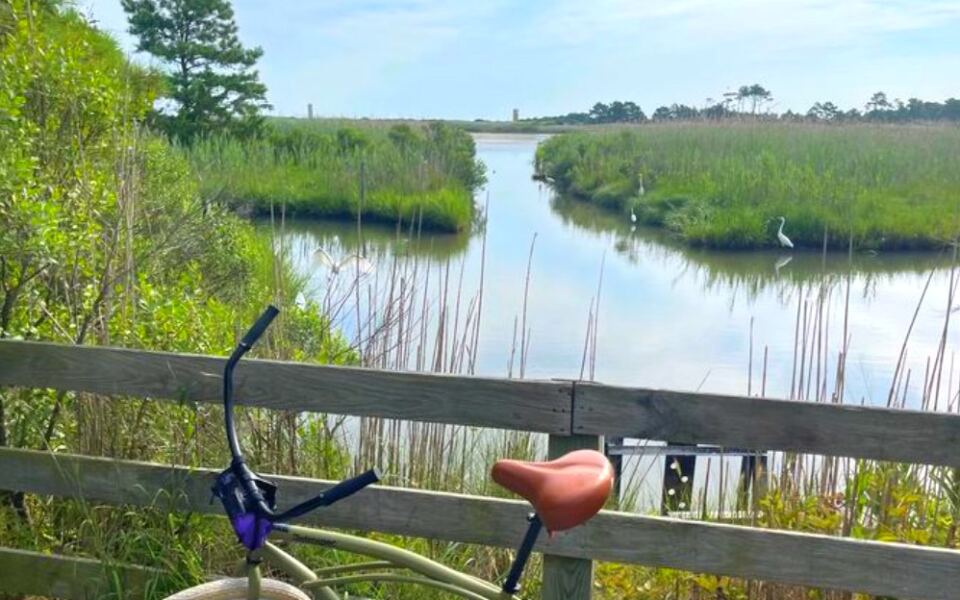
A heron once took off about a yard from my shoes, spread its wings, and acted like I was invisible. That was the moment I knew this path was different.
It runs between two beach towns, yet it feels miles away from every beach umbrella. Along the way you can spot eagles, cross wooden walkways built above the wetlands, and spy two old concrete towers left from a wartime past.
You can also learn which season keeps the crowds thin and the birds plentiful. Keep reading, because I will share the best tips, the hidden details, and the one stretch that surprised me most.
A Coastal Path With a Clear Starting Point
Gordons Pond Trail sits inside Cape Henlopen State Park near Lewes, Delaware, and the Google Maps listing places it at Lewes, DE 19958. The southern end begins at the Gordons Pond Day Use Area at the end of Ocean Drive in Rehoboth Beach, Delaware, 19971.
The northern end begins near Herring Point in the park. Parking is easy at both ends, and a state park entrance fee applies.
I started at Herring Point on a bright morning. The path stretches about 3.2 miles one way, and it is flat enough that my legs never complained.
The surface is fine crushed gravel, with a few bigger stones here and there. Comfortable shoes help, and so does a water bottle.
The trailhead has restrooms, water fountains, and a bike repair station with air and tools. I appreciated that before I rolled a single wheel.
Soon the marsh opens up on one side, and the next stretch offers a surprise you will want to see.
Salt Marsh Scenery That Keeps Changing
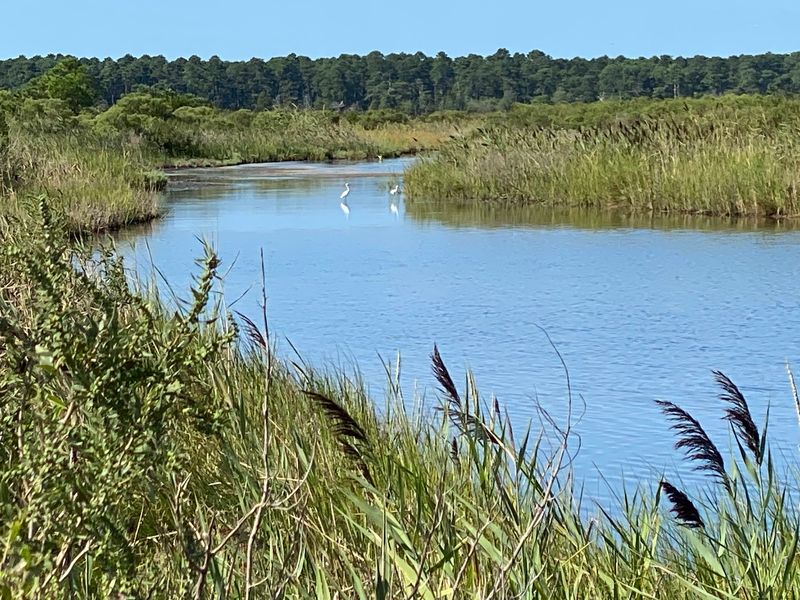
Tall grasses sway here like a slow crowd at a concert, and the show changes with the tides. The trail runs beside broad salt marshes, then slips toward sandy dunes topped with tough coastal plants.
Every few minutes the view shifts a little. One bend shows open water, and the next shows pines and scrubby bushes.
I loved how quiet it felt. Wind through the reeds was the main sound, with a few bird calls mixed in.
Marshes do real work, too. They shelter young fish, feed birds, and soak up extra water during storms.
Photographers will want to bring a camera in the early morning or near sunset, when the light turns the grass gold. Even a phone picture looks good here.
Up ahead, the path lifts off the ground, and that is where my favorite views begin.
Rising Above the Wetlands on Wood
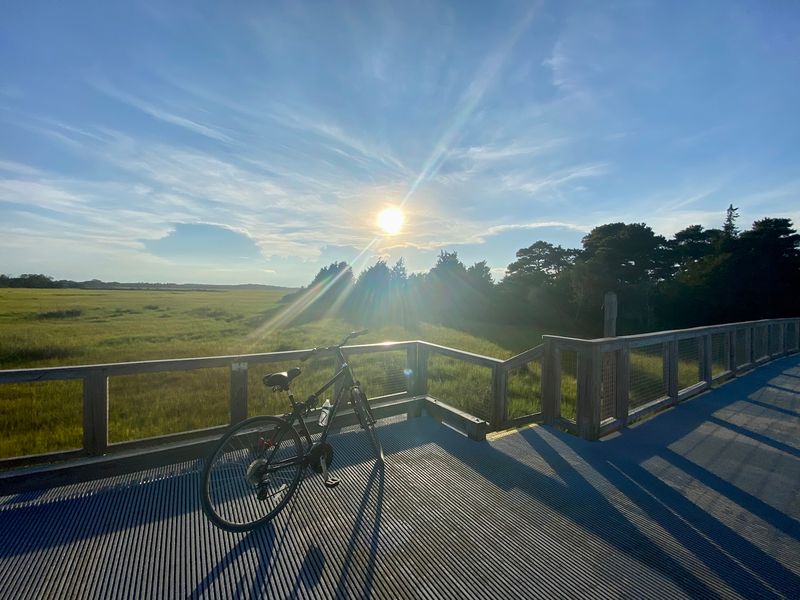
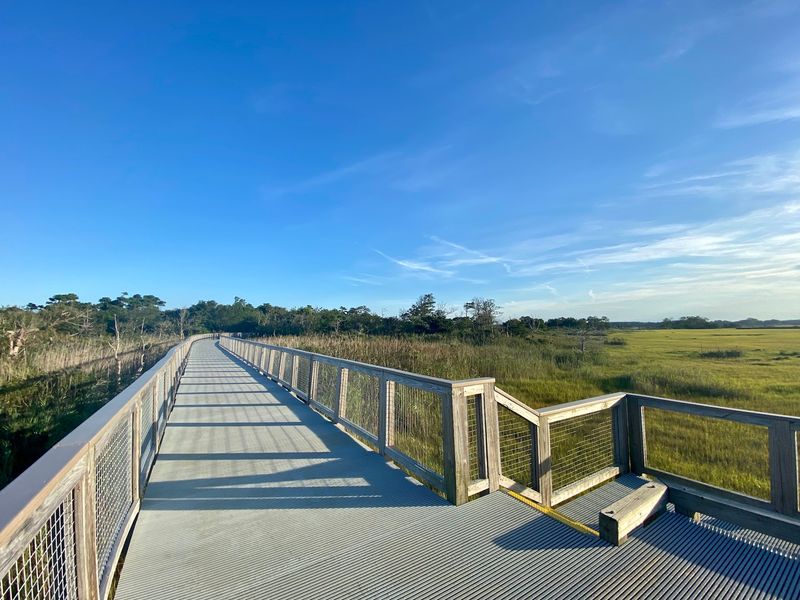
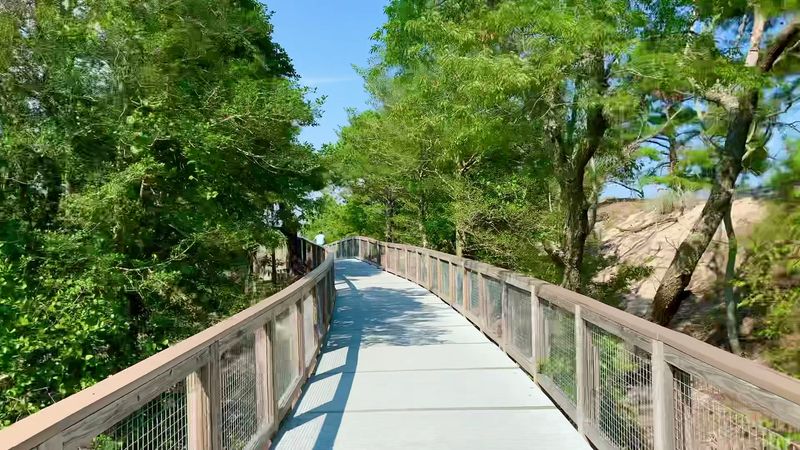
Nearly half a mile of the route is an elevated boardwalk, and it changes the whole mood. The wood lifts you above the wetlands so you can see far across the marsh without stepping on a single plant.
The decking even lets sunlight pass through. Plants can keep growing underneath, which is smart planning.
Several platforms along the way make good pause spots. I leaned on a rail for ten minutes just watching the water shimmer.
Bridges cross marshy patches, and the boards feel solid under bike tires. Walkers can slow down and enjoy the view without feeling rushed.
A tip from my trip: stay in a single lane when it gets busy, since bikes share the space. A little patience keeps everyone smiling.
From these platforms I spotted the first big bird of the day, and more were coming.
Wings Over the Water
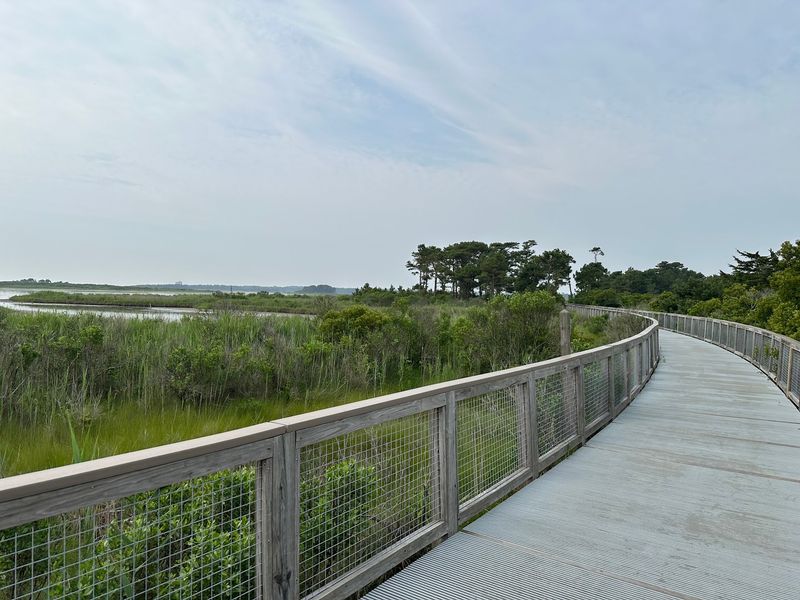
Bring binoculars, because this trail sits along a major migration route for birds. In fall, winter, and spring, waterfowl and shorebirds stop here to rest.
I saw great blue herons and egrets standing in the shallows like patient statues. Bald eagles circled overhead, and ospreys watched from the trees.
One grey heron strolled up to the trail edge, opened its wings, and lifted off just feet from me. It looked completely unbothered.
The area also shelters nesting birds such as piping plovers, least terns, and black skimmers. Some sections close at times to protect their nests, so check the park for updates.
Horseshoe crabs also come ashore to spawn in their season. That ancient visit is a treat for curious kids.
Walk softly and speak quietly, and the birds may reward you. Next, I found something built by people instead of by nature.
Concrete Towers With a War-Time Story
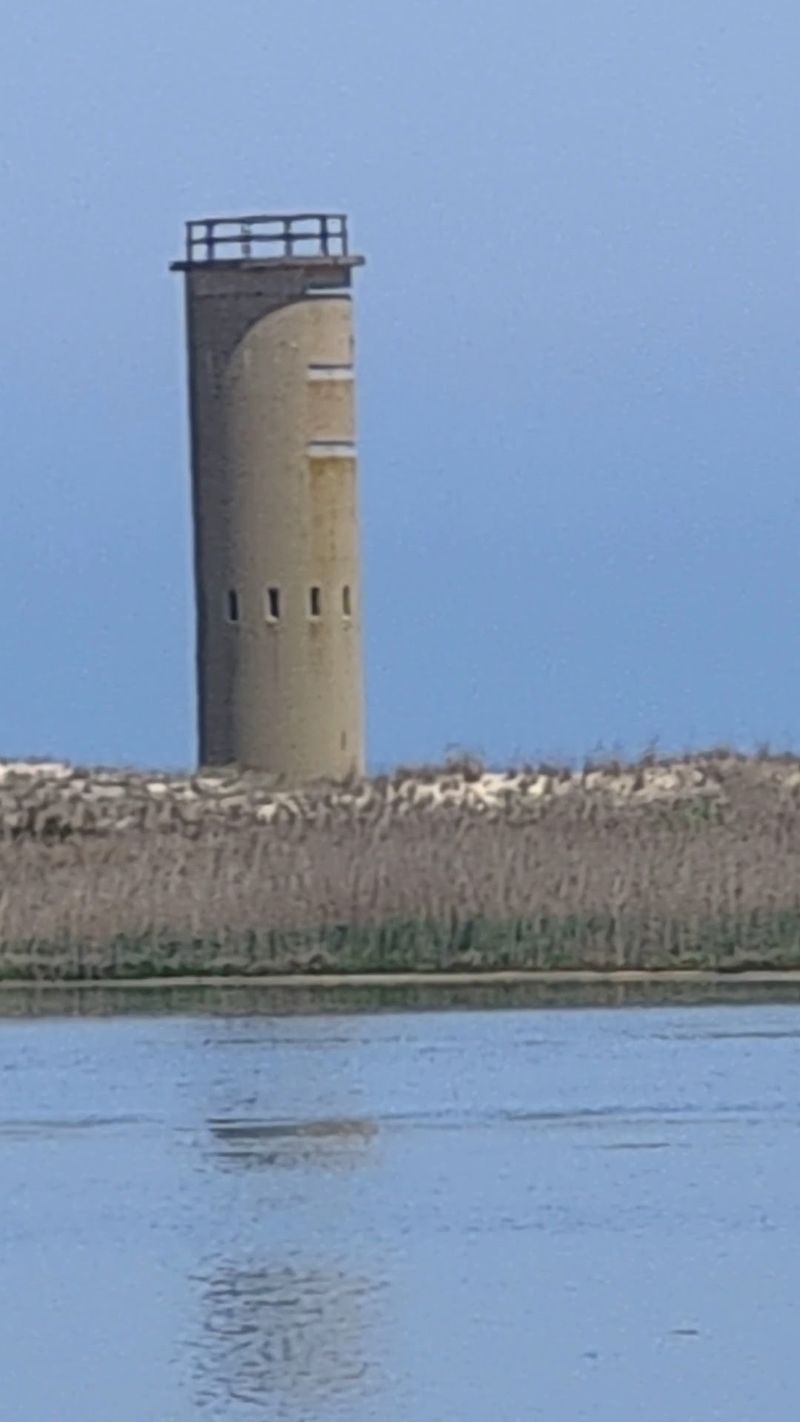
Two concrete observation towers stand along the shore here, and they look a bit like giant gray chess pieces. They belong to the Fort Miles Historical Area inside the park.
Fort Miles was a military base from World War II into the early 1970s. It was built to help protect the coast.
The trail itself grew from an older rough path once used by the military. That makes each mile feel linked to the past.
You can climb a spiral staircase inside one tower for wide views of the Cape Region. I took my time on the steps and enjoyed every landing.
History fans can also tour the nearby buildings and bunkers on the park loop. Bring a hat, since the shade is scarce.
After the climb, the water view was so large that I had to stop and stare for a while.
Big Views of Pond, Dune, and Sea
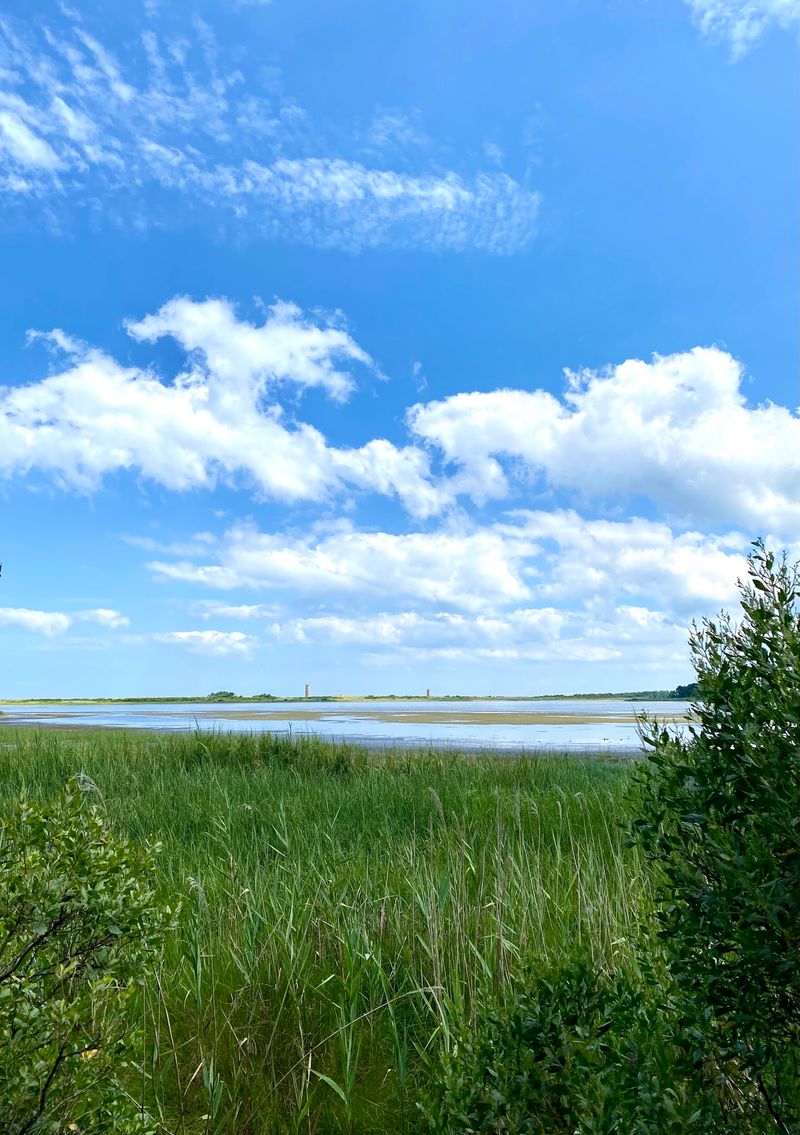
Gordons Pond is a saltwater lagoon of about 900 acres, and from the overlooks it spreads out like a mirror. The sky changes its colors, and the pond follows along.
On one side you can see calm marsh. On the other, the Atlantic rolls toward the horizon.
The Great Dune rises about 80 feet and shields the pond from rough ocean storms. It is the tallest landmark around, which is saying something on this flat coast.
Sunrise is my favorite time to visit. The light is soft, the air is cool, and the trail is quiet.
Evening has its own charm, as shadows stretch long across the reeds. I stayed until the colors faded from orange to pink.
Views are only half the fun, though, because this path offers plenty to do.
Bikes, Boots, and Fishing Rods
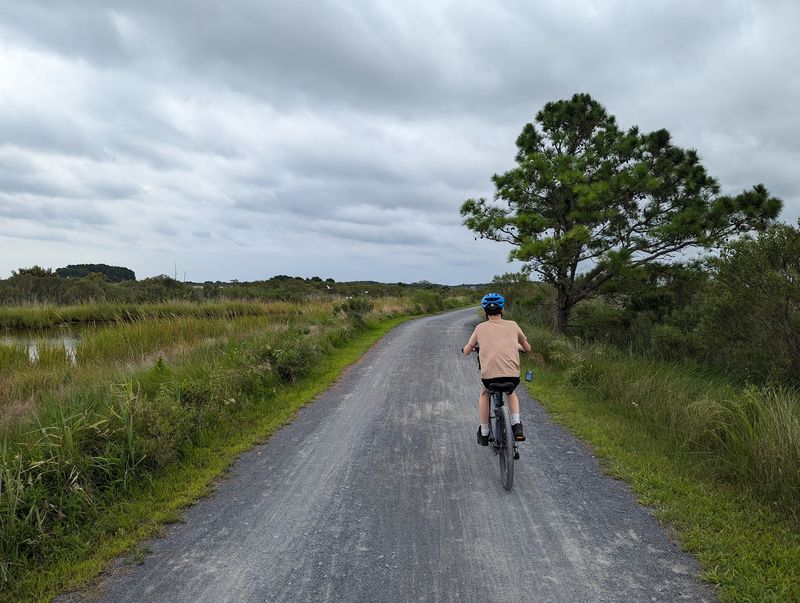
Cyclists make up much of the traffic, and it is easy to see why. The path is flat, the gravel is smooth, and the scenery keeps you grinning.
I watched families roll by with kids laughing in the breeze. If you do not own a bike, you can rent one in Lewes or Rehoboth Beach.
Walkers and runners enjoy it too, since there are almost no hills. Plan about five or six miles for a round trip along the whole route.
Quiet hobbies fit well here. People fish in nearby waters, and photographers wait for the light to turn just right.
A few picnic tables make lunch simple. Pack a sandwich, bring sunscreen, and plan on lots of direct sun.
Speed can be a problem, so keep a steady pace and give walkers space. Then think bigger, because this trail connects to other paths.
One Trail, Two Beach Towns
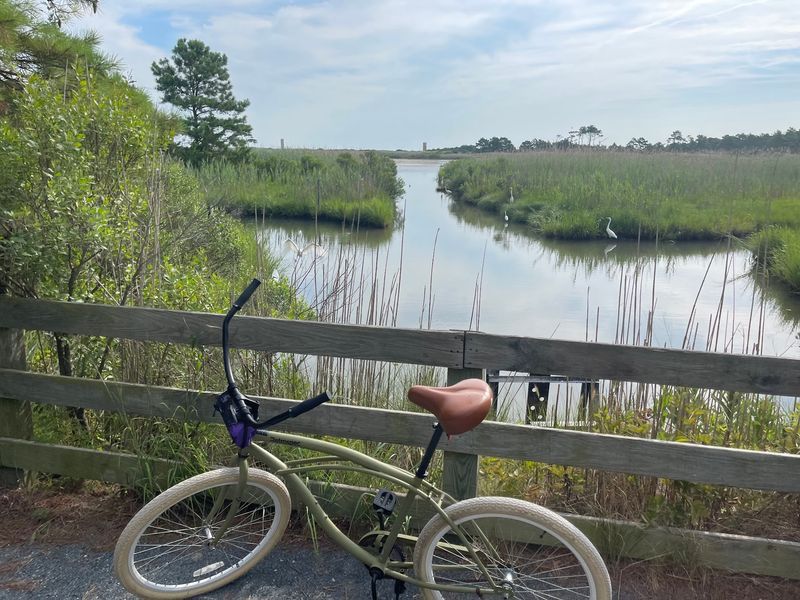
Link this path with its neighbors and you get a much longer ride. The Gordons Pond Trail is part of a regional trail network of about 15 miles that joins Lewes and Rehoboth Beach.
You can travel between the towns without ever starting a car. That alone felt like a small vacation victory.
At the northern end, it meets the Walking Dunes Trail. Near the Biden Center, the Salt Marsh Spur heads west into tidal marsh.
A short way north, a paved loop of about 3.3 miles tours the park. It passes the Fort Miles buildings and wartime bunkers.
Build your day around your energy. A short stroll works, and so does a full afternoon with lunch in town.
Behind this tidy network sits a long planning story, which I explore next.
How the Trail Came to Be
Good trails rarely appear overnight. The idea of a bikeway here showed up in a 1974 report, and it was studied again in 1990.
The trail officially opened in June 2014. It replaced a rough path that was open only part of the year.
Resource specialists at DNREC, the state environmental agency, planned the final route. Their goal was to let people enjoy the area while protecting it.
The special boardwalk decking is a good example. Light reaches the plants below, so the marsh keeps growing.
The effort also fit Delaware’s Trails and Pathways Initiative, which supported outdoor recreation across the state. That makes this stretch a story of patience and planning.
Knowing that, I wanted to make sure my own visit went smoothly, so here are the practical details.
Handy Tips Before You Go
Gordons Pond Trail can be enjoyed throughout the year, but conditions change dramatically with the seasons. Summer brings the most beach traffic and stronger sun, while spring and fall can provide cooler temperatures and excellent opportunities for birdwatching.
I would not rely on the source’s Google-listed 7 a.m. to 7:30 p.m. schedule as a permanent park rule. State park access and facility hours can vary seasonally, so checking Cape Henlopen State Park’s current information before an early or late visit is safer than planning around a third-party listing.
Bring water, sunscreen, sunglasses, and a hat. Much of the route is exposed, and the coastal breeze can disguise how much sun you are getting.
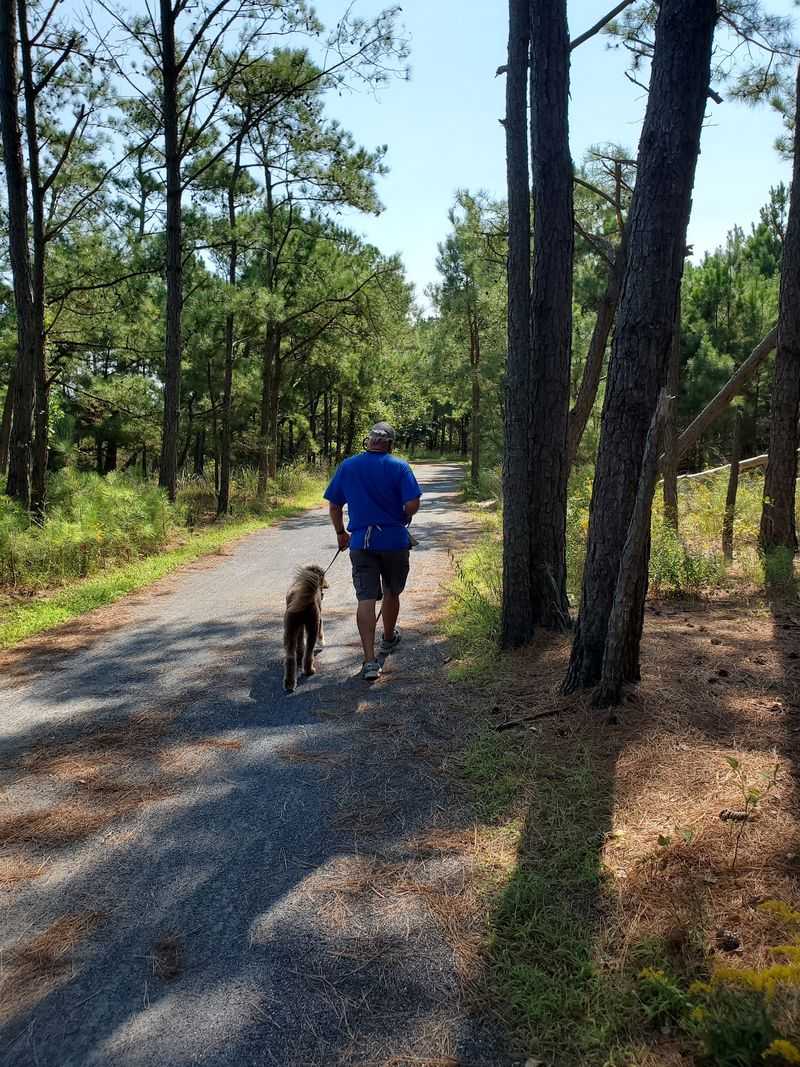
Dogs require additional planning because Delaware state parks apply seasonal and location-specific pet restrictions, particularly around beaches and wildlife areas. Check the current park pet rules rather than assuming a leash automatically allows access everywhere.
The park entrance fee is another detail to verify before arriving, especially because Delaware charges different vehicle rates depending on residency.
Trail etiquette matters during busy periods. Walk predictably, keep to the right, listen for approaching bicycles, and avoid stopping in the middle of the boardwalk for photographs.
Most importantly, check for temporary closures.
Coastal trails can be affected by storms, maintenance, wildlife protection, and other changing conditions. Gordons Pond itself has required storm-related repairs in the past.
A quick check before leaving home can save a frustrating detour.
Then you can focus on why you came in the first place.
A Calm Finish and a Reason to Return
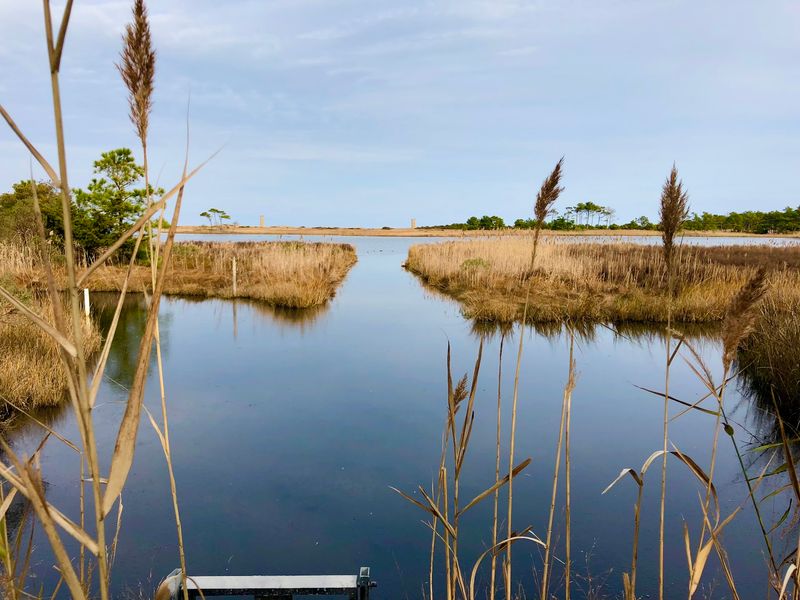
Quiet may be the best souvenir from Gordons Pond Trail. Wind moving through marsh grass, distant waves, bicycle tires rolling over crushed stone, and the sudden splash or call of a bird create a soundtrack that feels remarkably removed from Delaware’s busy beach towns.
That peacefulness is not the result of isolation. Rehoboth Beach and Lewes are close, and the trail itself forms part of the network connecting them.
The magic comes from having protected dunes, marshes, pond habitat, and forest between you and much of the surrounding development.
Cape Henlopen offers plenty of reasons to stay after the ride. The state park includes swimming beaches, surf-fishing areas, a fishing pier, camping, the Seaside Nature Center, Fort Miles, and nearly 20 miles of state-park trails shown on the current trail-system map.
Still, Gordons Pond Trail stands out because it combines so much without demanding a difficult hike.
You get wildlife, wetlands, elevated boardwalks, coastal views, military history, and easy connections to other trails in just a few miles.
I would return early in the morning, when the light is low and the traffic is thin.
Bring binoculars and a camera, but remember to put both away occasionally.
Some views are better experienced without trying to save them.
And if a heron decides to take off beside you, you probably will not need a photograph to remember it.
Share this story