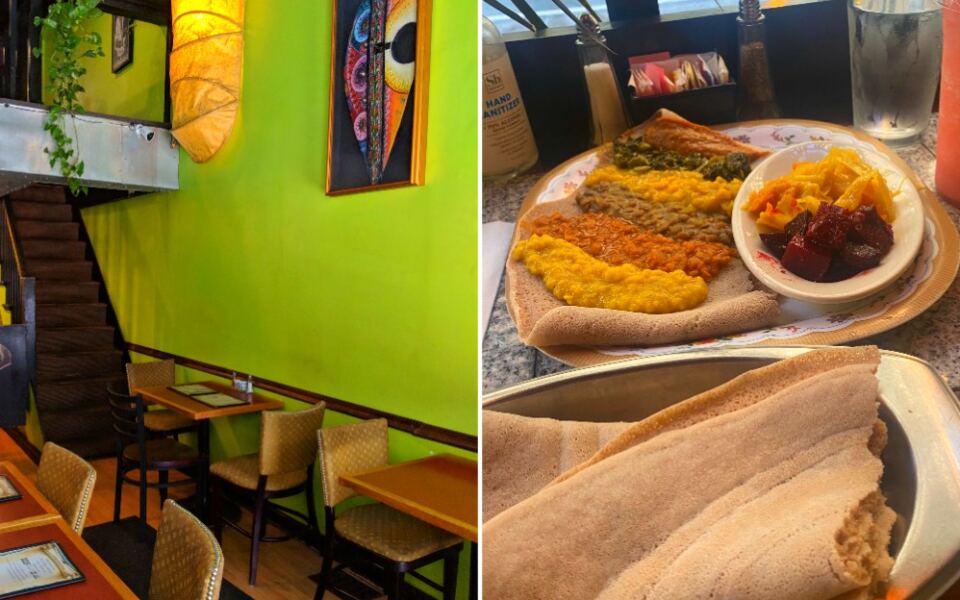
A few steps from Rittenhouse Square, a small cafe serves spongy injera, slow-simmered doro wot, and Ethiopian iced coffee under one roof. The same counter also hands out smoothies, wraps, and sandwiches.
That mix feels a little surprising for a spot this compact.
The building has two levels, and the upstairs works as a quieter place to sit. Diners can order at the counter or settle in for table service, depending on their mood and schedule.
I like places that make a whole cuisine feel approachable. A husband-and-wife team runs this one, and first-timers can lean on them for ordering help.
That matters when the menu includes words like misir, tibs, and foule.
This Pennsylvania cafe also has a coffee story worth knowing. Ethiopia is often called the birthplace of coffee, and that history shows up in every cup here.
A Two-Story Ethiopian Cafe Near Rittenhouse Square
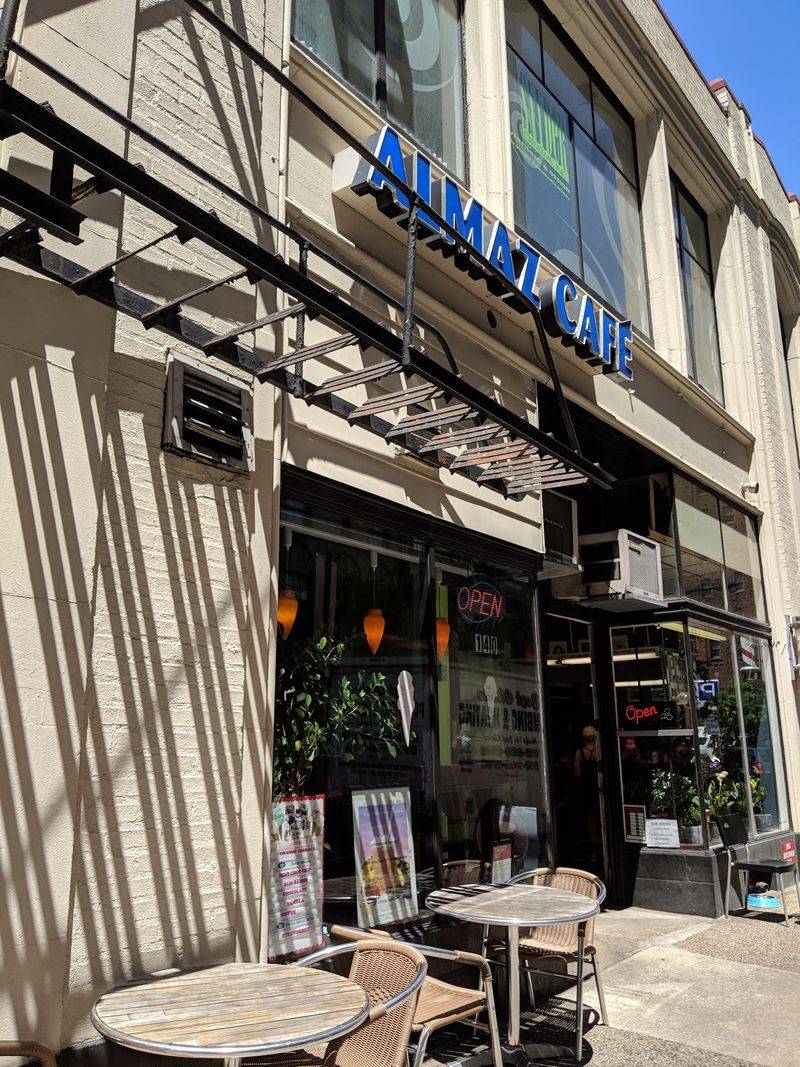
Almaz Cafe sits at 140 S 20th St in Philadelphia, Pennsylvania, just a short walk from Rittenhouse Square. It looks like a modest Center City storefront.
Inside, though, it serves as both an Ethiopian restaurant and a working coffeehouse.
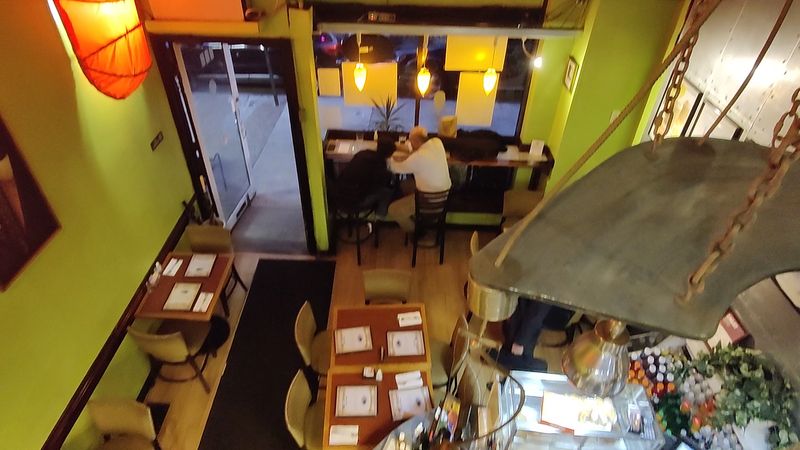
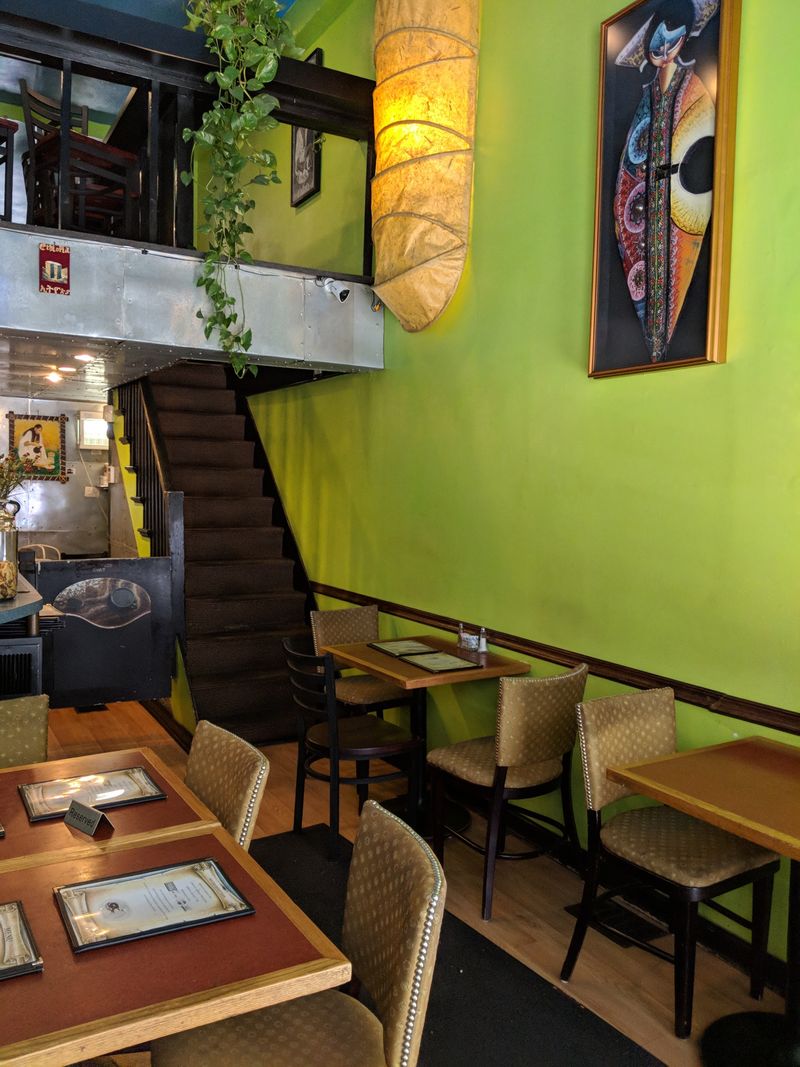
The space is bi-level. The ground floor holds the counter and much of the seating, while the upstairs is a calmer spot to linger.
On some days, a few tables appear outside too.
That layout gives the cafe two personalities. You can grab a coffee and go, or you can sit down for a full platter of stews and injera.
I find that flexibility appealing in a busy neighborhood. Office workers, students, and curious first-timers can all use the cafe in their own way.
Nobody has to commit to a long, formal dinner just to try something new.
The cafe opens Wednesday through Saturday, from late morning into the evening, and closes Sunday through Tuesday. That schedule is worth checking before you make the trip.
Once you know where it is and when it opens, the next question is simple. Who is behind the counter?
Solomon and Almaz Keep It Family Run
Names matter here. The cafe carries the name of Almaz, who runs it alongside Solomon, and the pair give the place its mom-and-pop identity.
Small, owner-operated restaurants feel different from chains. The people cooking and serving are the same people whose name is on the sign.
That connection shapes the whole visit.
Many first-time visitors to Ethiopian food feel unsure about what to order. At Almaz Cafe, the owners are known for guiding newcomers through the menu.
That kind of help turns a confusing list of dish names into an easy decision.
I would honestly start by asking them. Tell them whether you like spice, whether you eat meat, and how hungry you are.
A good recommendation beats guessing every time.
The cafe has been serving Center City diners for years, with some regulars returning since at least 2019. Lasting that long as a small family business in a pricey neighborhood takes steady work.
The personal touch also explains why the setting feels relaxed. Families even bring young kids who are seeing Ethiopian food for the first time.
And that food starts with one very important bread.
Injera Doubles as Plate, Spoon, and Bread
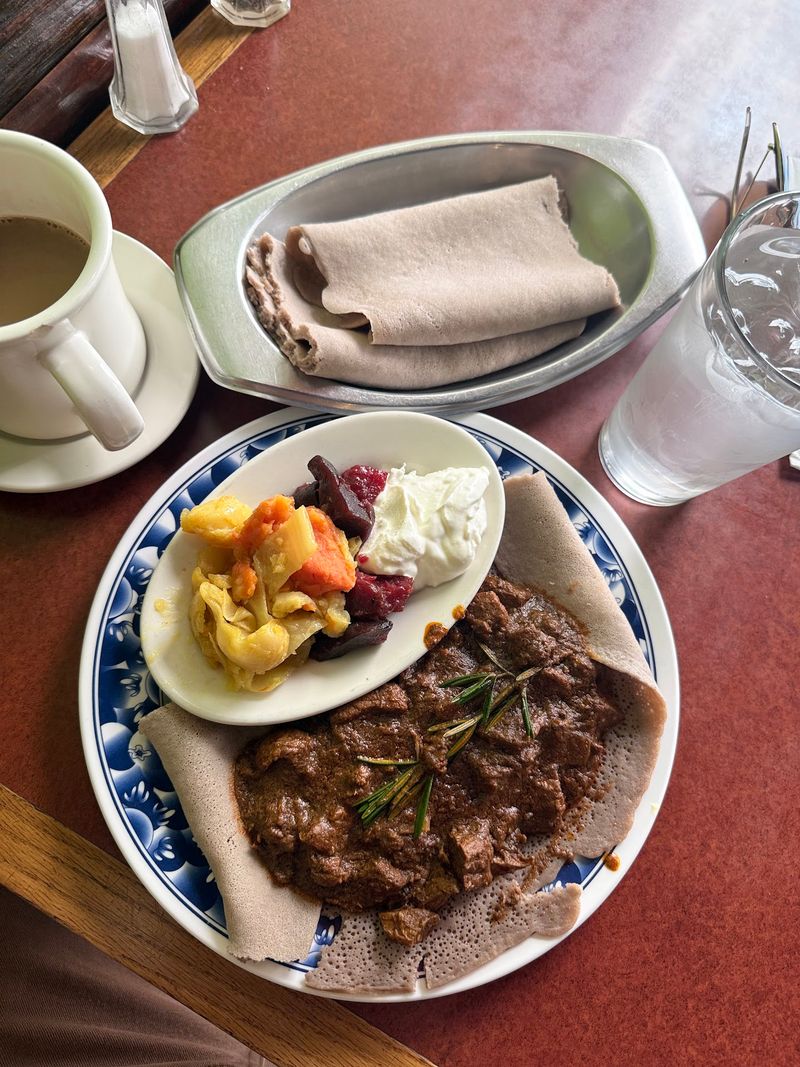
Forget forks for a minute. In Ethiopian dining, injera does the scooping, and it is the base of nearly every platter at Almaz Cafe.
Injera is a soft, thin flatbread with a bubbly surface. It is traditionally made with teff, a tiny grain grown in Ethiopia for thousands of years.
The batter ferments before cooking, which gives the bread a gentle sour note.
Here is how it works. Stews and vegetables are spooned onto a large round of injera, and extra rolls come on the side.
You tear off a piece with your right hand and pinch up a bite of food.
At Almaz Cafe, the standard injera blends teff with whole wheat flour. Diners who need to avoid gluten can request 100 percent teff injera for an added charge.
That option is worth knowing ahead of time. Teff on its own is naturally gluten free, so the all-teff version opens the meal to more people.
Eating with your hands may feel new at first. Within a few bites, it starts to feel natural and fun.
Now, what goes on top of all that bread?
Doro Wot Brings the Slow-Simmered Classic
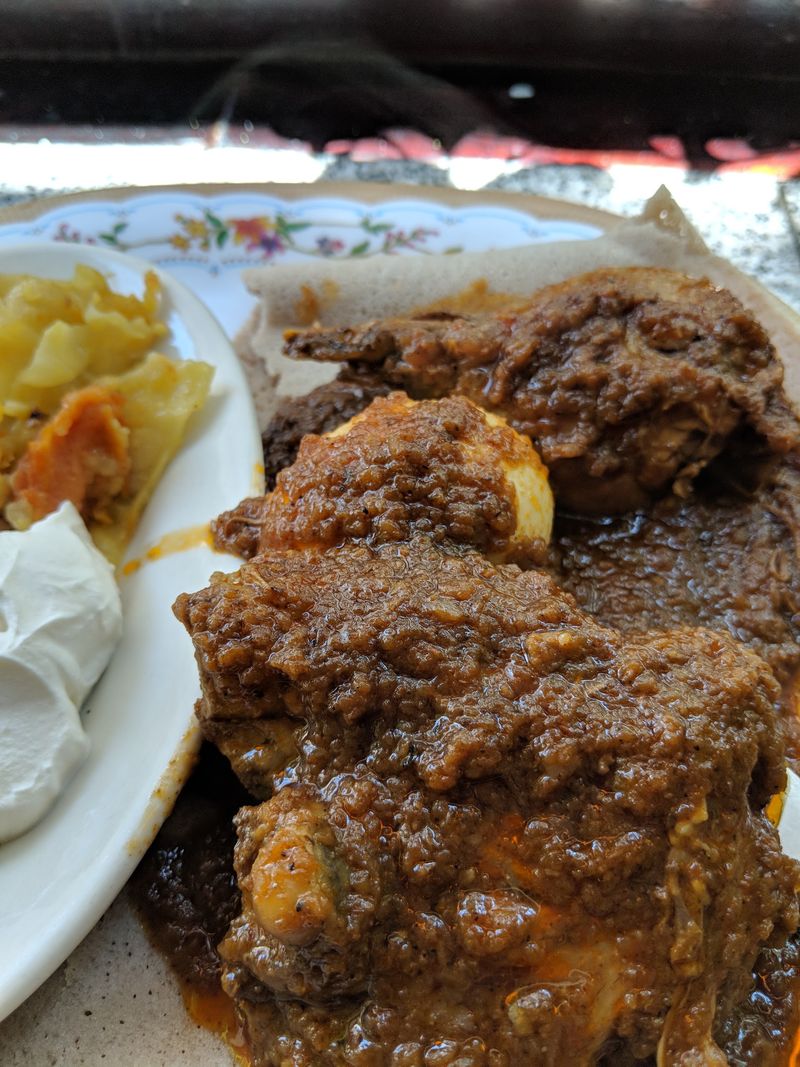
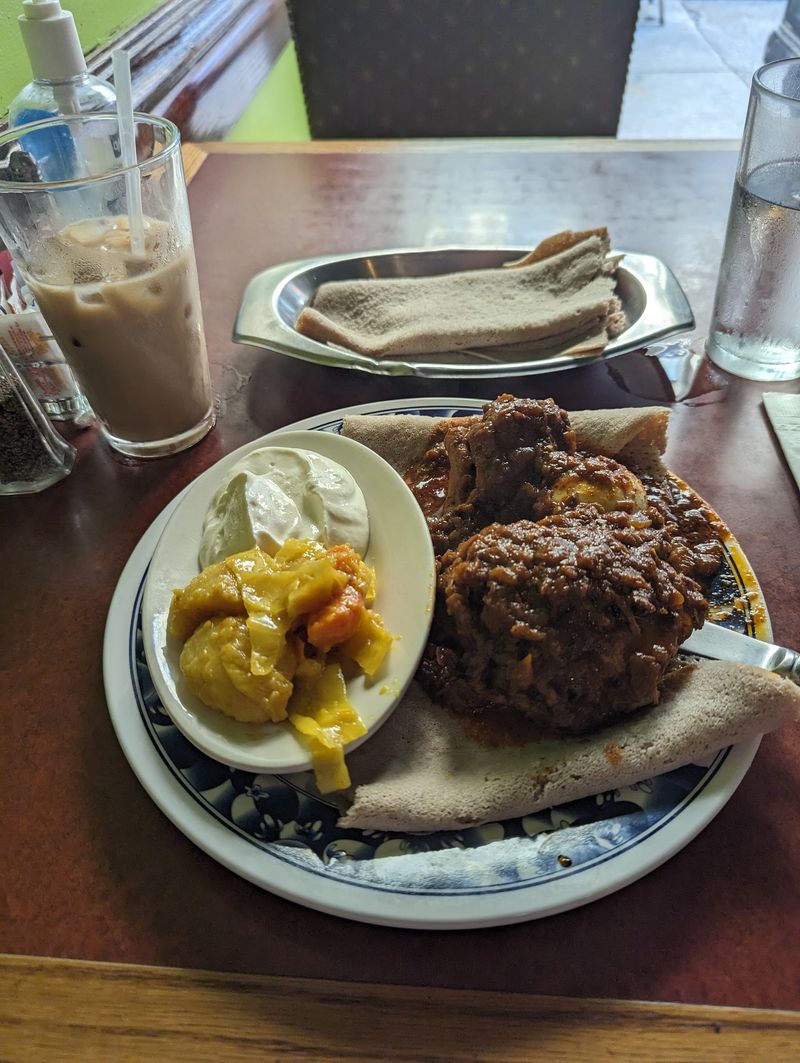
Ask almost anyone about Ethiopian comfort food, and doro wot comes up fast. Almaz Cafe serves this chicken stew as one of its signature plates.
Doro wot is traditionally cooked slowly with onions and berbere, a deep red spice blend. The long cooking time builds the sauce.
Ethiopian families often save it for holidays and special gatherings.
Here, the doro wot comes with helpful companions. It is served with a side of lentils, tikel gomen, and extra injera.
Tikel gomen is a mild dish of cabbage, carrots, and potatoes.
Those sides balance the meal nicely on paper. The stew brings warmth and spice, while the vegetables add a softer contrast.
Portions at Almaz Cafe run generous. Solo diners often find that one entree stretches into two meals, so packing leftovers is a smart plan.
I like doro wot as a starting point for nervous beginners. Chicken feels familiar, even when the spices are new.
If you want to share, pair it with a vegetable dish. That way, your table gets a taste of both sides of the menu.
Plant Eaters Get a Colorful Spread
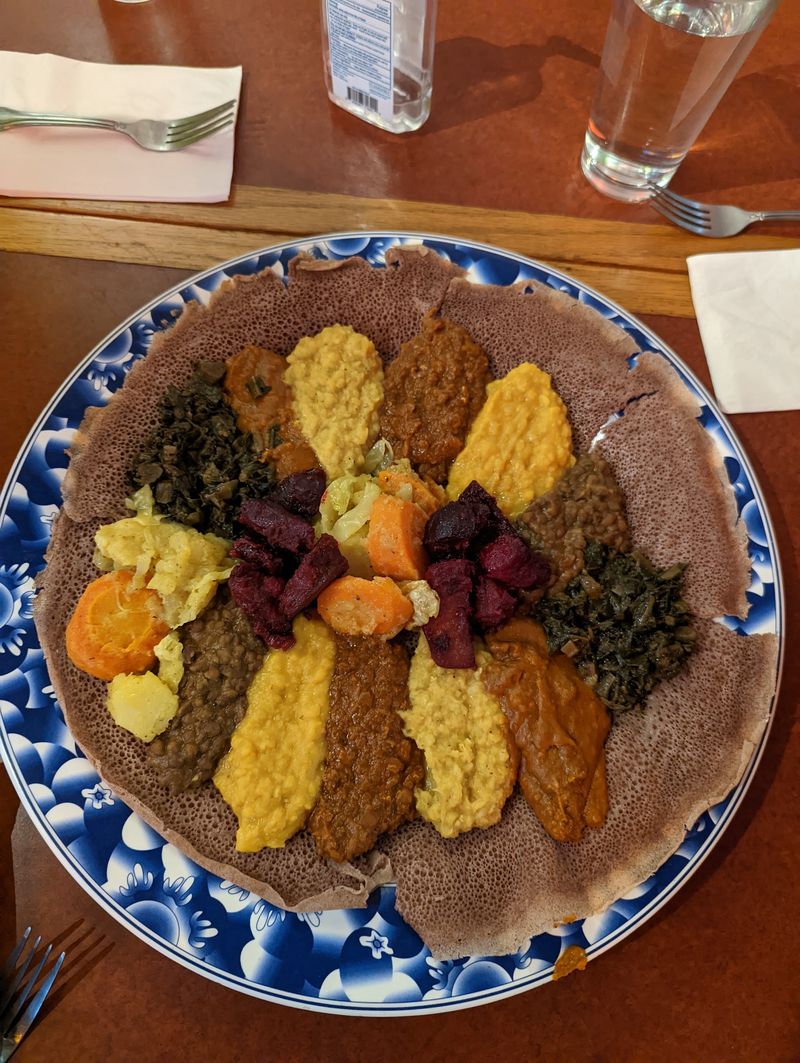
Vegetarians often get a single sad option at restaurants. At Almaz Cafe, the vegetarian platter ranks among the most ordered dishes on the menu.
Ethiopian cooking has a long tradition of meat-free meals. Many Ethiopian Orthodox Christians fast from animal products on certain days, so vegetable dishes developed real depth over time.
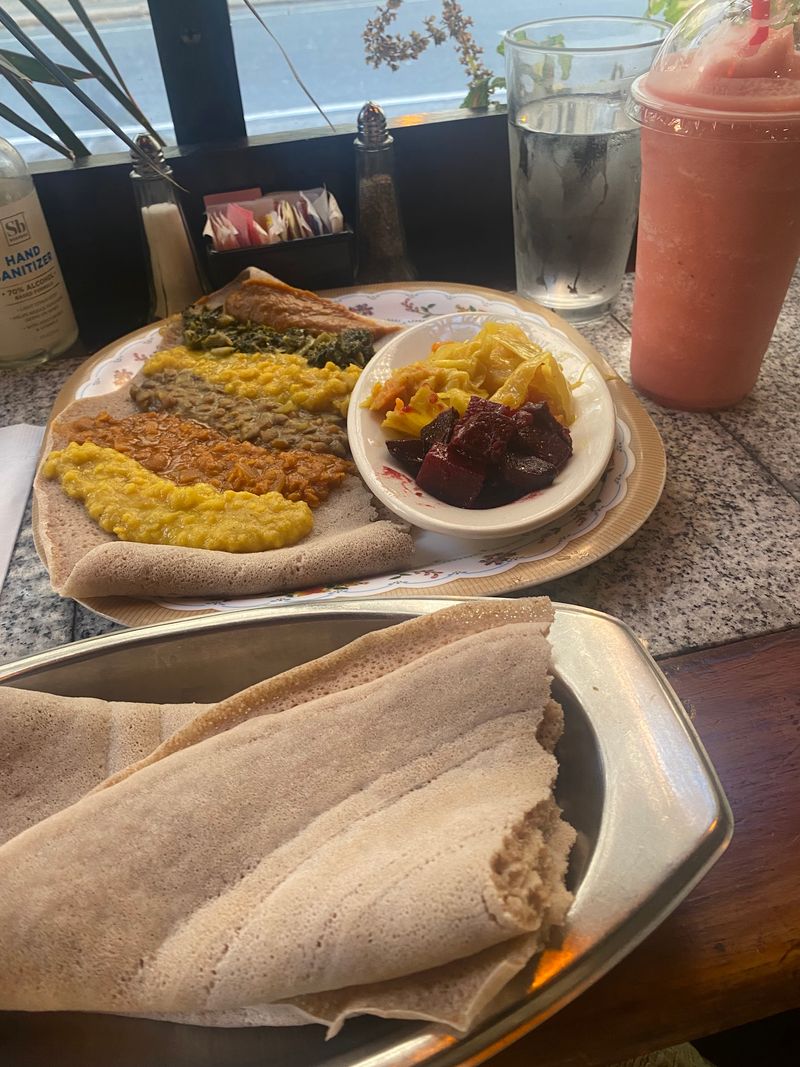
The combination here can include several lentil dishes, including misir, the red lentil stew. Green and yellow lentils may also appear, along with collard greens, beets, carrots, and cabbage.
Each small mound brings a different color to the injera.
Beets and collards in particular get plenty of love from diners. They add bright color and earthy contrast next to the lentils.
One practical tip helps here. If you are strictly vegetarian, mention it clearly when ordering, especially with a shared plate.
Meat and veggie dishes can sometimes arrive together on one platter.
The veggie combo also works well for groups. Everyone can reach in, try a little of everything, and figure out new favorites.
Meat lovers, meanwhile, have their own sizzling choices waiting.
Tibs, Firfir, and Other Meaty Choices
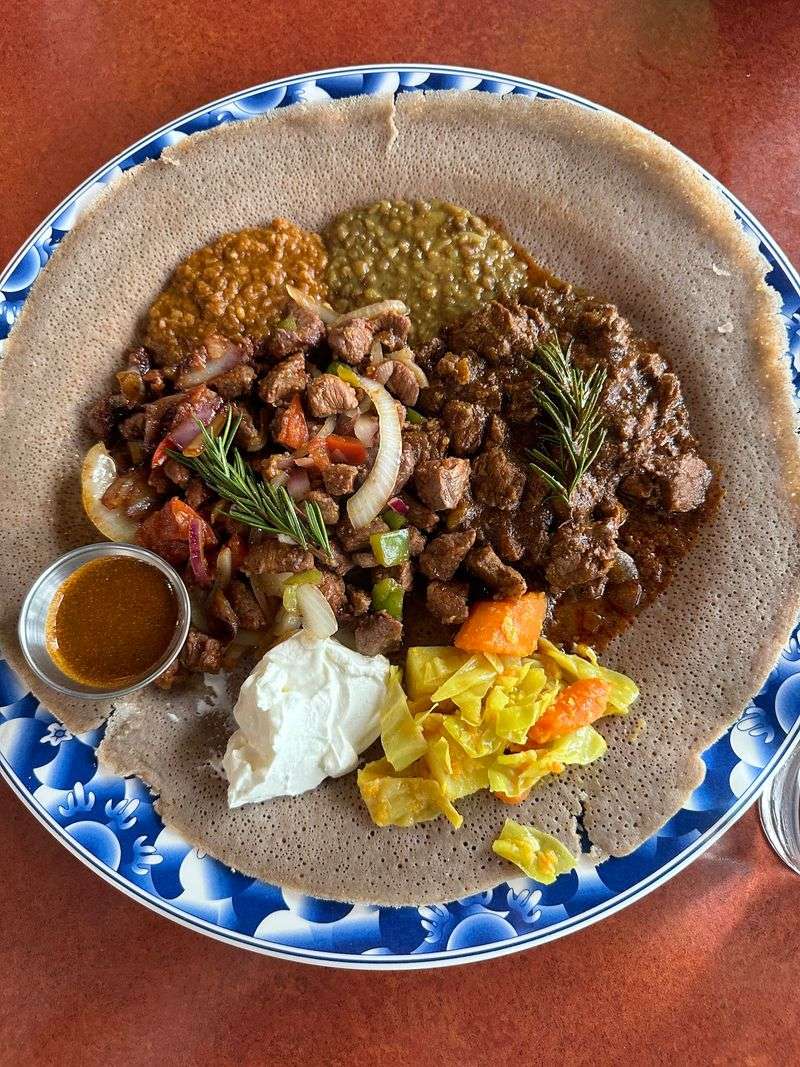
Tibs might be the easiest Ethiopian dish to love on the first try. The word refers to sauteed meat, and Almaz Cafe offers several versions.
Beef tibs and doro tibs, made with chicken, appear on the menu. There is also zilzile tibs, which uses strips of beef.
Lamb and beef tips can be ordered as a shared meal with vegetables and dips.
Many diners pair their meat with awaze sauce. Awaze is a spicy paste built on berbere, and it adds an extra kick for those who want it.
Firfir is another dish worth knowing. It mixes torn pieces of injera with a spiced sauce, so the bread becomes part of the main course.
Some beef dishes, like kitfo, can be cooked to your preference. Be clear about how you want it prepared, since traditional styles range from raw to fully cooked.
Beef curry and chicken curry round out the meaty side of the menu. With this much variety, ordering for a group gets easier.
Still, the morning crowd might skip all of this for a dish built on beans.
Foule Makes a Hearty Bean Option
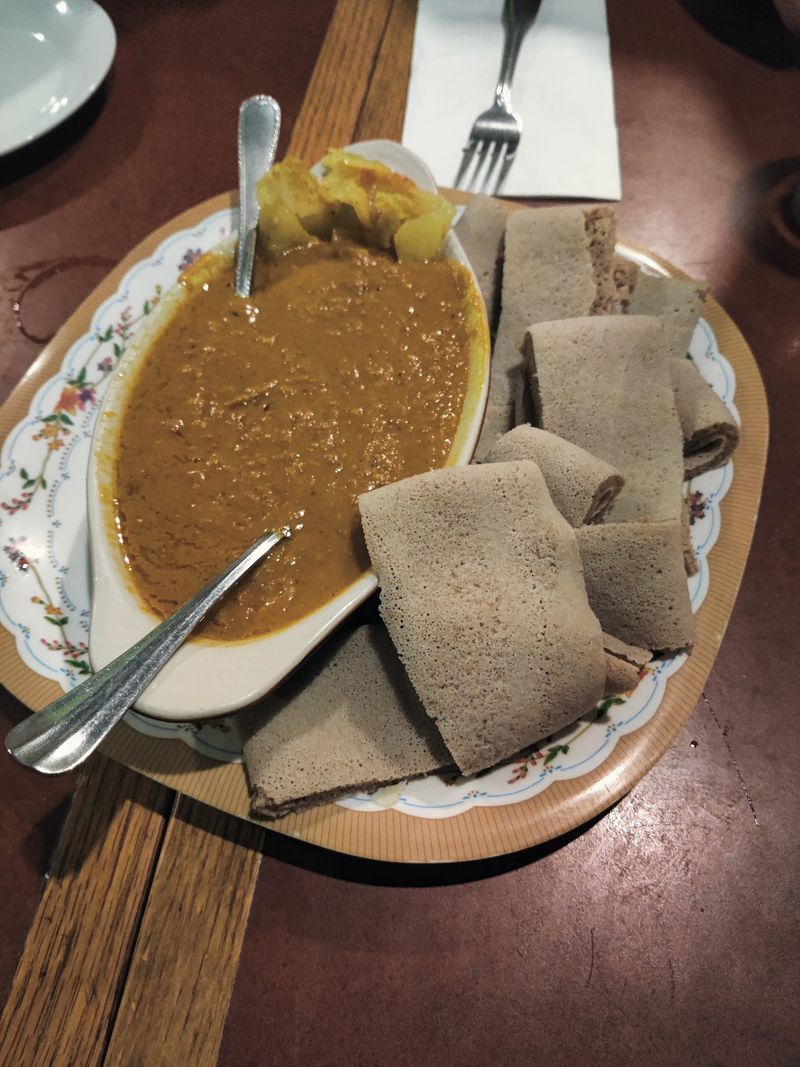
Beans for lunch? In Ethiopia, foule is a beloved everyday dish, and Almaz Cafe keeps it on the menu.
Foule, sometimes spelled ful, is made from fava beans. The beans are cooked until soft, then mashed and seasoned.
Across Ethiopia and much of the region, it is a common breakfast.
Toppings often include chopped tomato, onion, and peppers. Many people scoop it up with bread rather than injera.
That gives it a simpler feel than the big shared platters.
I think foule is a smart pick for a quick solo meal. It is filling, meat free, and less intimidating than a full combination plate.
Because the cafe opens at 11 in the morning, foule makes a natural late breakfast or early lunch. It fits nicely with a coffee from the counter.
The dish also shows another side of Ethiopian food. Not everything involves long-simmered stews or sauteed meats.
Everyday cooking, the kind families eat at home, has its own place here. Speaking of everyday rituals, the coffee deserves a closer look.
Coffee From the Land Where It Began
Legend says coffee was discovered in Ethiopia by a goat herder named Kaldi. His goats reportedly got lively after nibbling red berries from a certain shrub.
Whether or not the tale is true, Ethiopia has deep roots in coffee culture. In many homes, coffee is served during a ceremony where beans are roasted, ground, and brewed by hand.
It is a social ritual meant for slowing down and talking.
At Almaz Cafe, coffee sits at the heart of the business. The place describes itself as a coffeehouse as much as a restaurant.
Ethiopian iced coffee is a menu favorite worth trying. The cafe also pours espresso drinks, including espresso con panna, which is espresso topped with whipped cream.
Decaf versions are available for evening visits.
Window seats make a good place to sip and watch 20th Street go by. Many guests treat a coffee here as part of their daily routine.
I would happily end an Ethiopian meal with a small espresso. It ties the food back to the country that gave the world its favorite drink.
Not every drink here involves coffee, though.
Smoothies, Wraps, and Ice Cream Too
Not everyone in your group may want stew. Almaz Cafe planned for that by adding Western-style sandwiches and wraps to the menu.
Smoothies are another big draw. They come up more often than almost anything else when people talk about this cafe.
On a warm afternoon, a cold fruit smoothie makes an easy grab-and-go order.
This mix is genuinely practical. A family can visit with one adventurous eater and one picky kid, and both leave happy.
There is also ice cream for dessert. After a heavy platter, though, many diners struggle to find room for it.
I like how this broader menu lowers the pressure. A first-timer can order a wrap, taste a friend’s injera, and decide on Ethiopian food next time.
The counter service option helps here too. You can pop in for a smoothie without sitting down for a full meal.
That casual approach fits the cafe’s role as a neighborhood stop. It welcomes students, office workers, and coffee drinkers alike, all without fuss.
Knowing a few planning tips can make that visit even smoother.
Smart Moves Before You Head Over
Timing comes first. Almaz Cafe is open Wednesday through Saturday and closed Sunday through Tuesday, so plan around that midweek gap.
The space is small, but it packs in more seating than you might expect. If the ground floor feels busy, head upstairs.
That level offers a quieter place to eat or talk.
Ordering style is flexible. You can order at the counter or sit for table service, which suits both quick visits and longer meals.
Read the menu carefully, especially for shared orders. Several dishes may arrive together on one large platter, which is traditional for Ethiopian dining.
Prices reflect the Rittenhouse area. Still, generous portions mean many diners take food home for a second meal.
Bring a friend or two if you can. Ethiopian food is built for sharing, and a group can try more dishes without overordering.
Gluten-free diners should ask for the all-teff injera. Vegetarians should mention their needs clearly so plates stay meat free.
With those details handled, the rest is easy. Tear off some injera, sip your coffee slowly, and let the owners point you toward something new.
Share this story