There is a place in the heart of Nebraska where more than 50,000 artifacts tell the story of how an entire nation was built, one invention at a time. I had no idea what I was getting myself into when I first pulled off the highway and saw the sprawling grounds ahead of me.
What looked like a quiet, unassuming small-town attraction turned out to be one of the most jaw-dropping collections of American history I have ever encountered in my years of travel. One man, fueled by a childhood memory and a relentless passion for preservation, spent decades gathering everything from sod houses to jet engines, creating a museum complex that rivals anything I have seen in major cities.
By the time you finish reading, you will know exactly why this place has earned the nickname the Smithsonian of the Plains, and why so many visitors end up staying far longer than they ever planned.
A Grand Vision Anchored in the Heartland
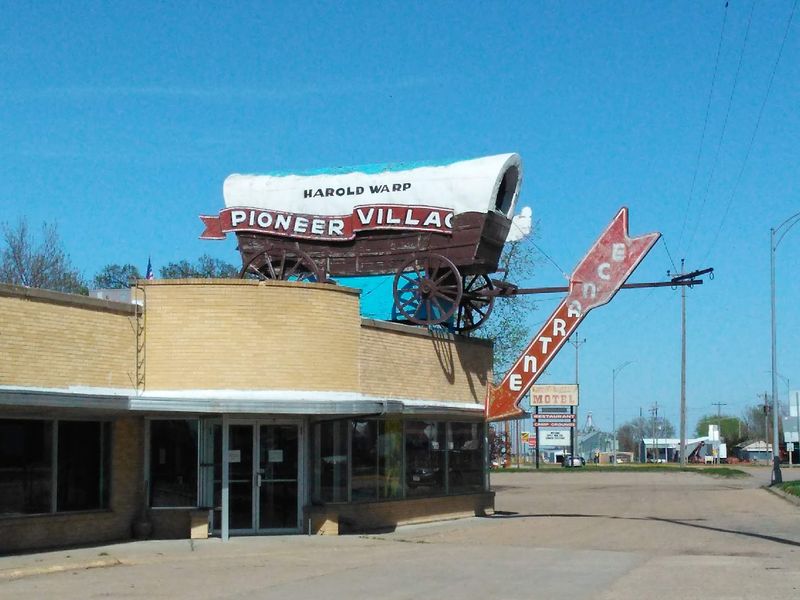
The address alone tells you something unexpected is waiting: 138 US Highway 6, Minden, Nebraska 68959, right at the crossroads of US 6 and 34 and Nebraska Highway 10. About 12 miles south of Interstate 80 from Exit 279, the Harold Warp Pioneer Village sits on 20 sprawling acres in Kearney County, a place that feels both ordinary and extraordinary at the same time.
Harold Warp, a Minden native, opened the village in 1953 with a mission that was equal parts personal and patriotic. He wanted to show the world how America grew, and he did it by assembling over 50,000 unique items arranged in chronological order starting around 1830.
Warp went on to become a successful Chicago plastics manufacturer, inventing Flex-O-Glass and pioneering polyethylene food wrap, but his heart never left Nebraska. Every exhibit here reflects his belief that progress deserves to be preserved, not forgotten.
The sheer scale of this place has to be seen to be believed.
The Man Who Started It All with a One-Room Schoolhouse
Harold Warp’s story reads like a classic American tale of grit and determination. Born in a sod house near Minden in 1903 and orphaned at age 11, he grew up knowing hardship firsthand before eventually heading to Chicago in 1924 to make his fortune.
The spark that ignited Pioneer Village was surprisingly modest. When the one-room country school he attended as a boy was put up for sale in 1948, Warp could not bear to see it disappear.
He bought it on the spot, and that single act of preservation quickly snowballed into something far grander.
He soon acquired the first church built in Minden, the old B and M Railroad Depot that marked the end of the line during homesteading days, and a growing roster of other historic structures. Each purchase was driven by the same conviction: that everyday objects and humble buildings carry the truest record of how people actually lived.
That conviction shaped every corner of this remarkable place.
Twelve Historic Buildings That Transport You Back in Time
Twelve historic structures are arranged around a circular green at Pioneer Village, making the layout feel more like a living town than a conventional museum. The design is intentional, inviting visitors to wander naturally from one era to the next without ever feeling rushed or overwhelmed.
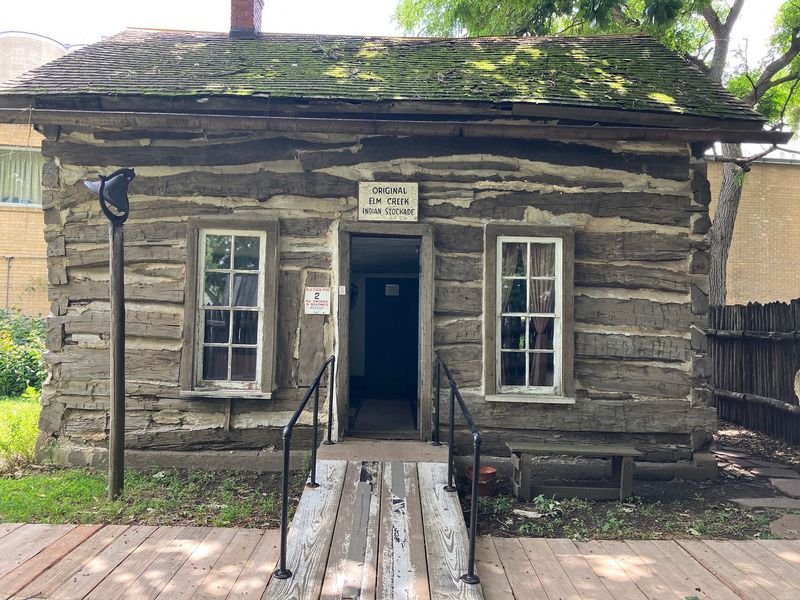
Among the standout structures is an authentic Pony Express Relay Station that reportedly houses Buffalo Bill’s saddle, a detail that gives the space an almost cinematic quality. The Elm Creek Stockade, originally built in 1869, has been authentically furnished to reflect the reality of early settler life on the frontier.
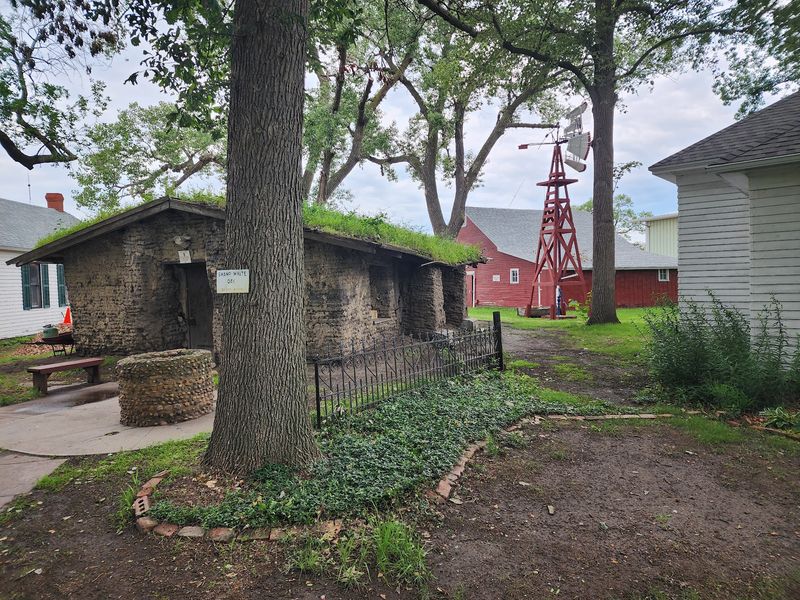
A replica Sod House, built to match Harold Warp’s actual birthplace with three-foot-thick walls made from eleven acres of prairie sod, offers one of the most visceral connections to pioneer hardship anywhere in the country. Add a historic country church, a working blacksmith shop, and the B and M Railroad Depot complete with early locomotives, and you have a village that genuinely hums with the past.
Over 350 Antique Cars and the Story of How America Moved
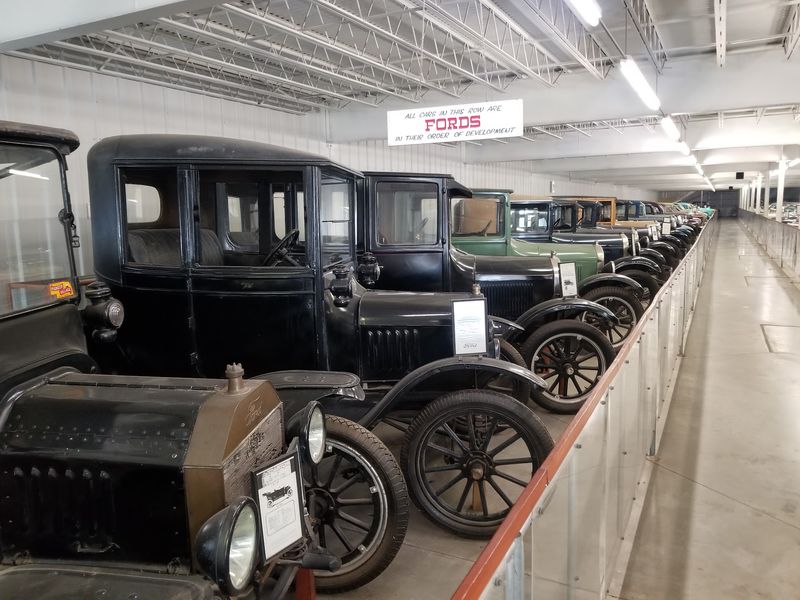
Car enthusiasts, prepare yourself, because the automotive collection here is something else entirely. Over 350 antique vehicles are displayed in strict chronological order, creating a visual timeline of how personal transportation evolved from barely-rolling contraptions to sleek mid-century machines.
The collection includes what is recognized as the world’s oldest Buick, dating to around 1902 or 1905, alongside a 1902 Cadillac and a 1903 Ford, both originally connected to Henry Ford himself. Seeing these vehicles side by side is a reminder of just how rapidly American ingenuity accelerated in the early twentieth century.
Beyond the cars, the transportation story extends to farm trucks, motorcycles, bicycles, and even an 1871 San Francisco Cable Car, each piece representing a different chapter in the way people and goods moved across a growing nation. The chronological arrangement is what makes this collection truly educational rather than just visually impressive.
You do not just see old vehicles; you understand why each one mattered when it arrived.
Seventeen Flying Machines That Trace the Arc of Aviation
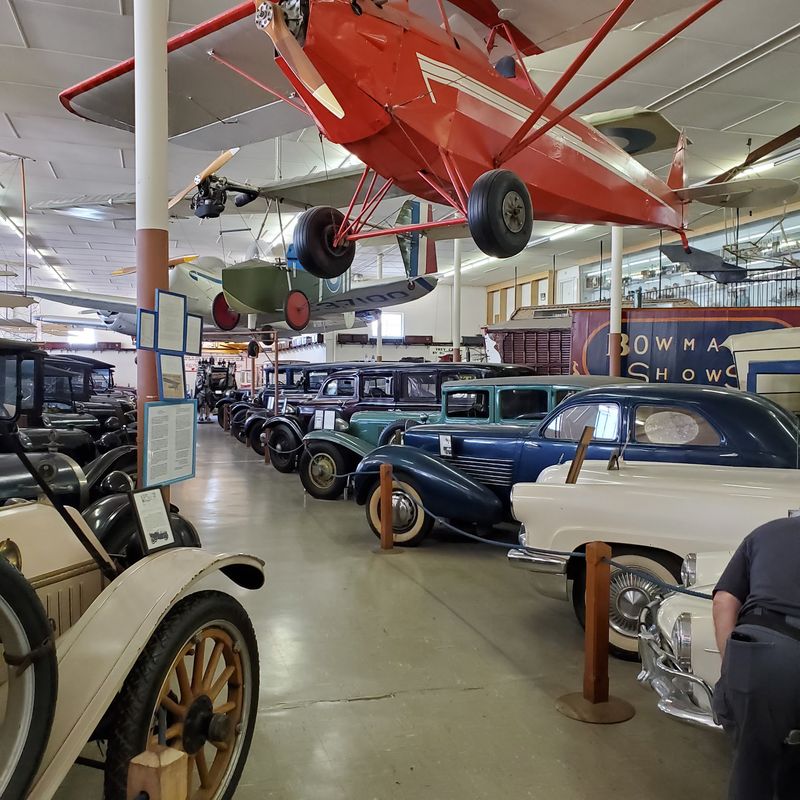
Few things capture the audacity of American innovation quite like watching the history of flight unfold in a single building. Pioneer Village houses 17 historic flying machines, and the collection spans the full arc from fragile early aircraft to the dawn of the jet age.
The crown jewel of this particular display is the first Bell P-59 jet aircraft, produced in 1942 as a groundbreaking moment in wartime engineering. Seeing it positioned alongside earlier propeller-driven planes makes the leap in technology feel almost surreal, like watching decades of progress compressed into a single room.
What makes this exhibit especially compelling is how it connects aviation history to the broader American story of pushing boundaries. Every aircraft on display represents someone’s willingness to rethink what was possible.
The collection does not just celebrate flying machines; it celebrates the stubborn human refusal to accept that the sky is a ceiling rather than a starting point. And if you think the aviation display is surprising, the farming equipment section offers its own kind of revelation.
One Hundred Tractors and the Agricultural Soul of America
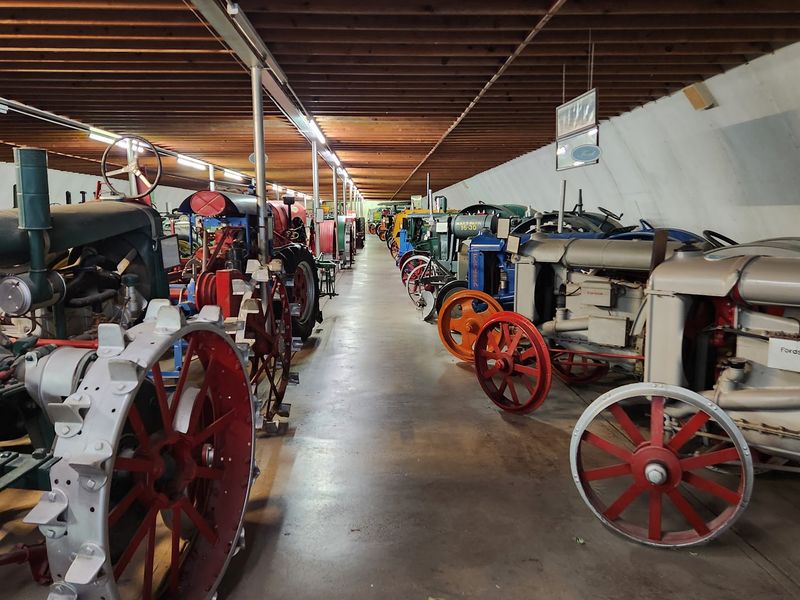
Agriculture built the American heartland, and Pioneer Village honors that truth with one of the most comprehensive farming equipment displays you will find anywhere in the country. One hundred antique tractors stand in formation, each one representing a specific moment in the evolution of how food was grown and harvested.
Alongside the tractors, you will find sod cutters, early corn harvesting devices, threshing machines, and a fascinating array of implements that most modern visitors have never seen outside of a photograph. The detail and variety in this collection is genuinely impressive, and the chronological arrangement makes it easy to follow how each innovation built on the last.
For anyone who grew up around farms, this section carries a particular emotional weight, the kind that comes from recognizing tools your grandparents might have used. For city visitors, it opens a window into a way of life that fed the nation for generations.
Either way, the agricultural exhibit earns its place as one of the most quietly powerful corners of the entire complex.
The General Store, Schoolhouse, and Shops Frozen in Time
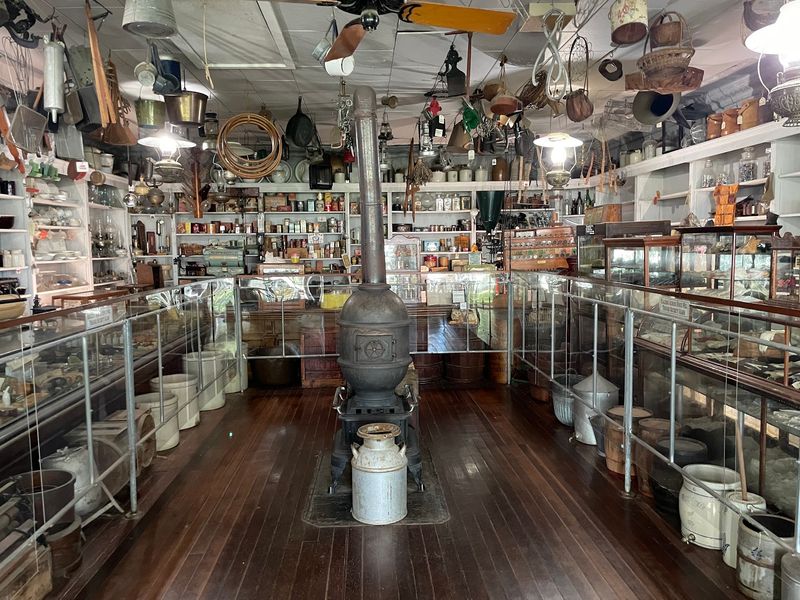
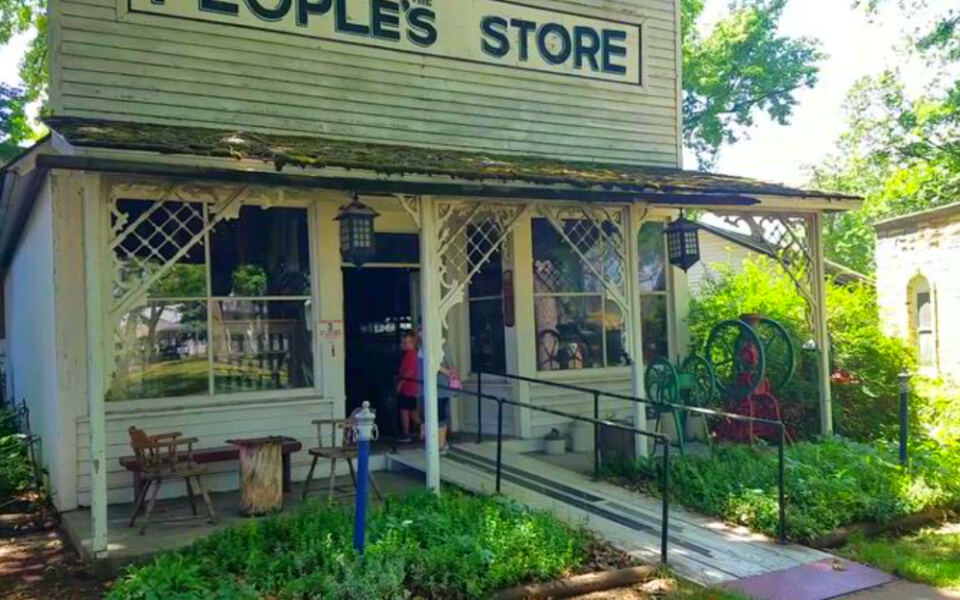
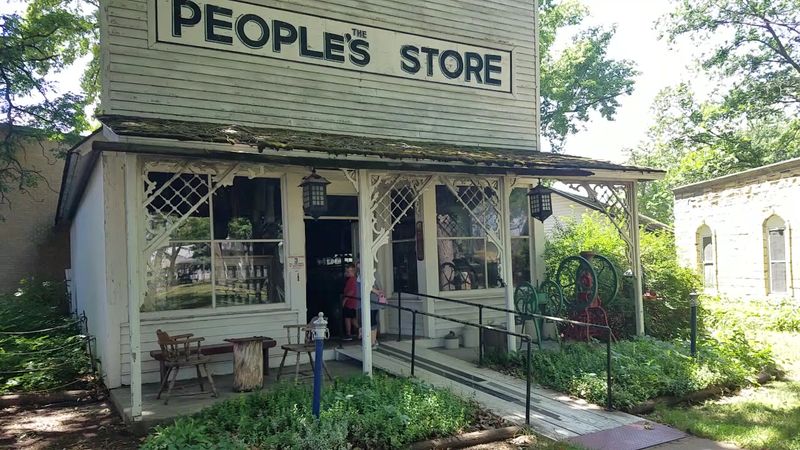
There is something genuinely playful about wandering through the Historic General Store at Pioneer Village, where shelves are stocked with flintlock guns, button shoes, calico fabrics, and a glass cat perched on a cracker barrel to keep mice away. That last detail, charming and oddly practical, is exactly the kind of thing that makes this place feel alive rather than merely preserved.
The one-room schoolhouse adds another layer of personality to the visit, featuring Harold Warp’s own perfect attendance certificates and a desk he once carved his name into as a boy. It is the kind of exhibit that makes history feel personal rather than textbook-distant.
Beyond the store and schoolhouse, the village includes a music shop, a doctor’s office, a print shop, a classic drugstore, and an old-fashioned barbershop, each stocked with authentic period items. During summer months, live demonstrations of yarn spinning, weaving, and broom making bring these spaces to life in a way that no display case ever could.
The past suddenly feels very close.
Twenty Rooms Showing How American Homes Changed Over Time
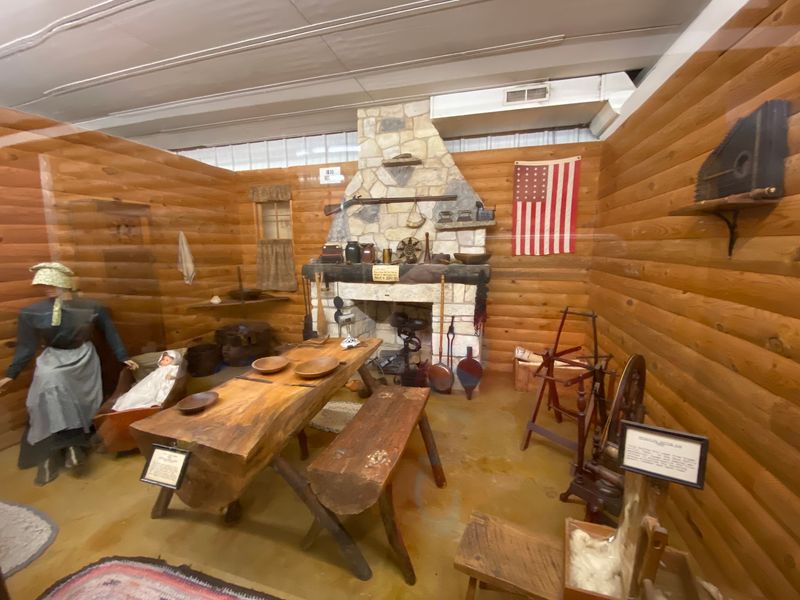
One of the most quietly fascinating sections of Pioneer Village is the Homes and Shops building, where twenty full-sized room vignettes are arranged in chronological order to show how American domestic life evolved from 1830 onward. Kitchens, living rooms, and bedrooms are recreated with period-accurate furniture, appliances, and decor, making it easy to picture real families moving through these spaces.
The progression from a simple hearth-centered kitchen to a room featuring early electric appliances is genuinely striking. Each decade brings new objects and new arrangements that reflect shifting priorities, technologies, and tastes.
You can almost feel the pace of change accelerating as you move through the rooms.
What sets this exhibit apart from similar displays elsewhere is the sheer completeness of each vignette. Nothing feels half-finished or placeholder.
Every room tells a coherent story about how people actually cooked, relaxed, slept, and organized their daily lives during that particular era. For families visiting with children, this section tends to spark some of the best conversations of the entire trip.
Curious Oddities and Artistic Treasures Hidden in Plain Sight
Amid all the heavy machinery and historic buildings, Pioneer Village harbors a surprising number of artistic and quirky treasures that reward the curious visitor. The world’s oldest internal combustion engine, dating to 1876, sits quietly in one corner, a mechanical milestone that most people walk past without realizing what they are looking at.
The art collection adds an entirely different dimension to the experience. Twenty-five Currier and Ives prints offer vivid snapshots of nineteenth-century American life, while the museum also holds what is recognized as the largest single collection of Rogers statues, intricate sculptures depicting everyday people and dramatic historical moments.
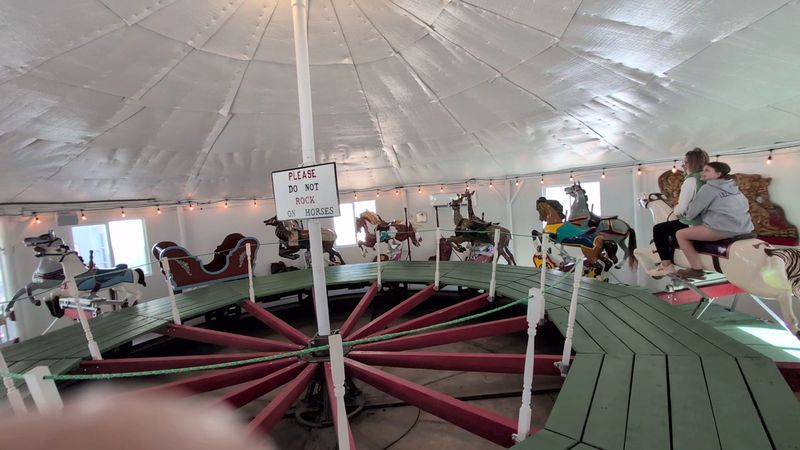
Perhaps the most delightful surprise is the 1879 steam-operated carousel that visitors can actually ride for a nickel. It is the kind of detail that stops you mid-step and makes you grin.
The first keyboard instrument, dating to 1709, adds yet another layer of unexpected discovery to a place already overflowing with them. Every corner here seems to hold one more thing you never expected to find.
Firefighting, Communications, and Presidential Connections
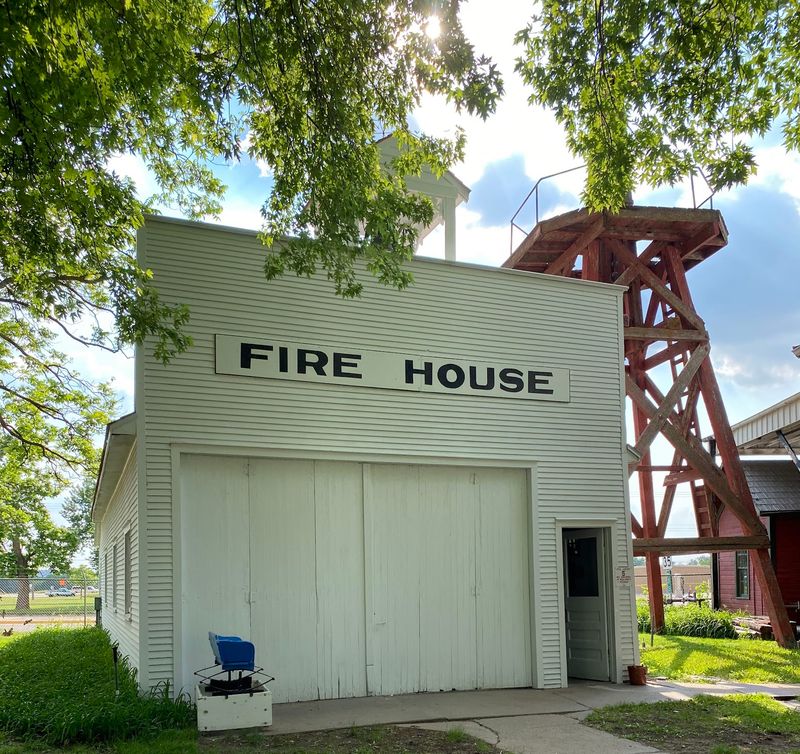
Some of the most specialized collections at Pioneer Village reward visitors who take the time to slow down and look carefully. The firefighting exhibit traces the evolution of fire suppression from simple hand-pumped carts to powerful motorized trucks, illustrating how communities adapted their protective capabilities as towns grew more complex and combustible.
The communications collection is equally absorbing, charting the journey from early telegraph machines through radio equipment and into the first television sets. Laid out chronologically, this display makes the acceleration of information technology feel almost dizzying, each invention building on the last with increasing speed.
For a touch of unexpected presidential history, the china and pottery display includes a bowl once owned by Abraham Lincoln, a detail that adds a genuinely poignant note to what might otherwise seem like a decorative collection. And standing outside near the historic structures, an old frontier jail crafted from strap iron offers a stark reminder that not every chapter of American progress was comfortable or fair.
History, in all its complexity, is present here.
Practical Tips for Making the Most of Your Visit
A visit to Pioneer Village deserves real planning, not a casual hour-long stop. The museum is open daily during summer from 9:00 AM to 6:00 PM, and a two-day pass is available for good reason.
Most visitors find that two hours barely scratches the surface, and a minimum of half a day is the more honest recommendation.
Adult admission is priced at $15.00, with children aged 6 to 11 at $7.50 and kids five and under entering free. Discounts are available for military personnel, seniors, and AAA members, making it one of the better-value experiences you will find anywhere in the region.
The on-site Pioneer Village RV Park and Campground accommodates units up to 50 feet with 30 and 50 amp service, as well as primitive spots, so there is no reason to rush. The Historic Valentine Diner, accessible from both inside the museum and the main parking lot, serves classic American food most days from 11:00 AM to 2:00 PM.
One tip worth remembering: the buildings are not all climate-controlled, so comfortable layers are a smart choice on variable weather days.
Share this story