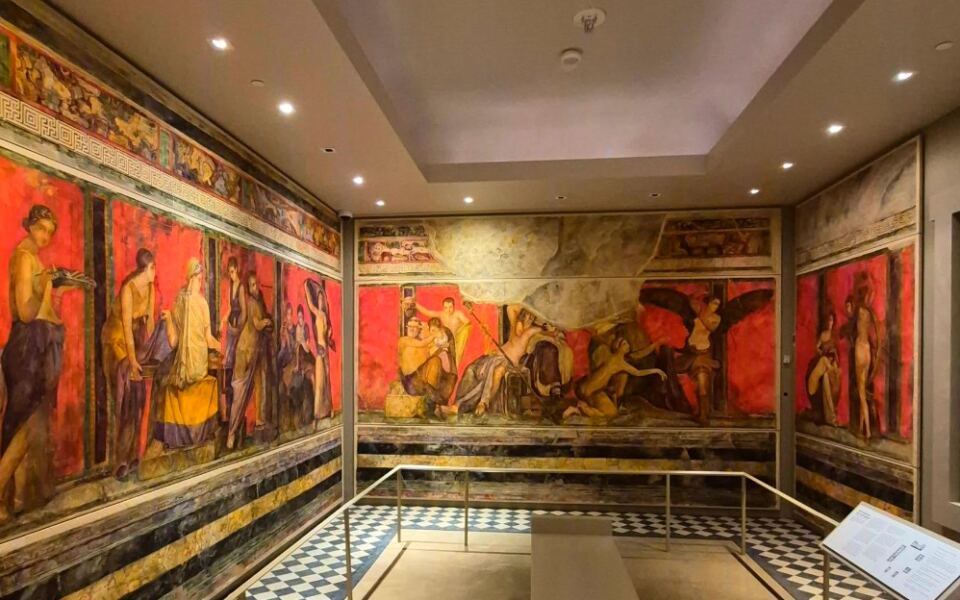
A famous room from ancient Pompeii has been recreated inside a Michigan museum, complete with nearly life-size paintings showing a mysterious Roman ritual. You can see it for free at the Kelsey Museum of Archaeology in Ann Arbor.
The paintings were reproduced by an Italian artist in the 1920s, preserving details from the Villa of the Mysteries. Today, they are part of a collection that also includes Egyptian mummies, Roman glass, ancient coins, and artifacts uncovered by University of Michigan archaeologists.
The museum has another unusual feature. Some display cases have drawers visitors can open to discover additional ancient objects.
With free admission and thousands of years of history to explore, there’s plenty here that most people wouldn’t expect to find on a college campus.
A Roman Villa Room in the Middle of Ann Arbor
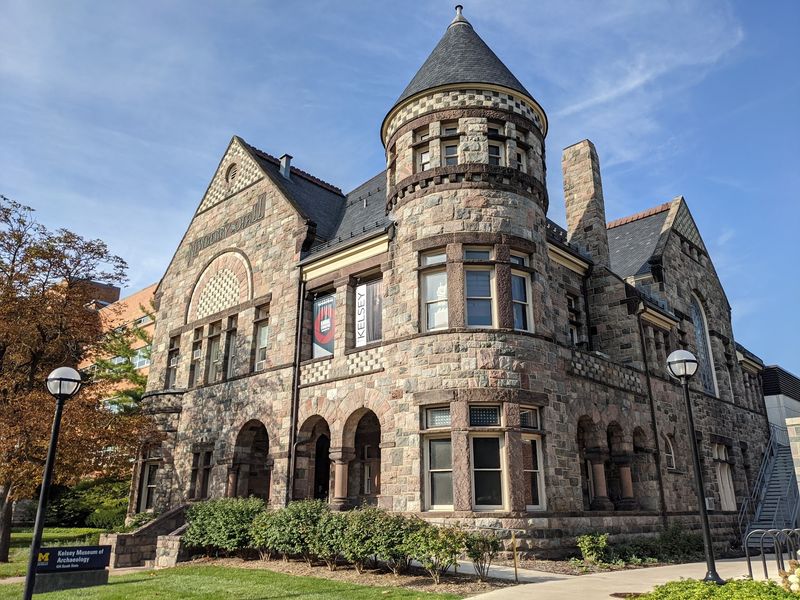
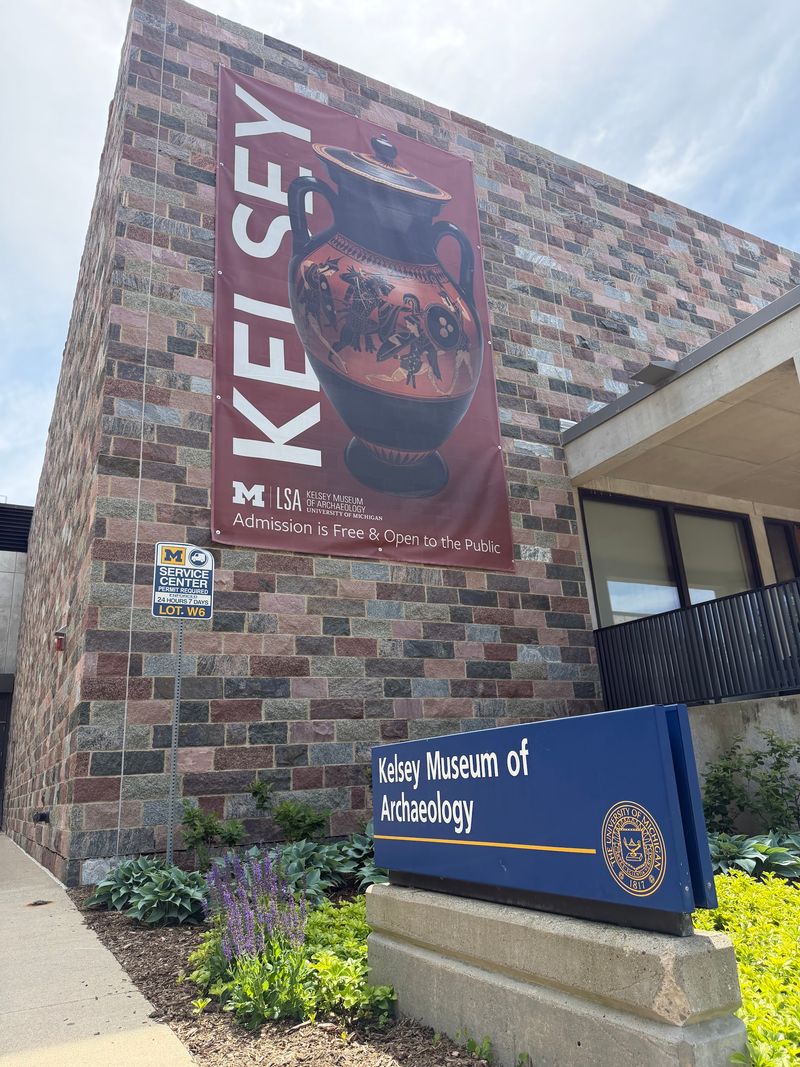
The Kelsey Museum of Archaeology sits at 434 South State Street in Ann Arbor, Michigan, right on the University of Michigan campus. It belongs to the university and focuses on the ancient Mediterranean and Near East.
Admission is free, though the museum welcomes donations. That simple policy opens the door to students, families, and anyone passing through town with an hour to spare.
The museum’s most talked-about feature connects to Pompeii. A large replica of the painted walls from the Villa of the Mysteries, an ancient home just outside the buried city, has been part of its story since a major exhibition there.
Visitors who expect a dusty hallway of labels may be surprised. The collection includes Roman glass, Greek pottery, Egyptian burial items, coins, and everyday objects from real excavations.
I find the location part of the appeal. You can walk past coffee shops and classroom buildings, then stand in front of paintings based on a room from the first century BC.
Street parking and nearby public garages are the usual options, so plan for a parking fee even though the museum itself costs nothing. The frescoes deserve a closer look first.
Red Walls From the Villa of the Mysteries
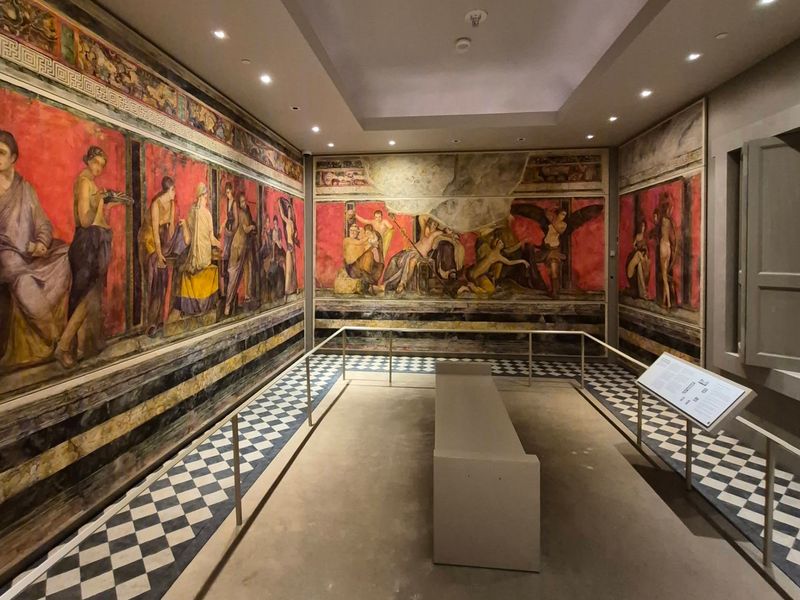
Cinnabar red covers the original walls of the Villa of the Mysteries, and the color still grabs attention today. The Kelsey recreated this famous painted room for its exhibition on the villa.
The original frieze shows a series of life-size figures. Scholars still debate what the scenes mean, though many link them to rites honoring the god Dionysus.
That mystery is a big reason the room draws so much interest. Nobody has a final answer, which leaves space for visitors to form their own ideas.
The Kelsey version was made at a large scale so people could experience the room’s size. Standing before figures nearly as tall as you changes how the paintings feel compared with a photo in a book.
I’d spend a few minutes just following the scenes around the walls. Each figure seems to react to the one beside it, almost like a story told in panels.
Check the museum’s current exhibits before your trip, since displays can rotate or move during gallery updates. Knowing what’s on view helps you plan your time.
The way these paintings were remade is a story of its own.
Artists Who Painted Ancient Walls by Hand
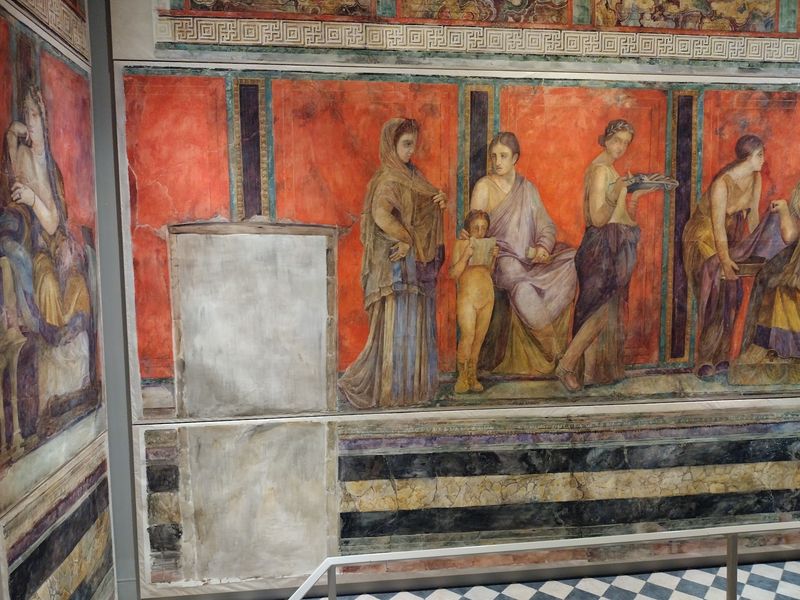
Copying a two-thousand-year-old painting sounds simple until you try matching faded colors and cracked plaster. The Kelsey’s reproduction project took careful study and lots of patience.
The team worked from detailed images and research about the original walls. Their goal was to show the room’s scale and color, so visitors could sense the space Romans once used.
Exhibits connected to the project also explored how Romans made their pigments. Learning about color sources turns a pretty wall into a chemistry and history lesson at once.
Kids often enjoy this angle most. Talking about how paint was made from minerals feels more hands-on than memorizing dates.
What catches my attention is how much skill hides behind a replica. People sometimes treat copies as less important, but making one well requires the eye of an artist and the mind of a researcher.
If staff members are nearby, ask what they know about the process. Museum workers here often share details that labels leave out.
Once you’ve seen the painted walls, the museum’s real ancient objects offer a different kind of thrill.
Treasures Dug Up by Michigan Teams
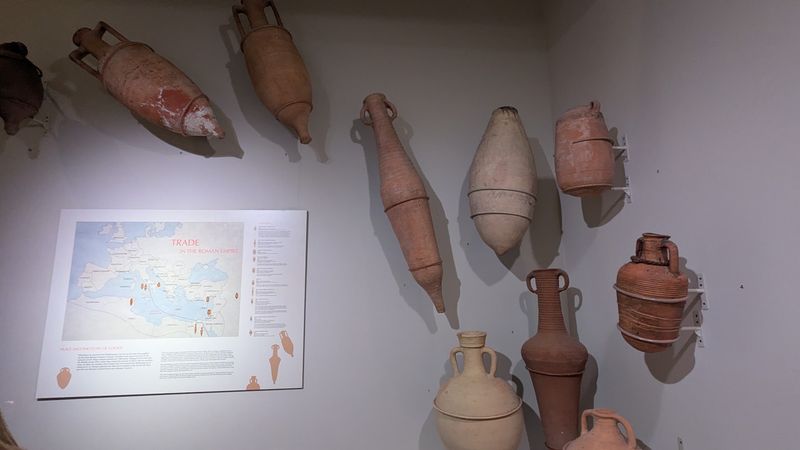
Many objects in this museum came out of the ground thanks to University of Michigan archaeologists. Early twentieth-century digs at sites like Karanis in Egypt and Seleucia on the Tigris in Iraq filled many of the shelves.
Karanis was a farming town in Roman Egypt. Its dry climate preserved things that usually rot away, including textiles, baskets, and wooden items.
Those finds show regular life rather than royal splendor. You can look at items people cooked with, worked with, and played with nearly two thousand years ago.
Some cases include old photos and postcards from the excavations. Those images connect each object to the people who uncovered it, which makes the displays feel more personal.
The museum is also open about where pieces came from. That honesty about origins matters a lot in modern archaeology.
I like knowing that a Michigan campus played a real role in uncovering the past. It turns the collection into part of the state’s own history.
The Egyptian galleries hold some of the most memorable pieces, including one painted coffin.
Painted Coffins and a Famous Cat
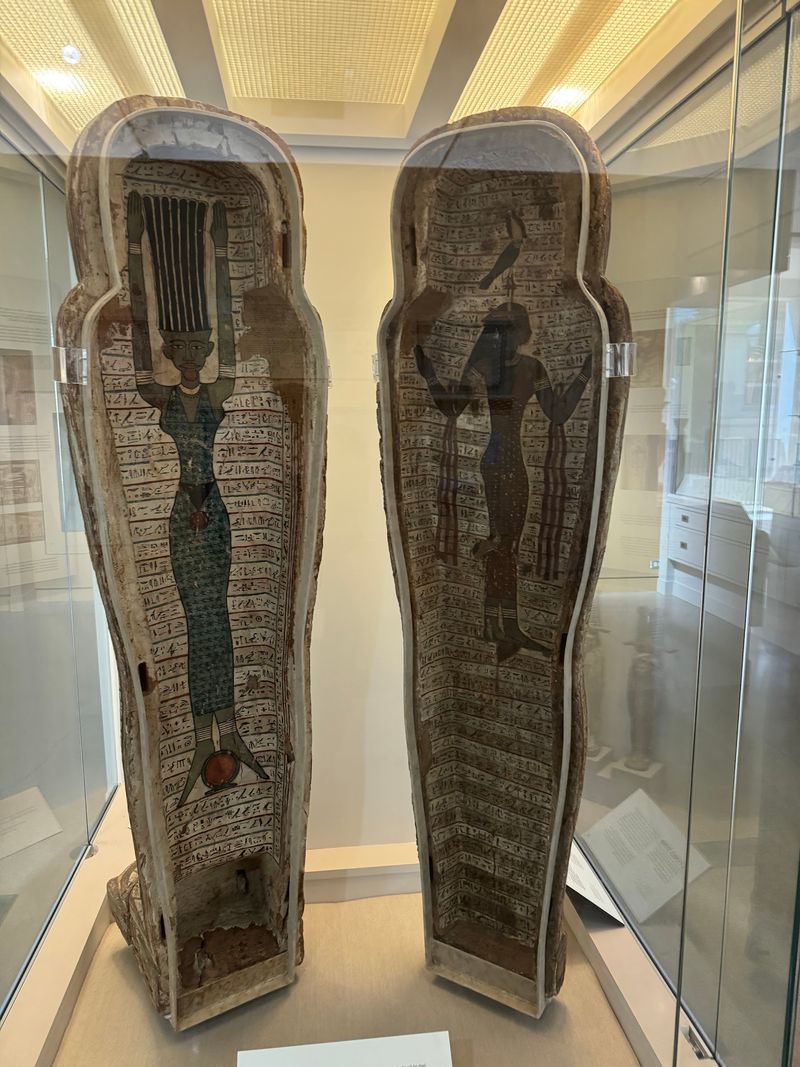
Bright colors on an ancient Egyptian coffin can catch you off guard. Many people picture Egypt in sandy browns, but these pieces show bold paint and detailed designs.
The Kelsey’s Egyptian collection includes burial objects, amulets, and items connected to beliefs about the afterlife. A wrapped cat is a crowd favorite for younger visitors.
Egyptians honored cats and linked them to the goddess Bastet. Seeing an actual preserved animal makes that fact much easier to remember than reading it in a book.
One thing has changed in recent years. The museum no longer displays human mummies, reflecting wider discussions in the museum world about how to treat human remains respectfully.
That decision gives families something meaningful to talk about. Kids can ask why museums make choices like this, and the answer teaches respect for people from long ago.
I’d suggest starting here if you’re visiting with children. The coffins and animals usually spark questions that carry through the rest of the trip.
Not everything Egyptian here is serious, though. Some objects are toys.
Toys, Glass, and Everyday Roman Life
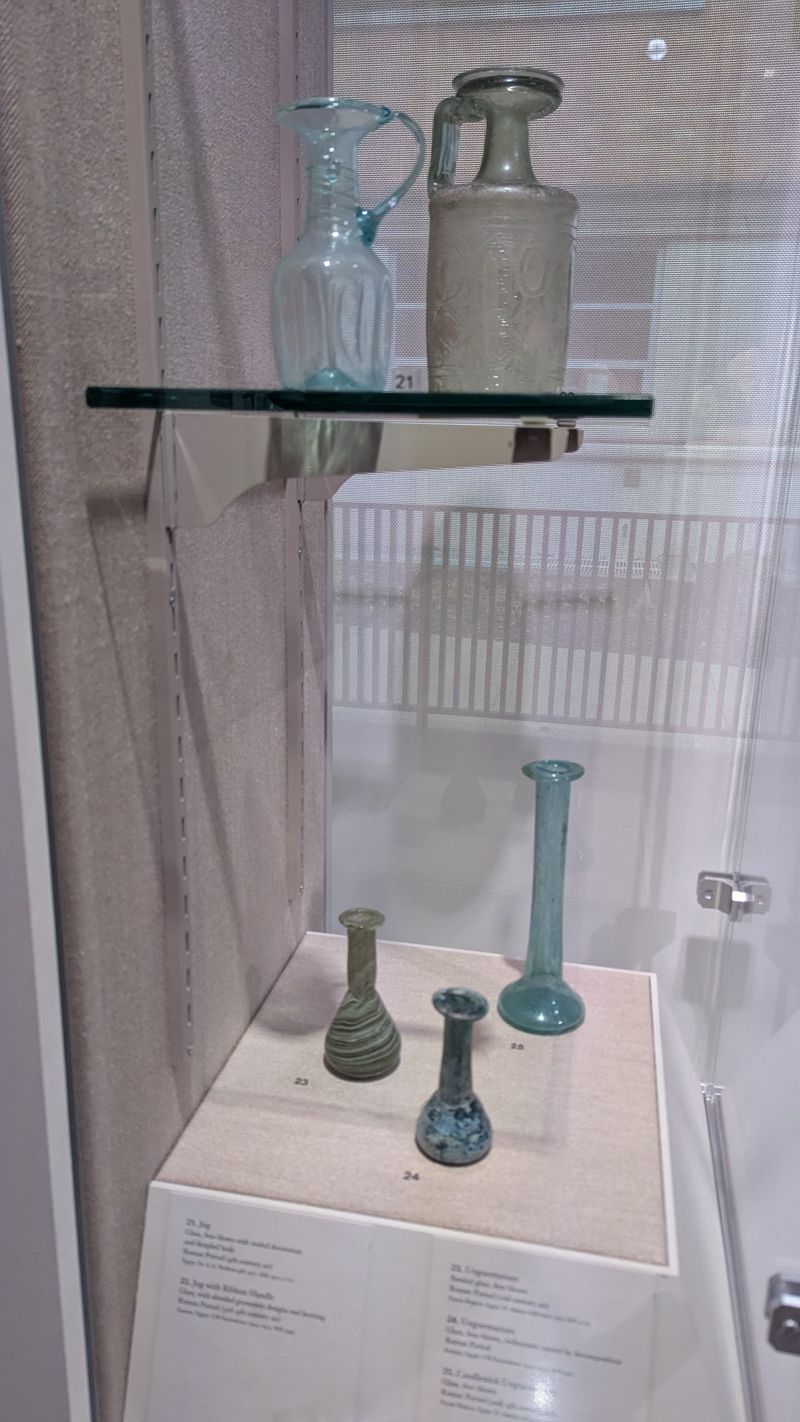
Children in Roman Egypt had toys, and some of them survived. Spotting them in a case is a fun reminder that kids long ago wanted to play just like kids today.
The museum also displays plenty of Roman glass. Bottles, cups, and small containers show how skilled glassmakers were, even without modern tools.
Pottery, lamps, and tools fill other cases. These objects help explain cooking, lighting homes at night, and daily chores.
People who enjoy crafts tend to linger here. If you’ve ever tried pottery or glassblowing, the workmanship stands out right away.
I find these everyday items more relatable than grand statues. A worn lamp or a small toy says a lot about a real household.
Bring questions for younger visitors, like what toys they think they’d find. Simple games like that keep kids looking closely at each case.
Some objects aren’t even in plain sight, which leads to one of the museum’s smartest features.
Open the Drawers Below the Cases
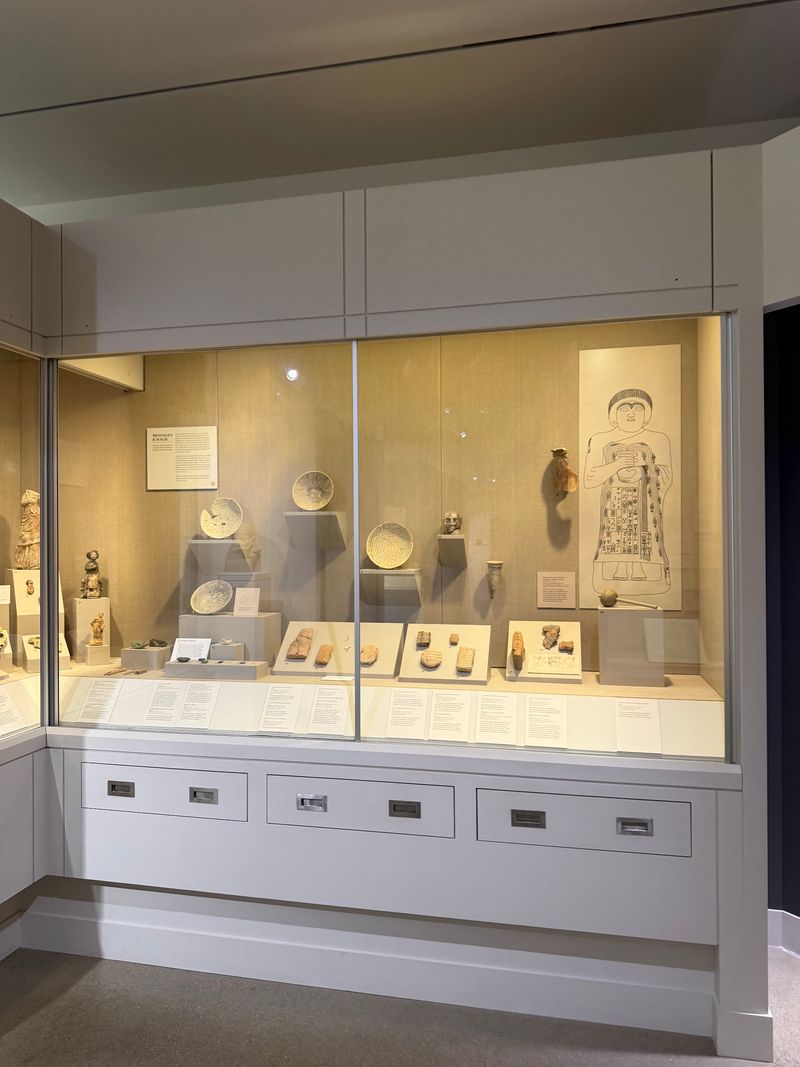
Pull-out drawers sit beneath some display cases, and they’re easy to miss. Opening them reveals more artifacts tucked under glass.
This setup lets the museum share far more objects than the main shelves could hold. Small coins, beads, and fragments often live in these spaces.
For curious kids, drawers feel like a treasure hunt. Each one adds a small surprise to the visit.
Adults benefit too. Many of the drawer items are tiny, so you can study details up close without crowds blocking the view.
I’d make a habit of checking every drawer you pass. Skipping them means missing a good portion of what’s on display.
Handle them gently, of course. They’re built for visitors, but slow, careful pulls keep everything in good shape.
Little features like this help a smaller museum feel deep. Speaking of size, the building’s layout is worth understanding before you arrive.
A Lecture Hall With an Old Story
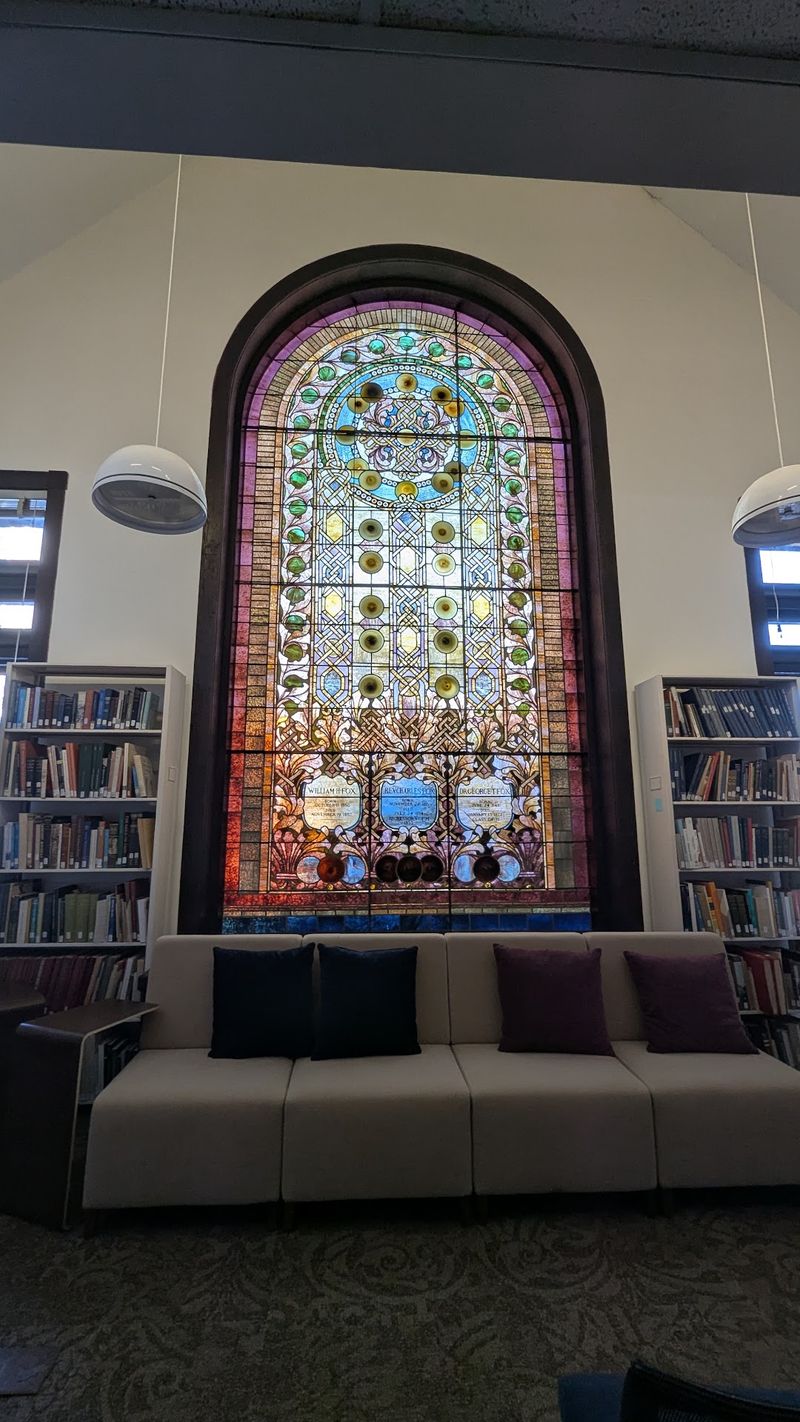
Newberry Hall, the museum’s original home, opened in 1891 as a building for student religious groups. Its stone walls and arched windows still stand out on State Street.
The museum is named after Francis W. Kelsey, a University of Michigan professor of Latin.
He pushed for the expeditions and collecting that built the early collection.
In 2009, the museum opened the William E. Upjohn Exhibit Wing.
This newer addition gave the collection much more space for galleries.
The blend of old and new is easy to spot from the sidewalk. The historic hall sits beside a modern glass section.
It’s a manageable size, too. Many people tour it in about one to two hours, depending on how closely they read.
That makes it a good stop to pair with other campus spots. You won’t need to plan an entire day around it.
Knowing the building’s purpose today helps explain the events held inside.
Talks, Tours, and Curious Questions
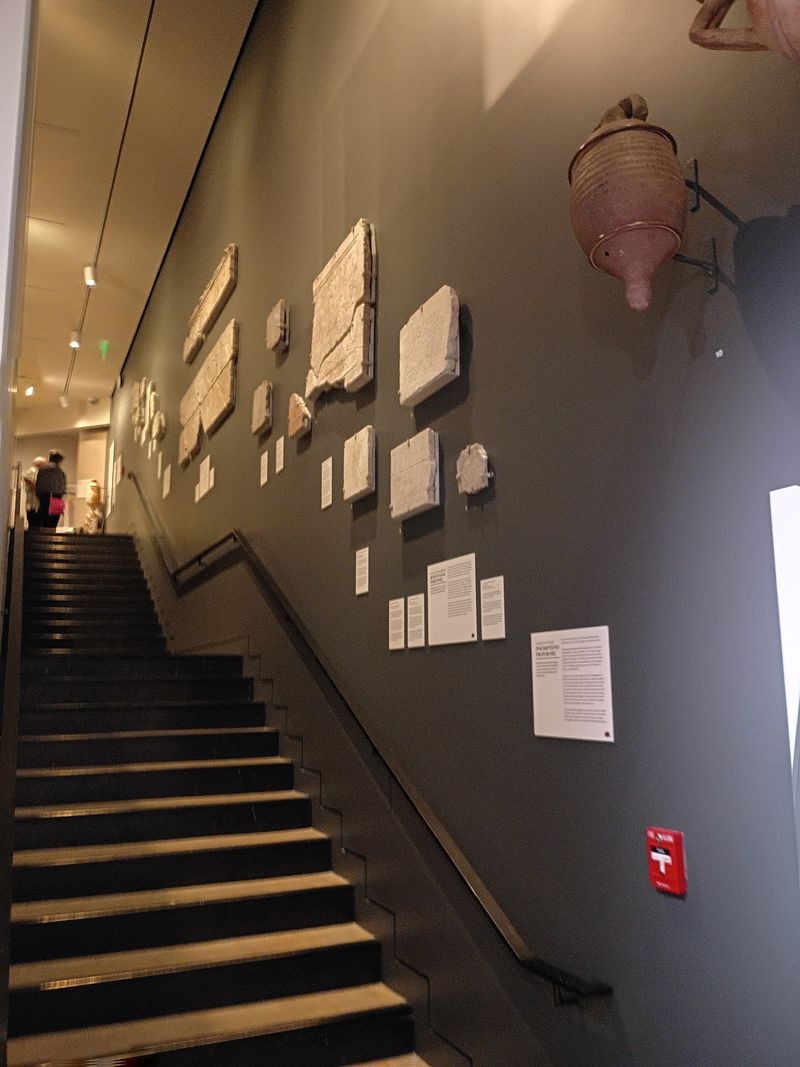
Guided tours and lectures add another layer to a visit. The museum hosts programs tied to its research and exhibitions.
Because it’s part of a university, experts in archaeology often lead talks. That gives visitors a chance to hear from people who actually study ancient sites.
Group tours can be arranged for schools and organizations. Teachers often use the museum to bring history lessons to life.
Family events appear on the schedule at times, too. These may include crafts or activities linked to ancient cultures.
I like that the staff seems happy to chat. Front desk conversations can lead to fun facts you’d never find on a sign.
Check the official calendar before you go, since programs change through the year. Some events need advance registration.
All that planning leads to one final question, which is how to make your visit run smoothly.
Smart Tips Before You Head Over
Mondays are closed days, so don’t plan your trip then. Hours are generally longer on weekdays than weekends, but confirm the latest schedule online.
Admission stays free, and a donation box helps support programs. Even a small gift helps keep the doors open for everyone.
Parking is the main cost you’ll face. Public garages and street meters sit nearby, and campus areas can fill up during busy school days.
Some galleries may be closed for updates at times. Checking ahead keeps you from missing something you hoped to see.
Pair your visit with a stroll around campus. The famous spinning Cube sculpture is just a short walk away.
I’d bring a notebook for kids who like to sketch. Drawing a Roman figure or Egyptian design keeps them focused and proud of their work.
A quiet afternoon here can spark a lasting interest in history. Not bad for a museum that asks only for your curiosity and a few minutes of your time.
Share this story