Buffalo, New York holds a secret that most people drive past without ever knowing. Hidden in plain sight on a busy downtown street is a theater so ornate, so carefully preserved, that walking through its doors feels like crossing into a different century.
Built in 1926 and designed with the involvement of Louis Comfort Tiffany, this grand performing arts palace has survived a full century of change without losing a single detail of its original brilliance. From its towering baroque ceilings to its gilded archways, every corner tells a story.
This article takes a close look at what makes this landmark so extraordinary, why it still matters today, and what you can expect when you finally decide to see it for yourself.
The Tiffany Connection That Makes This Theater Unique
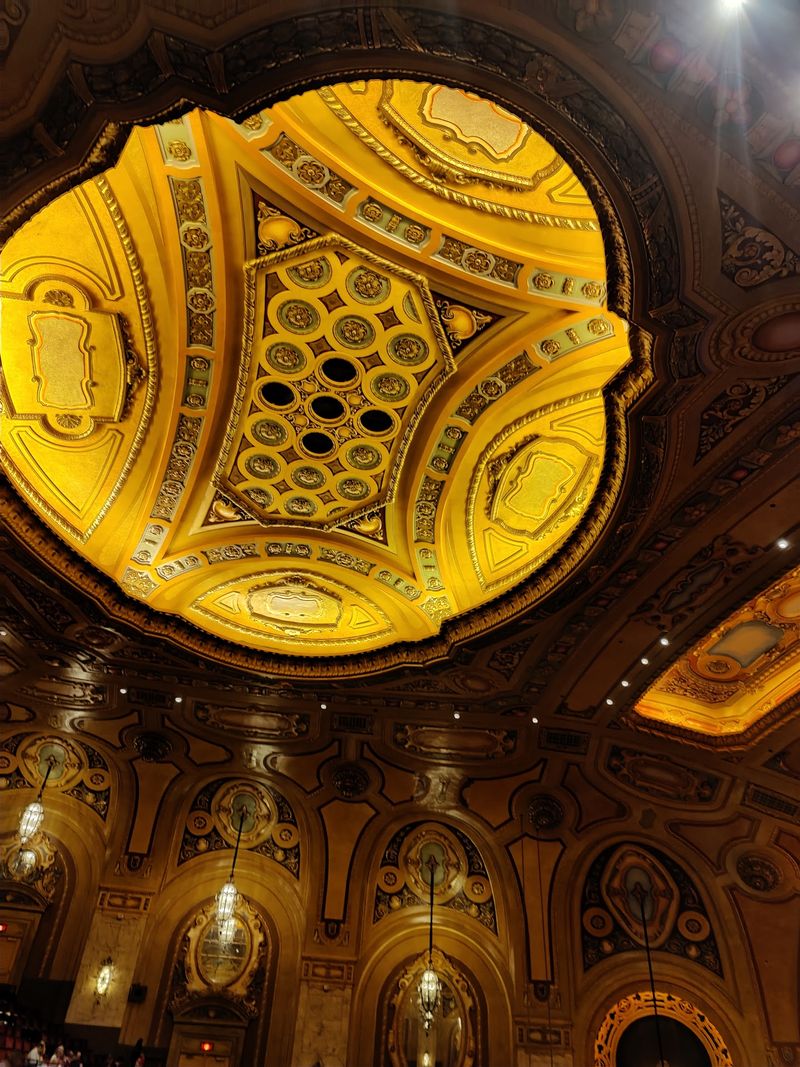
Louis Comfort Tiffany is best known for his stained glass lamps and windows, but his design contributions to Shea’s Buffalo Theatre represent one of the most underappreciated chapters in his legacy. The theater is widely recognized as the only surviving Tiffany-designed theater in the world, which is a distinction that no other performing arts venue on earth can claim.
Tiffany’s influence is visible throughout the interior, from the color palette to the decorative motifs that line the walls and ceilings. His design philosophy blended art and architecture in a way that made every surface feel intentional and alive.
The fact that this theater has survived intact for nearly 100 years is a testament to the dedication of everyone who has worked to protect it. Other Tiffany-designed spaces have been demolished or heavily altered over the decades.
Shea’s Buffalo stands as the last remaining example of what his theatrical vision looked like in full, breathtaking scale.
What the 1926 Design Still Looks Like Today
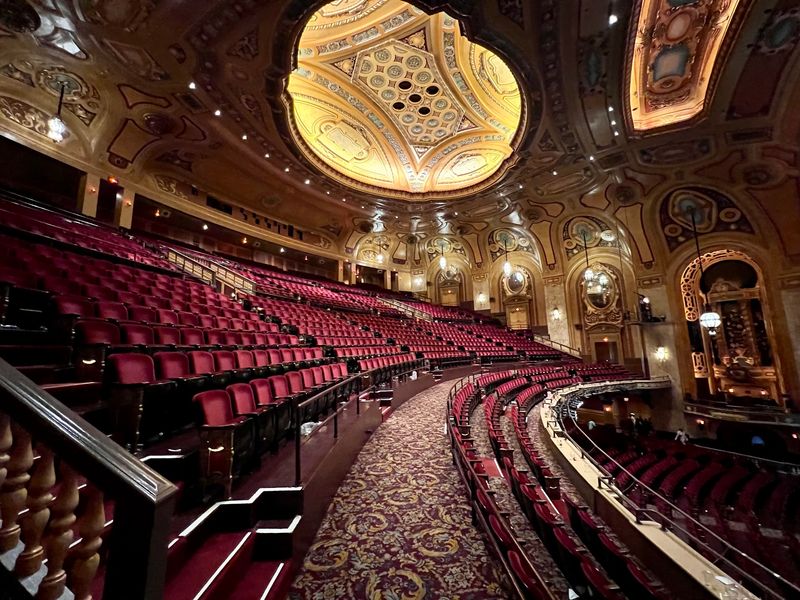
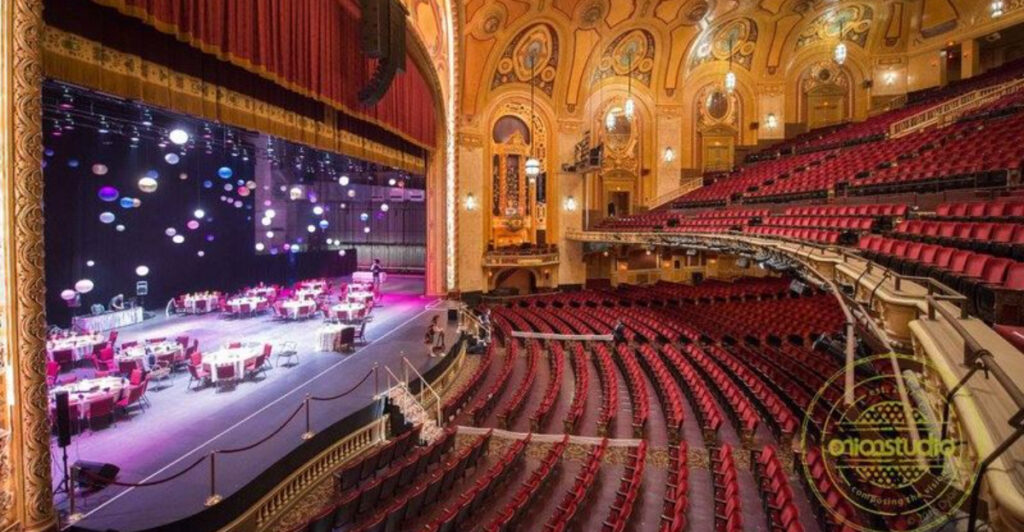
Few theaters in North America have held onto their original design as faithfully as this one. The interior of Shea’s Buffalo is a showcase of Spanish and French Baroque and Rococo styling, with layers of decorative plasterwork, gilded moldings, and painted ceiling panels that date back to the original 1926 construction.
The auditorium features multiple seating levels, each framed by arched openings and ornamental columns. The ceiling above the main floor is particularly striking, with its carved details and warm tonal palette that has been carefully maintained through multiple restoration efforts over the decades.
Restorations have been carried out with a commitment to authenticity, ensuring that replacement materials and techniques match the originals as closely as possible. The result is a space that genuinely reflects what audiences in the 1920s would have experienced when they first walked through those doors.
A century later, the craftsmanship still holds up remarkably well.
From Picture Palace to Broadway Powerhouse
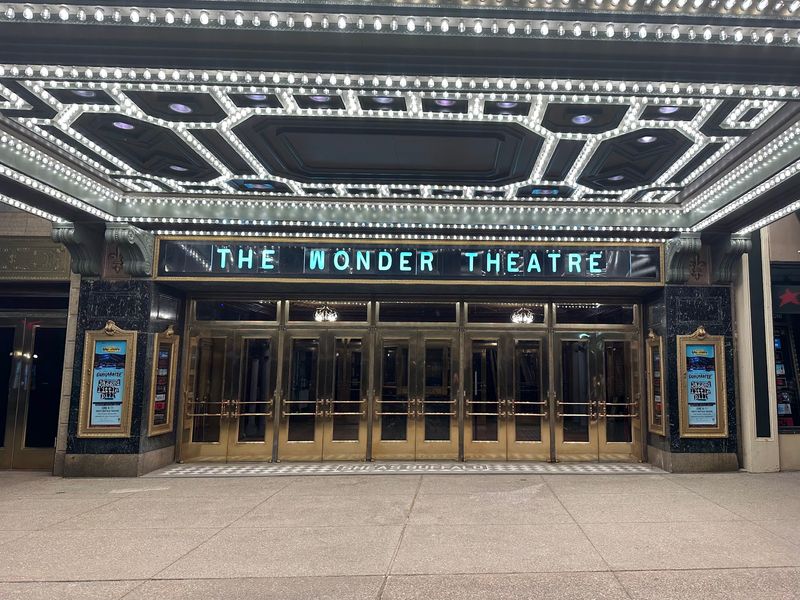
When Shea’s Buffalo first opened its doors in 1926, it was built to show silent films and early talkies to the masses. The picture palace format was enormously popular at the time, and theaters like this one were designed to make every moviegoer feel like royalty for a few hours.
As film culture shifted and movie palaces fell out of fashion, many similar theaters across the country were demolished or converted into parking structures. Shea’s Buffalo took a different path.
Rather than disappearing, it reinvented itself as a premier venue for live performance, eventually becoming one of the top destinations for Broadway touring productions in the northeastern United States.
Today the theater regularly hosts major touring shows that travel from New York City and beyond. Productions like Back to the Future the Musical, The Outsiders, and others have graced its stage in recent years.
The transition from cinema palace to Broadway powerhouse is one of the most remarkable comeback stories in American theater history.
Over 3,000 Seats and Every One Has a Story
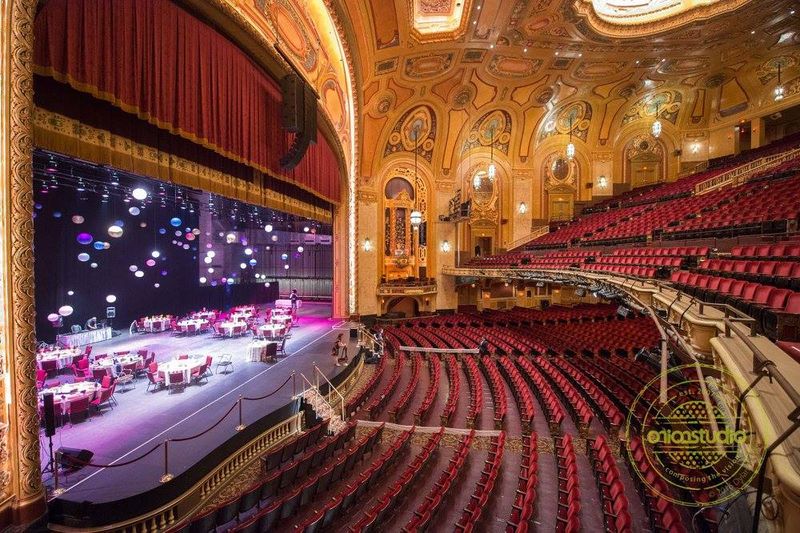
With a seating capacity of more than 3,000, Shea’s Buffalo Theatre ranks among the largest performing arts venues in New York State outside of New York City. That number alone sets it apart, but the more interesting fact is how the space is arranged across multiple levels, each offering a distinct perspective on the stage.
The main floor, the mezzanine, and the upper balcony all provide clear sightlines to the performance area. Even seats in the highest balcony deliver a full view of the stage, which is a genuine achievement in a venue of this age and scale.
The acoustic design also holds up well, ensuring that sound travels clearly throughout the house.
Some seats in the rear rows are narrower than others, and legroom can be limited in certain sections, particularly rows V and beyond. Checking the seating chart before purchasing tickets is a practical step that helps ensure the most comfortable experience possible for any given show.
The Restoration Work That Saved a National Treasure
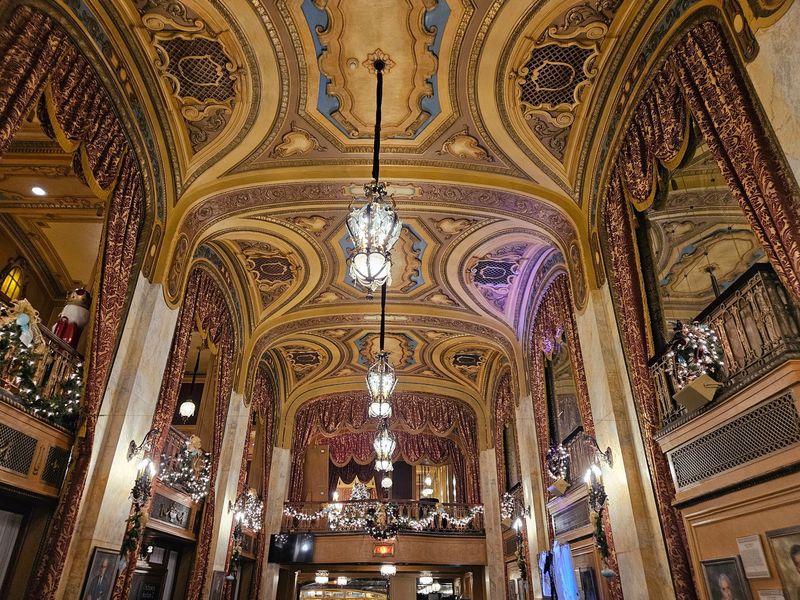
Shea’s Buffalo did not survive a century by accident. The theater has undergone multiple rounds of restoration work, each one aimed at preserving the original materials and design elements that make it a National Historic Site.
Without these ongoing efforts, the building would likely have followed the same path as dozens of other picture palaces that were lost in the mid-twentieth century.
The restoration process has involved skilled craftspeople working to repair and replicate plasterwork, refinish gilded surfaces, and address structural issues without compromising the building’s historic character. Each project is guided by preservation standards that prioritize authenticity over convenience.
Current and planned renovations continue to address areas of the building that need attention, including improvements to the main lobby and common areas that become crowded during peak attendance periods. The community’s investment in this work reflects a genuine commitment to keeping the theater functional and beautiful for another hundred years.
Few cities have shown this level of dedication to a single historic structure.
Why the Lobby Deserves Its Own Visit
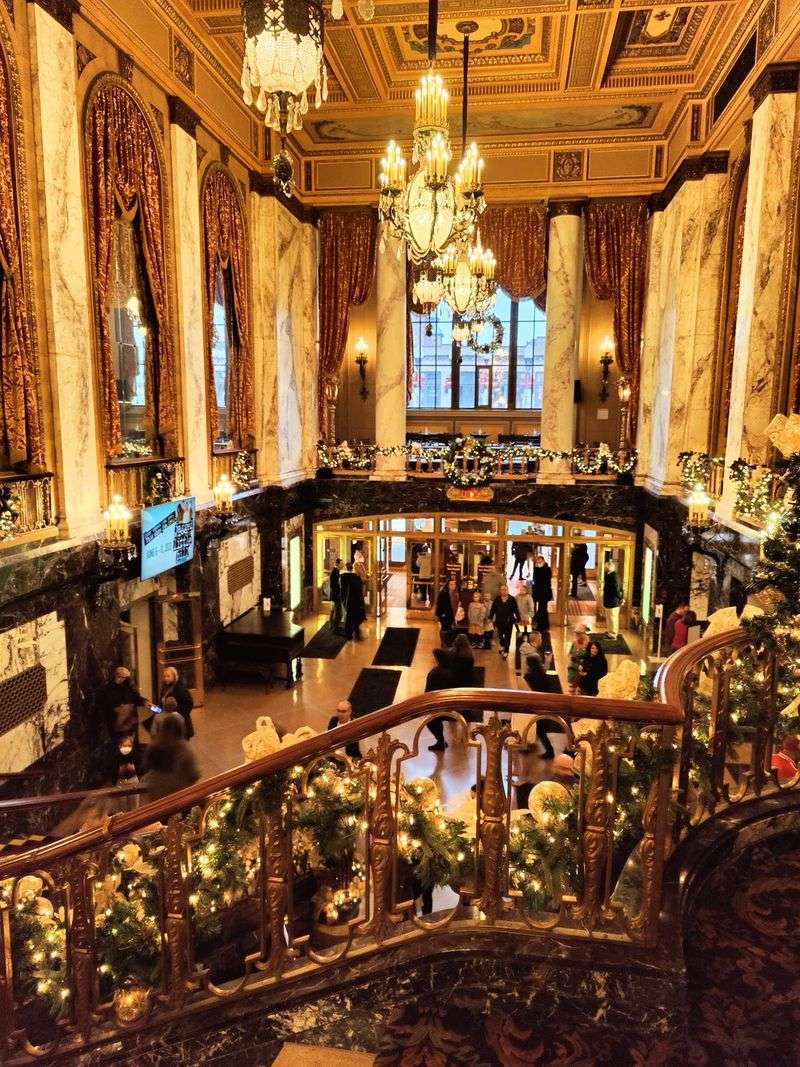
Before the curtain ever rises, the lobby at Shea’s Buffalo sets a tone that few other venues can match. The entry spaces are decorated with the same attention to detail found throughout the rest of the building, featuring restored artwork, decorative archways, and architectural elements that date back to the original 1926 design.
Concession stands are available on multiple levels, offering refreshments and snacks at prices that are reasonable by theater standards. The merchandise area near the lobby also gives attendees a chance to pick up show-specific items, making the pre-show experience feel like part of the event itself.
On busy nights, the lobby and common areas can feel crowded, particularly during intermission when all three seating levels empty out at once. Planned renovations are expected to address some of these flow issues in the coming years.
Until then, arriving early and taking time to explore the lobby’s details is one of the most rewarding parts of any visit to the theater.
The Performing Arts Complex Beyond the Main Stage
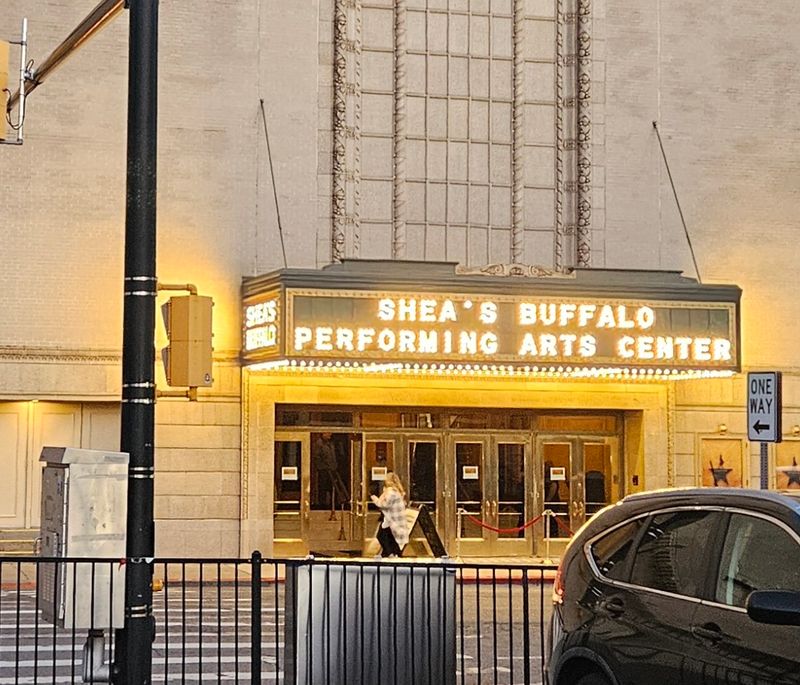
Shea’s Buffalo Theatre is the flagship venue within a larger performing arts complex known as Shea’s Performing Arts Center. The complex also includes two smaller venues, Shea’s 710 Theatre and Shea’s Smith Theatre, which serve as spaces for more intimate productions and community programming.
The 710 Theatre, located nearby on Main Street, hosts smaller touring shows, local productions, and events that benefit from a more contained setting. The Smith Theatre offers an even more scaled-down environment suited to experimental work, readings, and youth programming.
Together, the three venues give Shea’s Performing Arts Center the flexibility to serve a wide range of audiences and artistic formats. The main theater handles the large-scale Broadway tours and concerts, while the smaller stages support local artists and emerging productions.
This tiered structure has helped the organization remain relevant and financially sustainable over decades of changing cultural tastes and economic conditions in the Buffalo region.
Historical Tours That Open Up Hidden Corners
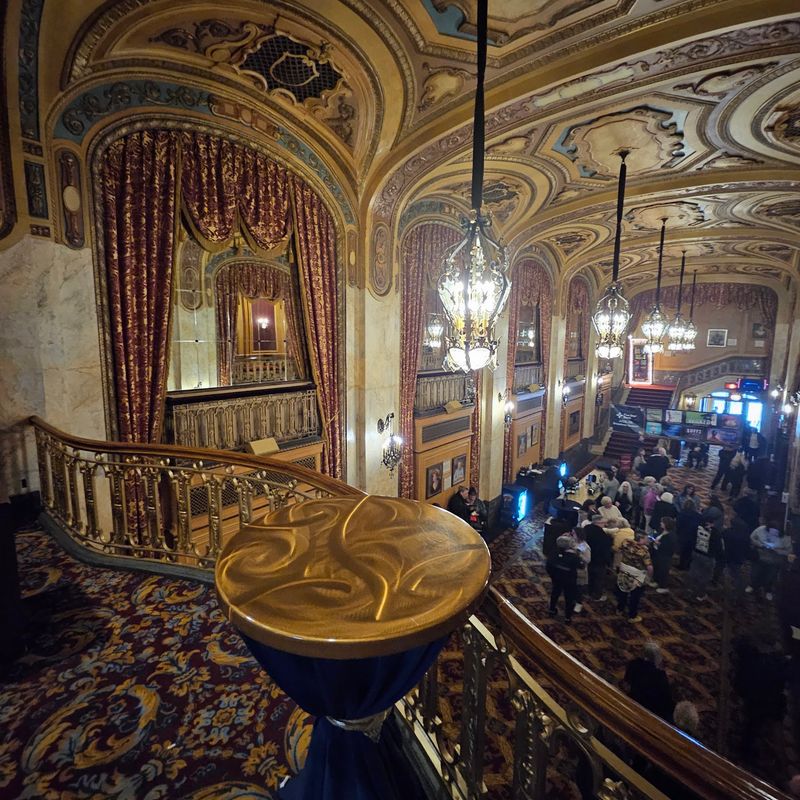
Not everyone who visits Shea’s Buffalo comes for a show. The theater offers historical tours that take guests behind the scenes and into areas of the building that are not accessible during regular performances.
These tours have become a popular option for architecture enthusiasts, history buffs, and anyone curious about what a century-old theater looks like from the inside out.
Tour participants get to see the backstage areas, the original mechanical systems, and architectural details that are easy to miss from a seat in the auditorium. Guides share the history of the building’s construction, its connection to Louis Comfort Tiffany, and the story of how it survived when so many similar theaters did not.
The tours also provide context for the restoration work that has been completed over the years, helping visitors understand just how much effort goes into keeping a building like this functional and authentic. Booking in advance through the theater’s official website is the most reliable way to secure a spot.
A National Historic Site in the Middle of Downtown Buffalo
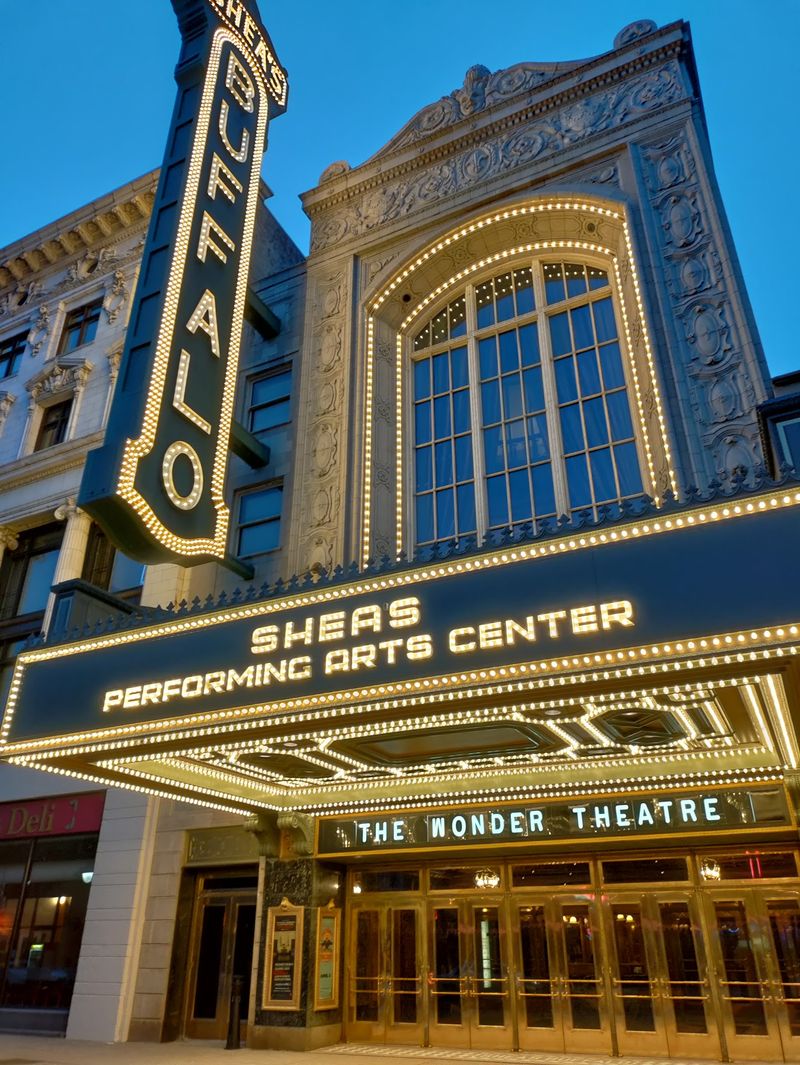
The National Historic Site designation that Shea’s Buffalo Theatre holds is not a ceremonial title. It comes with real legal protections and obligations that govern how the building can be modified, renovated, or used.
This status places the theater alongside some of the most significant architectural and cultural landmarks in the country.
The designation also makes the theater eligible for certain federal preservation grants and tax incentives that help fund the ongoing restoration work. Without this financial support, maintaining a building of this size and complexity would be far more challenging for a regional performing arts organization operating in a mid-sized city.
Downtown Buffalo has undergone significant changes over the past few decades, with new development reshaping much of the urban core. Through all of that change, Shea’s Buffalo has remained a constant presence on Main Street.
Its survival as a National Historic Site in an evolving urban landscape is a story about community priorities and the decision to protect what cannot be rebuilt once it is gone.
Why Shea’s Buffalo Still Matters After 100 Years
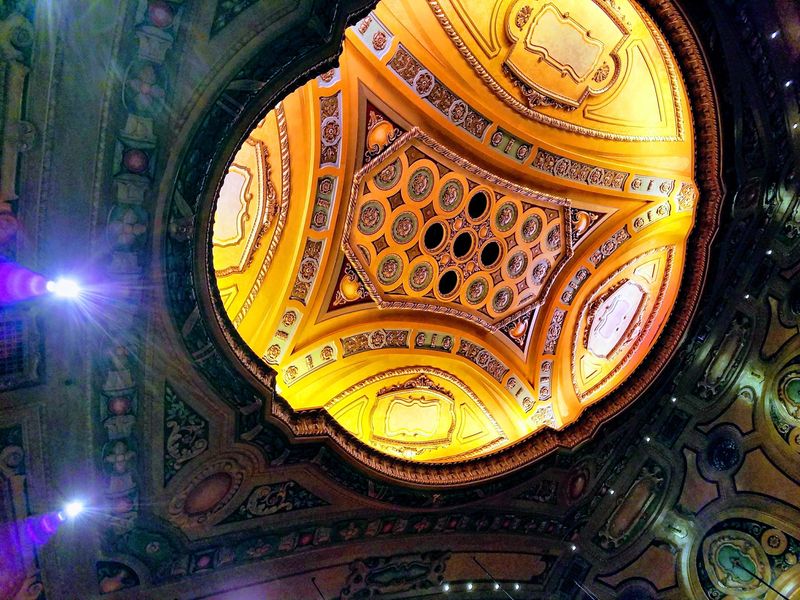
A theater that has operated continuously for nearly a century in the same building, with most of its original design intact, is genuinely rare anywhere in the world. Shea’s Buffalo Theatre represents something that modern construction cannot replicate: a physical connection to a specific moment in American cultural history, preserved and kept alive through active use.
The performances that fill its calendar each season, from Broadway tours to concerts to dance productions, draw audiences from across western New York and beyond. The theater functions as a cultural anchor for Buffalo, giving the city a venue that competes with anything available in much larger metropolitan areas.
What keeps people coming back is not just the quality of the shows but the building itself. The ornate details, the restored grandeur, and the knowledge that Louis Comfort Tiffany’s vision still exists in this space make every visit feel like more than just a night out.
A century in, Shea’s Buffalo is still the wonder it was always called.
A Grand Address With a Century of Stories
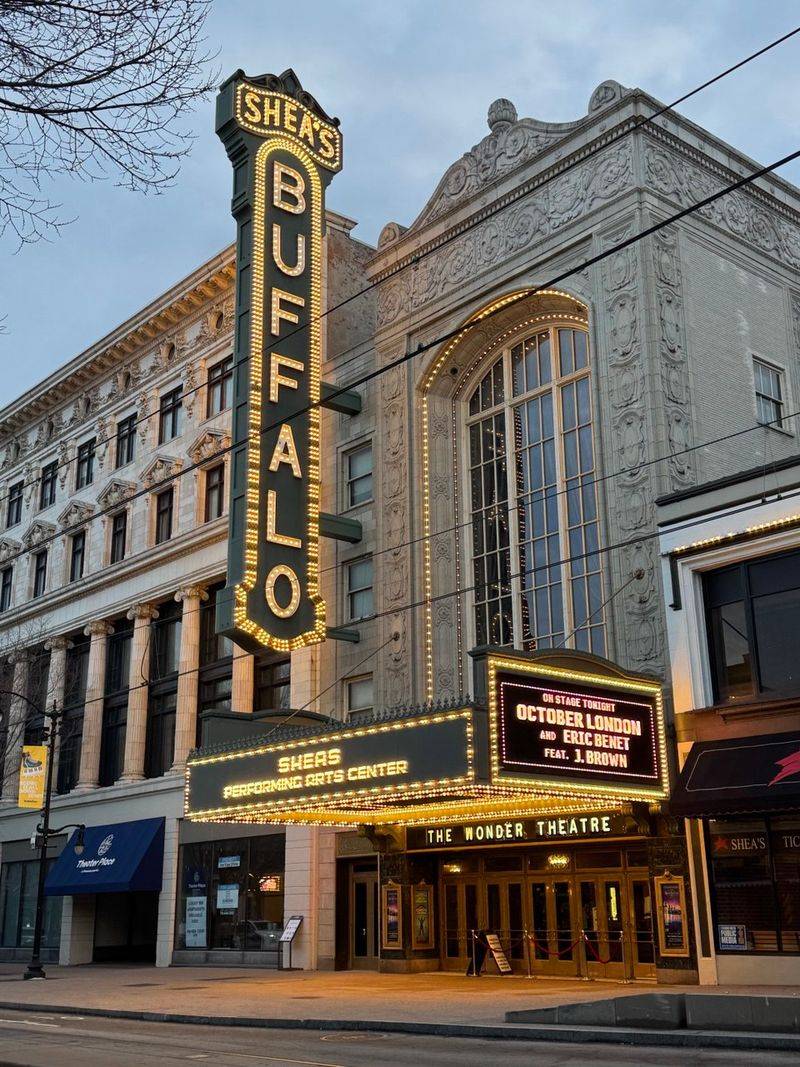
Right in the heart of downtown Buffalo, at 646 Main St, Buffalo, NY 14202, stands one of the most architecturally remarkable theaters in the entire United States. Shea’s Buffalo Theatre opened in 1926 as a picture palace, built during the golden age of movie houses when theaters were designed to feel like cathedrals of entertainment.
The building stretches along Main Street with a facade that commands attention. Its baroque and rococo detailing, arched windows, and ornamental stonework set it apart from every modern structure around it.
What makes this address even more special is that the building is a designated National Historic Site, meaning its preservation is not just a local priority but a national one. Over the past century, the theater has hosted countless performances, from silent films to full-scale Broadway touring productions.
The address is more than a location; it is a landmark that defines Buffalo’s cultural identity.
Share this story