Tucked away in the far eastern corner of Oklahoma, there is a place where the ground itself holds a thousand years of stories. Spiro Mounds Archaeological Center preserves one of the most significant prehistoric Native American sites in North America, and it sits right here in our own backyard. Most Oklahomans have heard the name but never made the drive, and that is a genuine shame. A visit to this site near the Arkansas River feels less like a field trip and more like a quiet conversation with the people who shaped this land long before Oklahoma had a name.
Where Spiro Mounds Archaeological Center Stands

Right at the edge of a small eastern Oklahoma town, the Spiro Mounds Archaeological Center sits at 18154 1st St, Spiro, OK 74959, operated by the Oklahoma Historical Society. The site rests in Le Flore County, not far from the Arkansas River, and its geography is no accident. The Spiroans, as researchers often call them, chose this river valley deliberately, building a ceremonial and trade hub that drew connections across a vast region of North America.
Getting here requires a commitment, but that drive through eastern Oklahoma sets the mood perfectly. The landscape shifts from flat plains to rolling hills thick with trees, and by the time you reach Spiro, you feel like you have crossed into a different chapter of the state entirely.
The center is managed under the umbrella of the Oklahoma Historical Society, which oversees preservation and public interpretation of the grounds. A phone call to 918-962-2062 can answer questions before you go, and the official website at okhistory.org/sites/spiromounds carries updated visitor information. Finding it is straightforward once you are in town, and the grounds are clearly signed from the main road.
The Civilization That Built These Mounds
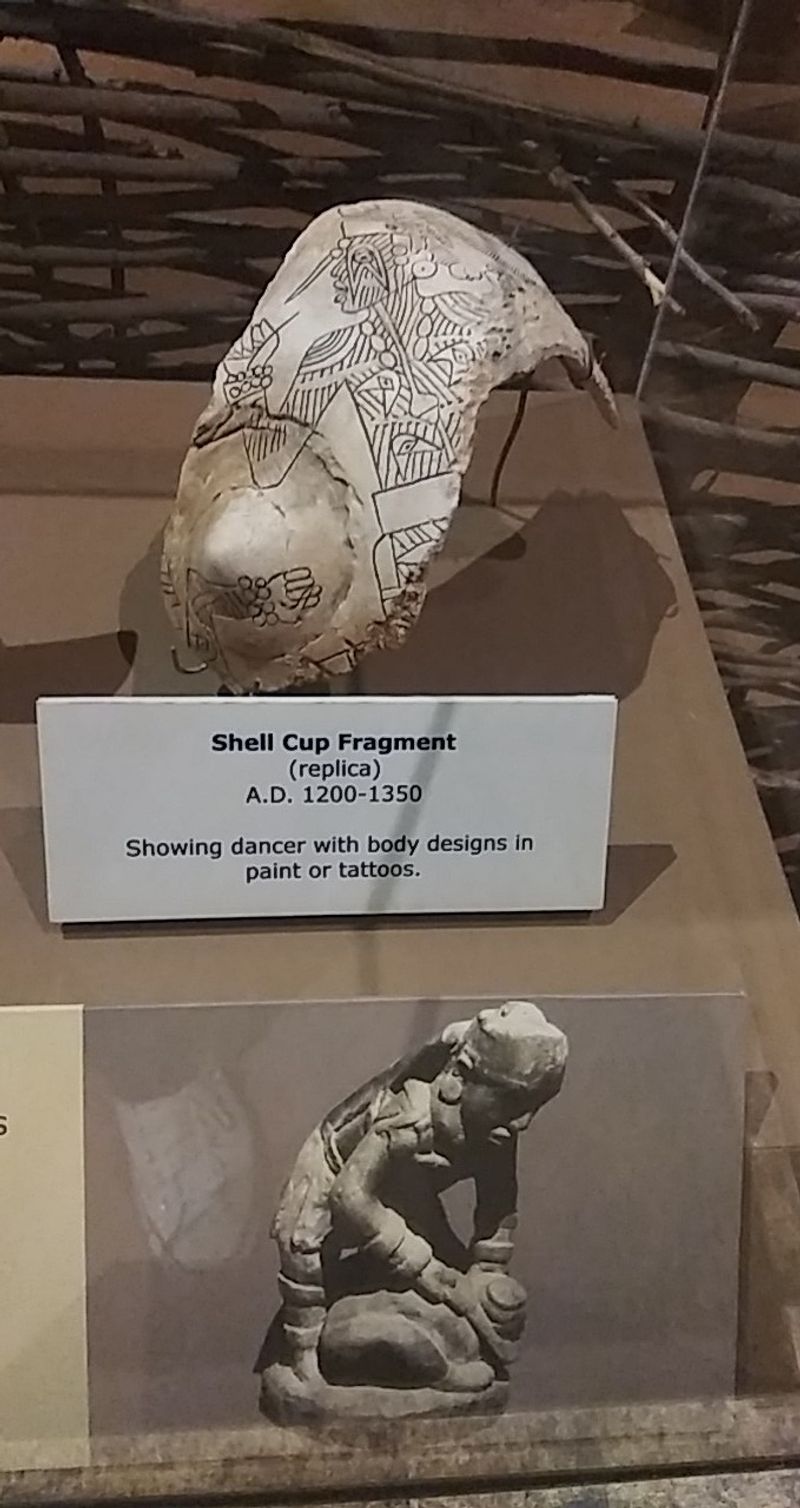
Around 900 to 1450 CE, a sophisticated society flourished in what is now eastern Oklahoma. Archaeologists classify the Spiro people as part of the broader Mississippian cultural tradition, a network of mound-building societies that stretched across much of the eastern half of North America. What made Spiro exceptional was its role as a major ceremonial and trade center, with connections reaching as far as the Gulf Coast, the Great Lakes, and the Rocky Mountain foothills.
Copper, shell, and carved objects recovered from this site show artistic sophistication that rivals any prehistoric culture on the continent. The shell engravings found here are particularly remarkable, depicting figures, animals, and ceremonial scenes with extraordinary precision and detail. Researchers have spent decades studying what these images reveal about Spiro beliefs, rituals, and social structure.
The society eventually declined and dispersed, and the reasons remain a subject of ongoing study. Climate shifts, resource pressure, and changing trade networks all likely played a role. What they left behind in the earth of eastern Oklahoma, though, continues to reshape how historians understand the prehistoric American South and the deep roots of Native culture in this region.
Craig Mound and the Burial Site That Shocked Archaeologists
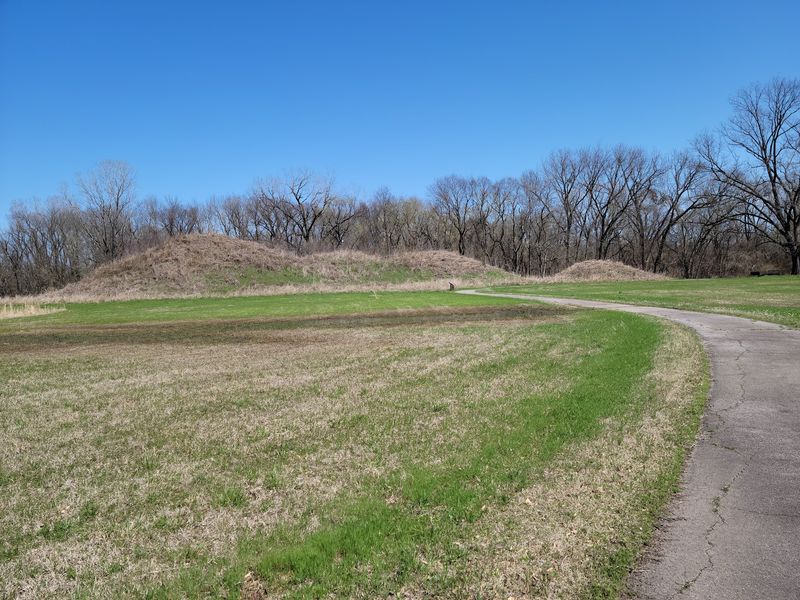
Among the dozen or so mounds scattered across the site, Craig Mound carries the heaviest historical weight. Known as a burial mound, it held an extraordinary concentration of ceremonial objects and human remains, making it one of the richest archaeological deposits ever uncovered in North America. When looters broke into the mound during the 1930s, they tunneled directly into a hollow chamber packed with artifacts, an event that sent shockwaves through the archaeological community and eventually led to Oklahoma passing one of the country’s first antiquities protection laws.
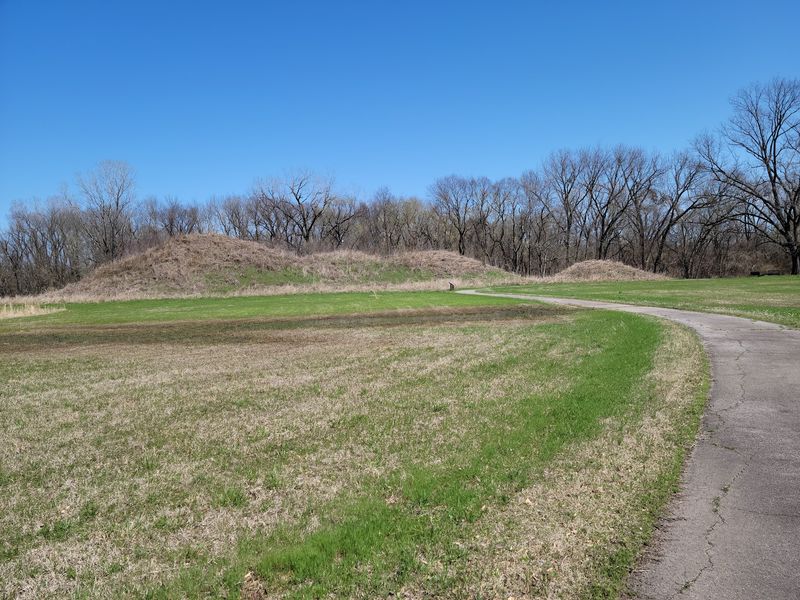
The damage done by that looting was irreversible in many ways, scattering objects across private collections and museums before proper documentation could occur. Yet enough survived and was later recovered to give researchers a remarkable picture of Spiro ceremonial life. Today, Craig Mound stands as a quiet, grassy rise on the landscape, its exterior giving no hint of the drama buried in its history.
Walking up to it and understanding what once lay inside is a genuinely humbling experience. The mound’s scale is impressive even now, and standing at its base while knowing what it once contained makes the whole visit feel more personal and real than any museum display ever could.
Brown Mound and the Elite Quarters of a Prehistoric Society
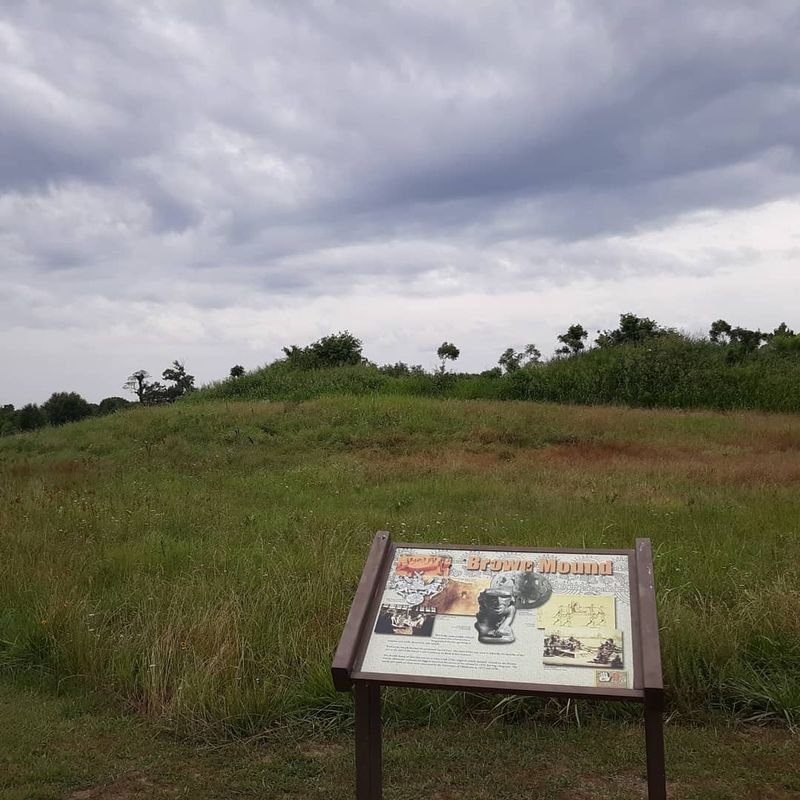
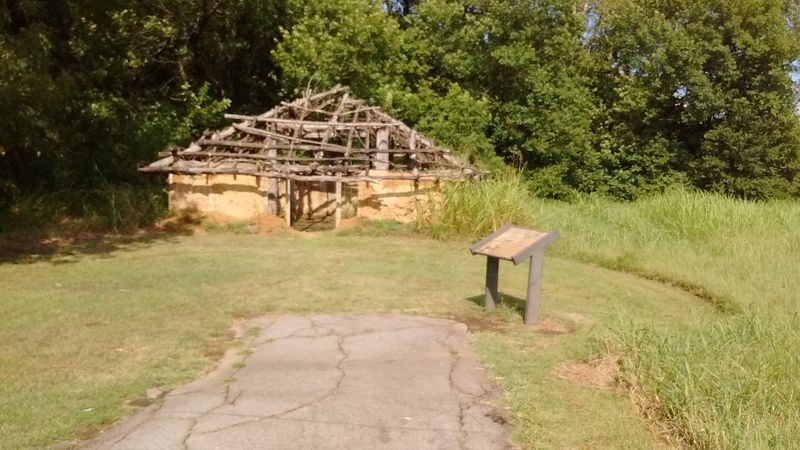
Not all mounds at Spiro served the same purpose, and Brown Mound tells a different kind of story. Classified as a temple mound, it is flat-topped and more imposing in silhouette than its neighbors. The area surrounding it is where archaeologists believe the elite members of Spiro society built their homes, creating a kind of sacred district that separated the ruling class from the broader population living nearby.
That social geography is fascinating to think about as you walk the trail past Brown Mound. The Spiroans were not a simple egalitarian community. They operated a stratified society with priests, leaders, and craftspeople occupying distinct roles, and the physical layout of the mound complex reflected that hierarchy clearly. The placement of Brown Mound relative to Craig Mound suggests deliberate urban planning on a scale that most people do not associate with prehistoric Oklahoma.
Seeing the mound in person, even in its current weathered state, communicates something that no photograph quite captures. The effort required to move that much earth by hand, without metal tools or draft animals, speaks to a level of communal organization and intention that demands genuine respect from anyone willing to stand there and think about it.
The Trail System That Puts You on the Ground
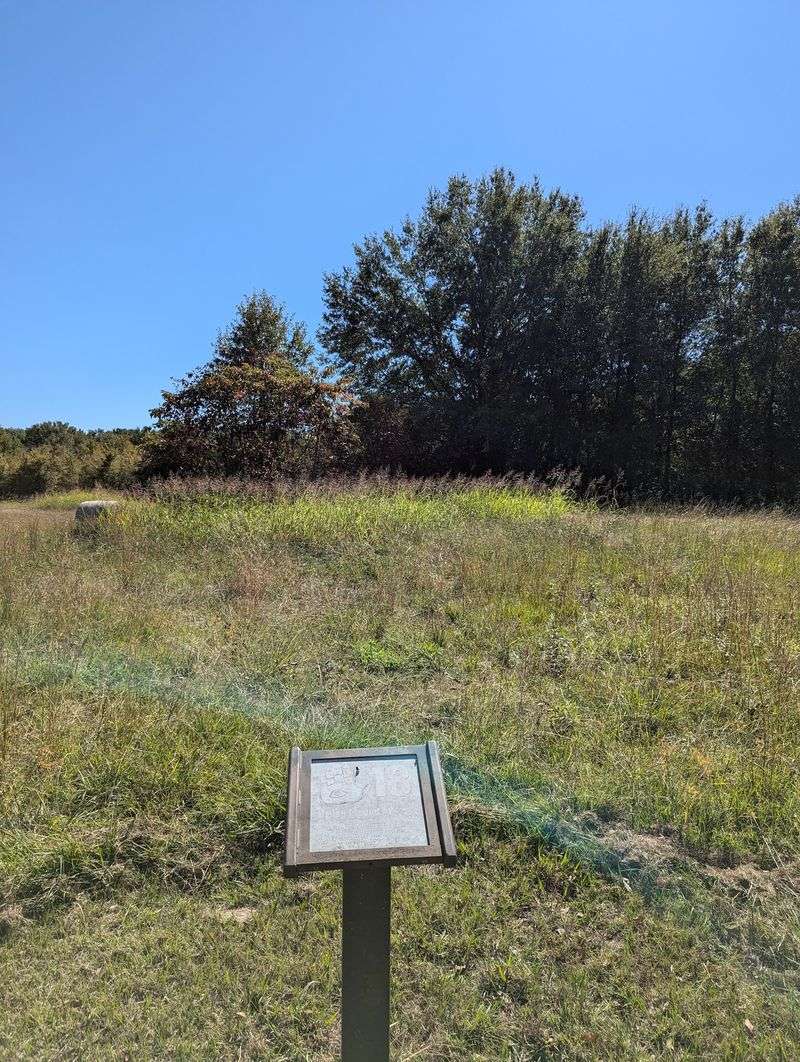
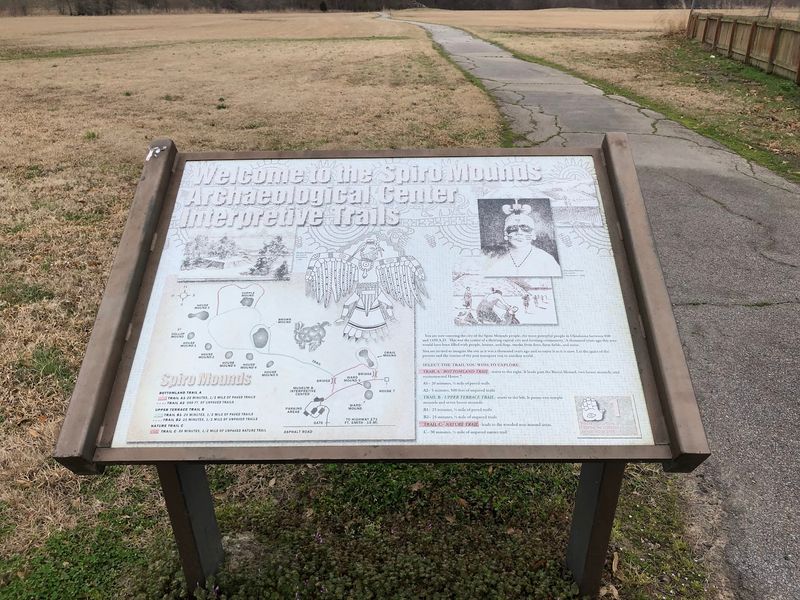
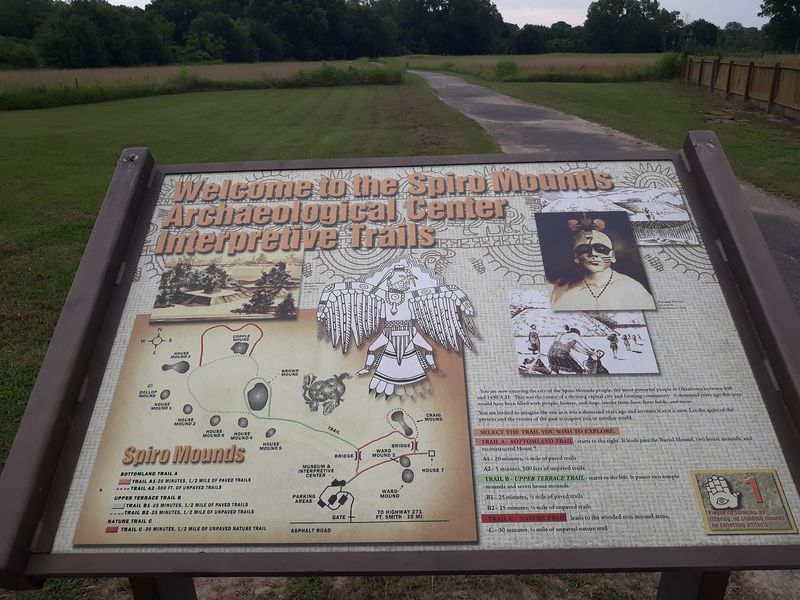
One of the most appealing things about Spiro Mounds is that you are not kept at a respectful distance from the history. Two trail options let visitors choose their own pace. The longer loop runs approximately two miles and takes in the full sweep of the mound complex, while the shorter option covers roughly one mile and hits the major features without the extended walk. Both are relatively flat and easy underfoot, making them accessible to a wide range of visitors.
The trails wind through open grassland and patches of woodland, with the Arkansas River valley visible in the distance on clear days. Interpretive signs are posted along the route to explain each mound’s function and significance, though some of those signs are currently sun-faded and in the process of being replaced as part of an ongoing renovation effort. Even with faded text, the placement of each sign next to its corresponding mound gives the walk a clear narrative arc.
Seasonal conditions change the experience noticeably. A winter visit after snow turns the whole site serene and almost otherworldly, while spring and fall bring softer light and comfortable temperatures. The walk never feels rushed, and the open landscape gives you space to absorb the scale of what the Spiro people actually built here.
Shell Carvings and the Museum’s Most Compelling Exhibits
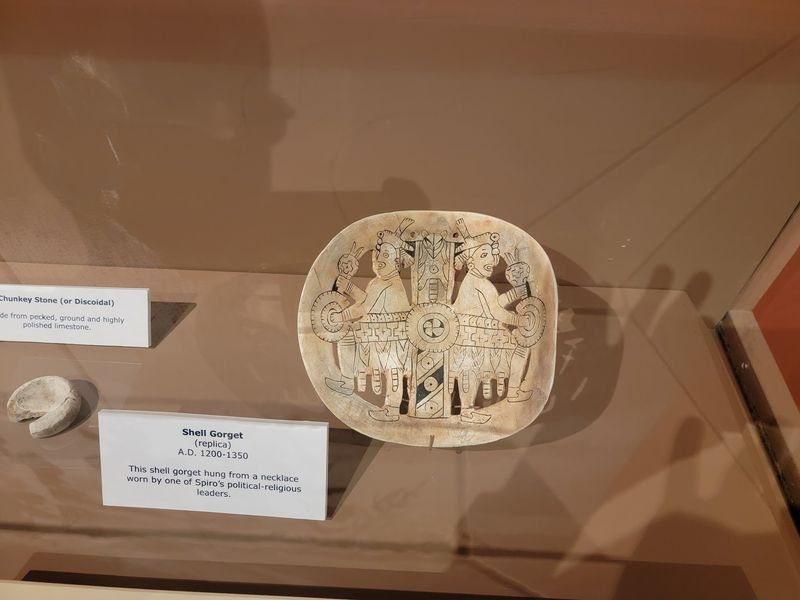
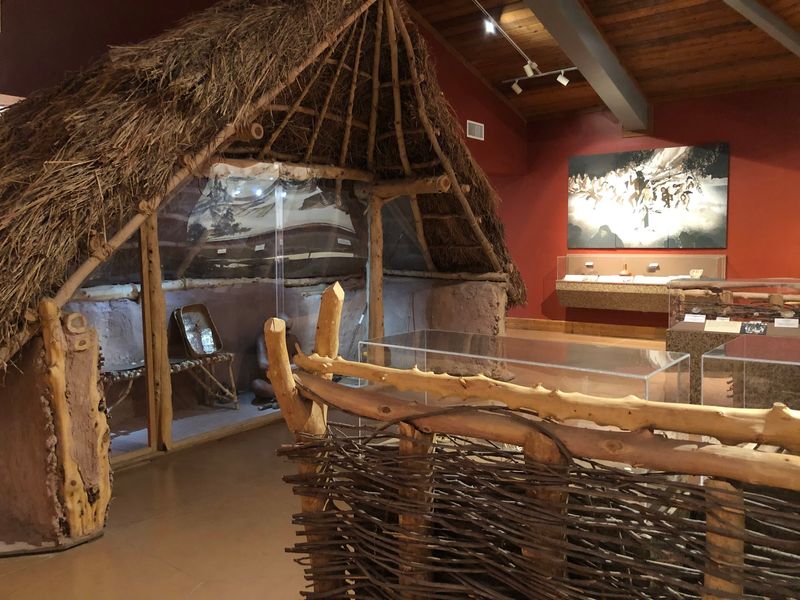
The visitor center at Spiro Mounds holds exhibits that reward careful attention. Due to the Native American Graves Protection and Repatriation Act of 1990, many of the actual artifacts that were once displayed here have been covered or removed from public view, a situation that has frustrated some visitors. What remains, however, still carries considerable depth, particularly the volumes of detailed drawings documenting the shell ornaments recovered from the site.
Those shell carvings are among the finest examples of prehistoric North American art ever documented. The engravings depict warriors, mythological creatures, serpents, and ceremonial figures with a level of detail that continues to astonish researchers. The books of drawings available in the exhibit give you a sustained look at this artistic tradition even when the original objects cannot be shown, and spending time with those images is genuinely worthwhile.
The exhibits also cover trade networks, social organization, and the broader Mississippian cultural world that Spiro belonged to. Staff members are a real asset here. The center’s director, Anna Vincent, has been praised by multiple visitors for her depth of knowledge and willingness to spend time answering questions. That personal connection to the material elevates the experience well beyond a typical self-guided museum visit.
Solstice Walks and the Site’s Living Calendar
A detail that surprises many first-time visitors is how intentionally the Spiro mounds were oriented to celestial events. The site’s alignment with solstice sunrises and sunsets was not accidental. The Spiroans built their ceremonial landscape with the sky in mind, and that connection is something the center actively celebrates through special guided events.
The winter solstice sunset tour has become a highlight of the site’s calendar. Director Anna Vincent leads these walks personally, guiding groups through the mound complex as the sun drops toward the horizon and illuminates the landscape in a way that makes the astronomical alignment immediately visible. People who attend these tours consistently describe them as unexpectedly moving, the kind of experience that reframes everything else you see at the site.
Checking the center’s website or calling ahead is the best way to find out when solstice and other special events are scheduled. Spots on these guided walks are worth planning around, especially for visitors who want more than a self-guided stroll. The solstice tours also tend to draw a mix of history enthusiasts, Native heritage advocates, and curious locals, making the conversation among the group as enriching as the walk itself. Arrive a little early to get your bearings before the tour begins.
Ongoing Renovations and What They Mean for Your Visit
Spiro Mounds is currently in the middle of a significant upgrade. A $1.5 million investment is funding improvements to parking, trails, interpretive signage, and the visitor center itself. That scale of investment is meaningful for a site that has long operated with limited resources, and the changes already underway are visible to anyone who visits more than once.
The timing of your visit matters more right now than it would at a fully finished site. Some exhibit cases are in the process of being repaired or replaced, the outdoor trail signs are being updated, and a few sections of the grounds are mid-renovation. None of that makes a visit not worthwhile, but going in with realistic expectations helps. Think of it as catching a great restaurant mid-remodel.
The food is still excellent, but the ambiance is a work in progress.
The good news is that admission has been waived during the renovation period, which makes the trip easier to justify for families or anyone on a budget. Once the upgrades are complete, the site should offer a noticeably more polished experience while keeping the raw, open-air quality that makes it compelling in the first place. Checking the website before your trip will give you the most current picture of what is accessible on any given day.
The Atmosphere That Sets Spiro Apart from Any Indoor Museum
There is a quality to Spiro Mounds that no conventional museum can manufacture: the silence. Out on the trail, with the mounds rising around you and nothing but wind and birdsong in the background, the distance between the present and the past collapses in a way that feels almost physical. People who visit describe the walk as meditative, a word that comes up repeatedly and is not an exaggeration.
The site covers enough ground that you rarely feel crowded, even on weekends. The open landscape of eastern Oklahoma frames the mounds naturally, and the absence of fences or barriers around most of the earthworks lets you get genuinely close. That proximity matters. Reading about a mound in a textbook and standing at its base are two entirely different experiences.
Families with older children tend to find the walk engaging, especially when the kids start asking questions that the trail signs cannot fully answer. That curiosity is exactly what the site is designed to provoke. Photographers also find a lot to work with here, particularly in early morning or late afternoon light when the mounds cast long shadows across the grass. The whole place rewards slow, attentive visitors over those who rush through looking for the highlights.
Hours, Admission, and Getting to Spiro
Planning a visit to Spiro Mounds requires a little calendar awareness. The center is open Tuesday through Saturday from 9 AM to 4 PM and is closed on Sundays and Mondays. That Tuesday-to-Saturday window is narrow enough that a weekend day trip from Tulsa, Oklahoma City, or Fort Smith works well, but arriving on a Sunday will leave you looking at a locked gate.
Admission is currently free while renovations are ongoing, which is a genuine perk for anyone making the drive. That policy could change once upgrades are complete, so confirming current pricing at okhistory.org/sites/spiromounds before you go is a smart move. The site’s phone number is 918-962-2062 if you prefer to call ahead with specific questions about trail accessibility or exhibit availability.
Spiro itself sits in Le Flore County in far eastern Oklahoma, close to the Arkansas border. From Tulsa, the drive runs roughly two hours heading southeast. From Fort Smith, Arkansas, you are looking at under an hour heading west. The town of Spiro is small, so plan to bring snacks or stop in town before heading to the site.
There are no concessions on the grounds, and the walk can take anywhere from one to two hours depending on which trail you choose.
Why Spiro Mounds Belongs on Every Oklahoman’s List
Oklahoma has no shortage of places that carry historical weight, but Spiro Mounds occupies a category of its own. This is not a reconstructed village or a themed attraction. The mounds are real, the ground under your feet holds genuine archaeological significance, and the story they tell belongs specifically to this corner of the state. No other site in Oklahoma puts you this close to a prehistoric civilization of this scale and sophistication.
The site also connects directly to a broader national story about how prehistoric America is understood, preserved, and returned to the communities descended from its builders. That context adds a layer of meaning that grows the more you learn about it, and the staff at the center are well-equipped to help visitors engage with those complexities honestly.
For Oklahomans who grew up hearing about Spiro Mounds in school but never made the trip, this is a genuinely good time to go. The renovation investment signals a real commitment to the site’s future, admission is free right now, and the trails are open and walkable. Spiro is the kind of place that earns a second visit, and most people who make the first trip leave already thinking about when they can come back.
Share this story