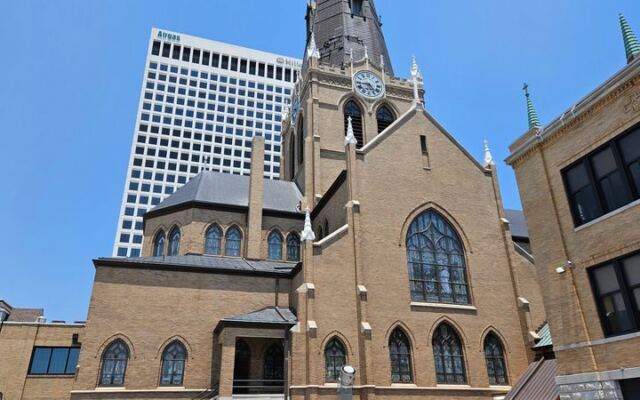
Oklahoma has a way of hiding its most extraordinary places in plain sight, and sometimes the biggest surprises rise not from the countryside but from the heart of a city. Tucked into downtown Tulsa, one towering cathedral has been drawing gasps from first-time visitors for over a century, its Gothic spires reaching skyward in a way that feels almost impossible against the flat horizon.
Families have worshipped here for generations, travelers have stumbled upon it by accident, and nearly everyone who walks through its doors leaves changed by the experience. Whether you are deeply faithful or simply curious about beautiful architecture, this is the kind of place that stops you cold and makes you glad you found it.
A Cathedral Standing in the Heart of Tulsa
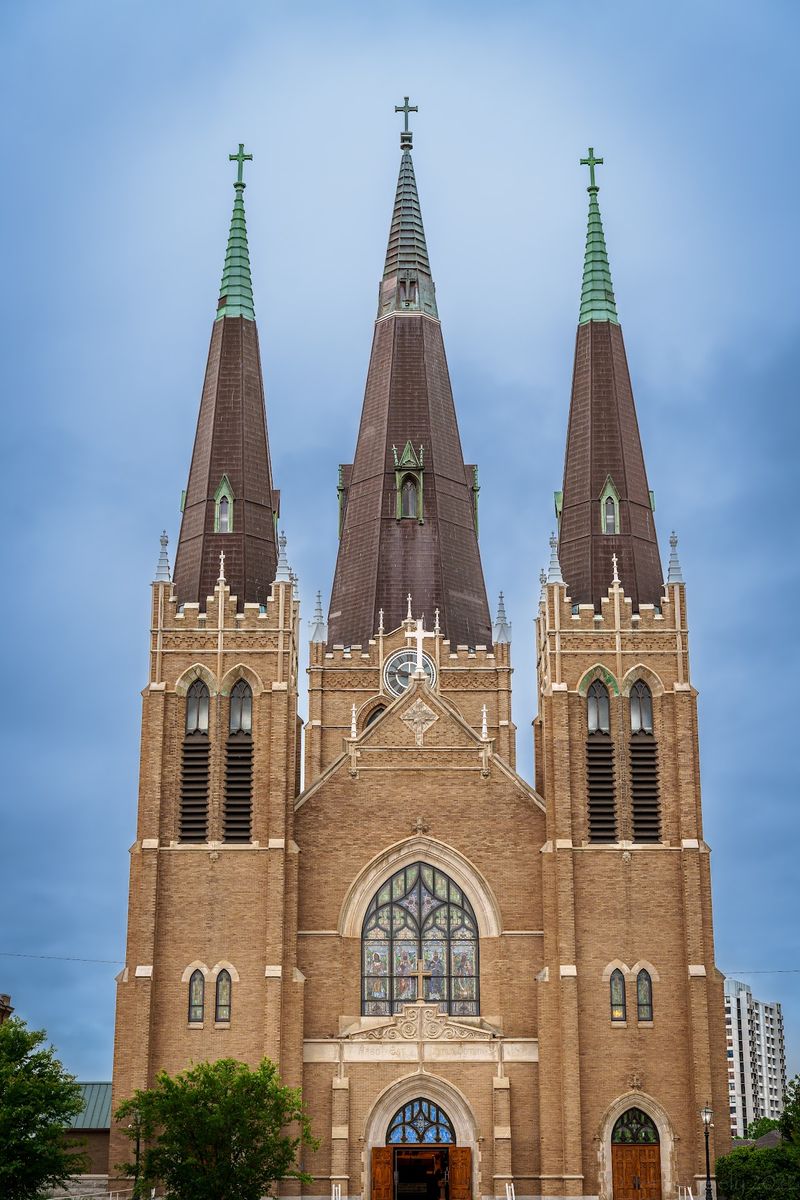
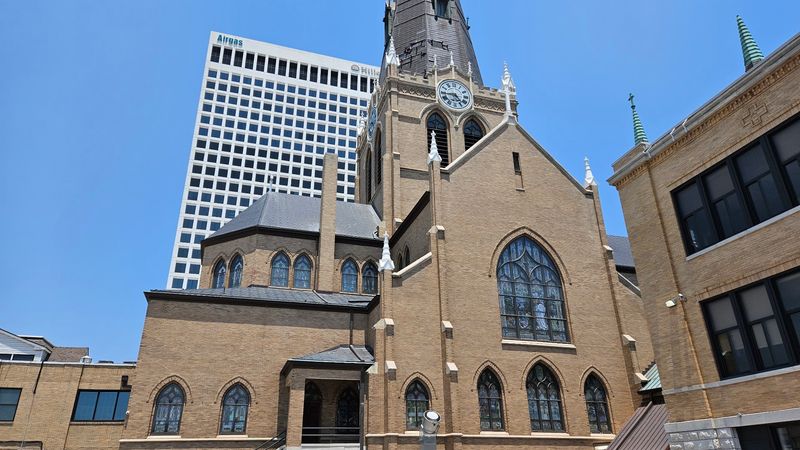
Standing along South Boulder Avenue in downtown Tulsa, Holy Family Cathedral announces itself with a confidence that surprises even longtime residents. Its Gothic spires cut upward from the flat Oklahoma skyline in a way that feels almost theatrical, like something lifted from a European city square and set down gently on the southern plains.
The address is 820 South Boulder Ave W, Tulsa, OK 74119, and the cathedral serves as the mother church of the Diocese of Tulsa.
For a mid-sized Midwestern city, the scale of this building is genuinely unexpected. Visitors who stumble upon it while exploring downtown often stop mid-stride, phone in hand, trying to capture something that keeps defying the frame.
The cathedral has been a fixture of the Tulsa skyline for well over a century, quietly anchoring the neighborhood through oil booms, civic growth, and decades of change.
Some locals have passed it hundreds of times without ever stepping inside. Those who finally do almost universally say the same thing: they had no idea something this remarkable was here all along.
That gap between expectation and reality is exactly what makes Holy Family Cathedral one of Tulsa’s most rewarding discoveries.
Over a Century of History Rooted in Oklahoma Soil
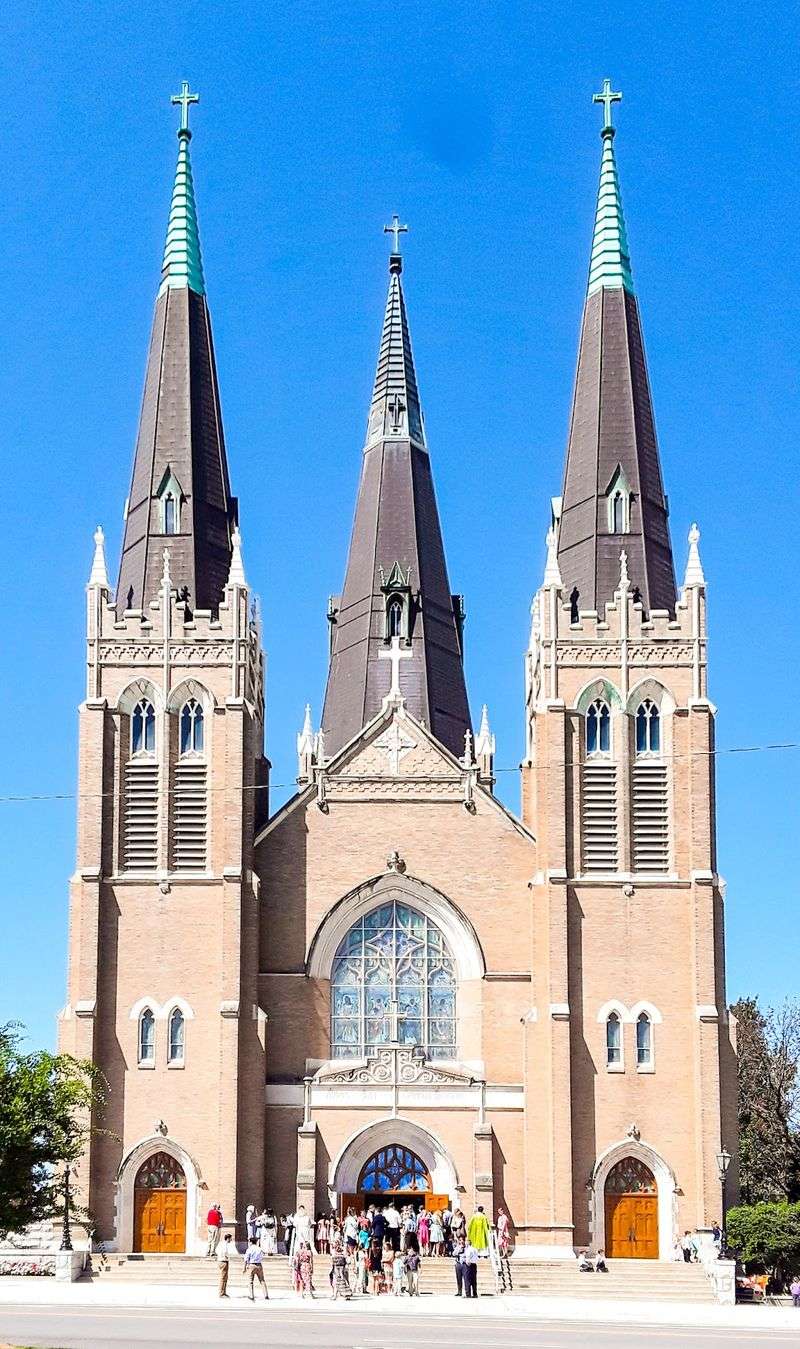
Few buildings in Oklahoma carry as much layered history as Holy Family Cathedral. One parishioner noted that their family has been part of the Holy Family parish for over 100 years, a testament to just how deeply this congregation is woven into the fabric of Tulsa’s story.
The cathedral predates much of what visitors recognize as modern Tulsa, having watched the city grow up around it across generations.
Founded during Oklahoma’s formative years, the parish grew alongside the oil industry that shaped Tulsa’s early identity. What began as a community of faith in a young city gradually became an institution, its congregation expanding and its building evolving into the grand Gothic structure visitors encounter today.
That long arc of growth is part of what gives the space its particular gravity.
Programs like the Becoming Catholic group have carried that tradition forward, welcoming newcomers with dinners and guided tours that offer both spiritual context and a deeper look at the cathedral’s remarkable history. Visitors who take part in those experiences often describe them as unexpectedly moving, equal parts informative and genuinely fun.
History here is not something posted on a placard; it is something you can feel the moment you step inside.
Gothic Architecture That Commands Attention
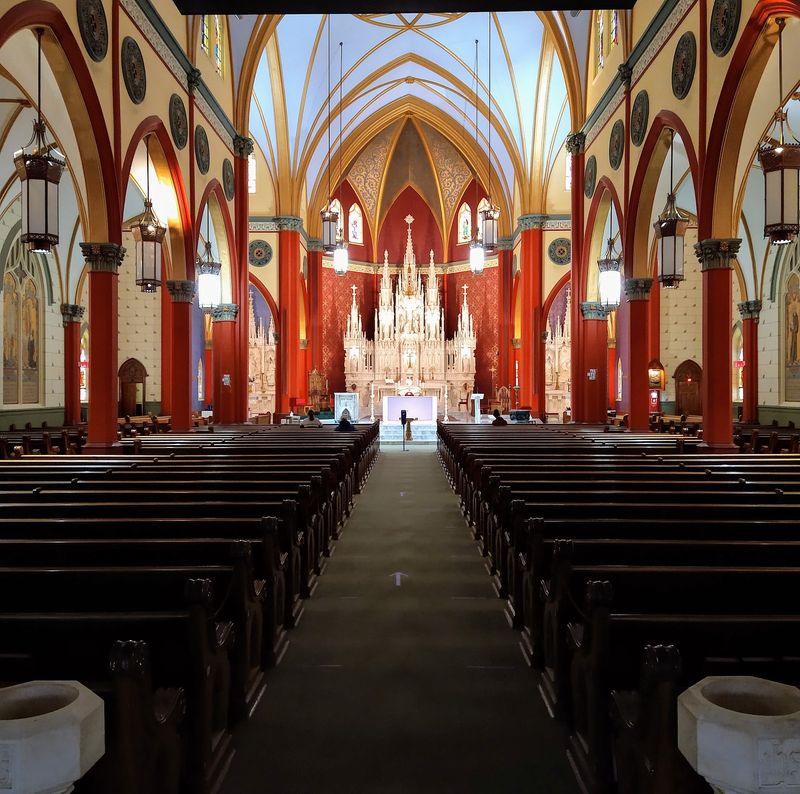
Gothic architecture is built to provoke awe, and Holy Family Cathedral delivers on that promise without hesitation. The pointed arches, the soaring vertical lines, the intricate stonework layered across every surface: each element works together to draw the eye upward and hold it there.
Visitors regularly describe the interior as stunning, colorful, and far more elaborate than anything they expected to find in Oklahoma.
The craftsmanship throughout the building reflects a level of ambition unusual for its time and place. Every corner rewards close inspection, from carved details along the columns to the careful proportions of the nave that make the space feel simultaneously vast and intimate.
Architects and casual observers alike tend to linger longer than they planned, circling back for second and third looks at details they almost missed.
What makes the Gothic style so effective here is how it transforms the act of simply standing inside the building into something almost meditative. The verticality pulls attention away from the everyday and toward something larger.
Even visitors who arrive purely for the architectural spectacle often leave describing a quality of stillness they did not anticipate. That is the quiet power of a building designed, from its foundations up, to make people feel small in the best possible way.
Stained Glass Windows That Transform Sunlight
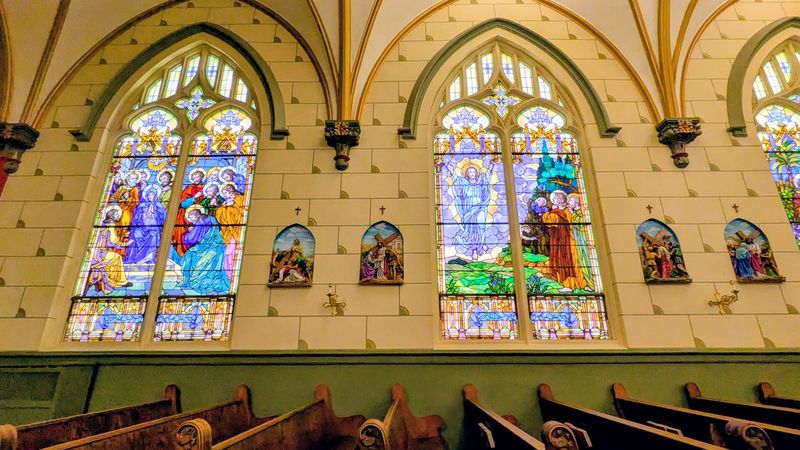
Sunlight behaves differently inside Holy Family Cathedral. Filtered through stained glass that has been in place for roughly a century, it breaks into pools of amber, cobalt, crimson, and emerald that drift slowly across the stone floors and wooden pews as the hours pass.
The effect is less decoration and more transformation: the ordinary light of an Oklahoma afternoon becomes something genuinely luminous.
Each window tells a story, and together they form a visual narrative that rewards multiple visits. The color palette is rich without being garish, the figures rendered with the kind of careful artistry that characterized the best ecclesiastical glasswork of the early twentieth century.
Morning light and afternoon light read completely differently through these panels, which means the cathedral essentially offers a new visual experience depending on when you visit.
Visitors who attend the 10 AM Sunday Mass specifically mention the way the organ music and the colored light seem to work together, creating an atmosphere that is hard to describe but easy to feel. For photographers and architecture enthusiasts, the windows alone justify a visit.
For everyone else, they are simply one more layer of beauty in a building that seems to have no shortage of them. Few places in Oklahoma produce this particular quality of light.
The Marble Altar at the Center of It All
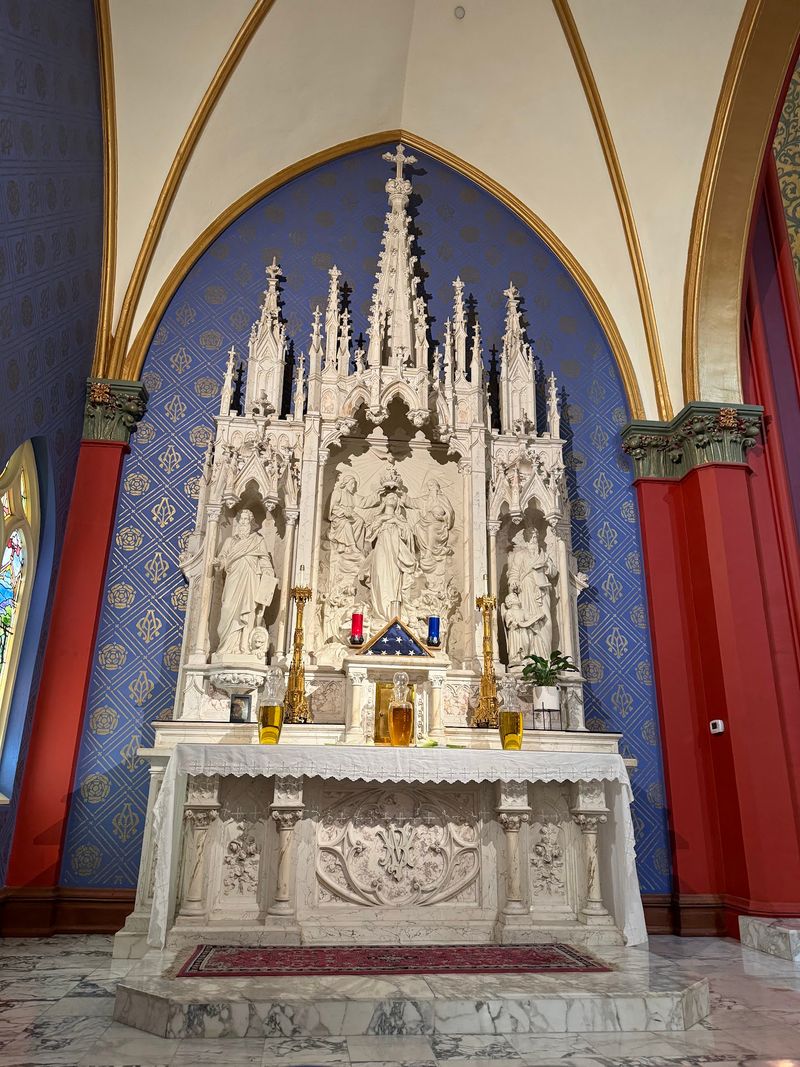
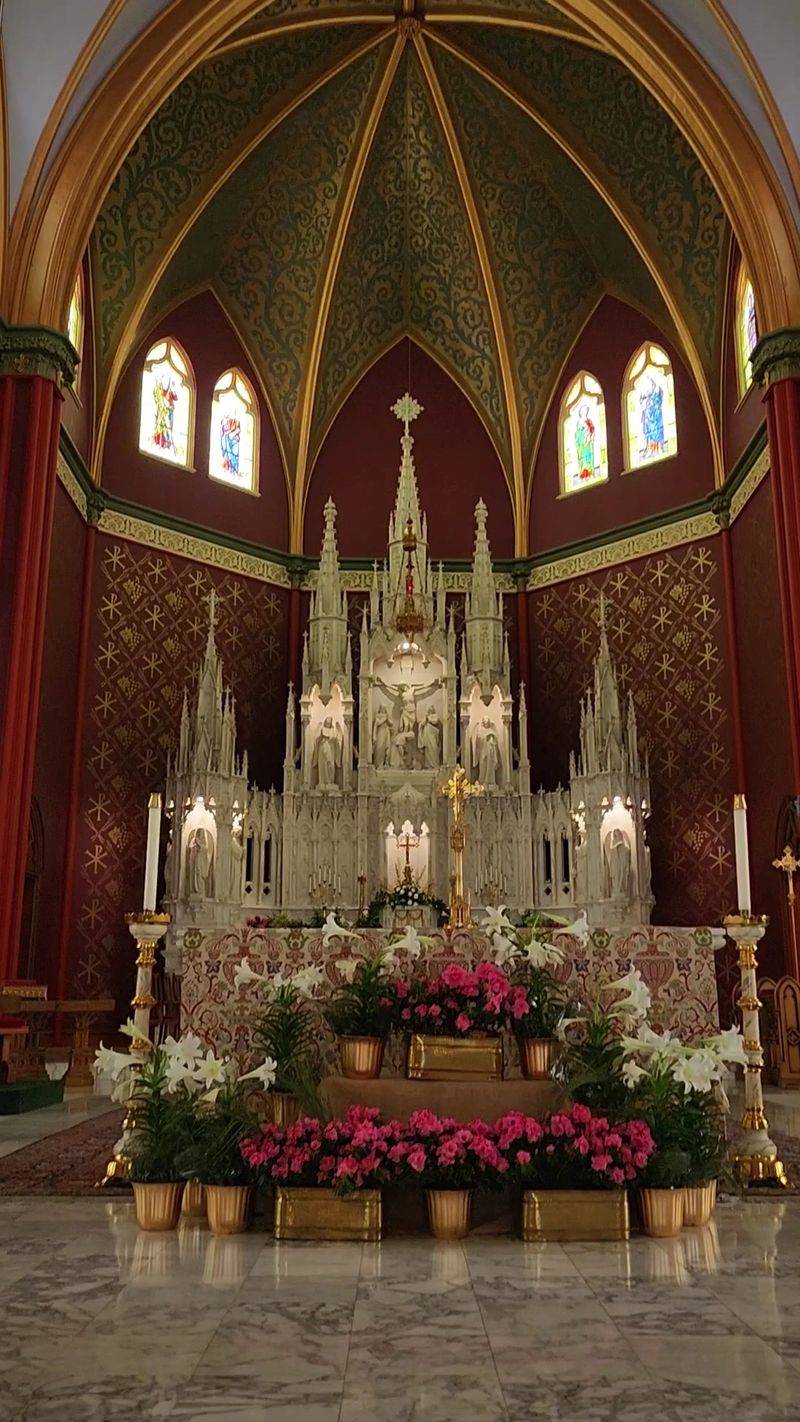
Among all the remarkable features inside Holy Family Cathedral, the altar tends to be the one that stops people completely. Crafted from 100 percent marble, it is an exercise in intricate detail: carved surfaces, layered forms, and a scale that makes it impossible to overlook even in a building full of competing visual splendor.
Visitors who have traveled widely and seen major cathedrals elsewhere still describe this altar as genuinely unexpected.
Marble altars of this quality were extraordinarily ambitious undertakings for early twentieth-century Oklahoma, and the fact that this one has survived intact and in such pristine condition speaks to the care the community has invested in the building over the decades. Up close, the craftsmanship reveals itself gradually: subtle veining in the stone, relief work along the base, proportions calibrated to feel monumental without overwhelming the surrounding space.
One visitor put it plainly, calling it a truly unexpected cathedral in a mid-sized Midwest city. That sense of surprise runs through nearly every account of a first visit.
The marble altar is, in many ways, the heart of that surprise: a piece of genuine artistic ambition placed at the center of a building that was already aiming high. Standing before it, even briefly, tends to leave a lasting impression that is difficult to shake.
The Atmosphere Inside and Who Feels at Home Here
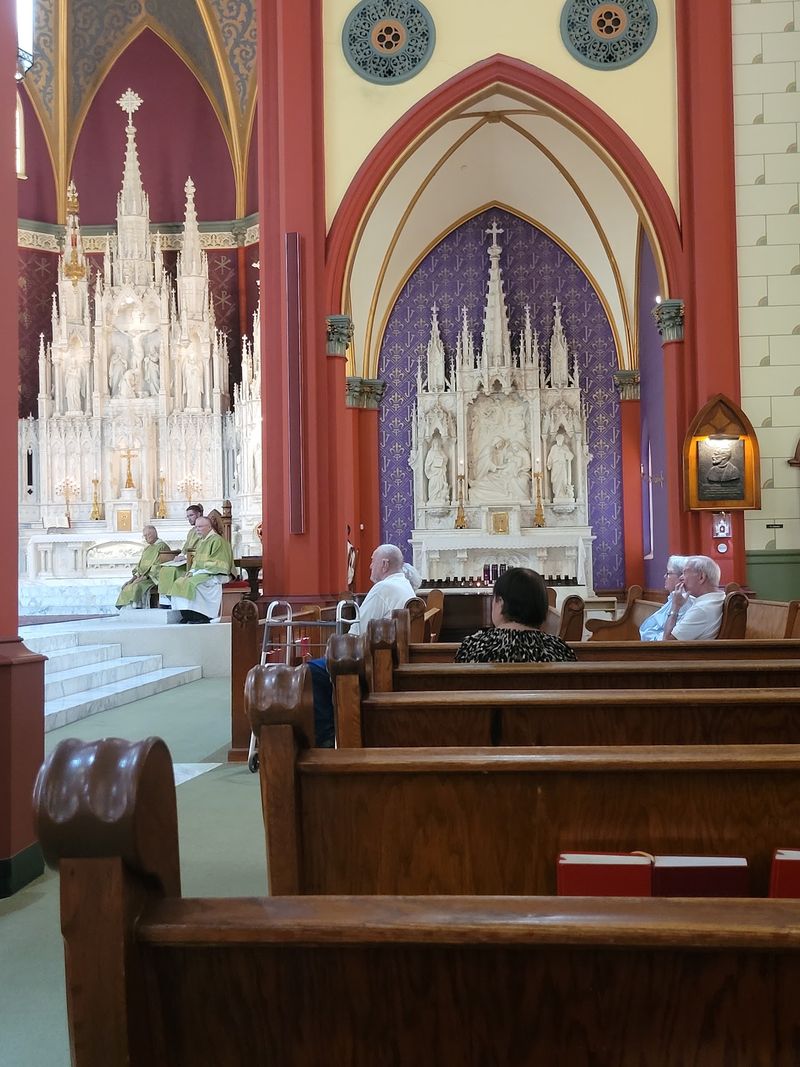
Walking into Holy Family Cathedral for the first time, the atmosphere settles over you quickly: calm, reverent, and genuinely welcoming. Visitors who are not Catholic regularly attend services out of curiosity and leave describing the experience as surprisingly accessible.
The clergy and congregation have a reputation for warmth that extends well beyond the usual Sunday greeting, with multiple visitors noting how welcomed they felt from the very first moment they stepped through the door.
The 10 AM Sunday Mass tends to draw the largest crowds, and the addition of the organ and choir during that service elevates the experience considerably. Smaller weekday Masses offer a quieter, more contemplative atmosphere for those who prefer stillness over spectacle.
The cathedral is also notably family-friendly, with parents of young children mentioning that the environment is comfortable and accommodating rather than stiff or formal.
Confession is available regularly, and the clergy have earned specific praise for their attentiveness, with one visitor noting that a priest continued hearing confessions until the line had completely cleared. That kind of unhurried, genuinely pastoral approach reflects something about the character of the whole parish.
Whether you arrive seeking spiritual renewal, architectural wonder, or simply a peaceful hour away from the noise of the city, the cathedral tends to deliver on all fronts without asking much in return.
Practical Notes for Planning Your Visit
Planning a visit to Holy Family Cathedral is straightforward, though the hours vary considerably depending on the day of the week. Sunday hours run from 7:30 AM to 1:30 PM, making it the most accessible day for visitors who want to attend Mass and explore the interior at a relaxed pace.
Monday hours are 11:30 AM to 1 PM, while Tuesday through Friday the cathedral opens briefly from 7 AM to 7:30 AM. Saturday hours are 8 AM to 8:30 AM.
Parking is one of the practical details that visitors consistently highlight as a pleasant surprise. For a downtown Tulsa location, the cathedral offers ample parking that makes arrival stress-free, whether you are coming for a weekday Mass or a busy holiday service.
Clean restrooms are available inside the building as well, a small but appreciated detail for families and travelers on longer road trips through the city.
The cathedral can be reached by phone at +1 918-582-6247, and additional information including service schedules and parish programs is available at tulsacathedral.com. There is no admission charge to visit, which makes it an accessible stop for anyone passing through downtown Tulsa.
Even during exterior renovation periods, the sanctuary interior remains open and fully beautiful, so do not let any ongoing construction work outside deter you from stepping in.
Why This Cathedral Earns a Place on Any Oklahoma Itinerary
Some places earn their reputation gradually, through years of quiet word-of-mouth. Holy Family Cathedral is one of those places: known deeply by the faithful who have called it home for generations, yet still a revelation to the curious traveler who rounds a corner in downtown Tulsa and suddenly finds Gothic spires climbing the sky above them.
That contrast between expectation and reality is part of what makes it so memorable.
The cathedral works equally well as a spiritual destination, an architectural landmark, and a simple pause in the middle of a busy trip. You do not need to be Catholic, deeply religious, or even particularly interested in history to feel the pull of a building this carefully made and this well-loved.
The century-old stained glass, the marble altar, the soaring interior, the welcoming congregation: each element layers onto the next until the overall effect becomes something genuinely moving.
For anyone building a road trip through Oklahoma or spending time in Tulsa, Holy Family Cathedral belongs on the list alongside the city’s better-known attractions. It is the kind of stop that costs nothing, asks very little, and tends to give back far more than expected.
Oklahoma has a habit of hiding its finest things in plain sight, and this cathedral may be the best example of that tendency anywhere in the state.
Share this story