Somewhere along East 21st Street in Tulsa, a golden giant has been keeping watch over the city since the 1950s. The Golden Driller Statue stands as one of the most recognizable roadside landmarks in all of Oklahoma, and most people who drive past have no idea just how much history is packed into that towering frame.
Whether you are a Route 66 road-tripper, a curious local, or someone who simply appreciates the wonderfully weird, this statue is worth a deliberate stop. Few landmarks in the state carry this kind of weight, both literally and symbolically.
The Golden Driller and Where to Find Him
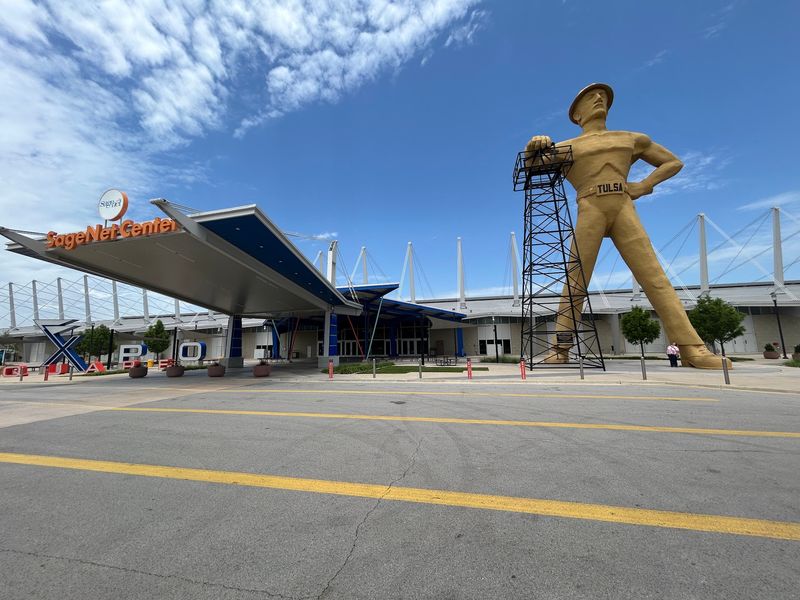
Right out front of the Tulsa Expo Center at 4145 E 21st St, Tulsa, OK 74114, the Golden Driller commands attention the moment you turn onto the grounds. He is impossible to miss, which is sort of the point.
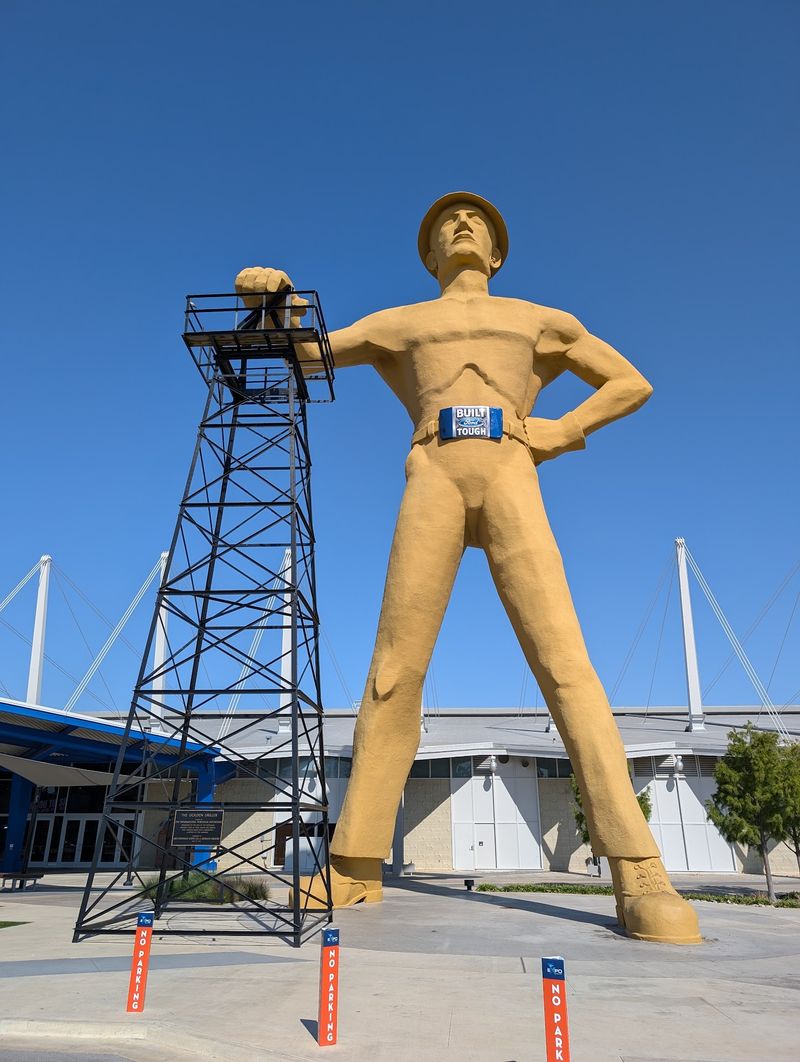
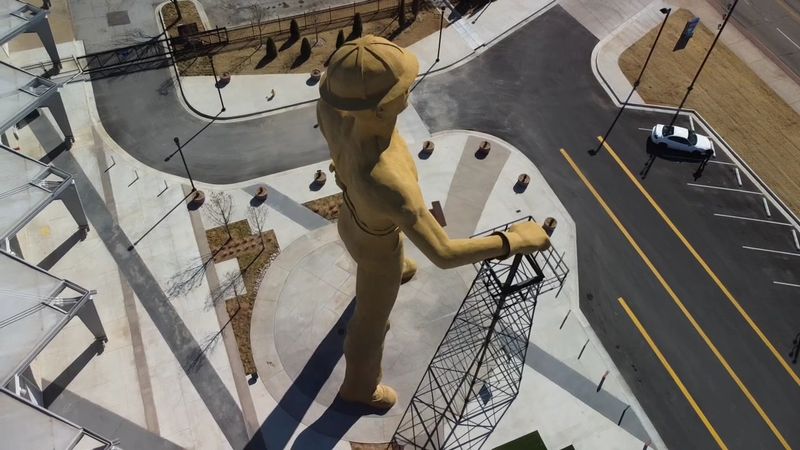
A colossal figure of an oil worker, rendered in golden tones, with one hand resting on an oil derrick like he owns the place, which, in a cultural sense, he kind of does.
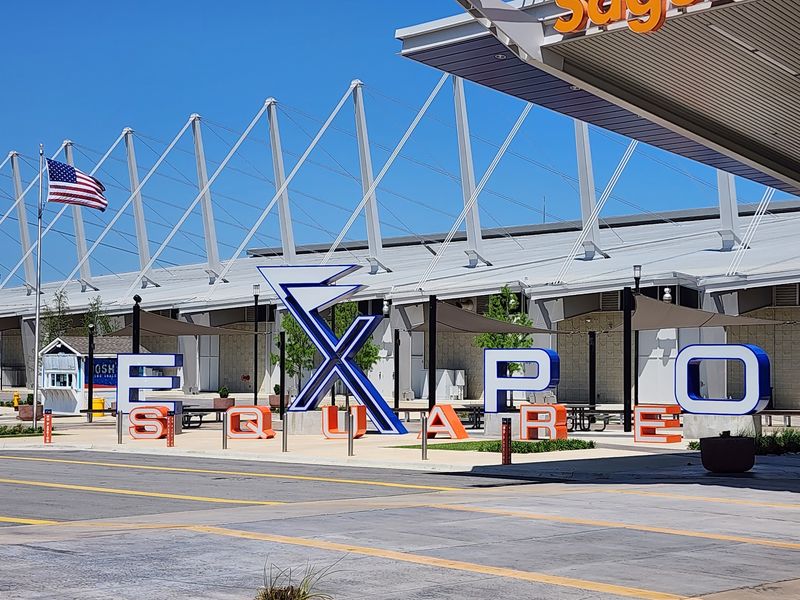
The statue sits at the entrance to Expo Square, the sprawling fairgrounds complex that hosts everything from state fairs to car shows. The location itself is well-suited for a quick pull-off.
There is a dedicated area nearby where visitors can park, walk up close, and snap photos without any hassle.
Tulsa sits in northeastern Oklahoma, and the Expo Center is easy to reach from multiple directions. The address puts it close to several dining options and within reasonable distance of Route 66 corridor stops.
First-timers are often caught off guard by the sheer scale of the statue before they even step out of their car. That initial reaction is pretty much universal.
Origins in the Oil Boom Era
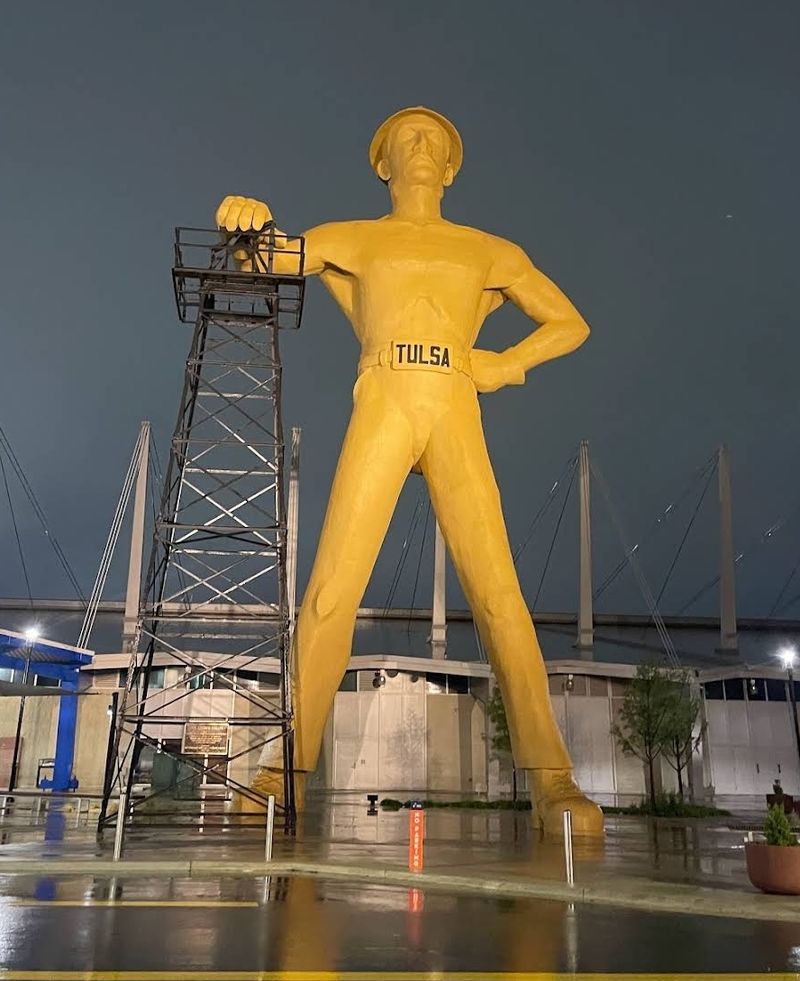
Few statues in America carry as much industrial pride as the Golden Driller, and understanding where he came from makes the whole experience richer. The statue was originally created for the 1953 International Petroleum Exposition, a major industry event that drew oil professionals from around the world to Tulsa.
At that time, Tulsa had earned the nickname “Oil Capital of the World,” and the city wanted a symbol that matched that reputation.
The oil industry shaped Tulsa in profound ways. Fortunes were made, skylines were built, and entire neighborhoods took form because of petroleum money.
The Golden Driller was conceived as a physical embodiment of all that energy and ambition, a blue-collar worker frozen in time to honor the people who made it all happen.
Early versions of the statue were temporary exhibition pieces. The permanent version that stands today was dedicated in 1966 and became the official state monument of Oklahoma in 1979.
That designation was not handed out lightly. It reflects how deeply the statue resonates with Oklahoma’s identity and how much the oil heritage still means to the people who live and work in the region.
The Staggering Scale of the Structure
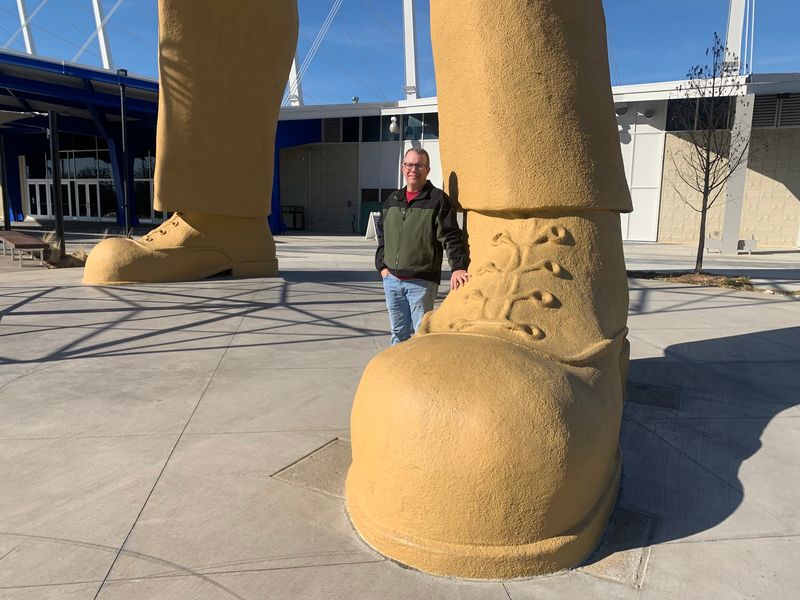
Numbers alone do not quite prepare you for standing at the base of the Golden Driller. The statue rises 76 feet into the Oklahoma sky and tips the scales at over 40,000 pounds.
Those boots alone are big enough to make a grown adult feel genuinely small, and the oil derrick the figure leans against adds another layer of visual drama to the whole composition.
The statue is made of reinforced concrete and steel, built to last through Oklahoma’s notoriously unpredictable weather. The golden finish gives it a warm, almost regal appearance in sunlight, which makes afternoon visits particularly photogenic.
Early morning light hits differently, casting long shadows that stretch across the fairgrounds pavement.
One thing that catches many visitors by surprise is how the statue’s proportions feel realistic rather than cartoonish. The facial features, the work boots, the rolled-up sleeves, all of it was crafted with a level of detail that rewards a closer look.
From a distance, he reads as a symbol. Up close, he reads as a person.
That duality is part of what makes the Golden Driller so enduring as a piece of public art in the American heartland.
What the Golden Driller Represents to Tulsa
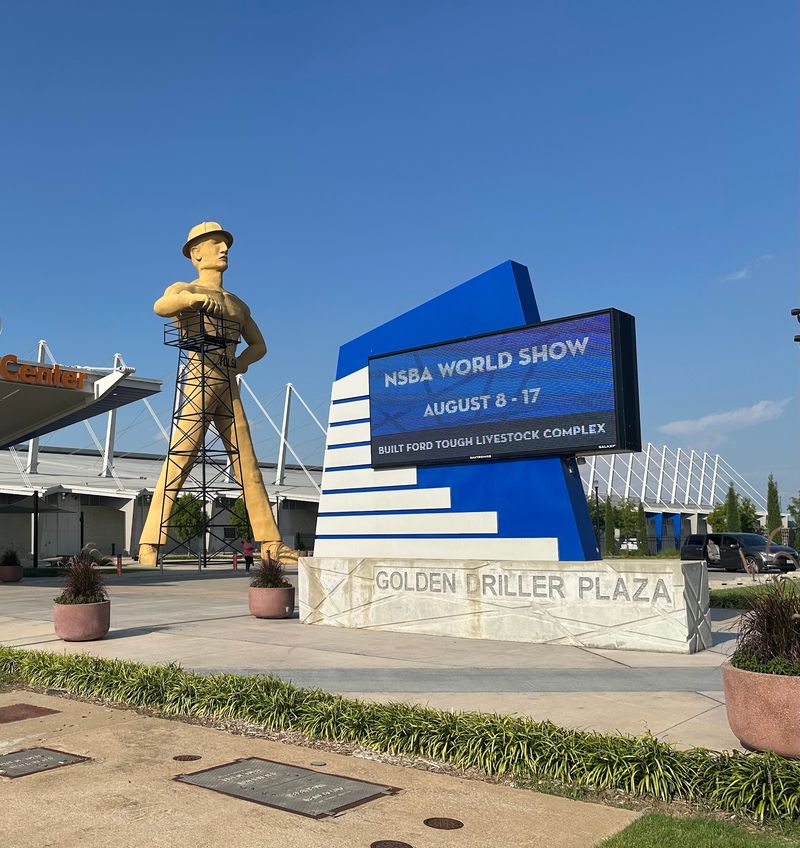
Symbols carry weight only when people genuinely believe in what they represent. For Tulsa, the Golden Driller is not just a quirky roadside feature.
He is a direct line back to the era when oil defined the city’s character, its economy, and its self-image. The statue was designated Oklahoma’s official state monument in 1979, a recognition that cemented his place in the cultural fabric of the entire state.
The figure represents the blue-collar workforce that built the oil industry from the ground up. Roughnecks, drillers, and field workers who spent long days in the heat of Oklahoma summers and the cold of its winters.
The statue honors that labor in a way that feels genuine rather than corporate or sanitized.
For longtime Tulsa residents, the Golden Driller carries personal associations as well. Families have posed in front of him for generations.
Road-trippers have made him a must-see stop on cross-state drives. The statue holds a kind of community memory that goes beyond tourism.
When you stand next to him and look up, you are not just looking at concrete and steel. You are looking at a version of Oklahoma that the state is genuinely proud of and still actively claims as its own.
The Expo Square Setting and Its Energy
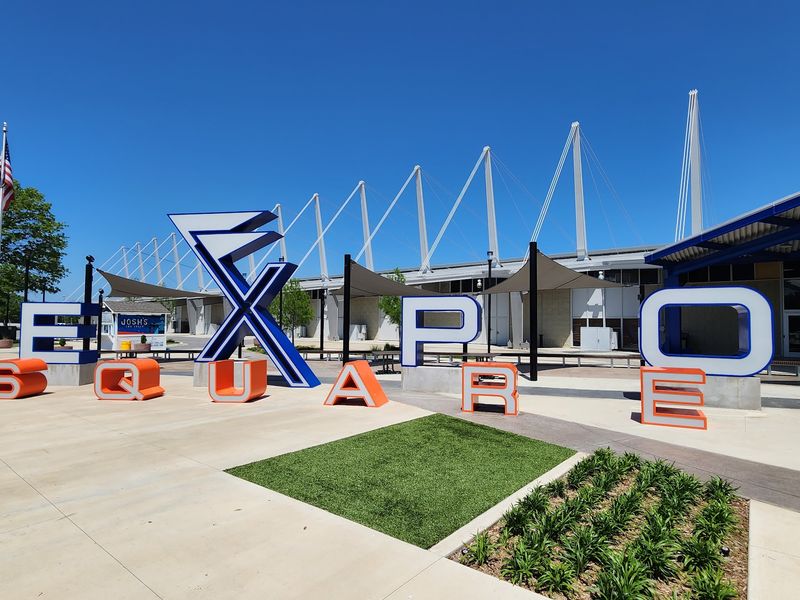
The Golden Driller does not exist in isolation. He anchors the entrance to Expo Square, one of Oklahoma’s most active event venues, and the energy of the surrounding grounds shapes the overall experience of visiting.
On any given weekend, the complex might be hosting a state fair, a car show, a gun show, or a home and garden show. The variety keeps the place feeling alive year-round.
The Tulsa State Fair is probably the biggest draw, pulling in large crowds each fall and filling the grounds with food vendors, entertainment, and the kind of atmosphere that makes people want to linger. The Golden Driller serves as the natural gathering point, a landmark that orients visitors and gives the whole fairground a sense of identity.
Even on quieter days between events, the grounds are open and accessible. The statue can be visited any time, day or night, since the area operates around the clock.
There is something oddly peaceful about visiting during an off-peak moment, when the crowds have cleared and the Golden Driller stands alone against a wide Oklahoma sky. The contrast between the statue’s imposing size and the quiet of an empty fairground creates a mood that is hard to replicate anywhere else in the state.
Photography Opportunities Worth Planning Around
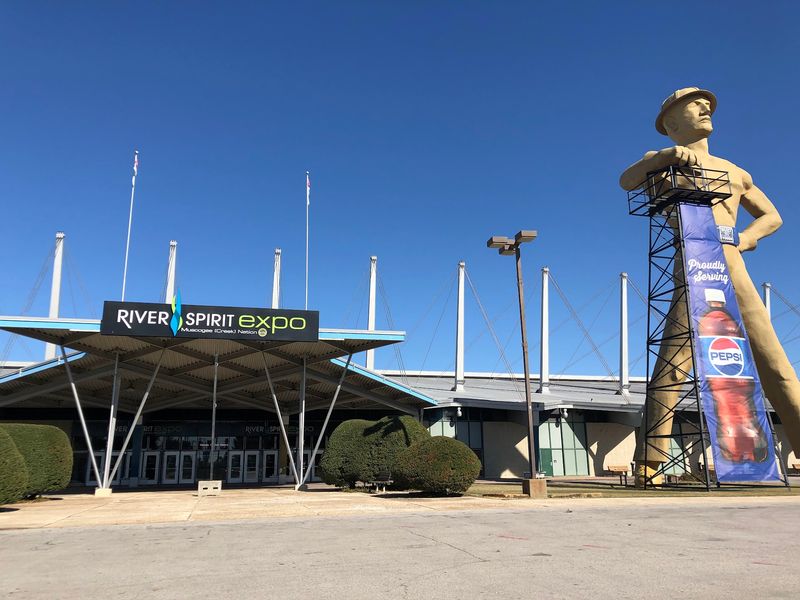
With a 4.6-star rating across more than 2,500 reviews, the Golden Driller has clearly earned its reputation as a photo stop worth making. The pull-in area near the statue was designed with visitors in mind, giving enough distance to frame the full figure without craning awkwardly or backing into traffic.
That practical detail makes a real difference when you are trying to capture the scale.
Lighting conditions matter more here than at most outdoor stops. The golden finish on the statue responds beautifully to afternoon sun, taking on a warm glow that photographs with real impact.
Overcast days tend to flatten the color and reduce the visual drama, so clear-sky visits during late afternoon tend to yield the most satisfying results.
One honest note from frequent visitors: the statue is not lit at night, which limits after-dark photography considerably. The surrounding expo center buildings provide some ambient light, but the statue itself fades into shadow once the sun drops.
Morning visits work well for softer light and fewer people in the background. The dedicated pull-off area means you can take your time without feeling rushed, which is a small but welcome courtesy at a landmark that genuinely deserves more than a quick glance from the car window.
The Art Deco Architecture Hiding Behind Him
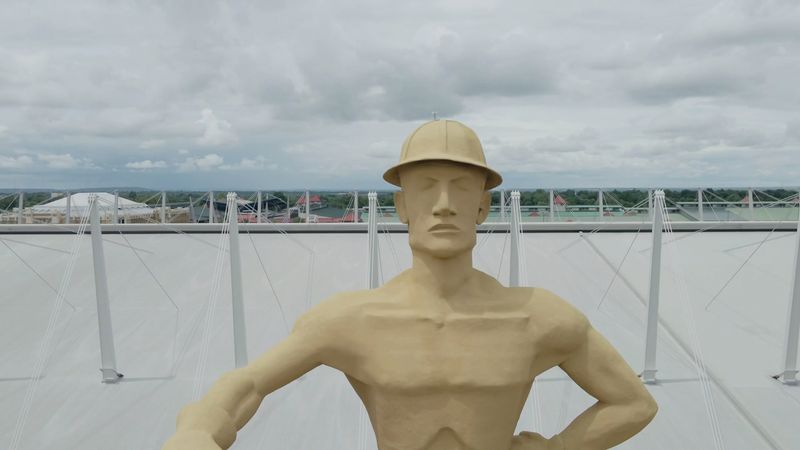
Most visitors spend their time focused on the Golden Driller and never wander behind him to discover what else the Expo Square campus has to offer. The administration building located several structures back from the statue features striking art deco ceramics that represent some of the finest decorative architecture in the region.
The geometric patterns, the glazed tile work, and the bold lines of the facade are genuinely worth the short walk.
Art deco was Tulsa’s architectural language during the city’s oil boom years, and the style shows up across the city in various forms. The Expo Square admin building is a less-publicized example, which means it rarely draws the crowds that downtown Tulsa’s famous deco buildings attract.
That relative obscurity makes it feel like a genuine discovery for visitors who take the time to look.
Pairing the Golden Driller visit with a slow walk through the surrounding buildings turns a quick photo stop into a more complete experience. The contrast between the massive, modern-feeling statue and the carefully crafted deco details of the older buildings creates an interesting visual conversation.
Both represent Tulsa’s oil era, just through very different artistic languages. Taking twenty extra minutes to explore the campus repays the effort with some genuinely memorable architectural sights.
Who Enjoys This Stop the Most
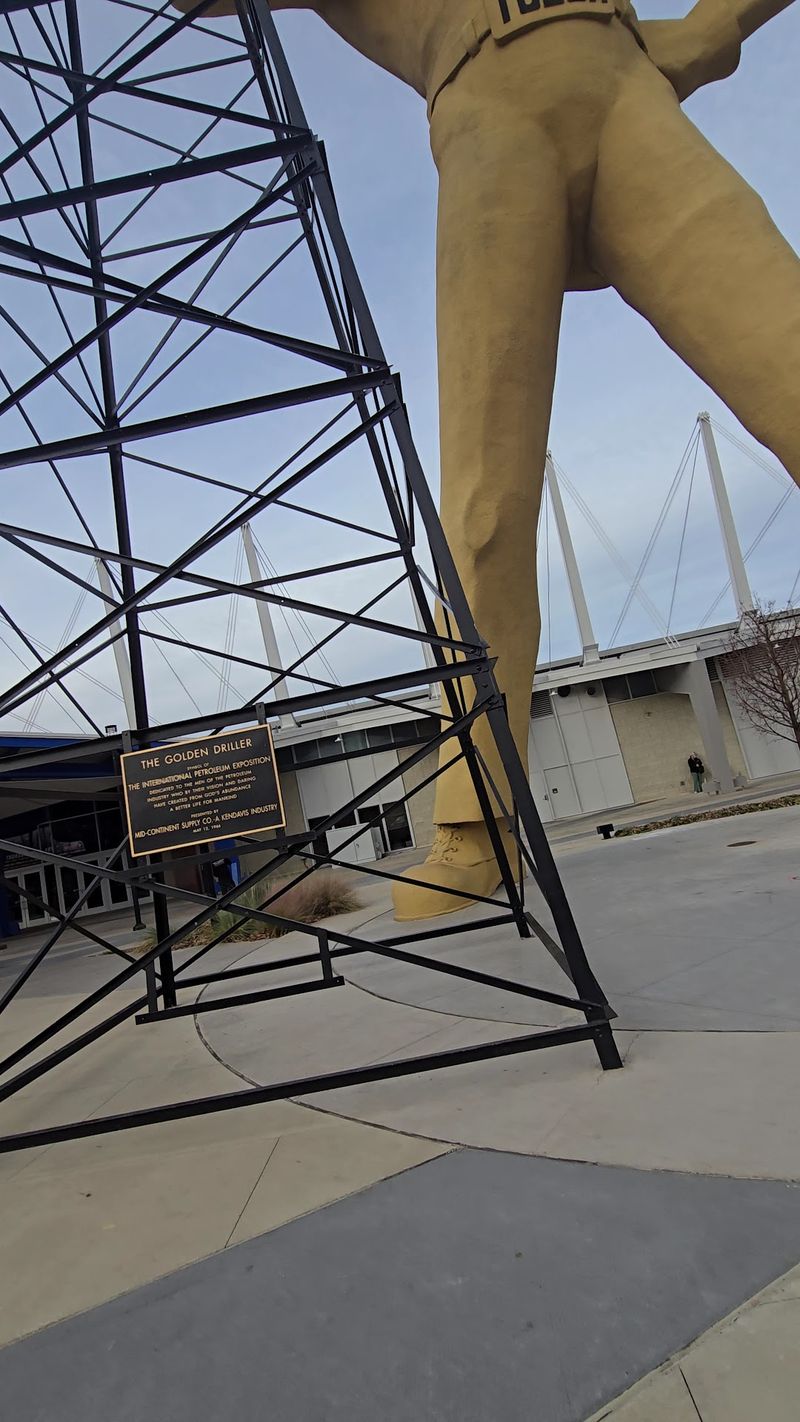
Road-trippers tend to get the most out of the Golden Driller experience, particularly those working their way through Oklahoma’s quirky attraction circuit. The statue fits naturally into a day that might also include Route 66 stops, since the landmark sits close enough to the historic highway to make it a logical addition to any corridor drive through northeastern Oklahoma.
Families with kids find the scale genuinely impressive, and children who might tune out a historical marker or a museum exhibit tend to react with real enthusiasm to something this physically large. The open-air setting means no admission lines, no timed entry, and no pressure to move along quickly.
Everyone can take their time and experience the statue at their own pace.
History enthusiasts who appreciate American industrial heritage will find the backstory satisfying. The connection to the 1953 International Petroleum Exposition and the subsequent state monument designation gives the Golden Driller a depth that pure novelty attractions lack.
Architecture fans who wander the broader Expo Square campus get an added bonus with the art deco buildings in the background. Honestly, the statue appeals to a wider range of visitors than its roadside-oddity reputation might suggest, and most people who stop leave more impressed than they expected to be.
Visiting Hours, Admission, and Getting There
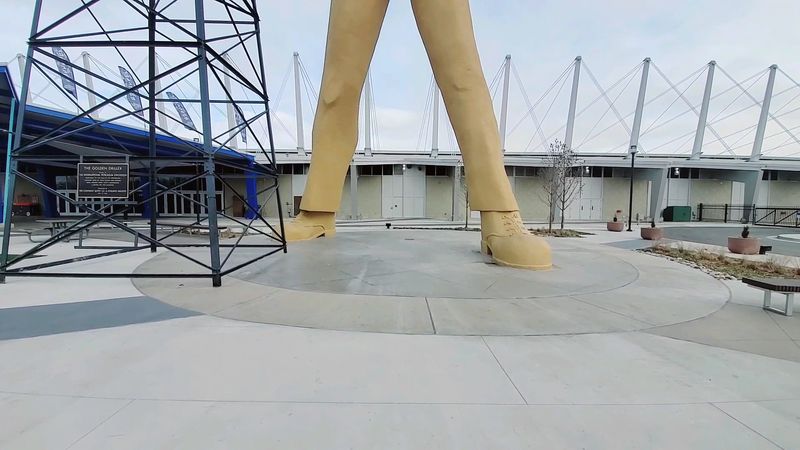
One of the most appealing things about the Golden Driller as a travel stop is how uncomplicated the logistics are. The statue is accessible 24 hours a day, seven days a week, every day of the year.
There is no ticket booth, no timed entry window, and no reservation system to navigate. Admission to view the statue from the outside is completely free, which makes it an easy addition to any itinerary without budget concerns.
The Expo Center address is 4145 E 21st St, Tulsa, OK 74114. From downtown Tulsa, the drive takes roughly ten minutes depending on traffic.
The location sits near several major streets and is straightforward to reach by GPS. Parking in the pull-off area near the statue is generally easy to find outside of major event days at the expo center.
For questions about special access, interior tours, or event schedules that might affect your visit, the Expo Square team can be reached at 918-596-2100 or through exposquare.com. Event days can bring significant crowds to the grounds, which changes the feel of the visit considerably.
Checking the calendar before arrival helps you decide whether you want the lively fair-day atmosphere or the quieter experience of a non-event visit. Both have their own appeal.
Nearby Highlights Worth Adding to the Route
The Golden Driller’s location in Tulsa puts it within easy reach of several worthwhile stops that complement the visit nicely. Route 66 runs through Tulsa, and the historic highway corridor offers a string of classic roadside attractions, vintage diners, and neon-lit relics from mid-century American road culture.
Combining the statue stop with a Route 66 drive through town turns a single attraction into a full half-day adventure.
Tulsa’s broader landscape also rewards exploration. The city has a genuinely impressive collection of art deco buildings concentrated in its downtown core, many of them dating from the same oil boom era that produced the Golden Driller.
Brady Arts District and the Greenwood District both offer cultural depth for visitors who want more than a quick drive-through experience.
The Expo Square campus itself hosts a rotating calendar of events throughout the year, from the Tulsa State Fair each fall to car shows, gun shows, and specialty expos spread across the calendar. If the timing lines up, attending one of these events alongside a visit to the statue adds a layer of local flavor that pure landmark tourism cannot replicate.
The fairground atmosphere, the food vendors, and the crowds all give the Golden Driller a lively backdrop that feels very specifically and authentically Oklahoman.
A Final Word on Why This Stop Earns Its Reputation
Some roadside stops deliver exactly what they promise and nothing more. The Golden Driller delivers more than most people expect.
The free access, the 24-hour availability, and the genuine historical depth behind the statue make it a stronger stop than its novelty-attraction label implies. A 4.6-star rating across over 2,500 reviews reflects real visitor satisfaction rather than inflated hype.
The statue earns that reception because it operates on multiple levels simultaneously. At surface level, it is a very large, very gold oil worker standing in a parking lot, which is inherently entertaining.
One level deeper, it is a sincere tribute to the blue-collar labor force that built Tulsa’s economy and identity. One level deeper still, it is a window into a specific moment in American industrial history when oil defined regions and communities in ways that still echo today.
Road trips through Oklahoma benefit from anchors, specific places that give the journey shape and memorable moments. The Golden Driller is exactly that kind of anchor.
He stands at 4145 E 21st St in Tulsa, visible from the road, free to visit, and genuinely worth the stop. Whether you give him five minutes or an hour, you will leave with a clearer sense of what Oklahoma is proud of and why that pride is well-earned.
Share this story