Most museums keep their best secrets locked behind velvet ropes. The Cherokee Strip Regional Heritage Center in Enid, Oklahoma does something far more interesting: it hides an entire pioneer village on its grounds, complete with original buildings you can actually walk through.
Built around the story of the 1893 Land Run, the largest land run in American history, this museum pulls you into a world of dusty homesteads, one-room schoolhouses, and frontier commerce in a way that no textbook ever could. Whether you are a history enthusiast, a curious road-tripper, or a parent looking for something genuinely worth the drive, this place delivers far more than its modest exterior suggests.
What the Cherokee Strip Regional Heritage Center Actually Is
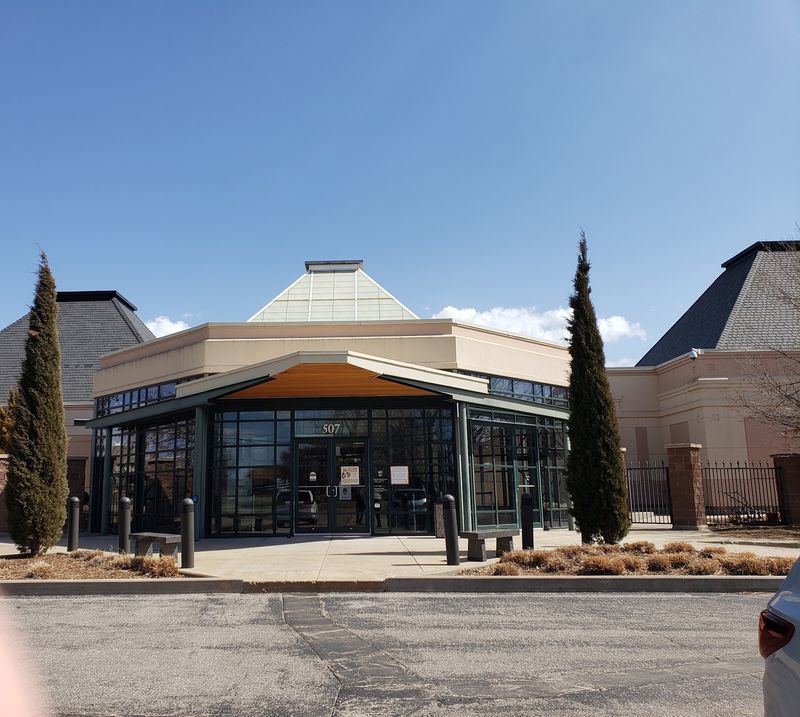
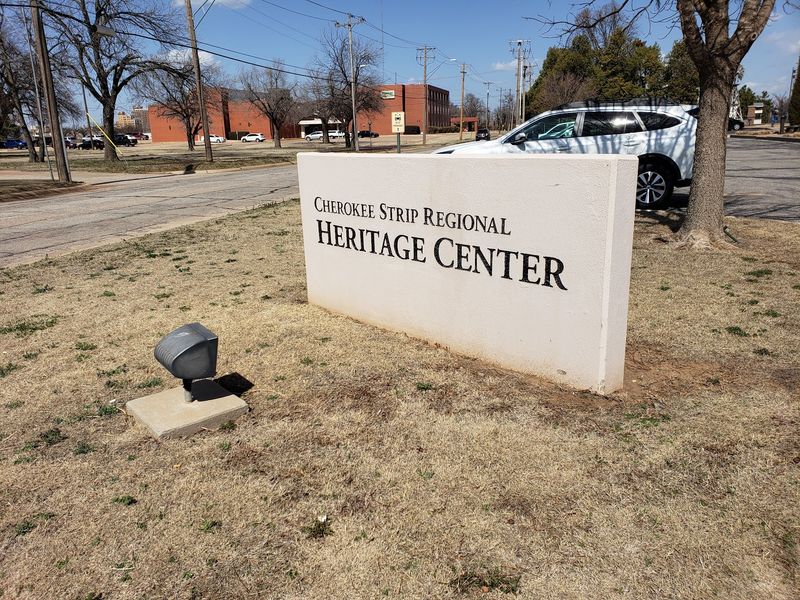
Few places in northwestern Oklahoma pack as much historical weight into a single address as the Cherokee Strip Regional Heritage Center at 507 S 4th St, Enid, OK 73701. The center sits in Enid, a city in Garfield County that owes its very existence to a single chaotic September afternoon in 1893, when thousands of settlers raced across the prairie to claim land in what became known as the Cherokee Strip Land Run.
The museum is operated as a regional heritage center dedicated to telling the story of European settlement in northwestern Oklahoma, beginning with that landmark run. It holds a 4.7-star rating from 163 Google reviews, which is a strong signal that the place consistently delivers on its promises.
The building itself is a striking contrast to what it contains. Its contemporary glass-and-steel architecture feels almost deliberately modern, as if the architects wanted visitors to feel the full jolt of stepping from the present into the past the moment they cross the threshold.
That tension between old and new is part of what makes the experience so memorable.
The 1893 Land Run Story at the Heart of Everything
On September 16, 1893, roughly 100,000 people lined up along the borders of a six-million-acre strip of land in present-day Oklahoma and waited for a signal to race in and claim a plot as their own. When the gun fired, the Cherokee Strip Land Run became the largest single land run in American history, and Enid was born from that chaos within hours.
The indoor exhibits at the heritage center walk visitors through this event in layered, thoughtful detail. First-person accounts from settlers who actually participated give the story a human texture that dates and statistics alone cannot provide.
You hear about the fear, the excitement, the physical exhaustion, and the extraordinary gamble those families were taking on an open stretch of Oklahoma grassland.
The exhibits also trace what happened after the dust settled: how communities formed, how businesses opened, and how a raw frontier territory gradually shaped itself into something resembling a functioning society. The progression feels logical and well-paced, moving from the run itself into the years of development that followed without losing momentum or burying the visitor in dry detail.
The Outdoor Pioneer Village Hidden Behind the Modern Walls
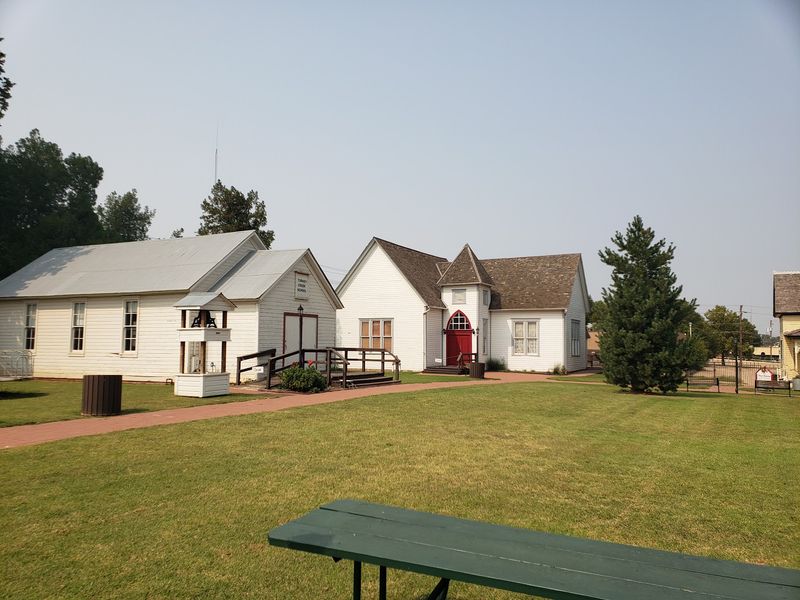
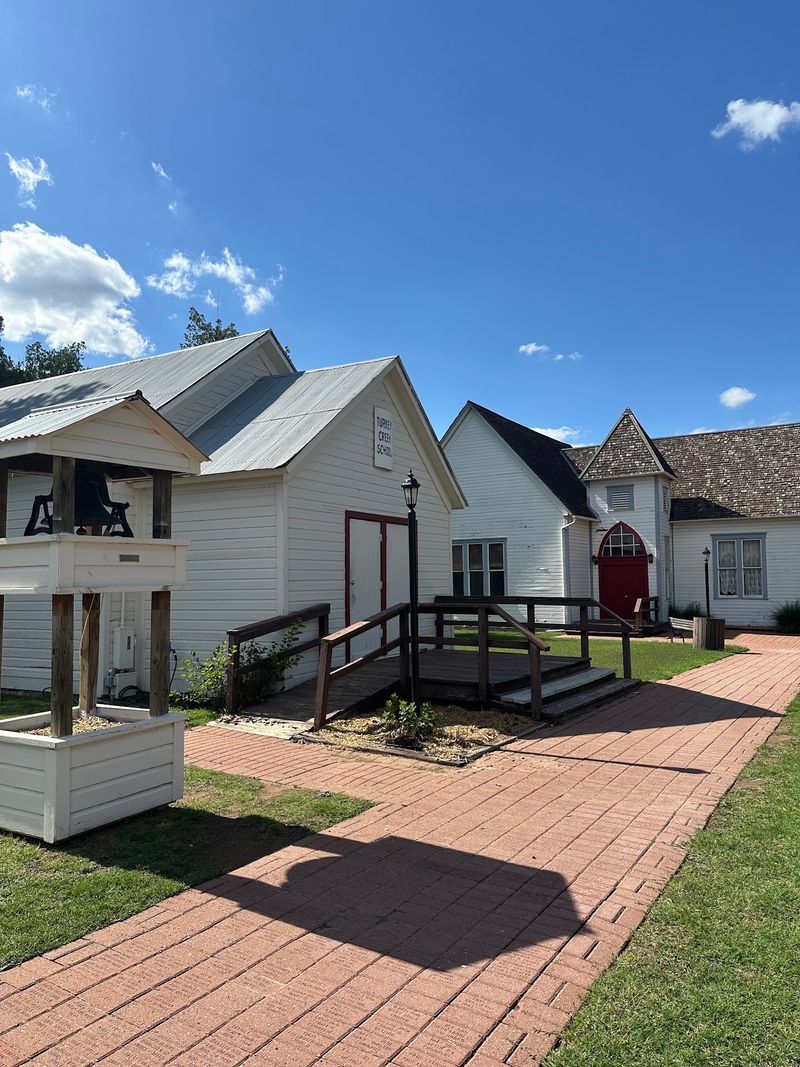
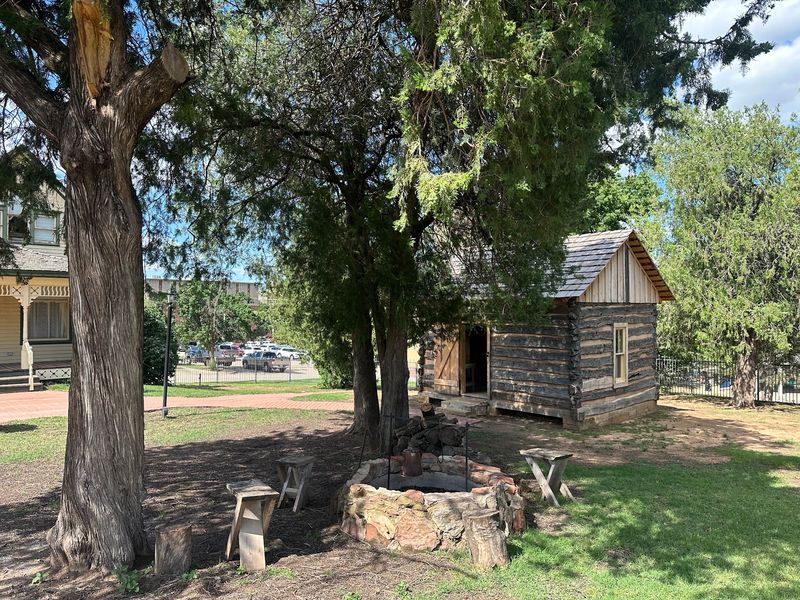
Behind the sleek museum building, the grounds open up into something that genuinely catches visitors off guard. A collection of original historic structures has been relocated and preserved on the property, forming a small but remarkably complete pioneer village that visitors can explore on foot.
The village includes a one-room schoolhouse, a chapel, a general store, a land office, and an 1890s homestead cabin. Each building has been carefully maintained, and the interiors are furnished with period-appropriate items that make the spaces feel lived-in rather than staged.
Spend a few minutes inside the old schoolhouse and it becomes easy to picture children hunched over slates while a single teacher managed every grade level at once.
The chapel is particularly striking in its simplicity. Small, spare, and quietly dignified, it reflects the role that faith played in anchoring frontier communities during uncertain times.
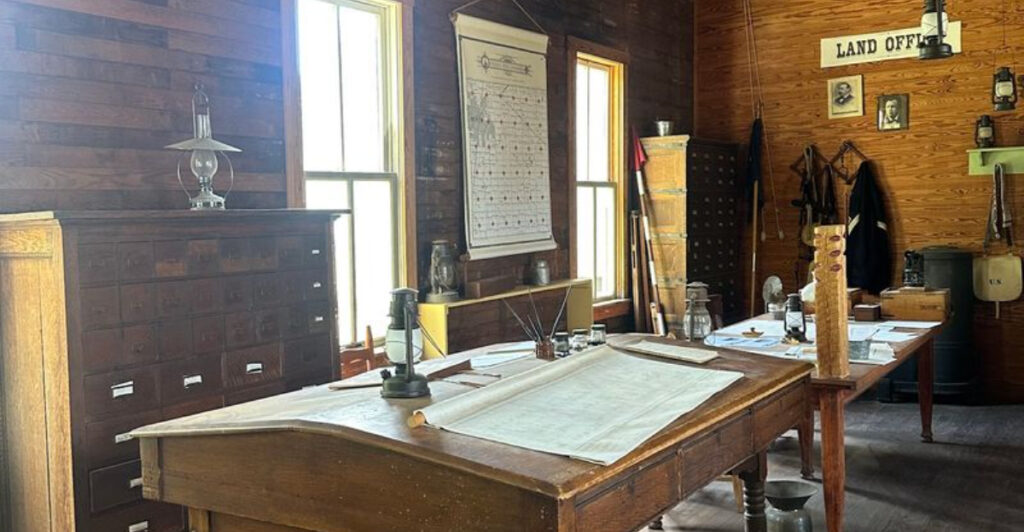
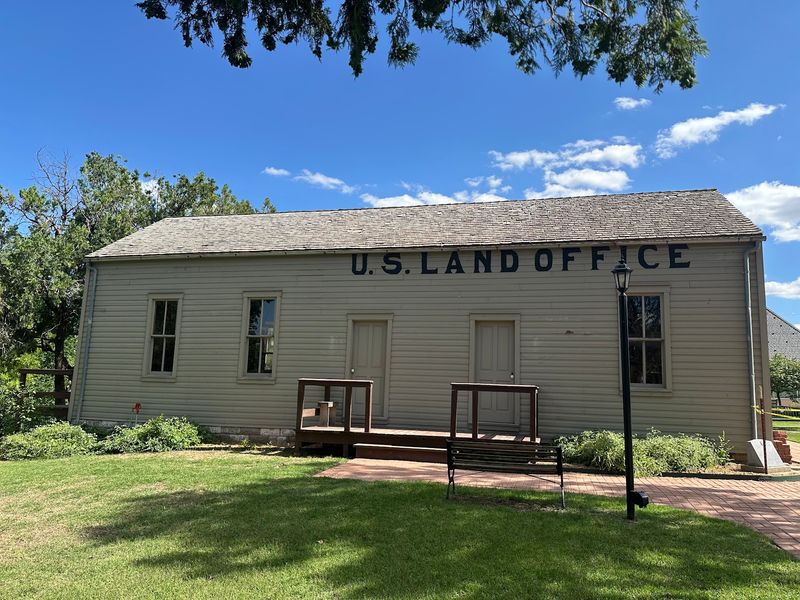
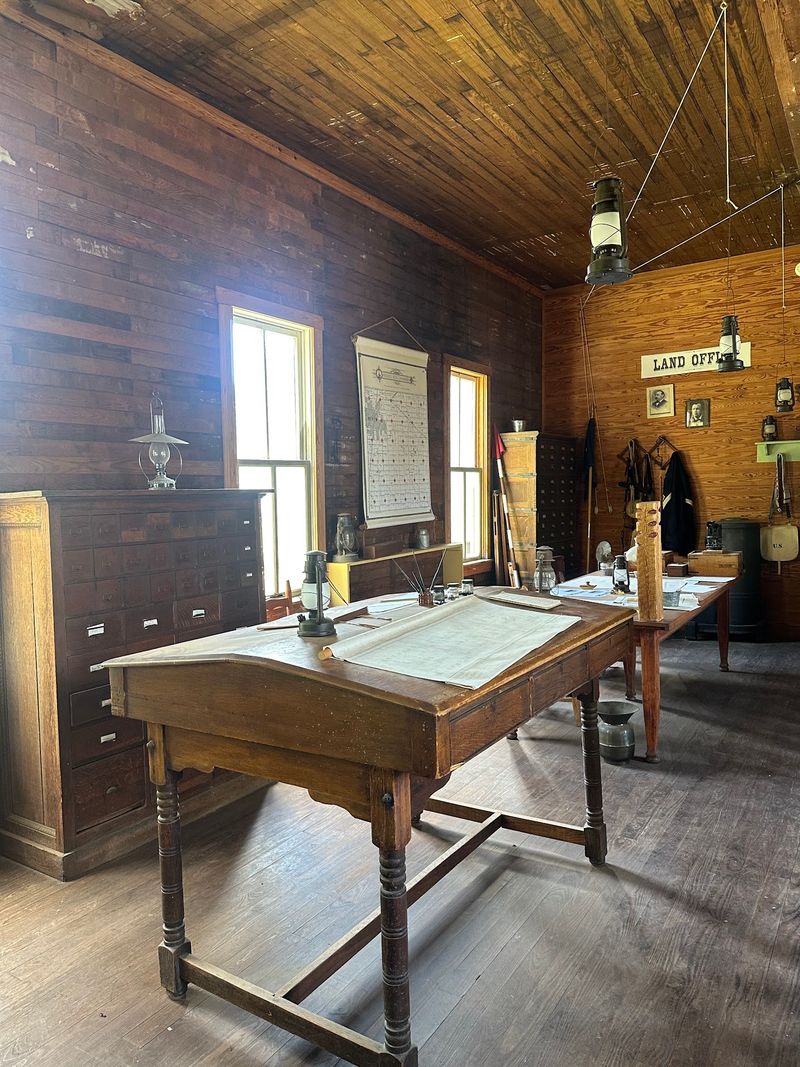
The land office carries its own weight as the only surviving land office used during the Oklahoma Land Run, which makes it arguably the most historically significant structure on the entire property. That single fact alone is worth the drive to Enid.
The Last Surviving Oklahoma Land Run Land Office
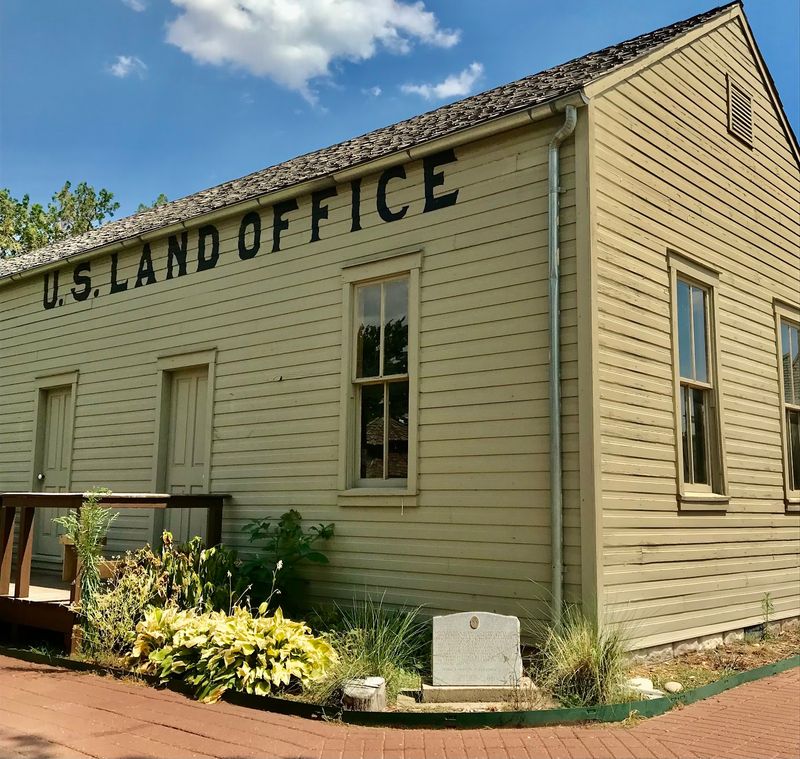
Among all the structures in the outdoor village, the original land office stands apart in a category of its own. Land offices were the bureaucratic nerve centers of the Land Run era, the places where settlers filed their claims, paid their fees, and made their homestead dreams official on paper.
Most of those buildings are long gone, absorbed by time, weather, and the march of progress.
The land office preserved at the Cherokee Strip Regional Heritage Center is believed to be the only one remaining that was actually used during the Oklahoma Land Run. That distinction transforms it from a charming old building into a genuinely rare artifact of American frontier history.
Standing inside it, you are occupying the same physical space where real settlers stood in 1893, paperwork in hand, hearts pounding.
Guided presentations are offered inside the land office, where staff walk visitors through the process of claiming land and the significance of the office itself. Some visitors prefer a quieter, self-guided experience, so it is worth knowing in advance that the living-history format here involves active engagement with guides rather than passive browsing.
For those who lean into it, the interaction adds real depth to the visit.
Indoor Exhibits That Cover More Ground Than You Expect
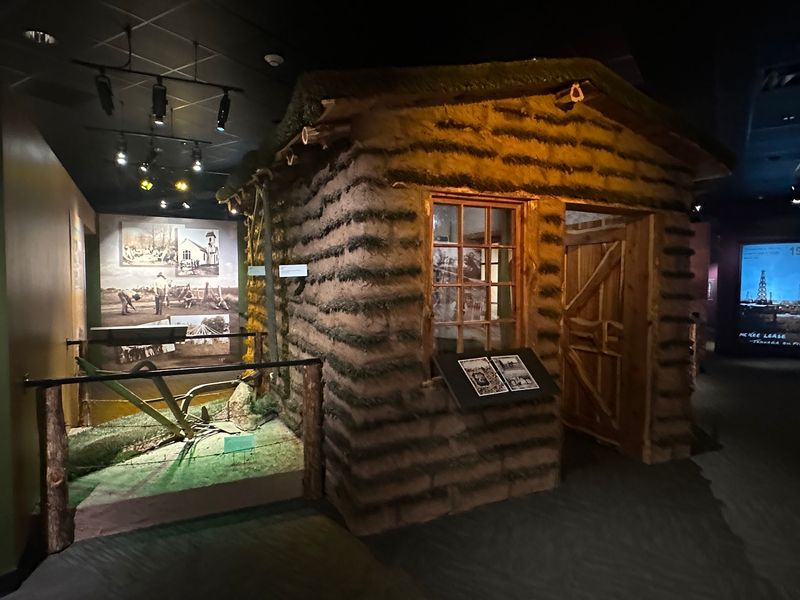
The indoor portion of the museum covers considerably more territory than a single event. Yes, the 1893 Land Run anchors the narrative, but the exhibits branch outward to cover the geography of the Cherokee Strip, the political forces that shaped it, the business culture that emerged from it, and the notable figures who left their mark on the region.
Exhibit design here is genuinely varied, which matters more than most people realize. A museum that relies entirely on text panels tends to lose visitors after the first few rooms.
The heritage center mixes reading-based displays with large visual installations, recorded audio presentations, and interactive media that gives visitors multiple ways to absorb information. There are phones to pick up and listen to, buttons that trigger responses, and small books tucked into displays that invite closer inspection.
Oil and gas history also gets meaningful attention, reflecting the economic forces that reshaped northwestern Oklahoma after the homestead era. Interactive media presents perspectives from people of the time, lending the oil boom section the same human texture that makes the Land Run galleries so effective.
Visitors who budget two to three hours for the full experience tend to leave feeling genuinely satisfied rather than rushed.
A Research Center Tucked Inside a Museum
Not every museum visitor comes purely for the exhibits. Some arrive with a specific mission: tracing a family name, locating a land claim record, or piecing together what happened to an ancestor who made the run in 1893.
The Cherokee Strip Regional Heritage Center accommodates that kind of purposeful visit through an onsite research center.
Genealogy resources are available for visitors interested in digging into the historical record, and staff members have been noted for genuine expertise in this area. The research center adds a dimension to the museum that most comparable facilities simply do not offer, making it a meaningful destination for anyone with roots in northwestern Oklahoma or the broader Cherokee Strip region.
The combination of a world-class exhibit space and a functioning research archive under one roof is rare. It positions the heritage center as something more than a passive attraction.
For the right visitor, this is a place where family history can shift from vague family lore into documented reality. A morning spent in the research room followed by an afternoon walking the outdoor village makes for an unusually rich and personally meaningful day in Enid.
Who Will Get the Most Out of a Visit Here
The heritage center draws a genuinely broad audience, but certain visitors tend to connect with it most deeply. History enthusiasts who appreciate well-organized, research-backed exhibits will find the indoor galleries rewarding from start to finish.
The narrative is clear, the artifacts are authentic, and the interpretive materials are thoughtful without being academic to the point of exhaustion.
Families with older children, roughly middle school age and up, will find the experience engaging and appropriately paced. Younger kids may find the indoor exhibits a bit text-heavy, though the interactive elements help.
The outdoor village, with its hands-on, walkable format, tends to recapture the attention of younger visitors who have started to fidget inside.
Road-trippers passing through Enid on a regional tour of Oklahoma often list the heritage center as a highlight that exceeded their expectations. The museum has a way of surprising people who arrive without strong preconceptions, offering more layers than the modest admission price would suggest.
It also hosts rotating art exhibits, so repeat visitors have reason to return. The gift shop carries Oklahoma-made items and souvenirs that feel more considered than the typical museum fare.
Atmosphere, Staff, and the Feel of the Place
The atmosphere inside the Cherokee Strip Regional Heritage Center leans warm and unhurried. The building is clean and well-maintained, the exhibits are logically sequenced, and the overall layout makes it easy to move through the space without feeling lost or rushed.
There is a calm sense of care about the place, the kind that tells you the people running it actually believe in what they are preserving.
Staff consistently earn high praise in visitor feedback. The team is described as friendly, knowledgeable, and attentive without being overbearing.
One staff member noted for genealogy expertise has been mentioned by name in multiple reviews, which speaks to the depth of knowledge available to visitors who want to ask questions beyond the standard tour script.
The living-history format in the outdoor village means guided interaction is part of the experience, particularly inside the land office. Visitors who prefer to wander at their own pace may find this format more structured than expected.
That said, the guides bring genuine enthusiasm to their presentations, and for most visitors the engagement adds real value rather than friction. The overall impression is of a museum that respects both its subject matter and the people who come to learn about it.
Hours, Prices, and Getting to Enid
Planning a visit to the Cherokee Strip Regional Heritage Center is straightforward. The museum is open Tuesday through Saturday from 10 AM to 5 PM.
It is closed on Sundays and Mondays, so timing matters if you are building a road trip itinerary around a stop in Enid.
Admission pricing has historically been described as very reasonable, with past visitors noting a maximum fee of around six dollars, making it one of the more affordable quality museum experiences in the region. Prices can change over time, so checking the official website at csrhc.org or calling ahead at 580-237-1907 is the best way to confirm current rates before your visit.
Enid sits in northwestern Oklahoma, roughly an hour north of Oklahoma City via US-81 or I-35 to US-412. The museum address is 507 S 4th St, Enid, OK 73701, and parking is accessible on the property.
Most visitors find they need between two and three hours to do the indoor exhibits and outdoor village justice without rushing. The gift shop is worth a browse on the way out, stocking a mix of local souvenirs and Oklahoma-made goods that make for better keepsakes than the average museum store.
Share this story