Somewhere along the wooded shores of Grand Lake in northeastern Oklahoma, a fully reconstructed pioneer village waits to pull you back about 150 years. Har-Ber Village Museum in Grove, Oklahoma is not a typical museum where you shuffle past glass cases reading tiny placards.
Here, you walk actual streets lined with 19th-century structures, watch craftspeople demonstrate forgotten trades, and let the landscape do most of the storytelling. Whether you are bringing curious kids, a history-loving grandparent, or just your own sense of wonder, this place has a way of making the past feel surprisingly close.
What Har-Ber Village Museum Actually Is
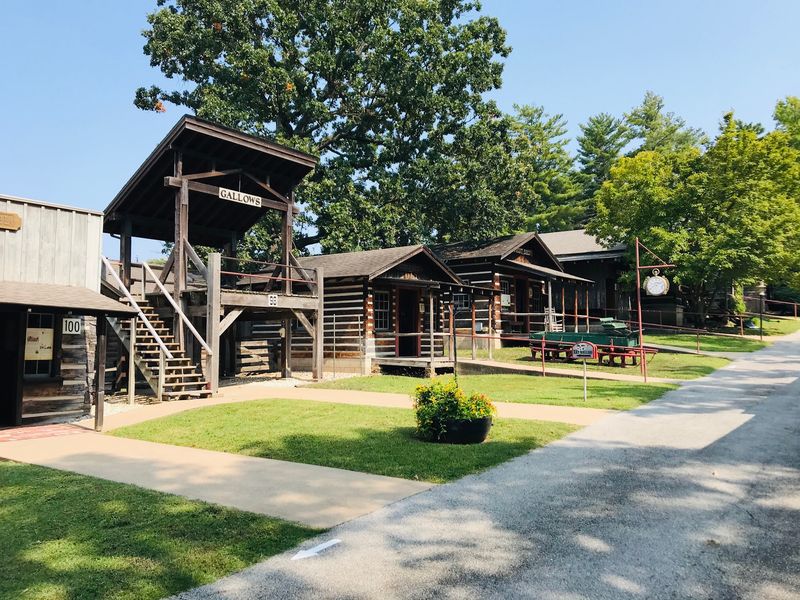
Most history museums ask you to look without touching, but Har-Ber Village Museum flips that expectation entirely. Spread across a scenic stretch of land beside Grand Lake O’ the Cherokees in Grove, Oklahoma, this open-air museum recreates an entire pioneer-era community you can physically walk through.
The address is 4404 W 20th Rd, Grove, OK 74344, and it sits in the northeastern corner of the state near the borders of Arkansas, Missouri, and Kansas.
The museum is classified as a history museum, but calling it that almost undersells the experience. There are dozens of authentic 19th-century-style structures filled with period antiques, collectibles, and hands-on exhibits.
Some buildings house tools, furniture, and household items from daily frontier life. Others contain fascinating biographical displays about real historical figures from the four-states region.
A gift shop rounds out the visit for those who want to bring a little piece of pioneer spirit home. With a 4.8-star rating across nearly 600 Google reviews, the museum has clearly earned a devoted following among both locals and out-of-state travelers who stumble upon it and leave genuinely glad they did.
The Founders Behind the Vision
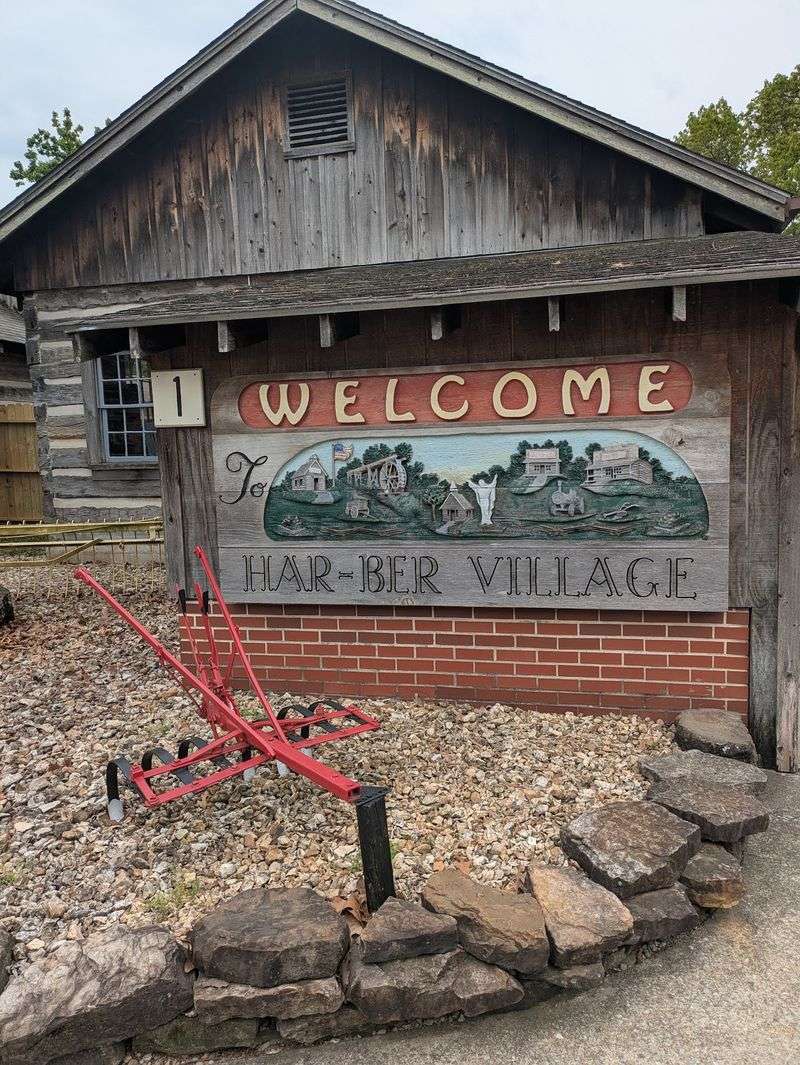
Every great place has an origin story worth knowing, and Har-Ber Village is no exception. The museum was founded by Harvey and Bernice Jones, and its name is actually a blend of their first names: Har from Harvey, Ber from Bernice.
That small detail says a lot about the personal investment the couple poured into creating this place.
Harvey Jones was a successful businessman who co-founded the Jones Truck Lines, and the couple used their resources to build something that would outlast them both. Their goal was to preserve the material culture and spirit of pioneer life in the region before it faded entirely from memory.
What began as a personal passion project grew into one of the most comprehensive open-air history museums in the South-Central United States.
Biographical displays inside the village give visitors a clear picture of who Harvey and Bernice were, as well as the broader community of historical figures they wanted to honor. Walking through the grounds, you get the sense that this was never just a collection of old things.
It was always meant to be a living tribute to a way of life that shaped the region profoundly.
Grand Lake as a Backdrop
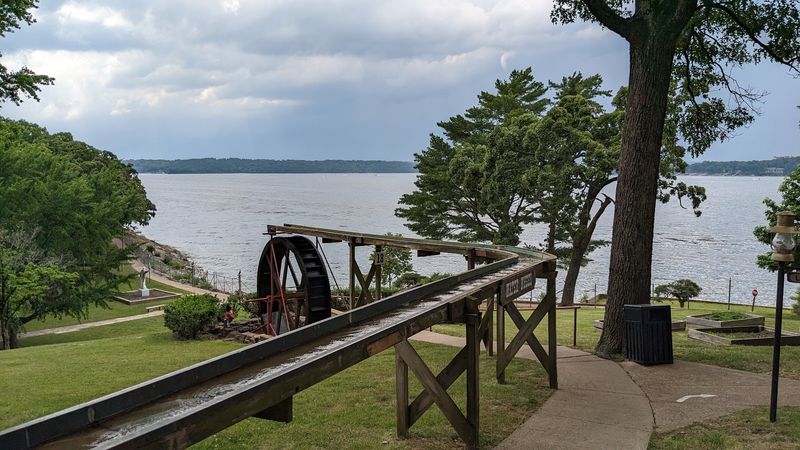
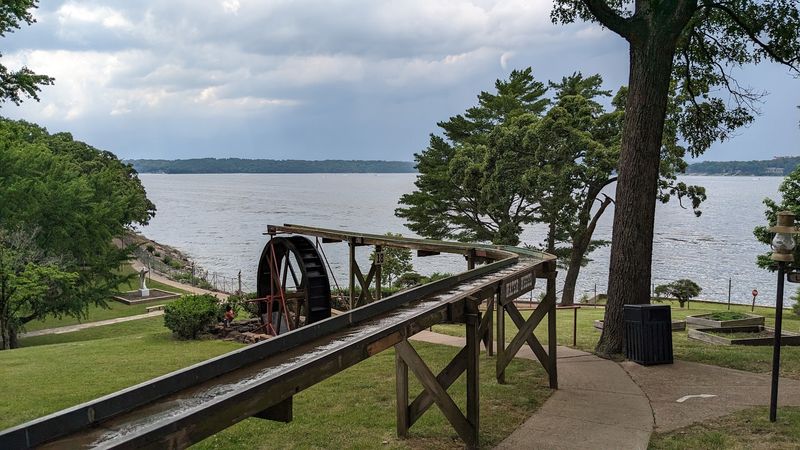
Few museums can claim a backdrop as naturally stunning as this one. Har-Ber Village sits directly beside Grand Lake O’ the Cherokees, one of Oklahoma’s most beloved recreational lakes.
The water is visible from multiple points throughout the grounds, and the combination of historic wooden structures and open lake views creates an atmosphere that feels genuinely cinematic.
On calm mornings, the lake surface mirrors the surrounding trees and sky in a way that makes the whole scene feel almost unreal. Birders have taken note of this location for good reason.
Pelicans and cranes have been spotted swooping down near the shoreline, and the variety of bird activity visible from the lakeside paths gives the visit an unexpected natural science dimension alongside the history.
The placement beside the water was clearly intentional. Pioneer communities in this region depended on waterways for transportation, trade, and survival, so having the lake present reinforces the historical authenticity of the setting.
Whether you pause to watch the water for five minutes or spend a longer stretch sitting quietly on the shore, Grand Lake adds a layer of peace and perspective to the entire museum experience that no indoor exhibit could replicate.
The Layout That Actually Makes Sense
One of the quiet frustrations of visiting large outdoor museums is getting turned around, doubling back, and missing half the exhibits by accident. Har-Ber Village sidesteps that problem with a layout that has been praised repeatedly for its logical, easy-to-follow path design.
The routes are arranged so visitors naturally move through the village without retracing steps or losing their place in the story.
Paths branch sensibly, guiding you from one cluster of buildings to the next in a way that feels organic rather than forced. Paved sections make portions of the route accessible to visitors with mobility challenges, while unpaved trails add a more rugged, immersive quality in other areas.
The grounds are exceptionally well maintained, with manicured landscaping that keeps the setting beautiful without making it feel overly polished or artificial.
Visitors who have spent six or more hours here without feeling rushed report that the variety of displays and outdoor features keeps the experience from ever feeling repetitive. That is a remarkable achievement for any museum.
The thoughtful design means a three-year-old and a grandparent can navigate the same path comfortably, each finding something that holds their attention around every turn.
Structures Frozen in the 19th Century
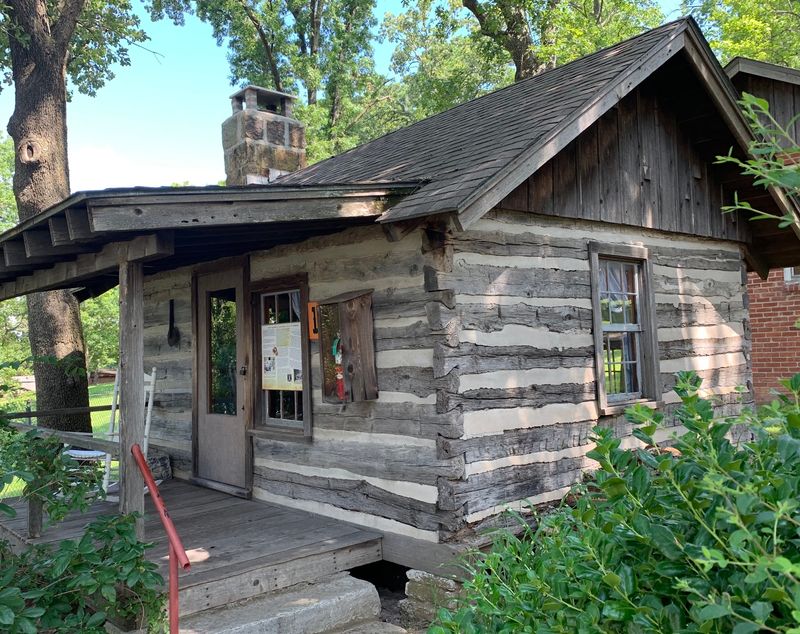
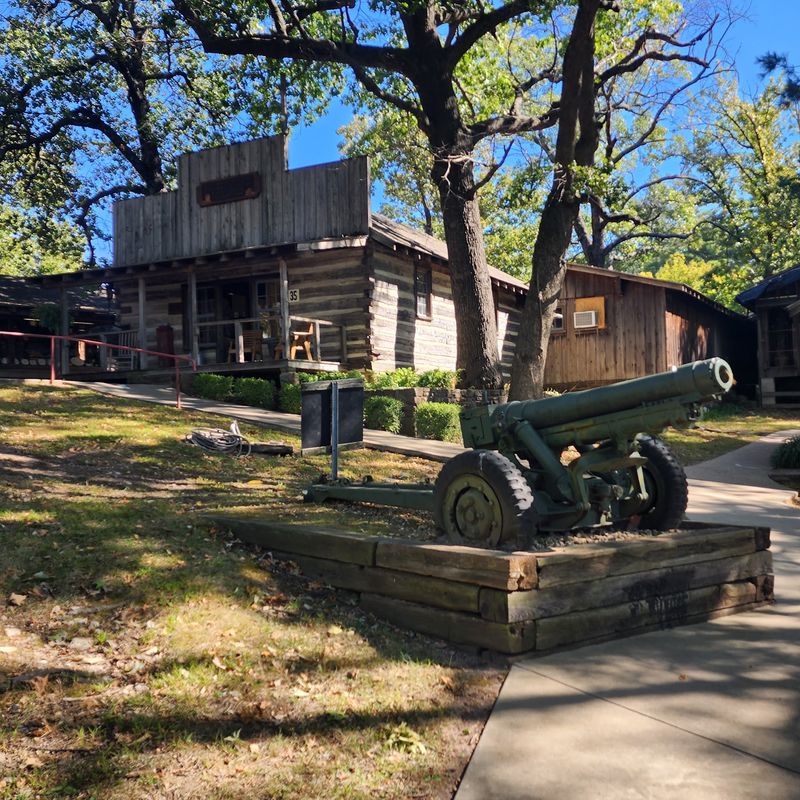
The buildings at Har-Ber Village are the heart of the entire experience. Dozens of 19th-century-style structures line the village paths, each one housing a different window into frontier life.
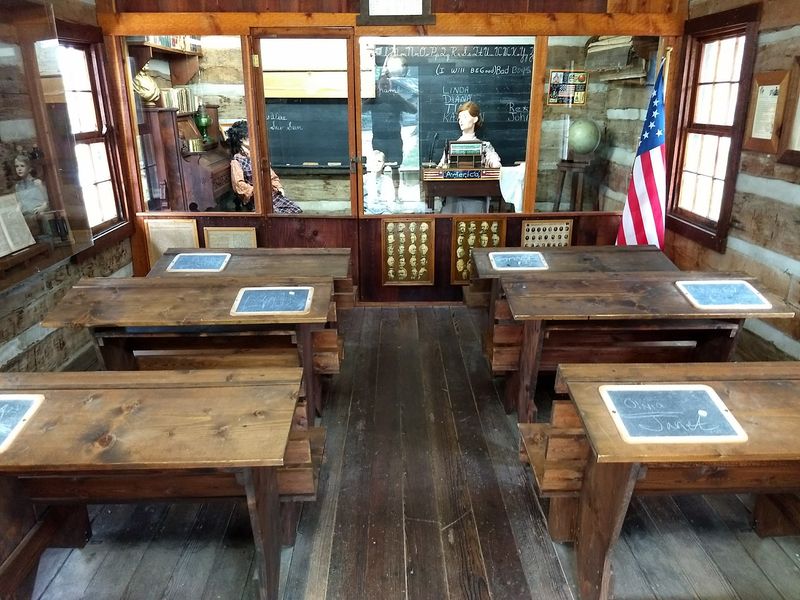
Some replicate general stores, others recreate homes, schoolhouses, churches, or workshops. The variety means there is genuinely something new to discover in every building you enter.
Antiques and collectibles fill the interiors in careful arrangements that reflect how these spaces would have actually been used. You are not looking at sterile displays behind rope barriers.
The items feel placed with intention, as though the original occupants just stepped out for a moment and might return any second. Period furniture, tools, kitchenware, and personal effects create an intimacy that photographs rarely capture.
The structures are very well preserved, which is a credit to the ongoing care the museum puts into maintenance. Wood does not survive Oklahoma weather without attention, and the condition of the buildings here reflects serious curatorial commitment.
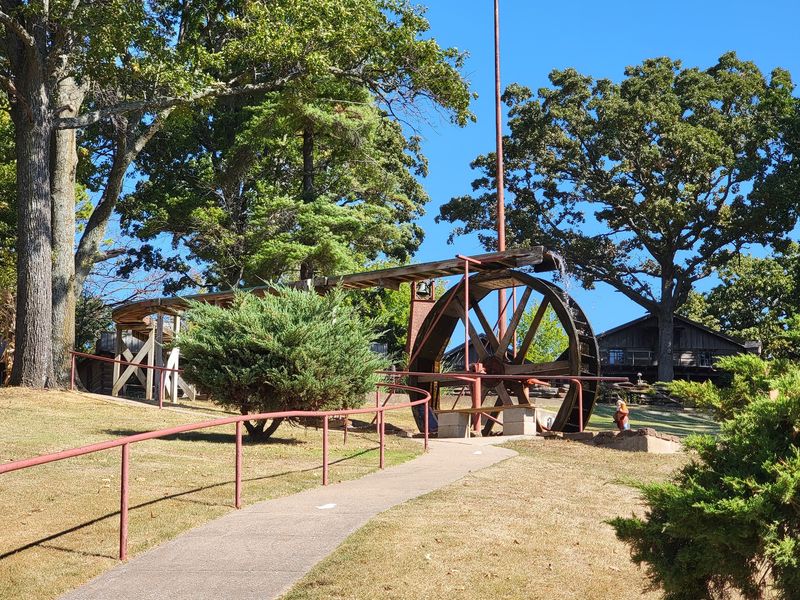
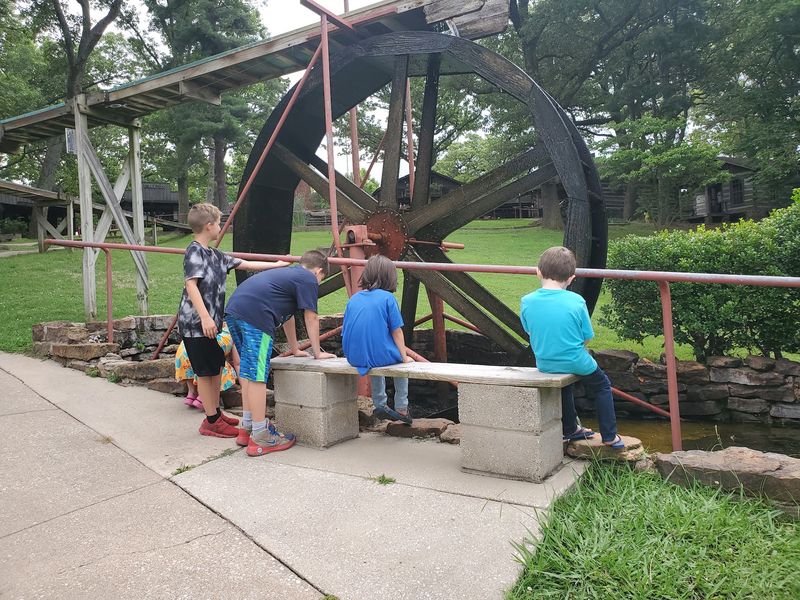
A working water wheel is among the structural highlights, along with a bell that anchors the town square visually and gives the village a recognizable center point that ties the whole layout together beautifully.
Live Demonstrations That Bring History Alive
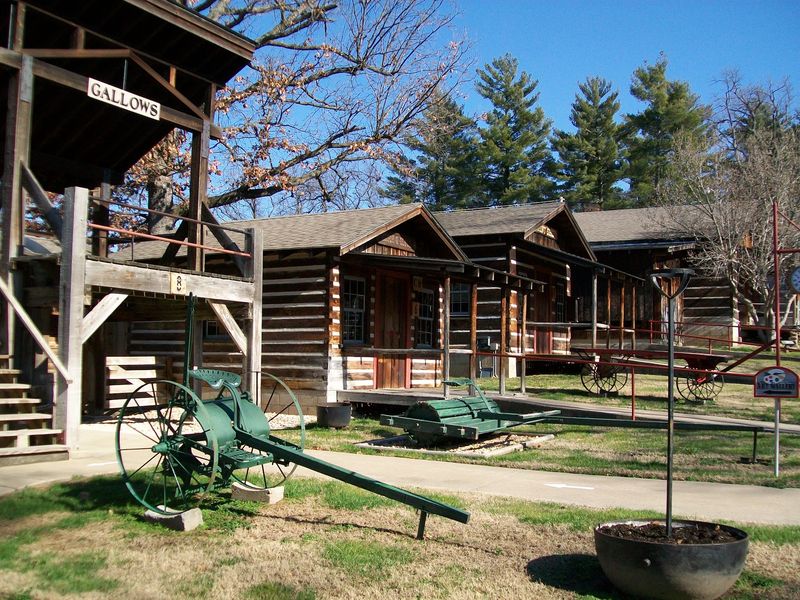
Reading about how pioneers lived is one thing. Watching someone actually do it is something else entirely.
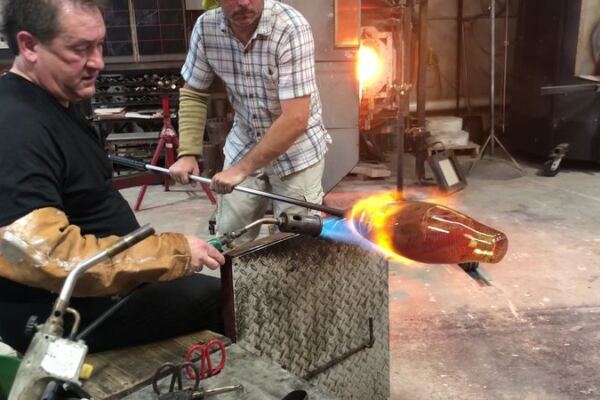
Har-Ber Village hosts live demonstrations that transform historical facts into tangible, memorable moments. Blacksmithing is among the featured crafts, with working forges and skilled demonstrators showing how metal was shaped by hand before modern manufacturing changed everything.
Weaving demonstrations have drawn particular attention from visitors over the years. Watching a loom in motion, with threads interlacing into fabric at the hands of someone who clearly knows the craft, is the kind of sensory experience that sticks with you.
The rhythm of the shuttle, the texture of the finished cloth, and the patience required all communicate something about pioneer life that no exhibit panel could fully convey.
Staff members who lead these demonstrations are consistently described as knowledgeable and approachable. They answer questions with genuine enthusiasm and seem to enjoy sharing the skills they have learned.
The demonstrations rotate and vary by season, so repeat visitors often encounter something new on a second or third trip. That unpredictability keeps the museum feeling fresh rather than like a fixed, unchanging attraction you can fully exhaust in a single afternoon.
Historical Figures Worth Knowing
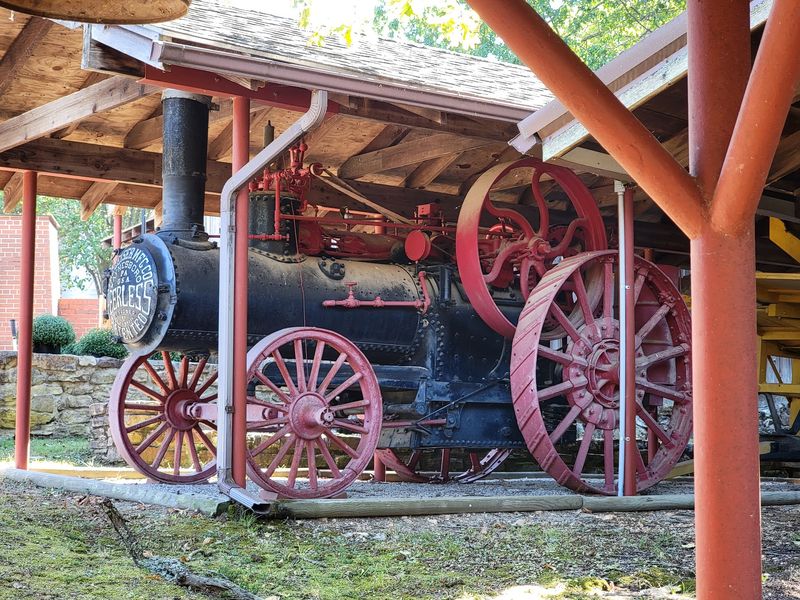
Beyond the buildings and objects, Har-Ber Village tells human stories with real depth. Biographical displays throughout the village highlight fascinating individuals from the four-states region, and the selection goes well beyond the predictable roster of frontier heroes.
Cherokee lawyers, a judge with a formidable reputation for courtroom severity, and a woman who moved from teaching to bank ownership all feature prominently.
That last story is particularly striking in its historical context. A woman navigating from the classroom to clerking to controlling interest in a bank during the 19th century represents a kind of quiet determination that deserves more attention than it typically receives in mainstream history.
Har-Ber Village gives these figures room to breathe, presenting their lives in enough detail to feel genuinely compelling rather than tokenistic.
The Cherokee history woven throughout the exhibits reflects the regional reality of northeastern Oklahoma, where Indigenous history and pioneer history are deeply intertwined. Acknowledging that complexity honestly gives the museum a credibility and richness that simpler frontier narratives often lack.
Visitors who arrive expecting a straightforward celebration of westward expansion tend to leave with a more nuanced and satisfying understanding of what life in this region actually looked like across different communities.
Hands-On Activities for Younger Visitors
Keeping kids genuinely engaged at a history museum is not always easy, but Har-Ber Village handles it with activities that feel fun rather than educational in a forced, reluctant way. Children can try washing laundry using a washboard, the same method families relied on before electric machines became standard.
The physical novelty of it tends to produce a mixture of effort and laughter that parents appreciate.
A play house gives younger visitors a space to use their imagination within a period-appropriate setting. The children’s play area has kept even very young visitors entertained for extended stretches, which means parents and grandparents can take their time exploring the exhibits without constantly managing restless energy.
That balance between child-friendly activity and adult-oriented depth is genuinely difficult to achieve, and Har-Ber Village manages it well.
A nature center cabin offers a scavenger hunt experience that adds a sense of adventure to the visit. Kids move through the grounds with a purpose, looking for specific items or features, which encourages them to actually observe their surroundings rather than rushing past.
The combination of tactile activities, imaginative spaces, and structured exploration makes the museum a place where children of different ages and temperaments all tend to find their footing.
The Nature Trail Running Through It All
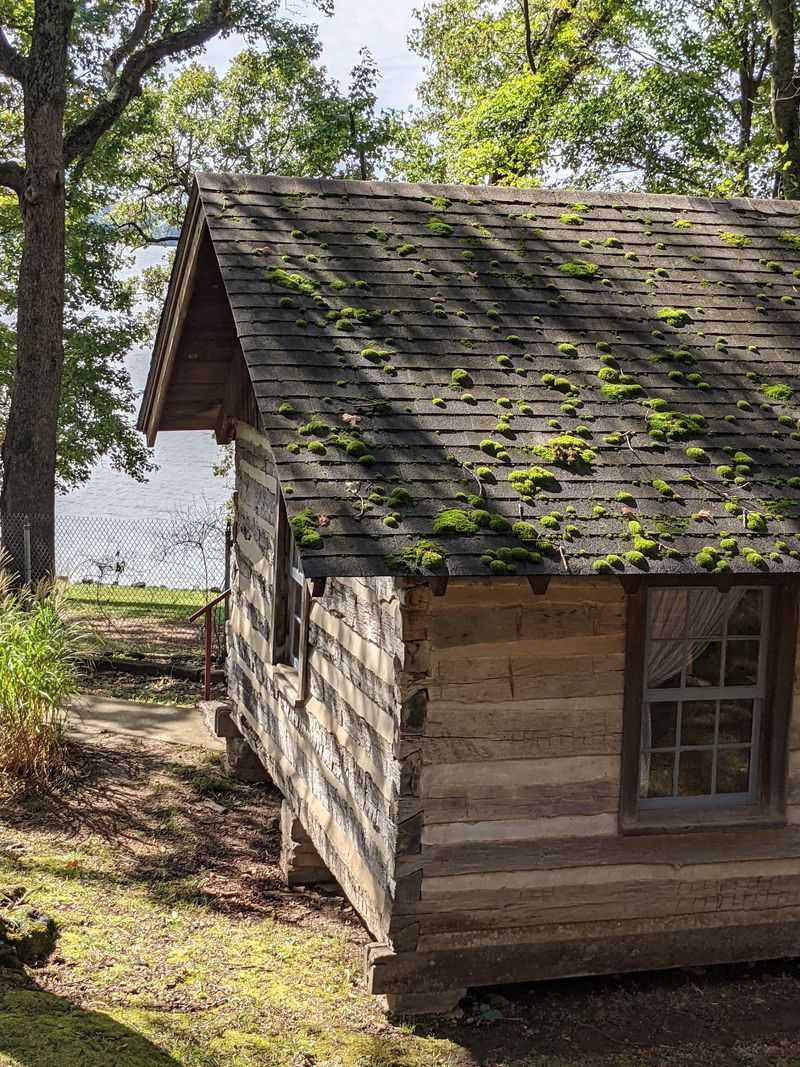
Not every visitor comes strictly for the history. Some come for the two miles of nature trails that wind through the museum grounds and along the lakeside, offering a genuinely pleasant outdoor walk regardless of interest in pioneer artifacts.
The trails include both paved and unpaved sections, making portions accessible to visitors who use wheelchairs or mobility aids while offering a more rugged option for those who prefer it.
The lakeside segments of the trail are particularly appealing for anyone who enjoys birdwatching. Pelicans, cranes, and a variety of other species have been spotted from these paths, giving the walk a wildlife-watching dimension that surprises many first-time visitors.
Sitting quietly beside the water and watching birds hunt fish from above is the kind of unhurried pleasure that pairs well with a morning at the museum.
Wildlife is not limited to the lake. Deer have been spotted on the drive into and out of the property, adding one more reason to move slowly and pay attention to the surroundings.
The nature trail is free to access even outside of paid museum visits, which makes it a popular spot for locals who return regularly for the simple pleasure of a quiet walk beside Grand Lake in good company.
The Town Square and Its Anchor Points
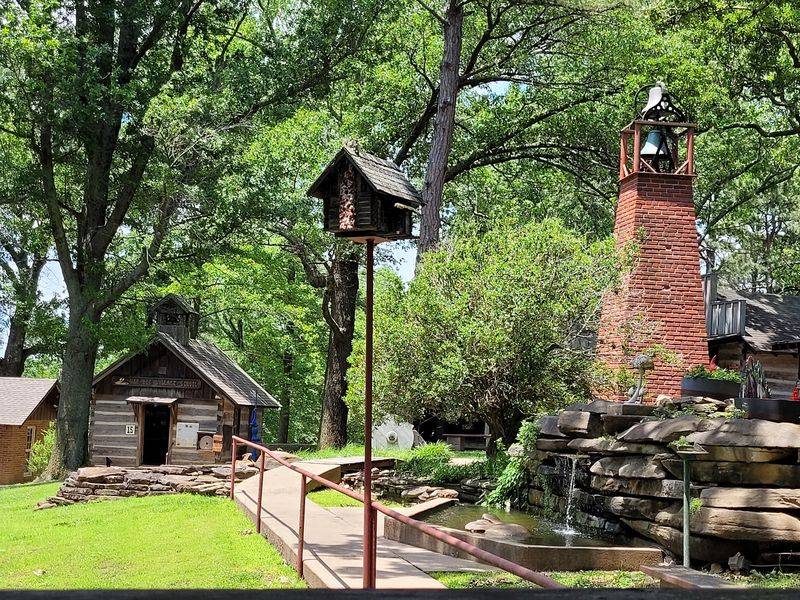
Every good village has a center, and at Har-Ber Village that center is the town square. Standing there with the lake visible in the background and 19th-century buildings framing the edges of the space, it is easy to understand why people describe the grounds as beautiful.
The square functions as both a visual anchor and a natural gathering point where visitors tend to pause and take in the full scope of what surrounds them.
Two features of the square draw particular attention. The bell is a straightforward but effective historical touch, the kind of detail that would have called a frontier community to meetings, church services, or moments of shared significance.
The working water wheel is the more dynamic of the two, with its steady rotation providing both visual interest and a satisfying mechanical sound that fits the setting perfectly.
Recent updates to several cabins around the square mean that even returning visitors have new things to notice. The museum appears committed to ongoing improvement rather than treating the grounds as a finished product.
That willingness to refresh and update while preserving the historical character of the space reflects a curatorial philosophy that keeps the museum relevant and worth revisiting rather than treating it as a static monument to a completed project.
Atmosphere and the Kind of Crowd It Draws
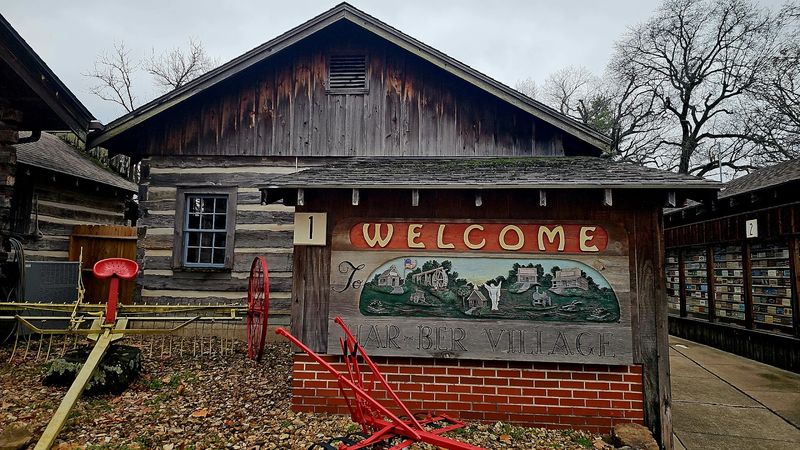
The mood at Har-Ber Village is unhurried in the best possible way. There is no rushing, no ticket line anxiety, no sense of being herded through an experience on someone else’s schedule.
The pace of the place invites you to slow down, which is increasingly rare in an era when even leisure activities tend to feel optimized and time-managed.
Families with children of all ages make up a significant portion of visitors, alongside grandparents who find genuine resonance in objects and structures that connect to their own family histories. History enthusiasts, birdwatchers, and casual day-trippers who simply want somewhere beautiful to spend a few hours all seem to find what they are looking for here.
The staff contributes enormously to the overall atmosphere. Volunteers and paid employees alike are consistently described as welcoming, knowledgeable, and genuinely happy to share information about the exhibits.
That human warmth turns a visit from a solo exploration into something more like a conversation with people who care deeply about what they are preserving. The combination of a beautiful setting, thoughtful exhibits, and genuinely kind people creates an atmosphere that is harder to manufacture than most museums seem to realize, and Har-Ber Village has it in abundance.
Seasonal Visiting and What to Expect
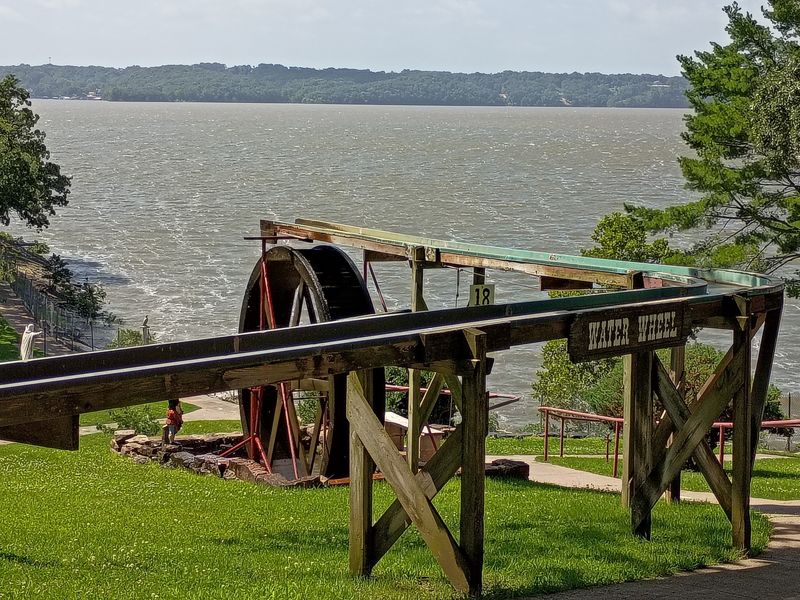
Spring and early fall tend to be the most rewarding times to visit Har-Ber Village. Temperatures are comfortable for extended walking, the grounds are at their most photogenic, and the lake takes on a particular clarity that makes the lakeside portions of the trail especially enjoyable.
The museum’s opening weekend in spring has become a notable local event, drawing volunteers and visitors who are eager to get back on the grounds after the winter closure period.
Summer visits are entirely doable, though the Oklahoma heat means starting early in the day is wise. The museum opens at 9 AM, which gives visitors a window of comfortable morning hours before temperatures peak.
Bringing water and wearing light clothing makes the outdoor portions of the visit much more manageable in July and August.
Even on days when the weather is less cooperative, the museum retains its appeal. The indoor exhibits provide shelter and engagement when rain or overcast skies make outdoor exploration less appealing.
Visiting on a quieter weekday can also mean more one-on-one time with demonstrators and staff, which adds a personal dimension that busy weekend visits sometimes lack. The grounds hold up well in most conditions, and the staff maintains their welcoming energy regardless of the forecast.
Hours, Admission, and Getting There
Planning a visit to Har-Ber Village requires a little scheduling awareness, because the museum does not operate every day of the week. Current hours run Thursday through Monday from 9 AM to 3:30 PM, with Tuesday and Wednesday as closure days.
That Thursday-to-Monday window gives most travelers a reasonable range of options, but it is worth double-checking the schedule before making the drive, particularly around holidays.
The museum is located at 4404 W 20th Rd in Grove, Oklahoma 74344, in the northeastern corner of the state near the Grand Lake area. Grove sits close to the borders of Arkansas, Missouri, and Kansas, making it a reasonable destination for visitors traveling from any of those neighboring states.
The drive into the property is scenic, and the occasional deer sighting on the access road has become a small bonus that returning visitors look forward to.
For questions about specific events, group visits, or seasonal programming, the museum can be reached by phone at 918-786-6446, or through the official website at har-bervillage.com. The nature trail is available free of charge even outside of paid museum hours, which makes the property accessible to the community in a way that extends beyond the formal museum visit and reflects the museum’s broader commitment to public engagement.
Why Har-Ber Village Stays With You
Some places earn their reputation through spectacle. Har-Ber Village earns its 4.8-star rating through something quieter and more lasting: the feeling that history here is treated with genuine respect rather than used as a backdrop for entertainment.
The museum takes its subject seriously without becoming dry or inaccessible, which is a balance that many historical sites never quite find.
The combination of physical exploration, live craft demonstrations, biographical storytelling, natural beauty, and hands-on activities for children creates a layered experience that works on multiple levels simultaneously. A grandparent and a six-year-old can spend a full day here and each leave with a completely different set of memories, both equally valid and meaningful.
Repeat visits are common, and that says a great deal. People do not return to places that merely check a box.
They return to places that gave them something worth holding onto, a conversation with a demonstrator, a view of the lake at a particular moment, a story about a historical figure they had never heard of before. Har-Ber Village generates those moments consistently, and that is precisely why it has quietly become one of Oklahoma’s most rewarding destinations for anyone willing to make the drive to Grove.
Share this story