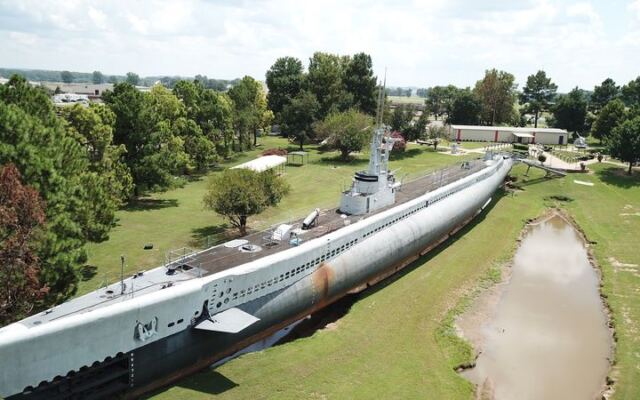
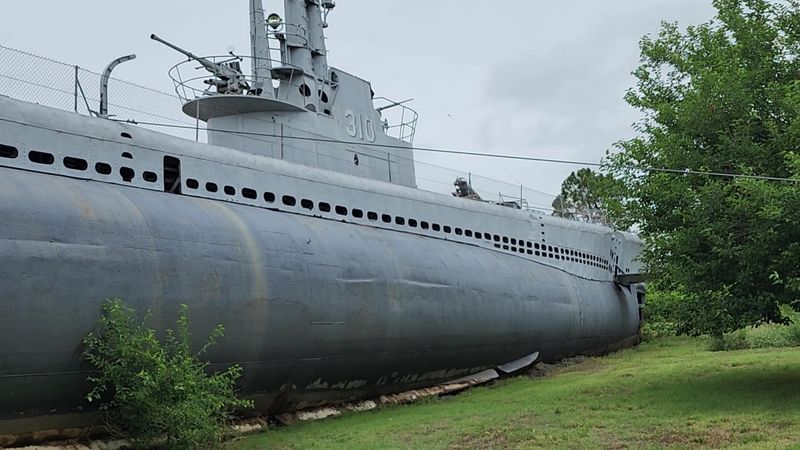
Oklahoma is not the first place that comes to mind when you think about submarines, but that is exactly what makes Muskogee so surprising. Sitting on dry land in the middle of the state, a genuine World War II submarine named the USS Batfish has called this city home for decades.
Muskogee War Memorial Park preserves the vessel alongside a broader collection of military artifacts, memorials, and stories that span from the Civil War to modern conflicts. History buffs, curious road-trippers, and families with kids who love big machines all tend to leave with more than they expected.
Where the USS Batfish Calls Home
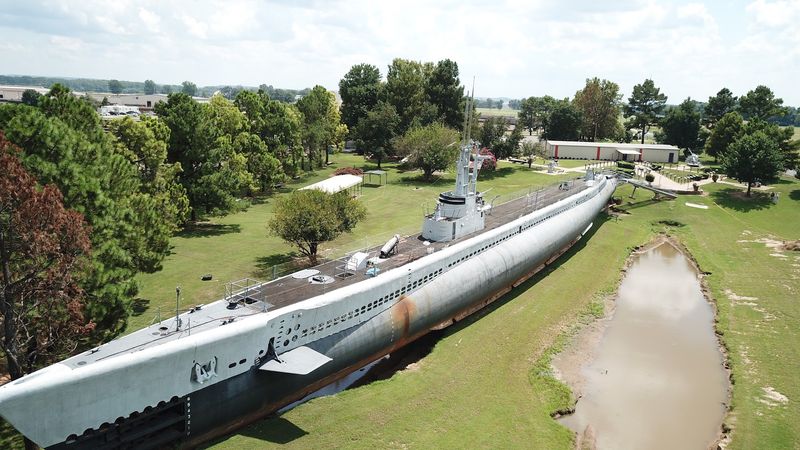
Most people picture submarines gliding through cold ocean water, not resting on a grassy riverbank in eastern Oklahoma. Yet that is exactly where you will find the USS Batfish, the centerpiece of Muskogee War Memorial Park at 3500 Batfish Rd, Muskogee, OK 74403, in the United States.
The park sits near the Arkansas River, and the submarine has been a fixture here since it was first brought ashore as a permanent memorial. Muskogee itself is a city with deep military roots, and the park reflects that heritage with quiet dignity.
Getting here is straightforward if you are coming from Tulsa, which sits roughly 50 miles to the northwest. The drive takes you through rolling Oklahoma countryside before the park appears almost unexpectedly along the roadside.
The location feels a little surreal at first. Seeing a full-length submarine on dry land in a landlocked state is one of those travel moments that stops you mid-step.
The park is managed largely by dedicated volunteers who genuinely care about keeping this piece of history visible and accessible to everyone who makes the trip.
The Combat Record of the USS Batfish
Few submarines in the entire United States Navy can claim a combat record as remarkable as the one the USS Batfish compiled during World War II. Commissioned in 1943, the Balao-class submarine completed seven war patrols in the Pacific Theater and earned nine battle stars for her service.
Her most celebrated achievement came during a single patrol in February 1945. Over the course of just three days, the Batfish sank three Japanese submarines in a row, a feat that no other American submarine has ever matched.
That record alone has secured her a permanent place in naval history.
Beyond that extraordinary stretch, she also sank or damaged numerous Japanese surface vessels and contributed to the broader Allied campaign to control Pacific shipping lanes. The crew who served aboard her operated in dangerous, cramped conditions for months at a time, relying on skill and nerve in equal measure.
Understanding that record changes how you look at the vessel when you see her up close. She is not just a relic on display.
She is a machine that performed under genuine pressure and came home when many others did not, which gives the whole park a weight that stays with you long after you leave.
How a Submarine Ended Up in Oklahoma
Bringing a 312-foot submarine from the ocean to a landlocked state required serious logistical effort, and the story of how it happened is worth knowing before you arrive. After the war, the Batfish was decommissioned in 1946 and eventually transferred to the Navy Reserve fleet before being struck from the Naval Vessel Register.
In 1972, the city of Muskogee acquired the submarine through a Navy donation program that allowed communities to preserve historic vessels as public memorials. Getting her from the Gulf Coast to Oklahoma meant towing her up the McClellan-Kerr Arkansas River Navigation System, a commercial waterway that connects the Arkansas River to the Gulf of Mexico.
That waterway, completed in 1971, made the whole project possible. Without it, the logistics would have been nearly impossible.
The submarine was floated up through a series of locks and then carefully positioned at the park site near the river.
It remains one of the more creative uses of that navigation system, and the fact that the community pulled it off speaks to how seriously Muskogee took the project. The Batfish arrived as a gift to the public and has served as a memorial ever since, representing not just one crew but an entire era of American naval history.
The 2019 Flood and Its Lasting Impact
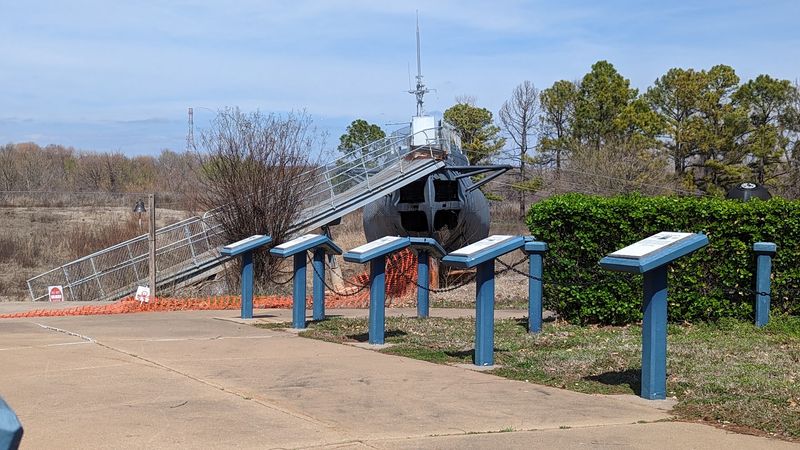
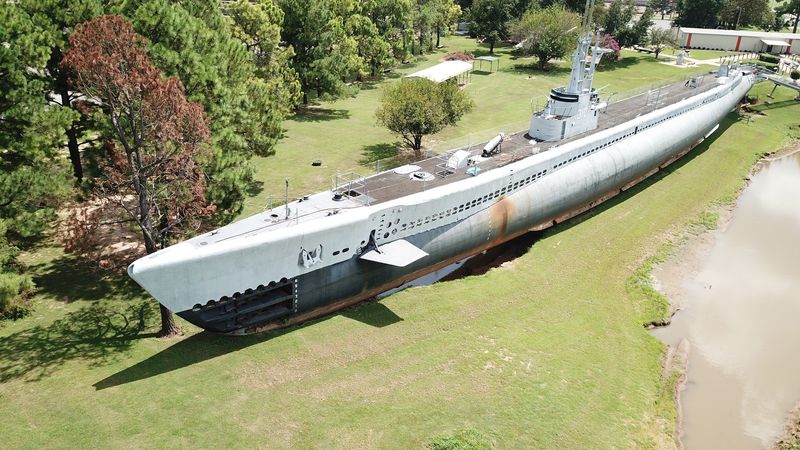
Nature threw a serious challenge at the park in 2019 when severe flooding along the Arkansas River caused the Batfish to break free from her moorings. The force of the floodwater shifted the submarine off its secure position, leaving her sitting at an unstable angle that made boarding unsafe for the public.
FEMA stepped in and closed tours of the vessel’s interior as a result. The closure has remained in effect while the park works with federal and state agencies to find a long-term solution.
Plans have included moving the submarine to a more stable, flood-resistant location along the Arkansas River.
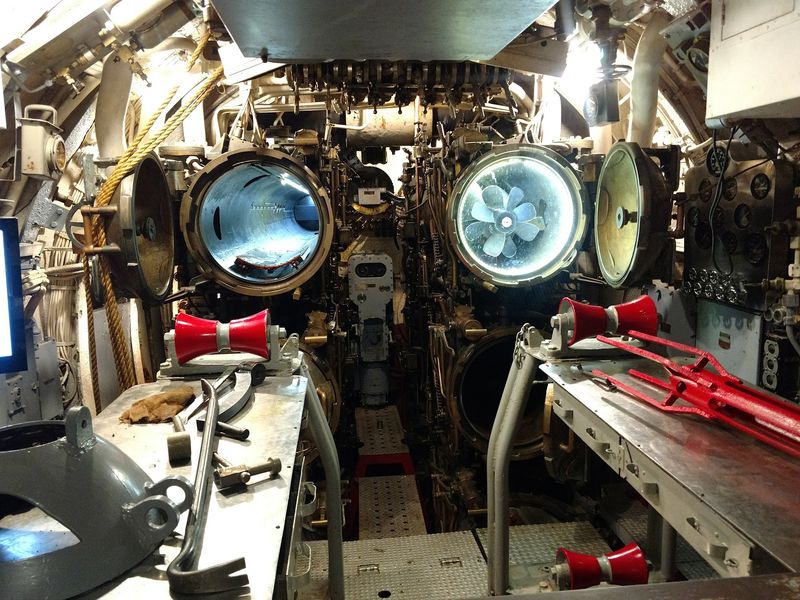
The situation has been a real setback for the museum, which previously offered tours through the interior of the boat. Visitors who came before the flood remember climbing through the narrow hatches, watching videos about submarine life, and even getting to simulate launching a torpedo.
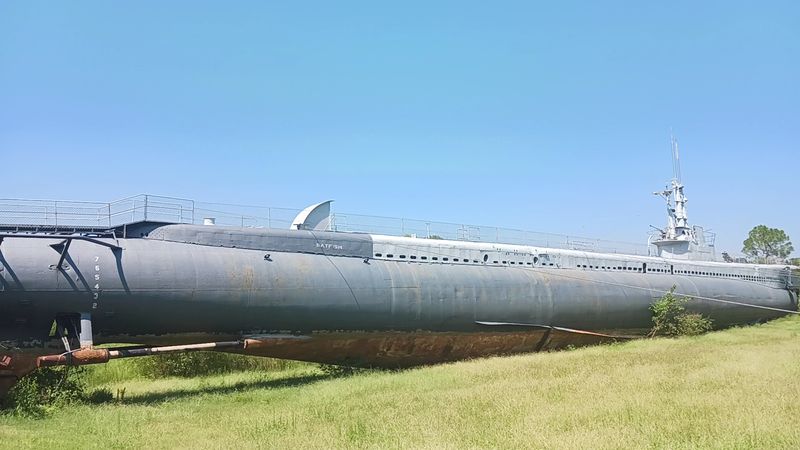
Despite the closure, the exterior of the submarine is still visible and accessible from the ground. You can walk around the vessel, get a close look at her hull, and take in the full scale of the machine.
The park continues to operate its museum and outdoor exhibits, and the energy from staff and volunteers to restore full access remains strong and genuine.
The Museum Building and Its Exhibits
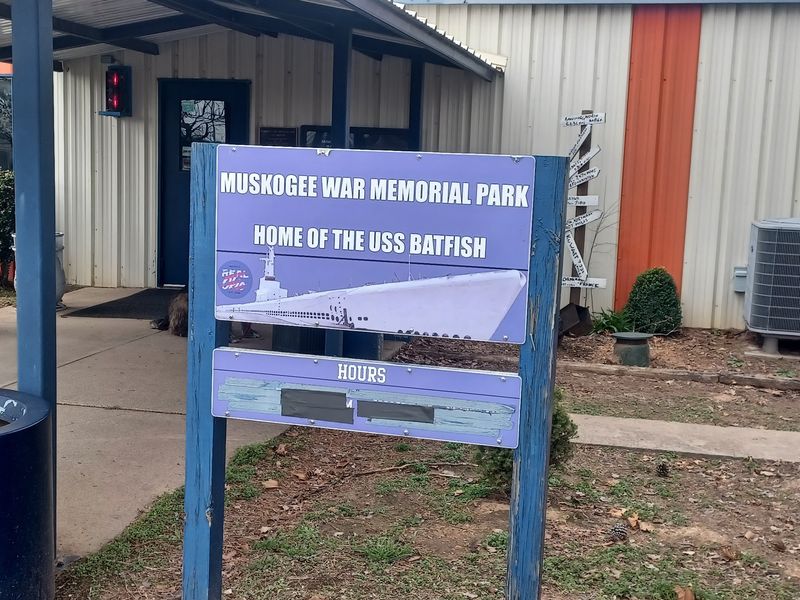
Walking through the museum building at Muskogee War Memorial Park reveals a collection that reaches well beyond the Batfish herself. The main room greets you with military history artifacts and information spanning from the Civil War all the way through to present-day conflicts, giving the place a scope that surprises most first-time visitors.
A dedicated room focuses specifically on submarine history, covering both the USS Batfish and American undersea warfare more broadly. Videos play throughout the space and help explain how submarines functioned, what life was like for the crew, and how the technology evolved across the decades.
One side room features hands-on exhibits that are particularly popular with younger visitors. The scale of the museum is manageable, meaning you can absorb everything without feeling rushed or overwhelmed.
Nothing feels padded out or stretched thin.
Much of the exhibit work has been built by the volunteers themselves, and that personal investment shows in how the displays are assembled. The man in charge has been credited by multiple visitors for constructing many of the exhibits by hand and bringing real expertise about submarines to every corner of the room.
A small gift shop sits inside the building, offering souvenirs for anyone who wants to bring a piece of the experience home.
Outdoor Artifacts That Demand Attention
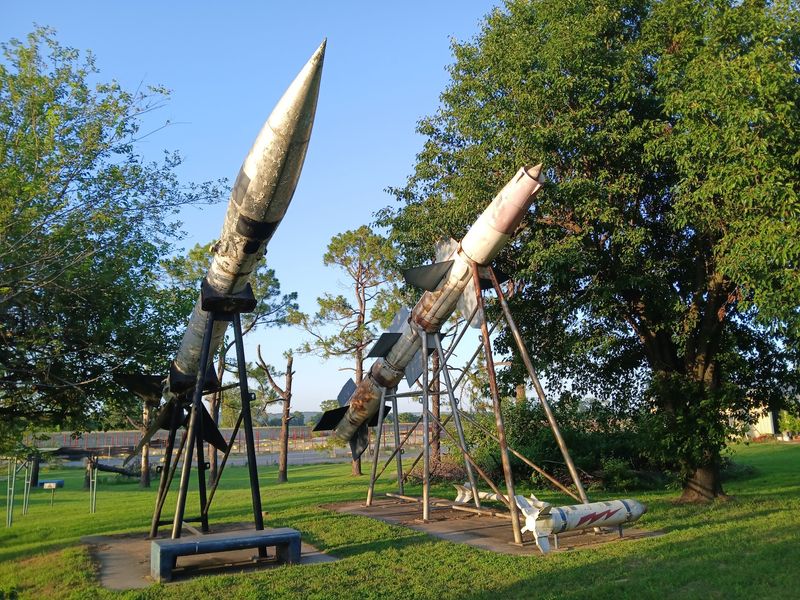
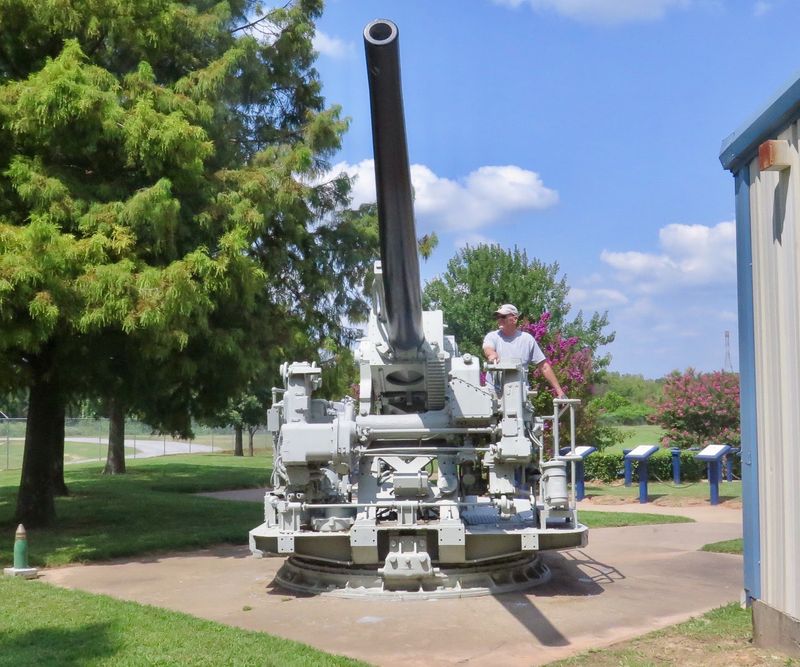
The outdoor grounds at Muskogee War Memorial Park hold a collection of large military hardware that gives the place a distinct open-air museum feel. More than a dozen artifacts are spread across the park, including torpedoes, naval mines, and 5-inch naval guns that you can get surprisingly close to.
These are not reproductions. Each piece is an authentic artifact with its own history, and the scale of some of them is genuinely impressive when you are standing right next to them.
Kids who love big machines tend to gravitate toward this section immediately.
One of the most significant outdoor pieces is a mast support from the USS Oklahoma, the battleship that was sunk during the Japanese attack on Pearl Harbor on December 7, 1941. Having that physical connection to one of the most pivotal moments in American history sitting quietly in a Muskogee park is the kind of thing that catches you off guard.
The grounds are well-maintained and easy to walk through, with enough space between exhibits to take your time without feeling crowded. Previous visitors have mentioned spotting a bald eagle soaring overhead during their time in the park, which adds an unexpected and fitting touch to the whole experience.
The Submarine Memorial Wall
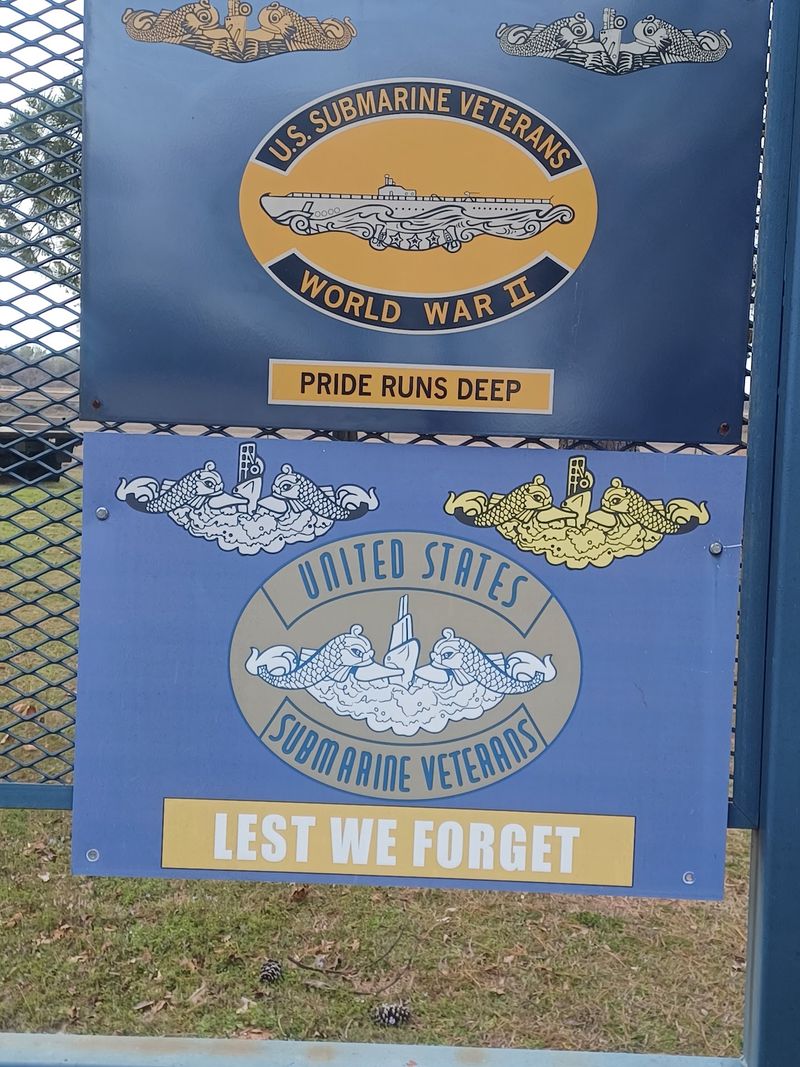
Beyond the hardware and the history displays, the park holds a tribute that carries real emotional weight. A memorial dedicated to every United States submarine lost during World War II stands on the grounds, listing each vessel along with detailed accounts of its service and the story of its final patrol.
The phrase used in the submarine community for a boat that never returned is “eternal patrol,” and the memorial uses that language with quiet respect. Reading through the individual vessel histories gives you a sense of just how many crews were involved in the Pacific campaign and how much was at stake during those years.
The Batfish herself made it home, which makes the contrast between her story and the ones on the memorial wall all the more striking. Standing near a working vessel that survived while so many others did not puts the whole collection in a different light.
The memorial is laid out so that you move through it at your own pace, and there is no pressure to hurry. Most visitors spend more time here than they initially planned.
The combination of individual ship stories and the broader context of the war makes this section of the park one of the most genuinely affecting parts of the entire visit.
The Volunteers Who Keep It Running
Volunteer-run institutions can feel uneven, but the team at Muskogee War Memorial Park consistently earns praise for the quality of knowledge and warmth they bring to every visit. The people staffing the museum are not just showing up to hand out brochures.
They genuinely know their subject and enjoy sharing it.
One volunteer in particular, a POW survivor named James A. Erb, Jr., has made a lasting impression on many visitors.
His personal story is remarkable, and hearing it directly from him gives the park a living-history dimension that no exhibit can replicate. Getting him to share his account is something that past visitors strongly recommend if the opportunity arises.
Other guides have included active and former military personnel who bring firsthand perspective to the stories on display. The curator has been described as both knowledgeable and willing to go well beyond the basics when visitors ask deeper questions.
The volunteer-driven nature of the operation also means the museum depends on community support to keep improving. Entry fees and donations directly fund restoration efforts and the long-term goal of returning the Batfish to full public access.
The people here are invested in this mission in a way that comes through clearly from the moment you walk through the door.
Sleeping Aboard the Batfish – A Pre-Flood Memory
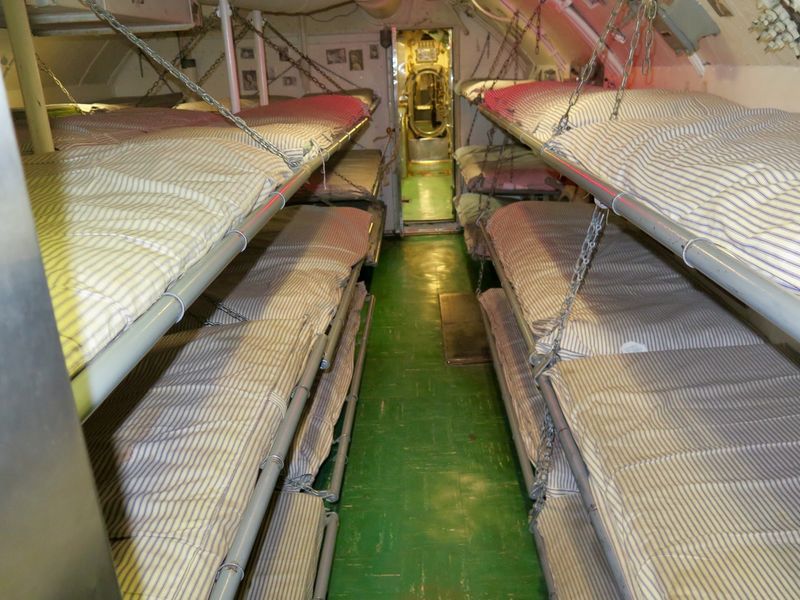
Before the 2019 flood changed everything, the USS Batfish offered one of the more unusual overnight experiences in all of Oklahoma. Groups could arrange to spend the night aboard the submarine, sleeping in the same cramped quarters where the wartime crew once bunked during long Pacific patrols.
Visitors who took part in those overnight stays describe the experience as genuinely immersive. The narrow bunks, low ceilings, and tight passageways gave a real sense of what daily life meant for the men who served aboard her.
There was nothing glamorous about it, and that was precisely the point.
Private tour guides led the groups through the vessel after hours, explaining the function of each compartment and the role it played during combat operations. A WWII cooking demonstration was also part of the overnight program, giving participants a taste, quite literally, of the kind of food that fueled submarine crews during the war.
Those experiences are on hold for now while the park works through the restoration process. The hope among staff and regular visitors is that the full tour program, including overnight stays, will eventually return once the Batfish is relocated to a safer, more stable position.
The memory of what the overnight program offered is part of what drives the ongoing effort to bring her back.
Admission Price and What You Get for It
At just three dollars per person, the entry fee at Muskogee War Memorial Park is one of the more honest deals in Oklahoma travel. That price reflects the current state of the submarine, which remains closed to interior tours, and the museum has been transparent about adjusting the cost accordingly.
Even at full price in years past, this was never an expensive outing. The three-dollar rate covers access to the museum building, the outdoor artifact collection, the submarine memorial wall, and the exterior view of the Batfish herself.
That is a meaningful amount of content for a very small investment.
The museum has also shown flexibility with pricing. At least one visitor received a discount from the curator after explaining their situation, a gesture that reflects the community-first spirit of the operation.
Nobody here is trying to squeeze visitors for money.
Staff and volunteers actively encourage guests to donate above the entry fee to support restoration and relocation efforts for the submarine. The park is a nonprofit operation, and every extra dollar goes directly toward the goal of returning the Batfish to her former status as a fully accessible attraction.
Given how much the place offers for three dollars, contributing a little more feels like a natural response for most people who leave genuinely impressed.
Hours, Days, and Planning Your Visit
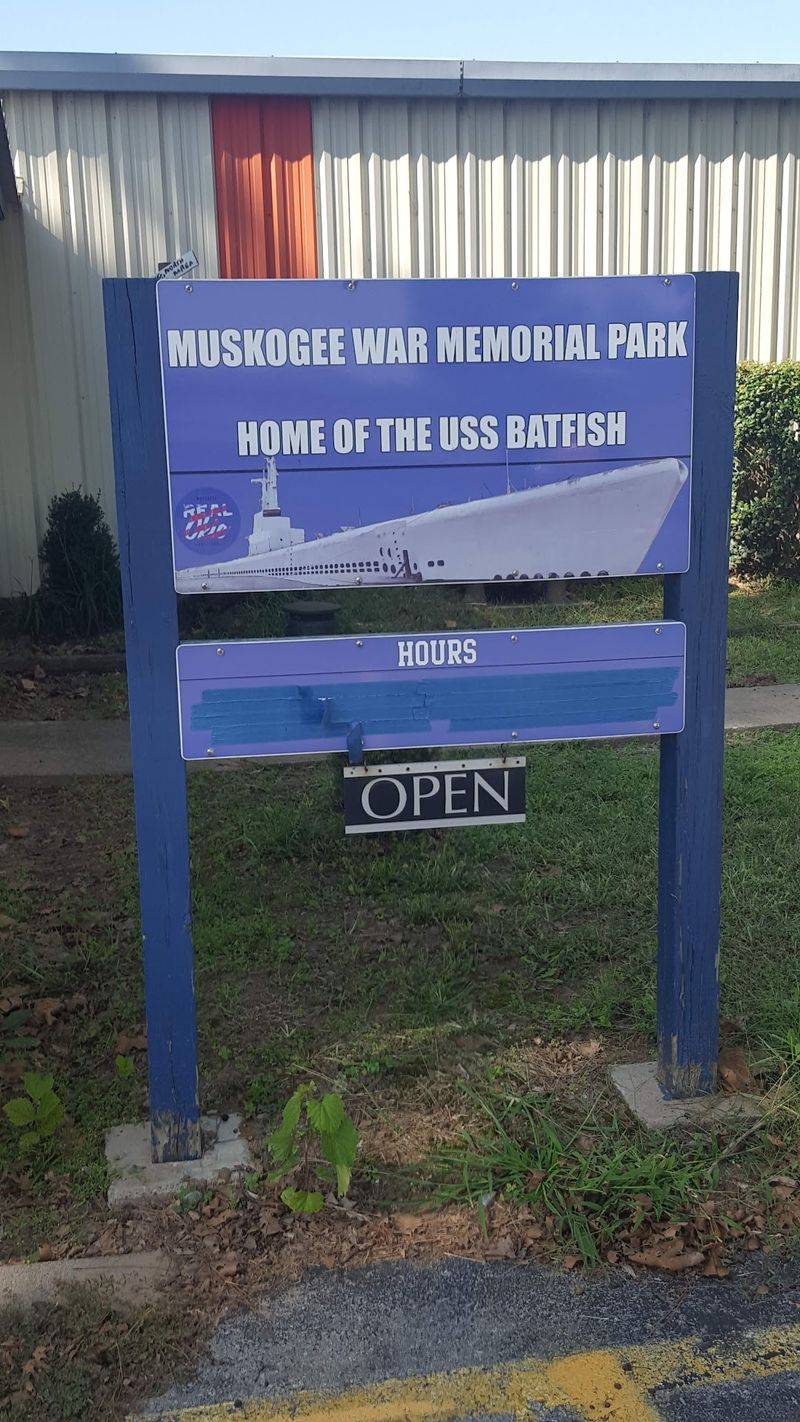
Planning your visit to Muskogee War Memorial Park requires a little attention to the schedule, because the museum does not operate every day of the week. Current hours run Friday and Saturday from 10 AM to 5 PM and Sunday from 12 PM to 5 PM.
The park is closed Monday through Thursday, so arriving on the wrong day means a wasted trip.
Several visitors have made that mistake, including one who stopped by on a Monday afternoon and had to turn around. Calling ahead is always a smart move.
The museum phone number is 918-682-6294, and the staff are responsive to questions about current conditions, tour availability, and any updates on the submarine’s status.
The park website at ussbatfish.com also carries current information and is worth checking before you make the drive. Given that the submarine’s situation has been evolving since 2019, conditions may change, and the site is the most reliable source for updates.
Muskogee is roughly 50 miles southeast of Tulsa, making it a very doable day trip from the Tulsa metro area. The drive is easy and the park itself requires no more than a couple of hours to cover thoroughly, so you can combine it with other Muskogee stops and still be home before dark if you want.
Who This Place Is Built For
Military history enthusiasts are the obvious audience here, but the park draws a wider crowd than that label might suggest. Families with curious kids respond well to the outdoor hardware and the sheer visual impact of a full-sized submarine sitting on dry land.
The combination of scale and accessibility makes it easy for children to engage without needing a lot of background knowledge.
Road-trippers working their way through eastern Oklahoma often add the park to their route after hearing about it from other travelers. The quirky premise alone, a WWII submarine in a landlocked state, is enough to pull in people who might not normally seek out military museums.
History teachers and educators have also found value in the park as a field trip destination. The range of content, from Civil War artifacts to modern military displays, gives the museum a breadth that fits neatly into a variety of curriculum contexts.
The park is not fully handicapped accessible due to the nature of the submarine’s interior, though that limitation matters less while the boat remains closed to tours. The outdoor grounds and museum building are navigable for most visitors.
Anyone with a genuine curiosity about American military history and a tolerance for a slightly rough-around-the-edges, volunteer-powered operation will find this place completely worth the stop.
The Future of the Batfish and Restoration Efforts
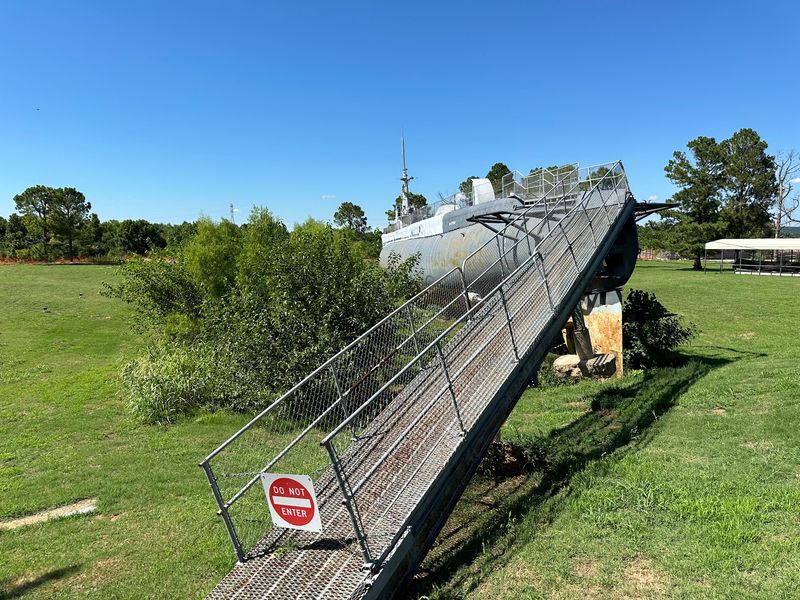
The long-term future of the USS Batfish is a topic that comes up in almost every conversation at the park. Since the 2019 flood dislodged her from her moorings, the museum has been working with FEMA and various government agencies to find a path forward that ensures the submarine can be preserved safely and reopened to the public.
One proposal that has been discussed involves moving the Batfish to a new, permanent location along the Arkansas River that would be better suited to the vessel’s needs and less vulnerable to flooding. Federal funds have been referenced in connection with the effort, though the process of working through multiple agencies takes considerable time.
In the meantime, the museum has continued to operate and invest in its exhibits. The volunteer team has built new displays, maintained the outdoor grounds, and kept the park open to visitors even while the submarine itself remains off-limits for interior access.
The passion for seeing this project through is real and visible. The people running this operation understand what the Batfish represents, not just as a local attraction but as a piece of national naval heritage that deserves proper care.
Most visitors leave with a genuine hope that the restoration succeeds, which says a lot about how effectively the park communicates the importance of what it is trying to preserve.
Why the Drive to Muskogee Is Worth Making
Some travel experiences earn their reputation through polish and production value. Muskogee War Memorial Park earns its 4.7-star rating through something harder to manufacture: genuine substance delivered by people who care deeply about what they are doing.
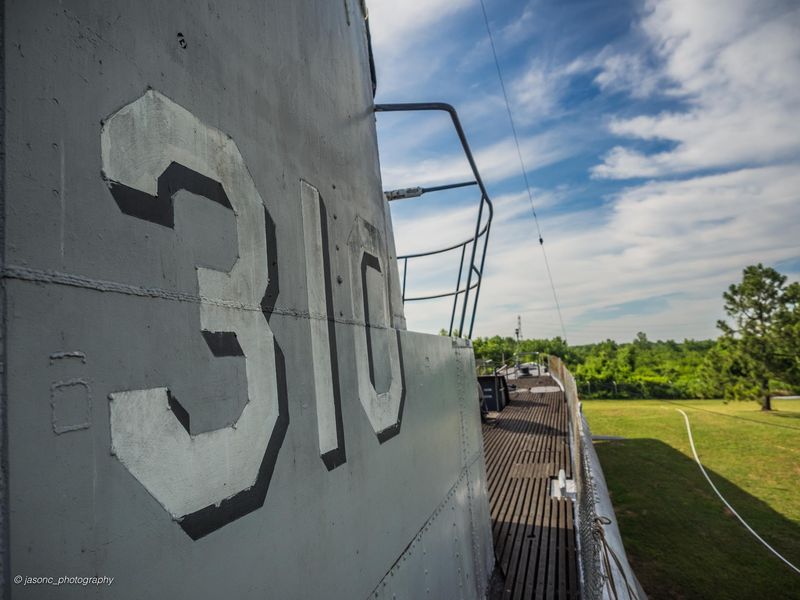
The USS Batfish is a one-of-a-kind vessel with a combat record that stands alone in American naval history. Having her accessible to the public in Oklahoma, at three dollars a head, through the efforts of volunteers who built many of the exhibits themselves, is the kind of thing that travel writers and history enthusiasts should be talking about more.
The current limitations around the submarine’s interior are real, and the park is honest about them. But the outdoor artifacts, the memorial wall, the museum building, and the sheer experience of standing next to a WWII submarine in the middle of the Great Plains add up to something genuinely memorable.
Road-trippers who write off Muskogee as a pass-through town are missing one of the more unexpectedly rewarding stops in the state. Whether you come for the history, the novelty, or simply the story of how a submarine ended up in Oklahoma, the park delivers in ways that stay with you well after the drive home.
That is about as honest a recommendation as any travel destination can earn.
Share this story