There are Oklahoma towns you pass through and towns you actually stop for, and Perry falls firmly into the second category. Tucked into Noble County about an hour north of Oklahoma City on Interstate 35, this small city carries the kind of unhurried charm that makes you slow down without even meaning to.
The historic downtown looks like a film set, the streets are wide and tree-lined, and the whole place hums with a quiet pride that feels genuinely earned. If you have been driving through the middle of the state and wondering where all that classic Oklahoma character went, Perry is where it has been keeping itself.
1. Perry, Oklahoma – The Town That Earns a Second Look
Perry sits at the heart of Noble County, Oklahoma, right along the I-35 corridor that connects Oklahoma City to Wichita. The official address is Perry, Oklahoma 73077, and the city website at perryok.org gives you a solid starting point for planning any visit.
With a population of around 4,484 recorded in the 2020 census, this is unmistakably a small town, but it wears that title with confidence rather than apology.
The city functions as the county seat, which means it carries a certain civic weight that keeps the downtown alive and purposeful. Government buildings, local businesses, and community anchors cluster around the central square in a way that feels organic rather than forced.
Noble County has a long memory, and Perry is where that memory lives.
First-time visitors often do a double-take when they pull off the interstate and find themselves looking at a genuinely preserved piece of Oklahoma history. The bones of this town are strong, and the community clearly takes care of them.
Perry rewards curiosity, and every block downtown seems to offer another reason to keep walking.
2. The Land Run Legacy That Built This Place
Perry did not grow slowly the way most towns do. On September 16, 1893, the Cherokee Strip Land Run brought an estimated 100,000 people racing across the Oklahoma Territory in a single afternoon, and by nightfall Perry had a population of roughly 25,000 people camped out on raw prairie land.
That is one of the most dramatic origin stories any American town can claim.
The Cherokee Strip Land Run was the largest land run in United States history, and Perry sat at one of its most contested starting points. The chaos, the ambition, and the sheer human energy of that day are baked into the town’s identity.
Perry grew from a tent city to a functioning municipality almost overnight, which explains why the place has always carried a certain can-do spirit.
Every September, Perry celebrates that founding moment with the Cherokee Strip Celebration, one of the longest-running community festivals in Oklahoma. The event draws people from across the state who come to remember, reconnect, and mark the anniversary of the run that started it all.
History here is not a footnote; it is the whole first chapter.
3. Downtown Architecture Worth Slowing Down For
Few things in small-town Oklahoma hit the way a well-preserved downtown square does, and Perry delivers one of the better examples in the state. The brick facades along the main commercial streets date back to the early 1900s, and many of them still carry their original cornices, window arrangements, and stonework details.
Walking the square feels like flipping through a catalog of prairie-era commercial architecture.
The Noble County Courthouse anchors the whole scene with the kind of confident civic presence that older courthouses always seem to project. The building sits at the center of town and gives the surrounding blocks a sense of purpose and proportion.
Everything else in downtown Perry seems to orient itself around that structure, which is exactly how a county seat should feel.
What makes the architecture here especially satisfying is the lack of obvious overdevelopment. Perry has not been aggressively renovated into something unrecognizable, and the storefronts still carry the scale and texture of a working small-town main street.
For Oklahomans who grew up in towns like this, the whole block triggers a specific kind of recognition that is hard to put into words but instantly felt.
4. Ditch Witch and the Industrial Pride of Perry
Perry carries an industrial identity that surprises a lot of first-time visitors, and it comes from one very specific source. The Charles Machine Works, better known as the home of Ditch Witch, has been manufacturing underground construction equipment right here in Perry since 1949.
The company invented the first mechanized trenching machine, and it has been a cornerstone of the local economy ever since.
Ditch Witch equipment shows up on job sites across the country and around the world, which means Perry quietly contributes to infrastructure projects that most people never connect back to a small Oklahoma city. There is something genuinely satisfying about knowing that a town of 4,484 people is behind a globally recognized brand in the construction equipment industry.
The company’s presence gives Perry a working-town energy that balances nicely against the historical charm of the downtown square. This is not a town that survives purely on nostalgia; it has an active economic engine humming along just off the main drag.
The Ditch Witch legacy is a point of real local pride, and it gives Perry a manufacturing identity that sets it apart from most other small Oklahoma communities of similar size.
5. The Cherokee Strip Museum and What It Holds
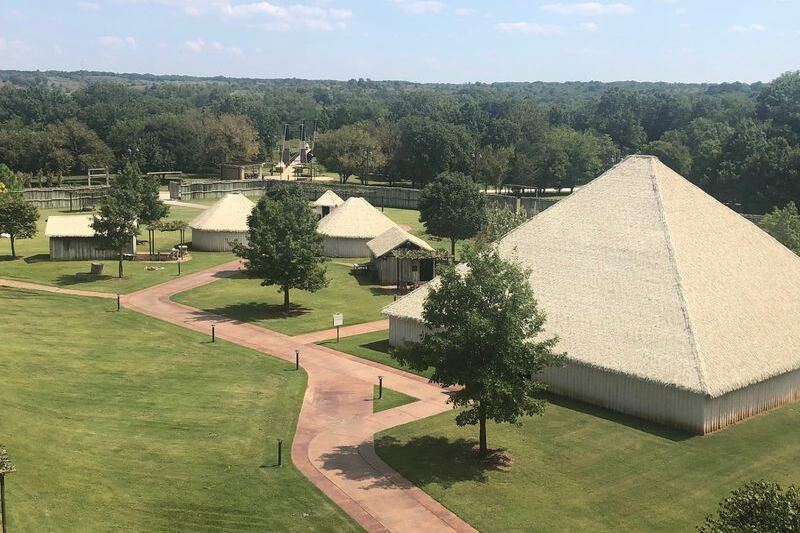
Any town with an origin story as dramatic as Perry’s deserves a museum equal to the task, and the Cherokee Strip Museum delivers exactly that. Located in Perry, the museum focuses on the history of the Cherokee Outlet and the 1893 Land Run that created this entire region.
The collections cover pioneer life, Native American history, and the broader story of how this stretch of central Oklahoma was settled and shaped.
Artifacts inside the museum include period clothing, tools, photographs, and documents that ground the Land Run story in human detail rather than just dates and statistics. Seeing the actual objects that settlers carried across the starting line makes the whole event feel less like a textbook entry and more like something that happened to real people with real stakes.
The museum also covers Noble County history beyond the Land Run itself, tracing the development of Perry and the surrounding communities through the 20th century. For anyone who grew up in this part of Oklahoma, a visit here tends to surface family connections and regional memories that add a personal layer to the historical record.
The Cherokee Strip Museum is the kind of local institution that reminds you why small-town history museums are worth your time.
6. Rose Rock Country and the Geology Beneath Your Feet
Noble County sits in the heart of rose rock country, and Perry serves as one of the best base points for appreciating Oklahoma’s official state rock. Barite rose rocks form when barite crystals grow around sand grains in a radial pattern that produces a shape resembling a blooming rose.
The formations are a reddish-brown color, and they occur naturally in the red clay soils that define this part of central Oklahoma.
The rose rock was designated Oklahoma’s official state rock in 1968, and Noble County remains one of the primary locations where these formations are found. Rockhounds from across the state make the drive to this area specifically to search for specimens in the fields and creek beds around Perry and the surrounding communities.
Finding one in the wild, half-buried in red dirt, carries a particular kind of satisfaction.
For visitors who are not actively hunting rocks, rose rocks still show up as decorations, gifts, and displays throughout the region. Gift shops and local businesses in the area often stock them, and seeing a cluster of these formations up close is genuinely striking.
The geology of central Oklahoma is visible here in a way that is both beautiful and completely specific to this part of the state.
7. The Pace of Life on Perry’s Main Streets
One of the first things you notice in Perry is the pace. Nobody seems to be in a hurry.
The downtown moves at a rhythm that feels calibrated to human scale rather than commercial pressure, and that quality alone makes the place feel different from larger Oklahoma cities. Wide streets, easy parking, and a general lack of noise give the whole town a settled, comfortable energy.
Conversations happen on sidewalks here. People wave from pickup trucks.
The kind of casual social interaction that urban life tends to squeeze out is still a natural part of daily life in Perry. For Oklahomans who grew up in small towns and later moved to bigger cities, spending an afternoon here triggers a very specific kind of recognition.
The unhurried quality is not a performance put on for visitors; it is simply how Perry operates. Businesses open at reasonable hours, lunch spots fill up with familiar faces, and the general atmosphere communicates that this is a town where people know each other and have for a long time.
That social texture is one of the most underrated things Perry offers, and it is the kind of thing you feel more than you plan for.
8. Food Stops That Keep Road-Trippers Coming Back
Perry sits right on I-35, which means it has been feeding road-trippers for decades, and the town has developed a reliable set of food stops that regulars plan around. The kind of straightforward, no-pretense cooking that central Oklahoma does best shows up consistently here, with portions sized for people who have been driving for hours and meals priced the way small-town Oklahoma has always priced them.
The local diners and casual restaurants around Perry lean into comfort food with the confidence of places that have been doing this a long time. Chicken-fried steak, homestyle sides, and fresh-baked pie are the kind of items that show up on menus and disappear quickly off plates.
The food is the sort that makes you loosen your belt and reconsider your afternoon plans.
For Oklahomans who have been making the I-35 run between Oklahoma City and Wichita for years, Perry is often the answer to the question of where to stop. The town has built a quiet reputation as a reliable food and rest point on a corridor that can feel relentless if you try to push straight through.
A meal in Perry is its own kind of reward.
9. Noble County Fairgrounds and Community Gathering Spaces
Community life in Perry revolves around shared spaces, and the Noble County Fairgrounds is one of the most important of them. Agricultural fairs, rodeos, and county events cycle through the fairgrounds in a rhythm that reflects the farming and ranching heritage of this part of central Oklahoma.
The Noble County Free Fair draws participants from across the region and gives the community a recurring moment to celebrate what it produces and who it is.
Rodeo culture runs deep in this part of Oklahoma, and the fairgrounds provides a venue where that tradition stays visible and active. Watching a local rodeo in a setting like this feels authentically rooted rather than packaged for tourism, which is a distinction that Oklahomans tend to notice and appreciate.
The crowd at a Noble County rodeo is made up of people who actually know the participants.
Beyond the fair and rodeo season, the fairgrounds hosts a range of community events that keep the space active throughout the year. Swap meets, car shows, and local fundraisers fill the calendar in the way that only a genuinely community-owned space can sustain.
Perry treats its gathering places with care, and the fairgrounds reflects that ongoing investment in shared civic life.
10. The Cherokee Strip Celebration Every September
Every September, Perry does something that most towns only talk about doing: it genuinely throws itself into its own history. The Cherokee Strip Celebration marks the anniversary of the 1893 Land Run with a multi-day festival that includes a parade, carnival rides, live music, a rodeo, and enough food vendors to keep the whole crowd fed and happy.
The event has been running for well over a century, which puts it in a category of Oklahoma traditions that actually means something.
The parade draws crowds from across Noble County and beyond, with floats, marching bands, and community groups moving through the downtown streets in a procession that manages to feel both celebratory and genuinely historical. Watching it from a spot on the square, with the brick storefronts framing the whole scene, is the kind of Oklahoma moment that sticks with you.
The Cherokee Strip Celebration is the event that brings former Perry residents back every year, and it is the kind of gathering that reinforces community identity in a way that no marketing campaign could manufacture. For first-time visitors who happen to arrive in September, landing in town during the celebration is an immediate and total immersion in what Perry is all about.
Timing your visit around it is highly recommended.
11. Getting to Perry and Moving Around Once You Are There
Perry’s location on Interstate 35 makes it one of the more accessible small towns in central Oklahoma. The city sits roughly 60 miles north of Oklahoma City and about 90 miles south of the Kansas border, which puts it squarely in the middle of one of the most-traveled corridors in the state.
The Perry-Lucien exit drops you right into town without any complicated navigation.
Once you are off the interstate, Perry is compact enough to cover on foot if you are focusing on the downtown area. The main commercial streets and the courthouse square are all within easy walking distance of each other, and parking is generally straightforward.
The town was built around a central grid, so orientation comes quickly even on a first visit.
For visitors coming from Tulsa, the drive runs about 90 miles west on the turnpike system before connecting south toward Perry. The city’s website at perryok.org carries current information on local events, city services, and community resources for anyone planning ahead.
Perry rewards the kind of visit where you arrive without a rigid itinerary and let the town set the pace, which is frankly the best way to experience any place that has this much character.
12. Seasonal Appeal and the Best Times to Visit
Perry has a distinct personality in each season, and the best time to visit depends on what you are after. September is the obvious peak, when the Cherokee Strip Celebration fills the downtown with activity and the early fall temperatures make being outside genuinely pleasant.
The light in central Oklahoma in September is some of the best the state produces, and Perry’s brick streets and open sky take full advantage of it.
Spring brings green back to the surrounding Noble County farmland and makes the drives into and out of Perry particularly scenic. The red dirt roads and rolling grasslands around town show their best color in April and May, and the town itself tends to have a fresh, energized quality after the quieter winter months.
Summer visits require some heat tolerance, but the trade-off is long days and an unhurried downtown that moves at an even more relaxed pace than usual. Winter is genuinely quiet in Perry, which has its own appeal for visitors who want to experience the town without any crowd at all.
The courthouse square in December, with holiday lights strung across the brick facades, is a scene that feels like it belongs on a postcard from an Oklahoma that most people forgot to keep.
13. Why Perry Stays With You After You Leave
There is a particular kind of Oklahoma town that does not announce itself loudly but leaves a strong impression anyway, and Perry is that town. The combination of genuine history, preserved architecture, active community life, and a location that makes it easy to reach creates something that feels less like a tourist destination and more like a place that simply exists well.
That distinction matters more than it might sound.
Perry does not need to perform for visitors because it is already fully occupied being Perry. The Cherokee Strip legacy is real.
The Ditch Witch manufacturing heritage is real. The courthouse square is real.
None of it was assembled to attract outside attention, which is exactly why outside attention keeps finding it anyway.
Oklahomans who make the stop here, whether for the first time or the tenth, tend to leave with the same feeling: that this is a town worth knowing. The drive back to Oklahoma City or Tulsa feels a little more grounded after an afternoon in Perry, like you touched something solid and specific in the middle of the state’s long highway miles.
That is the kind of place Perry is, and it is a harder thing to build than it looks.
Share this story