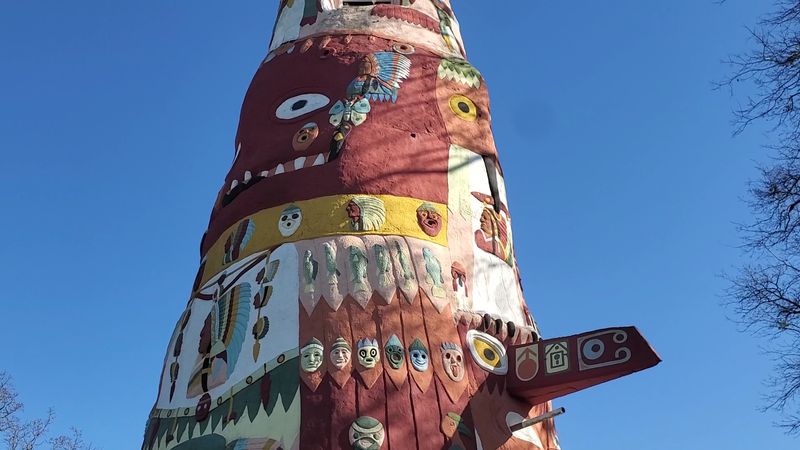
Tucked along a quiet stretch of northeastern Oklahoma highway, a folk-art wonder rises from the red dirt that most travelers never even know exists. Ed Galloway’s Totem Pole Park in Chelsea holds what is recognized as the world’s tallest totem pole, a 90-foot hand-carved giant built almost entirely by one determined man.
The park sits just a short detour off the legendary Route 66, making it one of those rare roadside surprises that genuinely earns its reputation. Whether you are chasing Oklahoma history, quirky Americana, or simply a great story to bring home, this place delivers all three.
Where to Find This Folk-Art Giant
About two miles off the main Route 66 corridor, a hand-painted sign points toward one of Oklahoma’s most underrated landmarks. Ed Galloway’s Totem Pole Park sits at 21300 OK-28A, Chelsea, OK 74016, nestled in Rogers County amid rolling green pastures and quiet country roads.
The drive in feels almost deceptively ordinary, which makes the moment you first spot the towering carved pole absolutely unforgettable.
Chelsea itself is a small northeastern Oklahoma town, the kind that rarely earns a second glance from highway travelers. Yet this particular patch of land has drawn curious visitors from across the country for decades, all coming to see what one self-taught artist quietly built in a field.
The park holds a 4.4-star rating across more than 1,100 Google reviews, a number that speaks to how consistently the place surprises people.
Rogers County sits in the green, hilly corner of Oklahoma, far removed from the flat plains most outsiders associate with the state. The landscape alone makes the drive worthwhile, and the park rewards anyone willing to leave the main highway for a few miles of winding country road.
The Man Behind the Masterpiece
Nathan Edward Galloway was a woodshop teacher and self-taught folk artist who spent eleven years building something truly extraordinary on his own property. Born in 1880, Galloway began construction on the park in 1937 and worked steadily until 1961, when the project was finally considered complete.
He had no formal art training, no architectural degree, and no corporate sponsor. He simply had vision, patience, and an almost obsessive dedication to craft.
Galloway worked alongside students and friends who helped bring his ambitious plans to life. The collaboration between a passionate teacher and willing helpers gives the whole park a community spirit that still feels present when you walk the grounds today.
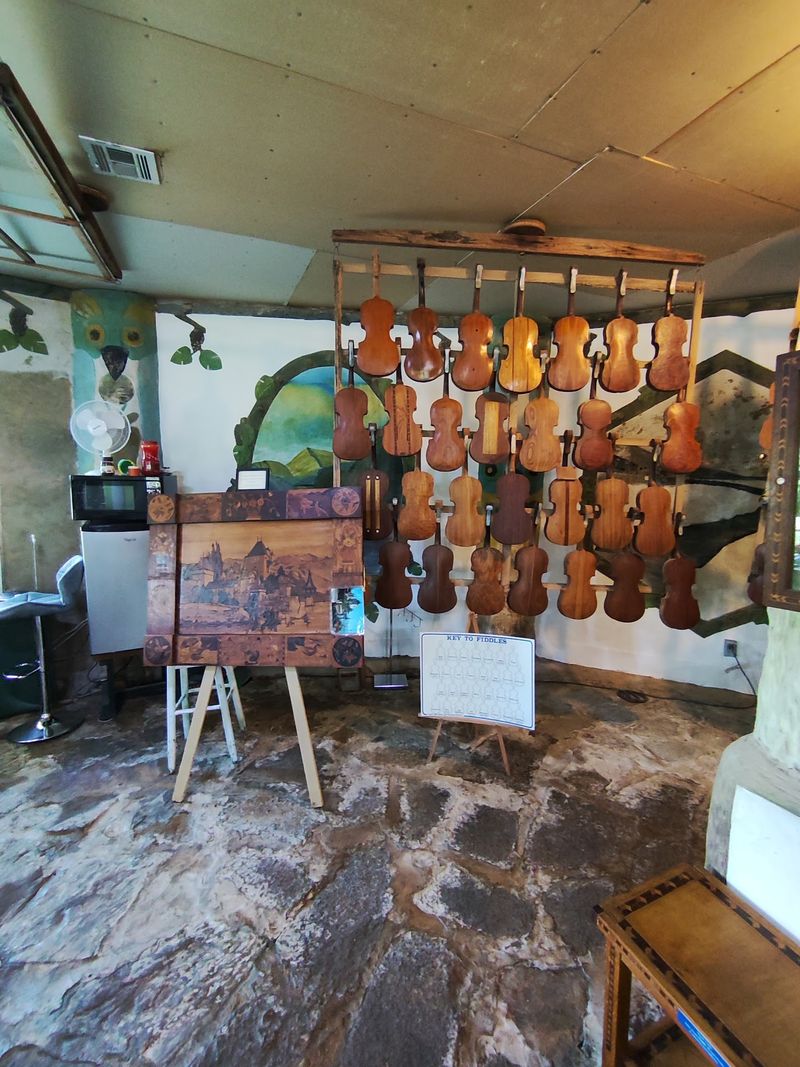
His artistic talent extended well beyond totem poles. Inside the visitor center, hand-carved fiddles and violins line the walls, each one a testament to the range and depth of his skill.
He carved symbols and figures representing Native American heritage, working with genuine respect for the traditions he was honoring. Galloway passed away in 1962, just one year after completing his life’s work, leaving behind a legacy that Oklahoma has been gradually restoring and celebrating ever since.
Few artists anywhere have left behind something this physically impressive.
The 90-Foot Totem Pole Up Close
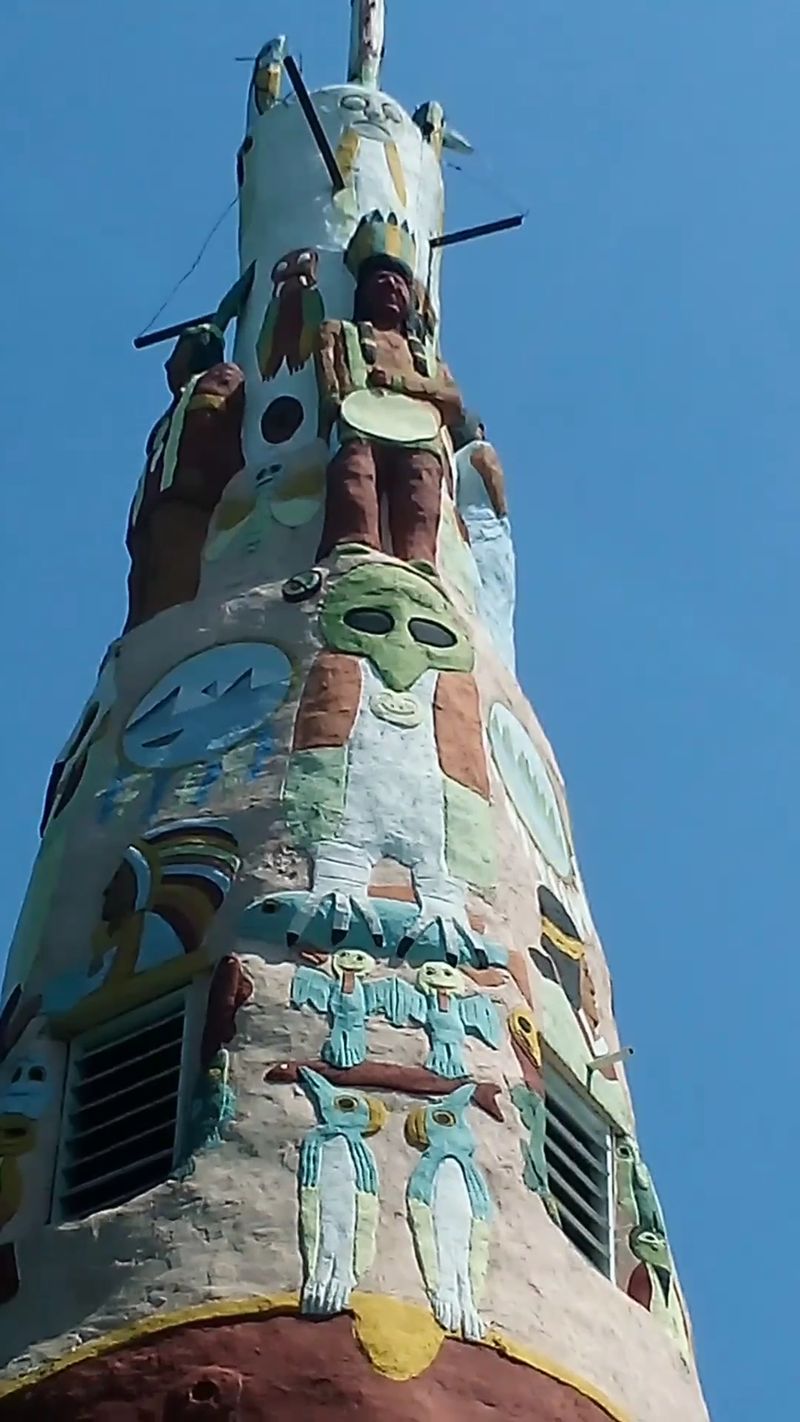
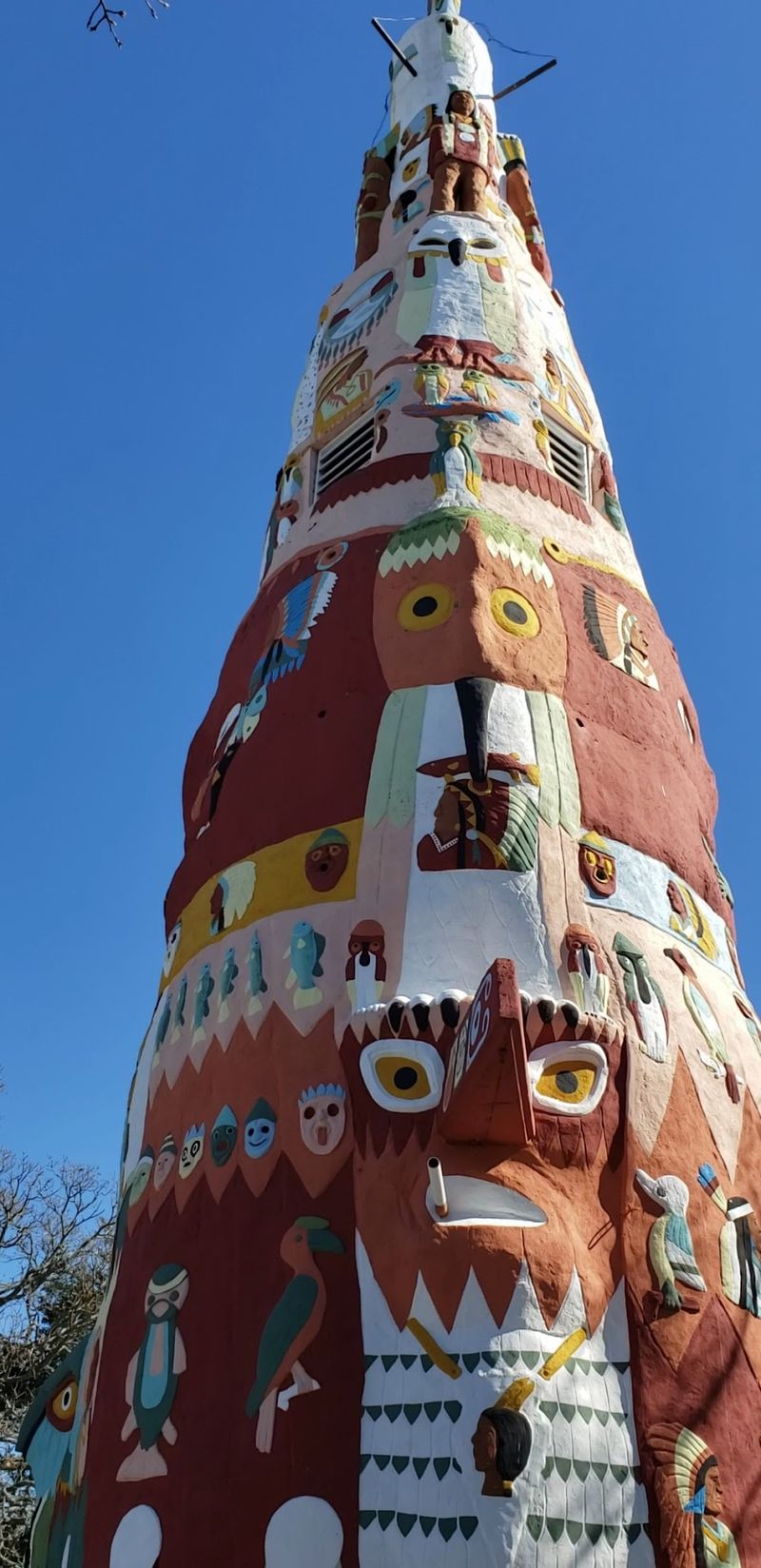
Seeing the main totem pole in photographs does not prepare you for the reality of standing at its base. The structure rises 90 feet into the Oklahoma sky, making it the tallest totem pole in the world according to the park’s documented history.
Galloway built it from concrete reinforced with steel and covered the surface with intricate hand-carved figures, symbols, and faces that spiral upward in dense, layered detail.
The sheer scale of the carving is difficult to process at first. Your eyes keep jumping from one figure to the next, each one distinct, each one clearly the product of careful, deliberate work.
The paint restoration ongoing at the site has brought many of the colors back to life, with freshly painted sections gleaming alongside older, weathered areas that carry their own kind of worn beauty.
Getting close enough to study individual carvings reveals just how much detail Galloway packed into every square foot of surface. Faces stare outward with strong, geometric expressions.
Animals and symbols interlock across the column in patterns that reward slow, careful looking. The overall effect is genuinely monumental, the kind of thing that makes you stand quietly for longer than you planned.
A Field Full of Carved Wonders
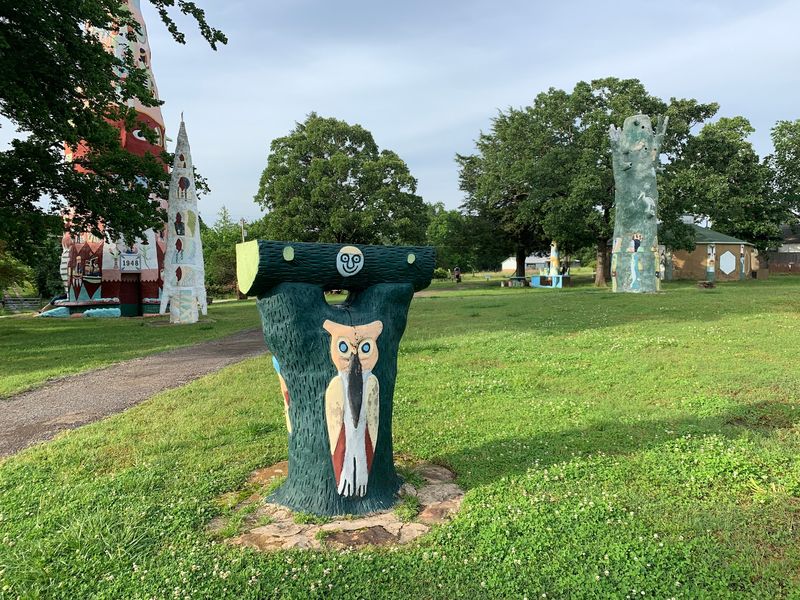
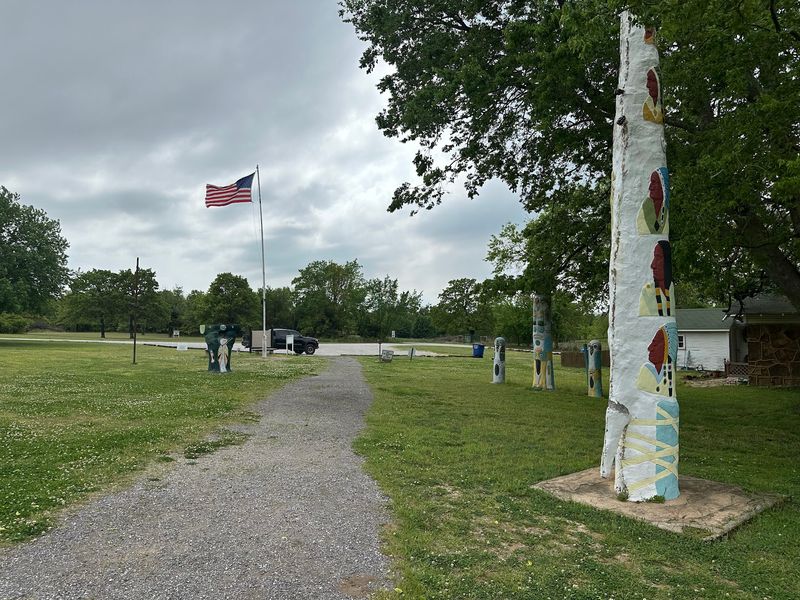
The 90-foot centerpiece earns all the headlines, but the surrounding grounds hold an entire collection of additional totem poles that deserve equal attention. Galloway built eleven totem poles in total across the property, each one unique in height, design, and character.
Wandering among them feels less like visiting a single attraction and more like moving through a personal outdoor gallery that grew organically over two decades.
Some of the smaller poles stand at head height, close enough to examine the carving texture directly. Others rise fifteen or twenty feet, their figures easier to read at a comfortable distance.
The variety keeps the walk genuinely interesting rather than repetitive. A carved turtle on one of the structures has drawn particular attention from visitors, its round, expressive form making it one of the most photographed details on the grounds.
The grassy open layout gives the park a relaxed, unhurried feel. There are no roped-off zones or guided tours pressuring you to move at a particular pace.
You are free to circle each pole as many times as you like, crouch down to study a base carving, or simply stand back and take in the full silhouette of multiple poles rising together against the Oklahoma sky.
The Fiddle House and Its Surprising Interior
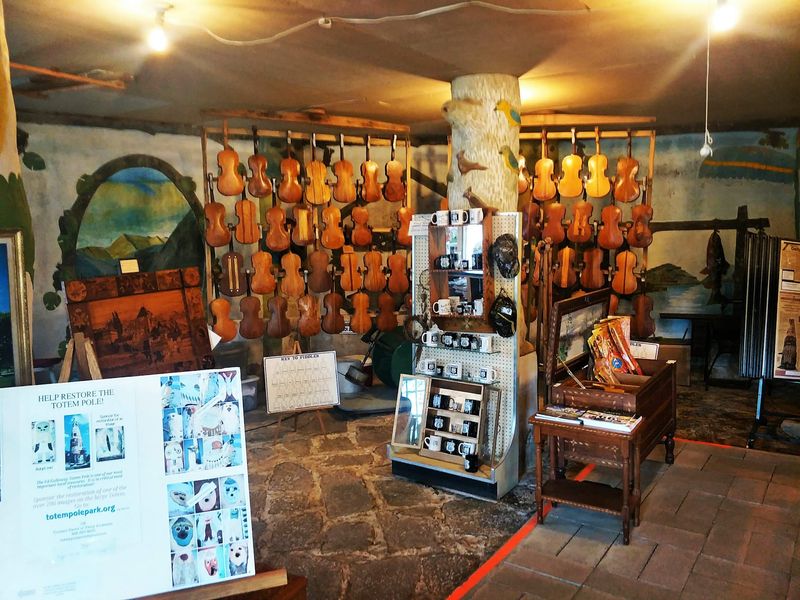
Most visitors come for the totem poles and leave genuinely amazed by what they find inside the Fiddle House. Galloway was not only a totem pole builder.
He spent years hand-carving fiddles and violins, and the collection displayed inside the visitor center is one of the more unexpected delights the park offers. The walls are lined with instruments that demonstrate a completely different dimension of his artistic range.
The fiddles are remarkably well preserved, their carved surfaces showing the same attention to decorative detail that defines the outdoor poles. Galloway incorporated ornamental carvings into the instrument bodies, turning functional objects into decorative art pieces that blur the line between craft and fine art.
The collection has been described by visitors as astonishing, particularly given that the same hands that built a 90-foot concrete structure also produced these delicate, intricate objects.
Staff at the Fiddle House tend to be knowledgeable and genuinely enthusiastic about sharing the history behind each piece. The conversations you can have inside the visitor center add real depth to the outdoor experience.
Plan to spend at least twenty or thirty minutes inside, because the collection rewards careful attention and the stories connected to individual pieces are genuinely worth hearing.
Gift Shop, Museum, and the Story They Tell Together
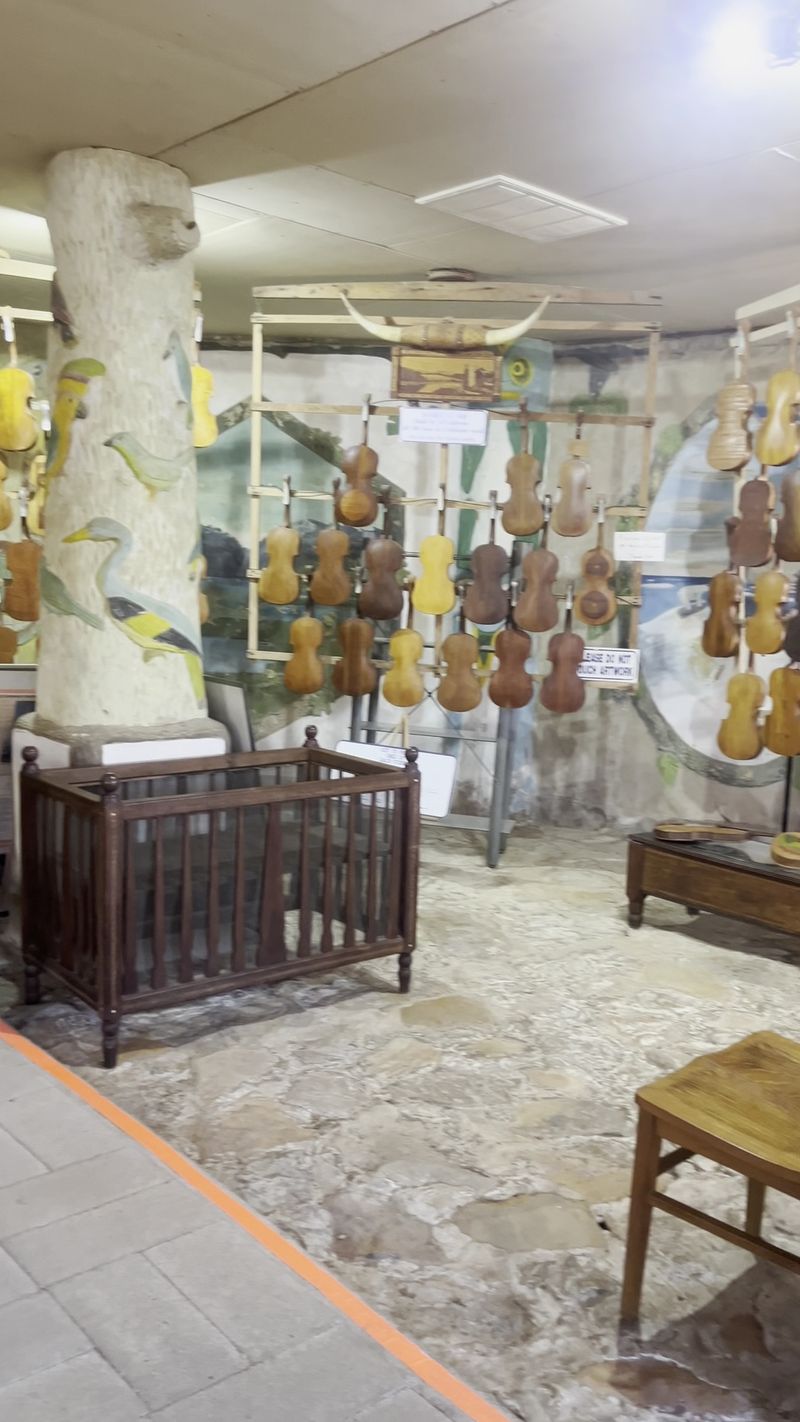
Beyond the Fiddle House, the park’s small museum and gift shop fill in the biographical gaps that the outdoor poles cannot tell on their own. Historical photographs, interpretive panels, and woodwork examples trace Galloway’s life from his early years as a teacher through the long construction period that consumed most of his retirement.
The displays are compact but well-organized, and they give the outdoor experience a meaningful narrative frame.
The gift shop carries a modest selection of souvenirs that feel appropriately tied to the place. Totem pole magnets are among the most popular items, the kind of small keepsake that actually connects to the specific memory of visiting rather than a generic Oklahoma gift.
Other pieces of Galloway’s woodwork appear throughout the shop, giving the space more of a gallery feeling than a typical roadside souvenir stand.
Staff members working the shop have occasionally shared personal memories connected to Galloway’s era, adding a layer of living history that printed panels cannot replicate. The gift shop and museum together take perhaps thirty to forty-five minutes to explore comfortably.
Combined with time spent on the grounds, the full visit adds up to a genuinely satisfying afternoon stop rather than a quick photo opportunity.
The Atmosphere and Who Fits Right In
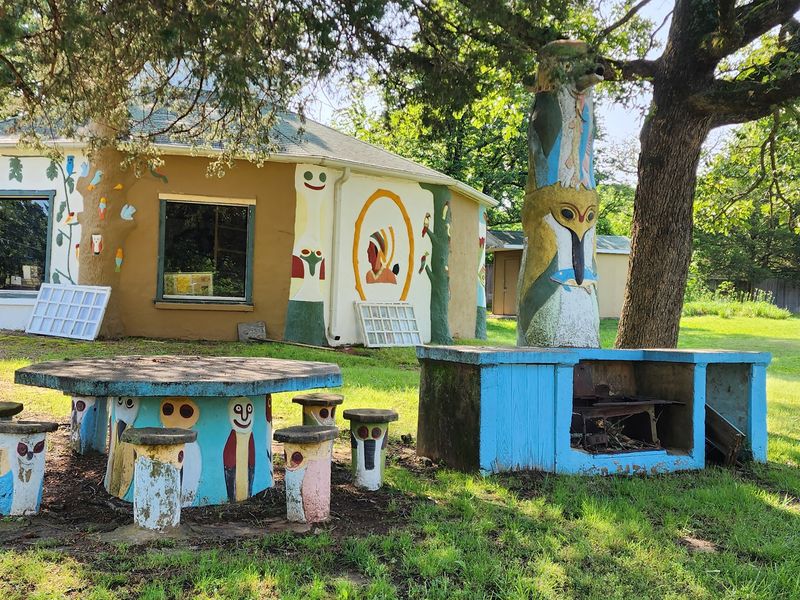
The park draws a genuinely mixed crowd, which says something meaningful about its appeal. Route 66 travelers make the short detour regularly, drawn by word of mouth and the promise of something genuinely unusual.
Families spread out on the picnic tables for a midday break, letting kids run across the grassy areas while adults circle the poles at a slower pace. History enthusiasts come armed with background research and leave with even more questions about Galloway’s creative process.
The grounds are pet-friendly, which adds to the relaxed, welcoming atmosphere. Dogs on leashes are a common sight, their owners happy to find an outdoor stop that accommodates the whole traveling party.
The open layout gives everyone enough space to spread out comfortably even when the park is moderately busy, which keeps the experience from ever feeling crowded or rushed.
Quiet weekday mornings offer a particularly peaceful version of the visit, with the poles almost to yourself and birdsong filling the space between the carved figures. Weekend afternoons bring more energy and more fellow travelers to swap notes with.
Either way, the park has a low-pressure, genuinely welcoming character that makes it easy to stay longer than originally planned. Nobody seems to be in a hurry here, and that feels right.
Hours, Entry, and Getting There
Planning the visit is straightforward once you know the key details. Ed Galloway’s Totem Pole Park is open seven days a week from 9 AM to 4 PM, which gives most travelers a comfortable window to work the stop into a Route 66 itinerary or a broader northeastern Oklahoma day trip.
The park does not charge a fixed admission fee. Entry runs on a donation basis, making it accessible to travelers at any budget level.
Getting there from Route 66 requires only a short detour of roughly two miles along OK-28A. The drive is easy, the road is well-maintained, and the park has ample parking behind the main grounds.
The phone number for the park is 918-283-8035 if you want to confirm seasonal details before making the drive. Parking is free and generally easy to find even on busier weekend days.
Chelsea sits in Rogers County, roughly an hour northeast of Tulsa, making the park a natural addition to any Tulsa-area road trip or a worthwhile standalone destination for anyone exploring the Route 66 corridor through Oklahoma. The combination of free-range grounds, a donation-based entry model, and a seven-day schedule makes this one of the most visitor-friendly folk-art sites in the entire state.
Arriving before noon leaves plenty of time to see everything at a relaxed pace.
Share this story