Most people think of Oklahoma as flat, windswept, and uneventful, but the southwestern corner of the state has a secret worth driving for. Elk Mountain rises from the Wichita Mountains Wildlife Refuge like something out of a different era entirely, and the granite beneath your boots is said to be among the oldest exposed rock in the continental United States.
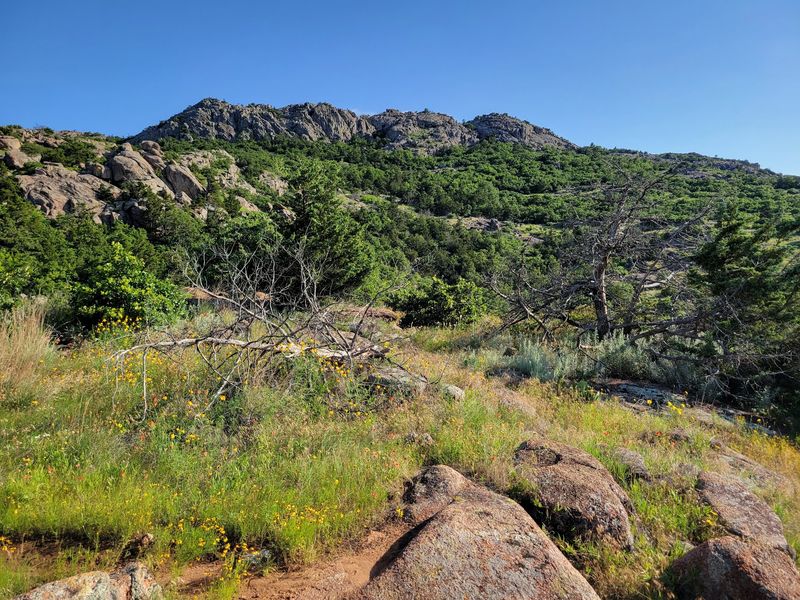
The trail to its summit rewards hikers with sweeping views, wildflowers, boulders the size of small houses, and a sense of scale that feels completely out of place for Oklahoma. If you have never considered the Sooner State a hiking destination, Elk Mountain Trail is about to change that.
Where Elk Mountain Trail Sits and What It Actually Is
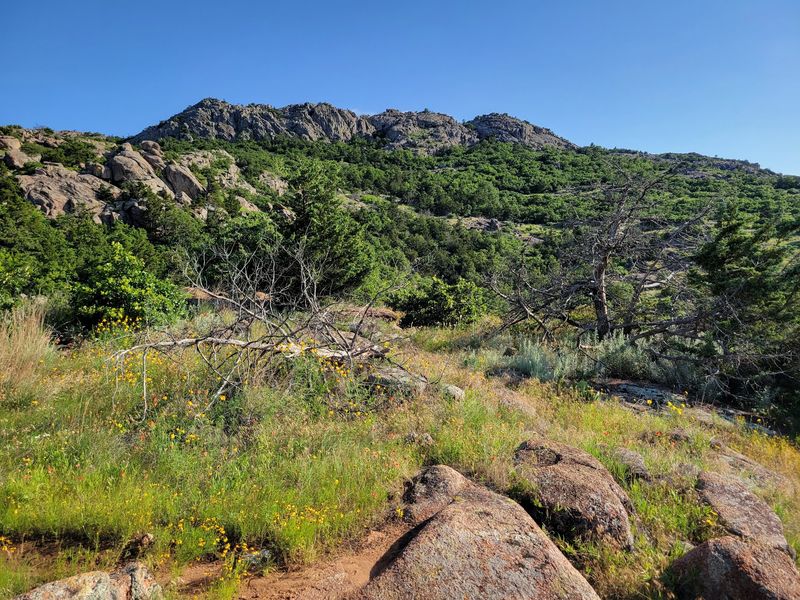
Anchored inside the Wichita Mountains Wildlife Refuge near Indiahoma, Oklahoma, Elk Mountain Trail is one of the most celebrated hikes in the entire state. The address is Elk Mountain Trail, Indiahoma, OK 73552, and the refuge sits in Comanche County in the southwestern part of the state, roughly two hours from Oklahoma City.
The trail is managed by the U.S. Fish and Wildlife Service, which oversees the broader refuge and its extensive network of paths.
Elk Mountain itself is one of the tallest granite peaks in the Wichita Mountains, with a summit reaching 2,270 feet above sea level. That might not sound dramatic by Rocky Mountain standards, but the exposed granite formations and open ridgelines create a visual impact that far exceeds the numbers.
The Wichita Mountains are widely considered some of the oldest exposed mountains in the continental United States, with the granite dating back hundreds of millions of years. That geological age gives the landscape a raw, worn-smooth character that younger mountain ranges simply do not have.
Getting here is straightforward, and the refuge itself is free to enter, making it one of the best no-cost outdoor adventures Oklahoma offers.
The Ancient Geology Beneath Every Step
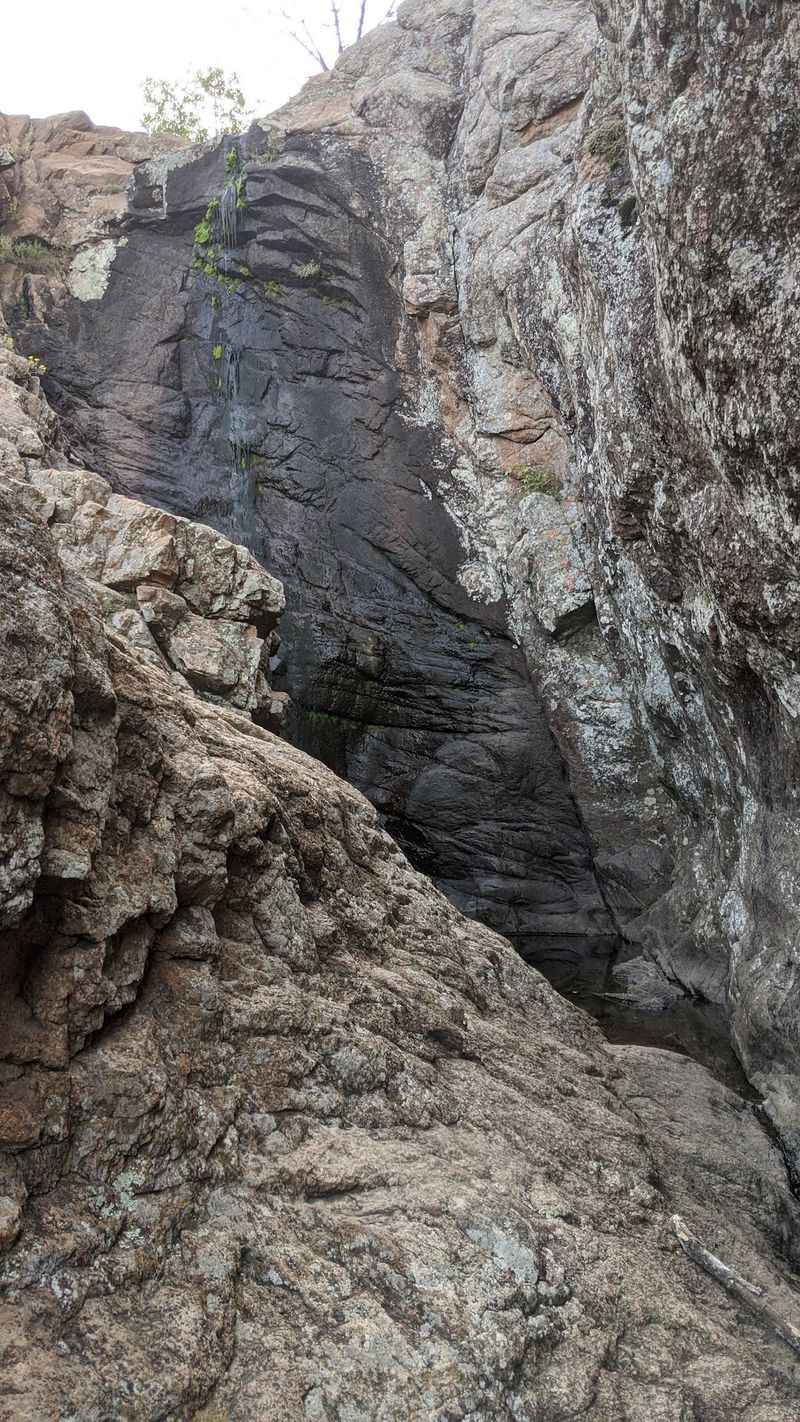
Few hiking trails in the American heartland put you in direct contact with rock this old. The granite that forms Elk Mountain and the broader Wichita range is estimated to be around 525 to 540 million years old, predating the formation of the Rocky Mountains by hundreds of millions of years.
That makes these rounded, weather-polished peaks some of the most ancient exposed rock in the lower 48 states.
Unlike the jagged, freshly-uplifted peaks of younger ranges, the Wichita Mountains have had an enormous amount of time to be shaped by erosion. The result is a landscape of smooth, rounded boulders and broad granite slabs that feel almost sculpted.
Hikers frequently notice the pink and gray tones in the rock, which shift in color depending on the light and time of day.
Walking across these surfaces, especially near the summit, gives a tangible sense of geological time that no museum exhibit can quite replicate. The rock underfoot has witnessed continental shifts, mass extinctions, and ice ages, and it carries that history in every crack and curve.
For anyone with even a passing interest in earth science, this trail is genuinely thrilling.
The Trail Itself: Distance, Terrain, and Honest Difficulty
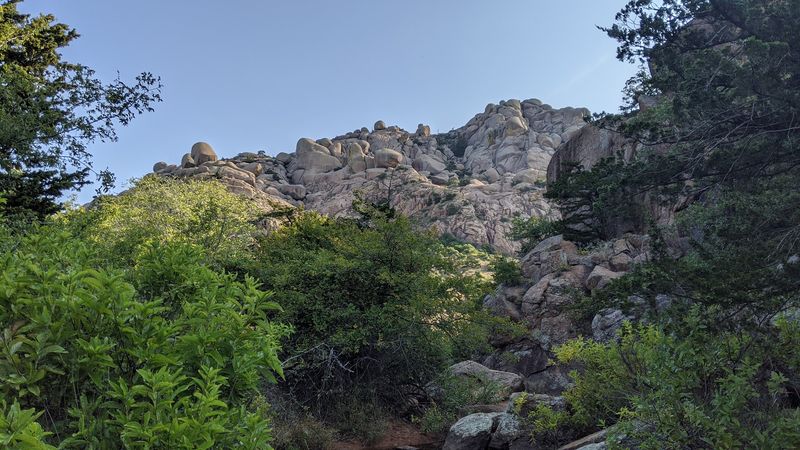
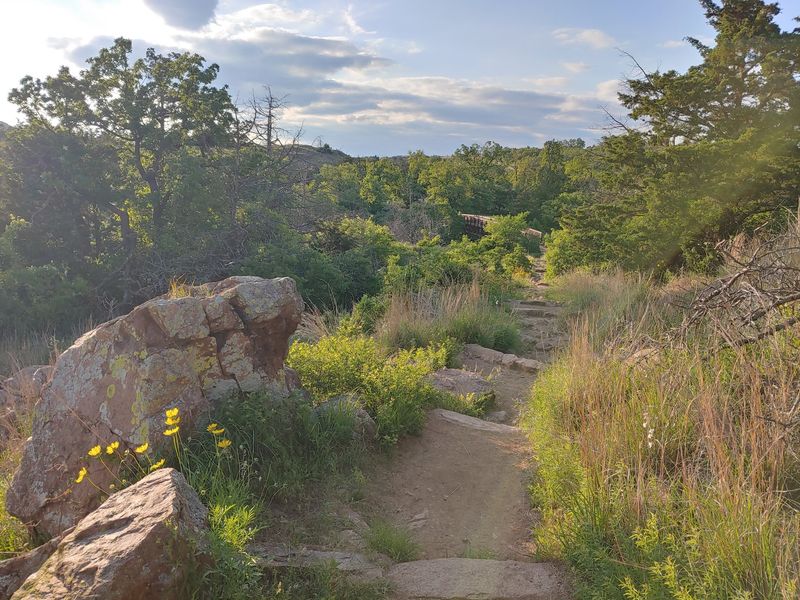
Elk Mountain Trail runs approximately 1.8 miles one way, making the round trip somewhere around 3 miles for most hikers who stick to the main path. The terrain is rocky throughout, with stretches of stone steps, loose rocks, and sections where the trail crosses open granite slabs.
Those open rock sections can be the trickiest parts to navigate, since the path becomes less obvious when there is no dirt underfoot to follow.
The elevation gain is real but manageable for most reasonably active people. The incline is not brutally steep, and there are flatter sections along the way where catching your breath is easy.
That said, the rocky surface demands attention on every step. Hiking boots are strongly recommended over trail runners or casual sneakers, since ankle support matters on this kind of terrain.
Orange trail markers help guide the way in spots where the route becomes unclear, and downloading a map before heading out is a smart move. Hikers who wander off the main path occasionally end up covering significantly more ground than planned.
The overall difficulty sits comfortably in the moderate range, though the rocky conditions push it toward moderate-to-difficult for those who are newer to uneven terrain.
Summit Views That Earn Every Uphill Step
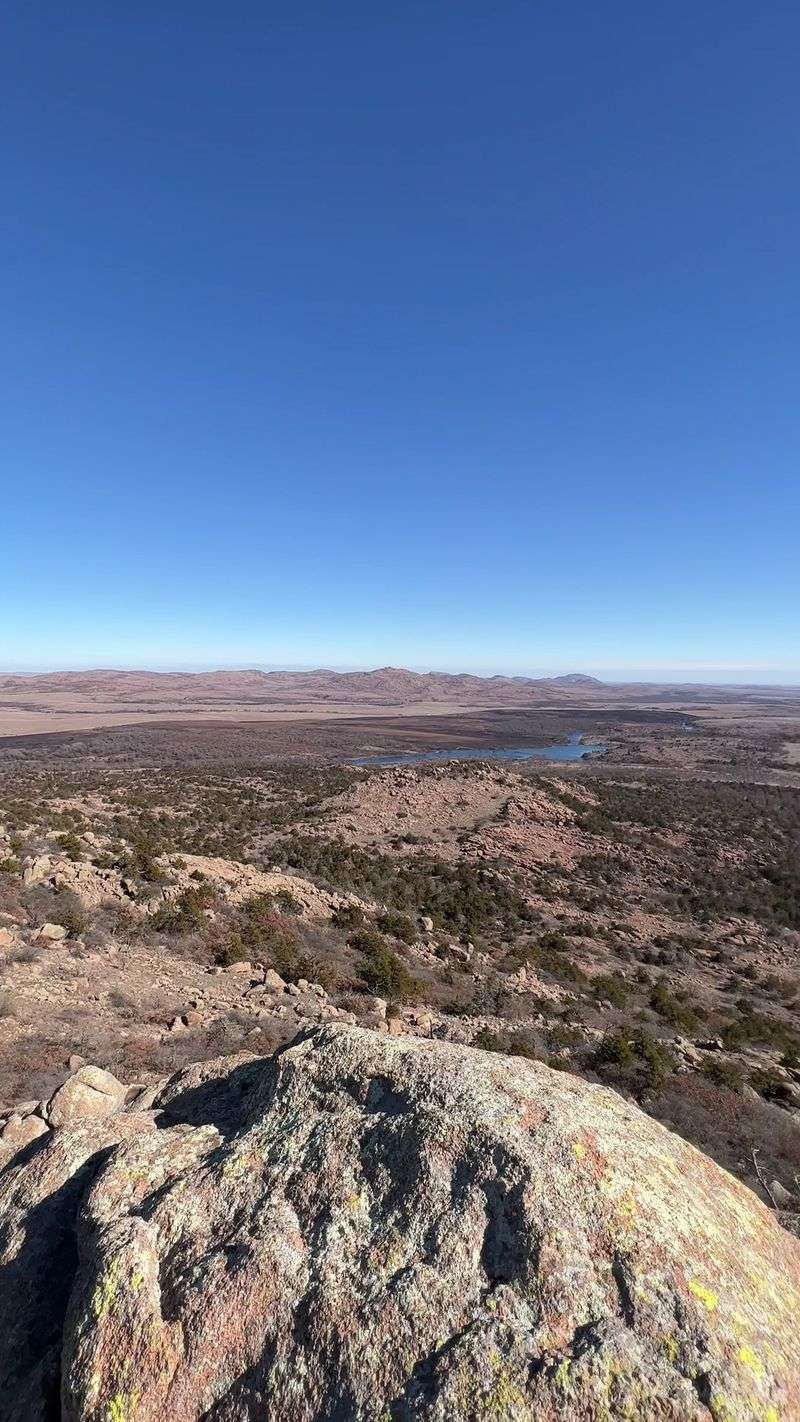
Reaching the top of Elk Mountain delivers one of the most satisfying payoffs of any trail in Oklahoma. From the summit at 2,270 feet, the view stretches across the Charon Garden Wilderness and the wider Wichita Mountains Wildlife Refuge in every direction.
The landscape below is a rolling patchwork of granite outcrops, native prairie, scattered woodland, and the occasional glint of water from the refuge’s lakes.
The summit itself is an open expanse of granite, which means there are no trees blocking the sightlines. On a clear day, the horizon seems impossibly wide for a state that most people associate with flat terrain.
Sunrise and sunset both transform the rock into warm shades of amber and rose, and photographers who time their visit around golden hour tend to come away with genuinely striking images.
Spending time at the top rather than immediately turning back is well worth the effort. Bringing a snack and a drink to enjoy on the summit rocks turns a workout into an experience.
The wind at the top keeps things cool even on warm days, and the quiet up there, away from the parking area and the lower trail buzz, feels like a reward all its own.
Wildflowers, Wildlife, and What Grows Between the Rocks
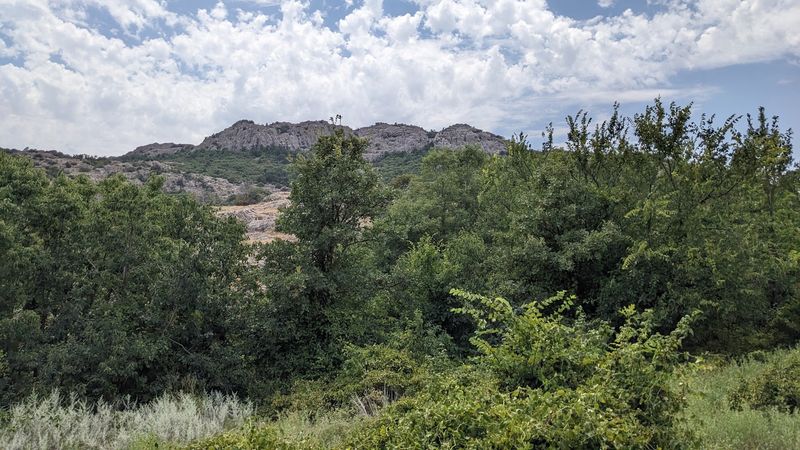
One of the more surprising pleasures of hiking Elk Mountain is the abundance of plant and animal life tucked into every corner of the rocky landscape. Wildflowers push up through cracks in the granite and bloom in clusters along the trail margins, with May being a particularly spectacular month for color.
Visitors who hike in early summer often describe the floral display as completely unexpected for a mountain made almost entirely of stone.
The Wichita Mountains Wildlife Refuge is home to a wide range of species, including bison, white-tailed deer, elk, wild turkey, and various reptiles. Hikers are frequently reminded to stay alert for snakes, which are a real presence in the rocky terrain.
Keeping to the trail and watching where hands and feet land near boulders is standard practice here.
Birds are especially rewarding to spot along the route, with raptors often riding thermals above the summit and smaller species moving through the brush below. The refuge’s protected status means wildlife is unusually approachable and visible compared to heavily trafficked areas.
The combination of ancient geology and thriving ecology gives Elk Mountain Trail a richness that goes well beyond a simple summit hike.
Bouldering, Cave Exploring, and Going Beyond the Main Path
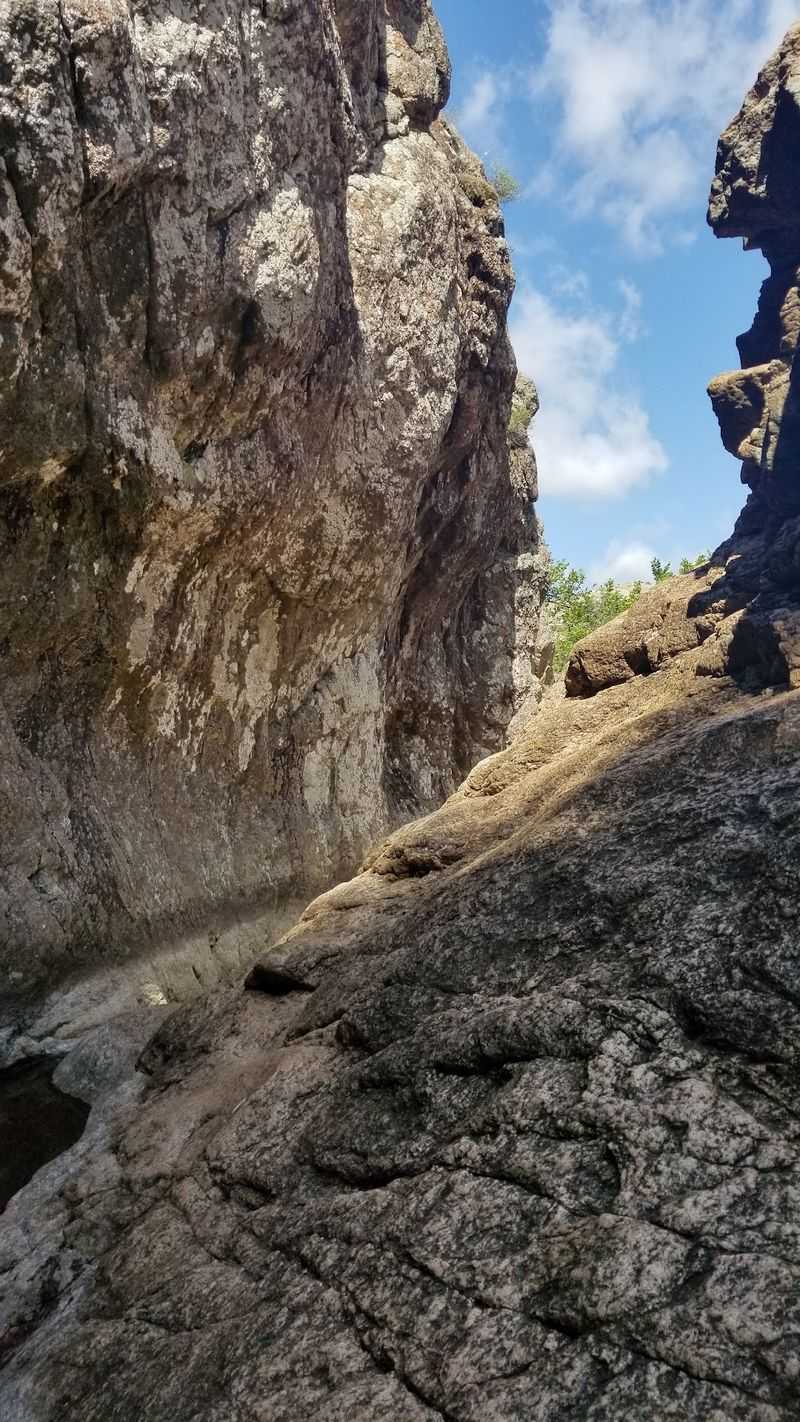
For those who want more than a straightforward hike to the top and back, Elk Mountain’s summit area opens up a whole secondary experience. The broad granite plateau near the peak is scattered with massive boulders and rocky formations that invite scrambling, bouldering, and informal exploration.
Climbers of various skill levels find challenges suited to their ability among the rock piles, from easy scrambles to more technical boulder problems.
Cave exploring is another draw at the summit level, where gaps and overhangs between boulders create small cave-like spaces worth poking around. None of these require special equipment, but a spirit of curiosity and a reasonable comfort level with uneven surfaces help.
What starts as a 20-minute casual hike for some visitors turns into a multi-hour adventure once the summit exploration begins.
The trail network within the broader Wichita Mountains refuge also connects to other routes, including the more demanding Charon Garden Trail, which passes features like Treasure Lake and involves significant bouldering of its own. Hikers who want a full day out can link trails together and cover considerably more ground than the Elk Mountain loop alone.
The refuge is large enough to keep even frequent visitors discovering new terrain on every return trip.
Who Fits This Trail and What to Expect from the Crowd
Elk Mountain Trail draws a genuinely varied crowd, which says something about its accessibility. Families with older children handle it well, and solo hikers, couples, and groups of friends all show up regularly.
The trail is popular enough that the parking area fills quickly on weekends, so arriving early is the single most effective strategy for a smooth visit.
Casual hikers in reasonable shape find the trail manageable without feeling like they are in over their heads. The moderate rating is accurate for most of the route, though the rocky sections demand more focus than a typical paved park path.
People who have never hiked before might find certain stretches a bit challenging, but the trail is not so technical that beginners should feel discouraged from trying.
The trail earns consistently high marks, sitting at 4.8 stars across nearly 200 reviews, which reflects both the quality of the experience and the enthusiasm of the people who make the trip. Weekday visits tend to be quieter, and the early morning hours offer cooler temperatures and better wildlife sightings.
The overall atmosphere on the trail is friendly and encouraging, with hikers frequently stopping to share trail conditions or point out a good spot for a view.
Practical Details: Hours, Facilities, and Getting There
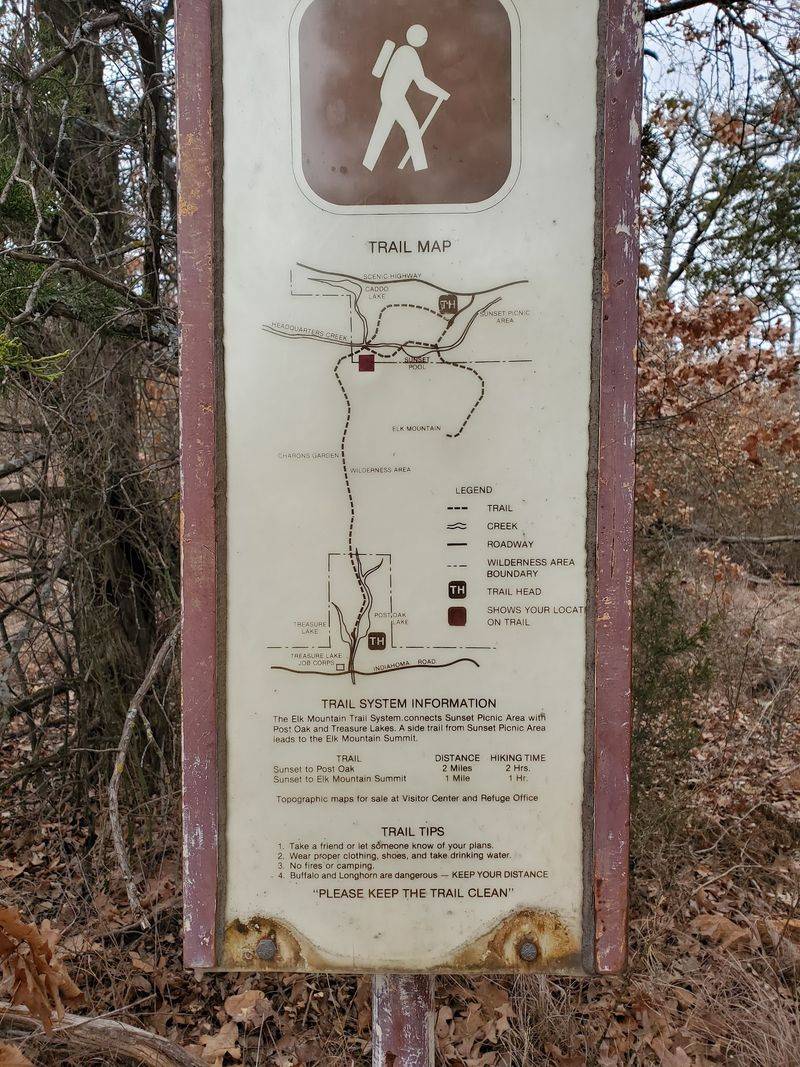
Elk Mountain Trail is open 24 hours a day, seven days a week, which makes it unusually flexible for hikers who want to catch a sunrise from the summit or stay late for a sunset view. The trail can be reached by calling the refuge at +1 580-429-3222, and additional information is available at the U.S.
Fish and Wildlife Service website dedicated to the Wichita Mountains refuge trail map.
The trailhead includes a parking area with picnic tables and restroom facilities, though the restrooms are pit toilets rather than modern facilities. Parking fills up fast on weekends, so planning an early arrival saves the frustration of hiking in from a distance.
There is no fee to hike the trail itself, and the refuge entrance is also free, making this one of the better value outdoor experiences in the region.
Bringing plenty of water is essential regardless of the season, since there are no water sources on the trail. Sunscreen and bug spray are both worth packing, especially in warmer months when the open granite summit offers no shade.
The nearest services are in the surrounding towns, so topping off fuel and supplies before heading to the refuge is a practical move. The coordinates 34.7316856, -98.7234045 will take navigation apps directly to the trailhead.
Share this story