Deep in the high desert of eastern Oregon, a trail winds through sagebrush and scrubland toward something that stops most visitors cold: two shallow grooves pressed into the earth by thousands of wagon wheels more than 160 years ago. These ruts are the real thing, left behind by pioneers who crossed the continent with everything they owned loaded into a wooden wagon.
The National Historic Oregon Trail Interpretive Center sits above those ruts on Flagstaff Hill, near Baker City, and it tells the full story of one of the most ambitious human migrations in American history. From hands-on exhibits to ranger-led presentations and a trail that leads straight to the original wagon road, this place delivers history in a way that actually sticks.
Where History Meets the High Desert: Location and First Impressions
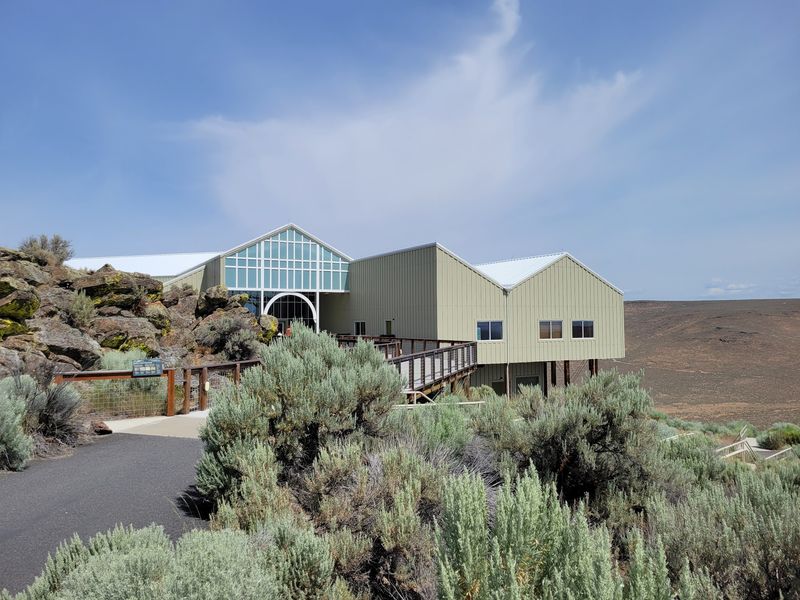
The National Historic Oregon Trail Interpretive Center sits at 22267 OR-86, Baker City, Oregon 97814, perched on Flagstaff Hill with sweeping views of the Powder River Valley below. From the parking lot alone, you can see the Elkhorn Range of the Blue Mountains in the distance, and on a clear day, the scale of the landscape starts to sink in fast.
Baker City is just a few minutes away, and the center is only a short drive from Interstate 84, making it an easy stop whether you are road-tripping through Oregon or making a dedicated visit. The Bureau of Land Management operates this site, and it shows in the care put into every detail, from the well-maintained grounds to the large, accessible parking areas that can handle RVs without any trouble.
First impressions matter, and this place delivers. The building itself is thoughtfully designed to blend into the hillside rather than overpower it.
You get a sense right away that the people behind this center took the subject seriously, and that sets the tone for everything that follows inside.
The Story Behind the Trail: A Brief History of the Oregon Trail
Between 1843 and the early 1870s, roughly 300,000 to 500,000 people packed up their lives and headed west along the Oregon Trail. The route stretched about 2,000 miles from Independence, Missouri, all the way to the Willamette Valley in Oregon, and it passed directly through what is now eastern Oregon near Baker City.
People made this journey for land, opportunity, and a fresh start. The federal government had opened up fertile land in the Pacific Northwest, and word spread fast.
Families loaded wagons with as much as they could carry, knowing they would likely need to abandon heavy items along the way when the trail got rough or the oxen grew too tired.
The journey typically took four to six months, and the terrain near Flagstaff Hill was one of the more grueling stretches. The wagon wheels carved those deep ruts into the earth over decades of use, and the fact that those marks are still visible today is both remarkable and quietly sobering.
The center does an excellent job of grounding this history in real human experience rather than just dates and statistics.
Inside the Museum: Exhibits That Bring the Past to Life
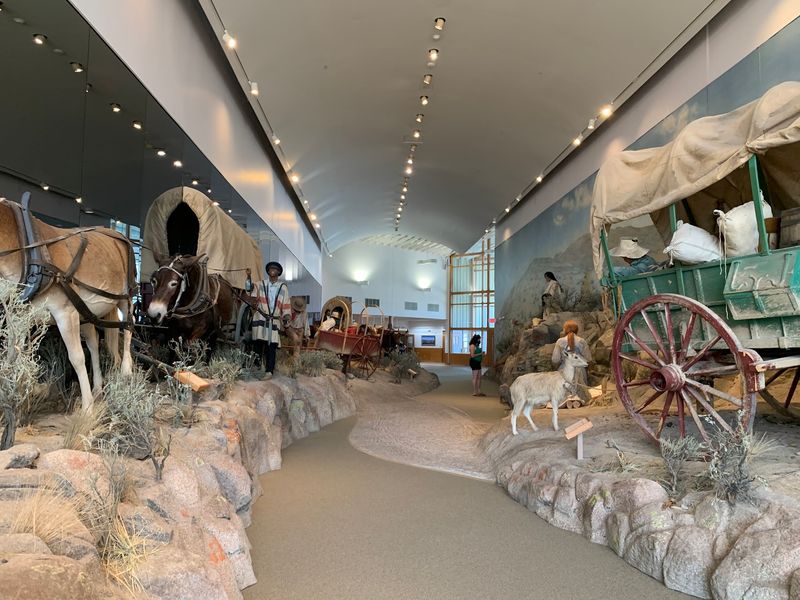
The museum inside is larger than it looks from the outside, and that surprise works in its favor. Visitors consistently remark that they expected something small and ended up spending two or three hours working through everything.
The exhibits are organized to follow the journey chronologically, so you move through the story the same way the pioneers did.
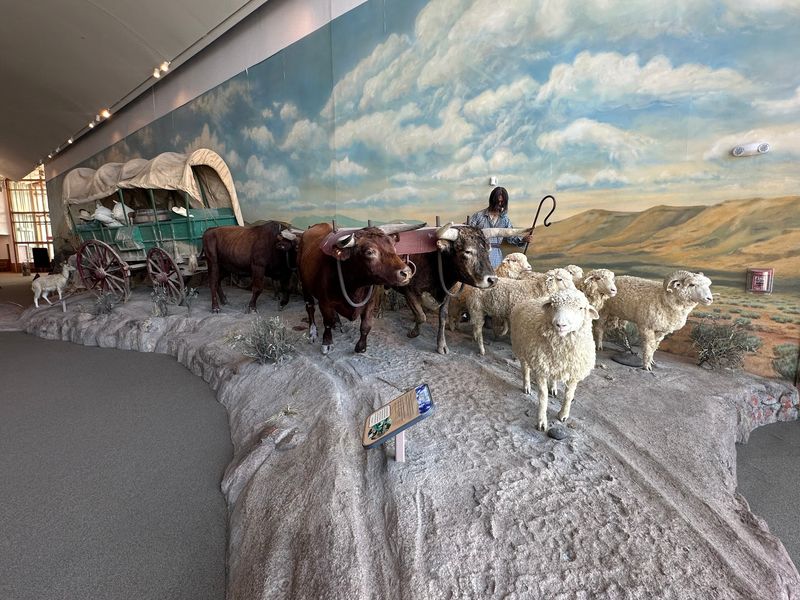
Detailed dioramas are one of the standout features. These aren’t dusty old displays with faded figurines.
They are carefully crafted scenes that capture specific moments on the trail, from river crossings to campfire gatherings, with enough detail to make you stop and look closely. Quotes from actual pioneer diaries are woven throughout the exhibit text, and in some cases, the original diaries are on display behind glass.
Interactive elements are scattered throughout, giving kids and adults alike a chance to engage directly with the material. You can answer questions, test your knowledge, and get a real feel for the decisions pioneers had to make on the trail.
The center also features a film that runs about an hour and is well worth watching before or after you walk the exhibits, as it adds useful context to everything you see.
Ranger Presentations: Learning Straight from the Experts
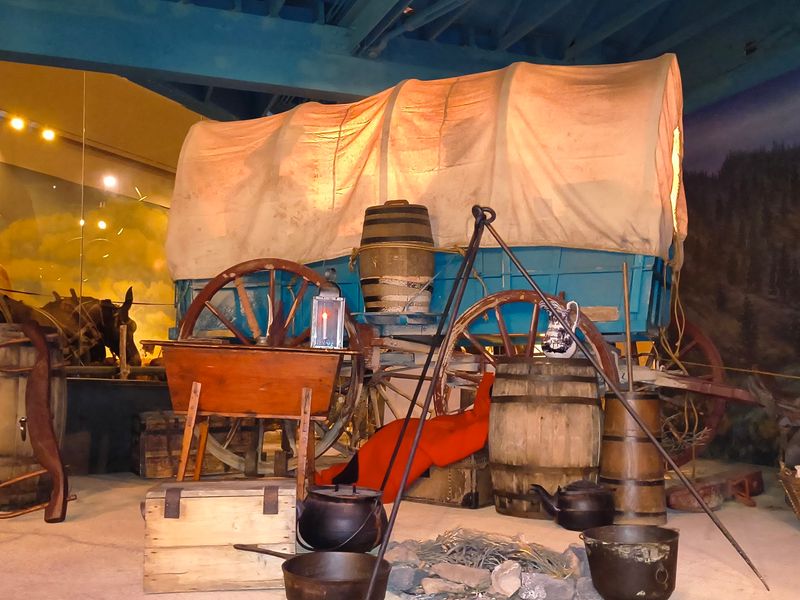
One of the most memorable parts of a visit here is catching a live ranger presentation. The staff at this center are genuinely enthusiastic about the subject, and that energy is contagious.
Rangers lead talks that go beyond what the exhibit panels say, pulling in personal anecdotes from pioneer accounts and answering questions with real depth.
The presentations vary in topic and length, and the schedule changes seasonally, so it’s worth checking the center’s website or calling ahead at (541) 523-1843 to find out what’s running during your visit. Some talks focus on the daily routines of pioneer families, while others zoom in on specific challenges like river crossings, illness on the trail, or the role of Native communities in the migration story.
Ranger bingo is also a thing here, and it sounds gimmicky until you actually play it. The activity keeps younger visitors engaged while sneaking in a surprising amount of real information.
The staff hands out high-fives freely and seem genuinely happy to be there, which makes the whole experience feel welcoming rather than like a mandatory school field trip. Their enthusiasm is one of the things visitors mention most often when talking about this place.
The Wagon Ruts Trail: Walking in the Footsteps of Pioneers
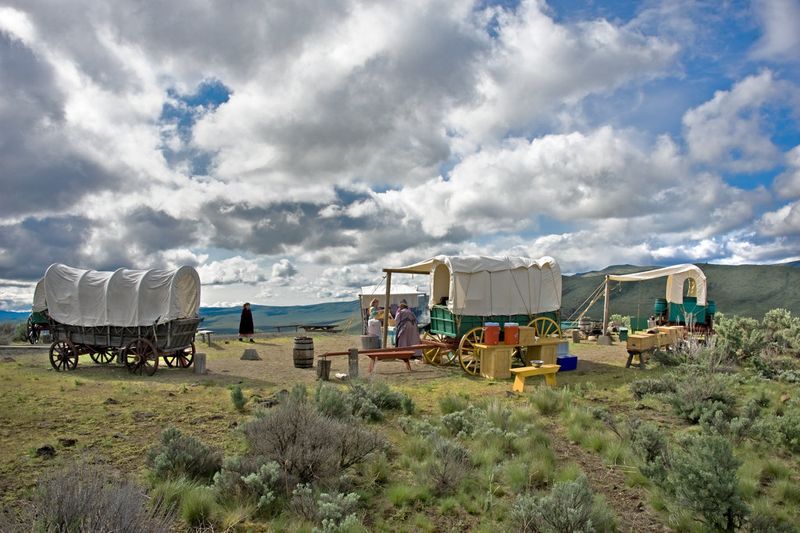
The wagon ruts are the reason many people make the detour to Flagstaff Hill in the first place, and seeing them in person is a different experience than any photograph can prepare you for. Two shallow channels run through the sagebrush, worn into the earth by thousands of iron-rimmed wheels over several decades.
They are not dramatic trenches, but that understated quality is part of what makes them powerful.
The trail from the interpretive center down to the ruts is about 1.5 miles one way, and the full loop back runs around three miles total. There is an alternate ascent trail that shortens the return to about 2.6 miles.
The terrain is open and exposed, so summer visits require sunscreen, a hat, and plenty of water. Spring and fall are the most comfortable seasons for this hike, when temperatures are mild and the desert scrub is often in bloom.
For visitors who cannot manage the full trail, there is a separate parking area closer to the ruts where you can walk a much shorter distance to stand directly in them. That option makes the experience accessible to more people, and standing inside those grooves, even briefly, creates a connection to the past that is hard to put into words.
Panorama Point: The View That Puts Everything in Perspective
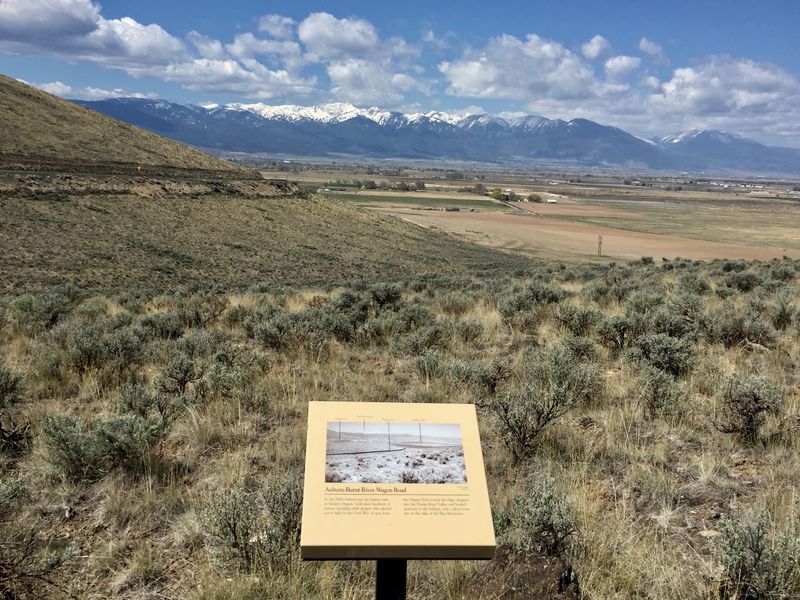
About halfway through the outdoor trail loop, you reach Panorama Point, and the view from up there earns its name without any argument. The Powder River Valley spreads out below, the Elkhorn Range frames the horizon, and on a clear day you can trace the general path of the Oregon Trail across the landscape with your own eyes.
This is the kind of view that resets your sense of scale. You stop thinking about parking and exhibit panels and start thinking about what it would have felt like to crest this hill after weeks of walking through flat, dusty terrain.
The mountains ahead would have been both a welcome landmark and a sobering reminder of how much trail still remained.
A replica mine and a blacksmith shop sit along the trail route leading up to Panorama Point, adding some texture to the walk. These structures are not elaborate reconstructions, but they give you a tangible sense of the support systems that existed along the trail route.
The combination of the view and those small historical touchpoints makes the outdoor portion of the visit feel like its own complete experience, separate from but connected to everything inside the museum.
Outdoor Wagons and Photo Opportunities
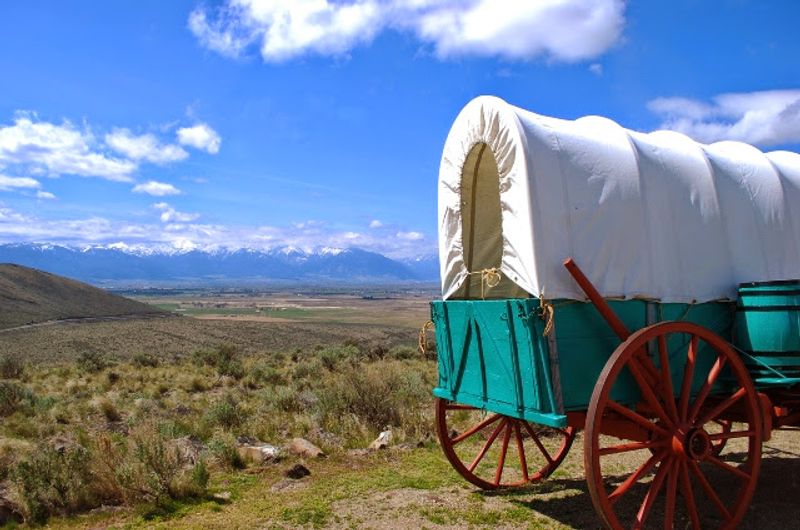
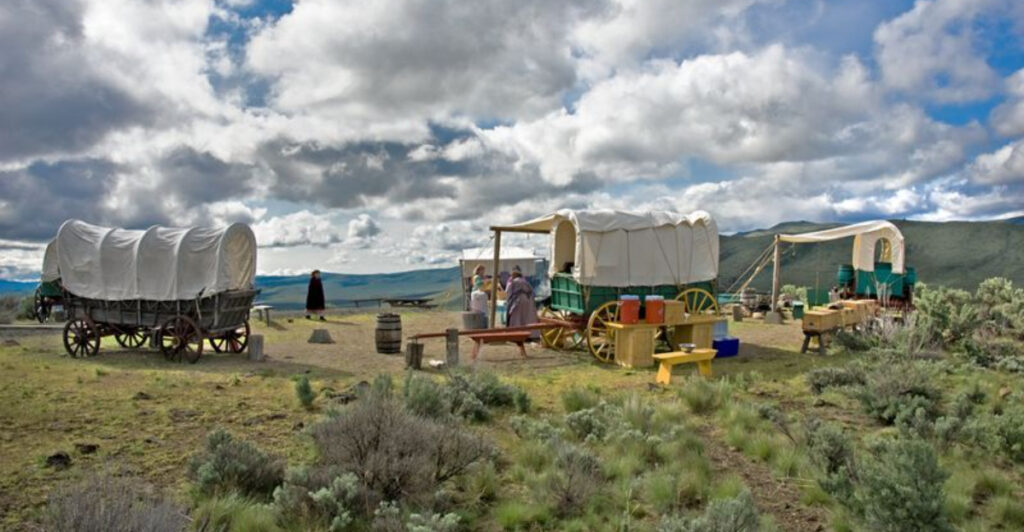
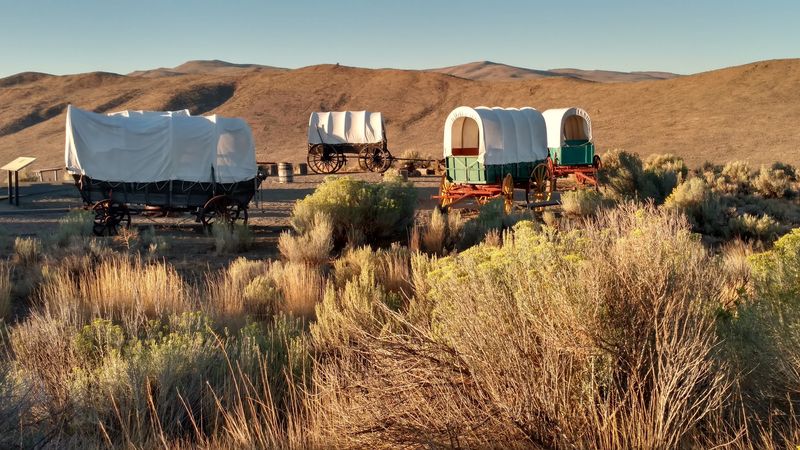
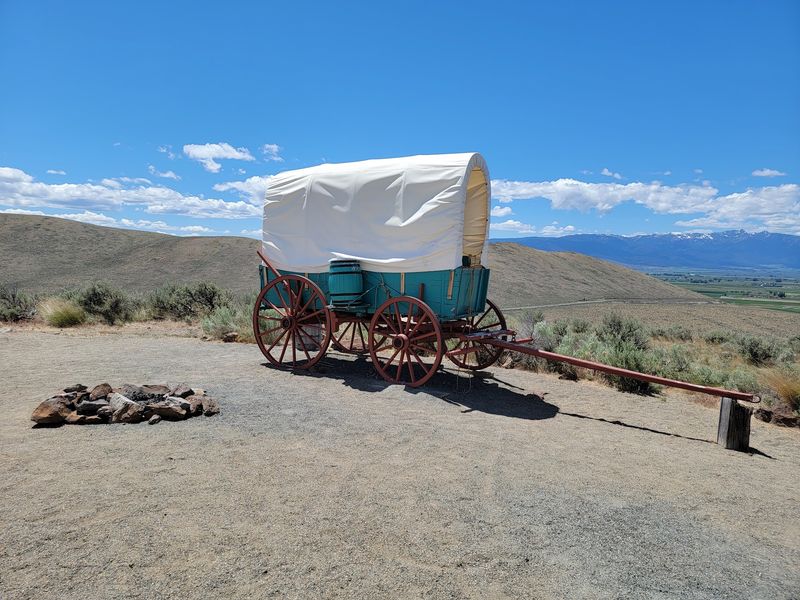
Before or after the hike, the wagons displayed outside the center are worth a slow look. Several wagon replicas are positioned on the grounds, and they are the kind of thing that makes history feel suddenly very real.
These were not large vehicles. Seeing one up close, you start to do the math on how a family of six would have fit their entire lives into that space for a six-month journey.
The wagons make for great photos, and the open sky and high desert backdrop give every shot a natural, dramatic quality without any effort. Families with kids tend to linger here longer than expected, as the wagons are climbable in some cases and offer a tactile connection to the history that the interior exhibits cannot quite replicate.
The grounds around the wagons are well maintained and easy to walk, with flat surfaces that are accessible for visitors with mobility needs. Picnic areas nearby make it easy to take a break without rushing back to the car.
The whole outdoor setup, from the wagons to the trailheads to the views, is designed to extend your time here naturally rather than push you toward the exit, and most visitors end up grateful for that pacing.
Pioneer Voices: Diary Excerpts and Personal Accounts
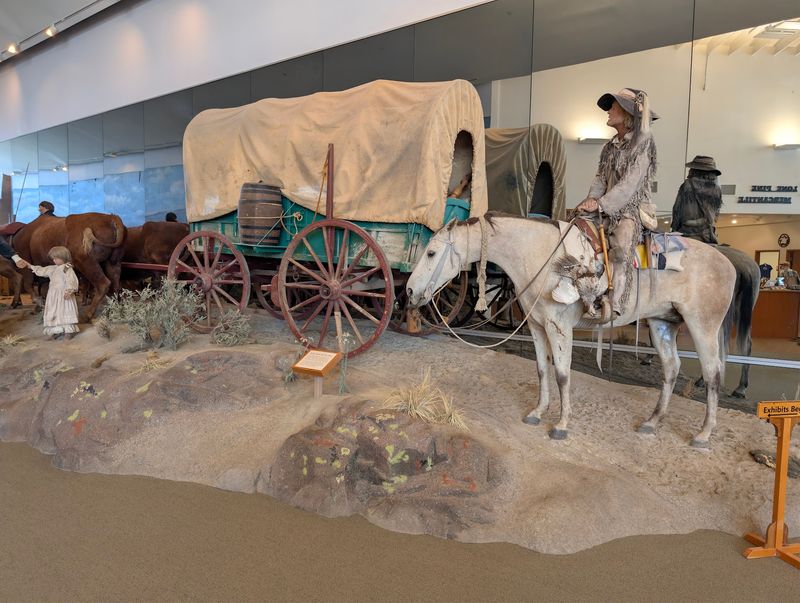
One of the most affecting parts of the museum is the way it centers real human voices. Quotes from pioneer diaries appear throughout the exhibits, and they pull you out of the abstract and into something personal.
These were not famous people. They were farmers, mothers, teenagers, and tradespeople who wrote down what they saw and felt because the journey was too big not to record.
Some of the diaries describe the landscape near Flagstaff Hill specifically, which creates an odd and moving sense of overlap when you read those words while standing in roughly the same place the writer once stood. A few original diaries are preserved behind glass, and the handwriting alone, cramped and careful, tells you something about the conditions under which they were written.
The center also includes accounts from Indigenous communities who were directly affected by the mass migration. These perspectives were added more recently and help round out the story in a way that older exhibits at similar sites sometimes miss.
History told only from one direction tends to flatten over time. The effort to include multiple viewpoints here gives the museum a credibility that makes the whole experience feel more honest and more complete.
Family-Friendly Features: Keeping Kids Engaged
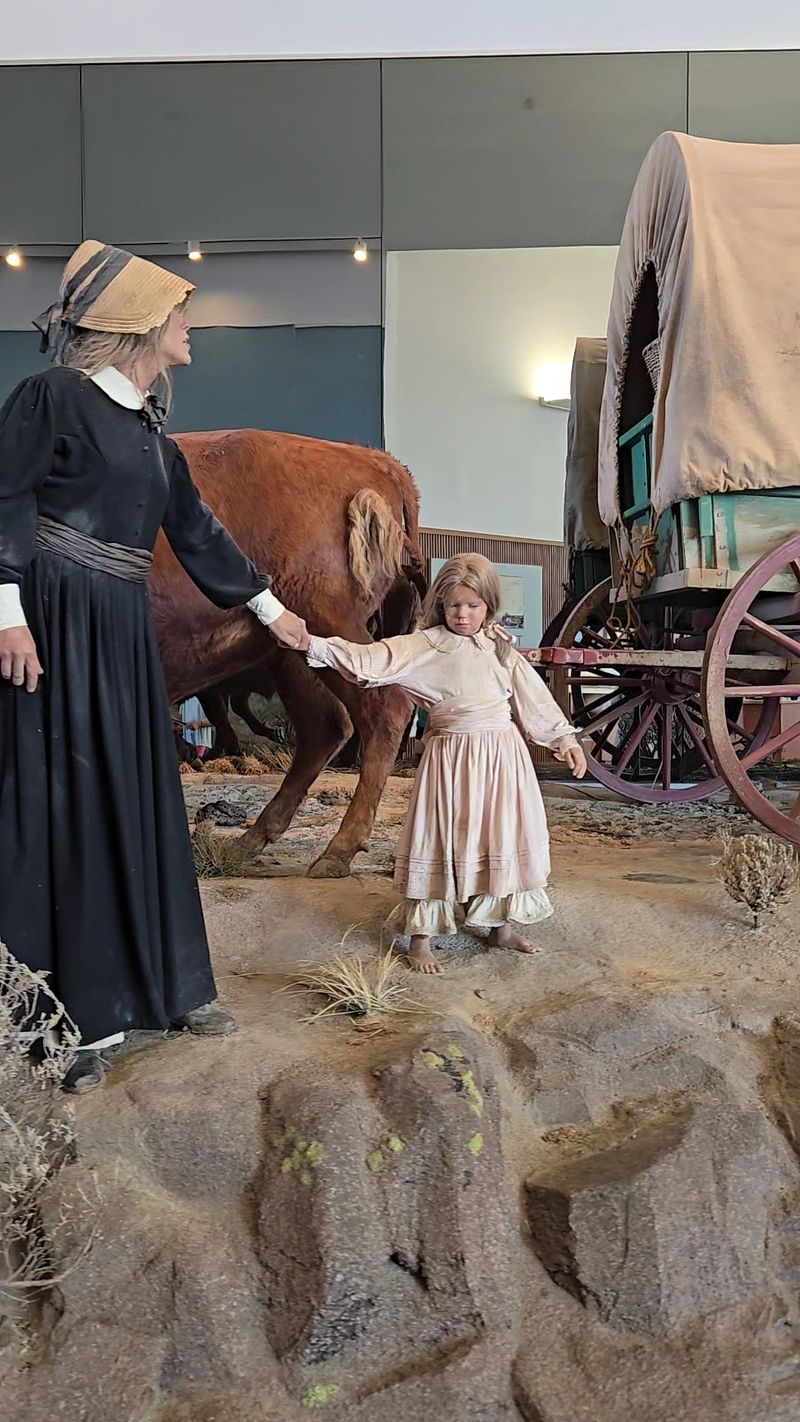
This is one of those rare history museums where kids actually want to stay longer. The interactive elements are well-placed throughout the exhibits, giving younger visitors things to touch, answer, and discover rather than just read.
Activity books are available for children, and the ranger bingo game turns a presentation into something kids actively participate in.
The outdoor wagons are a natural draw for families, and the shorter trail options mean that even visitors with young children can access the wagon ruts without committing to a full three-mile hike. The staff are notably good with kids, offering high-fives, answering questions at eye level, and making the whole experience feel inclusive rather than exclusive.
Admission is around $8 for adults, and children get in free, which makes this one of the more affordable family outings in the region. Holders of the America the Beautiful annual pass get in at no charge, which is worth knowing before you arrive.
Clean restrooms, a gift shop with Oregon Trail-themed souvenirs and magnets, and a water station round out the practical amenities. The gift shop passport stamp is a small touch that kids tend to love, and it gives the visit a satisfying, tangible ending.
Practical Tips for Planning Your Visit
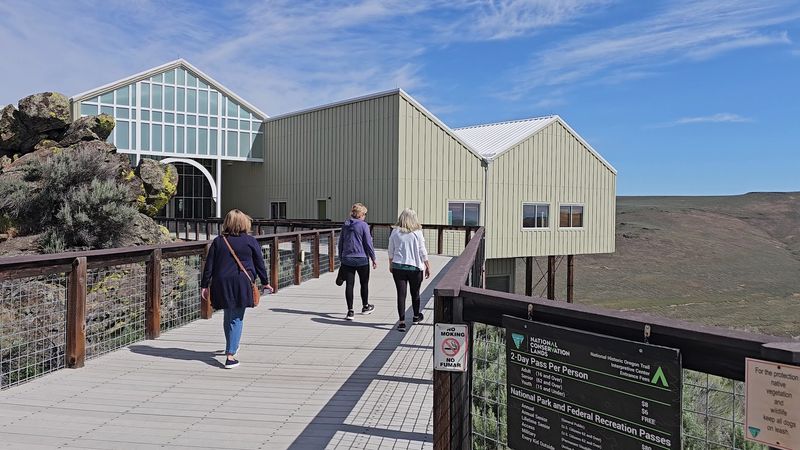
The center is open daily from 9 AM to 5 PM, which gives you a solid window to work with whether you are arriving early or fitting it in as an afternoon stop. The phone number is (541) 523-1843, and the official website through the Bureau of Land Management has current information on programs, seasonal closures, and any special events.
Parking is free and plentiful, with separate large lots for RVs and regular vehicles. The entrance fee runs about $8 per adult, but the America the Beautiful annual pass covers admission completely, so bring yours if you have one.
Kids get in free regardless, which is a straightforward policy that makes planning easier.
Summer visits require preparation for the outdoor trail. The terrain is fully exposed with almost no shade, and temperatures in eastern Oregon can climb fast between June and August.
Bringing at least a liter of water per person, wearing a hat, and applying sunscreen before you leave the building are basic steps that make the difference between a great hike and a miserable one. Spring and fall offer the most comfortable conditions, and the desert wildflowers in April and May add a visual reward to the already worthwhile trail experience.
The Surrounding Area: What Else to See Near Baker City
Baker City itself is worth more than a quick pass-through. The town sits in the Powder River Valley and has a well-preserved historic downtown with Victorian-era architecture that reflects its 19th-century mining and ranching roots.
Several good restaurants and local shops line the main streets, making it a comfortable place to grab a meal after your time at the interpretive center.
The region around Baker City is rich with outdoor options. The Wallowa Mountains are within reach to the north, offering dramatic alpine scenery and hiking trails that contrast sharply with the high desert terrain around Flagstaff Hill.
The Elkhorn Scenic Byway loops through the mountains just west of town and is one of the more beautiful drives in eastern Oregon, especially in early fall when the aspens turn gold.
For Oregon Trail enthusiasts, there are additional sites along the trail corridor within a reasonable drive of Baker City, including marked trail segments and small roadside interpretive signs that help you piece together the broader journey. The interpretive center staff are happy to point you toward the best nearby stops, and their local knowledge tends to be more useful than anything you will find on a generic travel app.
Baker City is genuinely worth an overnight stay if your schedule allows it.
Why This Place Stays With You Long After You Leave
Some places feel important the moment you arrive, and this is one of them. The combination of the museum, the ranger presentations, the outdoor trail, and the actual wagon ruts creates an experience that layers meaning in a way that sticks.
You do not just learn about the Oregon Trail here. You feel the weight of it.
Standing in those ruts, looking out at the same mountain range the pioneers saw, knowing that the grooves under your feet were made by people who had no guarantee they would survive the journey, that is not something you shake off easily. The center earns that emotional response by doing the work of genuine historical storytelling rather than simply displaying objects behind glass.
The National Historic Oregon Trail Interpretive Center is the kind of place that changes how you think about a road trip. Every mile of interstate that brought you here was effortless compared to what those wagon travelers covered in a full day.
That shift in perspective, quiet, unforced, and entirely earned, is the real takeaway from a visit to Flagstaff Hill. The ruts in the ground are just two shallow lines, but they carry a story that deserves to be told, and this center tells it well.
Share this story