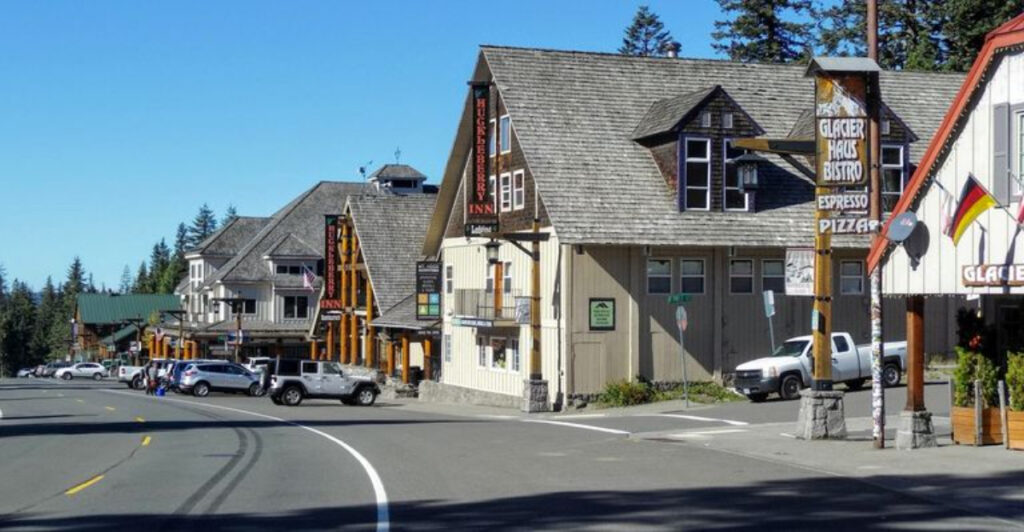
There is a small mountain community in Oregon where summer feels more like a long, cool spring, and locals wear jackets well into July. Perched at an elevation of roughly 3,980 feet on the southern slope of Mount Hood, this town gets snow when Portland is enjoying sunshine, and its highest summer temperatures barely crack the mid-70s.
The air is crisp, the forests are thick with Douglas fir, and the landscape shifts dramatically depending on the season. I visited this place and came back with stories worth sharing, so read on to find out what makes this high-altitude hideaway one of Oregon’s most fascinating communities.
A Town Built on Snow and History
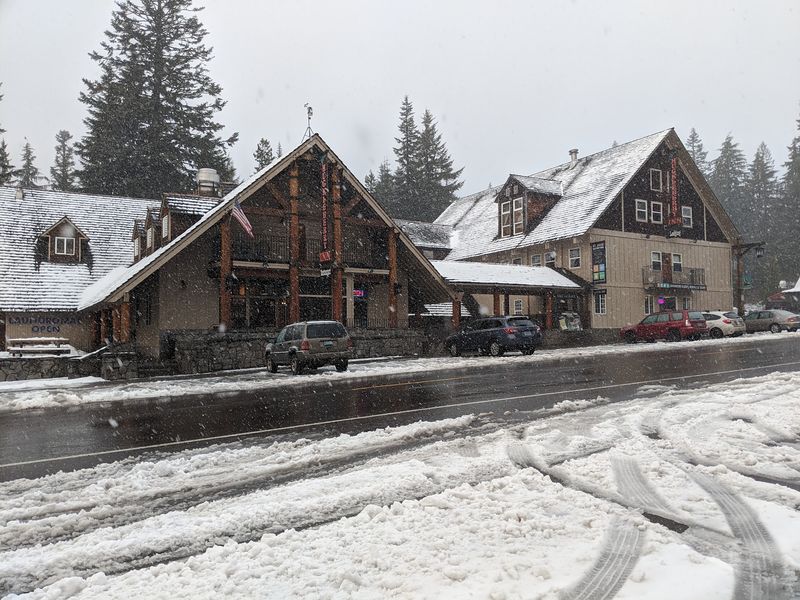
Government Camp, Oregon, sits at an elevation of about 3,980 feet along U.S. Route 26 in Clackamas County, with the mailing address of Oregon 97028.
The name alone carries a story worth unpacking. Back in 1849, a U.S.
Army supply wagon train got stranded here during a brutal winter crossing of the Cascades. The soldiers had to abandon their wagons and gear and push on without them, and locals simply started calling the spot “Government Camp” after that.
That origin story stuck, and the name has been official ever since. Today, the town is an unincorporated community and census-designated place, meaning it functions like a town but operates without a formal city government.
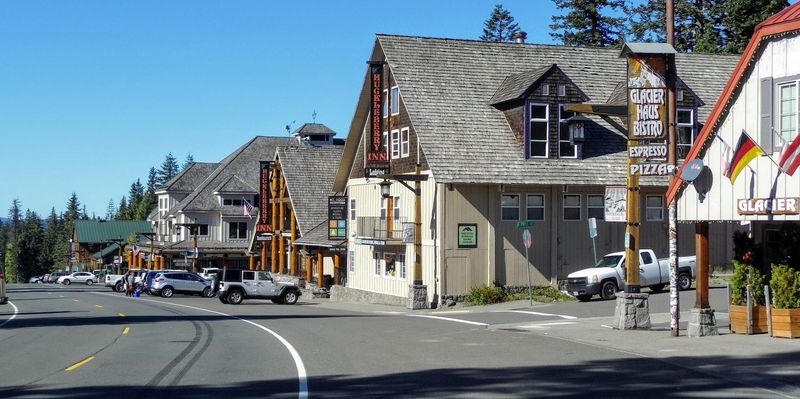
It sits right at the base of Mount Hood and is widely considered the only true mountain town within five miles of the peak. The community is small, walkable, and packed with personality.
From its old-fashioned storefronts to its weather-worn lodges, the whole place feels like it has been shaped by a century of snowstorms and adventurous travelers passing through on their way up the mountain.
Why July Barely Touches 75 Degrees Here
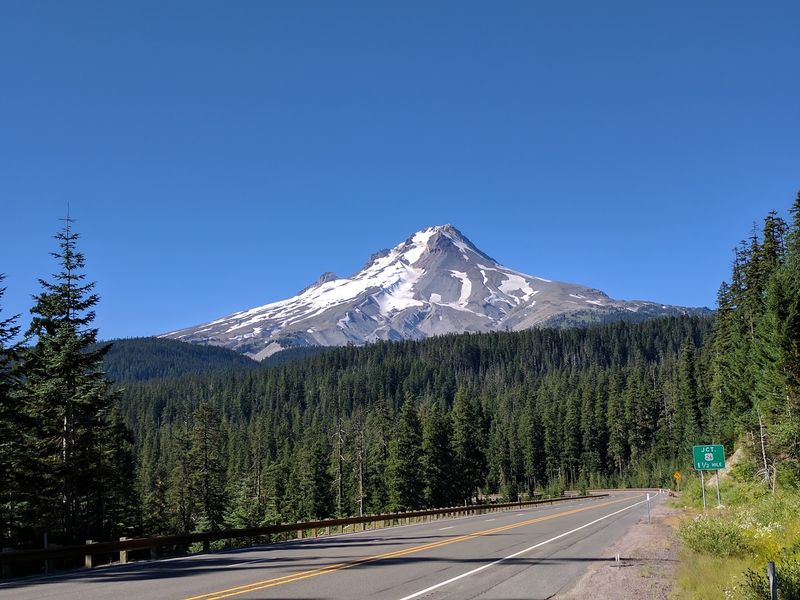
Most people expect summer to feel like summer, but Government Camp operates on its own weather schedule. The town sits nearly 4,000 feet above sea level, and that elevation changes everything about how the air feels.
Average high temperatures in July hover around 72 to 74 degrees Fahrenheit, which is pleasant but hardly what you would call hot.
Nights can drop into the low 40s even in midsummer, so packing a fleece jacket is not optional here. The town receives around 300 inches of snowfall annually, making it one of the snowiest communities in the entire Pacific Northwest.
That snow is part of what makes the place so appealing to outdoor enthusiasts, but it also explains the cool summers. Mount Hood’s snowpack lingers well into June and sometimes July, keeping the surrounding air noticeably cooler than the valleys below.
Visitors from Portland, which sits just 60 miles to the west and regularly hits 90 degrees in summer, are always a little surprised by the temperature difference. The cool climate is not a flaw but a feature, drawing hikers, cyclists, and anyone wanting a break from valley heat without driving far from the city.
Mount Hood as a Constant Backdrop
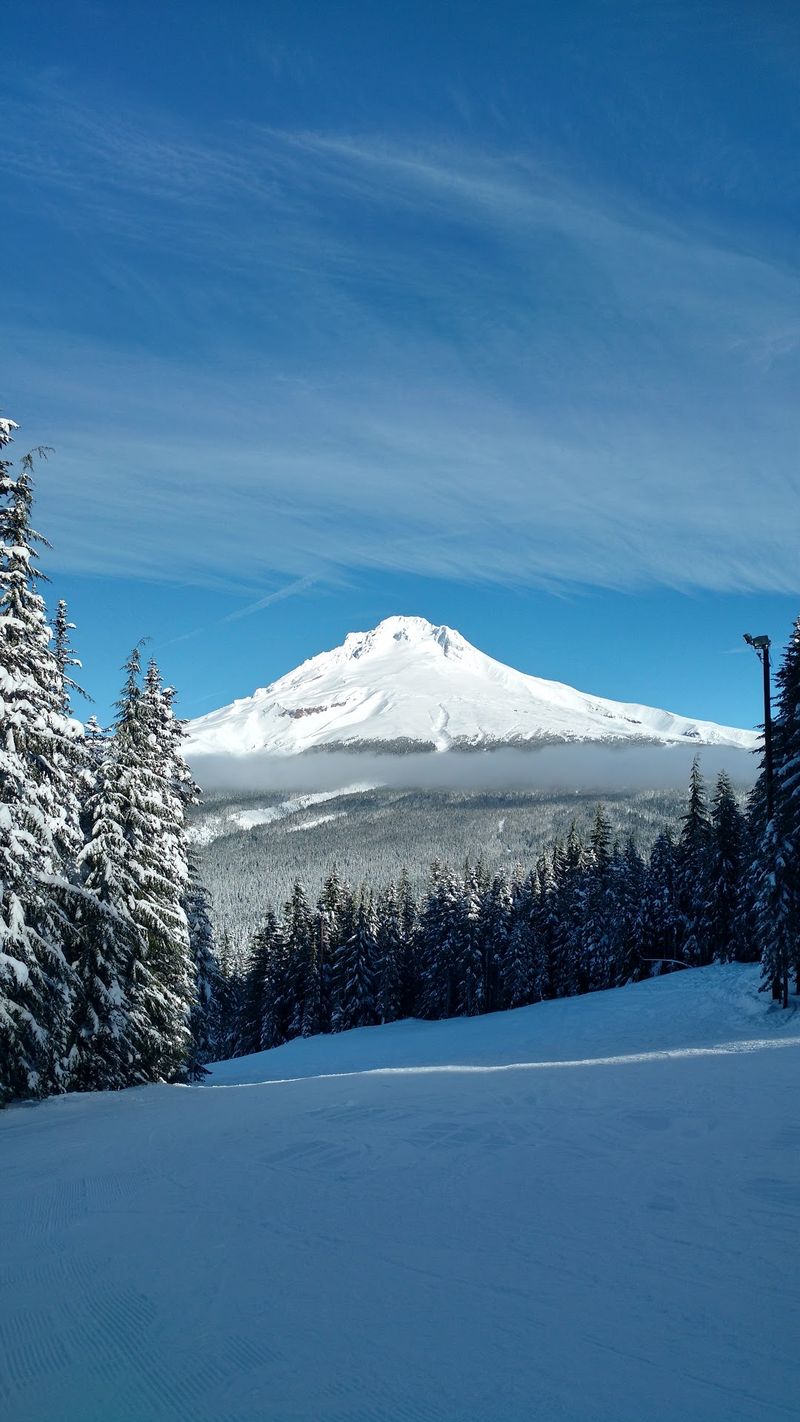
You can never forget where you are in Government Camp because Mount Hood is always watching. The stratovolcano rises to 11,249 feet and dominates the skyline from nearly every angle in town.
On clear days, the summit looks close enough to reach out and touch, though the hike to the top is a serious mountaineering objective that requires crampons and ice axes.
Mount Hood is the highest peak in Oregon and the fourth-highest in the Cascade Range. It is also considered a potentially active volcano, with the most recent major eruptions occurring around 1781 and 1782.
That geological backstory gives the mountain an edge that makes simply looking at it feel a little more thrilling.
From the main road through Government Camp, the peak frames every photo naturally. I found myself stopping mid-errand just to stare at it for a moment, which I suspect is something locals never fully stop doing either.
The mountain shapes the culture, economy, and daily rhythm of the entire community. Without Mount Hood looming overhead, Government Camp would just be a small crossroads in the woods.
With it, the town feels like it belongs somewhere genuinely special.
Timberline Lodge: An Icon Just Up the Road
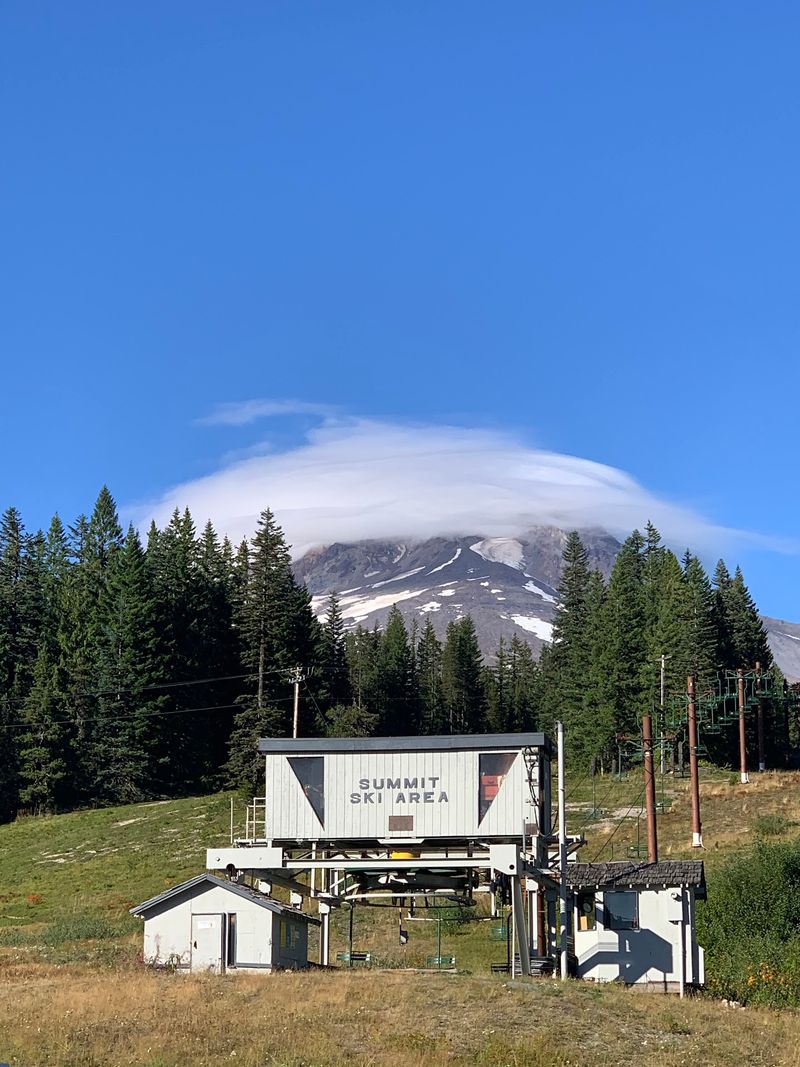
About six miles up the mountain from Government Camp sits one of the most famous buildings in the Pacific Northwest. Timberline Lodge was built between 1936 and 1938 as a Works Progress Administration project during the Great Depression, and it remains a stunning example of what craftspeople can accomplish when given time and purpose.
The stone and heavy timber structure feels like it grew directly out of the mountain.
The lodge operates year-round and offers skiing even in summer, thanks to the Palmer Snowfield on Hood’s upper slopes. That makes it one of the few places in North America where you can ski in July.
I made the short drive up from Government Camp just to walk through the lobby, and the hand-carved woodwork, wrought iron fixtures, and massive central fireplace made the whole trip worthwhile on their own.
Film buffs might recognize the exterior from Stanley Kubrick’s 1980 film “The Shining,” where it was used as the exterior of the fictional Overlook Hotel. The lodge welcomes visitors who are not staying overnight, and the views from the upper terrace looking back down toward Government Camp and beyond are genuinely hard to leave behind.
Skiing and Snowboarding Through the Seasons
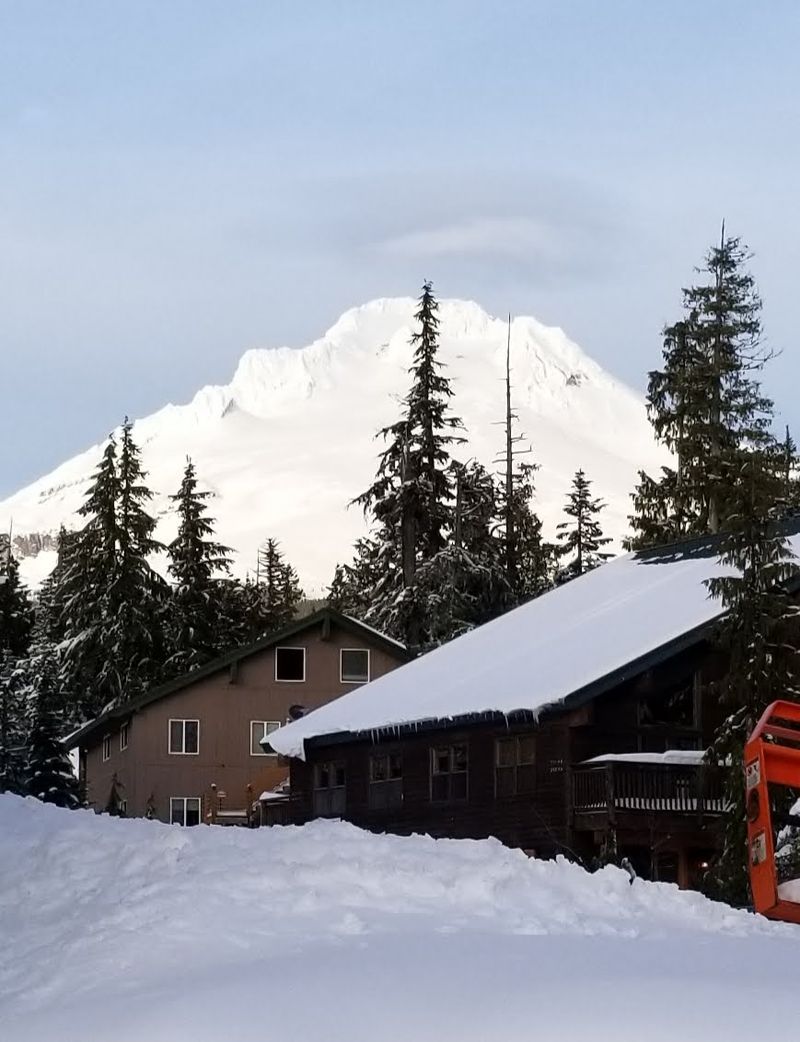
Snow sports are the heartbeat of Government Camp, and the town sits within easy reach of multiple ski resorts. Mount Hood Meadows is the largest, with over 2,000 acres of terrain and more than 85 named runs.
Mount Hood Skibowl sits right at the edge of town and is actually the largest night-skiing area in the United States, with 34 runs lit up after dark.
Ski Bowl also runs a summer adventure park with zip lines, mountain biking, an alpine slide, and an off-road go-kart track, so the fun does not stop when the snow melts. Cooper Spur Mountain Resort on the north side of the mountain offers a quieter, more old-school ski experience for families who want shorter lift lines and a slower pace.
I spent a morning at Skibowl on a mid-December visit and was struck by how lively the base area felt even on a weekday. The proximity of all these resorts to the main road makes Government Camp a logical base camp for anyone planning a multi-resort ski trip without wanting to drive long distances between runs each day.
The convenience factor alone is hard to beat.
Hiking Trails That Start Right in Town
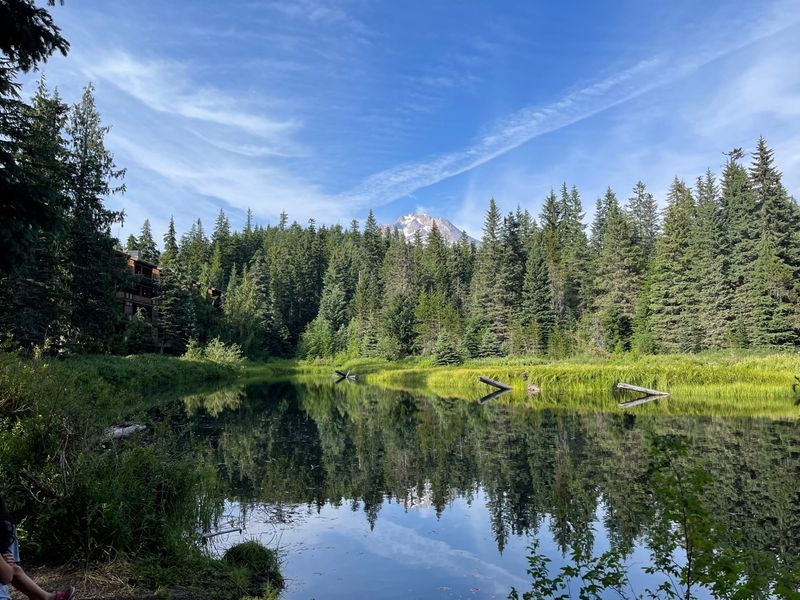
Not everything here requires a lift ticket or a reservation. Government Camp is ringed by hiking trails that range from easy forest walks to serious elevation gains, and several of them start within a short drive or even a short walk from the town center.
The Mirror Lake Trail is one of the most beloved, climbing about 1,400 feet over roughly 3.5 miles to reach a subalpine lake that reflects Mount Hood’s peak on calm mornings.
Tom Dick and Harry Mountain sits directly south of Government Camp and offers panoramic views of Hood and the surrounding Cascade peaks from its ridgeline. The Timberline Trail circles the entire mountain over 40 miles and passes through some of the most dramatic high-altitude terrain in Oregon.
Shorter segments of it are accessible for day hikers who do not want to commit to the full loop.
I tackled the Mirror Lake Trail on a Tuesday in August and barely saw another person for the first two miles. The wildflowers along the upper section were at their peak, and the lake itself was so still it looked painted.
That kind of accessible wilderness, reachable without a long drive from town, is something Government Camp genuinely has going for it.
The Unique Culture of a High-Altitude Community
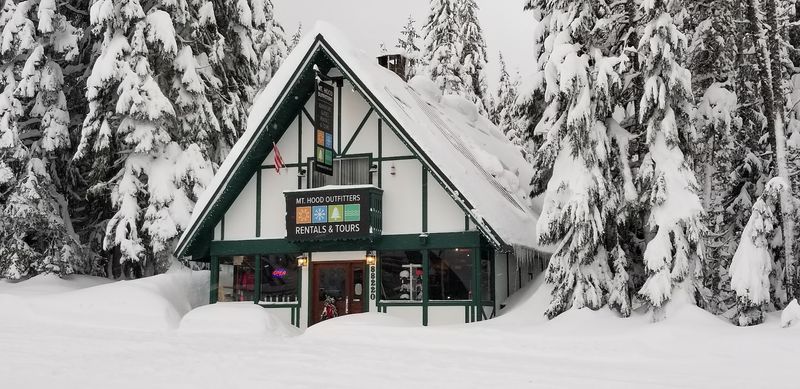
There is a particular personality that develops in communities where the weather runs the show. Government Camp has it in abundance.
The full-time population is small, estimated at just a few hundred permanent residents, but the town swells dramatically on winter weekends when skiers and snowboarders pour in from Portland and beyond.
That seasonal rhythm shapes how local businesses operate, how neighbors interact, and what gets celebrated. The community leans into its mountain identity with genuine enthusiasm rather than manufactured charm.
Local shops carry practical gear alongside novelty souvenirs, and the restaurants tend toward hearty, warming food that makes sense after a day in the cold.
There is also a strong sense of community self-reliance here. Residents deal with serious snowfall, occasional road closures, and the logistical realities of living at elevation, and that shared experience builds a certain toughness and camaraderie.
Longtime locals are generally welcoming to visitors who treat the mountain and the town with respect. The culture feels earned rather than curated, and that authenticity is part of what makes a visit here feel different from a typical resort town experience.
Food and Coffee at Altitude
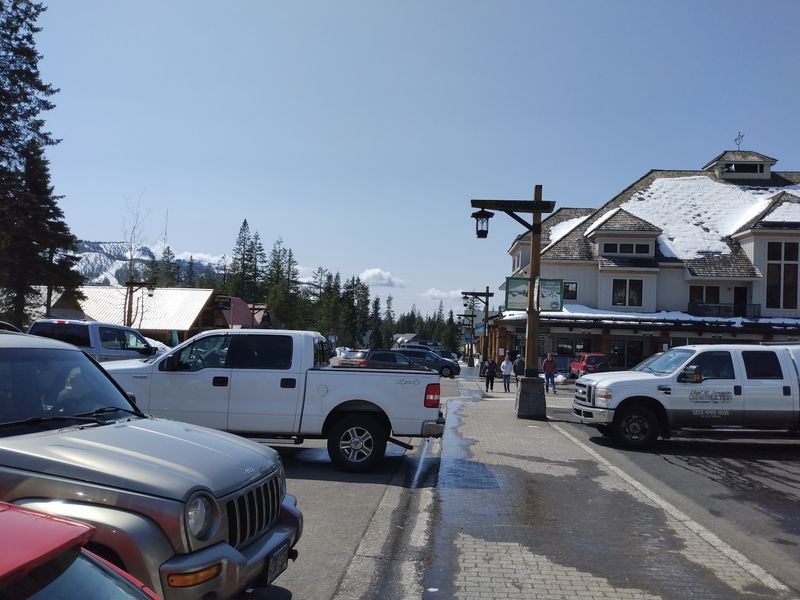
Eating well at nearly 4,000 feet is surprisingly easy in Government Camp. The town punches above its weight when it comes to food options, especially considering its small permanent population.
Several restaurants, cafes, and casual spots line the main road, and most of them serve the kind of food that feels exactly right after hours spent outside in cool mountain air.
The Ratskeller, a longtime local institution, has been feeding skiers and hikers for decades with burgers, sandwiches, and warming comfort food. Ice Axe Grill at the Mt.
Hood Brewing Company is another popular stop, known for its wood-fired pizzas and house-made root beer. The food there is straightforward and satisfying, and the mountain views from the windows make every meal feel a little more earned.
Coffee culture is strong here too, with several spots offering espresso drinks that taste particularly good when the temperature outside is hovering in the 40s. I grabbed a breakfast burrito and a large coffee one morning before a hike and found both to be genuinely well-made.
For a town this size, the consistency of quality across different spots was something I did not expect but was happy to find.
Where to Stay When the Mountain Calls
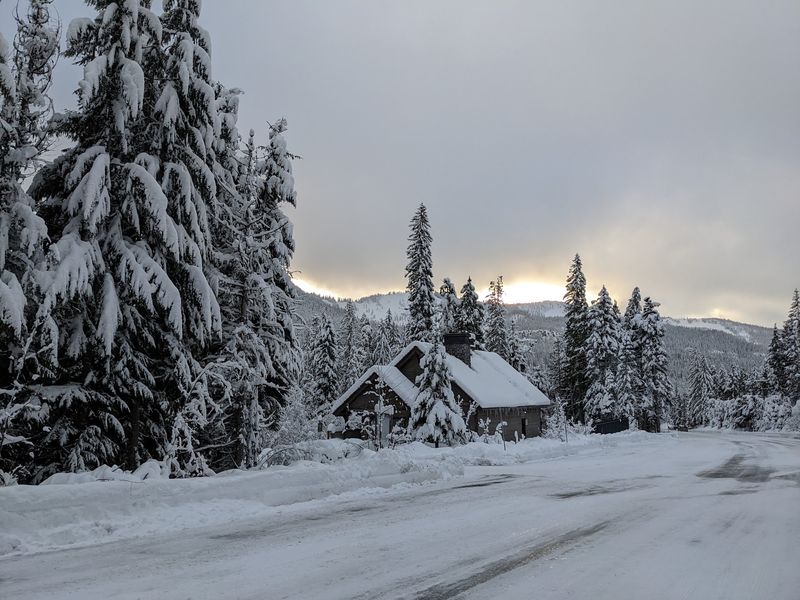
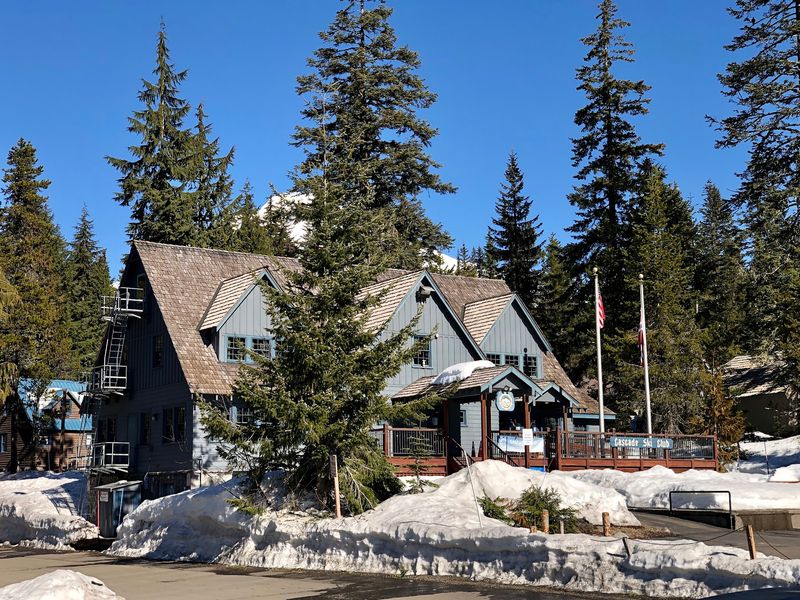
Accommodation options in Government Camp range from no-frills ski lodges to charming vacation rentals tucked into the trees. The town has a handful of traditional lodging properties that cater to weekend visitors, and the surrounding forest is dotted with private cabins and vacation homes available through rental platforms.
Booking early for winter weekends is not just a suggestion here, it is a necessity.
Huckleberry Inn is one of the most recognizable lodging spots in town, operating continuously since 1958 and offering a classic mountain lodge experience with a diner attached that serves breakfast around the clock. For travelers who want something more private, the forested areas surrounding Government Camp have dozens of rental cabins that sleep anywhere from two to twelve people.
Timberline Lodge is technically the most famous accommodation option in the area, but it books up quickly and sits above town rather than in it. Staying in Government Camp itself puts you closer to the shops, trailheads, and the general buzz of the community.
I stayed in a small rental cabin one winter trip and woke up to about eight inches of fresh snow on the deck, which felt like a gift I had not expected but absolutely wanted.
The Sandy River and Ramona Falls Nearby
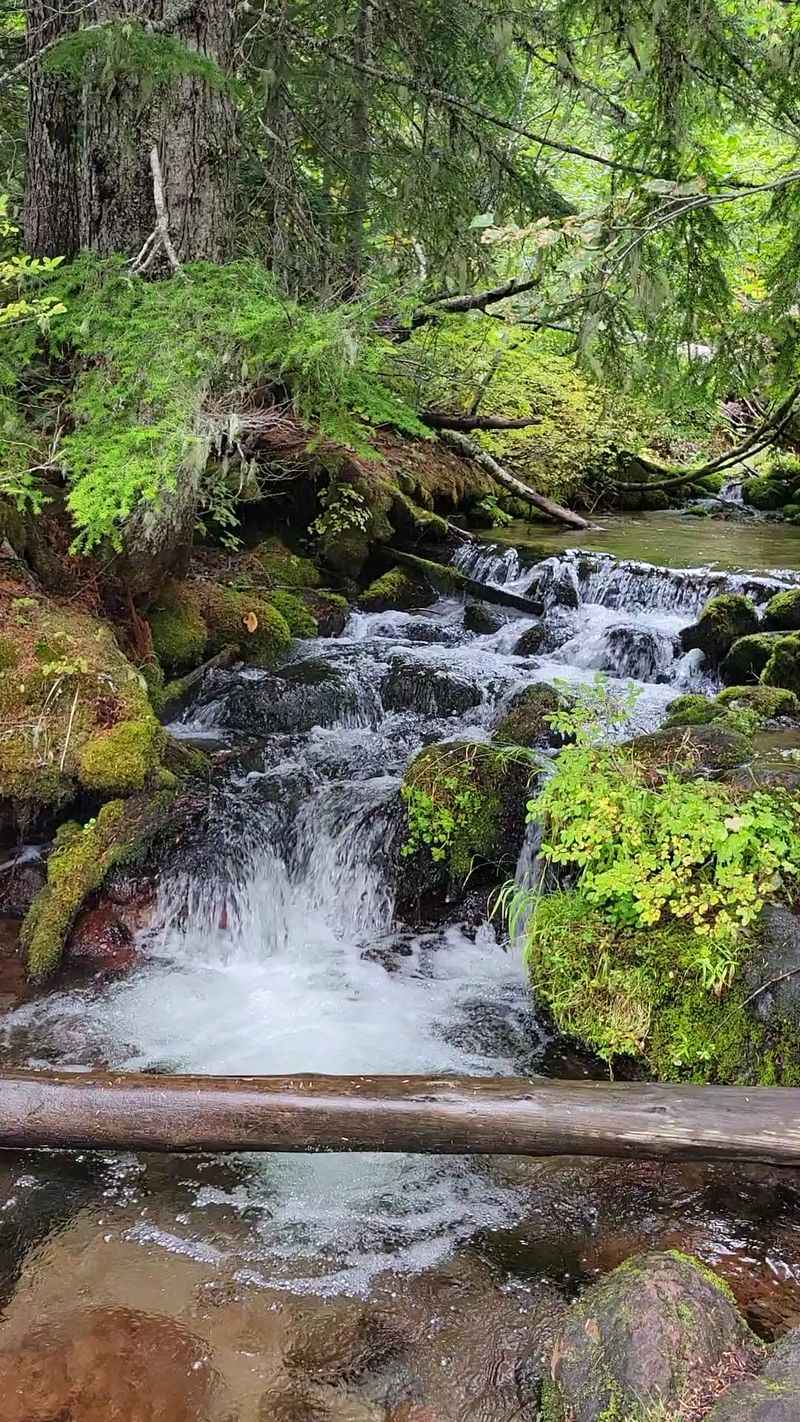
A short drive from Government Camp opens up access to some of the most scenic natural features in the Mount Hood National Forest. The Sandy River originates on Mount Hood’s glaciers and flows westward through dramatic gorges and forested canyons.
It is a popular destination for fly fishing, swimming in summer, and simply sitting beside moving water in a quiet forest setting.
Ramona Falls is one of the most photographed waterfalls in Oregon, and the hike to reach it is only about 4.2 miles round trip. The falls cascade over a wide wall of mossy basalt columns in a series of overlapping streams that spread out like a curtain of water.
The effect is genuinely impressive in person, and the trail through old-growth forest leading to it is beautiful in its own right.
I visited Ramona Falls on a weekday in late June and found the flow at its most powerful, fed by snowmelt from the upper mountain. The mist coming off the falls kept the air around the base noticeably cooler than the trail behind me.
It is the kind of waterfall that makes you stop talking and just look, which is a rarer experience than it should be.
Best Times to Visit and What to Expect
Timing a visit to Government Camp depends entirely on what you are hoping to do. Winter, roughly November through March, brings the deepest snow and the most activity around the ski resorts.
Roads are generally kept clear by ODOT, but carrying chains is legally required on U.S. Route 26 during certain conditions, and drivers should check road reports before heading up.
Summer, from late June through September, offers the most comfortable hiking and outdoor exploring. Temperatures stay mild, wildflowers bloom along the high trails, and the mountain feels accessible in a different way than it does under snow.
Fall is arguably the most underrated season, with golden larches and vine maples adding color to the landscape and significantly fewer crowds than winter weekends.
Spring can be unpredictable, with late-season snowstorms possible well into April and sometimes May. Whatever season you choose, packing layers is always the right call.
The weather at this elevation can shift within hours, and what starts as a warm morning hike can turn into a cold, cloudy afternoon faster than the forecast suggests. Flexibility and preparation go a long way here.
Why This Mountain Town Stays With You
Some places are easy to categorize. Government Camp resists that.
It is not a resort town in the polished, manicured sense. It is not a ghost town either, despite its small size.
It occupies a specific and unusual niche as a working mountain community that happens to sit at the edge of one of the most dramatic landscapes in the Pacific Northwest.
The combination of genuine outdoor access, cool summer temperatures, historic character, and a tight-knit local culture gives the town a texture that is hard to replicate. You can ski in the morning, hike to a lake in the afternoon, and eat a wood-fired pizza before dark, all without getting in a car more than once or twice.
Every time I drive back down toward Portland after a visit, the temperature climbs noticeably as the elevation drops, and I am reminded of just how different those 4,000 feet make everything. Government Camp is one of those places that rewards repeat visits because there is always a new trail, a new season, or a new layer of the community to discover.
The mountain keeps drawing people back, and once you have been, it is easy to understand why.
Share this story