Just off County Line Road in Villanova, Pennsylvania, a former private estate sits quietly behind a tree line that most commuters never notice. Stoneleigh: a natural garden is one of the Philadelphia area’s most peaceful outdoor destinations, and it costs nothing to visit.
What began as a grand Main Line estate has been carefully preserved as a public natural garden managed by the nonprofit Natural Lands. If you have ever wanted to wander through acres of old trees, native plantings, and historic architecture without a crowd in sight, Stoneleigh is worth the drive.
A Garden Hiding in Philadelphia’s Suburbs
There is a particular feeling that comes from stepping off a busy suburban road and finding yourself suddenly surrounded by old trees and birdsong. That is exactly what greets visitors at Stoneleigh: a natural garden, tucked along County Line Road in Villanova, Pennsylvania, just outside Philadelphia.
The garden sits on a historic estate that most people drive past without a second glance. Once through the entrance, the noise of the surrounding Main Line suburbs seems to soften, replaced by the rustle of leaves and the sound of footsteps on a paved path.
Stoneleigh is managed by Natural Lands, a nonprofit conservation organization that has been protecting open space in the region since 1953. Admission is free, the grounds are well maintained, and the property rewards visitors who slow down rather than rush.
It is the kind of place that quietly earns a spot on your list of favorite Pennsylvania gardens.
From Private Estate to Public Garden
Stoneleigh’s story begins as a private family estate on the Main Line, one of the prosperous residential corridors west of Philadelphia. The property was developed and shaped over generations, with the grounds eventually designed with input from the Olmsted Brothers, the celebrated landscape architecture firm responsible for parks and estates across the United States.
The estate passed through family ownership for decades before Natural Lands acquired it and opened it to the public as a natural garden. That transition from private retreat to community green space is central to what makes Stoneleigh feel special.
Visitors today can walk grounds that were once accessible only to a single family and their guests. The mansion itself now serves as an archival center for the Organ Historical Society rather than a historic house museum, so tours of the interior have limited appeal for most visitors.
The real draw has always been outside, where the landscape tells a longer and more interesting story.
What Makes Stoneleigh Different
The phrase “natural garden” is doing real work in Stoneleigh’s name. This is not a botanical garden filled with tightly clipped hedges and color-coordinated flower beds arranged for maximum visual impact.
The approach here is quieter and more ecologically minded.
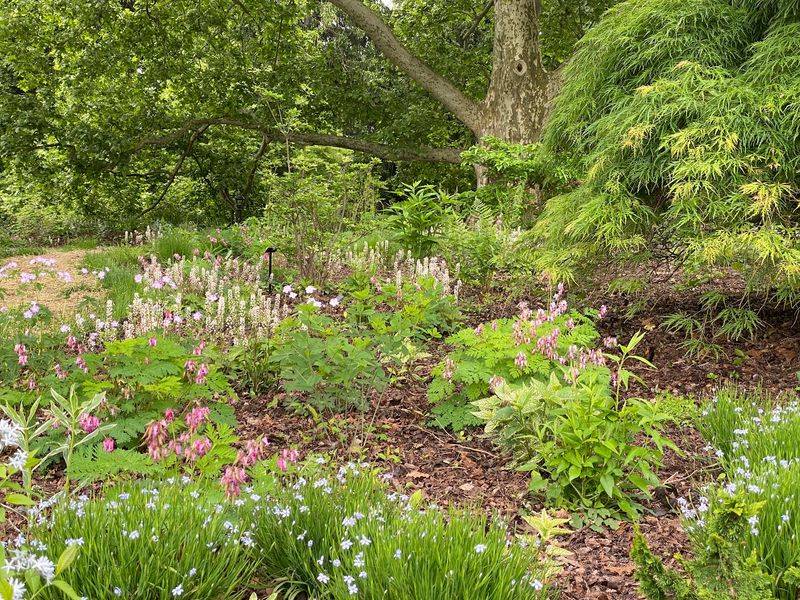
Natural Lands has been steadily shifting Stoneleigh’s plantings toward native species, meaning flowers, grasses, shrubs, and trees that naturally belong to this region. Native plants support local insects and birds in ways that ornamental imports often cannot, and they tend to look more at ease in the landscape.
For a visitor with no background in horticulture, this simply means the garden feels organic rather than artificial. Paths wind through areas that look as though nature had a hand in arranging them, even when careful planning was involved.
Stoneleigh sits in an interesting space between a managed estate and a functioning habitat, and that balance is what gives it a character that formal gardens rarely achieve.
The Historic Mansion and Estate Architecture
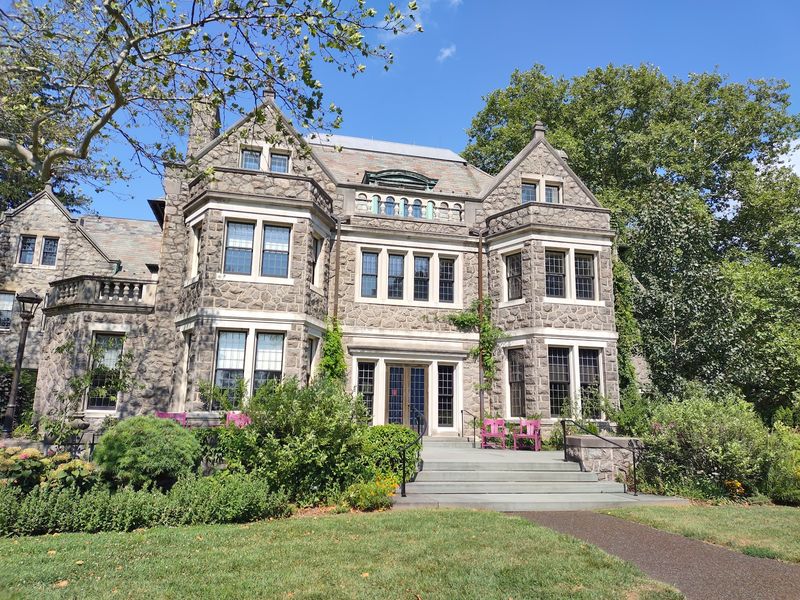
The main mansion at Stoneleigh is a substantial stone building that anchors the estate visually and historically. Walking toward it across the Great Lawn, it has the kind of quiet authority that comes from age and careful maintenance rather than flashy renovation.
The mansion now houses the Organ Historical Society’s archives, which means the interior is not quite what visitors expecting a period-furnished historic home will find. One reviewer noted some disappointment on that front, and it is fair to set expectations accordingly before booking a house tour.
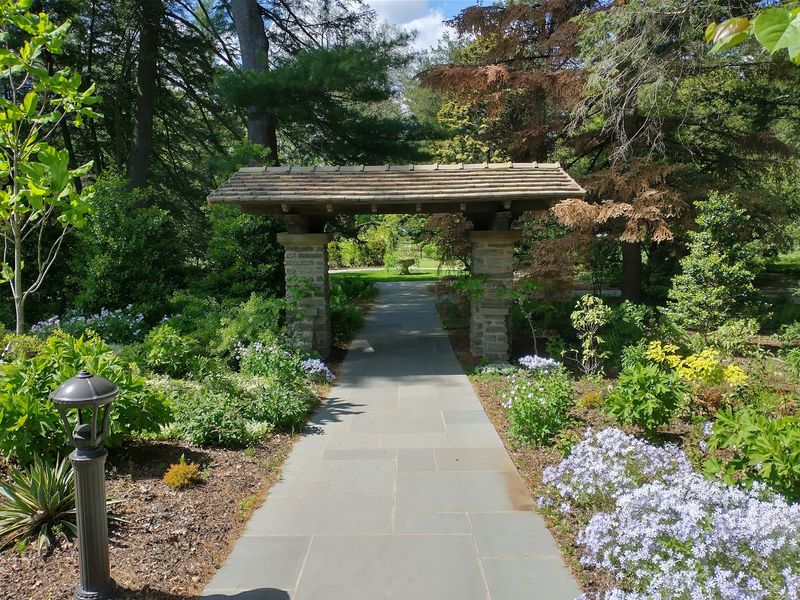
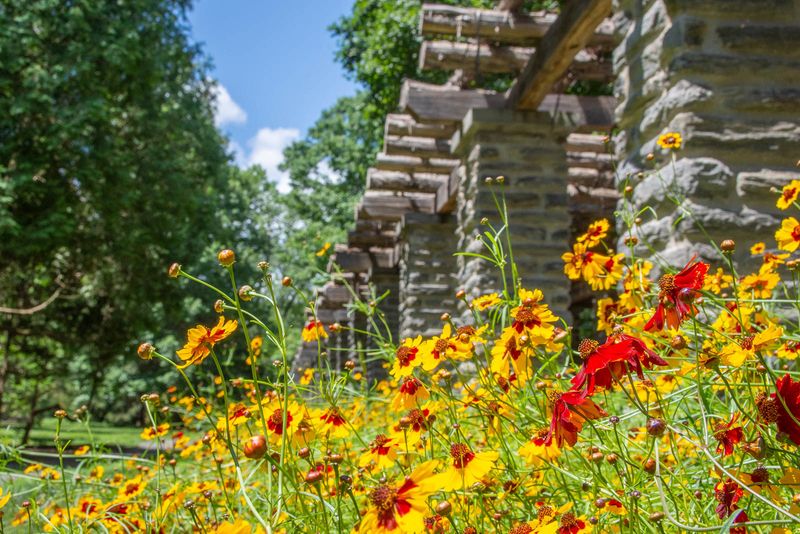
That said, the building itself contributes enormously to the atmosphere of the grounds. The stone architecture, the pergola area near flower gardens, and what was once a pool house now serving as restrooms all add texture to a walk around the property.
Stoneleigh’s built environment and its planted landscape work together, and the mansion is best appreciated as one element of a larger composition rather than a destination on its own.
Walking Beneath Stoneleigh’s Remarkable Trees
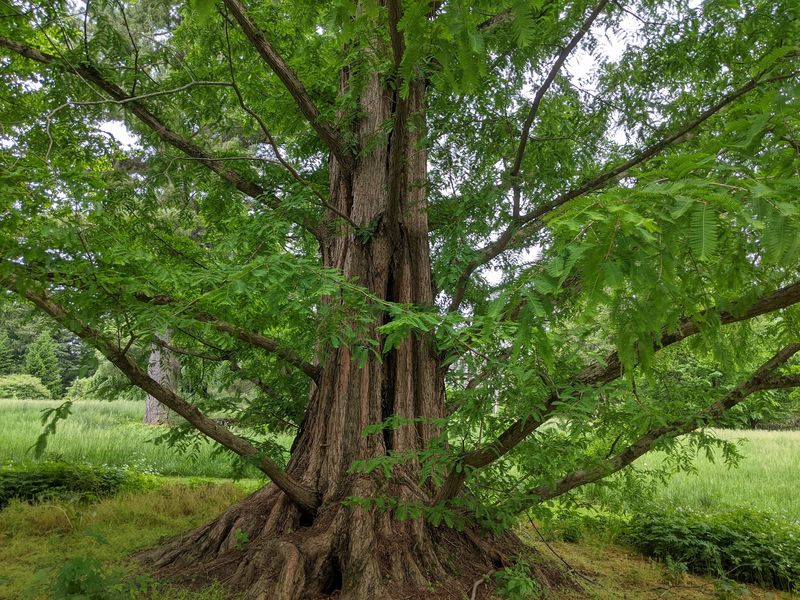
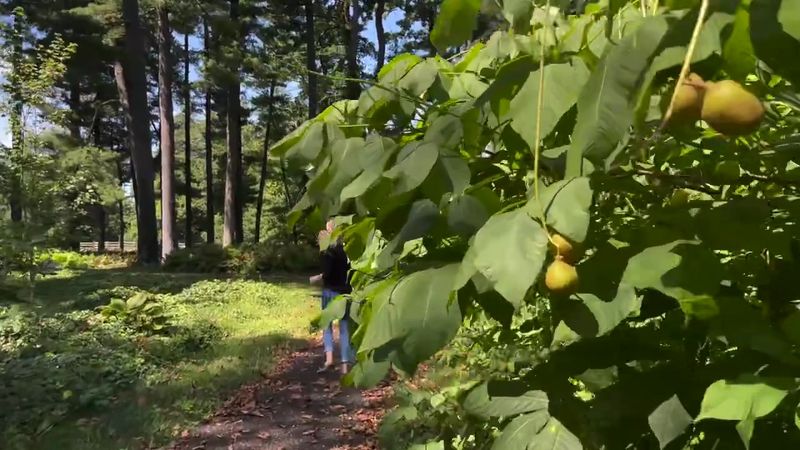
Old trees are among the most underappreciated features any garden can offer, and Stoneleigh has them in abundance. Visitors consistently mention the trees as one of the first things they notice, and with good reason.
Many of the specimens on the property have had a century or more to establish themselves, and their scale gives the garden a depth that younger plantings simply cannot replicate.
Walking beneath a canopy of large, established trees on a warm day has a particular quality to it. The light filters differently, the temperature drops a few degrees, and the sense of being inside something old and living becomes hard to ignore.
Individual trees and collections on the property are labeled, which helps visitors identify what they are looking at without needing to be experts. The cherry trees in bloom draw particular attention in spring.
Throughout the rest of the year, the mature tree canopy shapes every view and gives Stoneleigh much of its distinctive, unhurried atmosphere.
Native Plants Are Changing the Landscape
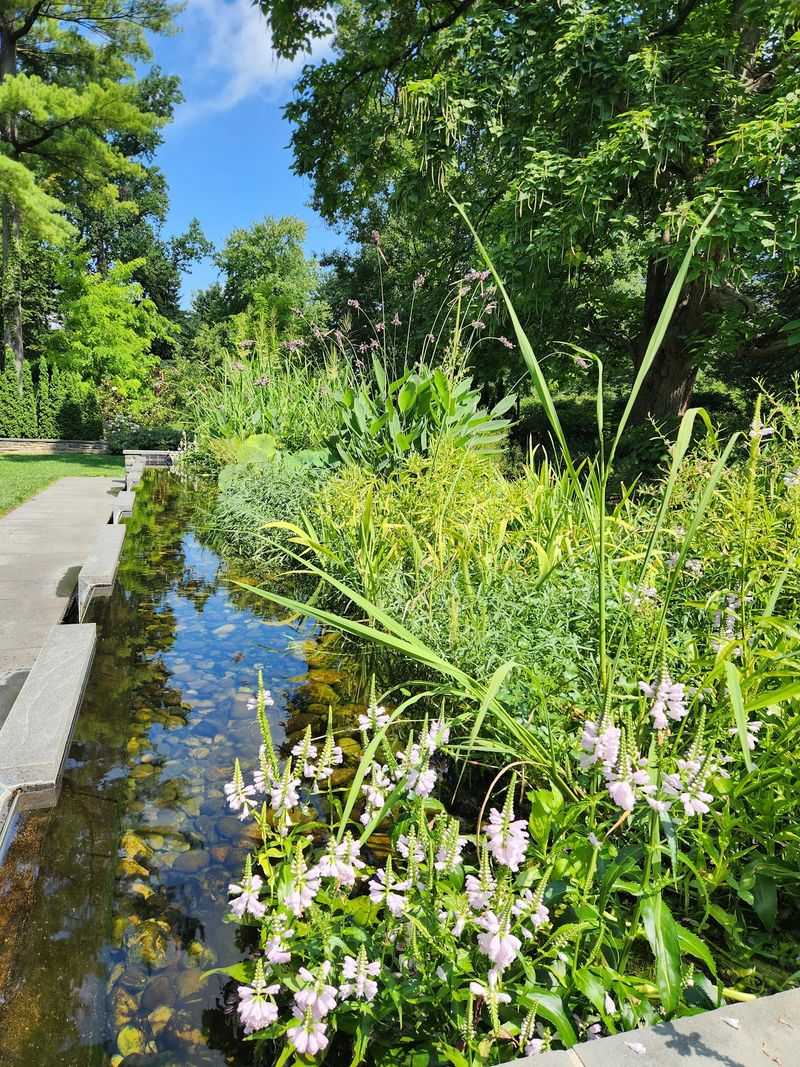
One of the most visible ongoing projects at Stoneleigh is the shift toward native plant gardening. Natural Lands has been introducing native flowers, grasses, shrubs, and trees to replace or supplement plantings that were chosen more for aesthetics than ecological function.
Native plants are adapted to local soils and seasonal patterns, which makes them more resilient once established. More importantly, they provide food and habitat for native insects, including pollinators that many garden plants from other regions simply do not support in the same way.
For visitors, this means Stoneleigh looks a little different from a traditional estate garden. There are wilder-looking patches alongside more structured areas, and the flower gardens near the pergola show how native plants can be both ecologically useful and genuinely beautiful.
The garden is a work in progress in the best sense, with Natural Lands continuing to develop plantings and landscape displays that reflect a commitment to ecological responsibility rather than purely decorative goals.
Paths, Lawns, and Quiet Corners to Explore
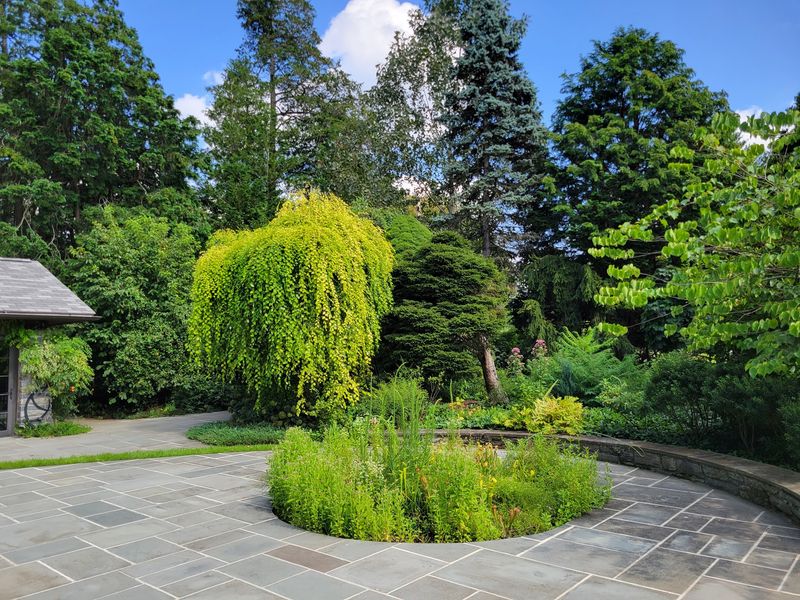
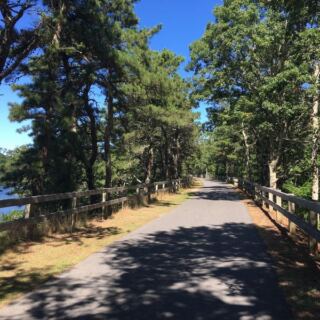
Stoneleigh’s layout rewards slow exploration more than speed. The main path that circles the property is fully paved and essentially flat, with one reviewer noting essentially zero elevation change across the route.
That makes it accessible for a wide range of visitors, including those who need a smooth surface underfoot.
Beyond the main loop, there are quieter garden areas tucked away from the central lawn. The bog gardens offer a different kind of planting, and there are seating areas and a pavilion near the parking area where visitors can stop for a picnic.
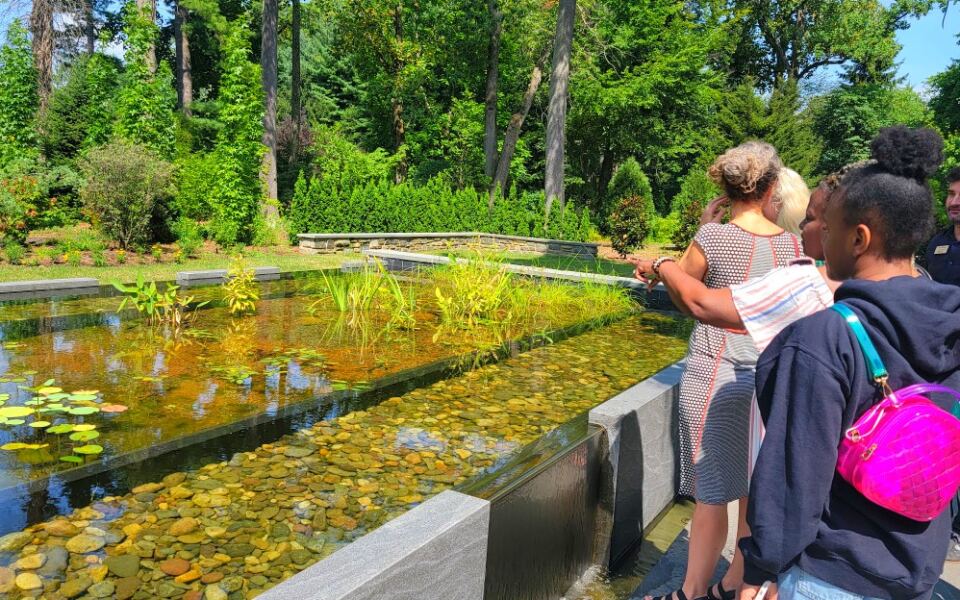
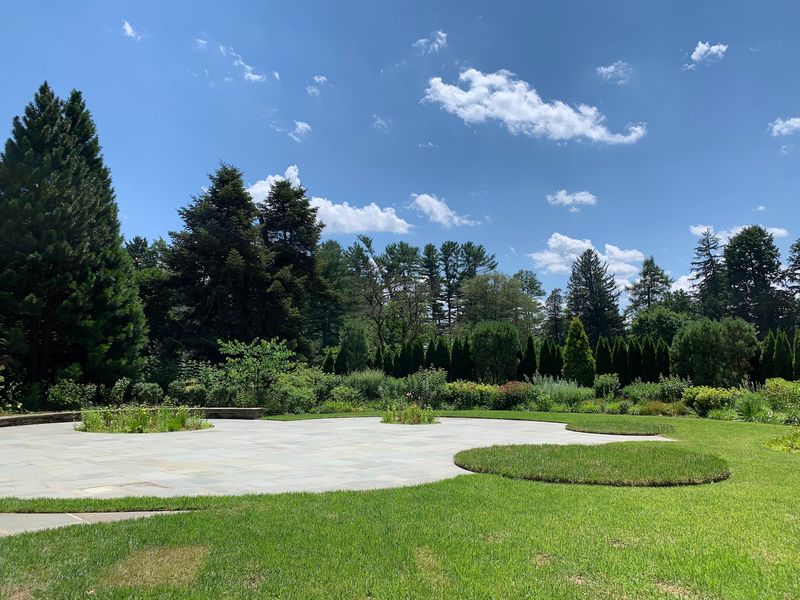
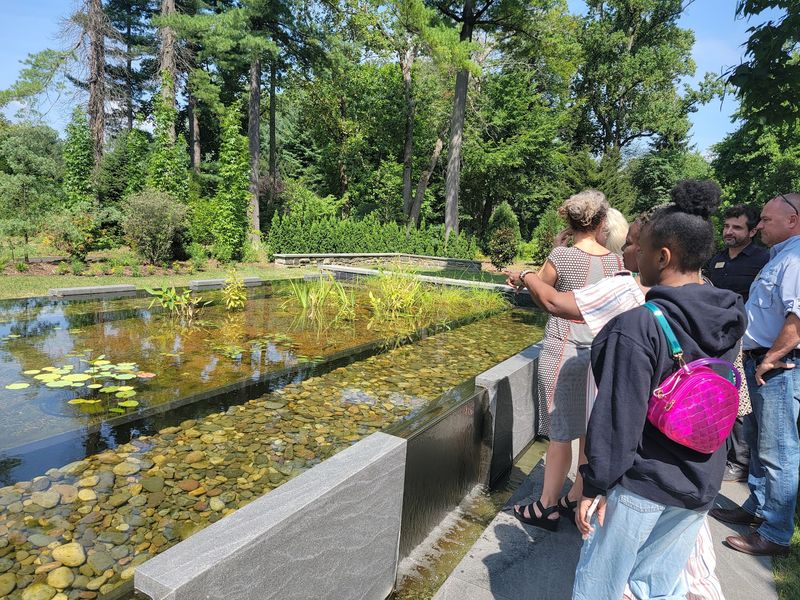
The Great Lawn is one of the property’s most open spaces, broad and well-kept, with views back toward the mansion that give the estate its grandest sense of scale. Scattered throughout the grounds are details worth pausing for, including labeled plants, a reflection pool with water lilies, a flower-covered pergola tunnel, and small sculptural surprises that reward visitors who look carefully rather than walking quickly through.
A Garden Designed for Wildlife Too
Stoneleigh is not just maintained for human visitors. Natural Lands manages the property with ecological health in mind, which means the garden is increasingly designed to support the insects, birds, and other wildlife that depend on functioning habitats in a densely developed suburban landscape.
Native plantings attract pollinators including native bees and butterflies that cannot rely on ornamental plants from other continents. The bog garden provides a wetter habitat type that supports a different community of plants and animals than the drier upland sections of the property.
Trees and shrubs that produce berries or seed heads are valuable food sources for migratory birds moving through the region in fall and spring. Natural Lands has systems in place across the property to help nature function year-round rather than treating the garden purely as a visual display.
Visitors paying close attention on a quiet morning may notice more activity in the garden than they expect from a suburban green space.
Why Every Season Looks Different
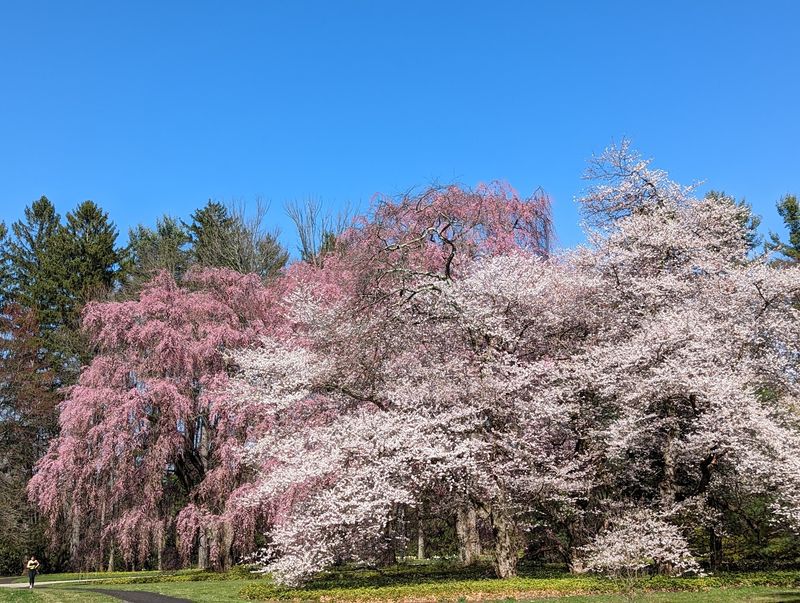
One of the practical advantages of a garden built around native plants and mature trees is that it genuinely changes with the seasons rather than looking identical month after month. Spring brings flowering cherry trees and early bulbs that visitors have described as surreal in full bloom.
Summer fills the garden with green canopy, active pollinators, and the fuller growth of perennial plantings.
Fall may be the most quietly dramatic season at Stoneleigh. The mature tree collection includes enough variety to produce real autumn color, and the native grasses and seed heads that remain standing through the cooler months give the garden a textured, layered quality that bare-earth gardening cannot match.
The garden is open year-round, and winter visits have their own appeal for visitors interested in the structure of trees and the architecture of the estate without summer foliage in the way. Early November and early May are mentioned by visitors as particularly rewarding times to plan a trip to the property.
The Conservation Story Behind Stoneleigh
Stoneleigh fits into a larger story about protecting open space in the Philadelphia region. Natural Lands, the nonprofit that owns and manages the property, has been working to preserve land in Pennsylvania and New Jersey since 1953.
Stoneleigh represents a particular kind of conservation challenge: keeping a historic estate functional, beautiful, and ecologically productive in a suburban area where development pressure is constant.
Maintaining the grounds of a former private estate as free public green space requires ongoing investment and careful decision-making. Natural Lands has expanded the property recently, with an additional ten acres added that will eventually open to visitors, suggesting the organization’s long-term commitment to growing the site rather than simply maintaining the status quo.
Sustainable horticulture, stormwater management, and ecological restoration are all part of how the garden is managed. For visitors who care about where their green spaces come from and how they are sustained, Stoneleigh offers a meaningful example of conservation work made visible and accessible to anyone who wants to walk through it.
What to Know Before Visiting
Stoneleigh: a natural garden is located at 1829 County Line Road, Villanova, PA 19085. The garden is open Tuesday through Sunday from 10 AM to 5 PM and is closed on Mondays.
Admission is free, with donations welcomed to support Natural Lands’ ongoing conservation work.
Parking is available on site and visitors report it as plentiful and easy. The main path is fully paved and flat, which makes the property accessible to visitors with mobility considerations.
Restrooms are available on the grounds in what was originally the estate’s pool house.
Dogs are not permitted at Stoneleigh, as the garden operates as a botanical garden rather than a park. Bicycles are also not allowed on the property.
The mansion is not generally open for casual drop-in tours and currently functions as an archive. Hours, programs, and policies can change, so checking the official website at natlands.org/stoneleigh before your visit is always a good idea, particularly if you are planning to attend a specific event or program.
Why Stoneleigh Is Worth Slowing Down For
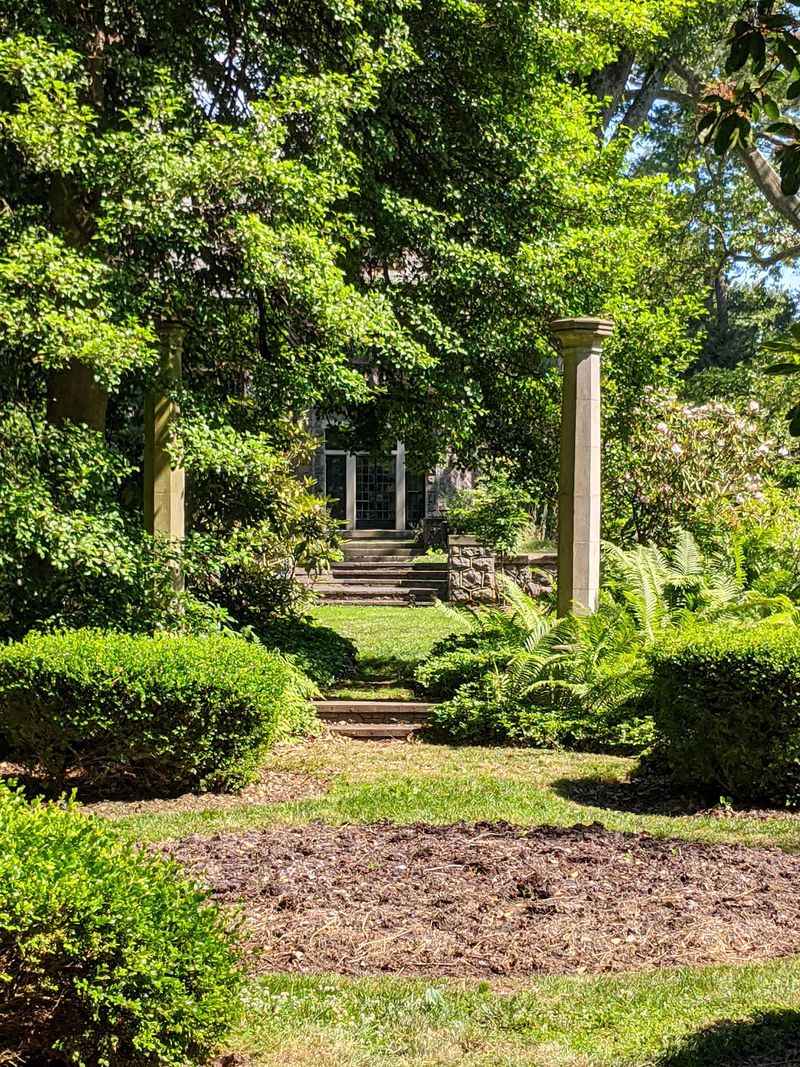
Some places reveal themselves only to visitors willing to move at a slower pace. Stoneleigh is one of them.
The garden does not announce its best qualities loudly. The old cherry trees, the bog garden, the reflection pool with its water lilies, the flower-draped pergola tunnel, and the labeled specimens scattered throughout the grounds all ask to be noticed rather than announced.
The combination of a historic estate, a serious commitment to native plants, and decades of ecological stewardship by Natural Lands has produced a garden that feels genuinely layered. There is always something worth looking at a second time, and return visits in different seasons tend to feel like new experiences rather than repetitions.
Walking back to the parking lot after a visit, with the sound of County Line Road gradually returning, it is easy to understand why visitors come back season after season. Stoneleigh is not trying to be the most dramatic garden in Pennsylvania.
It is simply one of the most honest ones.
Share this story