At Hershel’s East Side Deli in Philadelphia, pastrami is carved by hand right in front of customers and piled high onto rye bread. The counter sits inside Reading Terminal Market, where dozens of food vendors compete for attention.
The menu goes beyond pastrami. Corned beef, brisket, grilled Reubens, and Rachels with coleslaw give visitors plenty of reasons to stop.
Matzo ball soup and potato latkes keep the old-school deli tradition going.
There’s a family story behind the food, too. The deli was opened to honor a man who spent more than 40 years working at New York’s legendary Katz’s Delicatessen.
Today, his family’s recipes and hand-carving tradition continue at this busy Philadelphia market counter.
A Deli Counter Inside a Famous Philadelphia Market
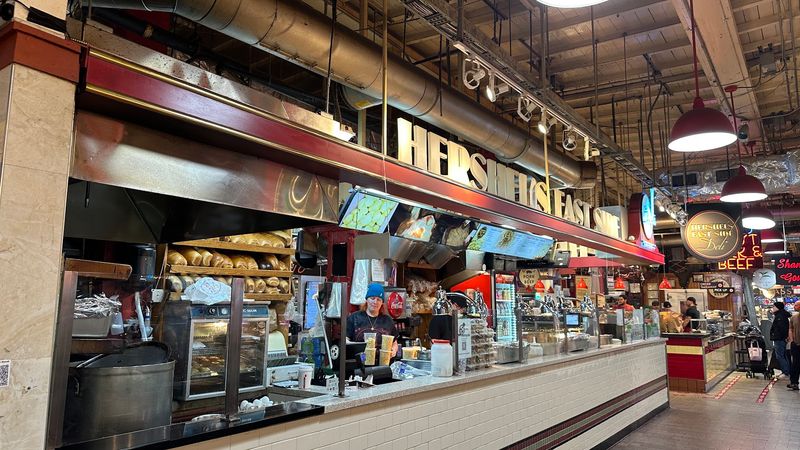
Hershel’s East Side Deli does business inside Reading Terminal Market, at 1136 Arch Street in Philadelphia, Pennsylvania 19107. That address puts it in the middle of a historic indoor market packed with food stalls of every kind.
The deli is a counter operation, not a sit-down restaurant. You line up, order at the glass, and pick up your food when it’s ready.
It’s a simple system, and it keeps things moving.
Hershel’s leans into classic Jewish deli food. The menu centers on pastrami, corned beef, and brisket, piled onto rye bread.
Soups and sides like matzo ball soup and latkes round things out.
I find the setting part of the appeal. You get a traditional deli lunch while the whole market buzzes around you.
That mix of old recipes and a lively food hall gives the stop its own personality.
The market itself is easy to reach in Center City. It sits near the Pennsylvania Convention Center, so travelers often wander through.
Knowing where the stall sits is the easy part. The harder part comes later, when you have to choose a sandwich.
Pastrami Carved by Hand, Right Where You Can See It
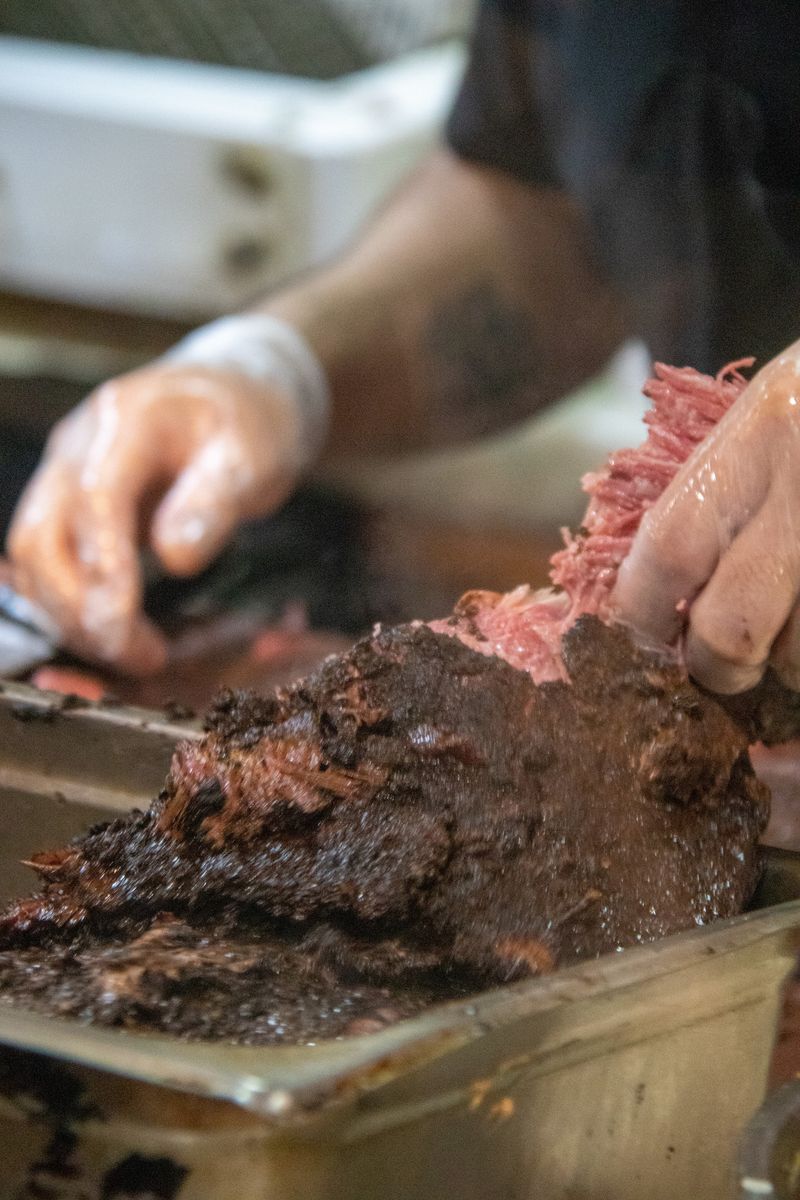
Knife work is the main event at this counter. The pastrami gets carved by hand instead of being run through a slicing machine.
That choice shapes everything about the sandwich.
Hand-carving lets the cutter adjust each slice. Thicker cuts hold together better on a sandwich.
It’s an old deli method, and you don’t see it everywhere anymore.
Customers can watch the staff work as they wait. The carvers move quickly, building sandwiches one at a time behind the glass.
For a first-timer, that view makes the wait go by faster.
Pastrami is beef that has been cured, seasoned, and smoked, then steamed before serving. The steaming step warms the meat through before it hits the board.
I’d start any visit with plain pastrami on rye. It shows you the meat without much else getting in the way.
A smear of mustard is the traditional partner.
Once you understand the pastrami, the rest of the menu makes more sense. The same counter handles two other cured and cooked meats with equal attention, and each one has its own fans.
Corned Beef and Brisket Share the Board
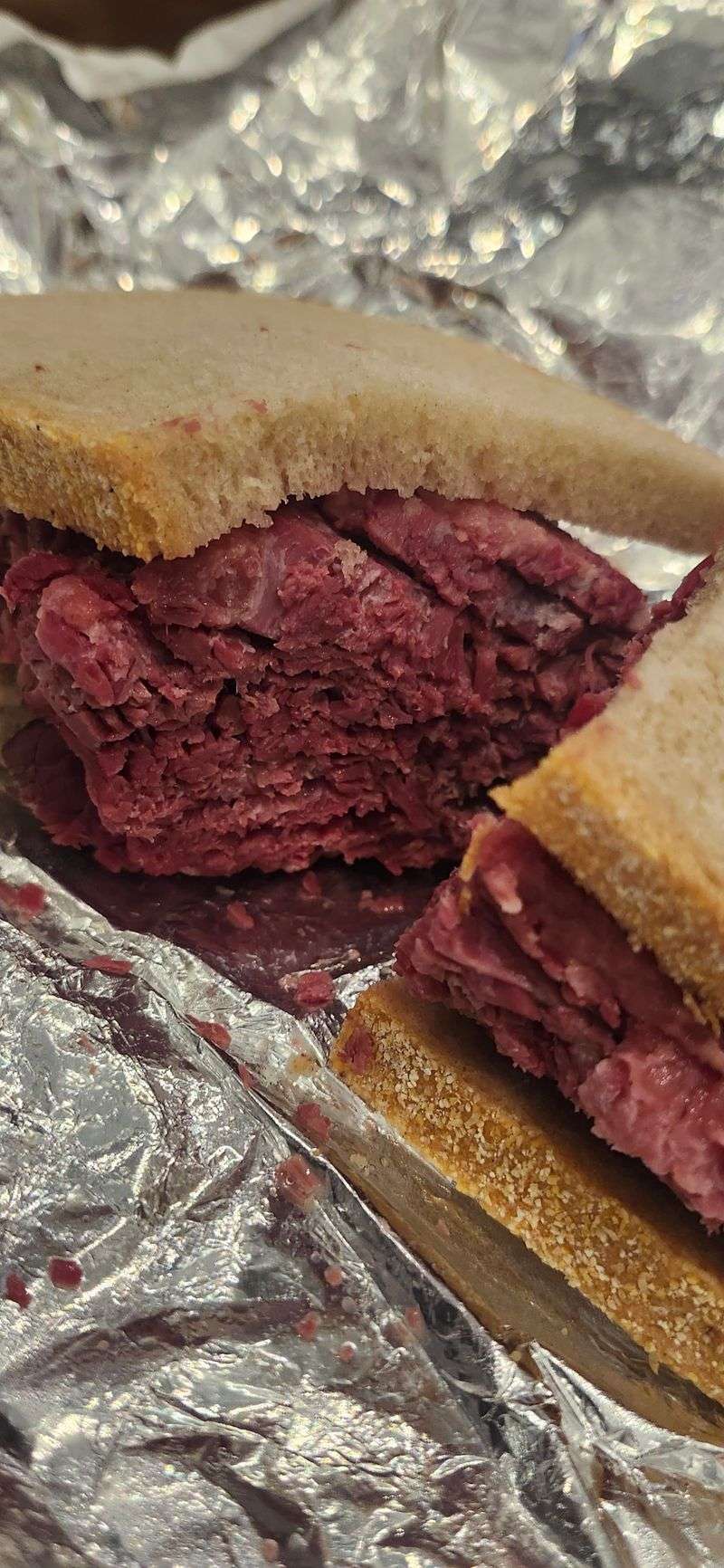
Pastrami may get the headlines, but corned beef holds its own here. It’s another cured beef, though it skips the smoky seasoning crust that pastrami carries.
Corned beef usually comes from the brisket cut and is cured in a salty brine. The result is a milder, pink deli meat.
It’s a natural choice for anyone who wants something a little less peppery.
Brisket is the third option on the board. Unlike the other two, it isn’t cured the same way.
It’s a cooked beef that gives the menu a different direction.
Having all three in one spot is handy if you’re sharing with a friend. Order two different sandwiches, cut them in half, and trade.
That way you learn which style you prefer without a second trip.
The deli also lists turkey for anyone who wants a break from beef. It’s good to know there’s an option for the person in your group who isn’t a pastrami fan.
Choosing the meat is only step one, though. The bigger debate starts when cheese, sauerkraut, and dressing enter the picture.
The Reuben Gets Pressed Until It Sizzles
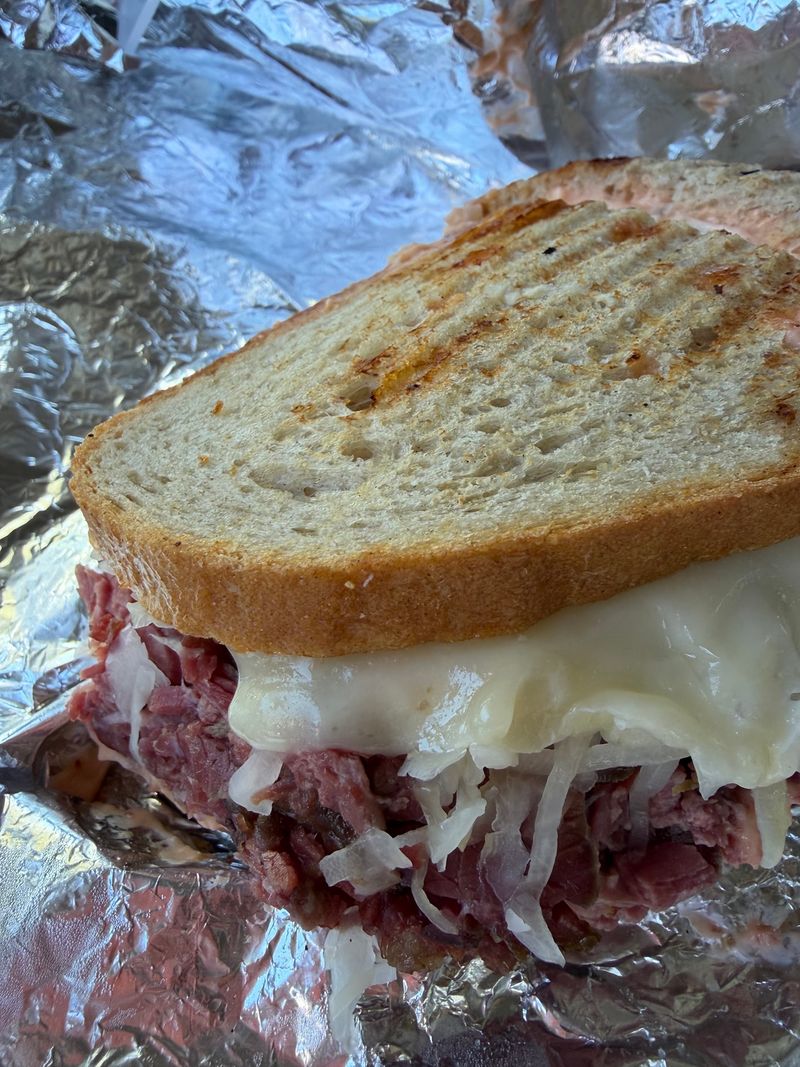
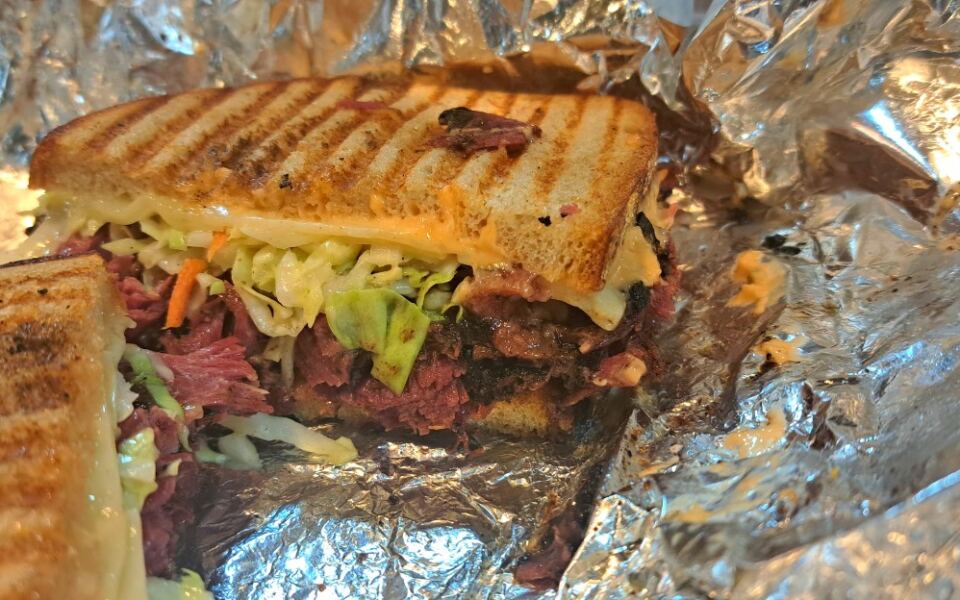
Swiss cheese, sauerkraut, and Russian dressing turn a plain meat sandwich into a Reuben. Hershel’s builds it on rye and then presses it hot, so the bread gets grill marks.
You can get the Reuben with either corned beef or pastrami. Corned beef is the classic version.
The pastrami Reuben swaps in the smoky, peppery meat instead.
Russian dressing is a creamy, slightly tangy spread. Paired with sauerkraut, it adds some sharpness to cut through the rich beef.
The melted Swiss holds everything together.
One tip is worth remembering. A pressed sandwich this full of toppings is best eaten soon after you get it.
The dressing and kraut can soften the bread if it sits too long.
That’s a good reason to grab a seat nearby instead of carrying it across town. Eat it warm, while the cheese is still melted.
I can see why this sandwich comes up so often at the counter. Still, its close cousin deserves a look before you order, since the two differ by just a couple of toppings.
Meet the Rachel, the Reuben’s Sister Sandwich
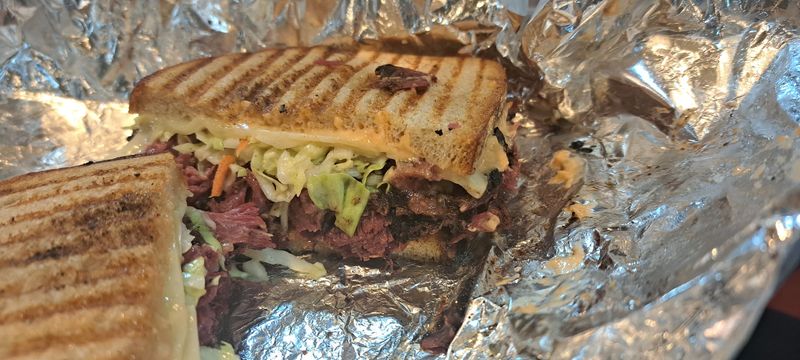
So what exactly is a Rachel? It’s the Reuben’s lesser-known relative, and Hershel’s makes one too.
The main difference comes down to one topping swap.
A Rachel usually replaces sauerkraut with coleslaw. Some versions also change the meat to turkey or pastrami.
At Hershel’s, the pastrami Rachel gets plenty of attention.
Coleslaw brings a cool, creamy crunch where the sauerkraut would have been sour. If you don’t love kraut, this is the sandwich to try.
It keeps the cheese and dressing while changing the mood.
The name sounds a little old-fashioned, and that’s part of the fun. Ordering a Rachel at a busy market counter feels like knowing a small deli secret.
I’d suggest it for anyone splitting lunch with a Reuben fan. You get to compare the two side by side and settle the debate for yourself.
Either sandwich arrives with something green and crunchy on the side. That small extra has its own following at Hershel’s, and it’s easy to overlook if you’re rushing.
Rye Bread, Mustard, and That Pickle on the Side
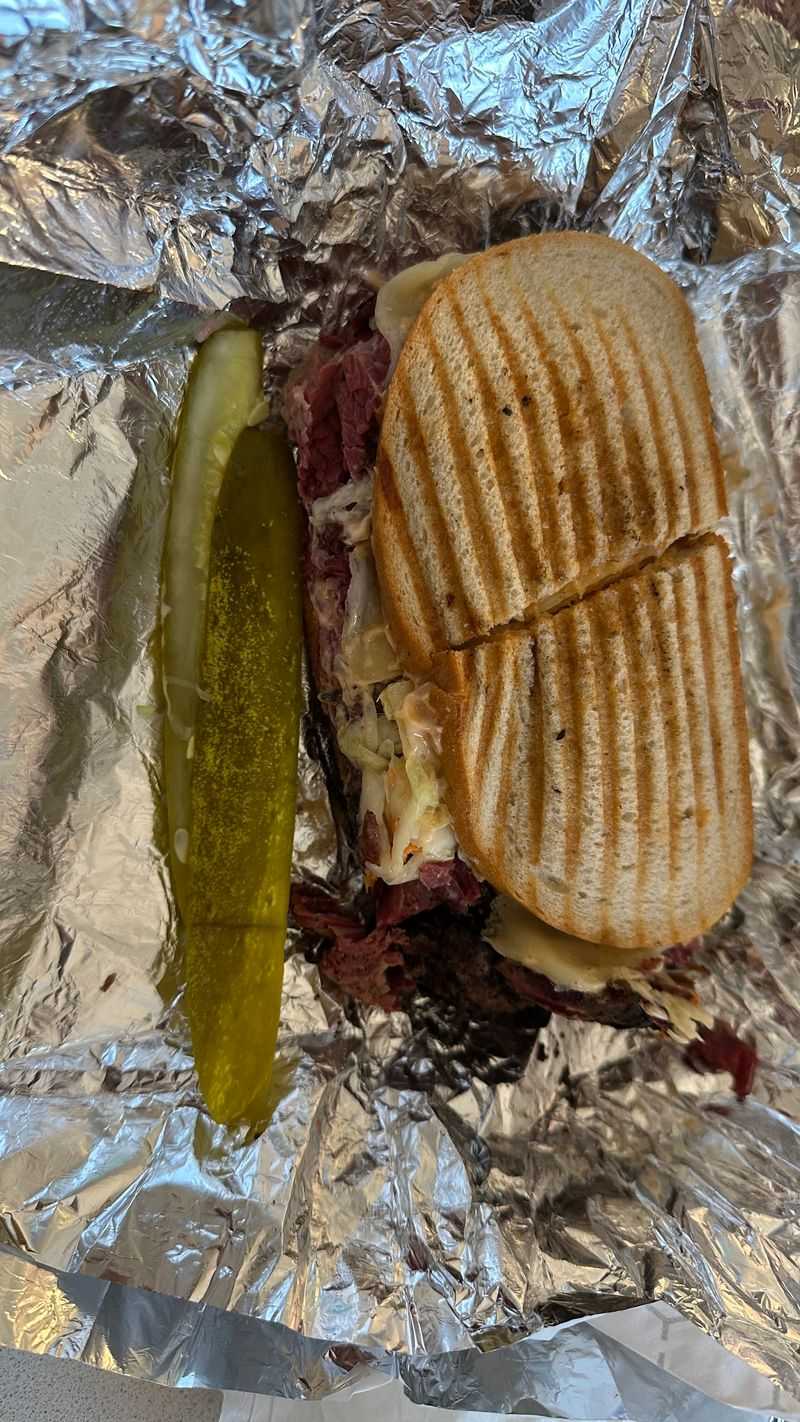
Every good deli sandwich needs a sturdy base, and rye bread is the traditional pick. Its firm crumb can hold a tall stack of meat without falling apart right away.
Plain pastrami or corned beef on rye usually gets mustard. Some people add coleslaw or sauerkraut too, ordering it with everything.
The choice is yours, and the staff can guide first-timers.
Then there’s the pickle. Hershel’s sends a pickle with sandwiches, and it’s a classic deli touch.
The sour bite helps reset your taste buds between rich mouthfuls.
Here’s a practical idea for takeout. Ask for the pickle wrapped separately if you won’t eat right away.
Pickle juice can soak into the bread while it travels.
That small request keeps your rye from going soft. It’s the kind of detail that matters most when you’re walking the sandwich across the market.
Bread and pickles cover the sandwich side of things. Yet the menu also reaches into warm, homey dishes that suit a chilly Philadelphia afternoon.
Matzo Ball Soup and Latkes for Cold Days
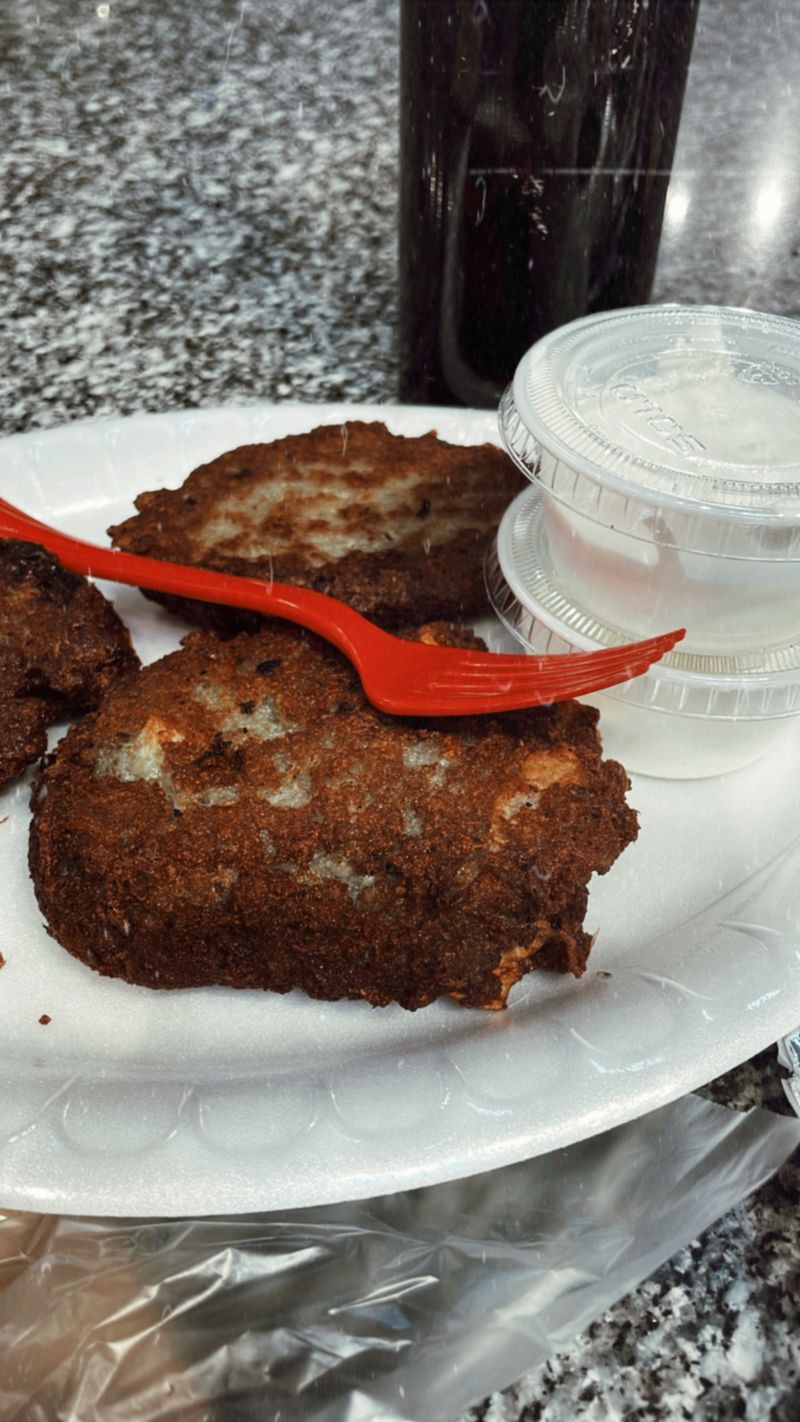
Winter in Philadelphia can be raw and windy. On those days, a bowl of matzo ball soup from Hershel’s makes a lot of sense.
Matzo balls are dumplings made from matzo meal, which is ground unleavened bread. They float in chicken broth, often with vegetables.
It’s one of the best-known comfort foods in Jewish cooking.
Latkes are another classic on the menu. These are potato pancakes, fried until the edges turn crisp.
They’re often linked to Hanukkah, but delis serve them year-round.
Soup and a sandwich make a smart pairing for two people. Splitting one of each gives you a warm starter and a hearty main without ordering too much food.
Noodle kugel also shows up at the counter. It’s a baked noodle dish that can lean sweet, and it’s another traditional side with deep deli roots.
These sides tell you something about the deli’s identity. It’s built around Jewish deli traditions, and that heritage connects to the name painted above the counter.
A New York Deli Spirit in Pennsylvania
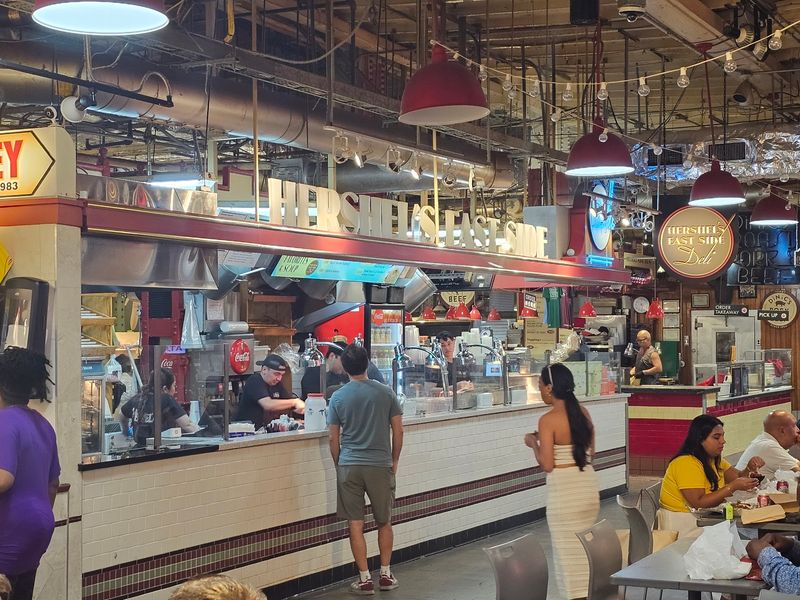
East Side is a clue. The name nods to the Jewish delis of New York’s Lower East Side, where pastrami on rye became famous.
Those old delis built their reputations on cured meats, rye bread, and mustard. Hershel’s follows that same playbook inside a Philadelphia market.
Many diners compare it to the big New York deli names.
I find that link interesting because Philadelphia has its own sandwich fame. Most visitors think of cheesesteaks first.
Hershel’s offers a different East Coast tradition just a short walk from those grills.
The menu sticks close to the classics. Pastrami, corned beef, brisket, Reubens, soups, and latkes all fit the deli mold.
There isn’t much chasing of trends here.
That focus can be refreshing. You know what kind of meal you’re getting before you even reach the front of the line.
Of course, a deli’s spirit also lives in its people. The crew behind the glass sets the pace for the whole experience, and that pace is quick.
Fast Hands, Quick Banter, and a Moving Line
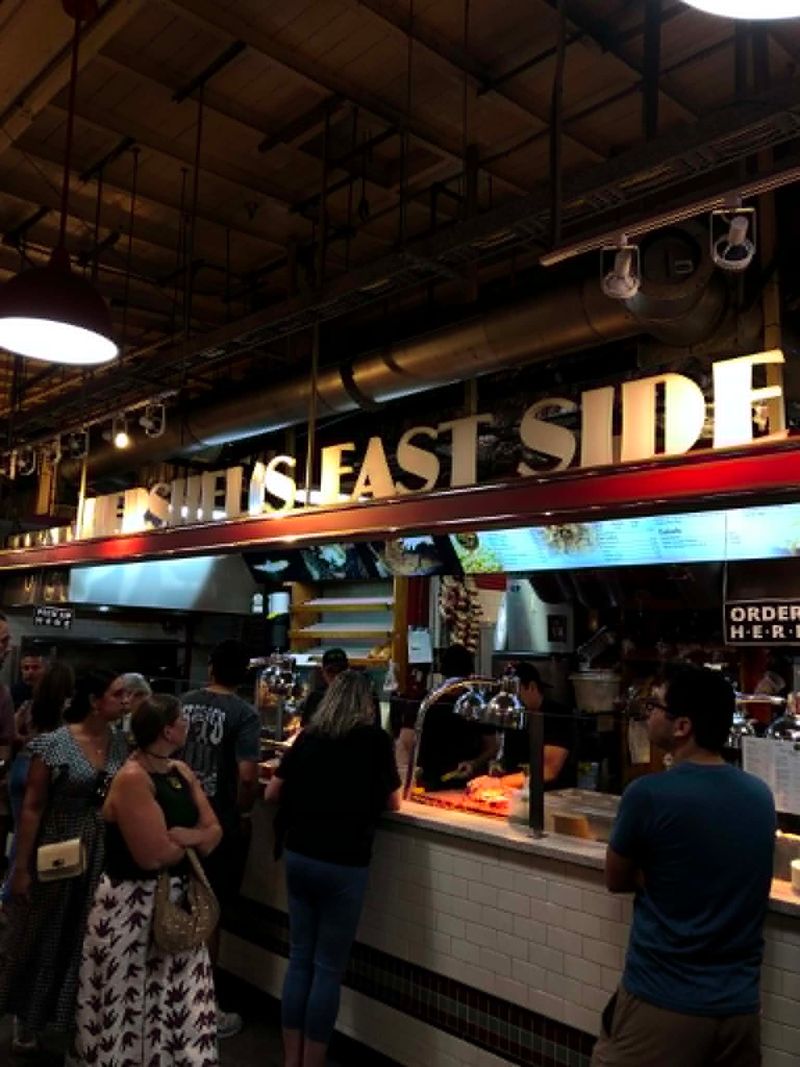
Expect a line, especially around lunchtime. The good news is that the staff work fast, and the line tends to move along steadily.
Ordering is simple. You wait your turn, tell the counter what you want, and then pick up your sandwich.
Keeping your order ready helps everyone, you included.
The crew has a classic deli style. They talk quickly and keep things brisk.
First-timers can ask for help, and staff will often walk new customers through the options.
Know your order before you reach the glass. Decide on the meat, then pick plain, Reuben, or Rachel.
That one bit of planning saves time at the busiest moment.
Hours are generous for a market stall. Hershel’s is listed as open daily from 8 a.m. to 6 p.m., though it’s smart to check before you go.
Morning visits may mean a shorter wait. After you have your food, though, the next question is where to actually sit down and eat it.
Finding a Seat in a Crowded Food Hall
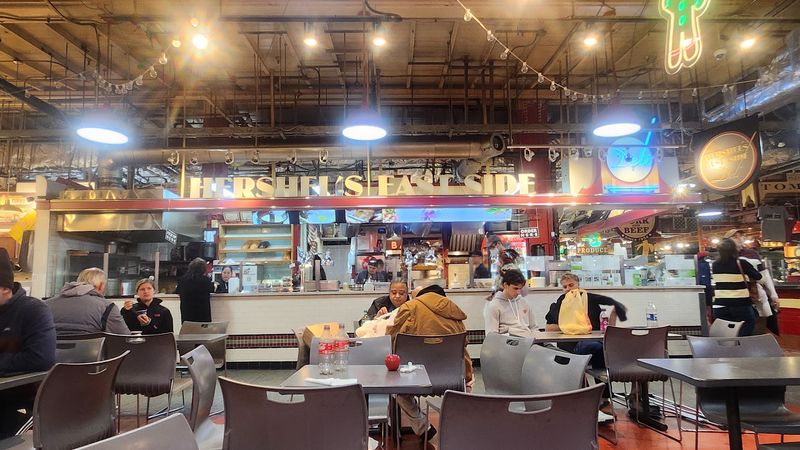
Seating is limited, and that’s normal for a stall inside a busy market. Hershel’s has some bar-style counter seating, plus a small area toward the back for customers.
Those spots fill fast during peak hours. If they’re taken, Reading Terminal Market has shared seating areas scattered around the floor.
Patience usually pays off.
Noise is part of the deal. The market hums with conversation, carts, and vendors calling out orders.
If you want a quiet lunch, an early or late visit might suit you better.
Remember the earlier tip about pressed sandwiches. A Reuben or Rachel tastes best soon after it’s made, so grabbing a seat nearby is worth the effort.
Bring napkins, and maybe a friend to share. These sandwiches come stacked high with meat, and splitting one leaves room to try something else in the market.
I like that a simple stool and a warm sandwich can make a full meal here. In the middle of all that market energy, a hand-carved pastrami on rye feels like the right reason to slow down for a few minutes.
Share this story