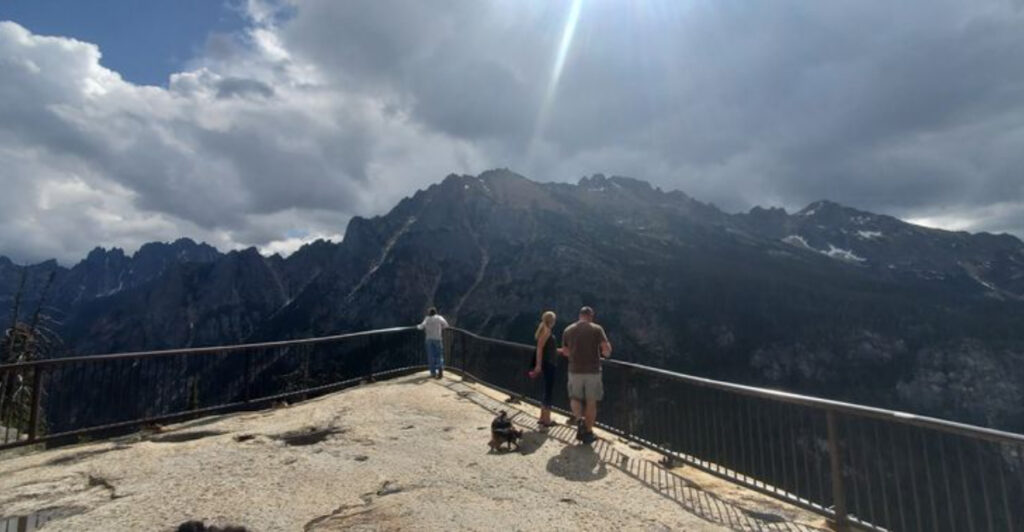
There is a spot along Highway 20 in Washington State where a short walk from the parking lot puts you face to face with some of the most dramatic mountain terrain in the entire Pacific Northwest. The trail is brief, the payoff is enormous, and the elevation sits right around 5,477 feet.
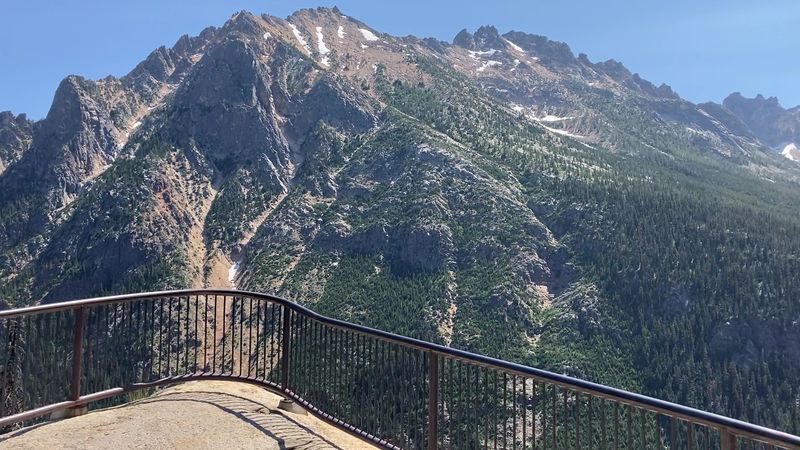
Liberty Bell Mountain towers directly ahead, jagged and bold against the sky, while the North Cascades stretch out in every direction. This is the kind of place that road-trippers accidentally stumble upon and end up talking about for years.
Whether you are passing through on a summer drive or making a dedicated trip from Seattle, this place earns every mile of the journey.
A Trail Anyone Can Handle
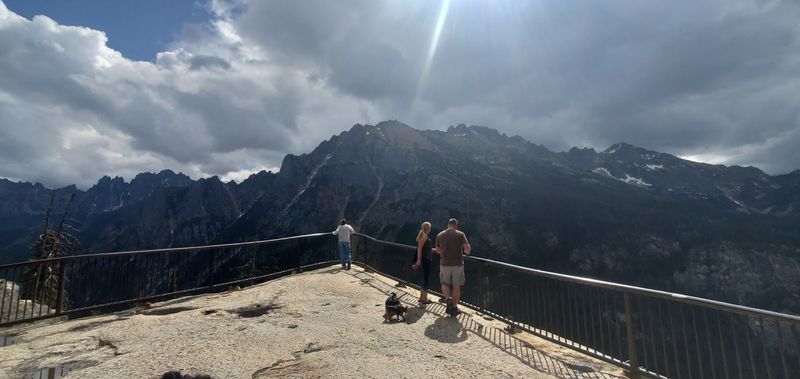
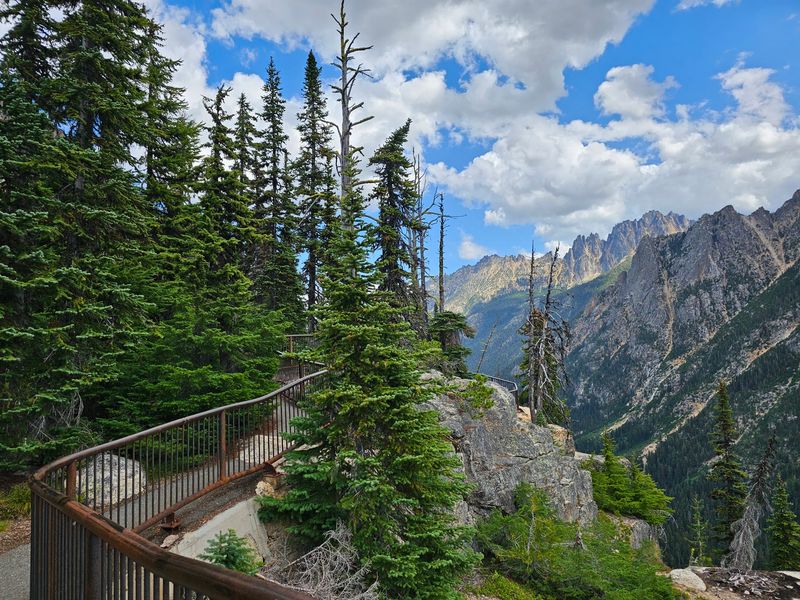
The trail at the Washington Pass Observation Site is short, paved, and genuinely manageable for most people regardless of fitness level. The path climbs gently from the parking lot to the main overlook platform, covering only a fraction of a mile.
Because the surface is paved and wide enough for wheelchairs, the overlook is accessible to a broad range of hikers and visitors. Families with young children, older adults, and people with mobility considerations can all reach the main viewpoint without serious difficulty.
A loop option exists for those who want a slightly longer experience. Instead of retracing the same path back to the parking lot, the loop takes you around a different route that offers additional angles of the surrounding peaks.
The elevation gain is modest, but the reward at the top is anything but modest. This trail punches well above its weight in terms of what it delivers at the end.
Liberty Bell Mountain Front and Center
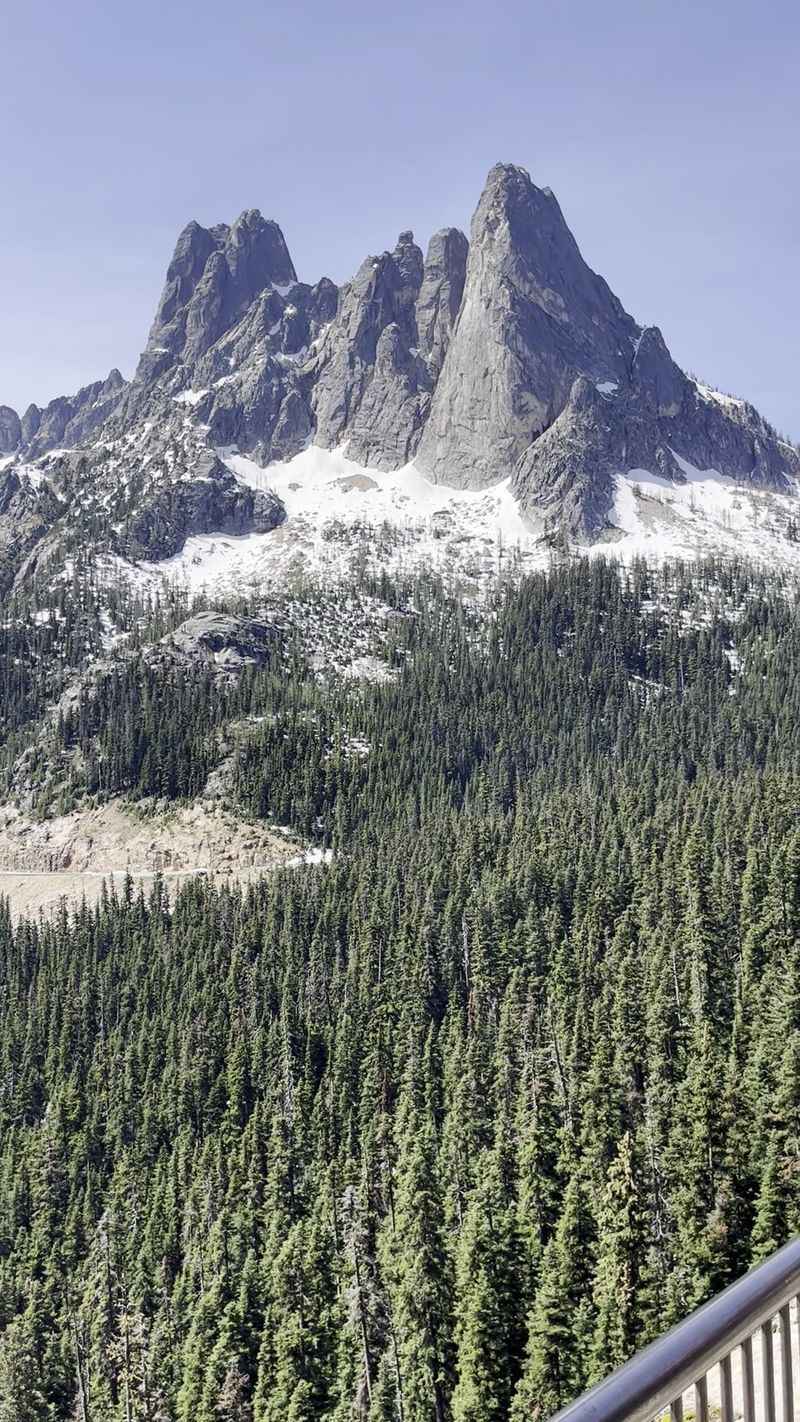
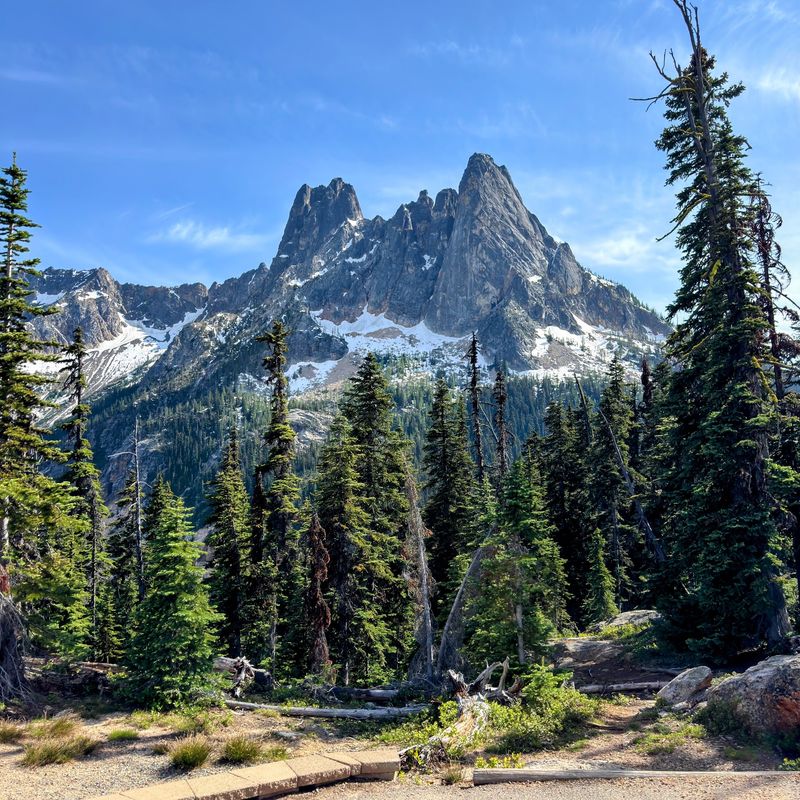
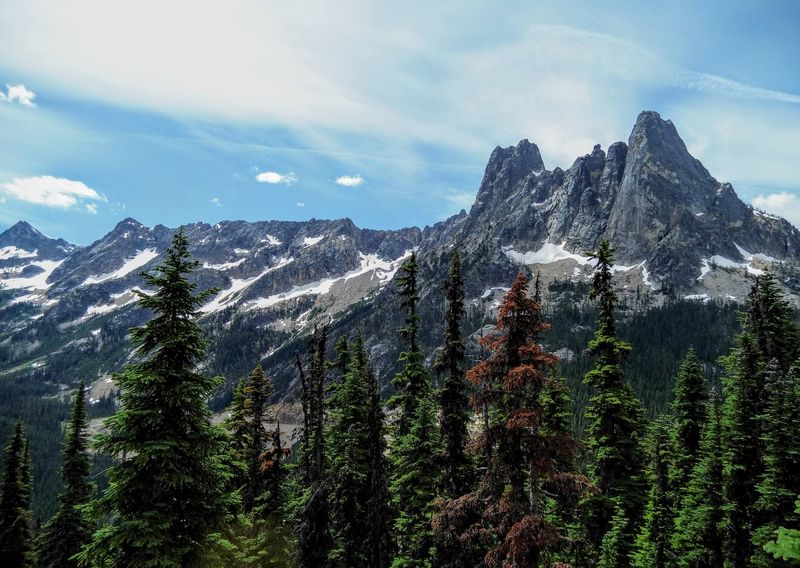
Liberty Bell Mountain is the undisputed centerpiece of the view from the Washington Pass overlook. The peak rises sharply with near-vertical rock faces that make it one of the most visually striking summits in the North Cascades.
The mountain sits almost directly across from the observation platform, which means there is no craning your neck or squinting into the distance. The view is front-facing and completely unobstructed from the main overlook area.
Rock climbers are drawn to Liberty Bell for its technical routes, and on clear days it is sometimes possible to spot climbers working their way up the granite walls. For everyone else, simply looking at it from the overlook is more than enough of an experience.
The jagged silhouette of Liberty Bell against a blue sky has become one of the most photographed scenes in all of Washington State. It earns that reputation without any exaggeration.
The Geological Story Behind the Peaks
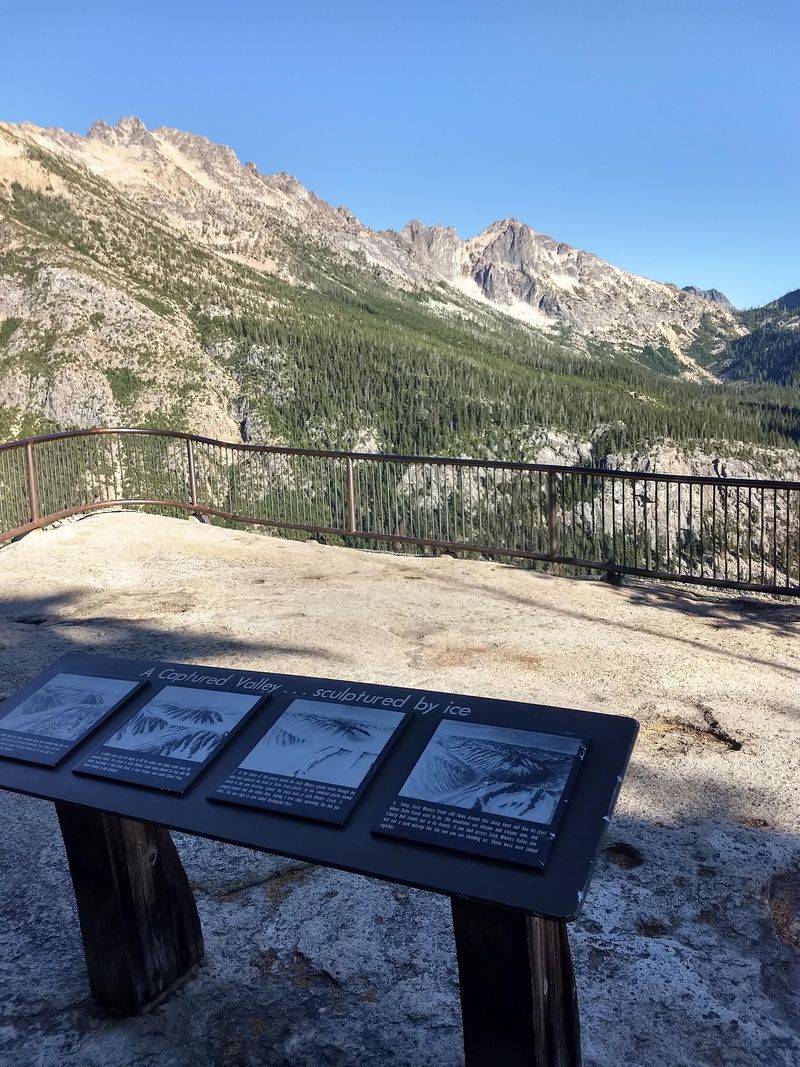
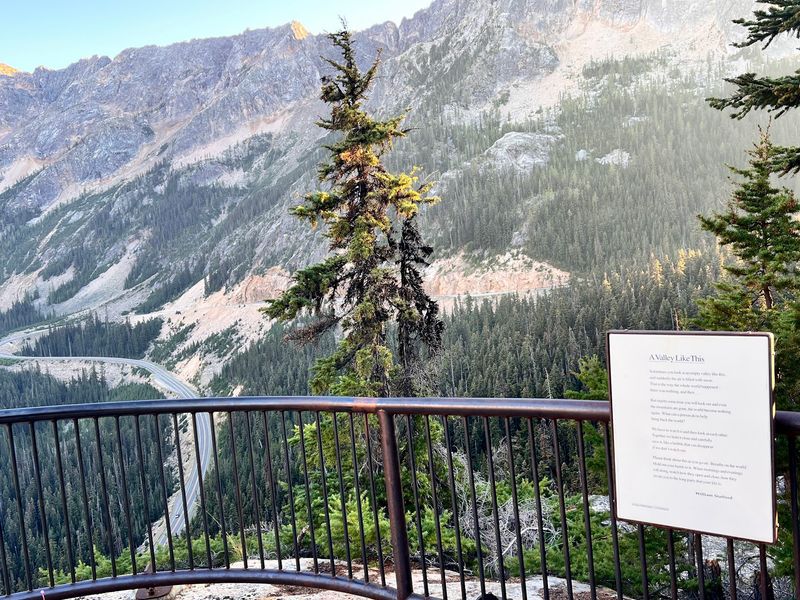
The National Park Service installed a series of plaques near the observation point that explain the geological history of the landscape. These signs do not talk down to the reader, and they add real depth to what you are already looking at.
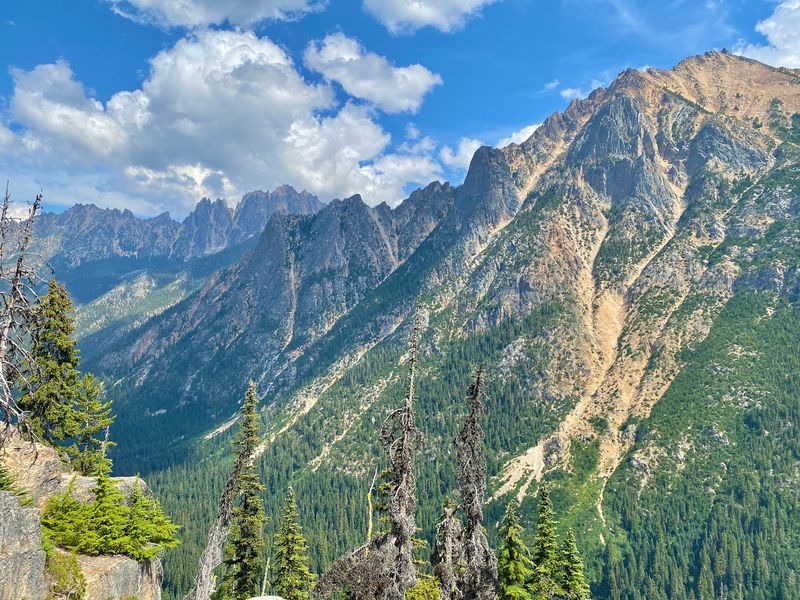
The North Cascades are among the most geologically complex mountain ranges in North America. The peaks visible from the overlook were shaped over millions of years by tectonic activity, glacial movement, and erosion on a scale that is genuinely hard to process.
Learning how these mountains formed does not diminish the experience of standing in front of them. If anything, it makes the whole scene more compelling, knowing that the forces responsible for creating this landscape operated on timescales that dwarf human history entirely.
Two small boards near the plaques also feature poems by William Stafford, which pair unexpectedly well with the geology lessons. The combination of science and poetry at this overlook is a thoughtful touch.
Highway 20 From Above
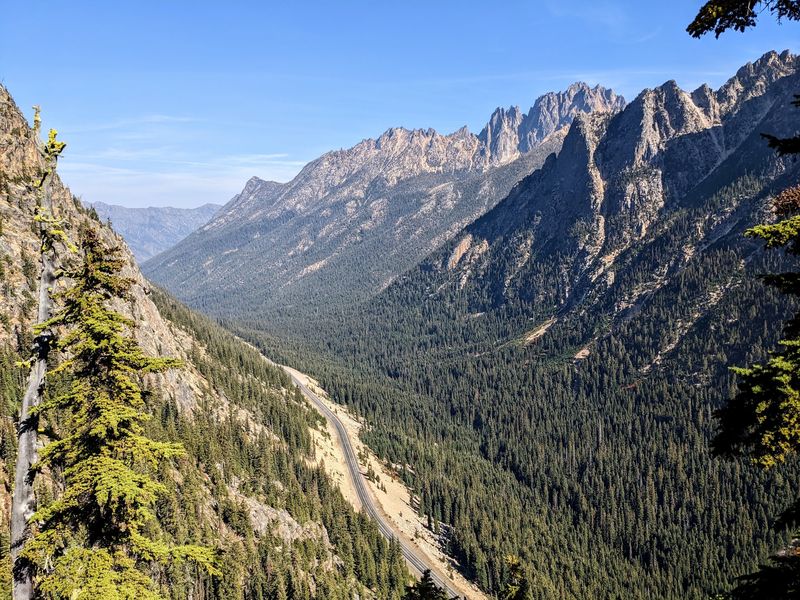
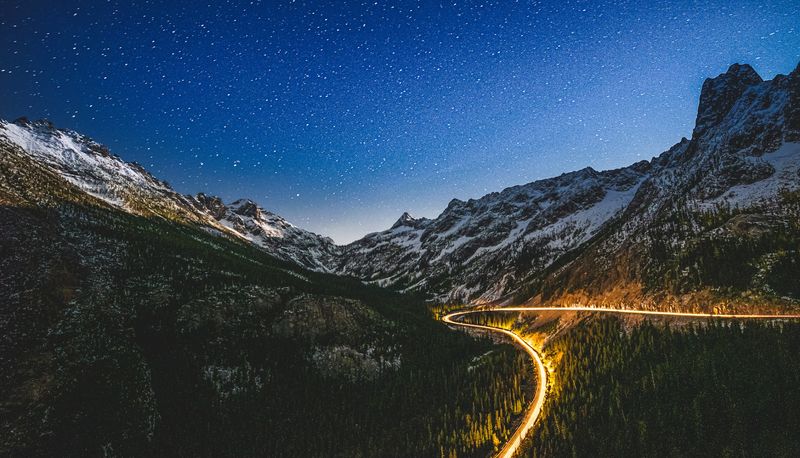
One of the more unexpected highlights of the Washington Pass Observation Site is the view of the highway itself. From the overlook platform, you can see State Route 20 snaking far below through the valley, looking almost impossibly narrow against the scale of the surrounding mountains.
Highway 20 is often cited as one of the most scenic drives in the United States, and seeing it from this elevated vantage point helps explain why. The road cuts through terrain that seems to resist any kind of human infrastructure, yet somehow the highway exists.
The history of this road adds another layer of interest. Building a highway through the North Cascades was a massive engineering undertaking that took decades to complete.
Markers near the observation site memorialize the workers who made the construction possible.
Watching cars move along the highway far below while standing at 5,477 feet gives the whole experience a perspective that is hard to replicate anywhere else in Washington State.
Wildflowers, Larches, and Seasonal Shifts
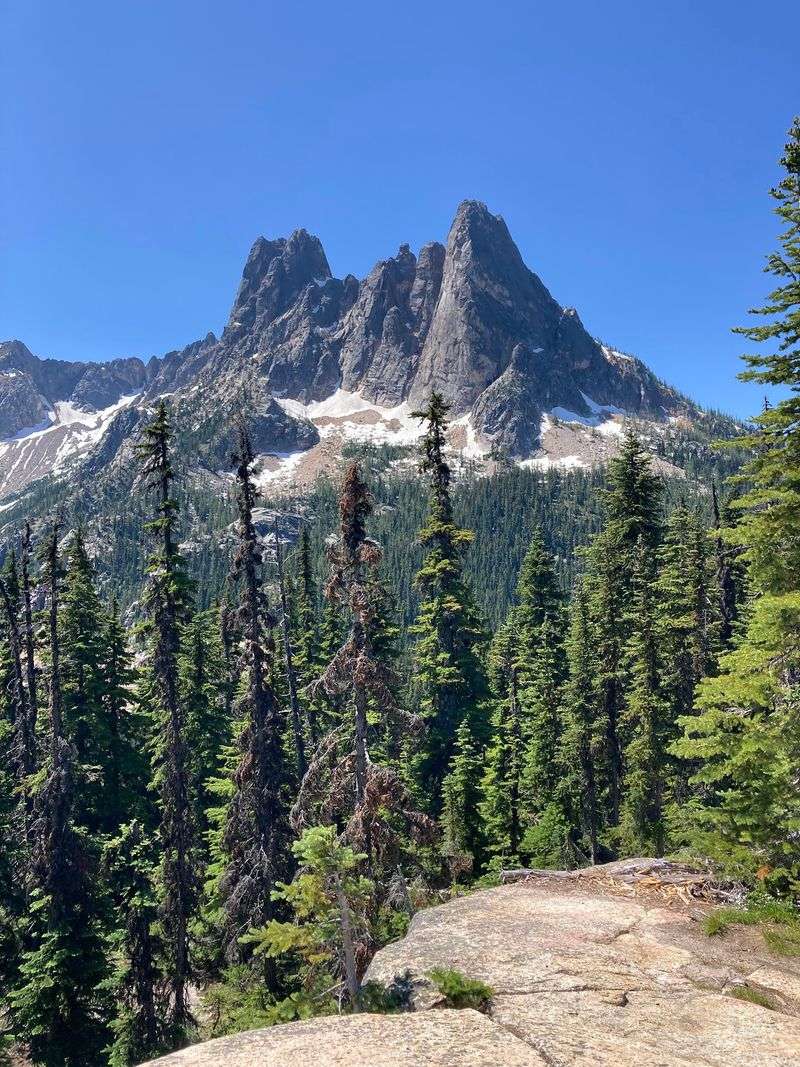
The observation site does not look the same twice, and that is largely because the surrounding landscape changes dramatically with the seasons. Spring and summer bring wildflowers along the trail and on the hillsides surrounding the overlook.
Fall is particularly spectacular. The larch trees in this part of the Cascades turn a vivid golden yellow in October, creating a color contrast against the dark granite peaks that is genuinely striking.
Larches are unusual because they are conifers that lose their needles, which means the color change comes as a surprise to people who assume all pine-like trees stay green year-round.
Early summer visits can still feature snow on the surrounding peaks and even along the trail in some years. Temperatures in mid-June can sit in the mid-50s Fahrenheit, so dressing in layers is always a smart approach regardless of what the weather looks like at lower elevations.
Each season brings a different version of this overlook, which keeps it worth returning to.
Winter Closure and Timing Your Visit
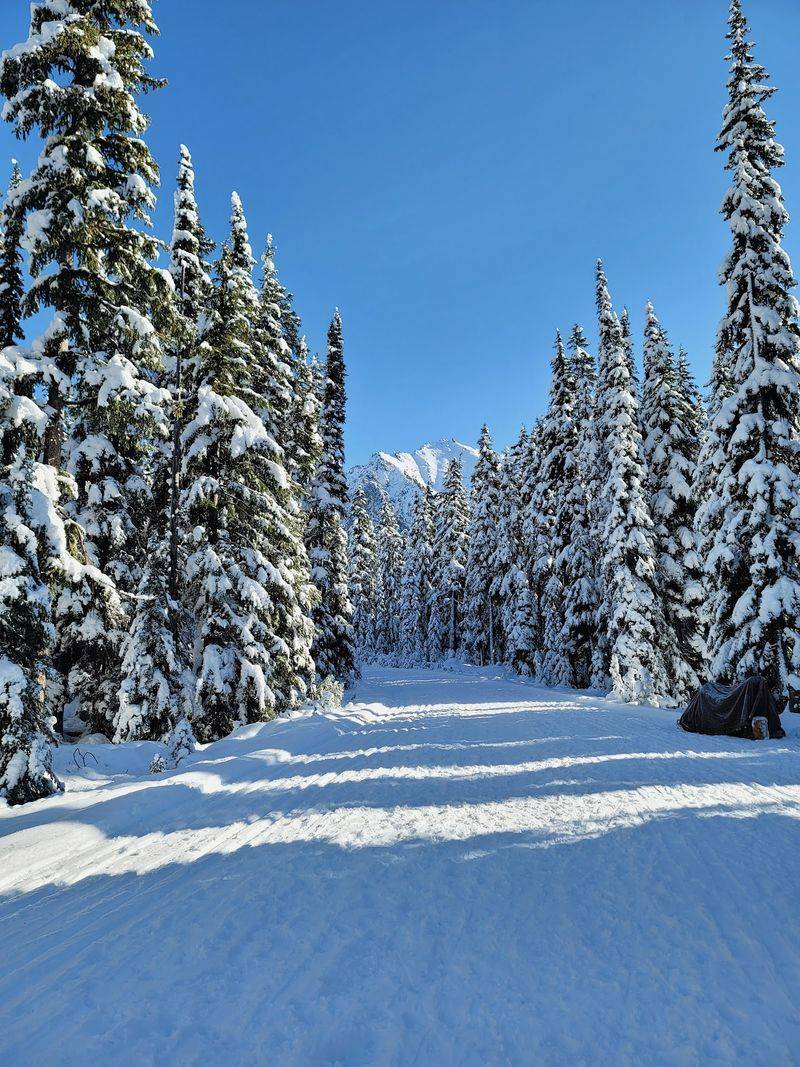
Highway 20 through the North Cascades closes during the winter months due to avalanche danger and heavy snowfall. The closure typically affects the section of road that includes the Washington Pass Observation Site, which means planning around the seasonal schedule is important.
The highway generally opens in mid-to-late April, though the exact date varies by year depending on snowpack and road conditions. The Washington State Department of Transportation provides updates on the opening date each spring, and checking before making the drive from Seattle or elsewhere is a practical step.
Even after the highway opens, the upper parking area at the observation site may remain closed for a few additional weeks if snow is still covering the lot. In those cases, parking near Highway 20 and walking up to the viewpoint is still possible and adds less than a mile to the trip.
The site is open 24 hours once the road is accessible, with no entry fee required.
Wildlife Watching From the Overlook
The mountains visible from the Washington Pass overlook are not just a backdrop. They are active habitat for wildlife that can sometimes be spotted from the observation platform with a bit of patience and a good eye.
Mountain goats are the most commonly reported wildlife sighting at this location. The rocky terrain directly across from the overlook provides the kind of steep, exposed environment that mountain goats favor, and they have been spotted on the cliffs facing the observation platform on numerous occasions.
Bringing a pair of binoculars significantly improves the chances of spotting wildlife, since the animals tend to blend into the gray granite at a distance. Even without binoculars, the scale of the cliffs and the open sight lines make this one of the better spots in the North Cascades for casual wildlife observation.
The unpredictability of wildlife sightings adds a layer of excitement to every visit, since there is no guarantee of what might appear on the mountainside.
Overnight Stays at the Site
The Washington Pass Observation Site is open around the clock, and that detail matters for a specific group of travelers. The parking area accommodates overnight RV stays, and the site has been used as a stopping point for people making longer road trips through the North Cascades.
The overnight experience at this elevation is notably quiet. The location is far enough from any town center to eliminate most ambient noise, and the surrounding mountains create a natural buffer from highway sound once traffic dies down in the evening.
Clean restrooms being available overnight is a practical advantage that makes the site more appealing for RV travelers than a standard roadside pullout. Multiple RVs have been known to park here on summer nights without any issues.
For travelers driving Highway 20 over multiple days, the observation site offers a convenient and cost-free place to rest that also happens to have one of the better mountain backdrops of any overnight parking area in the state.
Photography at 5,477 Feet
The Washington Pass Observation Site is a legitimate destination for photography, not just a casual snapshot stop. The overlook platform offers multiple angles, and the surrounding terrain provides enough visual variety to keep a camera busy for a full visit.
Liberty Bell Mountain directly ahead is the obvious primary subject, but the highway visible in the valley below, the ridgelines extending in both directions, and the foreground trail details all contribute to a wide range of possible compositions.
Lighting changes significantly throughout the day at this elevation. Morning light hits the eastern faces of the peaks differently than afternoon light, and the golden hour before sunset can transform the granite walls into something that looks almost painted.
Smoke from wildfires can reduce visibility during late summer, but even in hazy conditions the overlook produces compelling images because the layered ridgelines create natural depth in photographs. Clear days in early summer and fall tend to offer the sharpest, most vibrant conditions for photography.
The Drive From Seattle and Beyond
The Washington Pass Observation Site sits roughly three to three and a half hours from Seattle by car, making it a viable day trip for anyone willing to commit to the drive. The route along Highway 20 through the North Cascades is itself one of the main attractions, not just a means to an end.
The highway passes Diablo Lake and Ross Lake before reaching the pass, and both of those stops are worth considering as part of a longer itinerary. The color of Diablo Lake in particular is distinctive enough to warrant its own stop along the way.
Winthrop, a small Western-themed town on the eastern side of the pass, makes a natural base for visitors who want to spend more than one day exploring the area. The town has lodging, restaurants, and its own regional character that contrasts interestingly with the alpine terrain of the pass.
The full corridor from Seattle to Winthrop and back via Highway 20 is one of the more rewarding road trip loops in Washington State.
North Cascades National Park and Free Access
North Cascades National Park borders the area around Washington Pass, and the park itself charges no entry fee, making the entire corridor one of the more accessible national park experiences in the country. The observation site falls within the Okanogan-Wenatchee National Forest rather than the park boundary, but the two areas are closely connected.
The free access policy at both the observation site and the adjacent national park removes a barrier that stops some travelers from visiting other protected areas. There is no day-use fee, no parking fee, and no permit required for the overlook trail.
The U.S. Forest Service manages the observation site and maintains the facilities, trail, and informational signage.
The site falls under the Okanogan-Wenatchee National Forest designation, and more information is available through the Forest Service website at fs.usda.gov.
Free access combined with the quality of the experience here is a combination that is increasingly rare at viewpoints of this caliber anywhere in the western United States.
Why This Stop Belongs on Every Northwest Itinerary
The Washington Pass Observation Site earns its reputation not through hype but through consistent delivery. The view is genuinely exceptional, the access is easy, the facilities are functional, and the whole experience requires almost no physical effort to reach.
That combination is rare at alpine elevations. Most viewpoints at 5,000 feet or higher demand significant hiking time, technical gear, or both.
This one asks for a short walk on a paved path and rewards that minimal effort with a panorama that rivals what most hikers work much harder to see.
The site works equally well as a planned destination and as a spontaneous stop on a longer drive. Groups, solo travelers, families with children, and RV adventurers all find something worthwhile here without needing to adjust their plans dramatically.
For anyone moving through the Pacific Northwest and looking for a single stop that captures the scale and character of the North Cascades, the Washington Pass Observation Site is exactly that place.
Where the Road Meets the Sky
Few roadside stops in the United States deliver a view this immediate and this dramatic. The Washington Pass Observation Site is located along State Route 20 in Mazama, WA 98833, sitting at an elevation of roughly 5,477 feet in the Okanogan-Wenatchee National Forest.
The site is managed by the U.S. Forest Service and is open 24 hours a day, every day of the week, making it one of the more accessible alpine viewpoints in the state.
Getting here means driving one of the most celebrated mountain highways in the country. Highway 20, also known as the North Cascades Highway, winds through rugged terrain that most drivers never expect to find just a few hours from a major city.
The observation site itself sits just off the highway, with a signed turnoff that leads directly into the parking area. From there, the trail to the overlook begins almost immediately.
Share this story