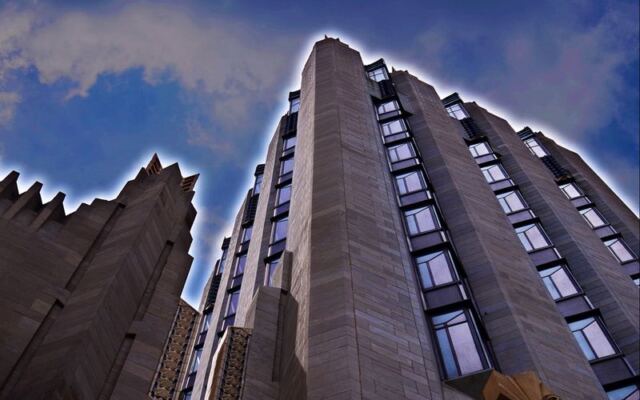
Oklahoma has a way of surprising you when you least expect it. You round a corner in downtown Tulsa and suddenly a soaring tower of terracotta and limestone stops you cold, looking like something out of a golden-age fantasy novel.
Step inside and the surprise only deepens, because the interior is every bit as jaw-dropping as the facade. If you have ever wanted to feel like you walked straight into 1929 at its most glamorous, this is the place to find it.
A Downtown Tulsa Landmark Unlike Anything Else on the Block
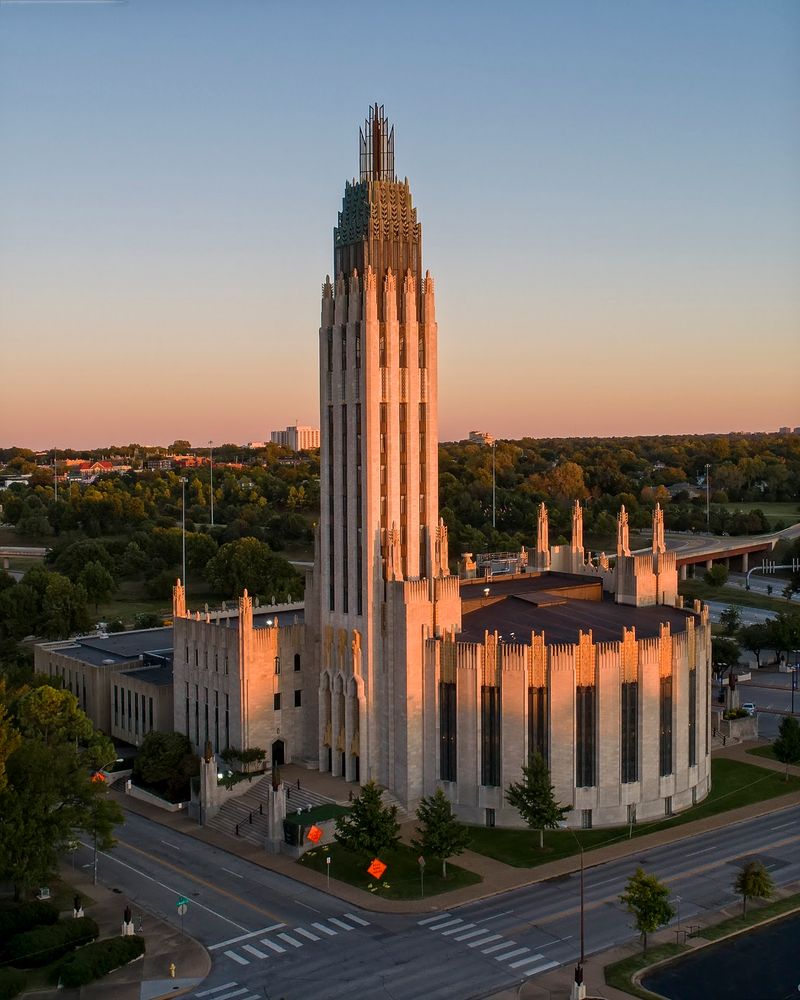
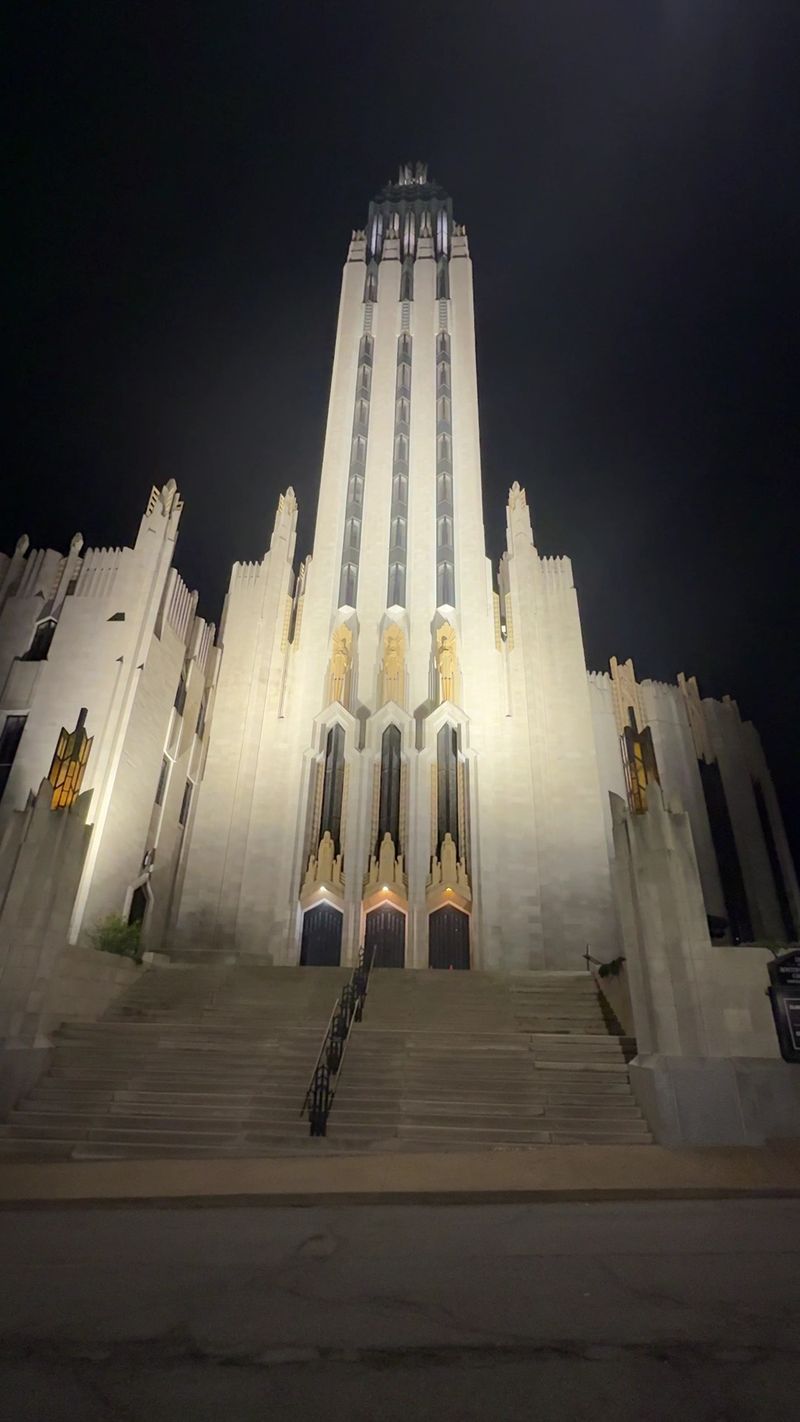
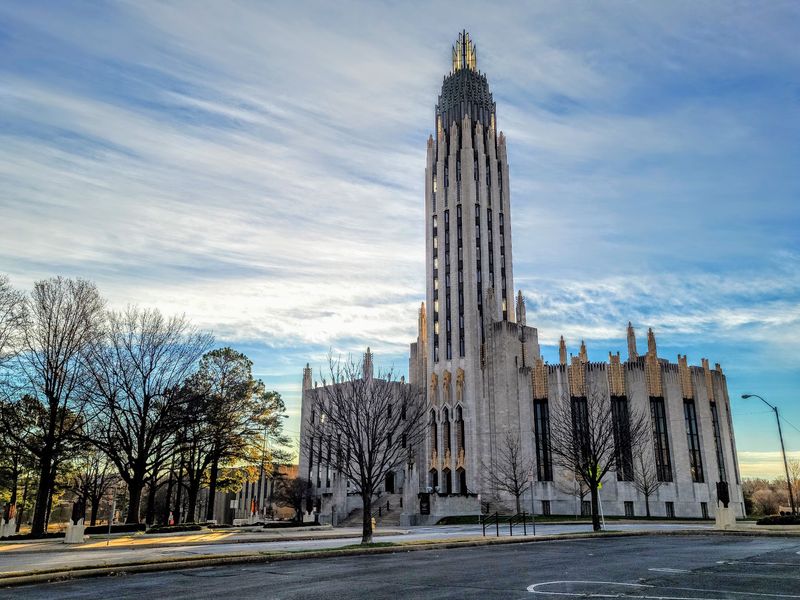
Planted firmly at the corner of 13th and Boston in the heart of downtown Tulsa, Boston Avenue United Methodist Church rises like a cathedral from another era. Its 15-story tower punches straight into the Oklahoma skyline, commanding attention from blocks away with the kind of quiet confidence that only genuine architectural masterpieces carry.
Built circa 1929, the building is recognized as a National Historic Landmark by the U.S. Department of the Interior, which puts it in rare company among American religious structures.
That designation is not handed out lightly, and one glance at the building tells you exactly why it earned that honor.
The soaring vertical lines and dramatic silhouette make it unlike any other church in the region. Visitors who pull up expecting a modest house of worship routinely find themselves standing on the sidewalk, necks craned, phones out, trying to capture something that really has to be experienced in person.
It is one of those rare buildings that rewards you the longer you look at it.
The Architectural Vision Behind the Building
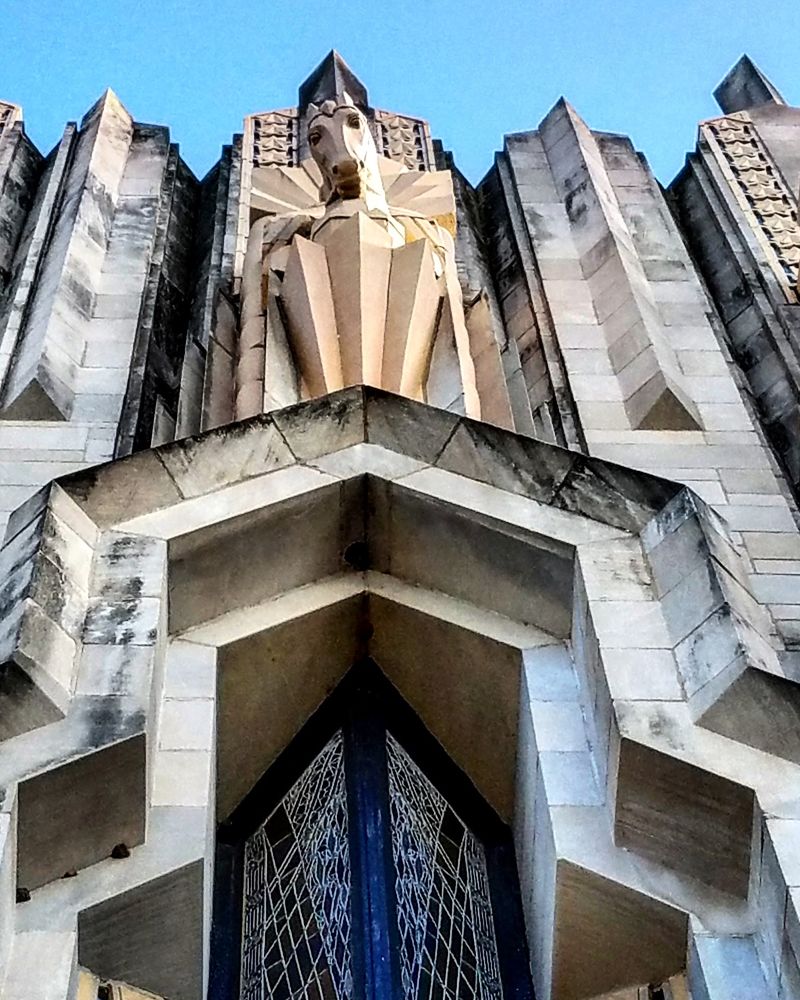
Credit for this extraordinary building goes to two names that every architecture lover should know: Bruce Goff and Adah Robinson. Robinson, an art teacher and visionary, developed the design concept, while Goff helped bring the technical drawings to life.
Together they created something that felt genuinely ahead of its time for 1920s Oklahoma.
The design philosophy was rooted in expressing spiritual aspiration through form. Every vertical line, every decorative flourish, every carefully placed terracotta sculpture was meant to draw the eye upward, both literally and symbolically.
The result is a building that feels purposeful rather than merely decorative.
Numerous terracotta sculptures adorn the exterior, each one embedded with symbolic meaning tied to the Methodist faith and the broader themes of community and devotion. Visitors who pick up the self-guided walking tour booklet from the welcome desk will find detailed explanations of what each element represents.
Knowing the intention behind the design transforms a simple architectural tour into something closer to reading a visual story written in stone and clay.
The Terracotta Exterior Up Close
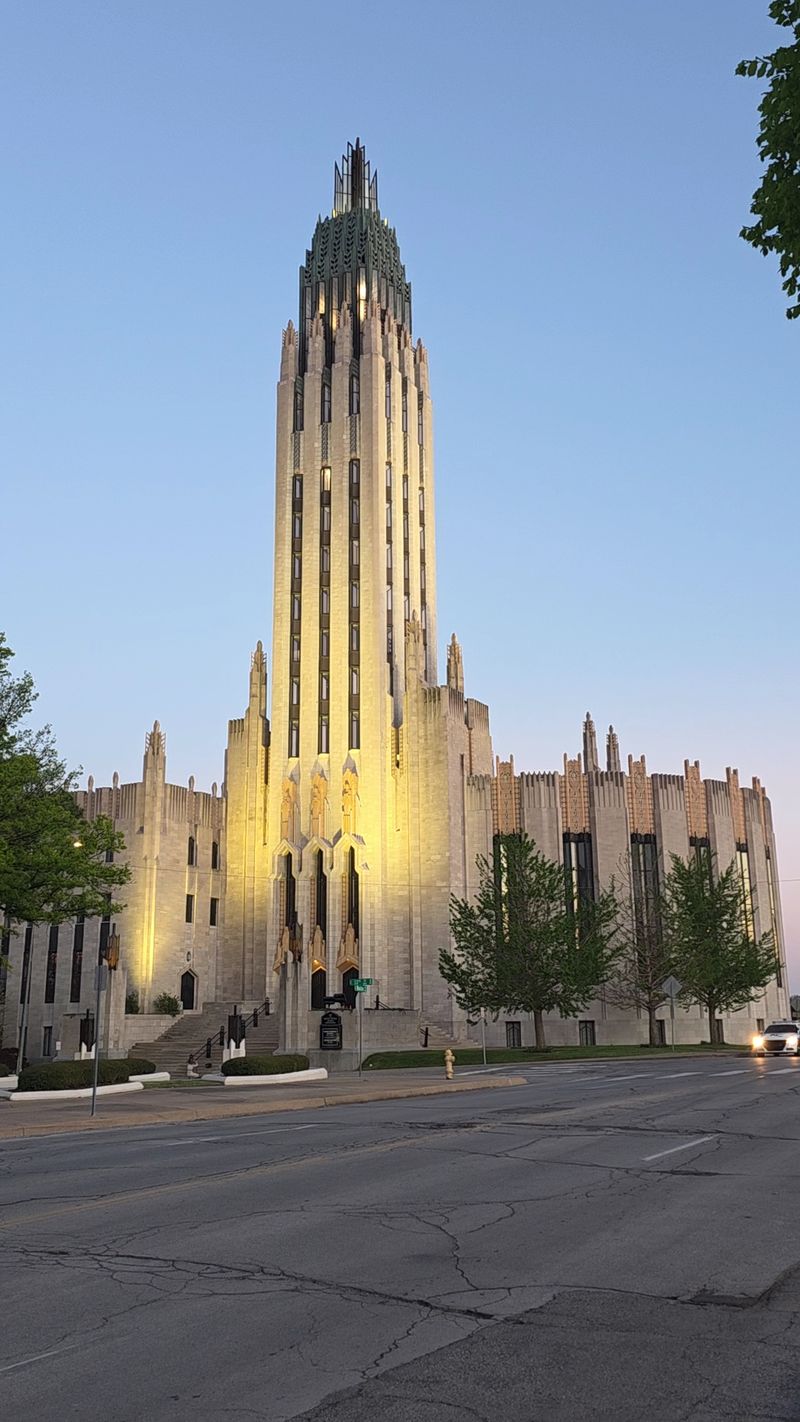
Running your eyes slowly across the exterior of Boston Avenue United Methodist Church is an exercise in discovering new details every time you look. The terracotta cladding catches light differently depending on the time of day, shifting from warm amber in the morning to a deeper, almost burnished gold as the sun moves west over Tulsa.
The sculptural program on the facade is dense and deliberate. Stylized figures, geometric patterns, and symbolic motifs layer over one another in a way that feels rich without ever tipping into clutter.
Art Deco at its best always walked that line, and this building walks it beautifully.
Visitors who have seen the building at night report that it becomes an entirely different spectacle when lit up after dark. The uplighting transforms the tower into something almost theatrical, the carved surfaces throwing sharp shadows that emphasize the relief work in ways daylight simply cannot replicate.
If your schedule allows, a quick evening drive past the building is well worth adding to any Tulsa itinerary.
The Marble Interior and the Lobby That Stops You Cold
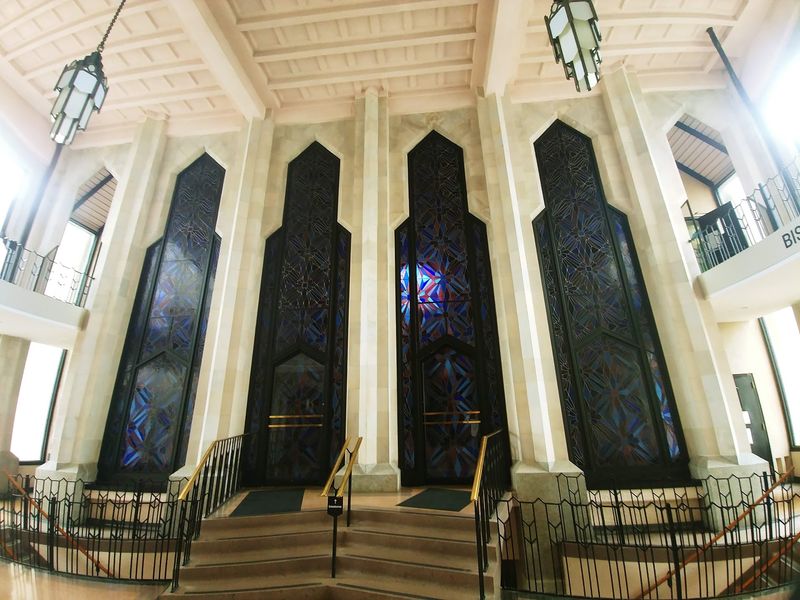
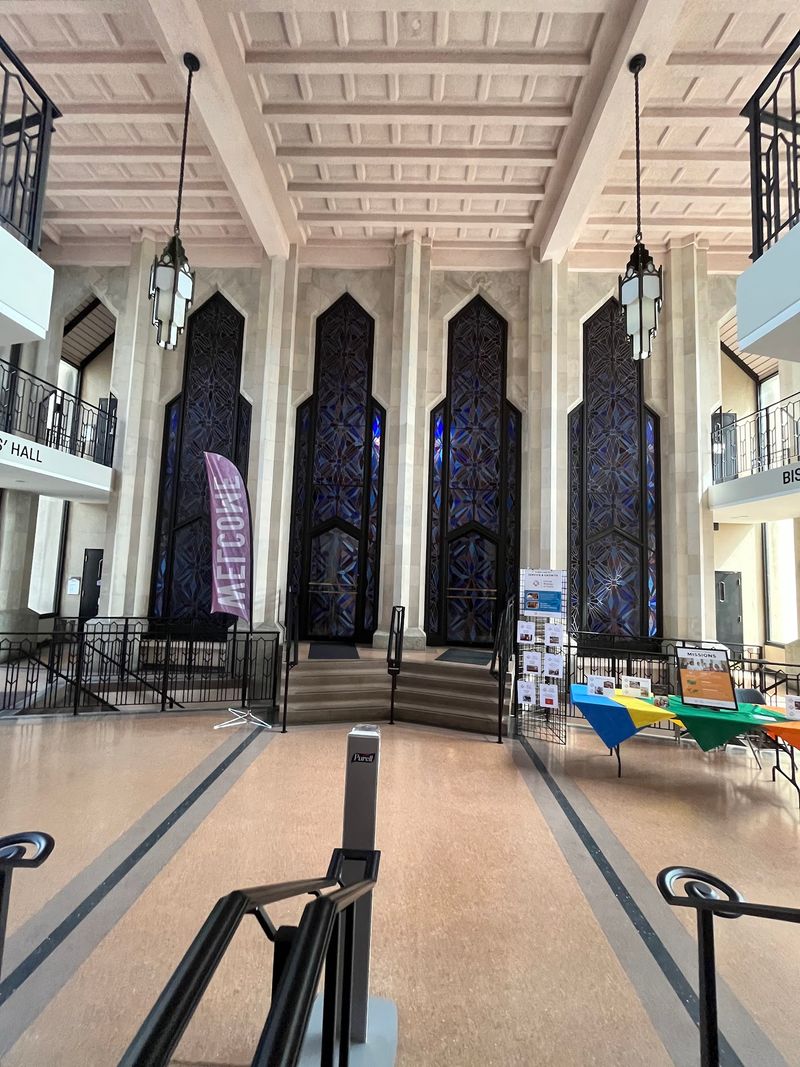
Pushing through the doors of Boston Avenue United Methodist Church and entering the lobby feels like crossing a threshold into a different century. The marble surfaces, the carefully chosen materials, and the attention to decorative detail create an atmosphere that is simultaneously grand and intimate, the way only the finest 1920s interiors manage to pull off.
Every surface carries intention. The metalwork, the inlaid patterns, the proportions of the entryway all speak to a design team that was not cutting corners anywhere in the building.
What makes it remarkable is that the quality holds from the grandest gesture down to the smallest ornamental touch.
Visitors frequently mention feeling a genuine sense of awe the moment they step inside, a reaction that has nothing to do with religious affiliation and everything to do with the sheer craft on display. Architecture lovers, history enthusiasts, and casual tourists all tend to respond the same way: they slow down, go quiet, and start looking.
That kind of involuntary reverence is the mark of a space that was designed with real conviction and executed with extraordinary skill.
The Circular Sanctuary and Its Pipe Organ
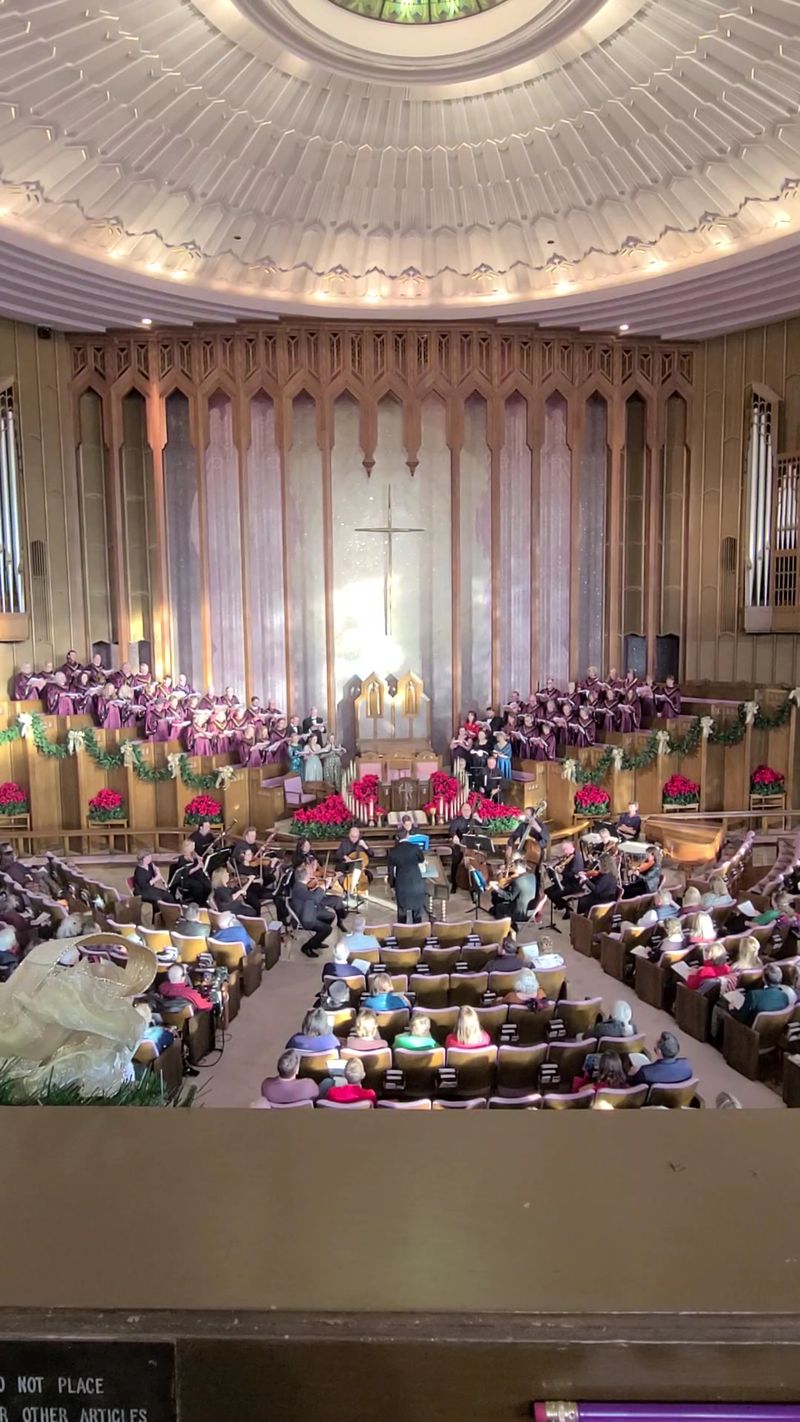
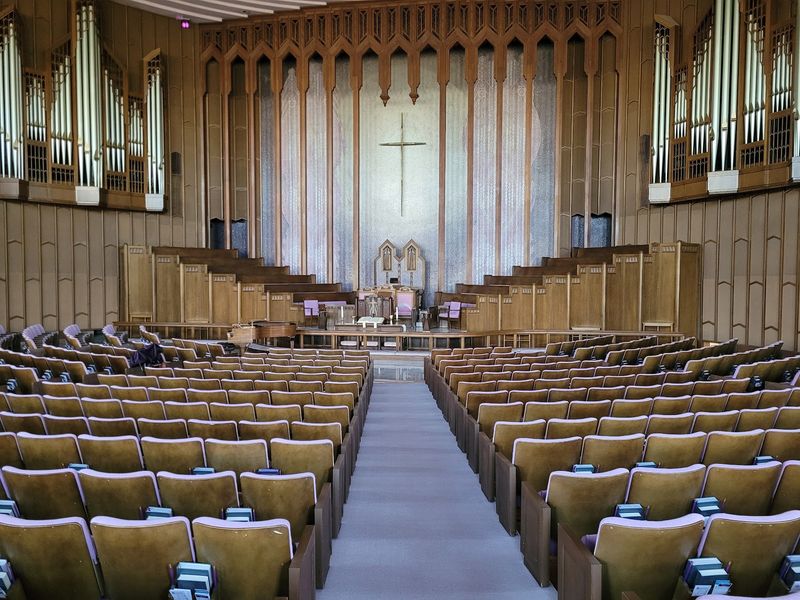
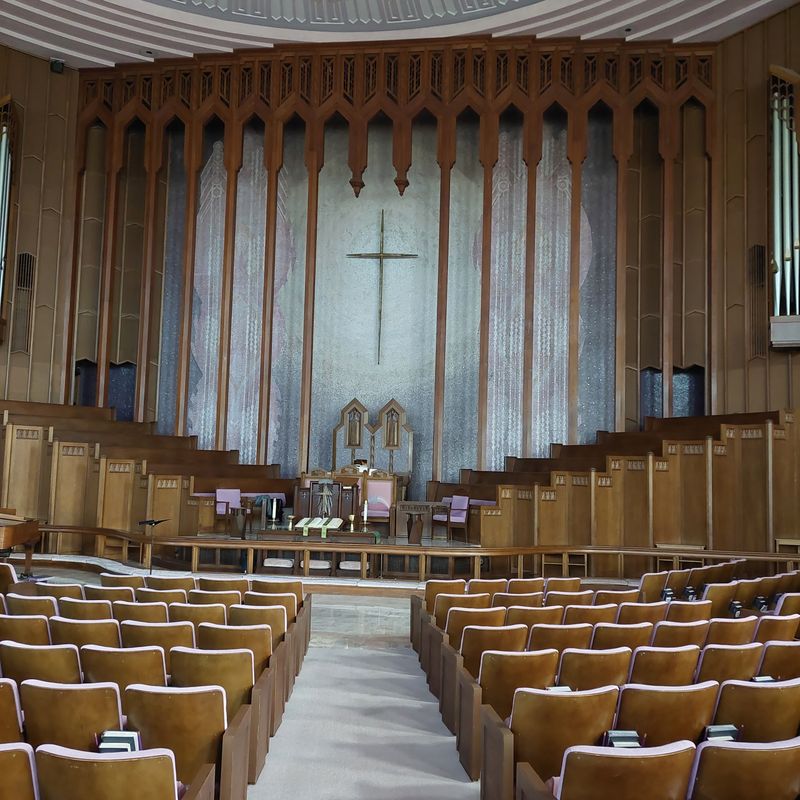
Few spaces in Oklahoma prepare you for the moment you walk into the main sanctuary at Boston Avenue. The room is circular, which is itself unusual for a church of this era, and the exposed pipes of a full pipe organ line the walls in a way that turns a functional instrument into a piece of visual architecture.
Above it all, a domed ceiling rises to a central oculus filled with stained glass. When sunlight filters through that glass at the right angle, it scatters color across the curved walls in a way that feels almost choreographed.
The acoustics in the sanctuary are reportedly exceptional, with singing voices and musical instruments carrying throughout the space in a manner that visitors consistently describe as beautiful.
The combination of the circular form, the pipe organ, the stained glass dome, and the Art Deco detailing throughout creates a sensory experience that is hard to categorize. It is a worship space, yes, but it is also a performance hall, a gallery, and a piece of living architectural history all folded into one room.
Spending time in it quietly is one of the more unexpectedly moving things you can do in Tulsa.
National Historic Landmark Status and What It Means
Earning a National Historic Landmark designation from the U.S. Department of the Interior is genuinely difficult.
The bar is set high: a building must demonstrate exceptional significance in American history, architecture, archeology, engineering, or culture. Boston Avenue United Methodist Church clears that bar with considerable room to spare.
The designation reflects a consensus among preservation experts that this building represents one of the finest examples of ecclesiastical Art Deco architecture in the entire country. That is a sweeping claim, but one that holds up to scrutiny.
There are other Art Deco churches in America, but very few that combine this level of exterior sculptural richness with an interior of equal quality.
For visitors, the landmark status adds a layer of meaning to the experience. Knowing that the building has been formally recognized at the highest level of American historic preservation changes how you look at it.
Every carved surface, every marble floor, every carefully proportioned doorway carries the weight of that recognition. Tulsa has a genuinely impressive collection of Art Deco architecture, but even within that exceptional context, Boston Avenue stands out as the crown jewel.
The Self-Guided Walking Tour Experience
One of the most accessible ways to experience Boston Avenue United Methodist Church is through the self-guided walking tour available during regular weekday hours. Visitors start at the welcome desk, where staff hand out a Walking Tour Guide booklet packed with details about the building’s design, symbolism, and the creative vision that shaped every corner of the structure.
The booklet transforms a casual walk-through into something much richer. Each stop on the tour comes with context that most visitors would never piece together on their own, explaining the meaning behind specific sculptures, the reasoning behind particular design choices, and the stories that connect the building’s past to its present.
Architecture lovers who have done the tour describe it as one of the most satisfying self-guided experiences they have encountered anywhere in Oklahoma.
The pace is entirely your own, which is part of the appeal. You can linger in the lobby for twenty minutes studying the metalwork, or spend half an hour in the sanctuary just listening to the silence.
Nobody rushes you. The staff have a reputation for being genuinely warm and welcoming to visitors who show up simply to admire the building, regardless of any religious connection.
Sunday Guided Tours and Services Open to All
Sunday mornings at Boston Avenue United Methodist Church offer something beyond the weekday self-guided experience. Services are held at 9 AM and 11 AM, and both are open to anyone who wants to attend, member or not.
The congregation has a well-established reputation for making visitors feel genuinely welcome rather than like curious outsiders peering in.
The guided architectural tour runs at 12:15 PM on Sundays, immediately following the morning services. This is the option for visitors who want an expert walking them through the building’s history, symbolism, and design details rather than navigating the booklet independently.
Groups who have attended the tour consistently praise it as thorough, engaging, and unexpectedly entertaining for people of all ages.
For larger groups, calling ahead is a smart move. The church can accommodate organized visits and is accustomed to hosting architectural societies, school groups, and tour operators who want a more structured experience.
The Tulsa Foundation Architectural Society has organized tours here, which speaks to the building’s standing in the broader preservation and design community. Sunday is genuinely the richest day to visit if your schedule allows any flexibility at all.
Practical Visiting Details: Hours, Parking, and Getting There
Planning a visit to Boston Avenue United Methodist Church is straightforward, but knowing the schedule in advance saves frustration. The building is open Tuesday through Friday from 8:30 AM to 5 PM, and on Sundays from 8 AM to 1 PM.
Monday and Saturday access is not available, so those days are ones to plan around rather than for.
Parking is free and plentiful at the church, which is a genuine luxury in a downtown setting. Visitors who have made the trip specifically for the architecture mention that easy, no-cost parking removes one of the typical urban headaches and lets you focus entirely on the experience.
The address is 1301 S Boston Ave, Tulsa, OK 74119, and the church is reachable by phone at 918-583-5181 if you want to confirm hours or ask about group visits before making the drive.
One practical note worth keeping in mind: holiday schedules can occasionally result in unplanned closures, even on days that fall within normal operating hours. Calling ahead or checking the church website at bostonavenue.org before a long trip is a sensible precaution that takes about thirty seconds and can save a wasted journey.
Why Architecture Lovers and Curious Road-Trippers Should Make the Detour
Some buildings justify a detour. Boston Avenue United Methodist Church is one of them, and the argument for making the trip is not complicated: there is simply nothing else quite like it in Oklahoma, and arguably very little like it anywhere in the American interior.
Road-trippers cutting through Tulsa on Route 66 or any nearby corridor have a natural opportunity to add a stop that costs nothing, takes as little or as long as you want, and delivers a visual and historical experience that holds up long after the drive is over. Architecture enthusiasts who have made Oklahoma pilgrimages specifically to track down Art Deco buildings consistently list Boston Avenue as the highlight of the entire state.
Beyond the architecture, the building carries a sense of community vitality that makes it feel alive rather than preserved behind glass. Active choirs, youth programs, community outreach, and a genuinely welcoming congregation mean that visiting here connects you to something ongoing rather than something frozen in time.
That combination of historic grandeur and living purpose is rare, and it is exactly what makes Boston Avenue United Methodist Church one of the most memorable stops in Tulsa.
Share this story