Most Civil War forts around Washington were torn down or covered by neighborhoods long ago. One earthwork fort in Northern Virginia kept about 90 percent of its original walls, and it sits inside a quiet city park.
Part of it was rebuilt using the original plans, and replica cannons point out over the grass. Joggers circle it, kids play nearby, and a small museum holds artifacts that tell stories you will not find in many textbooks.
I walked the loop on a bright day and found a lot more history than I expected. Here is what makes this place so special.
A Fort That Beat The Odds
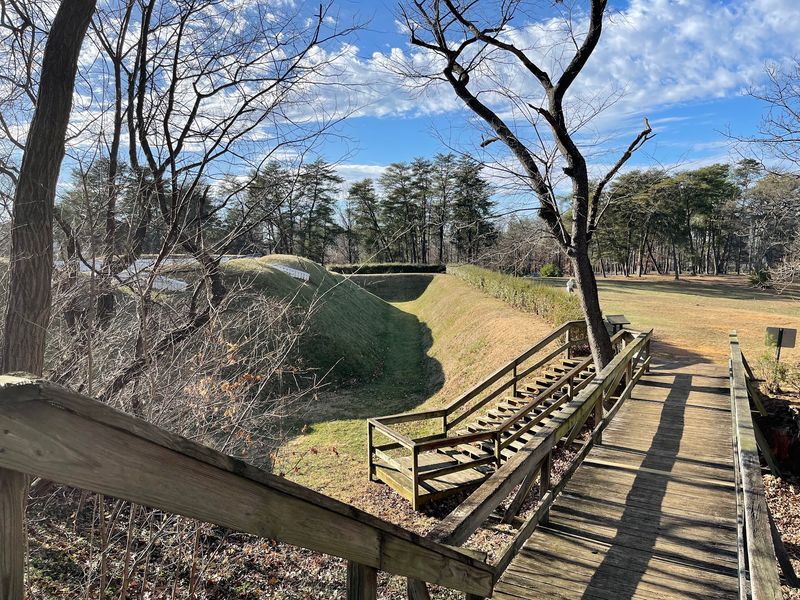
Most forts built to protect Washington during the Civil War vanished decades ago. Roads, houses, and shopping centers replaced them.
That makes this survivor feel like a small miracle.
About 90 percent of the original walls remain, and that is the reason I wanted to visit. The earthen mounds are covered in grass now, so they look like gentle hills until you notice their sharp angles.
Park signs explain how the fort was part of a ring of defenses around the capital. Reading them helped me understand why soldiers built so many forts so close together.
Plan to spend a little time just looking. The shapes of the walls tell a story about how people planned for danger long before modern machines existed.
The best part is that the whole thing is free to walk around, so you can take your time.
Finding The Place And Planning Your Visit
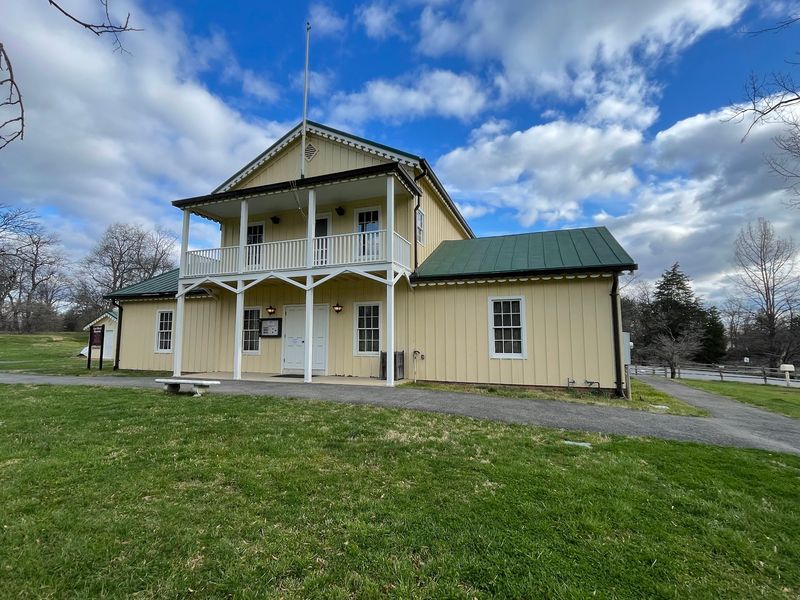
Here is the address you need: Fort Ward Museum & Historic Site, 4301 W Braddock Rd, Alexandria, Virginia, United States. It sits inside a city park, so finding parking is simple.
Admission and parking are free, which makes it an easy add-on to any Northern Virginia trip. The park roads are narrow, so drive slowly and watch for walkers.
The museum keeps limited hours. It opens Thursday and Friday from 11 am to 4 pm, Saturday from 11 am to 5 pm, and Sunday from 1 to 5 pm.
It is closed Monday through Wednesday.
The outdoor fort grounds are open to stroll even when you are not inside the museum. Check the city website before you go, since hours can change.
Wear comfortable shoes, because you will want to walk the whole loop.
The Rebuilt Northwest Bastion
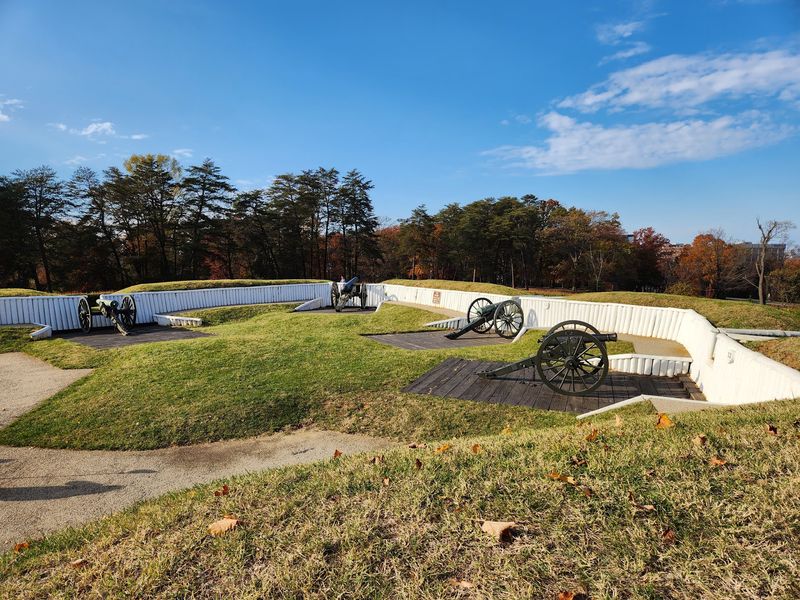
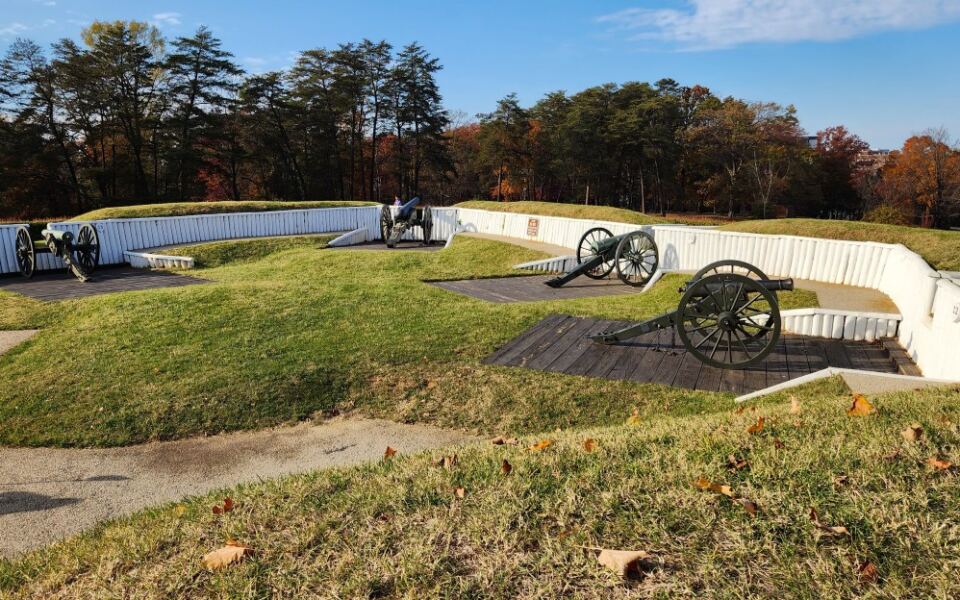
One corner of the fort looks different from the rest, and it is the part that grabs your eye first. The northwest bastion was rebuilt to match the original plans.
Wooden supports hold back the dirt walls, and the structure shows how soldiers shaped earth into a defensive position. Seeing it up close made the old drawings in the museum click for me.
Replica cannons rest on their platforms, aimed over the walls. They give you a sense of the scale of the guns that crews once handled.
Take a slow walk along the top edge if the signs allow. You can see how the angles gave defenders a wide view of the land around them.
Photographers will love the contrast of dark timber, green grass, and iron barrels.
Cannons In The Trenches
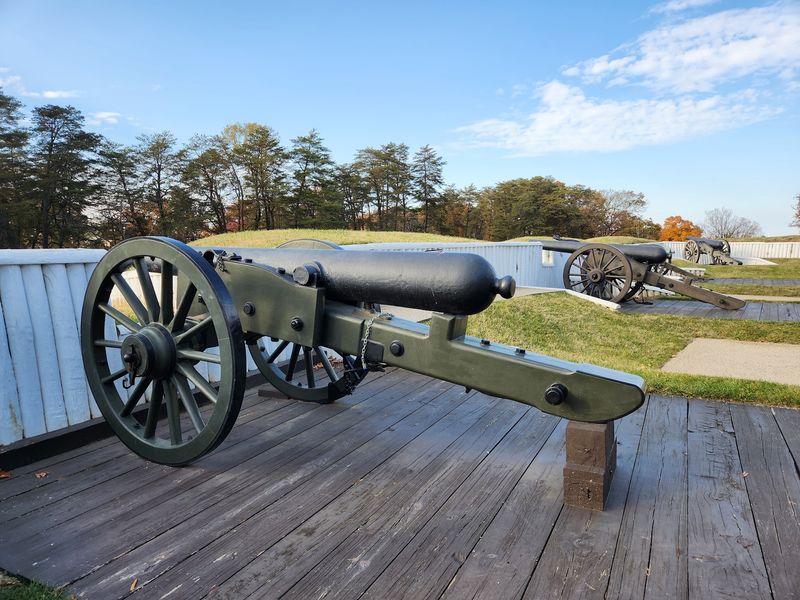
Ask almost anyone who has visited, and the cannons come up quickly. Replica guns sit along the walls in several spots, and each one has a good photo angle.
The artillery trench area is worth a slower look. The ditches and mounds show how crews found cover while they worked the guns.
Some of the cannons are positioned to point toward the open land where an approaching force might have come. Standing behind one helped me see the fort from a soldier’s point of view.
Kids tend to love this part, but adults linger here too. Read the nearby signs for names, uses, and details about how the guns were loaded.
A few minutes of reading turns a simple photo stop into a real lesson.
The Museum In The Headquarters Building
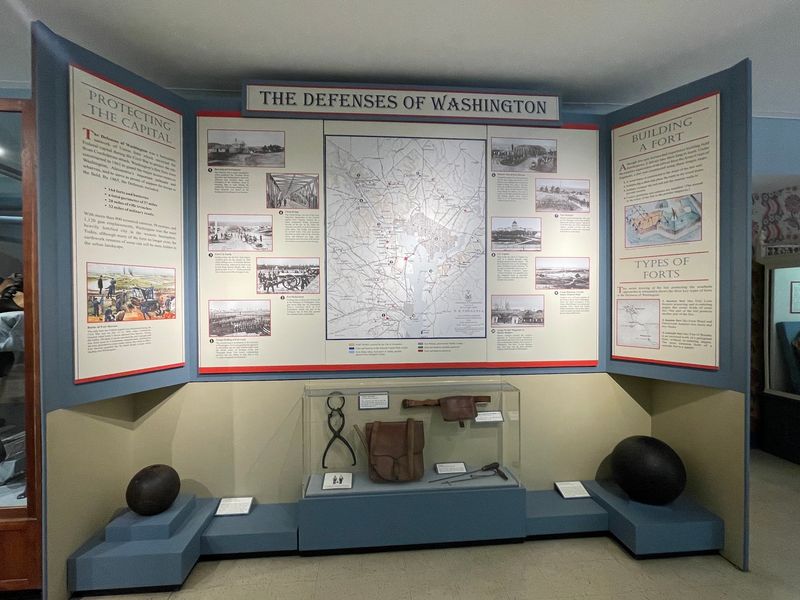
The small museum looks modest from the outside, but it packs plenty inside. Cases hold uniforms, tools, and everyday objects that make the soldiers feel like real people.
A large wall picture of the forts around the Washington area stands out. It shows how many defenses once circled the capital, and it put the fort I had just walked into context.
Photos are allowed, so bring your phone. The space is compact, but I found it easy to spend longer than planned.
There is also a small gift shop near the exhibits for books and keepsakes. Museum staff and volunteers can answer questions if you are curious about a certain object.
Go in before you head outside, since the exhibits help the fort walls make more sense.
The Zouave And Bingham Exhibit
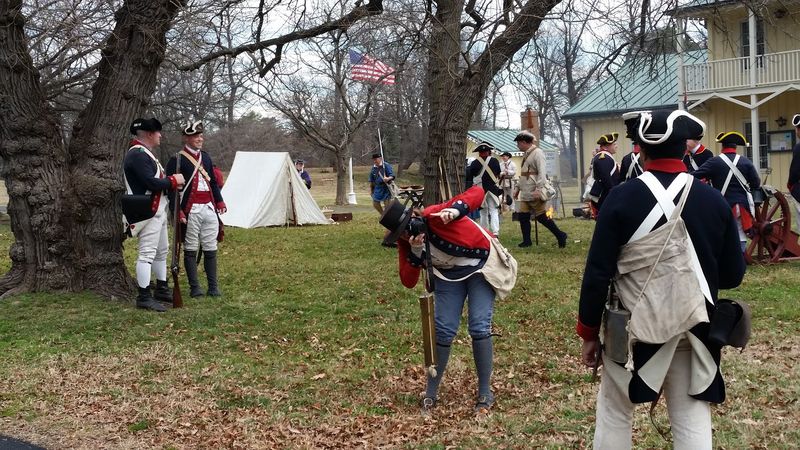
Bright colors are rare in Civil War displays, so the Zouave exhibit really stands out. Zouave soldiers wore flashy uniforms inspired by French North African troops.
The exhibit also tells the story of Bingham, and it is one of the museum’s best known displays. Visitors often call it one of the strongest sections they have seen.
Take your time reading the labels. They connect the uniforms and objects to the early days of the war.
A memorial tied to the war’s earliest losses appears in this part of the story as well, and it adds a quiet moment to the visit. Try to see this exhibit early in your tour.
The details are easy to miss if you rush, but they stay with you long after you leave.
Stories Of Freedom Seekers
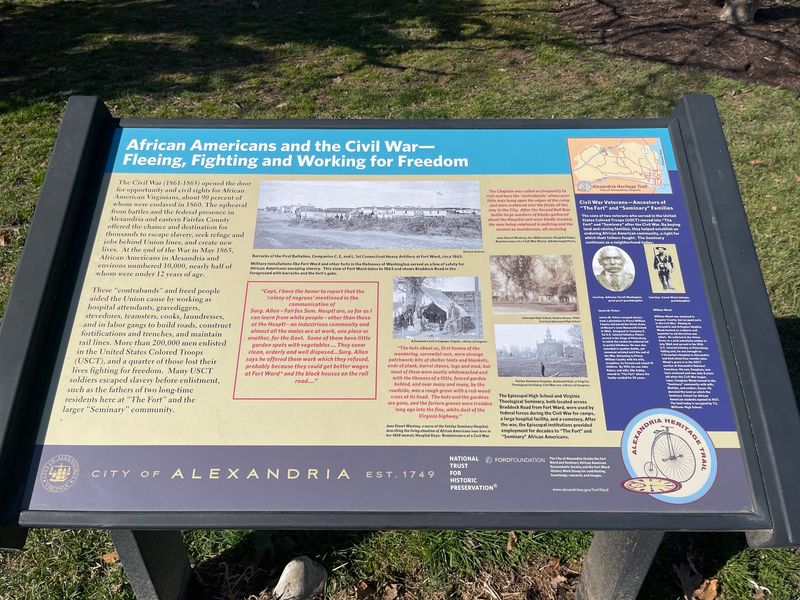
History here is not only about weapons and walls. The people who lived and worked around the fort have a big place in the story.
Enslaved people came to the Alexandria area seeking freedom during the war, and many Black men later served with the Union army. Signs and exhibits help share these experiences.
I liked that the story was told in plain words that younger readers can follow. It gave the earthworks a human side.
Look for the interpretive signs as you walk, and stop at each one. They add names, places, and context that you would never guess from the grass-covered mounds alone.
This part of the visit made me think the most.
The Historic Cemetery
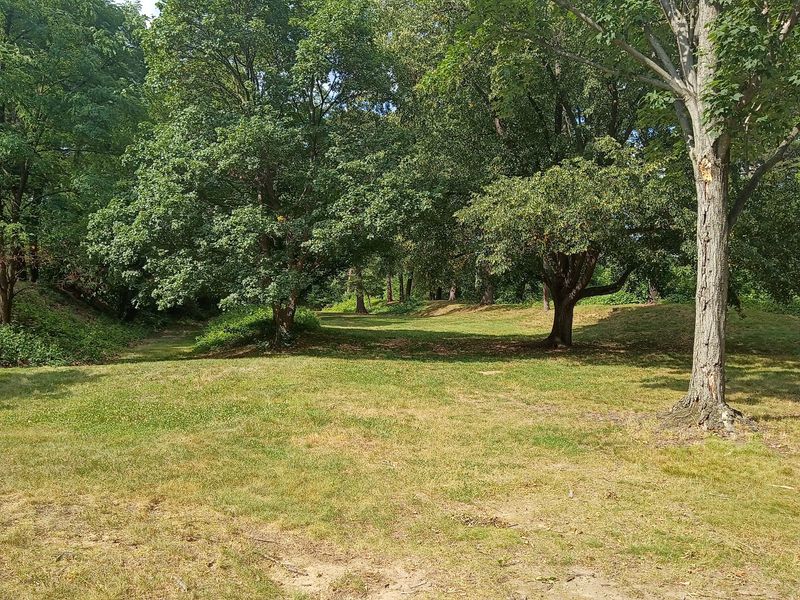
Tucked within the park is a small historic cemetery, and visitors are asked to treat it with respect. It is a calm corner that is easy to overlook.
Walk quietly, stay on the paths, and read any nearby signs. Even a brief stop reminds you that this land was part of real lives long before it became a park.
The spot is shaded and peaceful, which suits its purpose. I spent a few minutes there before heading back to the fort loop.
Many people zoom straight from the museum to the cannons and miss this part. Slow down and add it to your route.
It gives the visit a thoughtful pause between the louder attractions.
A Walking Loop Locals Love
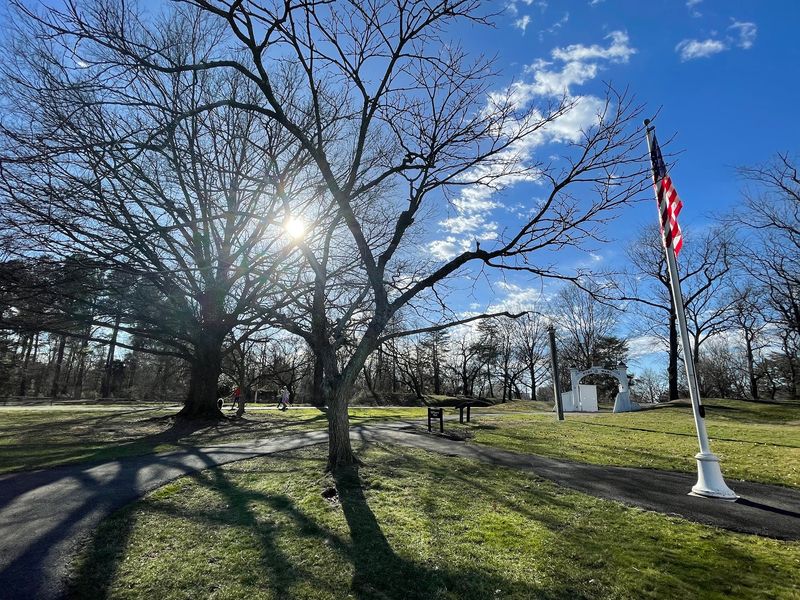
Locals treat this place like a neighborhood park, and the paved loop is the reason. It doubles as a one-lane road, so it works well for walkers, joggers, and people with strollers.
The path circles the fort grounds, so history is always in view. I saw runners passing the cannons without a second glance, which says a lot about how normal this treasure feels to them.
Dog owners will like that the trail is easy on paws, and water spigots with bowls have been noted along the way. Spring is especially pretty here.
Visit on a weekday midday for a quieter feel. Crowds tend to pick up in the early afternoon, especially on pleasant days.
Picnics, Playground, And Amphitheater
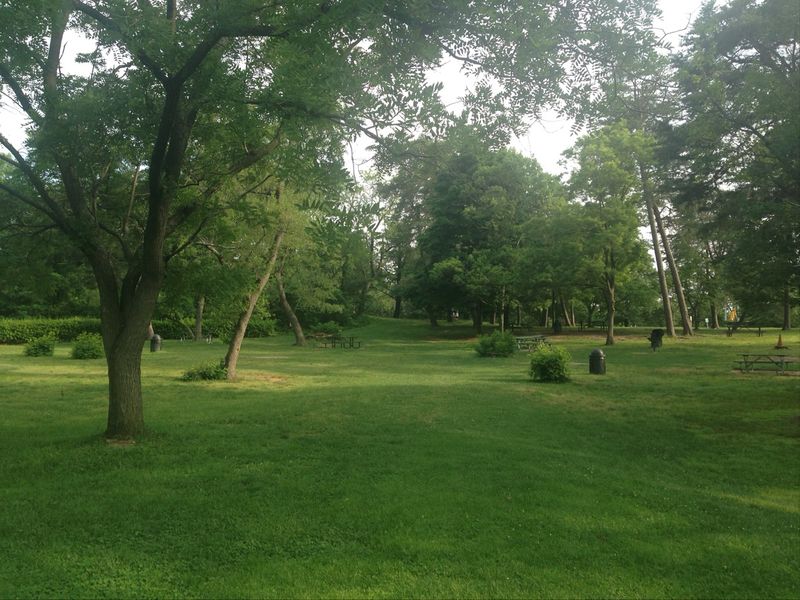
After the history lesson, the park has plenty of room to relax. Picnic tables and benches are scattered under trees, and some covered tables can be reserved ahead.
There are grills for cookouts, a playground for younger kids, and restrooms near the main area. That makes it easy to turn a short stop into a half day.
An outdoor amphitheater with power outlets sits within the grounds too. It hosts programs at times, so check the city website for event news.
Pack lunch and let the kids burn off energy after the museum. If you are still hungry for more history afterward, other Northern Virginia sites sit close by, including Alexandria’s Old Town streets and other Civil War forts around the capital region.
Share this story