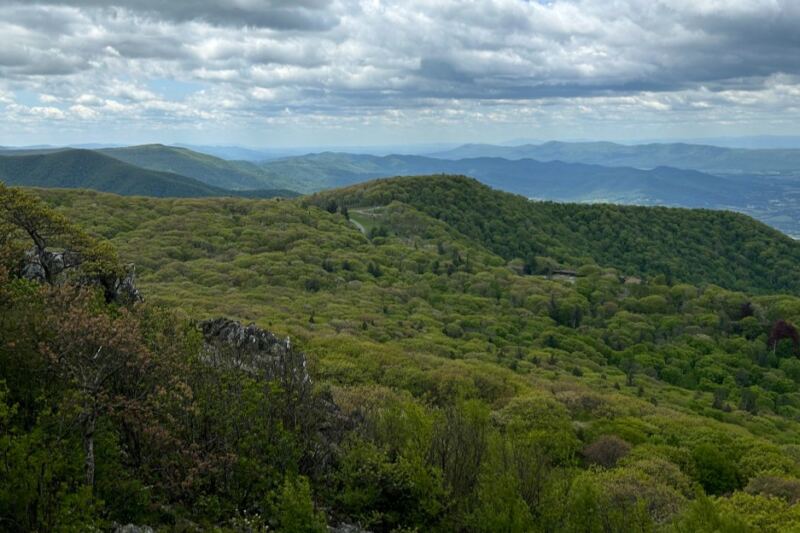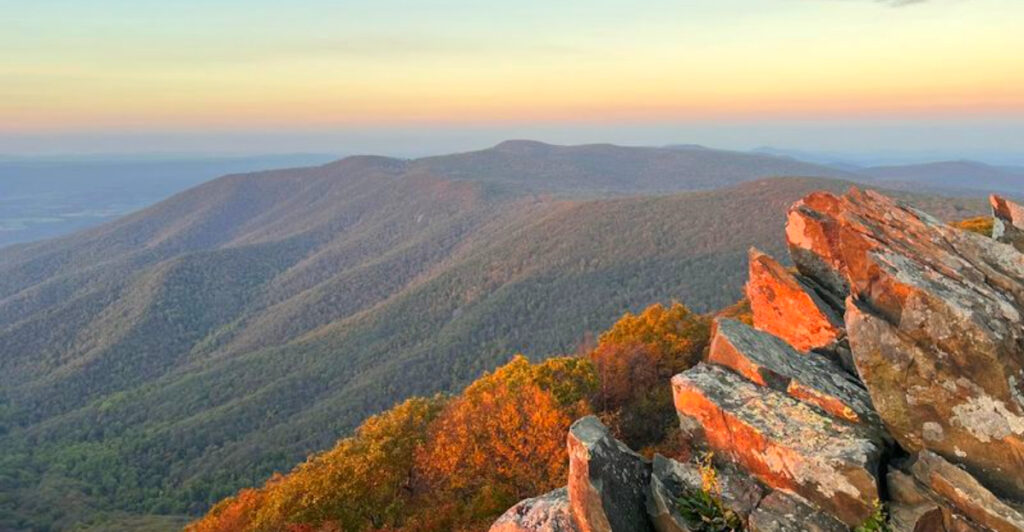
There is a road in Virginia where you can drive through the clouds, watch the Blue Ridge Mountains roll out endlessly below you, and spot a white-tailed deer standing perfectly still at the edge of the forest. That road is 105 miles long, and it sits entirely within one of the most remarkable national parks on the East Coast.
Every overlook along the way delivers a view that feels almost too good to be real. Whether you have never heard of this place or have driven it a dozen times, there is always something new waiting around the next curve.
Skyline Drive: The Road That Changes Everything
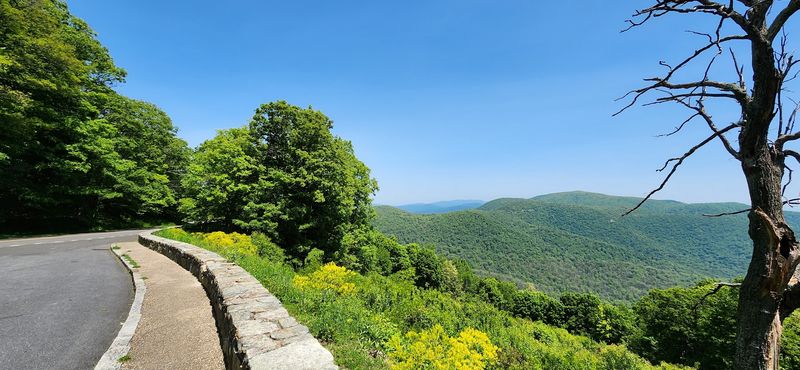
Few roads in the United States can match the sheer drama of Skyline Drive. Running the entire length of Shenandoah National Park in Virginia, this 105-mile route follows the crest of the Blue Ridge Mountains from Front Royal in the north to Rockfish Gap in the south.
The speed limit along the drive is 35 miles per hour, which sounds slow until you realize that is exactly the right pace. Every half mile or so, another overlook appears, and each one frames the Shenandoah Valley and the Appalachian ridges in a completely different way.
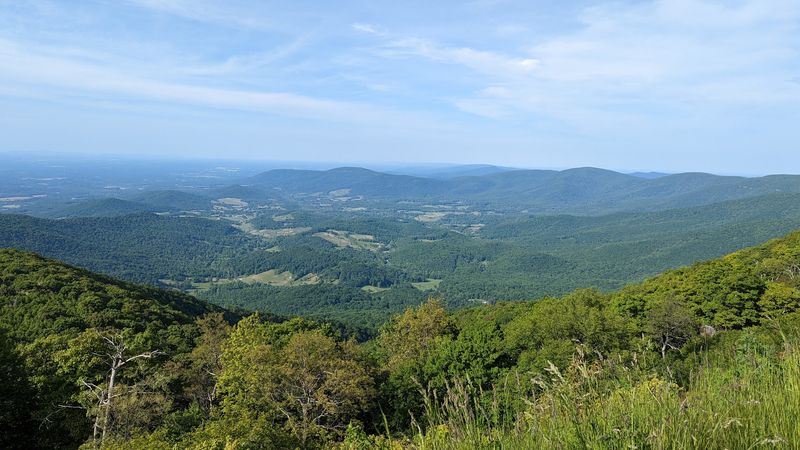
On a clear day, the views stretch for dozens of miles. On a misty morning, the mountains float above a sea of low clouds in a way that feels almost surreal.
Driving it once is rarely enough, because no two visits ever look exactly the same.
Where Shenandoah National Park Actually Is
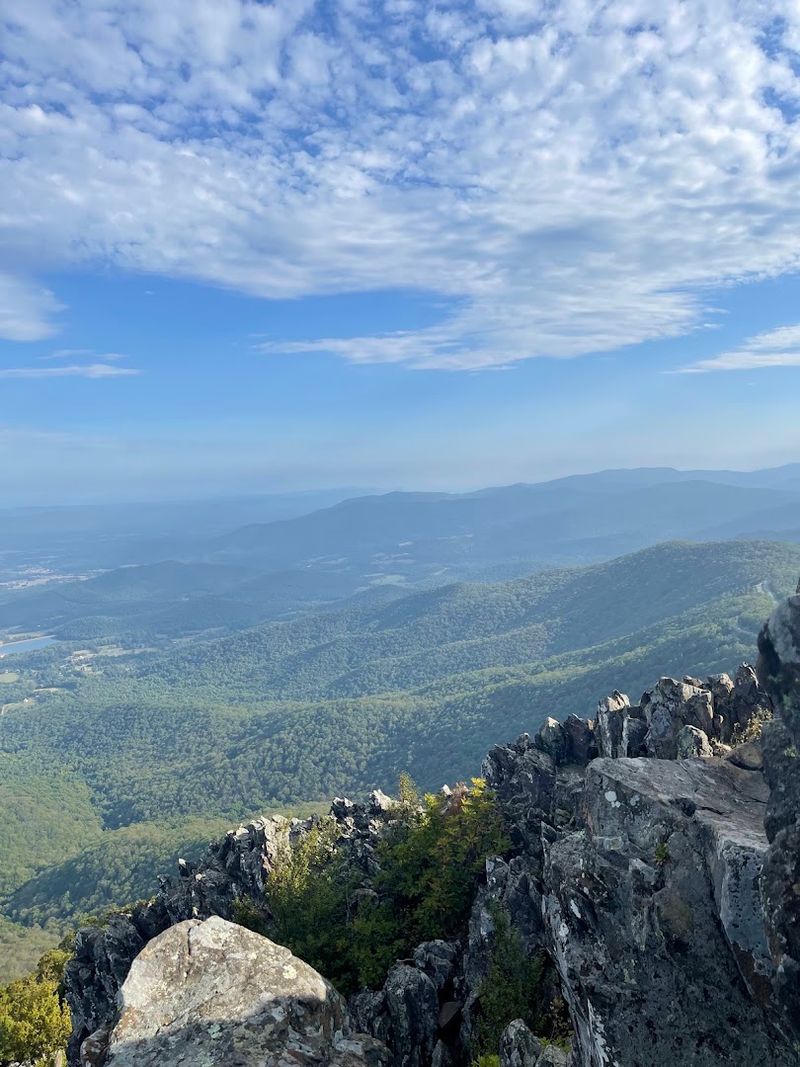
Shenandoah National Park sits in the northern part of the Blue Ridge Mountains in Virginia, stretching across roughly 200,000 acres of protected forest, meadows, waterfalls, and ridgeline terrain. The park entrance at Front Royal is located at the northern end of Skyline Drive in Luray, Virginia, United States.
What surprises most first-time visitors is how close it is to major East Coast cities. The park sits less than 75 miles from Washington, D.C., which means a morning departure from the capital can have you standing at a mountain overlook before lunch.
That proximity makes Shenandoah one of the most visited national parks in the country, yet the forest is so vast and the trails so spread out that it rarely feels crowded once you step away from the main overlooks. The park has a way of absorbing people and giving each visitor a sense of space.
The History Behind the Park’s Creation
Shenandoah National Park was established in 1935, making it one of the earlier additions to the national park system in the eastern United States. Unlike many western parks that were set aside from federal land, Shenandoah was carved out of privately owned mountain communities, a process that involved relocating hundreds of families who had lived in those hills for generations.
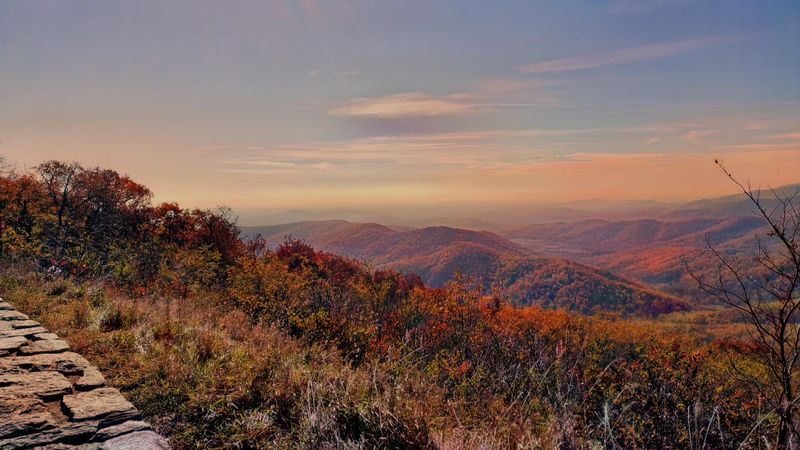
The Civilian Conservation Corps played a major role in building the infrastructure that visitors use today, including trails, stone walls, and the picnic areas that line Skyline Drive. Much of that stonework is still visible along the road, giving the drive a historic character that feels rooted in a particular era of American public works.
Understanding that history adds a layer of meaning to every walk through the forest. The land has been shaped by both nature and human effort, and that combination is part of what makes the park feel so richly layered.
The Overlooks That Stop You in Your Tracks
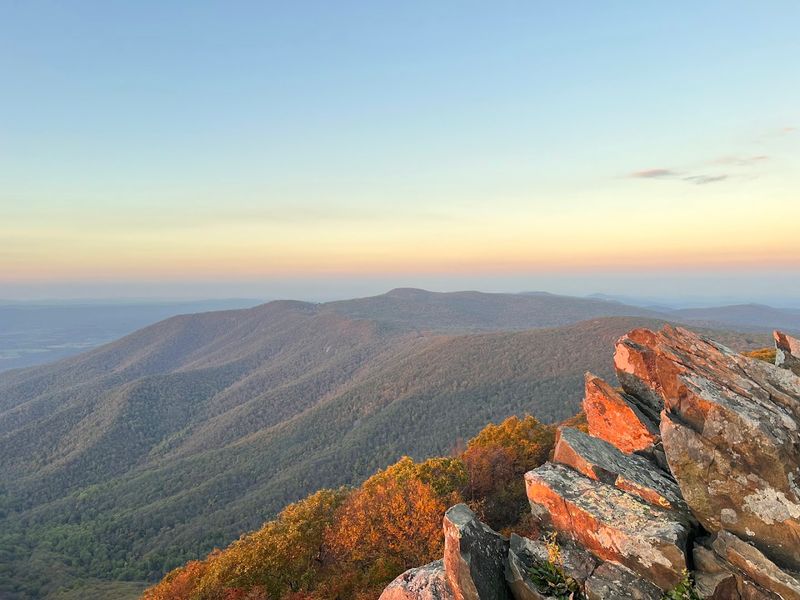
There are more than 70 named overlooks along Skyline Drive, and each one offers a slightly different perspective on the Blue Ridge landscape. Some face east toward the rolling Piedmont, while others look west across the wide Shenandoah Valley toward the Allegheny Mountains in the distance.
The stone walls at many overlooks were built by the Civilian Conservation Corps during the 1930s and have become iconic features of the drive. They create a natural foreground for photographs and give visitors a sturdy place to lean while taking in views that stretch for miles.
Stony Man Overlook and Franklin Cliffs are among the spots that tend to draw the most lingering. Both offer dramatic drops and wide sightlines that make it genuinely hard to leave.
The light changes constantly throughout the day, so an overlook that looks ordinary at noon can turn breathtaking by late afternoon when the sun drops lower in the sky.
Dark Hollow Falls and the Reward at the End of the Trail
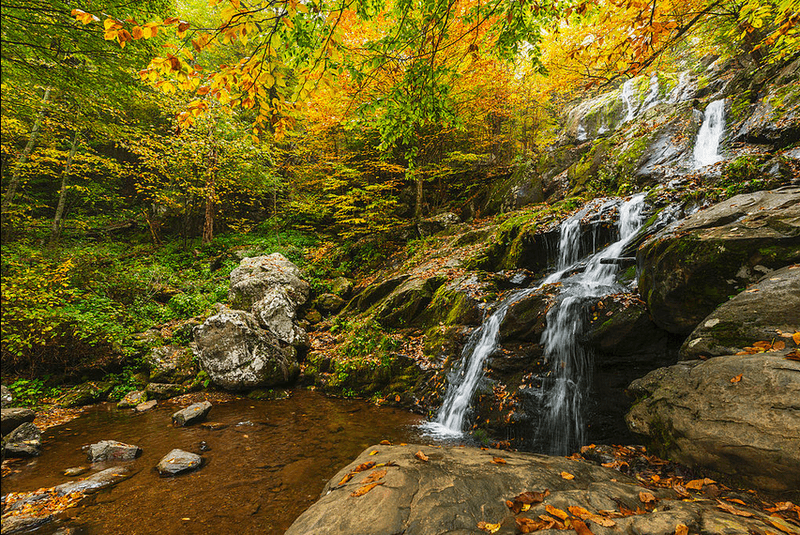
Dark Hollow Falls is one of the most popular short hikes in the park, and the trail earns its reputation quickly. The path descends through a dense forest of hemlocks and hardwoods, following Hogcamp Branch as it tumbles downhill toward the falls.
The waterfall itself drops about 70 feet over a series of basalt ledges, and the sound of it reaches you before you can see it through the trees. Standing at the base and watching the water break apart against the dark rock is the kind of moment that makes you glad you laced up your boots that morning.
The hike back up is steeper than the descent, which surprises some visitors, but the effort is short-lived. The trail is under two miles round trip, making it accessible for most fitness levels.
Arriving early in the morning means fewer people at the falls and a better chance of having the whole scene to yourself.
Bearfence Mountain and the Scramble Worth Every Step
Bearfence Mountain does not look like much on a map. The loop trail is just over a mile long, which sounds almost too easy for a national park known for serious hiking.
Then you reach the rock scramble section, and the whole experience shifts into something genuinely thrilling.
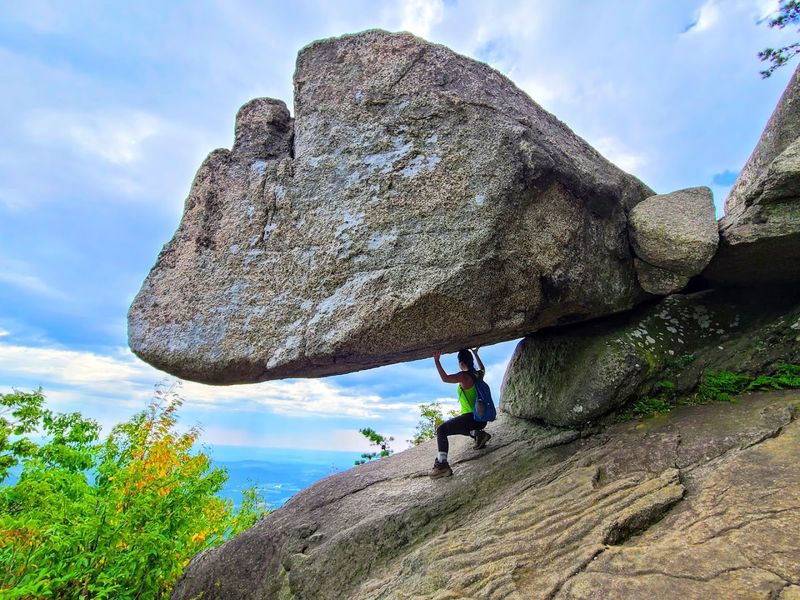
The final push to the summit requires using both hands and feet to navigate exposed volcanic rock formations. There are no ropes or ladders, just the rock itself and your own balance.
Reaching the top delivers a 360-degree panoramic view of the Blue Ridge Mountains that very few short hikes in the East can match.
The payoff is enormous relative to the effort, which is exactly why this trail gets mentioned so often by people who have hiked extensively in the park. Solo hikers sometimes hesitate at the scramble section, but most who push through describe it as the highlight of their entire visit to Shenandoah.
Big Meadows and the Open Sky Above the Ridge
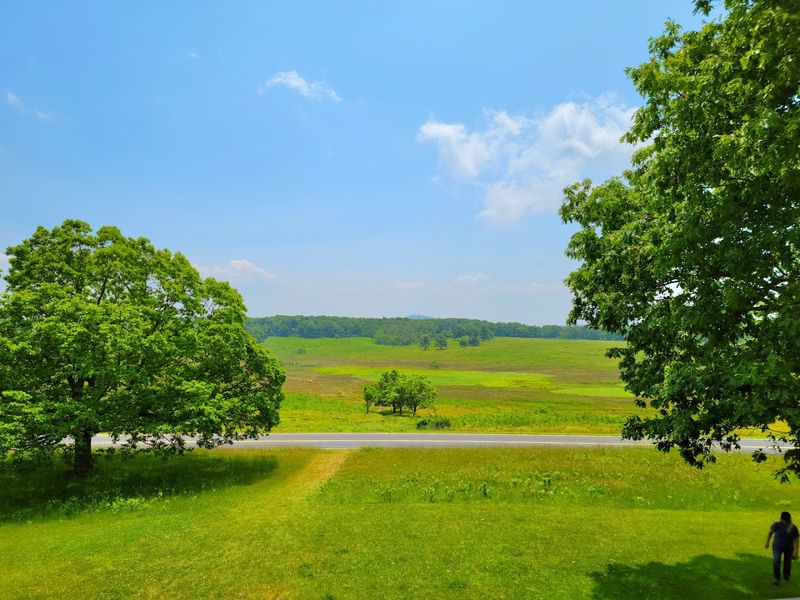
Big Meadows sits near the midpoint of Skyline Drive at an elevation of about 3,500 feet, and it feels like a completely different world from the dense forest surrounding it. The meadow spreads out across a broad, flat plateau, offering unobstructed views of the sky in every direction.
At sunrise, the light comes in low and warm across the grass, and the entire meadow takes on a golden quality that photographers chase for good reason. At dusk, deer move in from the tree line and graze quietly while the last light fades behind the mountains to the west.
Big Meadows is also one of the most developed areas in the park, with a lodge, campground, and visitor center all within easy reach. It serves as a natural base for exploring the central section of the park, and the surrounding trails connect to some of the most rewarding terrain Shenandoah has to offer.
Wildlife Along Every Mile of the Drive
White-tailed deer are so common along Skyline Drive that spotting one barely raises an eyebrow after the first hour. They graze at overlooks, cross the road without much concern for traffic, and stand at the forest edge in the early morning as if posing for the steady stream of cameras pointed their way.
Black bears also live throughout the park, and sightings are not unusual, particularly in areas with heavy berry growth in late summer and fall. The park recommends keeping a safe distance and storing food properly, especially at campgrounds.
Bears here are wild animals that have not lost their natural wariness, which makes any encounter feel genuinely special.
Wild turkeys, red foxes, and a wide variety of songbirds round out the wildlife picture. Bringing binoculars along Skyline Drive turns a casual road trip into something closer to a real wildlife experience, especially during the quieter early morning hours when animals are most active.
Fall Foliage Season and Why It Draws Such a Crowd
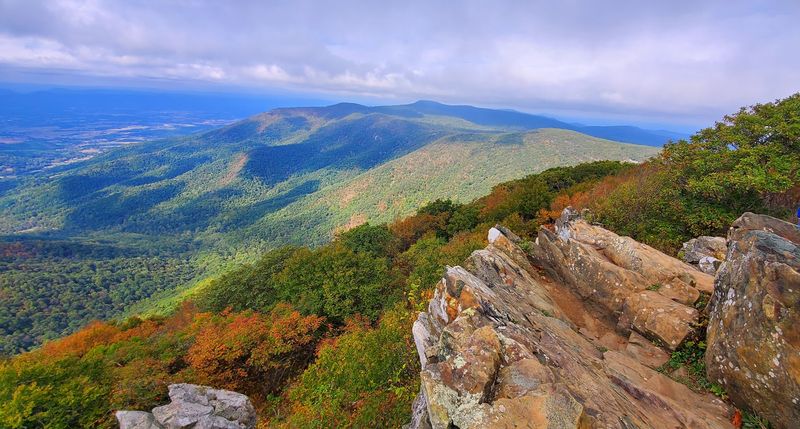
Autumn transforms Shenandoah National Park into one of the most visually striking places on the entire East Coast. The hardwood forests that cover the Blue Ridge ridgeline turn in waves of red, orange, and gold, typically peaking somewhere between mid-October and early November depending on elevation and weather patterns that year.
Driving Skyline Drive during peak foliage is an experience that is hard to overstate. The colors press in from both sides of the road, and every overlook frames a valley filled with fall color that seems to go on forever.
The crisp mountain air adds to the atmosphere in a way that photographs simply cannot capture.
The trade-off is that fall is also the park’s busiest season. Arriving early on weekday mornings gives the best chance of finding parking at popular overlooks and trailheads without a long wait.
The crowds thin significantly after the foliage peaks, and late November brings its own quiet, stripped-down beauty to the ridgeline.
Hiking the Appalachian Trail Through the Park
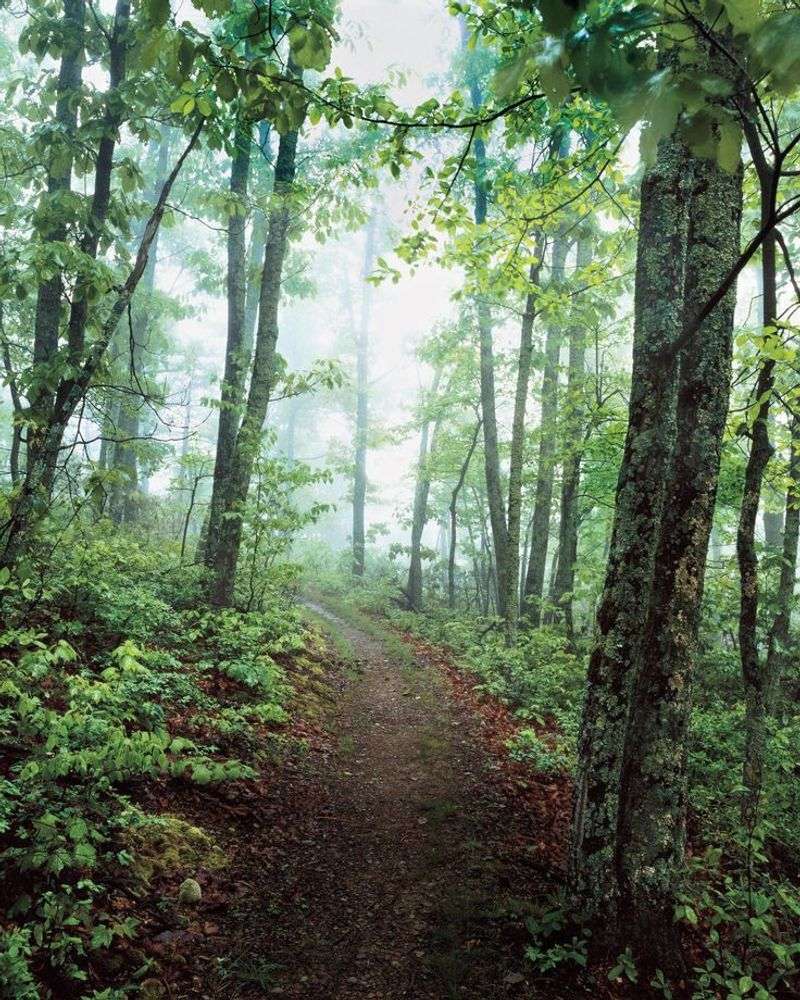
About 101 miles of the Appalachian Trail run directly through Shenandoah National Park, crossing Skyline Drive at multiple points along the way. That overlap makes Shenandoah one of the most accessible stretches of the entire 2,000-plus-mile trail, where day hikers can walk a section of the AT without any serious logistical planning.
The trail crosses through forest, open ridgeline, and rocky outcrops, offering a genuine taste of long-distance hiking culture without the commitment of a multi-week journey. AT thru-hikers pass through during spring and fall, and encountering someone carrying a fully loaded pack after weeks on the trail adds an unexpected human dimension to a day hike.
Shorter out-and-back segments from various Skyline Drive access points let visitors sample the trail at whatever pace suits them. Even a one-mile walk on the AT through Shenandoah carries the quiet satisfaction of being on one of the most famous footpaths in the world.
Hawksbill Summit and the Highest Point in the Park
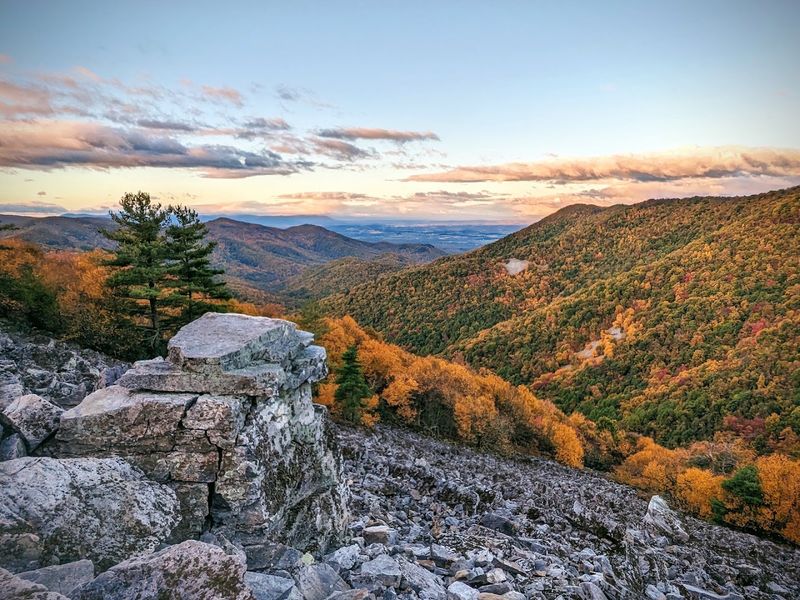
Hawksbill Mountain stands at 4,051 feet, making it the highest peak in Shenandoah National Park. The summit trail is not the longest hike in the park, but the elevation gain is real, and the views from the top belong in a completely different category from most other overlooks along Skyline Drive.
From the rocky summit platform, the landscape opens up in every direction. The Shenandoah Valley lies to the west, and the forested ridges of the Blue Ridge stretch north and south as far as the eye can reach.
On a clear day, the visibility can extend for 50 miles or more.
The hike itself winds through a forest of spruce and fir near the summit, a plant community more typical of northern New England than Virginia. That ecological surprise adds a layer of interest for nature-minded visitors who expect a typical mid-Atlantic forest and instead find something that feels distinctly alpine in character.
Camping Under the Stars at One of Four Campgrounds
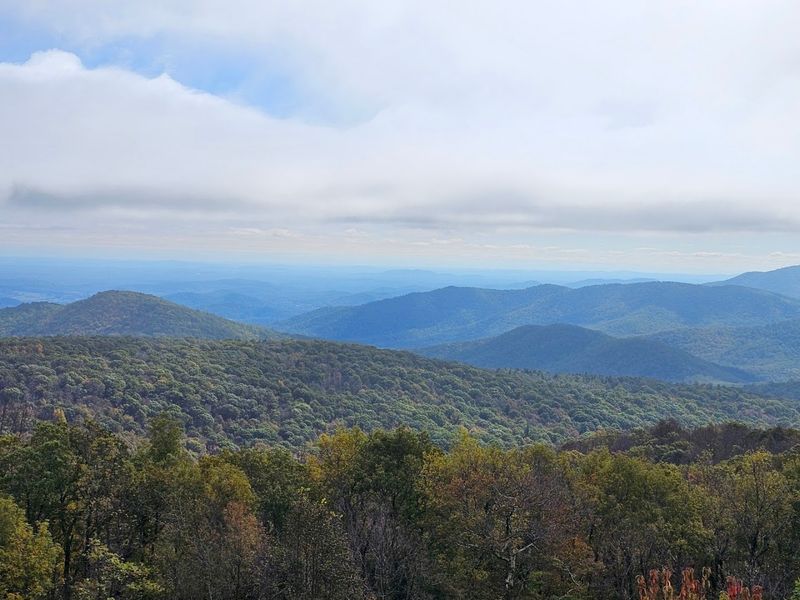
Shenandoah National Park has four developed campgrounds spread along the length of Skyline Drive, including Big Meadows, Lewis Mountain, Loft Mountain, and Mathews Arm. Each one sits within the forest, with campsites tucked among the trees and the sounds of the park filling the air after dark.
None of the campgrounds offer electrical hookups for RVs, which keeps the atmosphere decidedly low-key. The sites are designed for tents and basic camping, and the absence of generators and screen-lit interiors gives the nights a quietness that feels increasingly rare.
Sleeping at elevation inside the park is a noticeably different experience from staying in a town nearby. The temperature drops after sunset even in summer, and the darkness is genuine enough to make stargazing worthwhile.
Waking up inside the park means you are already positioned for the best light of the day, before the crowds arrive and the overlooks fill up.
Dining Inside the Park at Skyland and Big Meadows Lodge
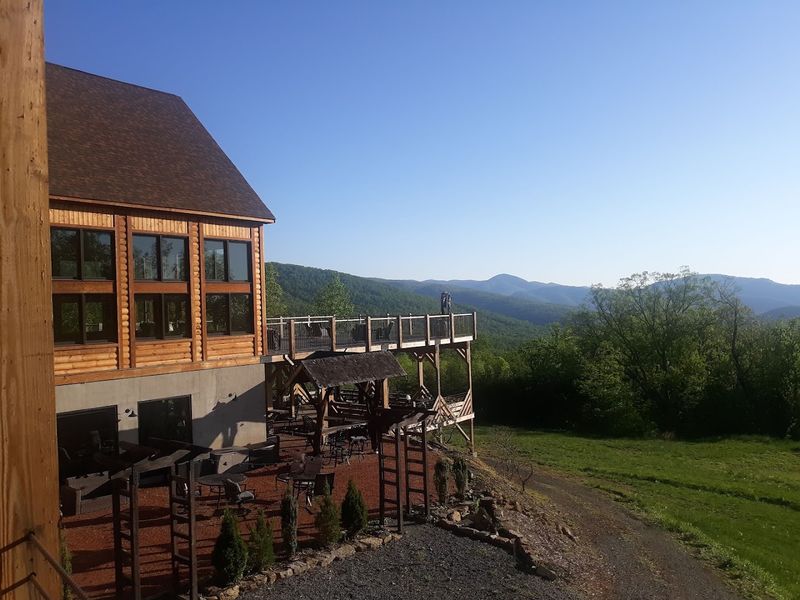
Eating inside a national park sometimes means settling for a vending machine or a gas station snack, but Shenandoah handles food considerably better than that. Skyland Resort and Big Meadows Lodge both offer sit-down dining with meals prepared from a real kitchen, and both locations deliver views that make the food taste better simply by association.
The Skyland dining room looks out over the western slope of the Blue Ridge, and on a clear evening the sunset from those windows is worth timing your dinner reservation around. The menu leans toward American comfort food with regional ingredients, and the portions are generous enough to fuel an afternoon of hiking.
Big Meadows Lodge has a similar feel, with a rustic dining room that fits the park’s overall character. A wayside food stop is also available at several points along Skyline Drive for visitors who want something quick without committing to a full sit-down meal.
Practical Tips for Getting the Most Out of Your Visit
A vehicle pass to Shenandoah National Park costs $30 and is valid for seven consecutive days, which makes it genuinely reasonable for the amount of ground the park covers. The America the Beautiful Annual Pass is also accepted and provides access to all federal lands for one year, which is worth considering for frequent travelers.
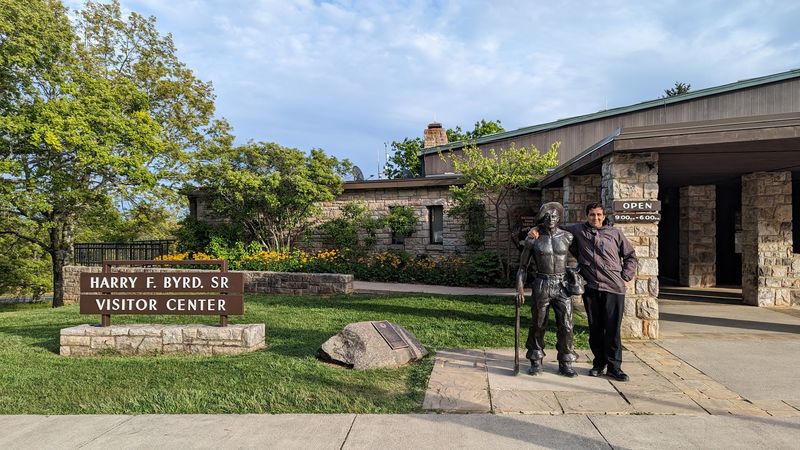
The park has three visitor centers along Skyline Drive, at Dickey Ridge in the north, Byrd in the central section, and Loft Mountain in the south. Each one carries maps, trail guides, and information about current conditions, and stopping at one early in the visit helps orient first-timers quickly.
Arriving before 9 a.m. on weekends makes a meaningful difference in parking availability at popular trailheads. Cell service is limited throughout much of the park, so downloading an offline map before entering saves real frustration.
Bringing layers is always smart, since ridge temperatures run cooler than the valleys below.
Why People Keep Coming Back Season After Season
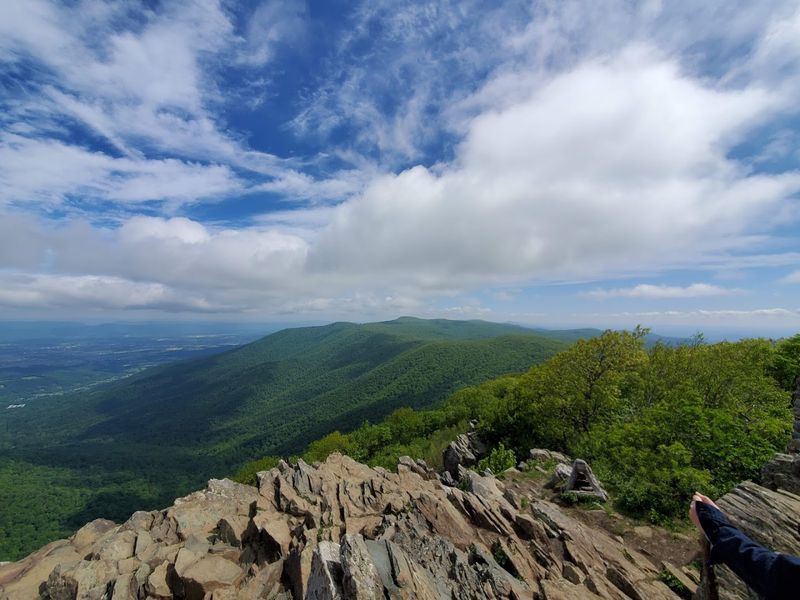
Spring brings wildflowers to the forest floor and migrating warblers to the tree canopy, and the whole park takes on a freshness that feels like a genuine reset after winter. Trillium, wild azalea, and mountain laurel bloom in sequence from April through June, giving each visit a different floral character depending on when you arrive.
Summer turns the forest dense and green, with cooler ridge temperatures offering relief from the heat building in the valleys below. Fall delivers the foliage show that draws visitors from across the region.
Winter quiets everything down to a version of the park that feels almost private, with snow on the rock outcrops and ice forming along the waterfalls.
That seasonal variety is probably the clearest answer to why people return to Shenandoah year after year. The road and the trails stay largely the same, but the park itself never stops changing, and that combination of familiarity and surprise is genuinely hard to find anywhere else in Virginia.
Share this story