There is a place in Virginia where you can walk through a fort that was built more than 400 years ago, talk to people dressed in 17th-century clothing, and actually touch the tools and materials that early English settlers used every single day. Most people drive right past it on I-95 without ever knowing it exists.
The site recreates one of the earliest English settlements in America, established in 1611, just a few years after Jamestown. Once you step through the entrance, the modern world fades away surprisingly fast.
The Real Story Behind the Citie of Henricus
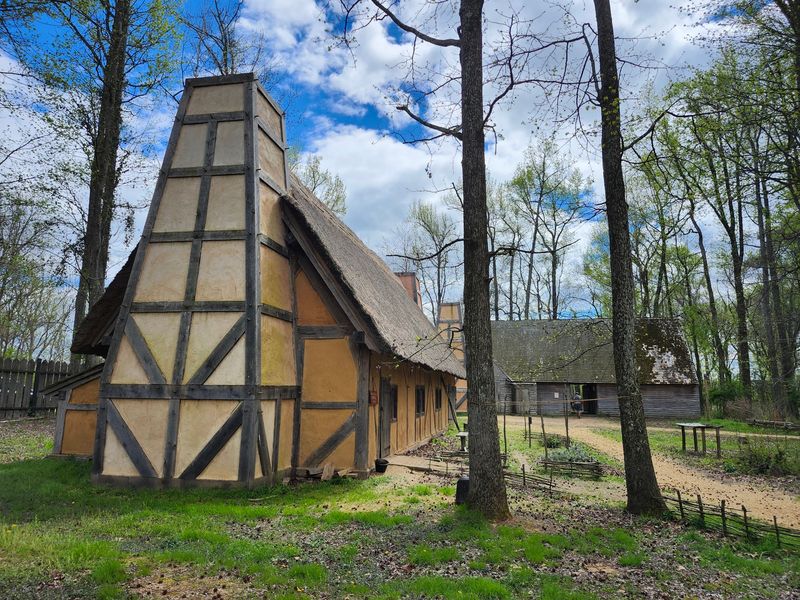
Most people who have driven I-95 through Virginia have spotted the brown highway sign that reads “Citie of Henricus” near Chester and wondered what it meant. Henricus Historical Park, located at 251 Henricus Park Rd, Chester, VA 23836, is the answer to that long-standing roadside mystery.
The park sits on a bend of the James River and recreates a fortified English settlement that was established in 1611 by Sir Thomas Dale, just four years after Jamestown. The original settlement was intended to become Virginia’s new capital city, making it one of the most ambitious colonial projects in early American history.
The name comes from Henry, Prince of Wales, son of King James I. The reconstruction gives visitors a rare, ground-level look at what life actually looked like in those earliest years of English settlement in the New World.
Walking Through the Reconstructed Palisade Fort
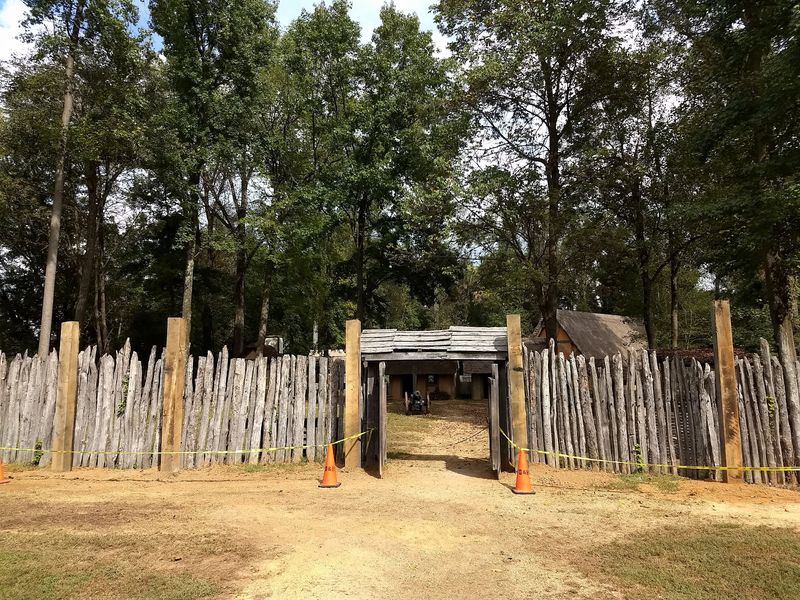
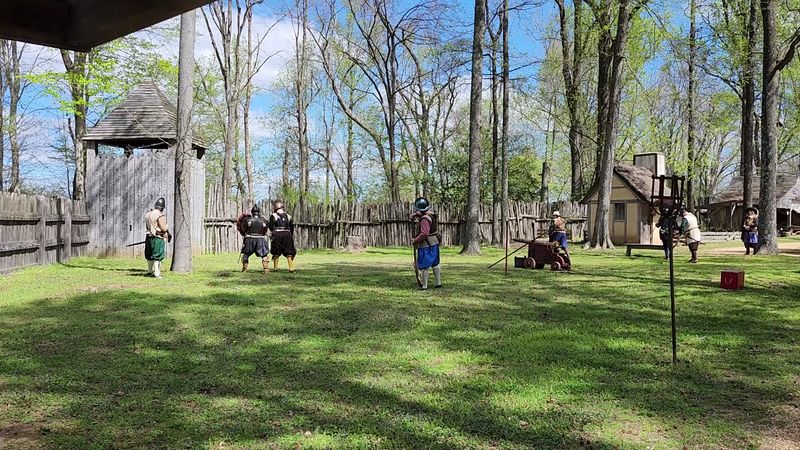
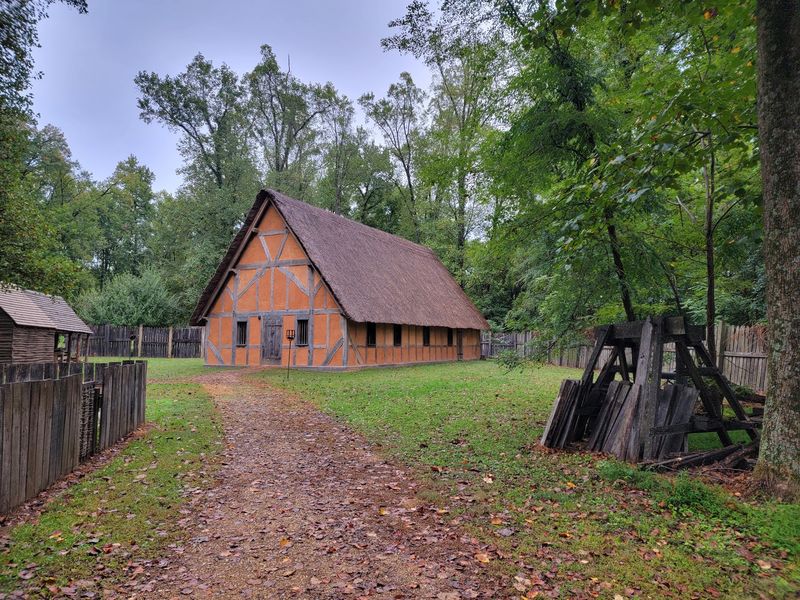
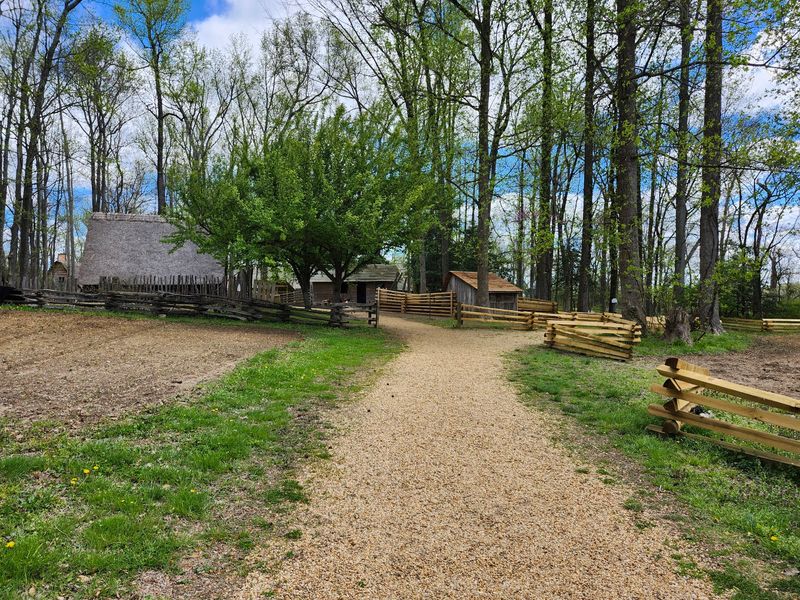
The first thing that hits you when you enter the main fortified area is how small and compact everything feels. The palisade walls are built from sharpened timber posts driven into the ground, just as the original settlers would have constructed them, and they create an immediate sense of enclosure that feels completely different from a modern museum.
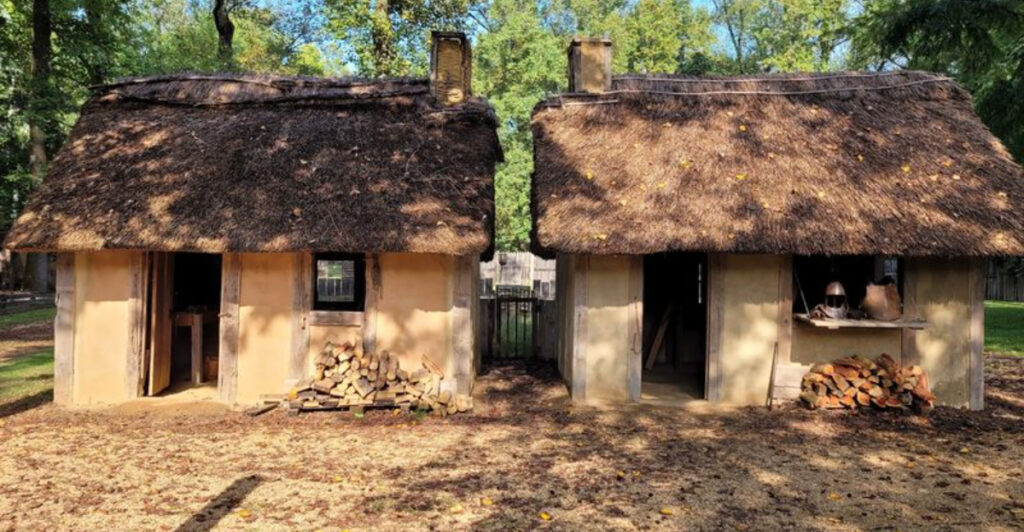
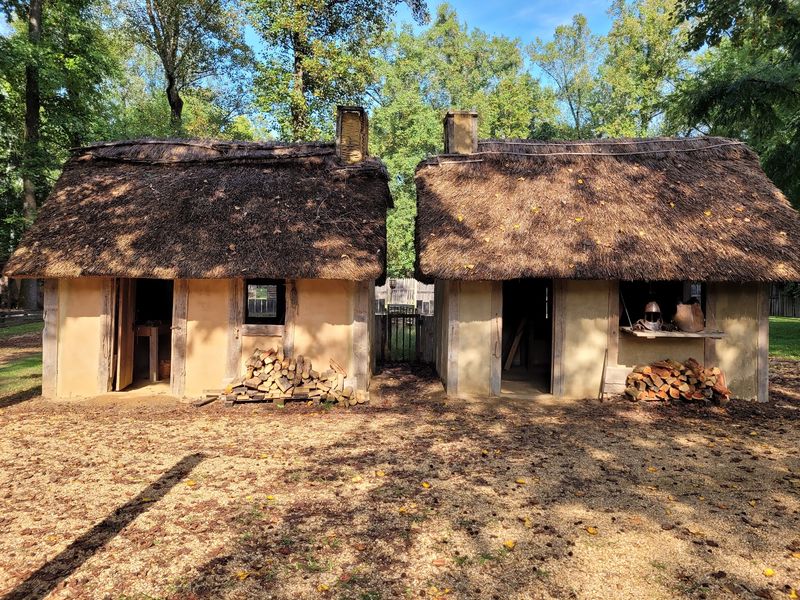
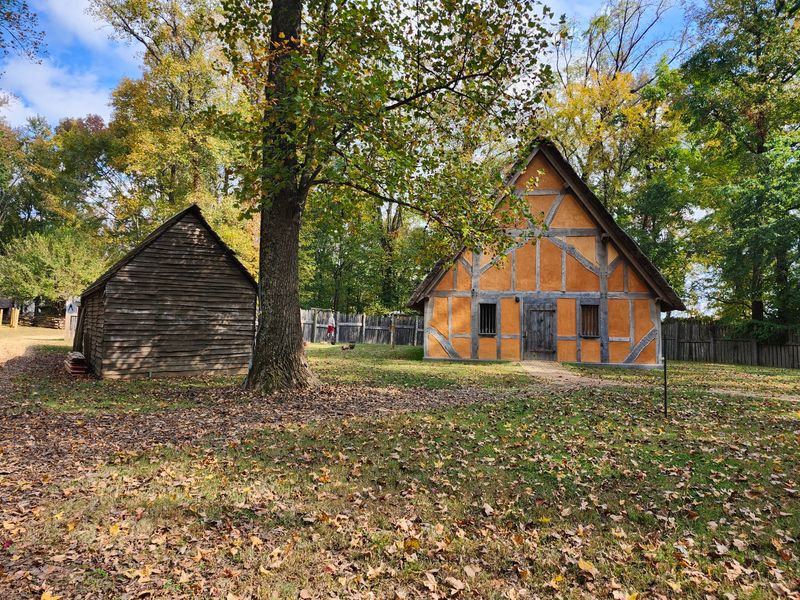
Inside the fort, the buildings are clustered close together, which makes sense when you think about the need for defense and warmth during those early years. The ground is unpaved, the structures are rough-hewn, and there is a rawness to the whole place that no indoor exhibit could replicate.
Every building you see was built using period-appropriate methods and materials. Walking the perimeter of the fort takes only a few minutes, but the detail packed into that small space will keep you occupied far longer than you might expect.
The Reconstructed Church That Stops Visitors in Their Tracks
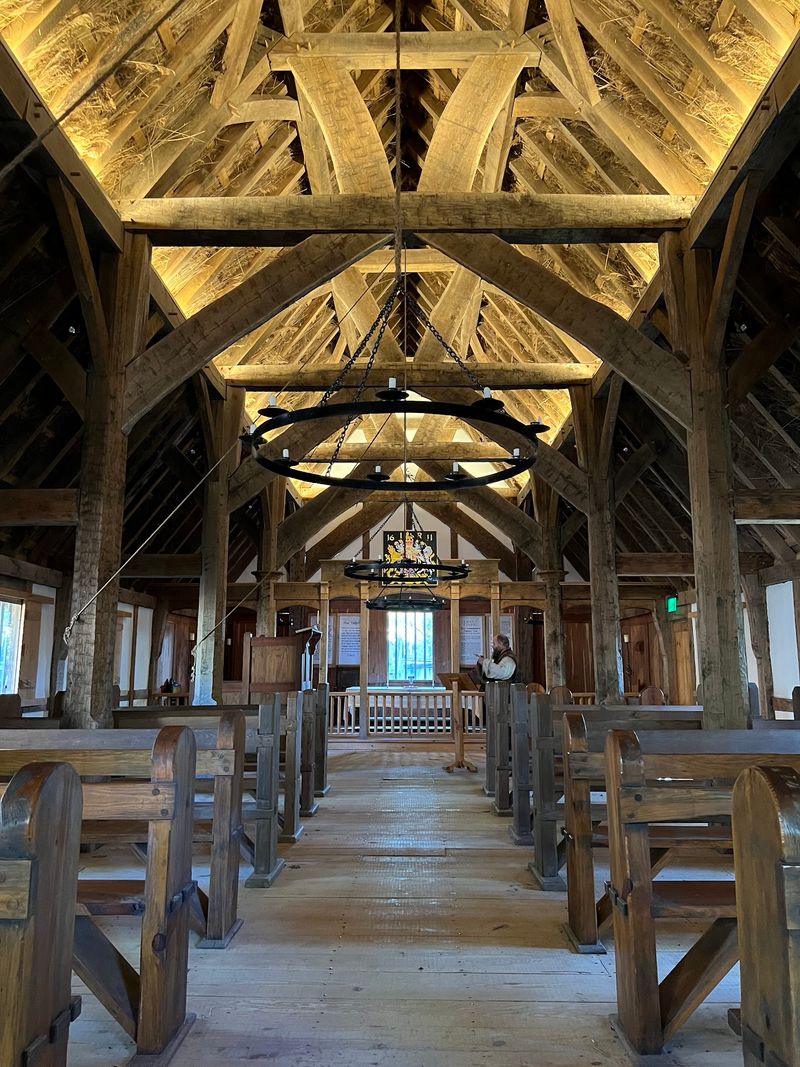
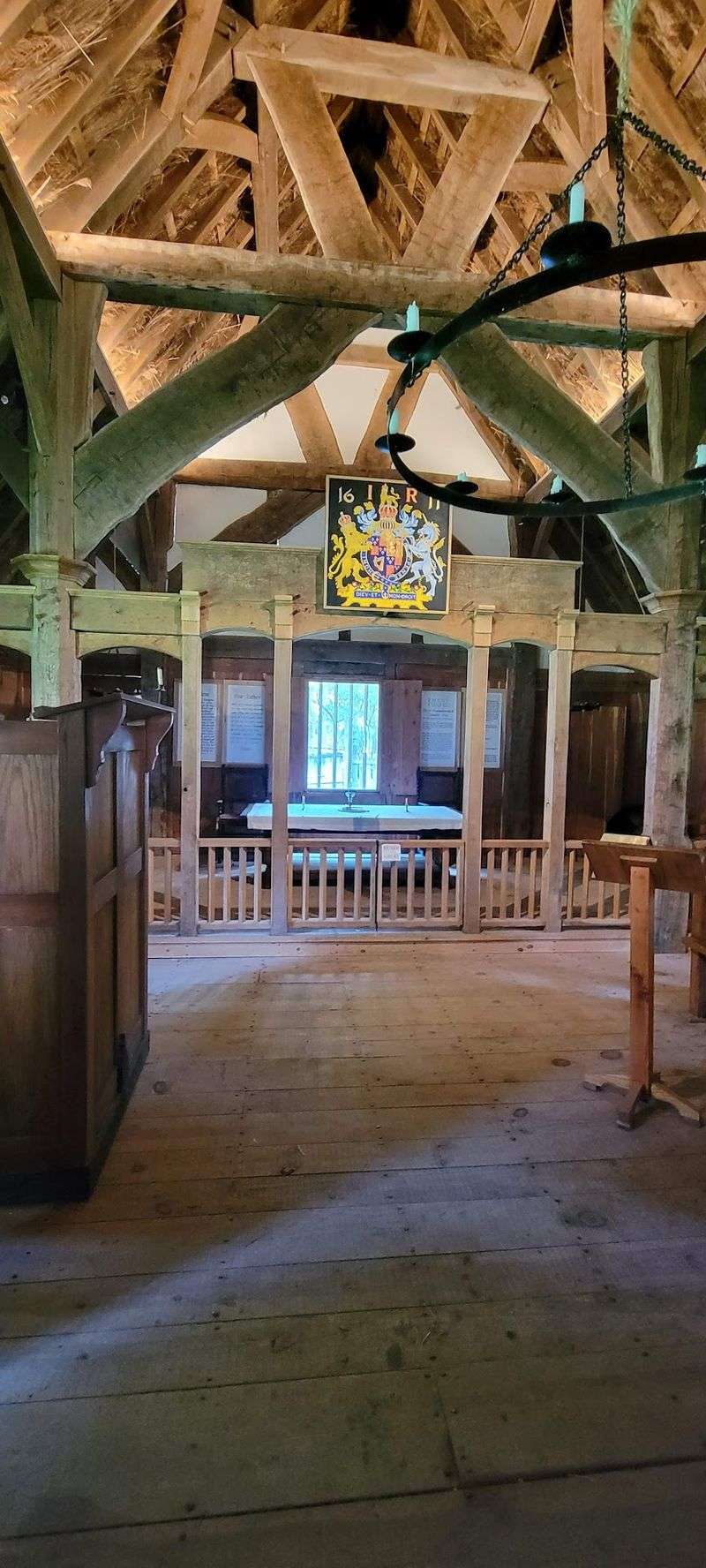
One of the most commented-on structures at the park is the reconstructed church, and once you step inside, it is easy to understand why. The building is spare and simple, with rough wooden pews, an earthen floor, and plain walls that let the timber frame do all the talking.
There is something unexpectedly moving about standing in a space that represents one of the earliest Christian worship sites in colonial America. No stained glass, no ornamentation, just wood, light, and silence.
That simplicity is what makes it so striking.
The church at Henricus is paired with a reconstructed parsonage nearby, giving visitors a sense of how religion and daily life were completely interwoven in this settlement. Taken together, the two buildings tell a story about community, survival, and the values the settlers carried with them from England across the Atlantic Ocean.
The Hospital That Changed How We See Colonial Medicine
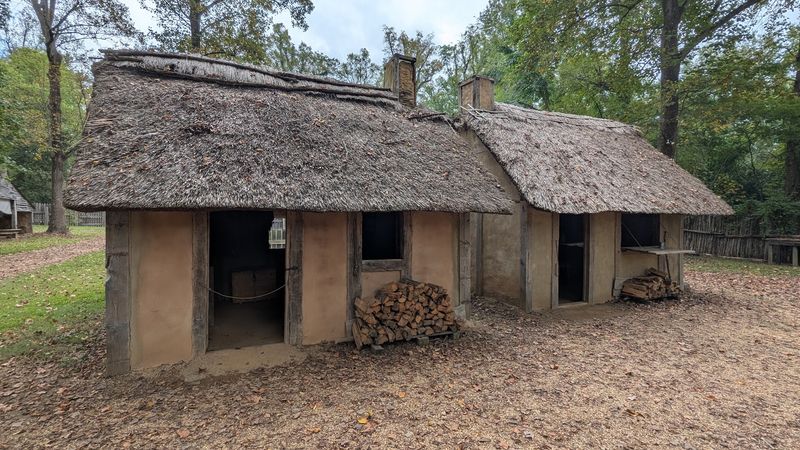
Most people do not associate the word “hospital” with 1611 Virginia, but Henricus was actually home to one of the earliest medical facilities in English colonial America. The reconstructed hospital at the park brings this overlooked piece of history into focus in a way that is both fascinating and a little unsettling.
Period medical tools are displayed inside, and the interpreters who staff the building are remarkably knowledgeable about 17th-century medical practices. The treatments used back then were a mixture of herbal remedies, bloodletting, and methods that sound alarming by today’s standards, but they were considered advanced for their time.
Seeing the hospital alongside the church and parsonage helps paint a fuller picture of how the settlers tried to build a functioning society from scratch. Henricus was not just a military outpost.
It was a genuine attempt to create a civilized community in a completely unfamiliar land.
The Living History Interpreters Who Bring 1611 to Life
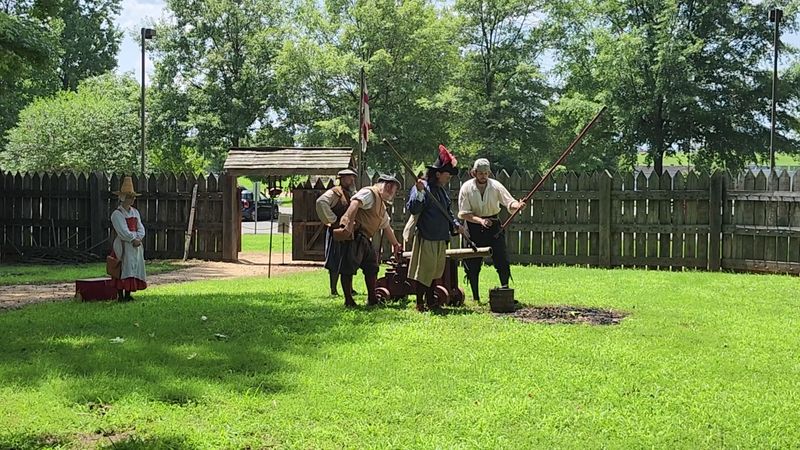
The buildings at Henricus are impressive, but the interpreters are the real reason people leave with their minds full and their phones almost out of storage. These are not actors reading from a script.
They are deeply knowledgeable historians who have spent serious time studying the period, and it shows in every conversation.
Each interpreter is stationed at a different location within the park, covering topics that range from weapons and military life to farming, church practices, and 17th-century medicine. Ask them a question and they will give you a thorough, engaging answer that goes well beyond what any placard could explain.
Multiple visitors have reported losing track of time entirely because the conversations were so absorbing. One person mentioned staying over three hours and completely missing lunch without even noticing.
That kind of engagement is rare at any museum, living history or otherwise, and it is what sets Henricus apart.
The Pocahontas Connection Most History Books Leave Out
Most people know Pocahontas from the Disney version of her story, but the real history is far more complicated and far more interesting. Henricus Historical Park is one of the few places where you can hear the full, unvarnished account of her connection to the English settlers.
Pocahontas was held at Henricus for a period of time during the early colonial years, and it was here that she converted to Christianity and took the name Rebecca. It was also here that she met John Rolfe, whom she later married.
That chain of events had enormous consequences for the relationship between the English colonists and the Powhatan Confederacy.
The interpreters at Henricus discuss this history with care and nuance, drawing on research rather than myth. Hearing the real story told in the actual place where it unfolded gives it a weight that no classroom lesson or film adaptation could ever fully capture.
The Powhatan Village and Native American History on Site
The story told at Henricus is not limited to the English settlers. The park also features a reconstructed Powhatan village that gives visitors a look at the Native American culture that existed in this region long before European contact and continued to shape events throughout the colonial period.
Visitors can see traditional structures, learn about Powhatan methods of hunting, fire-making, and boat-building, and hear about the complex political world of the Powhatan Confederacy. The interpreters approach this material with genuine respect and attention to historical accuracy.
Having both the English fort and the Powhatan village in the same park creates a more complete picture of early Virginia history than you typically get at sites that focus exclusively on European settlement. The two communities existed in tension, in trade, and in complicated relationships, and Henricus does a thoughtful job of showing both sides of that story.
Live Animals That Make the Farm Come Alive
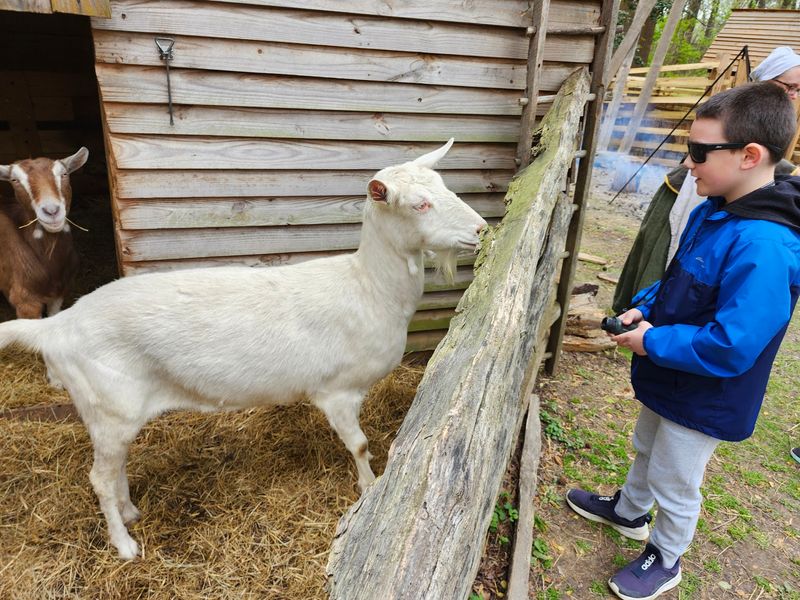
One of the unexpected delights of visiting Henricus is the presence of actual live animals on the grounds. Hogs, goats, and chickens roam the farm area, giving the settlement a sensory richness that you simply cannot manufacture with exhibits alone.
The sounds, the smells, the movement of animals going about their day all add to the feeling that this place is genuinely alive.
An interpreter stationed near the farm area discusses livestock care, agriculture, and the critical role that animals played in the survival of early colonial settlements. Food security was a constant challenge, and understanding how the settlers managed it changes the way you think about those early years.
Younger visitors especially respond to the animals with immediate enthusiasm. A friendly cat also reportedly roams the grounds, adding its own unofficial contribution to the atmosphere.
Few history museums can claim a resident cat as part of the experience.
Blacksmithing and Traditional Craft Demonstrations
Watching a blacksmith work a piece of heated iron at an open forge is one of those experiences that immediately pulls your full attention. The demonstrations at Henricus include traditional crafts and skills that were essential to daily colonial life, and seeing them performed by someone who genuinely understands the techniques makes a real difference.
Blacksmithing, cooking methods, and other period crafts are presented not as performances but as practical demonstrations of how things actually worked. The interpreters explain the reasoning behind each technique, connecting the skill to the broader challenges of survival in a 17th-century settlement.
These demonstrations are also hands-on in many cases, meaning visitors are encouraged to touch, handle, and interact with materials rather than just observe from a distance. That tactile quality is something that distinguishes Henricus from more traditional museum experiences and is a big reason why both kids and adults stay so engaged throughout the visit.
The James River Views and Trails Along Dutch Gap

The history at Henricus is compelling enough on its own, but the natural setting around the park adds another layer entirely. The park sits near the James River, and the views from certain points on the property are genuinely striking, with open water, marsh grasses, and tree lines stretching out in multiple directions.
Along the road leading to the park, there is a small pull-off area that lets visitors walk out onto a dock over the marsh. It is a quiet, unhurried spot that most people miss on their way in, but it is worth stopping for on the way out.
The trails around the Dutch Gap area offer additional opportunities for a leisurely walk through the riverside landscape. The combination of outdoor scenery and historical immersion means a visit here can easily fill an entire afternoon without ever feeling rushed or repetitive.
Dutch Gap and the Monument Most Visitors Walk Past
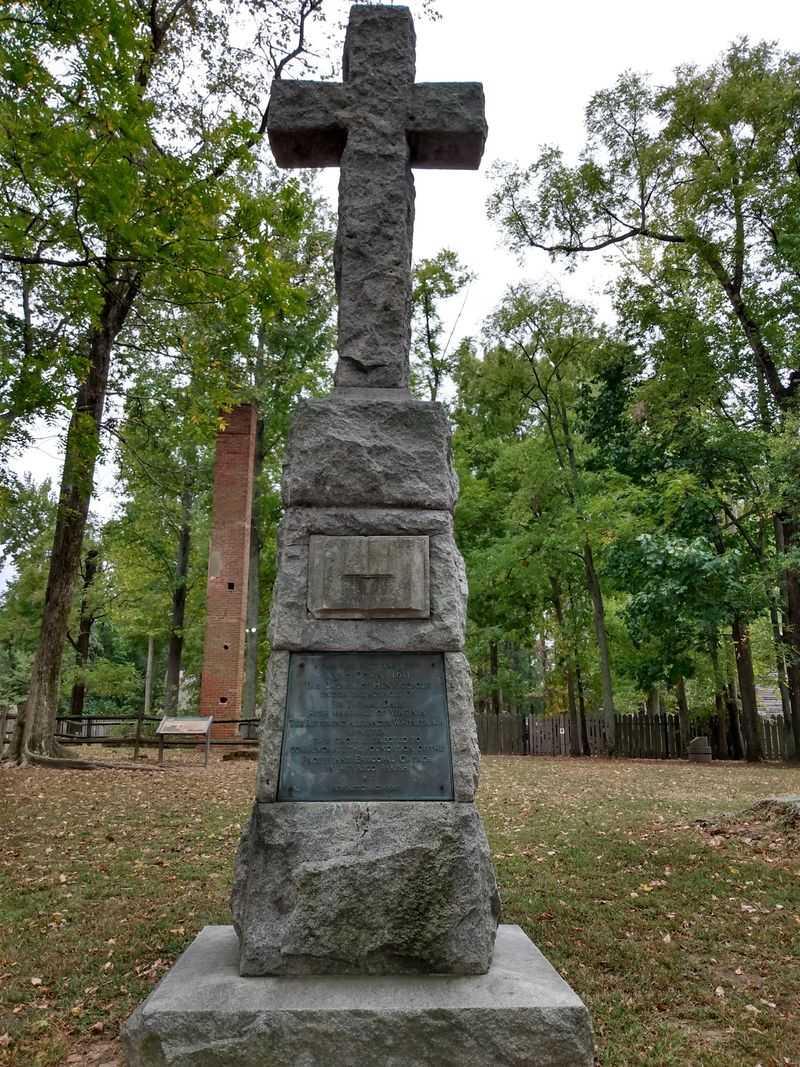
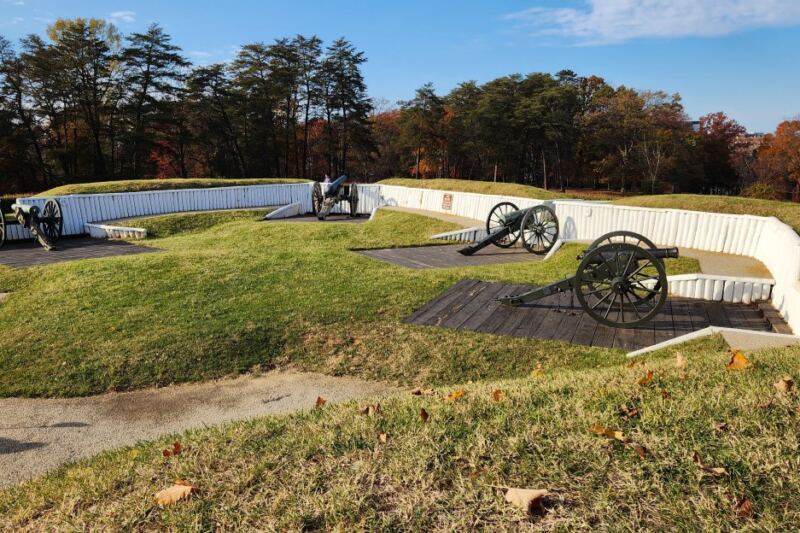
Tucked within the broader Henricus site is a commemorative monument related to Dutch Gap, a piece of Civil War-era history that most visitors do not realize is connected to this location. Dutch Gap was the site of a canal-cutting effort during the Civil War, and the monument marks that chapter of the area’s long and layered history.
The fact that a single park contains both 17th-century colonial history and Civil War-era landmarks says a lot about how much happened on this particular stretch of the James River over the centuries. The land itself carries multiple stories, and Henricus does a reasonable job of acknowledging that depth.
Many visitors walk past the monument without fully registering what it marks. Taking a moment to read the inscription and ask an interpreter about it can open up a whole additional conversation about how this area continued to be historically significant long after the original settlement was gone.
Seasonal Events Like Christmas Through the Centuries
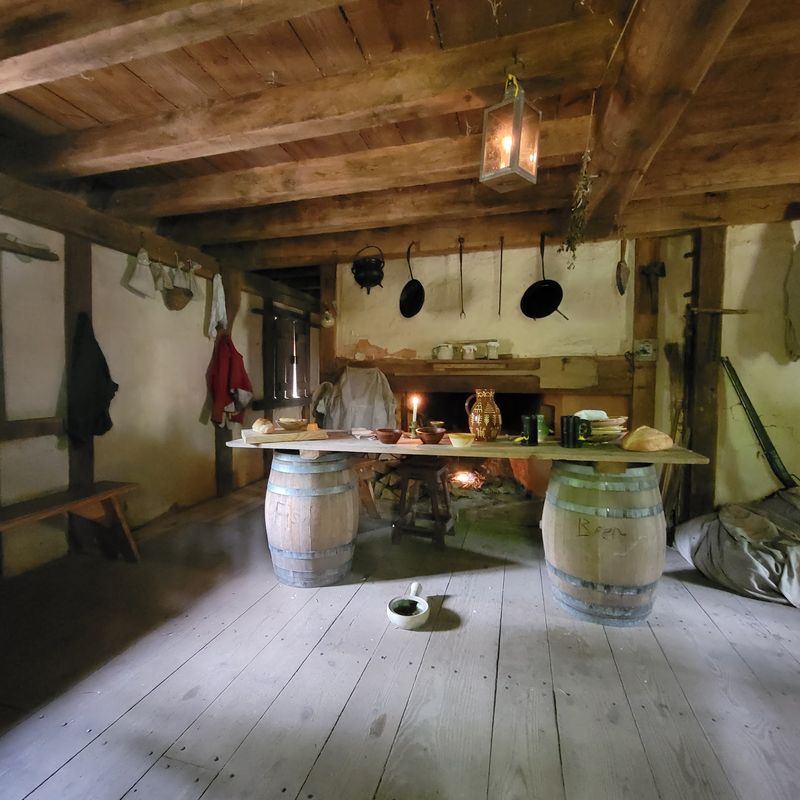
Beyond regular visiting hours, Henricus hosts seasonal events that draw repeat visitors year after year. Christmas Through the Centuries is one of the most popular, featuring costumed actors who represent different historical time periods and explain how Christmas was celebrated in each era.
Families who have been attending this event for years describe it as a genuine tradition, the kind that gets added to the calendar as soon as the dates are announced. The actors stay fully in character throughout the event, and the combination of candlelight, period costumes, and historical storytelling creates an atmosphere that is hard to find anywhere else in the region.
Other events held at the park throughout the year bring in military reenactors, craft demonstrations, and themed programming that expands well beyond the standard tour. Checking the Henricus events calendar before your visit is a smart move, since the experience can vary significantly depending on the time of year.
Why This Park Outshines Bigger Colonial Sites Nearby
Virginia has no shortage of colonial history sites. Jamestown and Colonial Williamsburg are both within a reasonable drive of Henricus, and both are well-known destinations.
Yet visitors who have been to all three consistently describe Henricus as the most engaging experience, particularly for children.
The difference seems to come down to scale and personal interaction. At Henricus, the site is small enough that you are never lost in a crowd, and the interpreter-to-visitor ratio means you get real conversation rather than a brief scripted talk.
Questions are welcomed, tangents are encouraged, and nobody rushes you along.
One visitor who brought kids to all three sites specifically said the children learned more at Henricus than at either of the other locations. That kind of feedback is telling.
When a smaller, lesser-known park consistently outperforms its famous neighbors in terms of actual learning and engagement, something is clearly being done right.
Practical Tips for Planning Your Visit
Henricus Historical Park is open Thursday through Sunday from 10 AM to 4 PM, and it is currently free to visit, which makes it an especially appealing option for families or anyone passing through the Richmond area on I-95. The park is entirely outdoors, so dressing for the weather is genuinely important, especially in colder months.
There is no food available for purchase on site, so bringing your own lunch or snacks is a practical necessity. Picnic tables are available, and spending a midday break on the grounds is a pleasant way to extend the experience.
Free parking is plentiful and easy to navigate.
Plan to spend at least two hours, though many visitors find themselves staying three or four hours without intending to. The trails and marsh dock near the entrance are worth adding to your itinerary.
Visiting on a quieter weekday means more time with the interpreters and fewer distractions.
A Place That Rewards the Curious and Keeps Drawing People Back
There is a specific kind of place that manages to feel both educational and genuinely enjoyable without trying too hard to be either. Henricus Historical Park lands in that category with consistency.
Families who visited when their children were young come back with grandchildren. History enthusiasts who stopped once on a road trip make a point of returning on the next one.
The interpreters are a big part of why people return. The conversations are never exactly the same twice, and the depth of knowledge on display means there is always something new to learn, even on a repeat visit.
That quality of engagement is not easy to maintain, and it reflects a real commitment to the site’s mission.
For anyone curious about the earliest years of English settlement in America, or simply looking for a genuinely absorbing afternoon near Richmond, Henricus Historical Park is one of those places that earns its reputation one conversation at a time.
Share this story