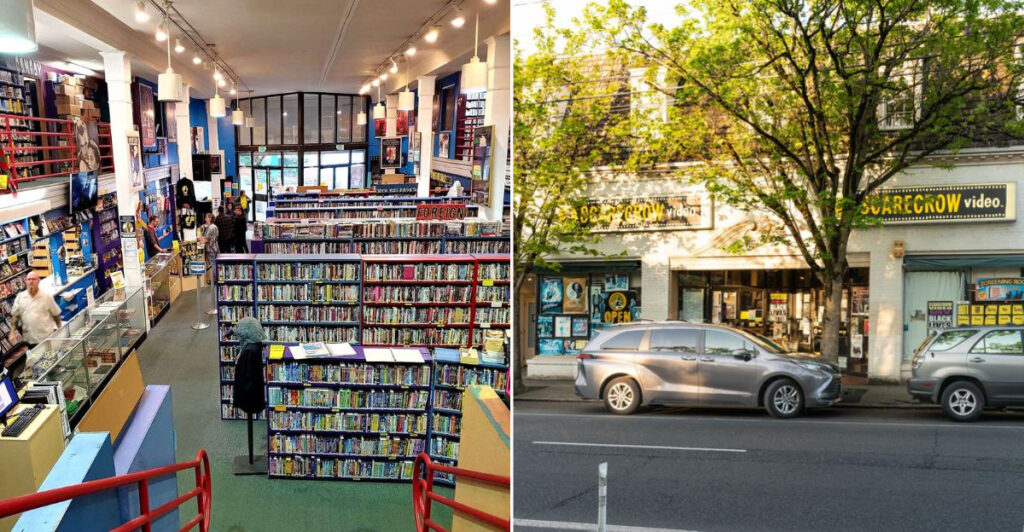
There is a place in Seattle where movies that vanished from the internet, never made it to streaming, and got dropped from every retailer’s shelf still exist on a physical disc or tape, waiting to be watched. Scarecrow Video, a nonprofit organization tucked into the University District, holds one of the largest collections of physical media in the world, with over 150,000 titles.
That number is not a typo. From obscure Belgian art films to forgotten VHS recordings, this organization has spent decades doing the quiet, unglamorous work of making sure those titles do not disappear forever.
This article walks through what makes Scarecrow Video so unusual, why its nonprofit model matters, and what anyone who loves film should know before paying a visit.
The Nonprofit Model That Keeps Rare Films Alive
Most video stores closed when streaming took over, but Scarecrow Video survived by doing something most businesses never try: becoming a nonprofit. The organization made that transition in 2014, which changed everything about how it operates and why it exists.
Rather than chasing profit, the nonprofit model allows Scarecrow to focus on preservation and access. Donations, memberships, and community support keep the lights on instead of quarterly revenue targets.
That shift also opened the door to partnerships with universities, film schools, and archives that take physical media seriously as a cultural record. The collection is not just a rental library at this point.
It functions more like a public trust, holding films that would otherwise have no institutional home.
For anyone curious about how physical media can survive in a streaming world, the Scarecrow model is one of the clearest working answers available right now.
Over 150,000 Titles and Still Counting
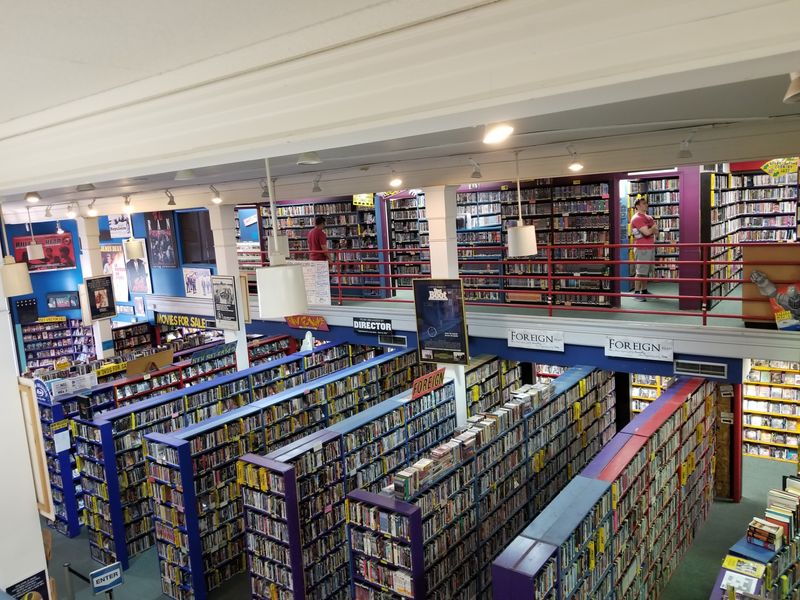
The number 150,000 gets thrown around when people talk about Scarecrow, and it still lands with some force once you actually see the shelves in person. That figure covers VHS tapes, DVDs, Blu-rays, and formats that most people stopped thinking about years ago.
For context, the average Netflix library at any given time holds somewhere between 5,000 and 6,000 titles in the United States. Scarecrow holds roughly 25 times that number in physical form, organized and accessible.
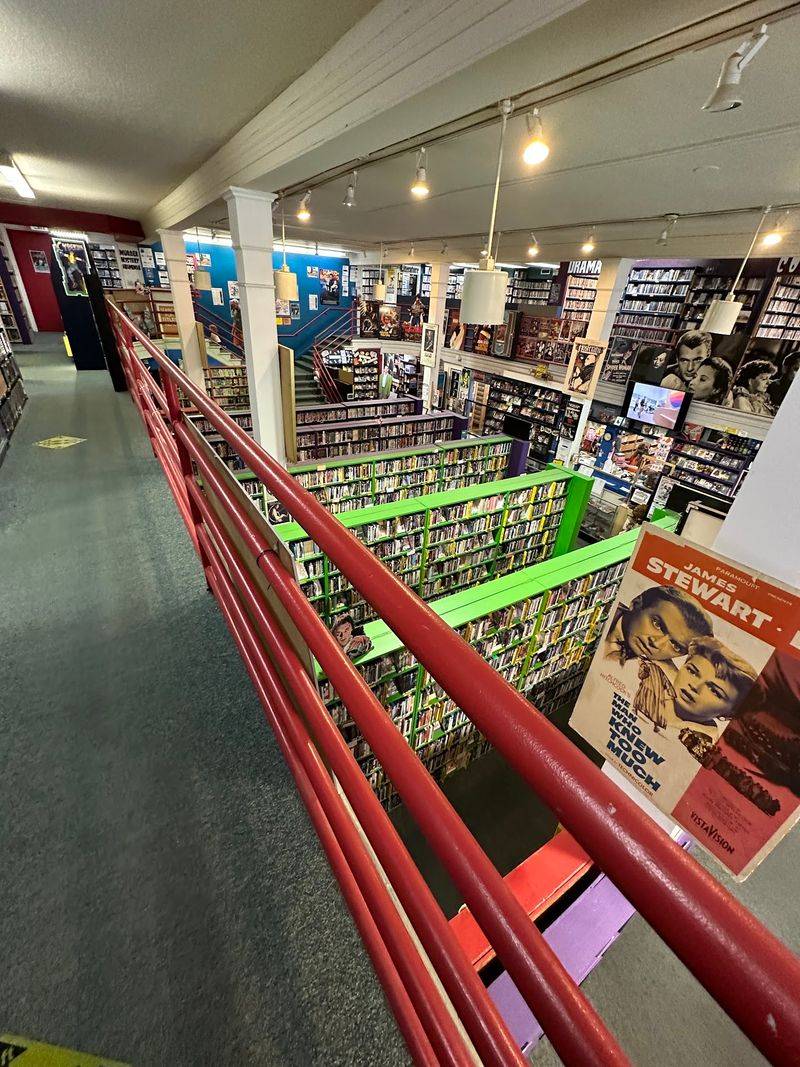
The collection spans the entire history of recorded film and television, from the earliest decades of cinema through recent releases. Theme rooms dedicated to specific genres, directors, or movements make browsing feel less like a chore and more like a discovery process.
There are titles on those shelves that exist nowhere else in a format a regular person can actually rent and watch at home, which is a genuinely rare thing.
The Curated Sections That Make Browsing Actually Fun
One of the quiet frustrations of streaming services is the algorithm. It learns what you have already watched and keeps nudging you toward more of the same, which is not always a bad thing, but it does narrow the field over time.
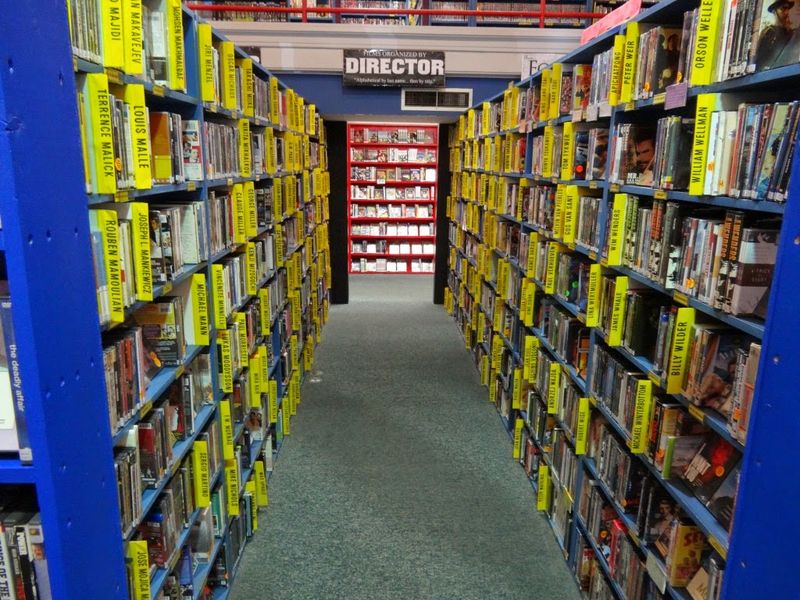
Scarecrow takes a different approach. The collection is organized not just by genre or alphabet but through curated sections built around themes, movements, directors, and ideas that a knowledgeable film person put together by hand.
That kind of curation creates a completely different browsing experience. Walking past a section labeled around a specific filmmaker or a regional cinema tradition plants ideas that an algorithm would never surface on its own.
The punch card system and membership perks make returning visits even more practical. Regular members get discounts that add up quickly, and the weekly ritual of coming in to pick out films for the week has become a genuine habit for many people in the neighborhood.
Formats That Streaming Cannot Touch
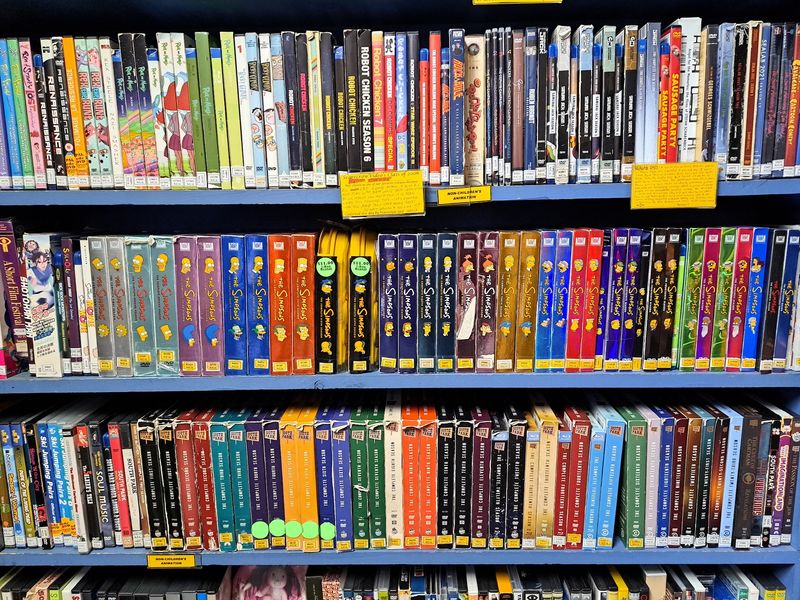
Streaming platforms are built around convenience, and they do that job well. What they are not built for is preserving every format that film has ever existed in, or making those formats available to the public.
Scarecrow holds VHS tapes, including recordings of television broadcasts and independent productions that were never transferred to any digital format. Some of those tapes are the only surviving copies of certain programs or films in a form that can still be played.
That is not a small thing. When a format disappears from the market, the content locked inside it tends to disappear too, unless an organization like Scarecrow steps in to hold onto it.
The collection also includes Blu-rays, standard DVDs, and physical editions that went out of print and now sell for significant amounts on the secondary market. Having access to those titles through a rental membership is a practical benefit that goes well beyond nostalgia.
Films That Exist Nowhere Else in Accessible Form
There is a specific category of film that Scarecrow has quietly become essential for: titles that are technically not lost but are practically impossible to find. A film might have a Wikipedia page, a few academic essays written about it, and a Criterion spine number, but if it is out of print and not on any streaming service, it effectively does not exist for most people.
Scarecrow fills that gap. The collection includes foreign language films from decades past, regional American productions, experimental works, and television recordings that never made it to any digital storefront.
One concrete example from the collection is a 1996 Belgian film that won a shared Best Actor award at Cannes, Le Huitieme Jour, which is available to rent there when it is nearly impossible to track down anywhere else.
That kind of specific, reliable access to hard-to-find titles is what separates a great archive from a large one.
What a Membership Actually Gets You
Signing up for a Scarecrow membership is straightforward and can be done in the store. The process takes only a few minutes, and the benefits start immediately on the first visit.
Members get access to discounted rental rates that make regular visits much more affordable over time. The punch card system rewards repeat trips, and the Wednesday two-for-one deal has become a weekly event that draws people in consistently.
Beyond the financial side, membership carries a more direct meaning at a nonprofit. The money goes toward maintaining the collection, paying staff, and keeping the physical archive in good condition.
That is a different relationship than a streaming subscription, where the fee goes into a corporate revenue pool.
Memberships also unlock access to a mail program, which allows people outside of Seattle to rent titles and return them by mail. That feature extends the reach of the collection well beyond the immediate neighborhood and makes the archive genuinely national in scope.
Two Floors of Film History to Explore
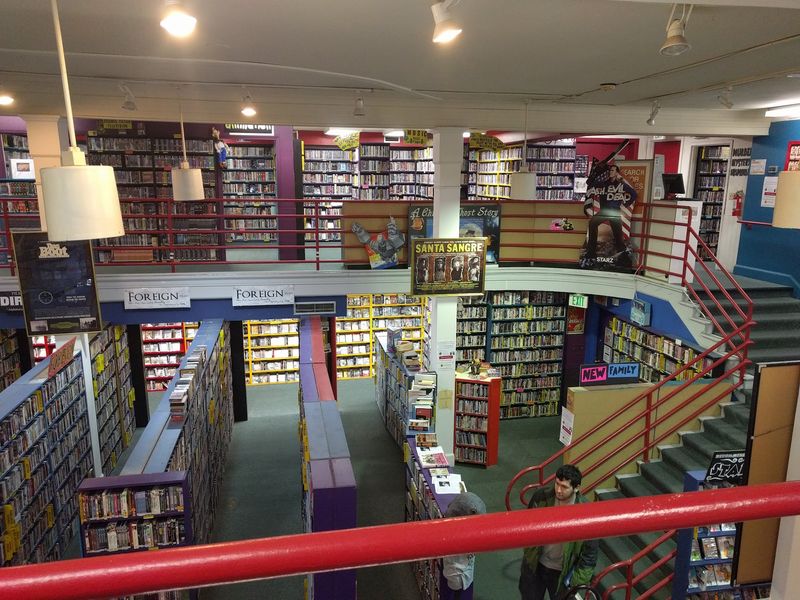
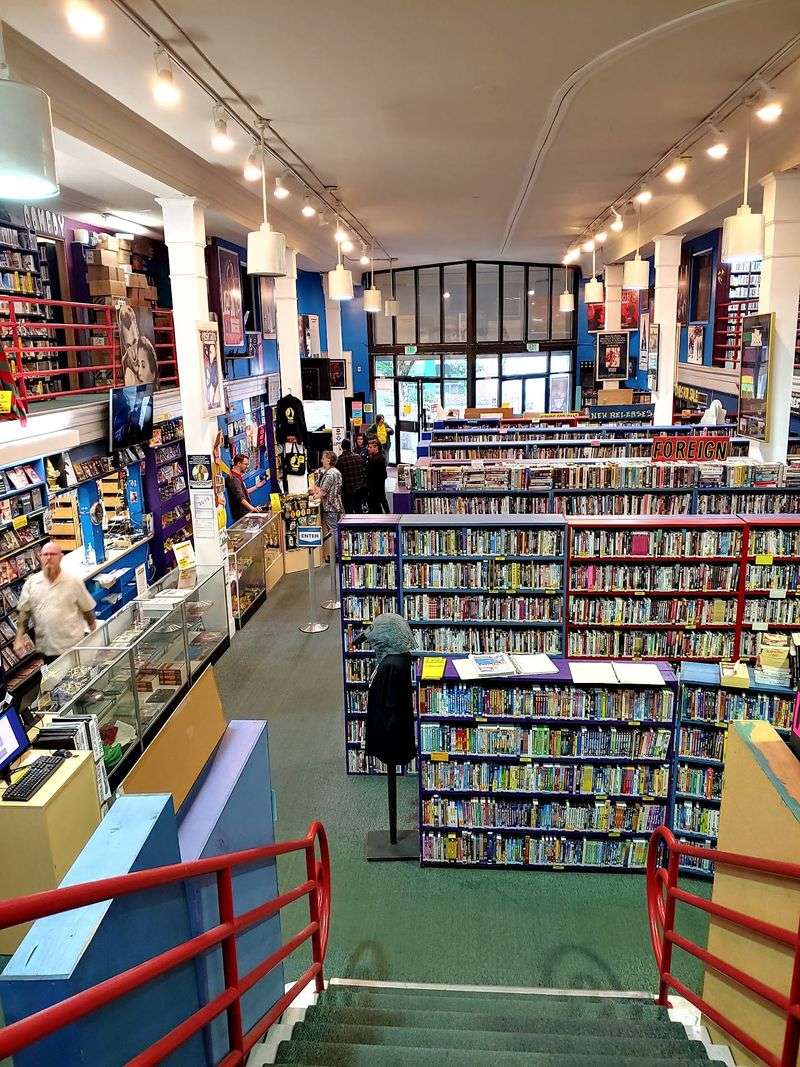
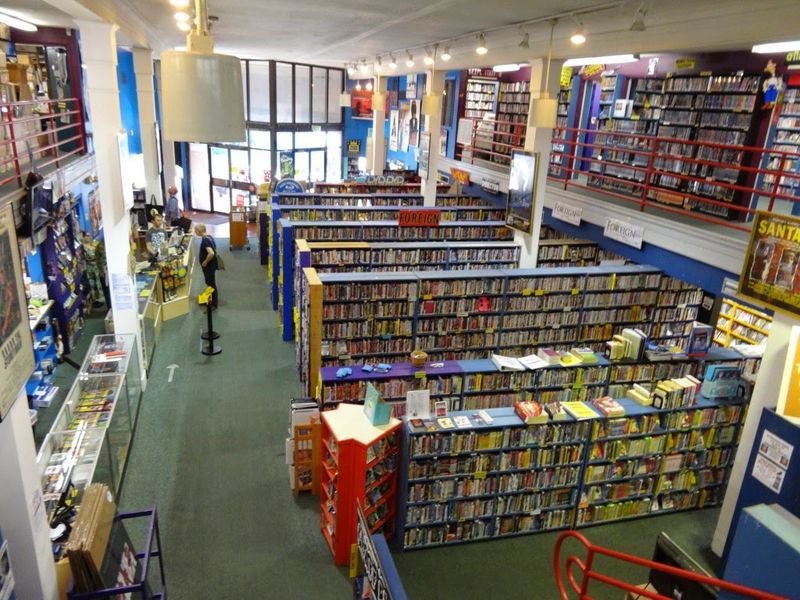
The building at Roosevelt Way NE holds two full levels of shelving, and both floors are packed with titles organized into distinct sections and theme rooms. The layout rewards slow browsing rather than quick in-and-out trips.
Theme rooms dedicated to specific directors, national cinemas, or movements give the space a character that feels closer to a library or a small museum than a traditional retail environment. Each room has its own internal logic, and moving between them creates a natural progression through different areas of film history.
The density of the collection means that spending an hour there and still not covering everything is a realistic outcome. People who come in planning to grab one film often end up leaving with two or three after getting pulled down an unexpected path by something on a nearby shelf.
That kind of accidental discovery is one of the things physical browsing does better than any digital interface currently available.
Physical Media for Sale Alongside Rentals
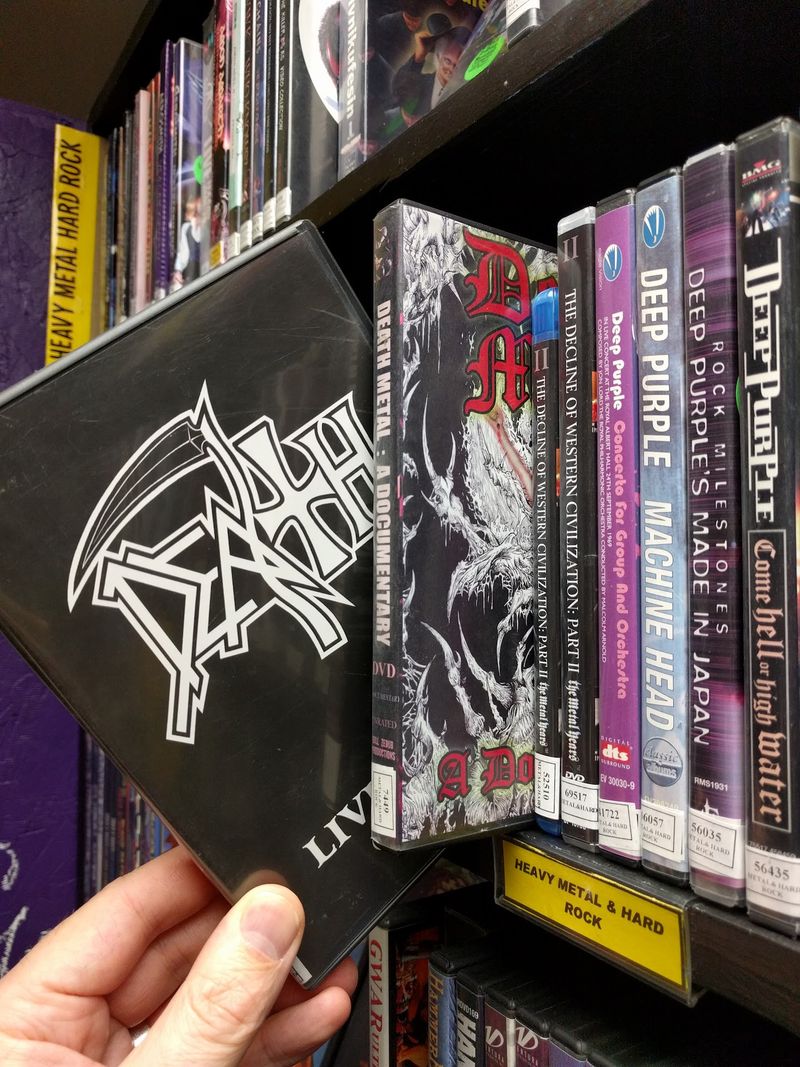
Rentals are the core of what Scarecrow offers, but the store also carries a selection of physical media for outright purchase. That section includes new releases, out-of-print editions, and titles from the Criterion Collection, which produces restored and carefully packaged versions of significant films.
Prices are fair and the selection leans toward titles that are harder to find in standard retail environments. The mix covers old and new, domestic and international, mainstream and obscure, which reflects the overall character of the collection.
For anyone building a personal physical library, the for-sale section is worth a dedicated look on each visit. Stock changes as new items come in, and finding a Criterion Blu-ray or a hard-to-source DVD at a reasonable price is a genuine possibility rather than an occasional fluke.
The store also carries merchandise, which gives regular visitors a way to support the organization beyond just renting films each week.
Why This Place Matters More Now Than Ever
Streaming services have made watching movies more convenient than at any point in film history. They have also made the available catalog more volatile, with titles rotating in and out based on licensing deals that have nothing to do with cultural value.
A film can disappear from every platform overnight because a contract expired, and if it was never released on physical media or if the physical copies are gone, it becomes effectively inaccessible to the general public.
Scarecrow Video exists as a counterweight to that volatility. The collection does not change based on licensing cycles.
A title that is in the archive stays in the archive, available to rent whenever someone needs it.
For Washington State and for anyone who cares about the long-term survival of film as a cultural record, this nonprofit in Seattle’s University District is doing work that no streaming platform is designed to do, and doing it consistently, year after year.
Where to Find This Film Archive in Seattle
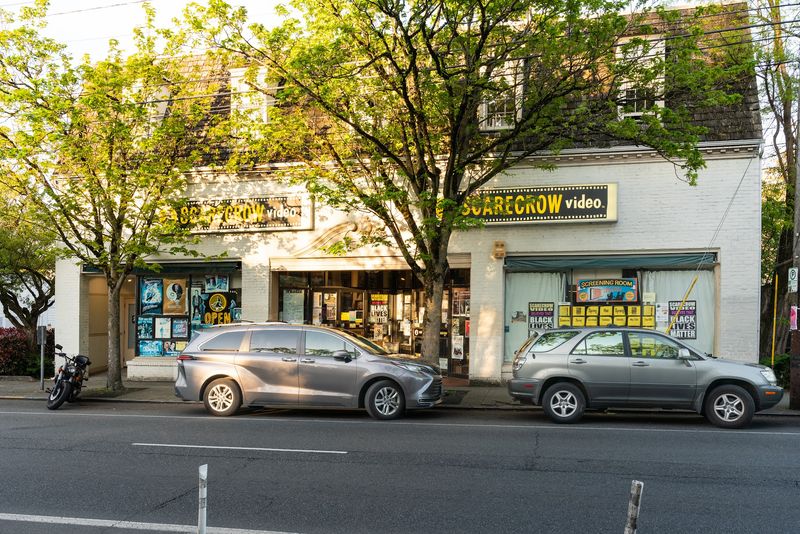
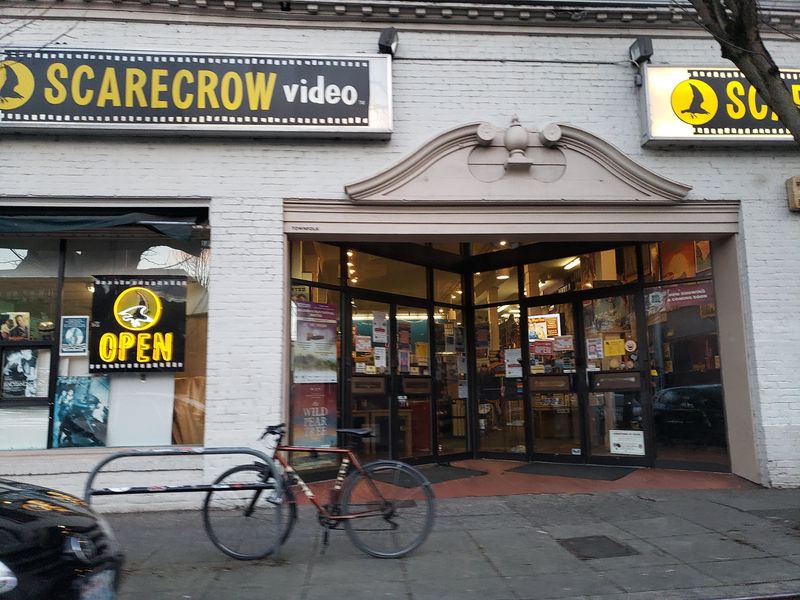
Not every cultural landmark looks like one from the outside, and Scarecrow Video is a good example of that. The organization is located at 5030 Roosevelt Way NE, Seattle, WA 98105, sitting in the University District neighborhood on the north end of the city.
The U District is already known for its bookshops, independent theaters, and academic energy, so Scarecrow fits the area well. The building spans two levels, which gives some hint of just how much physical media is packed inside.
Parking in the neighborhood can be tight depending on the time of day, but there is a small lot nearby that offers an option when street parking runs out. Hours run from 11 AM to 8 PM most days of the week, with Wednesday staying open until 10 PM, which makes it a natural stop for a midweek movie night.
Share this story