One Nebraska museum puts some of the most recognizable aircraft in military history under one enormous roof. Visitors can see an SR-71 Blackbird, B-52 Stratofortress, F-117 Nighthawk, Cold War bombers, missiles, and more than 30 historic aircraft across a 300,000-square-foot facility.
The collection goes beyond military aviation with space exhibits, interactive experiences, flight simulators, and a restoration area where historic aircraft are brought back to display condition. For aviation fans, this Ashland museum can easily turn a quick Interstate 80 stop into several hours of exploring.
Touching Down at 28210 West Park Highway, Ashland, Nebraska
The address is simple enough: 28210 West Park Highway, Ashland, Nebraska 68003, just off Exit 426 on Interstate 80, roughly halfway between Lincoln and Omaha. But nothing about the experience waiting inside is simple.
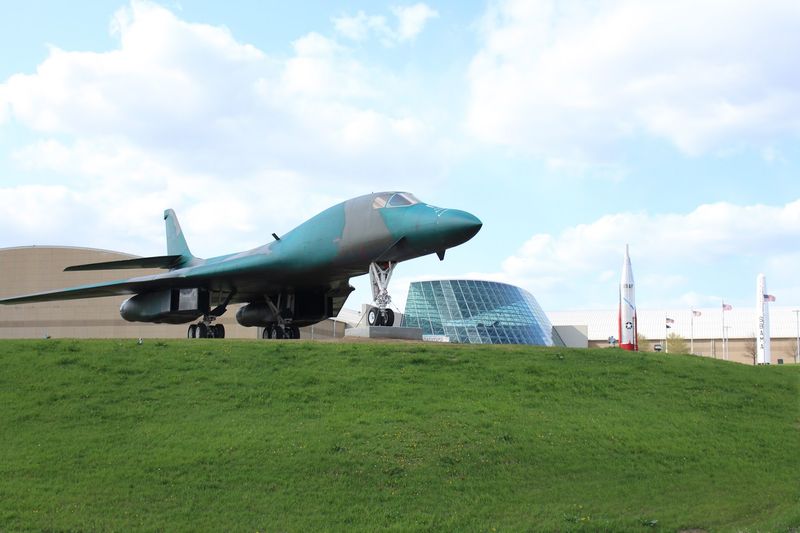
The moment you spot a full-scale military jet and a towering rocket piercing the Nebraska sky from the parking lot, you understand that this is not a typical roadside attraction.
The museum is a proud Smithsonian affiliate, and that designation is not just a badge. It signals a serious commitment to preservation, accuracy, and public education that you feel the second you walk through the doors.
The facility covers more than 300,000 square feet, and parking is completely free for every visitor.
Hours vary by day, with the museum open from 9 AM on most weekdays and Saturdays, and from 11 AM on Sundays, closing at 4 PM on weekdays and 5 PM on weekends. Tuesdays are the one day the doors stay shut, so plan accordingly before making the drive.
How a Cold War Mission Became a World-Class Museum
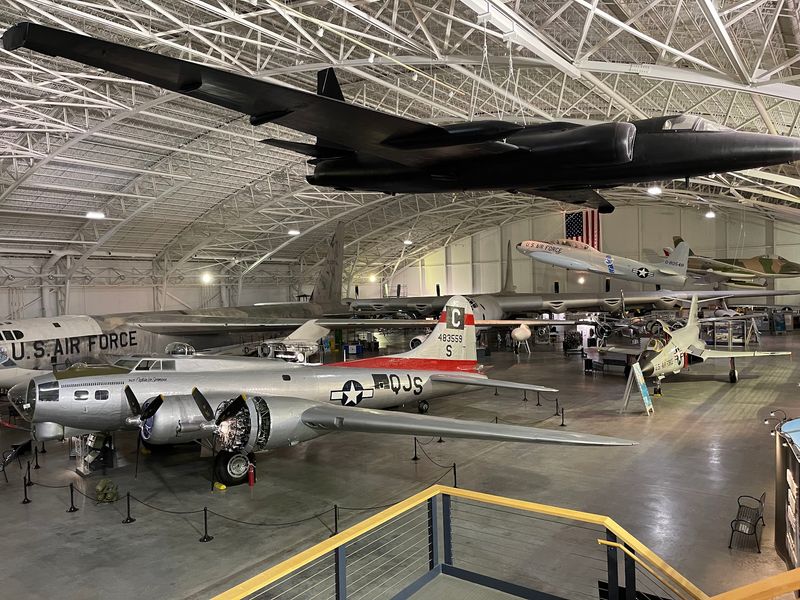
The story behind this institution is as compelling as the aircraft it houses. The museum traces its origins to 1959, when Colonel A.
A. Arnhym championed the idea of preserving the legacy of the Strategic Air Command, supported by General Thomas Power, then commander-in-chief of SAC.
Its earliest home was on Offutt Air Force Base near Bellevue, Nebraska, where the collection began with a handful of aircraft displayed outdoors.
Decades of exposure to the elements eventually threatened those irreplaceable machines, prompting a major relocation effort. In 1998, the museum moved to its current purpose-built indoor facility in Ashland, ensuring that these historic giants would be protected from the Nebraska weather for generations.
The institution officially adopted the name Strategic Air Command and Aerospace Museum in 2015, reflecting its expanded focus beyond military aviation.
That evolution from a modest outdoor collection to a 300,000-square-foot indoor landmark is a story of dedication that mirrors the tenacity of the airmen and engineers whose work fills every exhibit hall here.
The Architecture That Earns Its Own Standing Ovation
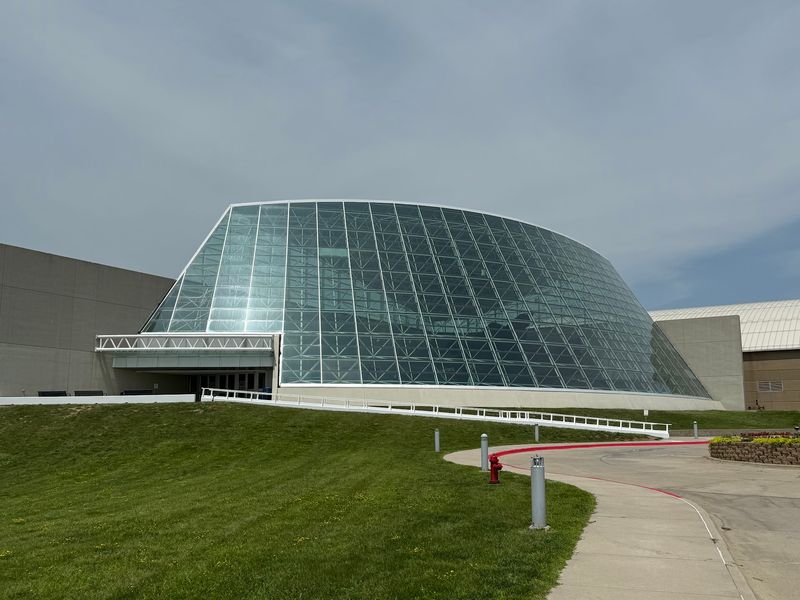
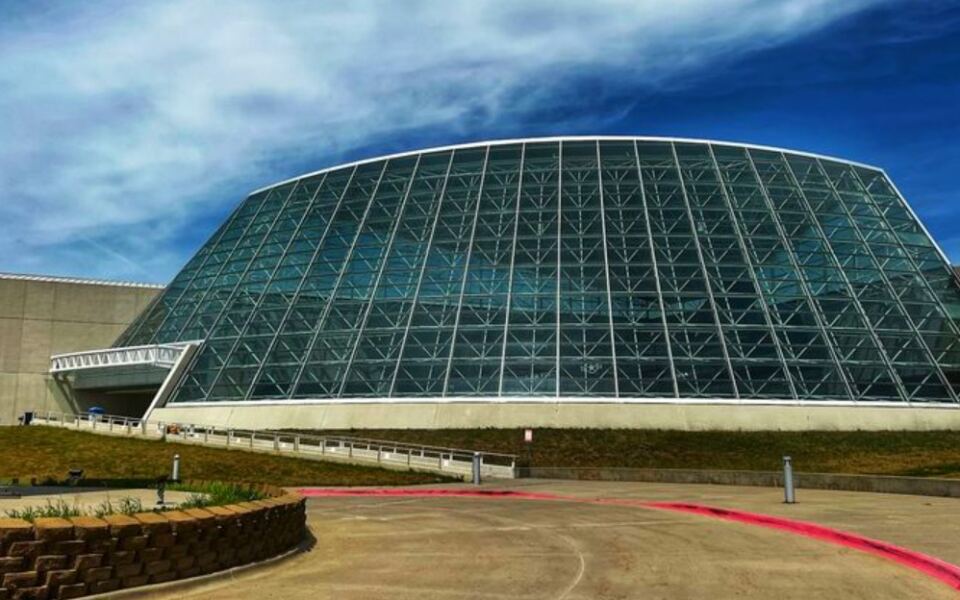
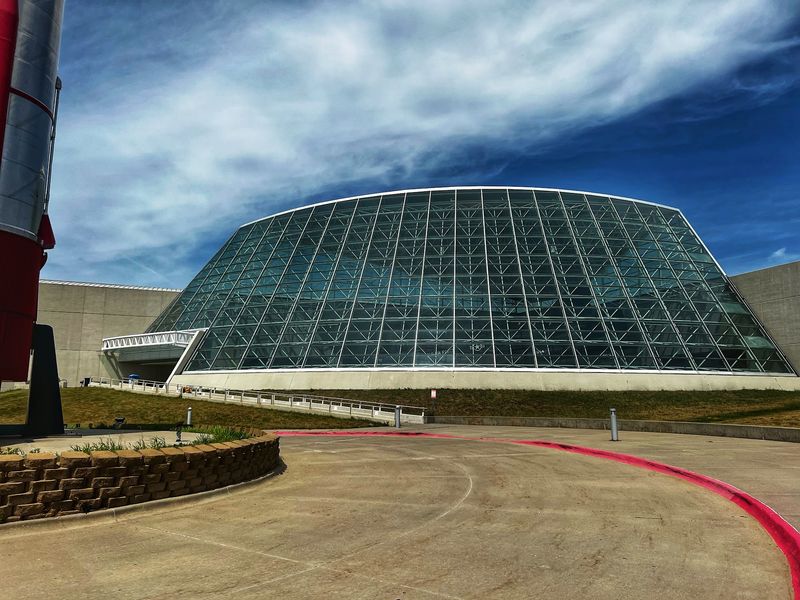
Before you even look at a single aircraft, the building itself demands a moment of appreciation. Designed by the firm LEO A DALY, the structure features two enormous column-free arched hangars, each spanning 270 feet and rising to a peak of 60 feet.
That vertical clearance is not accidental. It exists precisely because the aircraft inside needed room to breathe.
Connecting the two hangars is a glass-enclosed atrium assembled from 525 individual glass panels, flooding the interior with natural light and creating a visual drama that few museums anywhere can match. It is inside this atrium that the SR-71 Blackbird is displayed on a raised pedestal, angled as if it just broke the sound barrier and forgot to stop.
Visitors can view the collection from both the ground floor and an elevated balcony, which offers a completely different perspective on scale and engineering. The building is genuinely one of the great aerospace-themed architectural achievements in the American Midwest, and it sets the tone for everything that follows inside.
Bombers That Rewrote the Rules of Global Power
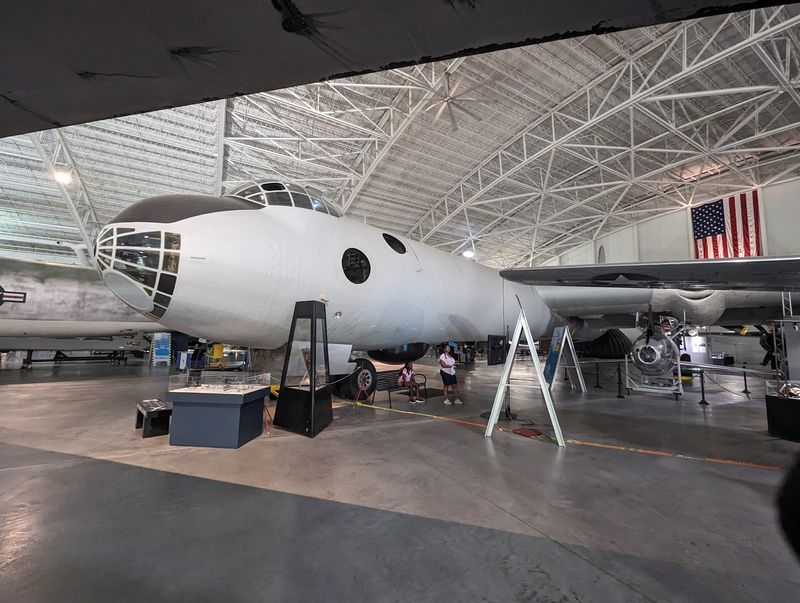
Few things prepare you for the sheer physical presence of a B-36J Peacemaker, the largest bomber ever built, occupying a significant portion of one of the museum’s hangars. The wingspan alone is enough to make you recalibrate your sense of what aircraft can be.
Nearby, a B-52 Stratofortress reminds visitors that some designs are so effective they simply never become obsolete.
The World War II section delivers its own powerful punch. A B-17G Flying Fortress stands as a tribute to the endurance of crews who flew mission after mission over Europe, while a B-25N Mitchell carries the legacy of the Doolittle Raid on Tokyo, one of the boldest operations of the entire war.
The B-1A Lancer rounds out the bomber collection with its swept-wing supersonic profile.
Standing beneath these aircraft and looking up at their wingspans, which stretch far beyond what photographs suggest, produces a kind of quiet awe that no screen can replicate. This section alone justifies the drive from anywhere in the region.
The SR-71 Blackbird and the Art of Flying Impossibly Fast
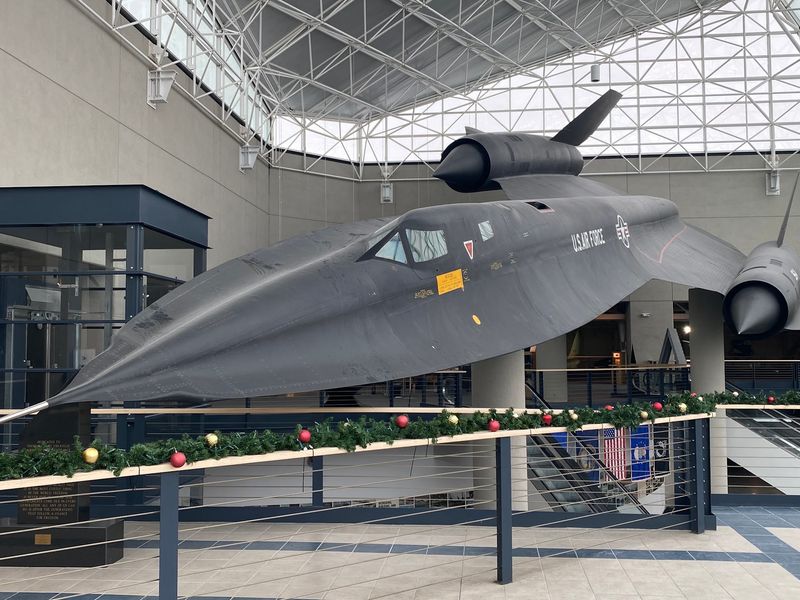
No aircraft in the museum generates more conversation than the SR-71 Blackbird, and once you see it in person, the reasons become immediately obvious. This all-black reconnaissance jet, developed by Lockheed’s legendary Skunk Works division and first flown in 1964, could cruise at speeds exceeding Mach 3 and reach altitudes where no enemy missile could follow.
The museum’s example is displayed in the glass atrium on a raised pedestal, angled forward as though it is perpetually about to vanish over the horizon.
Seeing its dimensions in person is a genuinely different experience from any photograph. The fuselage is long, low, and predatory in a way that feels almost alive.
The titanium skin, chosen because aluminum would melt at those speeds, gives the aircraft a texture and sheen that photographs simply cannot capture.
Alongside the Blackbird sits the Lockheed U-2C Dragon Lady, the high-altitude spy plane that preceded it and became famous through the Francis Gary Powers incident. Together, these two aircraft tell one of the most riveting espionage stories in aviation history.
Stealth, Secrets, and the F-117 Nighthawk
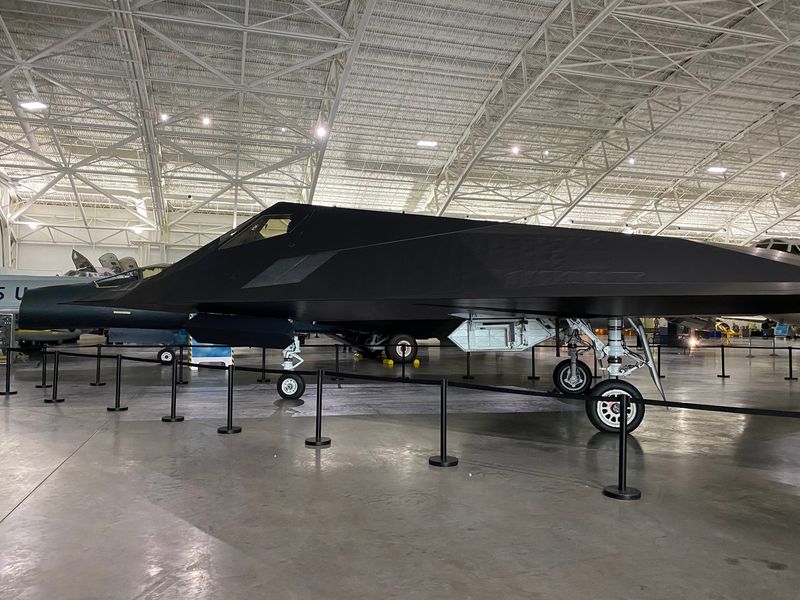
The F-117 Nighthawk occupies a unique place in aviation history, and seeing it at the Strategic Air Command and Aerospace Museum in person adds a layer of appreciation that reading about it simply cannot provide. This angular, faceted aircraft was the world’s first operational stealth warplane, designed to scatter radar signals rather than reflect them back to enemy receivers.
Its odd, almost geometric shape looks wrong in the way that genuinely revolutionary designs often do.
The museum’s example sits in quiet contrast to the rounded curves of the older bombers nearby, a visual reminder of how dramatically aerospace engineering shifted in the final decades of the twentieth century. The Nighthawk flew its first combat missions during Operation Just Cause in Panama in 1989 and later became famous during Operation Desert Storm.
Visitors who take a moment to walk the full perimeter of the aircraft notice how the angles change completely depending on where you stand. One moment it looks enormous; from another angle, it almost disappears into its own shadow, which is rather the point.
Rockets, Missiles, and the Weight of Nuclear History
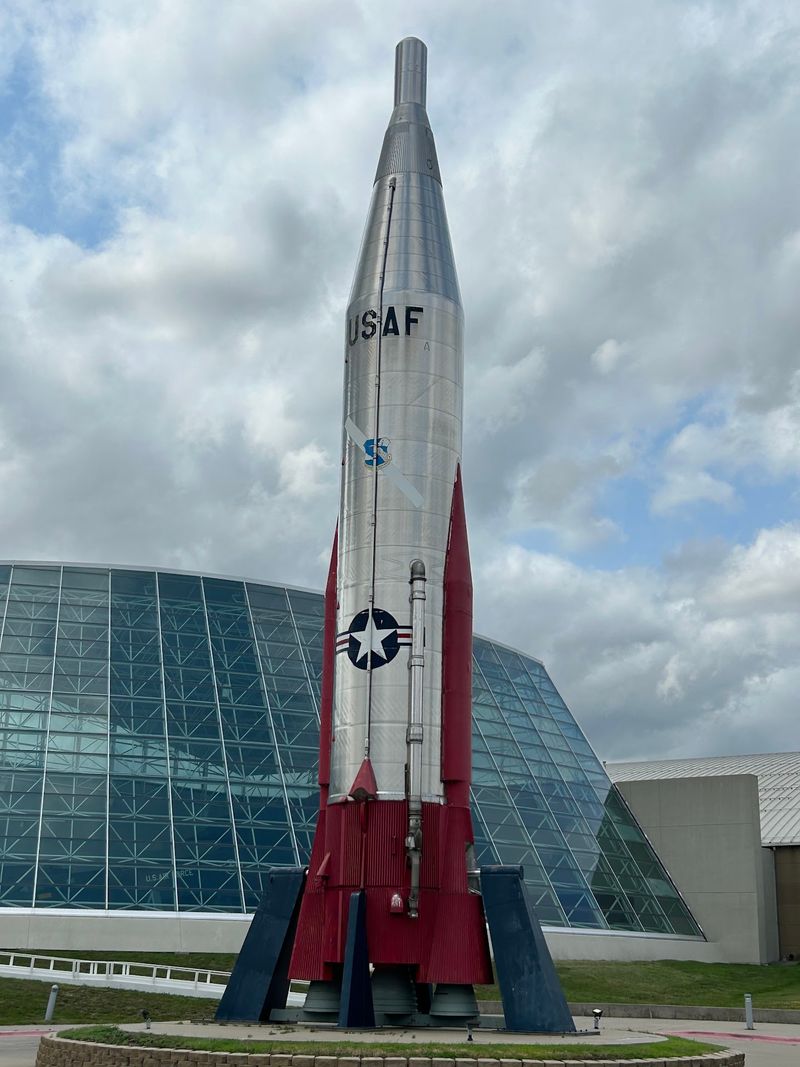
The bomber collection tells one part of the Cold War story, but the missile and rocket displays fill in the chapters that the aircraft cannot reach. Towering ICBMs and strategic missiles stand throughout the museum as stark, powerful reminders of a period when global security rested on the credibility of nuclear deterrence.
The Strategic Air Command’s motto, Peace Is Our Profession, takes on real weight when you stand next to the hardware that backed it up.
These artifacts are displayed with enough context to help visitors understand not just what they are, but why they existed and what their presence meant to the geopolitical landscape of the mid-twentieth century. The combination of scale and historical context creates one of the more thought-provoking sections of the entire museum.
The transition from missiles to space rockets feels natural here, because the technologies are closely related. Engineers who developed ballistic missiles often contributed directly to the rockets that eventually carried astronauts into orbit, and the museum connects those dots in a way that rewards curious visitors who take time to read the accompanying materials.
Space Exploration Galleries and Nebraska’s Own Astronaut
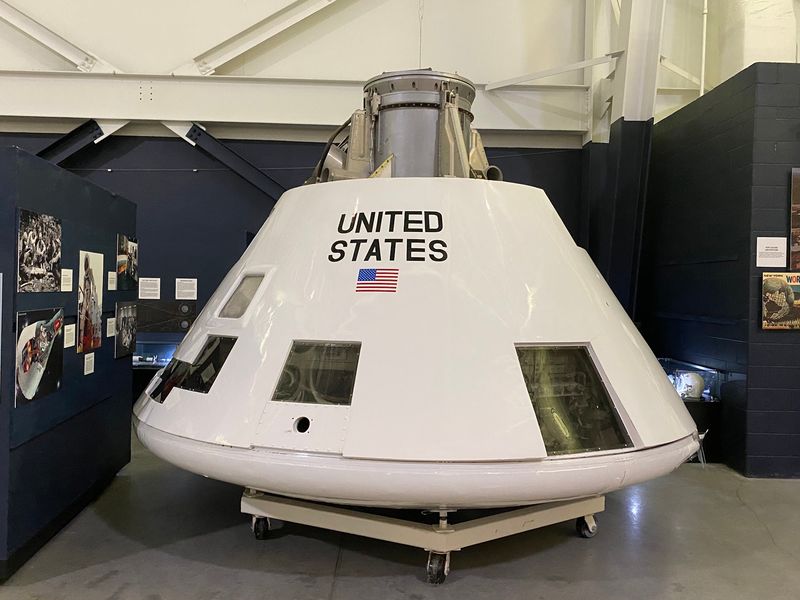
Beyond the military hardware, the museum devotes significant gallery space to humanity’s journey beyond Earth’s atmosphere, and this section carries its own brand of wonder. An Apollo Command Module replica anchors the space exploration area, transporting visitors back to the era when the entire planet held its breath watching grainy television footage of astronauts on the lunar surface.
The gallery also celebrates Nebraska’s own connection to NASA through a dedicated exhibit honoring astronaut Clayton Anderson, who flew on two Space Shuttle missions and spent 167 days aboard the International Space Station. Seeing a hometown hero’s story told with actual mission artifacts and personal details adds a human dimension that purely historical exhibits sometimes miss.
A planetarium on site offers scheduled shows for an additional fee of five dollars for adults and three dollars for seniors, military personnel, and children, providing a fully immersive look at the cosmos above. The combination of spacecraft artifacts and live planetarium programming makes this section feel like a museum within a museum, and it is genuinely worth the extra time and cost.
Flight Simulators, Drone Soccer, and the Future Fun Lab
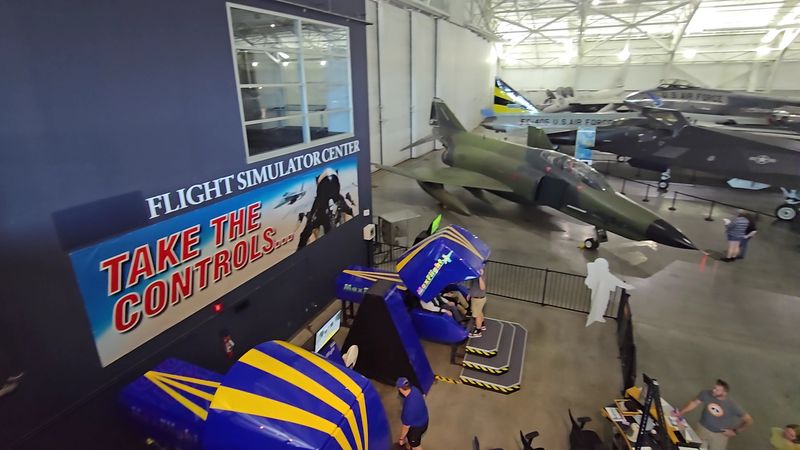
There is a particular kind of joy that happens when a museum stops asking you to simply look and starts asking you to actually do something. The interactive section of this facility earns its reputation quickly, especially among younger visitors who arrive skeptical and leave reluctant to leave.
The flight simulators, available in both 2D and 3D virtual reality formats, let you take the controls of a virtual aircraft for a fee that hovers around thirteen dollars for roughly three minutes of airtime, and the BOGO deals available online make that even more accessible.
The drone soccer arena is a genuinely unexpected highlight, a competitive activity that blends hand-eye coordination with aerospace principles in a format that kids and adults both find immediately addictive. The Future Fun Lab takes things further, with technology that brings hand-drawn sketches to life digitally, a concept that earns audible reactions from visitors of every age.
An inflatable space shuttle bouncer rounds out the younger-kid offerings, ensuring that no member of the family feels left out. This section alone could anchor a visit even if none of the aircraft existed.
Aircraft Restoration: Where History Gets a Second Chance
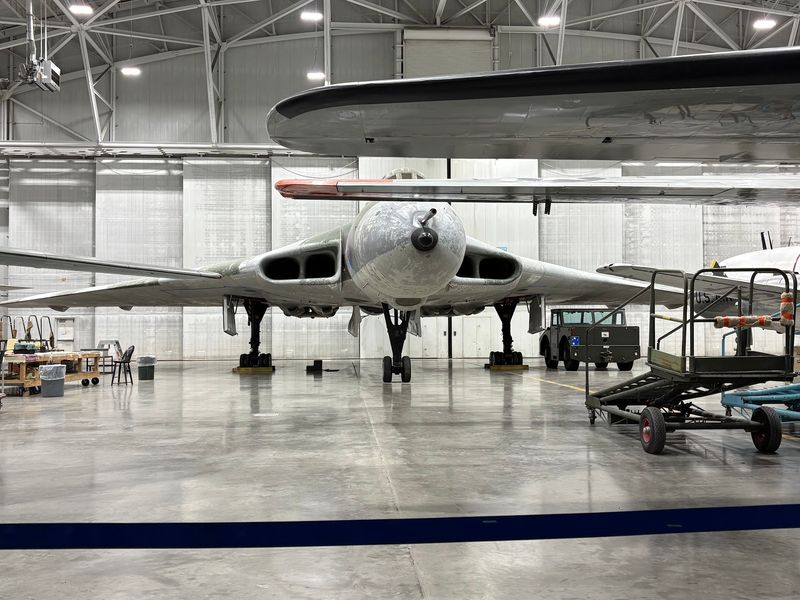
One of the most quietly compelling areas of the museum is the restoration gallery, where visitors can watch skilled volunteers and staff bring weathered aircraft back to display condition in real time. The process is not quick.
A single aircraft typically requires around two years and approximately 10,000 man-hours of careful, painstaking work before it is ready to take its place on the floor.
Because of that investment, the team can realistically focus on one aircraft at a time, which means the restoration gallery always offers something in progress rather than a finished product. Watching someone carefully work on a panel or a cockpit instrument while explaining the process to curious onlookers is the kind of unscripted museum moment that no exhibit label can manufacture.
The goal is structural preservation and historical accuracy rather than airworthiness, which keeps the scope realistic and the results genuinely impressive. Visitors who take time to stop and ask questions in this area often report it as one of their favorite parts of the day, and the docents here clearly love what they do.
Planning Your Visit: Tickets, Tips, and What to Expect
Adult admission runs eighteen dollars, which is a reasonable ask for a facility of this scale. Seniors and active or retired military personnel pay fourteen dollars with valid identification, children between four and twelve are admitted for ten dollars, and kids three and under get in free.
The museum is open seven days a week with the exception of Tuesdays, plus standard holiday closures on New Year’s Day, Easter, Thanksgiving, and Christmas.
Weekday hours run from 9 AM to 4 PM, while Saturdays extend to 5 PM and Sundays open later at 11 AM. Parking is free and plentiful, which is a genuine convenience for families arriving by car.
A cafe on site handles lunch and snacks, and the food quality has drawn positive comments from visitors who expected basic concession fare and received something considerably better.
Budget at least two and a half to three hours for a comfortable visit, though four hours is not unusual for enthusiasts. The museum store on the upper level stocks a solid range of aviation-themed souvenirs and educational items worth browsing before you head back to the highway.
Share this story