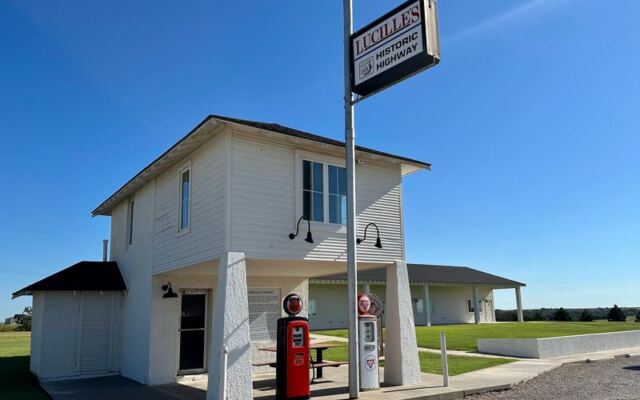
Somewhere along a quiet stretch of old highway in Oklahoma, a weathered gas station sits just off the interstate, close enough to see from your car window yet far enough that most people never bother to stop. That is exactly the problem.
Lucille’s Historic Highway Gas Station is one of those rare roadside finds that costs nothing to visit yet hands you something genuinely priceless: a front-row look at what road travel once felt like on the legendary Mother Road. Pull over, stretch your legs, and let the story of one remarkable woman and her filling station remind you why slow travel will always beat the fast lane.
Location and Identity of a Mother Road Landmark
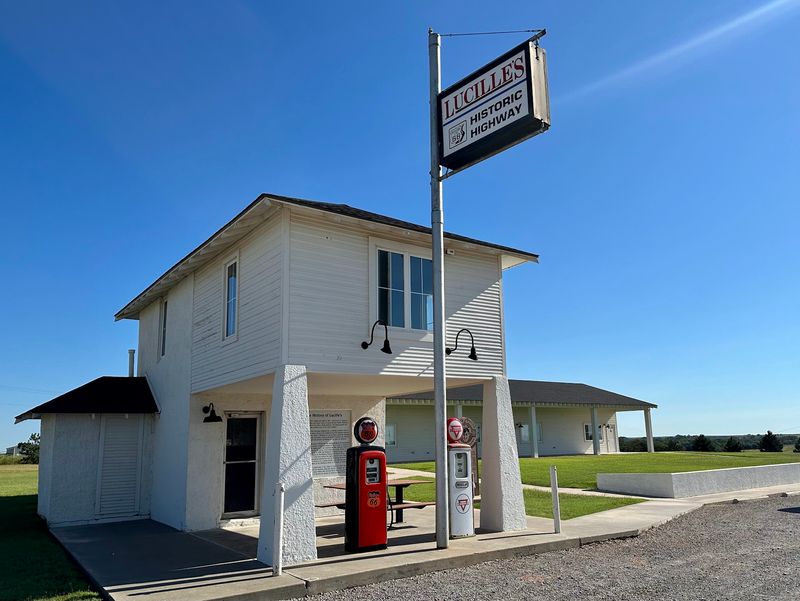
Sitting at 3004 U.S. Route 66 in Hydro, Oklahoma, Lucille’s Historic Highway Gas Station occupies a spot that feels frozen somewhere between the 1930s and the present day.
The building hugs the original alignment of Route 66, the storied cross-country corridor that once connected Chicago to Los Angeles and carried generations of American travelers through the heartland.
Visitors approaching from Interstate 40 can actually spot the station from the highway, though the full impact of the place only registers once you are standing right in front of it. The contrast between the modern freeway rushing past and this quiet, preserved relic of roadside Americana is striking enough to stop you mid-sentence.
Classified as a tourist attraction, the station functions today as an open-air historic site rather than an operating business. No admission fee is charged, no ticket booth guards the entrance, and no tour guide ushers you along.
You simply park, walk up, and absorb a century’s worth of highway culture at your own pace, which is exactly how a good roadside stop should work.
The Woman Behind the Pumps
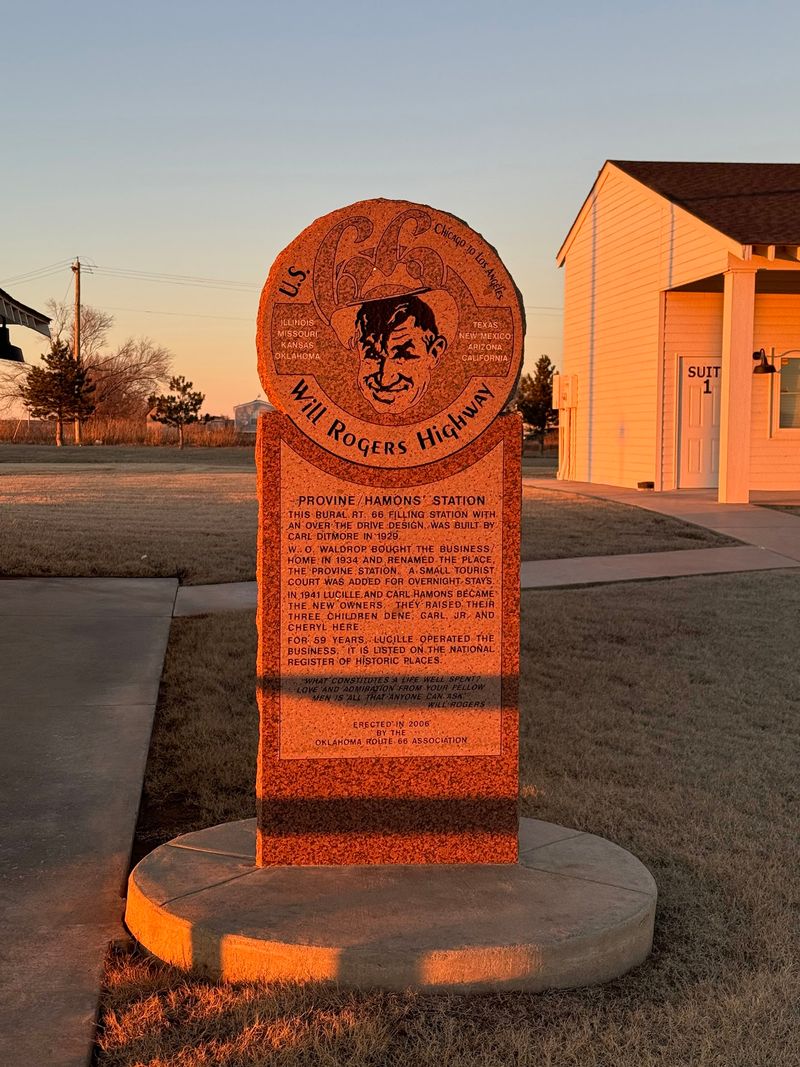
Behind every legendary roadside stop is usually a legendary person, and this one is no exception. Lucille Hamons ran the station for decades and earned a reputation along Route 66 that stretched far beyond Hydro, Oklahoma.
Travelers who passed through during the mid-twentieth century often remembered her by name long after the miles had blurred together.
Known locally as the “Mother of the Mother Road,” Lucille was celebrated not just for keeping the pumps running but for her generosity toward travelers who had fallen on hard times. Visitors who have researched her story say she helped people who were broke, stranded, or simply in need of a kind word during difficult stretches of their journeys.
A detailed informational sign on the grounds tells her story in plain, moving language, giving visitors a real sense of the woman who shaped this place. Reading it, you get the feeling that Lucille treated every car that pulled in as an opportunity to connect with another human being.
That spirit, more than the buildings or the pumps, is what makes stopping here feel worthwhile rather than just photogenic.
The Vintage Fuel Pumps That Still Command Attention
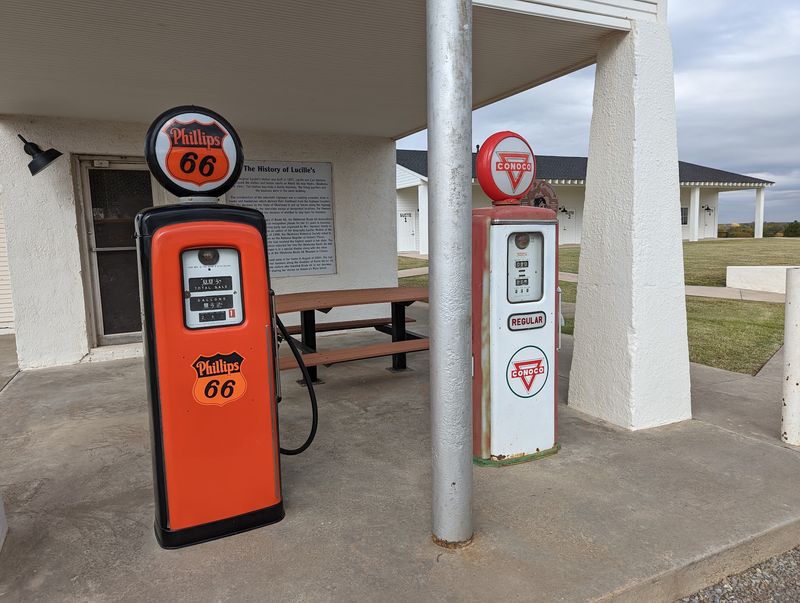
Two antique fuel pumps stand guard outside the station like sentinels from another era. One carries the Conoco brand, the other the familiar Phillips 66 shield, and together they represent the competing oil companies that once defined the roadside landscape across the American Southwest.
Visitors consistently mention these pumps as a highlight, and it is easy to understand why.
Up close, the pumps have that satisfying, chunky quality of old industrial equipment built to last rather than built to impress. The rounded tops, the faded lettering, the mechanical simplicity of the design all tell you something about how different the world of motoring once was.
A fill-up at a station like this would have been a social event, not a hurried tap-and-go transaction.
One visitor noted, with a grin implied in the writing, that gas was once only twenty-five cents a gallon at places like this. Standing next to these pumps while today’s fuel prices loom somewhere in your memory creates a quietly humorous kind of time-travel experience.
The pumps are not roped off or encased in glass, so you can get genuinely close and appreciate the craftsmanship that went into them.
A Classic Truck Parked Like It Never Left
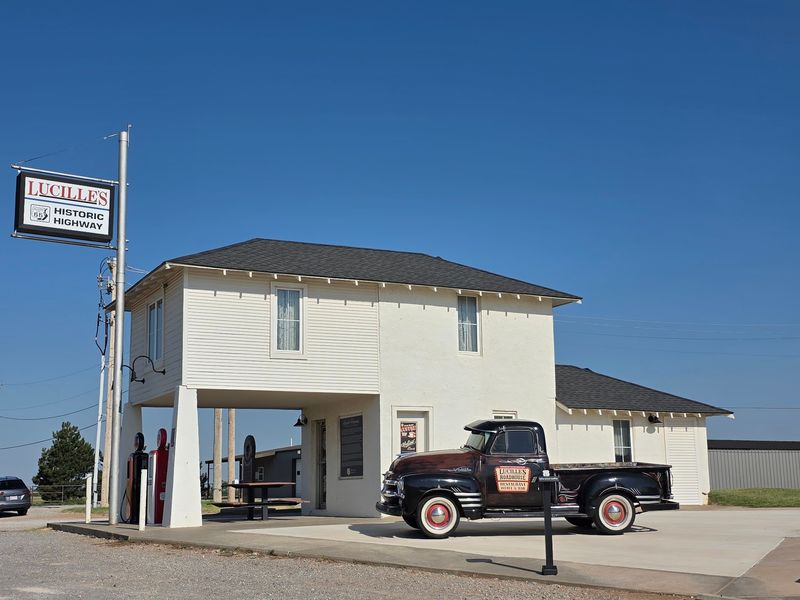
Parked alongside the station as if its driver just stepped inside to pay, an old Chevrolet pickup truck adds a layer of storytelling that no museum display could replicate. The truck looks like it belongs there because, in every meaningful sense, it does.
Its presence transforms the grounds from a preserved building into something closer to a living scene from the past.
Multiple visitors have called the truck out specifically in their accounts of the stop, noting that it contributes to the overall atmosphere of the place in a way that feels organic rather than staged. The vehicle carries the patina of real use and real years, which gives it an authenticity that a perfectly restored showpiece would lack.
Someone is clearly maintaining the grounds with care, and the truck is part of that effort. Visitors who have stopped on weekdays, weekends, and even holiday Sundays report finding the exterior clean, well-kept, and thoughtfully arranged.
The truck, the pumps, and the buildings form a coherent tableau that rewards anyone willing to spend even ten minutes walking around and taking it all in from different angles.
Informative Signs That Do the Heavy Lifting
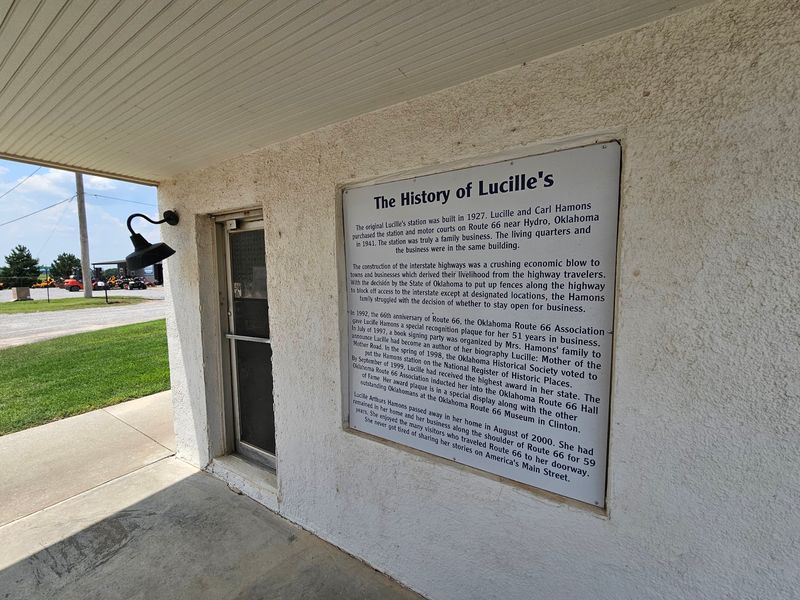
One of the smartest things about this stop is how much information the site itself provides without requiring any outside preparation. A well-written sign details the history of Lucille and the station, giving casual visitors the context they need to appreciate what they are looking at.
There is also a Will Rogers Highway Marker on the grounds, adding another layer of historical significance to an already story-rich location.
The signs have been described by visitors as genuinely informative rather than the kind of boilerplate text that gets skimmed and forgotten. Reading them carefully takes only a few minutes, but those minutes reframe the entire visit.
Suddenly the old pumps are not just props for a photograph; they are artifacts connected to real people, real journeys, and real economic hardship that shaped mid-century America.
For anyone who loves roadside history but does not always have time to research stops in advance, the on-site signage at Lucille’s does an admirable job of bridging that gap. You arrive knowing little and leave knowing quite a bit, which is a rare and genuinely satisfying outcome for a free, unscheduled detour off the interstate.
The Route 66 Centennial Pole and Fresh Paint
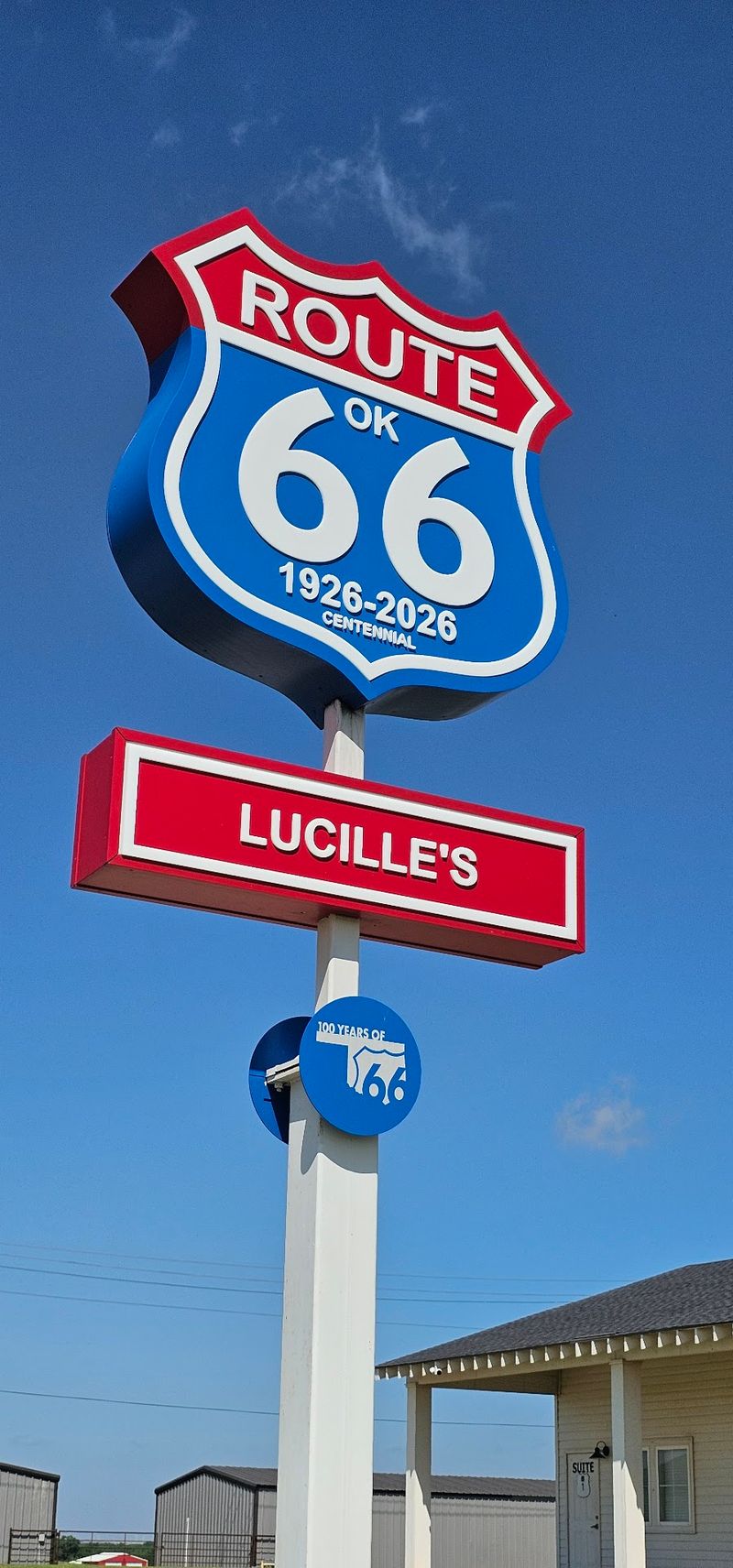
Preservation efforts at the station have been ongoing and visible. Visitors who have stopped over the past couple of years noticed a fresh coat of paint on the buildings and a newly installed Route 66 pole, added in anticipation of the highway’s upcoming hundredth anniversary.
These touches signal that someone genuinely cares about keeping this site relevant and presentable for future generations.
The centennial milestone for Route 66 is a significant cultural moment for communities along the old highway, and Lucille’s station is positioned to be part of that celebration in a meaningful way. The pole serves as both a marker and a symbol, acknowledging that this stop is not a relic waiting to fade but an active participant in the ongoing story of the Mother Road.
What strikes visitors is that the improvements feel respectful rather than over-produced. Nothing about the station has been turned into a theme park version of itself.
The fresh paint and new pole complement the original character of the place rather than overwriting it, which is exactly the kind of stewardship that keeps historic sites worth visiting decade after decade.
Who This Stop Suits Best
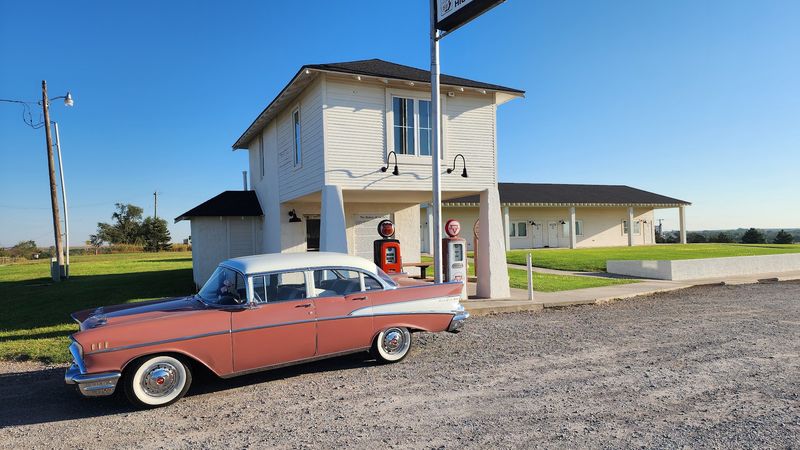
Road-trippers driving the original alignment of Route 66 are the obvious audience here, but the station attracts a much wider crowd than that. Families on holiday road trips, history enthusiasts, photographers chasing authentic Americana, and international travelers making bucket-list runs along the Mother Road all show up at this small patch of Oklahoma highway.
One memorable account describes two travelers from the Netherlands who had come all the way from Europe specifically to drive the full length of Route 66, stopping at Lucille’s as part of that journey. That kind of global appeal says something real about the power of the place.
A preserved gas station in a small Oklahoma town is drawing visitors from across the Atlantic, and they are leaving genuinely glad they stopped.
Kids tend to respond well to the tactile, visual nature of the stop. Old trucks, chunky antique pumps, and faded signs are naturally fascinating to younger visitors who have never seen anything like them.
Adults appreciate the slower pace and the chance to imagine what cross-country travel felt like before interstates, GPS, and drive-through everything. The site manages to offer something to nearly every type of traveler who gives it a chance.
Practical Details for Planning Your Stop
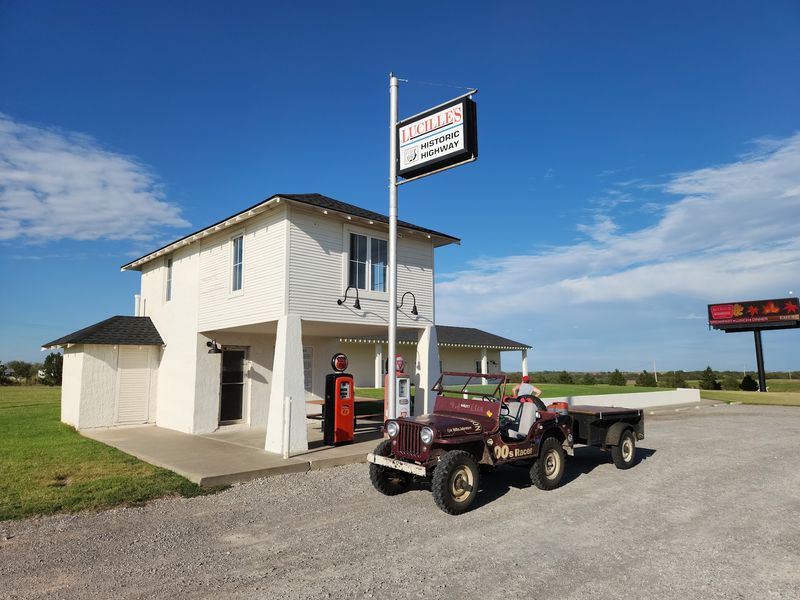
Getting to Lucille’s is straightforward. The station sits at 3004 U.S.
Route 66 in Hydro, Oklahoma, and is reachable by phone at 405-258-0008 if you need directions or want to confirm current conditions before making the trip. From Interstate 40, the building is actually visible, making it one of the easier roadside finds along this stretch of old highway.
Parking is generous and easy to navigate, which matters more than it might sound for a roadside stop. Visitors arriving in larger vehicles or pulling small trailers report no trouble finding space, and the layout makes it simple to pull in, park, and walk around without any maneuvering headaches.
The grounds are consistently described as clean and well-maintained, with no litter and clear sightlines to all the main features.
Because the station functions as an exterior historic site rather than an operating business, access to the interior of the buildings is not available. Visitors can explore the outside thoroughly, read the signs, photograph the pumps and truck, and soak in the atmosphere.
Plan for a stop of roughly fifteen to thirty minutes, though plenty of visitors find themselves lingering longer once the history starts to sink in.
Why Slowing Down Here Pays Off
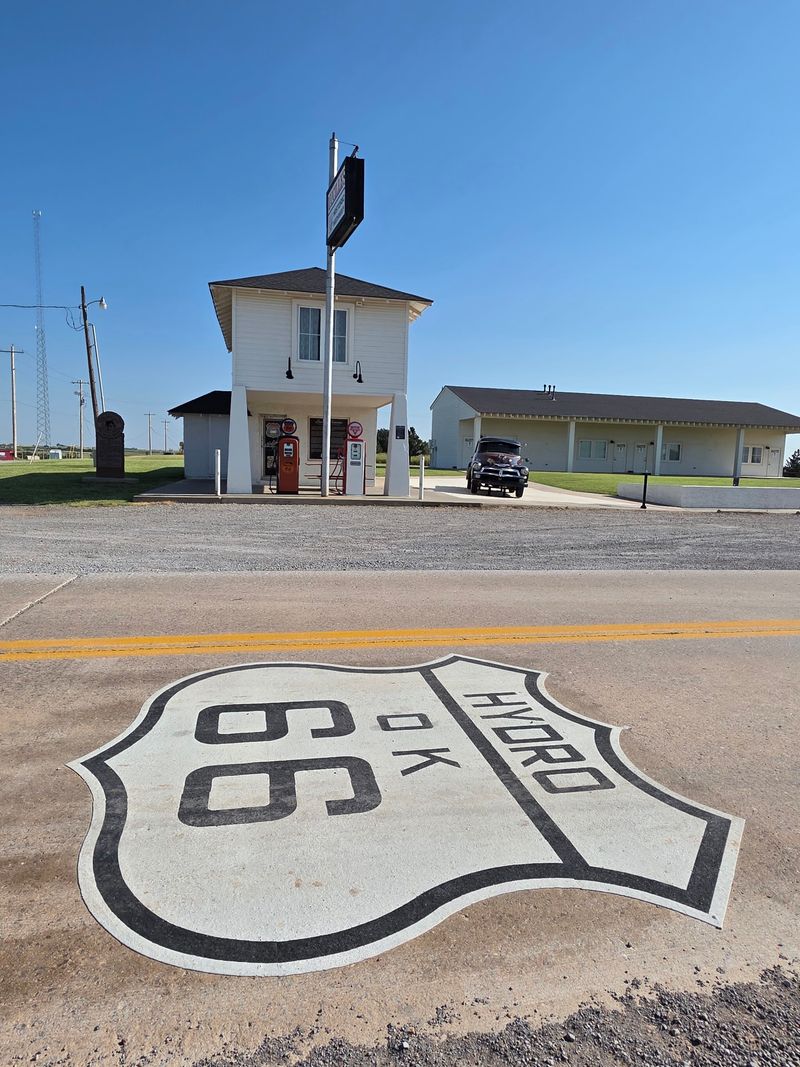
Most drivers passing this stretch of Oklahoma see Lucille’s station as a blur in the peripheral vision, a brown building near the interstate that registers for about half a second before the road pulls their attention forward again. The ones who stop tend to walk away describing it as one of the better unplanned decisions of their trip.
There is something about standing in a place where thousands of people once stopped out of necessity, where a single determined woman built a life and a reputation through hard work and genuine hospitality, that shifts your perspective in a quiet but lasting way. The station does not shout for your attention.
It simply waits, and rewards whoever shows up.
Free to visit, easy to reach, and loaded with more genuine history than most roadside stops three times its size, Lucille’s Historic Highway Gas Station earns its reputation as a must-stop along the Mother Road. Whether you are deep into a Route 66 pilgrimage or just passing through Oklahoma on a whim, the few minutes it takes to pull off and walk around are minutes you are unlikely to regret.
Some of the best travel moments cost nothing at all.
Share this story