Most towns are a patchwork of different colors, materials, and styles. But a handful of places around the world took a completely different approach, committing to one bold, unusual color across nearly every wall, roof, and street. Some got their look from ancient geology, others from royal orders, religious traditions, or even a cartoon movie promotion. The result in each case is a town that feels like nothing else on earth, a place where the landscape and the architecture merge into one unforgettable visual statement.
Whether the color comes from volcanic stone, iron-rich sandstone, whitewash, or a fresh coat of paint, these towns prove that a single color can carry an enormous amount of history, culture, and personality. From a blue Moroccan medina tucked into mountain folds to a golden Rajasthani desert city, each destination on this list offers something genuinely surprising. Read on to discover all fourteen.
1. Chefchaouen, Morocco
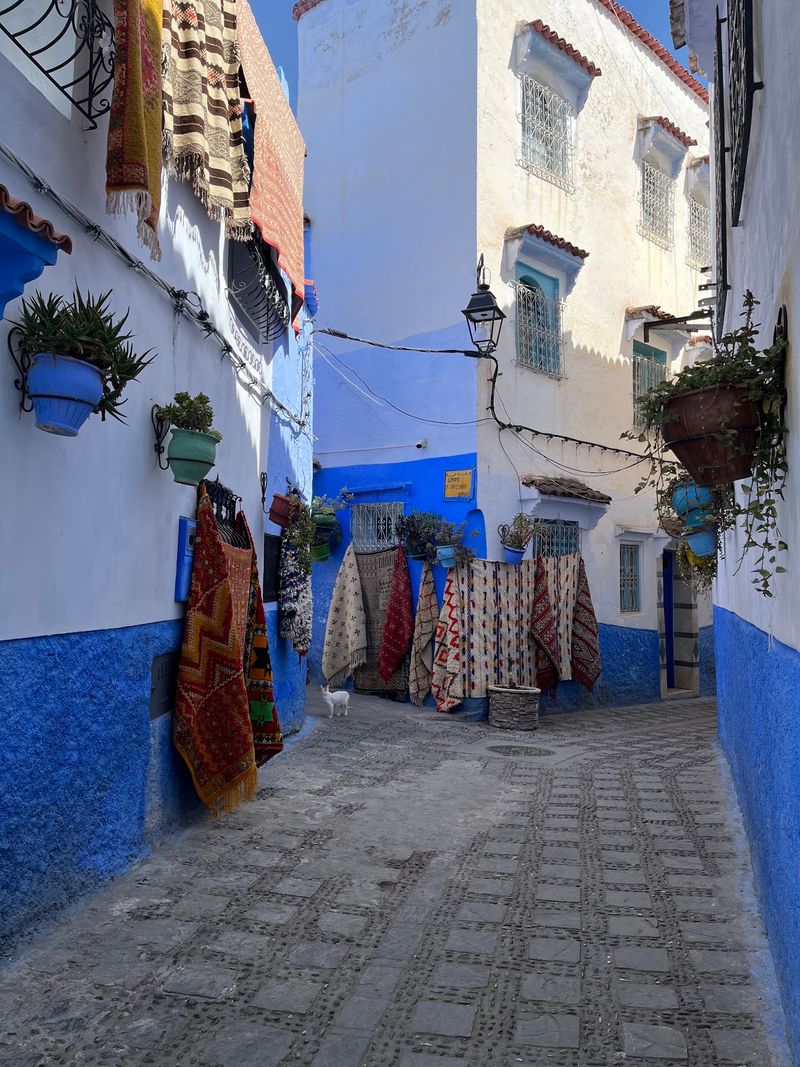
Blue is not just a color in Chefchaouen; it is practically the town’s entire personality. Nestled high in Morocco’s Rif Mountains, this northern medina is covered from ground to rooftop in shades of azure, cobalt, and sky blue, coating houses, staircases, doors, and alley walls alike.
The origins of the blue tradition are rooted in history. Jewish refugees who arrived after fleeing 15th-century Spain brought with them the practice of painting homes blue, a color tied to spiritual meaning in Jewish tradition. When that community departed for Israel in 1948, the local population kept the custom alive.
Today, the town government and residents maintain the blue through regular repainting, treating the color as both a cultural identity and a practical asset. Some locals also believe the blue pigment, which often contains copper compounds, helps deter insects. The result is a medina that feels unlike any other urban environment in the world.
2. Jaipur, Rajasthan, India
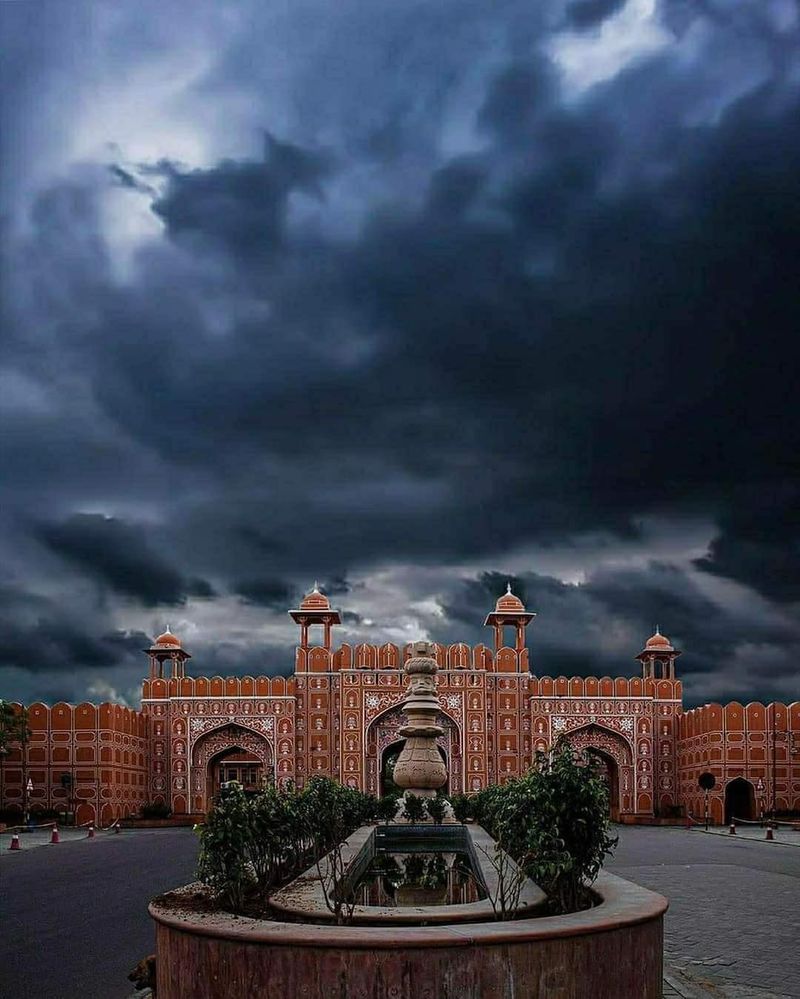
A Maharaja’s desire to impress a visiting British prince accidentally gave an entire Indian city its most recognizable feature. In 1876, Maharaja Sawai Ram Singh I ordered Jaipur’s historic core repainted in pink, a color traditionally associated with hospitality in India, ahead of a royal visit from the Prince of Wales.
The prince was reportedly delighted, and the nickname “Pink City” followed almost immediately. The Maharaja’s enthusiasm for the look was so strong that a law passed in 1877 required all buildings within the old walled city to maintain the same pink shade. That law remains in effect today.
The particular tone chosen was a durable terracotta pink made from a calcium oxide compound, well-suited to Jaipur’s dry climate. Iconic structures like the Hawa Mahal, already built from pink sandstone in 1799, received a fresh wash that year too. The overall effect is a historic district that feels warmly unified, especially around golden hour.
3. Ostuni, Puglia, Italy
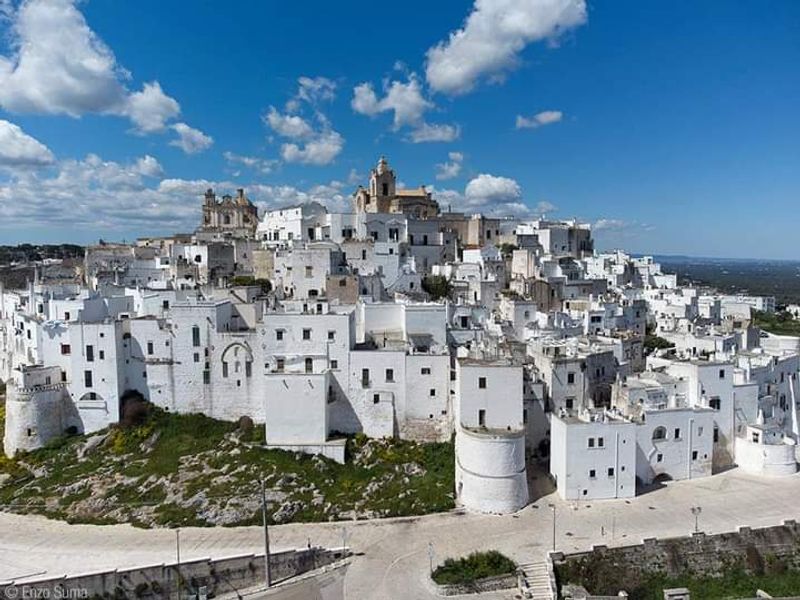
Perched above Puglia’s olive country, Ostuni earns its “White City” label through sheer commitment. Its historic center is a dense network of whitewashed buildings stacked along narrow lanes, under graceful arches, and up winding staircases, presenting an almost unbroken sweep of bright white from every angle.
The whitewash tradition was not purely decorative. Lime paint served as a natural disinfectant during plague outbreaks, a practical public health measure that towns across the Mediterranean adopted for centuries. The same white surfaces also reflect the intense Puglian sun, helping keep interiors cooler during long, hot summers.
Colorful doors, potted geraniums, and cascading bougainvillea provide vivid contrast against the white backdrop, giving the town visual depth without disrupting its dominant palette. Ostuni’s elevated position offers panoramic views of the surrounding countryside and the Adriatic coastline beyond, making the whitewashed buildings even more striking against the wide blue horizon. It is a place where simplicity and drama coexist with remarkable ease.
4. Jodhpur, Rajasthan, India
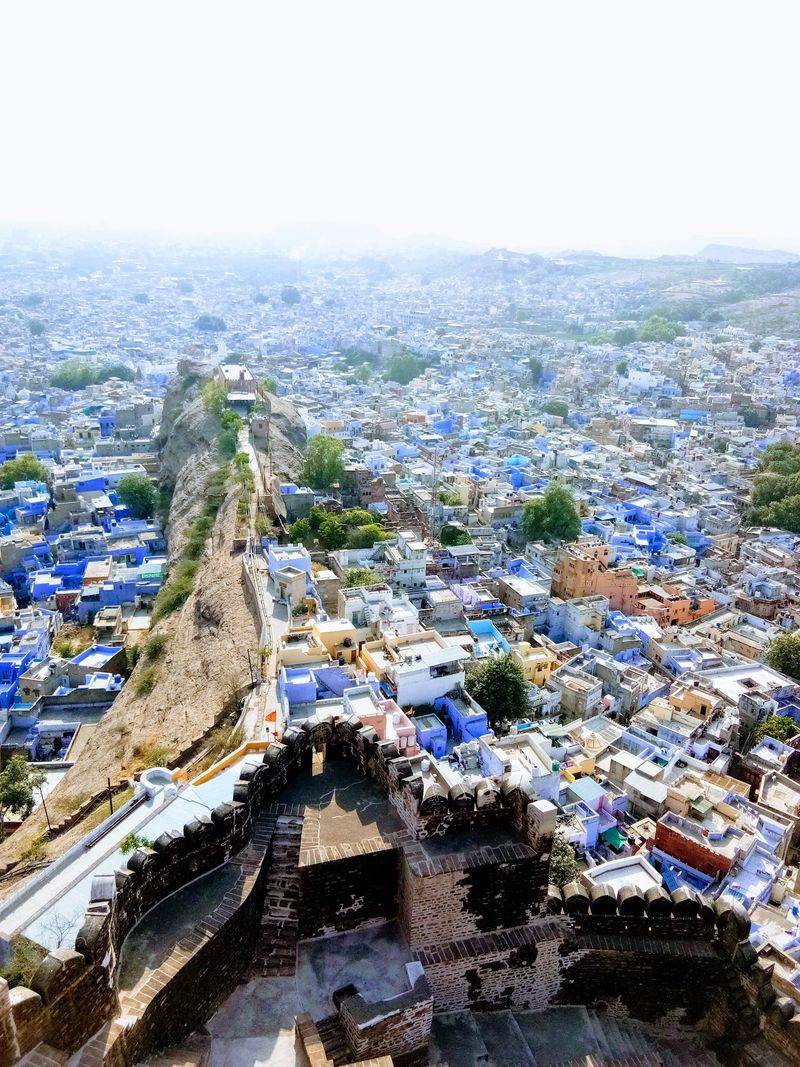
From the ramparts of Mehrangarh Fort, old Jodhpur spreads out below like a dense indigo mosaic. The blue rooftops and walls of the historic neighborhoods create one of Rajasthan’s most recognizable panoramas, a cityscape that has earned Jodhpur the title of the “Blue City.”
One widely cited explanation links the blue color to the Brahmin community, whose members historically used the distinctive pigment to mark their homes and social status. As blue paint became more affordable over time, the tradition spread well beyond Brahmin households, eventually becoming a defining characteristic of the entire old quarter.
A separate practical theory suggests the blue wash, often containing copper sulphate and limestone, helped deter termites that damaged traditional structures. Whether the motivation was social, practical, or simply aesthetic, the result is the same: a historic city that wears its color with confidence. The view from the fort, with blue stretching in every direction, is one of the most photographed urban scenes in all of India.
5. Izamal, Yucatan, Mexico
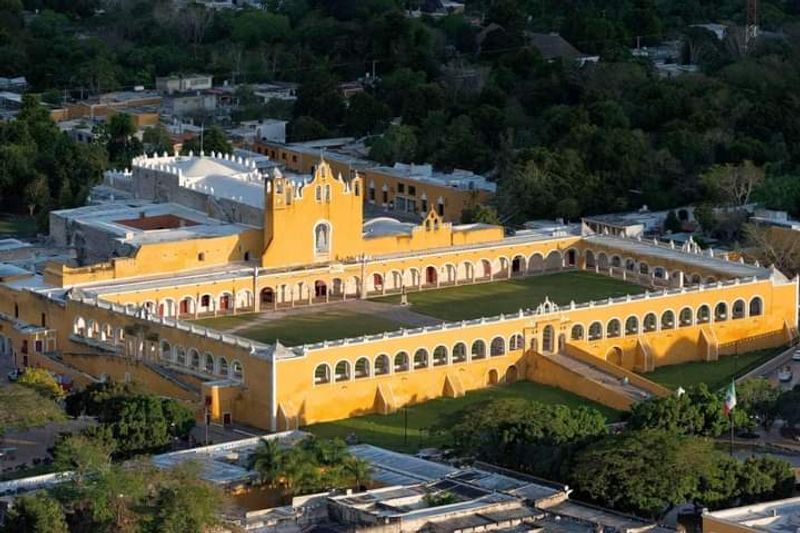
Golden yellow does not usually describe an entire town, but Izamal pulls it off with remarkable conviction. Much of this Yucatan town’s historic center is painted in a warm, sunny yellow with crisp white trim, giving its streets a remarkably consistent and cheerful appearance that visitors tend to remember for a long time.
The color’s most commonly cited origin dates to 1993, when Pope John Paul II visited Izamal. The town was painted yellow and white in reference to the Vatican’s colors for the occasion. The visual impact was so well-received that residents voted to keep the golden hue permanently, and the town has maintained it ever since.
Ancient Maya pyramids rise among the colonial buildings, adding an extraordinary layer of history to the colorful setting. The massive San Antonio de Padua Convent, built directly atop a Maya acropolis, stands as the town’s architectural centerpiece, its yellow walls visible from considerable distance. Known locally as the “City of Hills,” Izamal blends pre-Columbian heritage with colonial character in one unusually golden package.
6. Collonges-la-Rouge, Correze, France
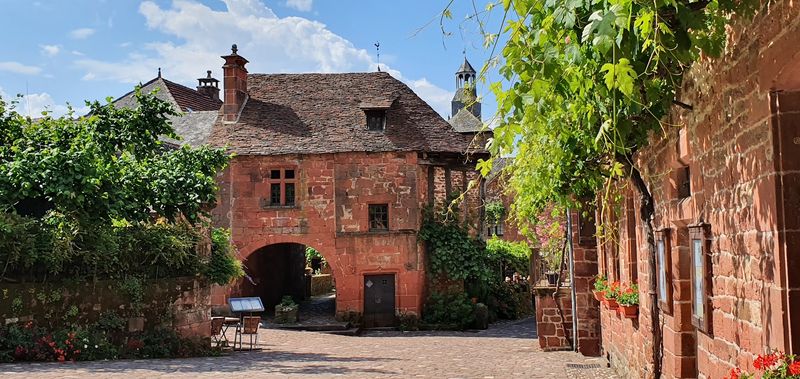
The name itself is a spoiler, but the reality of Collonges-la-Rouge still manages to surprise. This medieval French village in the Correze region is built almost entirely from a distinctive red sandstone, giving its houses, manor towers, and walls a rich, rusty hue that stands in bold contrast to the surrounding green countryside.
The color is entirely natural, a product of geology rather than paint. The sandstone comes from a nearby fault separating the Brive basin from Meyssac, and its high iron oxide content is responsible for the deep reddish tone. Many buildings were originally rendered, but renovations in the 1930s uncovered the beautiful red stone, restoring the village to its original fiery appearance.
Collonges-la-Rouge prospered during the Middle Ages as both a trade route stop and a pilgrimage destination, and wealthy law officers of the Vicounty of Turenne built impressive manor houses throughout the 15th and 16th centuries. Today the village holds the founding membership of “The Most Beautiful Villages in France” association, a recognition it wears as naturally as its remarkable red stone.
7. Frigiliana, Malaga, Spain
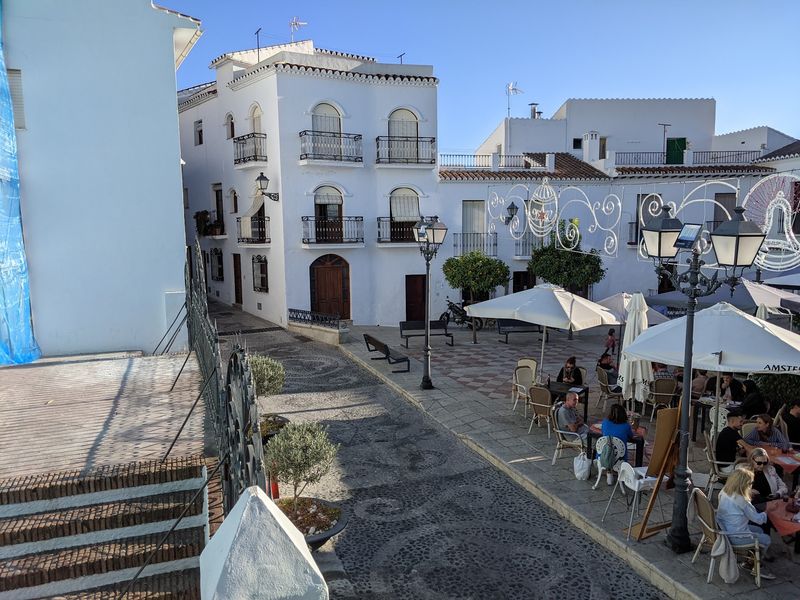
Frigiliana is Andalusia’s white village formula taken to a wonderfully dramatic extreme. Its historic quarter winds uphill through a series of steep, cobbled lanes, all lined with whitewashed houses that present an almost uninterrupted wall of bright white against the deep blue southern Spanish sky.
The whitewash is not just tradition for tradition’s sake. In the intense heat of the Malaga coast, white walls reflect sunlight effectively, helping keep interiors at a manageable temperature through long summer months. Residents reapply fresh coats of lime paint regularly, which keeps the village looking consistently pristine year after year.
What prevents the whole place from feeling monotonous is the steady punctuation of color that appears throughout the lanes. Vibrant bougainvillea, terracotta pots filled with geraniums, and painted doors in deep blues and greens all pop against the white backdrop with considerable force. Frigiliana has won national recognition as one of Spain’s most beautiful villages, a distinction that feels entirely earned once you have navigated its bright, winding streets and looked back down over the surrounding hillside.
8. Juzcar, Malaga, Spain
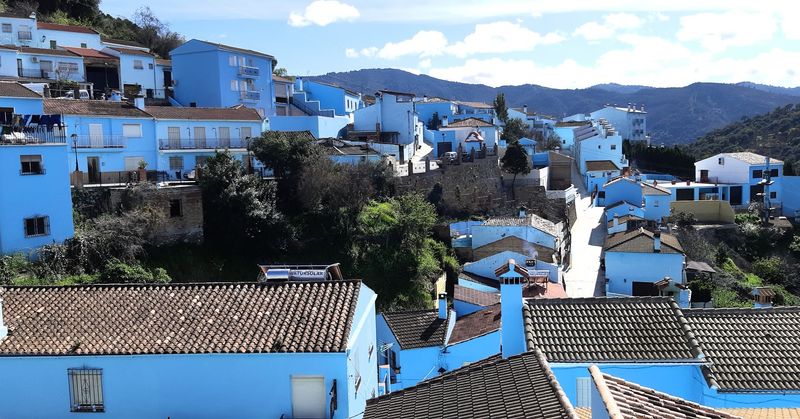
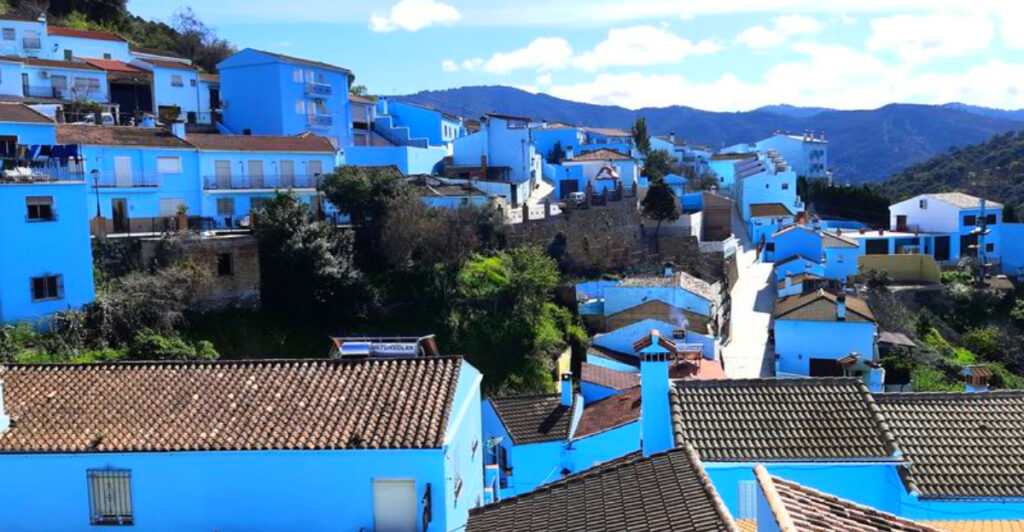
Not every town’s color story begins with centuries of tradition. Juzcar’s blue makeover started in 2011 as a promotional event for a major animated film, when nearly every building in the village, including the church and other public structures, was painted a vivid Smurf-blue ahead of the movie’s Spanish premiere.
After the promotional period ended, residents faced a choice: return to white or keep the blue. They voted to keep it. The decision transformed what had been a quiet, conventional Andalusian village into a self-described “Smurf Village,” complete with themed murals and visitor attractions that play directly into the quirky identity.
The surrounding landscape makes the blue even more striking. Juzcar sits within a chestnut forest in the Genal Valley, and the lush green of the trees provides a vivid natural frame for the unexpected blue buildings. What began as a marketing stunt has become a genuine community identity, proving that sometimes the most unusual color choices end up being the ones that stick around the longest.
9. Jaisalmer, Rajasthan, India
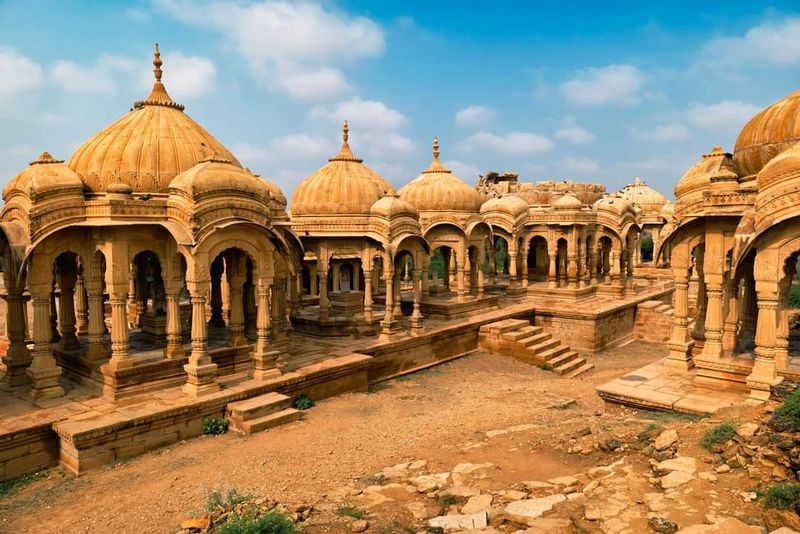
Yellow sandstone does something remarkable in Jaisalmer: it makes an entire desert city look as though it was carved from a single enormous block of gold. The warm, honey-toned stone used throughout the fort, temples, merchant mansions, and residential streets gives the city a visual unity that few urban centers anywhere can match.
Founded in 1156 AD by Rawal Jaisal atop a ridge of yellowish sandstone called Trikuta Hill, Jaisalmer grew into a vital trading post along the ancient Silk Route. Its fort, known as Sonar Quila or the Golden Fort, is a UNESCO World Heritage Site and one of the largest fully inhabited fortifications in the world.
The city’s ornate havelis, built by wealthy merchants in the 18th and 19th centuries, are among its most impressive features. Patwon Ki Haveli and Salim Singh Ki Haveli both showcase intricate stone carving on every surface, all rendered in the same warm yellow sandstone. As the sun descends, the old city and the Thar Desert beyond appear to merge into one continuous golden panorama.
10. Yerevan, Armenia
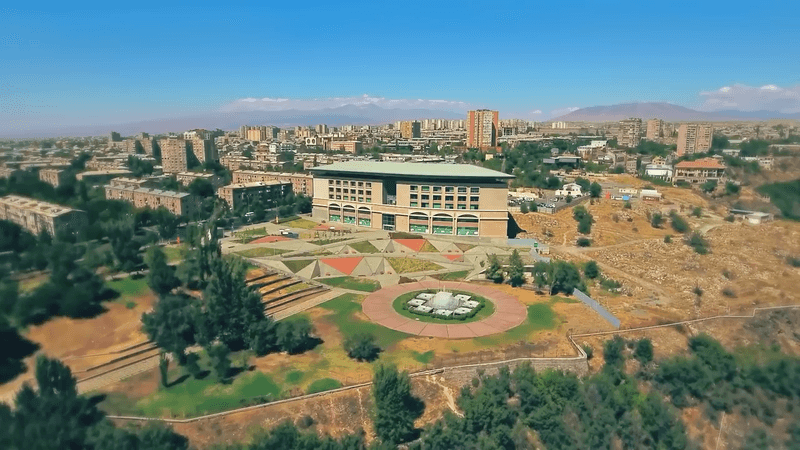
Armenia’s capital city has a color all its own, and it comes not from paint but from the ground itself. Large sections of central Yerevan are built from Armenian volcanic tuff, a locally abundant stone that ranges from soft peach and rosy pink to warmer coral and orange-tinged hues depending on the specific quarry it came from.
The widespread use of tuff was a deliberate architectural choice. After World War I, architect Alexander Tamanian led the rebuilding of Yerevan with a vision of a unified, distinctive city. He specified the use of local pink tuff extensively, creating a cohesive appearance that set Yerevan apart from the often-grey urban landscapes typical of Soviet-era construction.
The result is a city center, known as Kentron, where government buildings, residential blocks, and cultural institutions all share a similar warm palette. Republic Square, the city’s central gathering point, is particularly striking, with its surrounding structures presenting a unified face of pink and rose-toned stone. Founded in 782 BCE, Yerevan pairs one of the world’s oldest urban histories with an architectural palette that feels genuinely unlike any other capital.
11. Ait Benhaddou, Draa-Tafilalet, Morocco
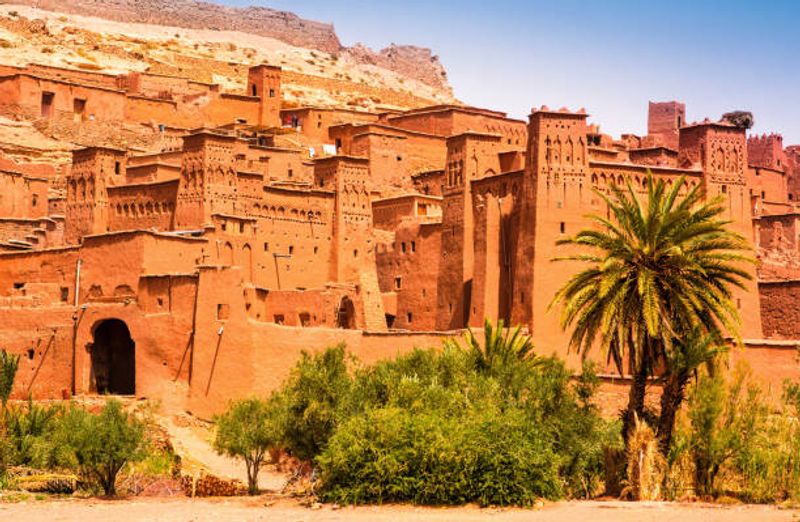
Few places on earth blur the line between architecture and landscape quite as completely as Ait Benhaddou. This UNESCO-listed fortified village, or ksar, is constructed almost entirely from adobe, a mixture of earth, straw, and water, and its buildings take on the same rust, ochre, and reddish-brown tones as the dry Moroccan terrain surrounding them.
The construction method was born from necessity and environmental logic. Adobe provides thick, insulating walls that keep interiors cool during intense desert heat and retain warmth during cooler nights, a practical solution that has kept this building style alive for centuries. The color of the structures comes directly from the local clay and mud used, making the ksar an organic extension of its desert setting.
Ait Benhaddou served historically as an important stop on the caravan route connecting the Sahara to Marrakech, and its defensive towers and walls protected merchants traveling with valuable goods. Its striking visual character has also made it one of the most frequently used film locations in Morocco, appearing as a backdrop in numerous major productions. Viewed from across the dry riverbed, the entire settlement looks as if it grew from the earth rather than being built upon it.
12. Piodao, Coimbra District, Portugal
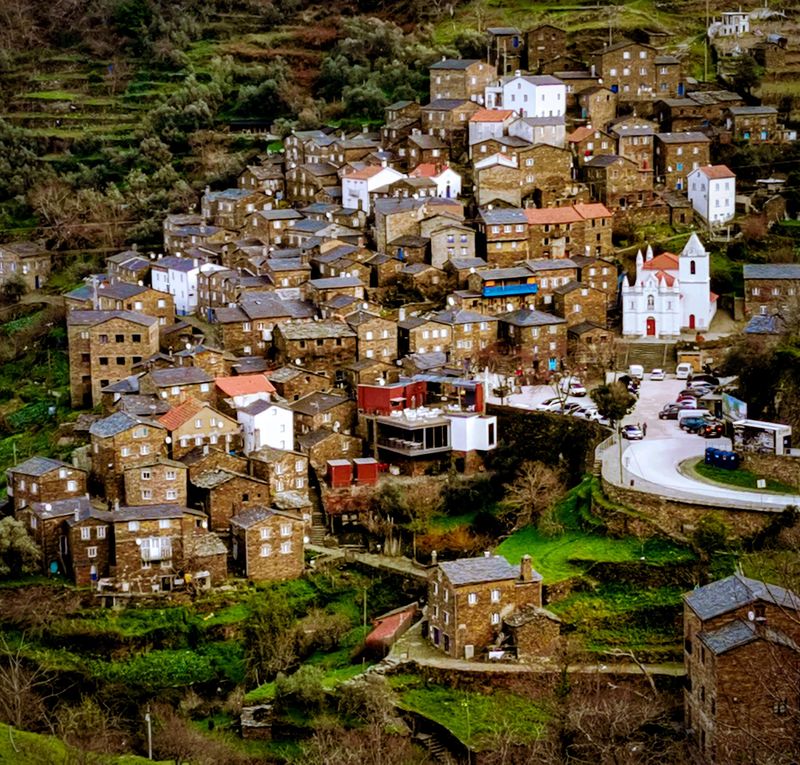
High in Portugal’s Serra do Acor mountains, Piodao offers one of the most unusual color experiences in all of Europe, and it is not the result of paint. The village is built almost entirely from dark local schist, a metamorphic rock that gives every house, wall, and lane a deep slate-grey tone that merges naturally with the surrounding mountainside.
The choice of schist was purely practical. The stone is abundant in the region, retains heat from the sun during the day and releases it slowly at night, and requires no imported materials. Piodao remained isolated for much of its history, without electricity until the 1970s and accessible only by foot or horseback for centuries before that, which meant local materials and traditional methods were the only options available.
What breaks the grey monotony is a small but vivid detail: the village’s doors and window frames are painted a bright cobalt blue. Local legend holds that blue was simply the only paint color available in the village shop at the time the tradition began, a charmingly accidental origin for such a distinctive visual feature. The contrast between the dark stone and the bright blue accents gives Piodao a quiet, striking beauty that rewards the journey to reach it.
13. Alberobello, Puglia, Italy
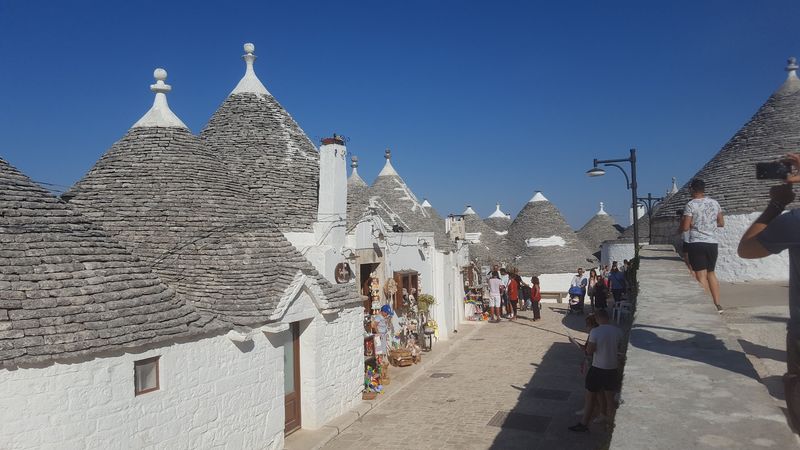
Alberobello looks like a place a child might draw if asked to design an entire town from scratch, which makes it all the more remarkable that it is entirely real. The town’s famous trulli districts are filled with hundreds of traditional stone huts, each capped with a distinctive conical grey limestone roof and surrounded by whitewashed walls, creating a landscape that has no real equivalent anywhere else in Italy.
The trulli are built using an ancient dry-stone technique, stacking local limestone without mortar to form their characteristic rounded roofs. One historical explanation for the mortar-free construction is that buildings could be quickly dismantled to avoid property taxes, a clever workaround that shaped an entire architectural tradition. The whitewashed walls serve the same practical purpose found across southern Italy: reflecting the Mediterranean sun to keep interiors cooler.
Alberobello’s two main trulli neighborhoods, Rione Monti and Aia Piccola, are listed as UNESCO World Heritage Sites. Many trulli remain inhabited, while others have been converted into accommodations and shops, allowing visitors to experience the architecture up close. The pale limestone roofs and white walls combine to give the town a remarkably unified and quietly surreal appearance.
14. Setenil de las Bodegas, Cadiz, Spain
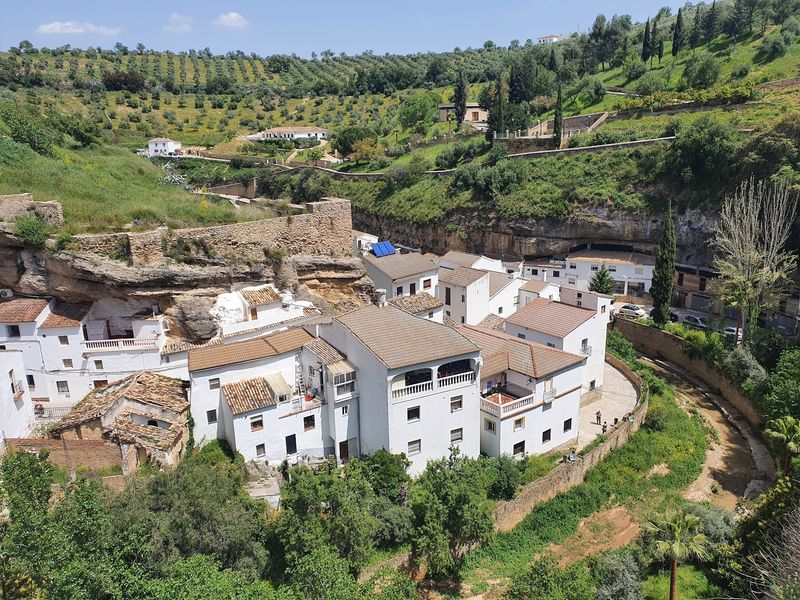
Setenil de las Bodegas takes the classic Andalusian white village and adds a geological plot twist that makes the whole thing feel almost impossible. White-painted facades are built directly into, beneath, and around enormous natural rock overhangs, creating streets where the brilliant white walls contrast sharply with the raw grey and brown stone looming overhead.
The town’s unusual layout is a direct result of human adaptation to the Rif Trejo riverbed’s erosion patterns. Rather than clearing the rock formations, residents over centuries used the natural caves and overhangs as structural elements, incorporating them into the walls and roofs of their homes. The rock provides natural insulation and shelter, making it a practical as much as a visually dramatic solution.
The town’s name carries its own layer of history. “Setenil” may derive from the Latin “septem nil,” meaning “seven times no,” a reference to the number of unsuccessful attempts by Christian forces to capture the town from Moorish control during the Reconquista. Today, its streets divide into sun-lit and permanently shaded sections depending on the angle of the overhangs above, giving the town a character that no amount of paint alone could ever create.
Share this story