I walked in expecting a quick peek and ended up sitting still for far longer than I planned. Some places in Oklahoma hide in plain sight, tucked between office towers and parking lots, waiting for someone curious enough to open the door.
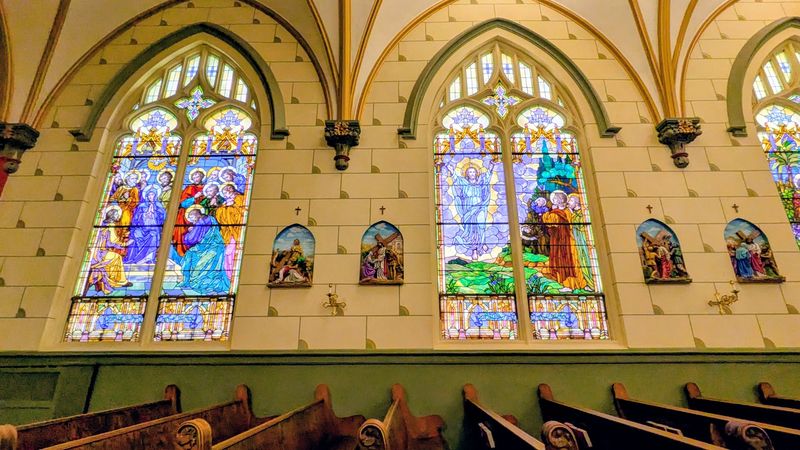
This one rewards that curiosity with soaring Gothic lines, a gleaming marble altar, and colored light that drifts across the floor like slow paint. You don’t need a plane ticket to feel like you’ve stepped into Europe, just a free hour and a little wonder.
A Gothic Landmark in Downtown Tulsa
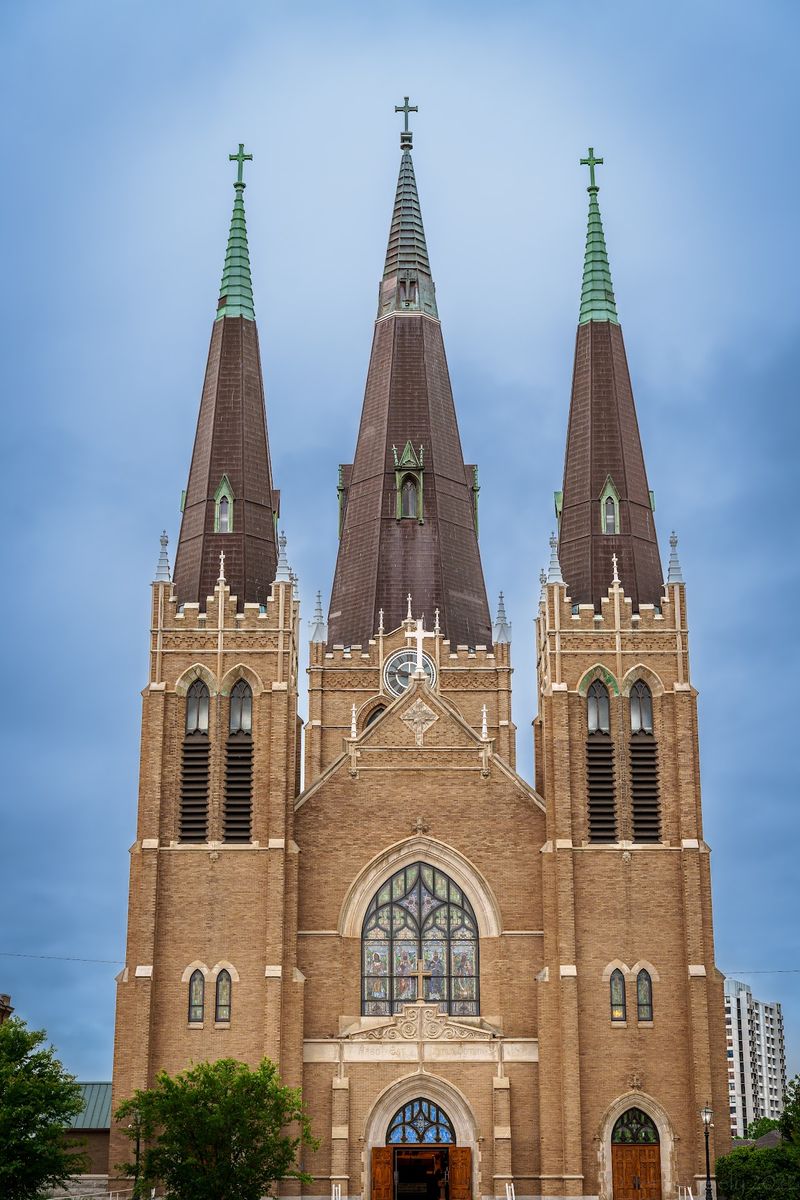
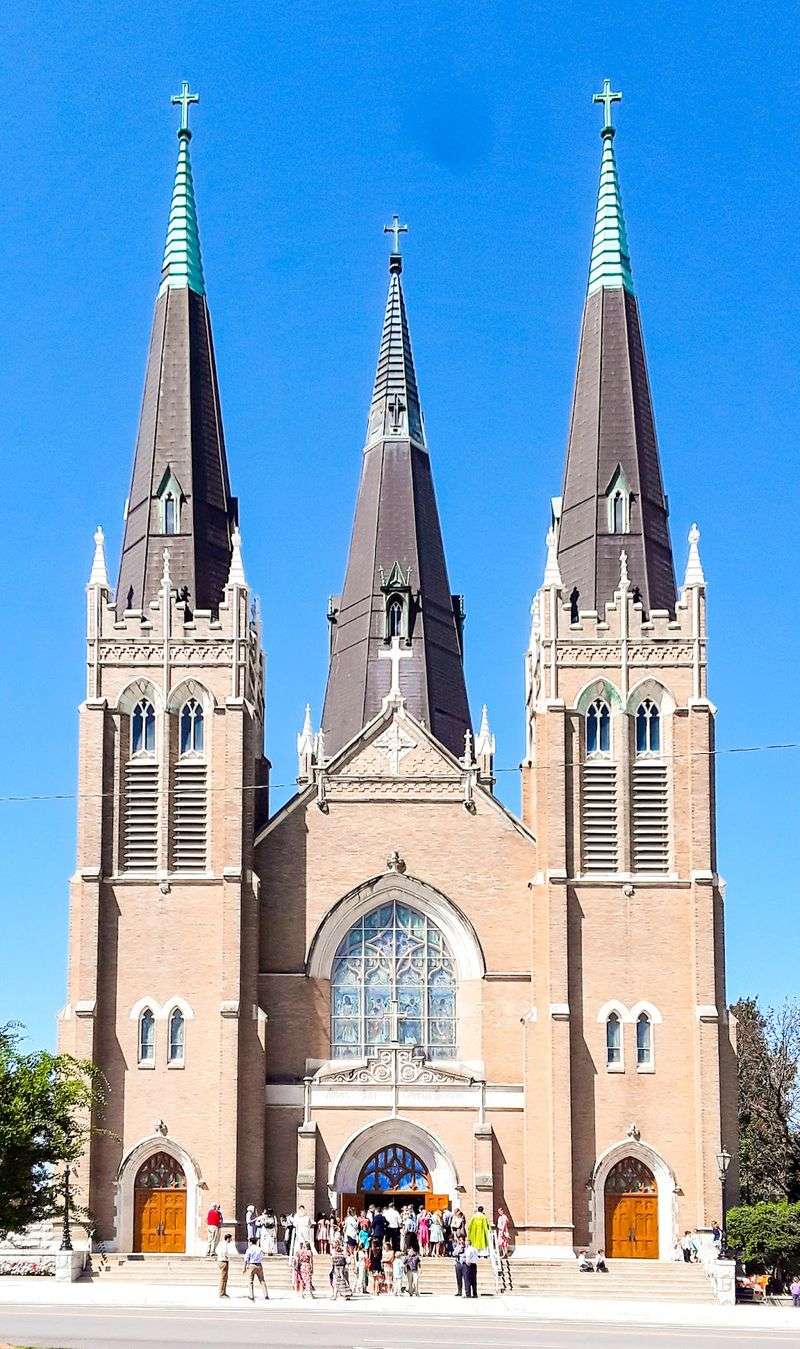
Downtown Tulsa is famous for its Art Deco towers, so a Gothic spire rising over South Boulder Avenue tends to catch people off guard. Holy Family Cathedral sits at 820 South Boulder Ave W, right in the heart of the city, and it serves as the Catholic cathedral for the area.
Plenty of folks drive past it for years without stepping inside. One visitor admitted to living in the Tulsa area their whole life without knowing the church was there at all.
That kind of hidden-in-the-open quality is part of the fun.
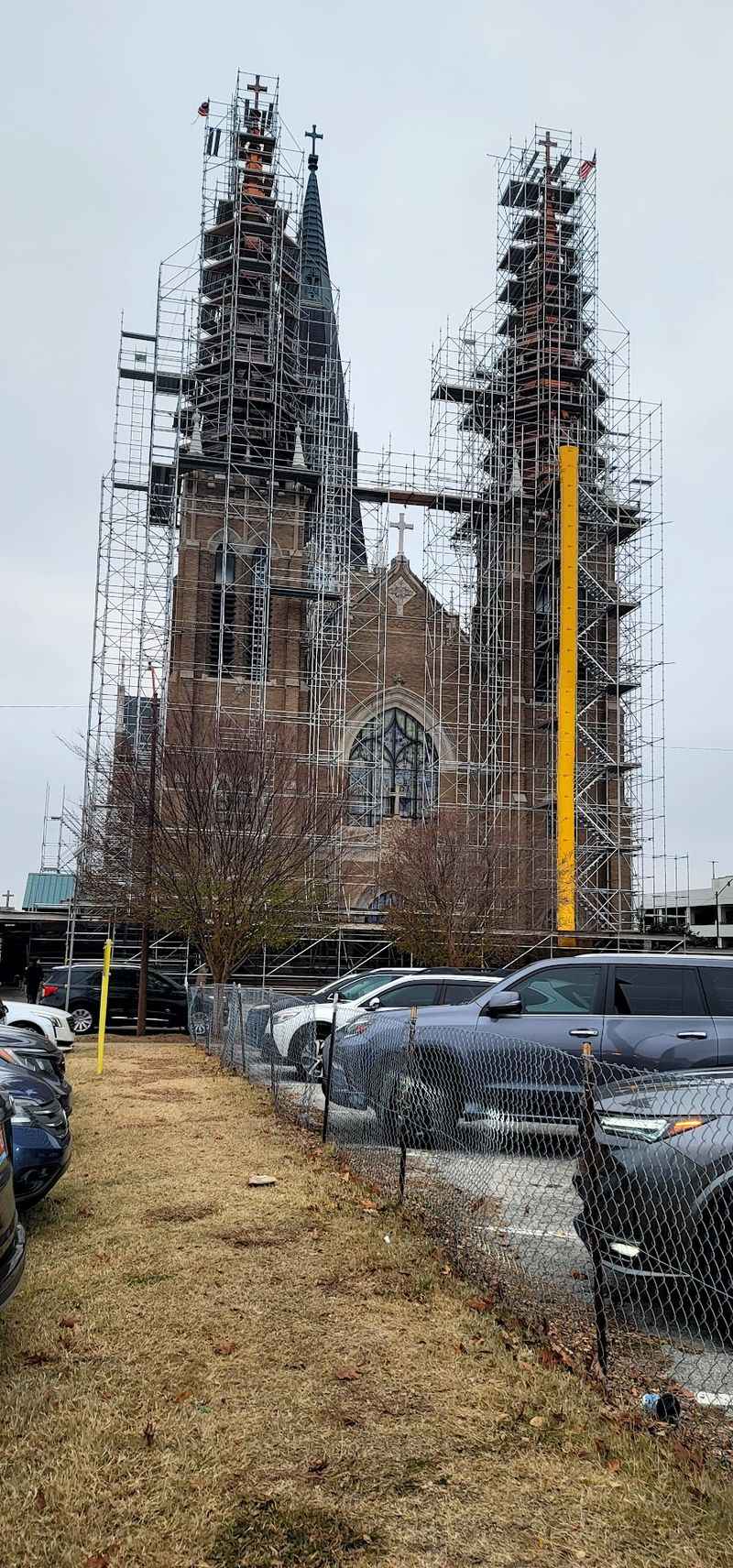
From the street, you get a sense of scale right away. Visitors often describe it as big and monumental, the type of building you might expect in a much larger city.
One guest even called it a truly unexpected cathedral for a mid-sized Midwest town, which feels like a fair compliment.
Still, the real magic waits indoors. Once the doors close behind you, the traffic noise fades and the space opens up into tall arches, warm color, and a hush that feels miles away from the downtown bustle.
Think of it as a road trip stop with no gas required. It sits close enough to plenty of Tulsa attractions that you can easily fold it into a day of exploring.
Roots That Run Over a Century Deep
Ask around, and you’ll hear about families tied to this parish for generations. One longtime member shared that their family has belonged to Holy Family for over 100 years, which says a lot about how rooted the church is in Tulsa life.
History here isn’t something kept behind glass. It lives in the community, in the people who keep returning week after week, and in newcomers who decide to stay.
That same parishioner noted how much the parish has grown over the past few years, a sign that the old place still has plenty of fresh energy.
For history buffs, a building like this offers a different kind of time travel. Rather than reading plaques, you sit in pews where families have gathered across many decades of Oklahoma change.
The city around it has transformed again and again. Oil booms, new skylines, and changing neighborhoods have all come and gone, while the cathedral has stayed put as a steady anchor downtown.
That sense of continuity is what gives the visit its weight. You’re not just admiring old architecture.
You’re stepping into a story that’s still being written, one Sunday at a time, by people who call this place home.
Colored Light on Stone
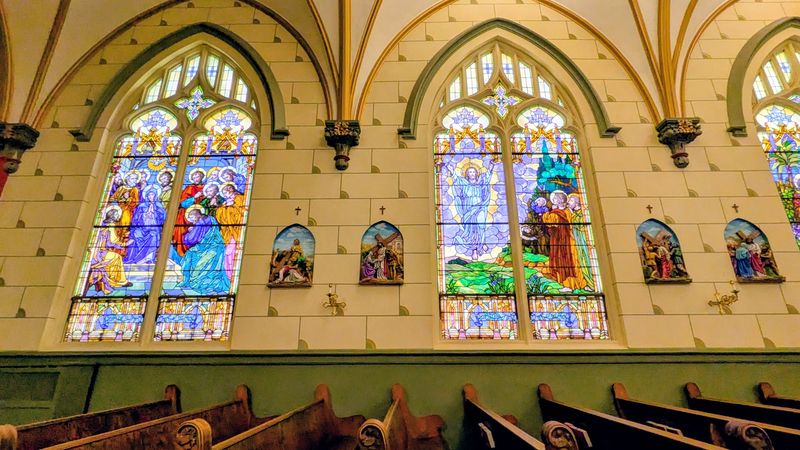
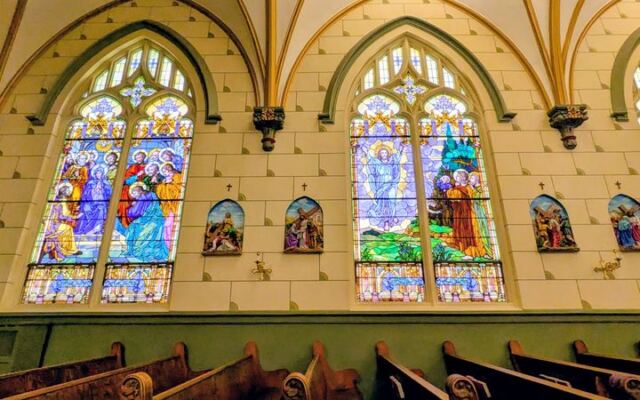
Picture a sunny morning and a beam of ruby and sapphire light sliding slowly across the floor. That’s the moment many visitors remember most, even if they can’t quite put it into words.
Guests frequently describe the interior as very colorful, and the windows play a huge role in that impression. As the sun moves, the patterns shift, so the room never looks exactly the same twice.
Early arrivals and late-afternoon visitors may notice completely different moods.
Photographers, take note. The play of color on the floor and pews is subtle, so slow down and let your eyes adjust before reaching for your phone.
Remember that this is an active place of worship, so be discreet and respectful during services.
There’s something almost playful about the effect. Kids tend to notice the colored spots before adults do, pointing out little rainbows landing on their shoes or the back of a pew.
If you only remember one tip, make it this: come when the sun is out. Cloudy days still feel peaceful, but bright weather turns the whole sanctuary into a slow-moving light show that costs nothing to enjoy.
The Marble Altar Everyone Talks About
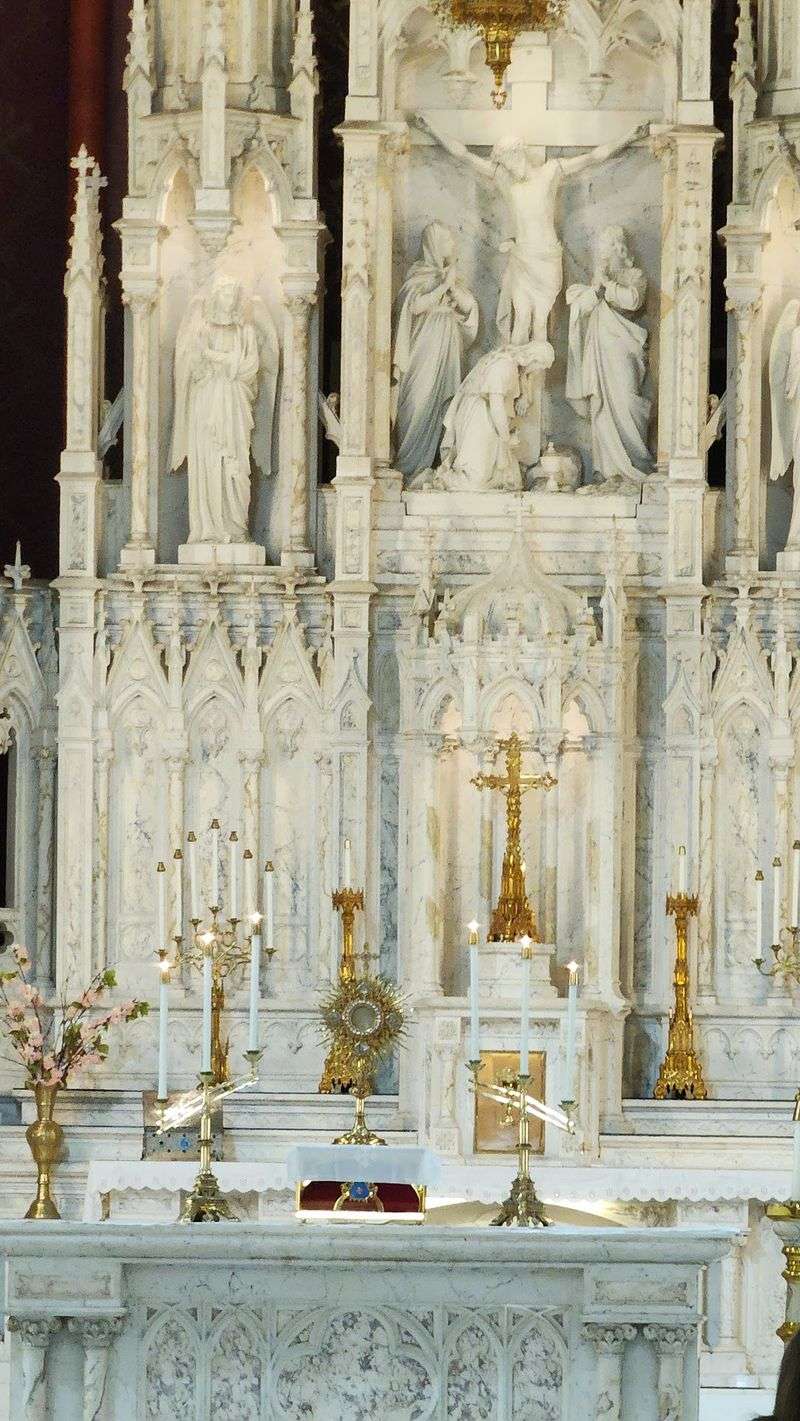
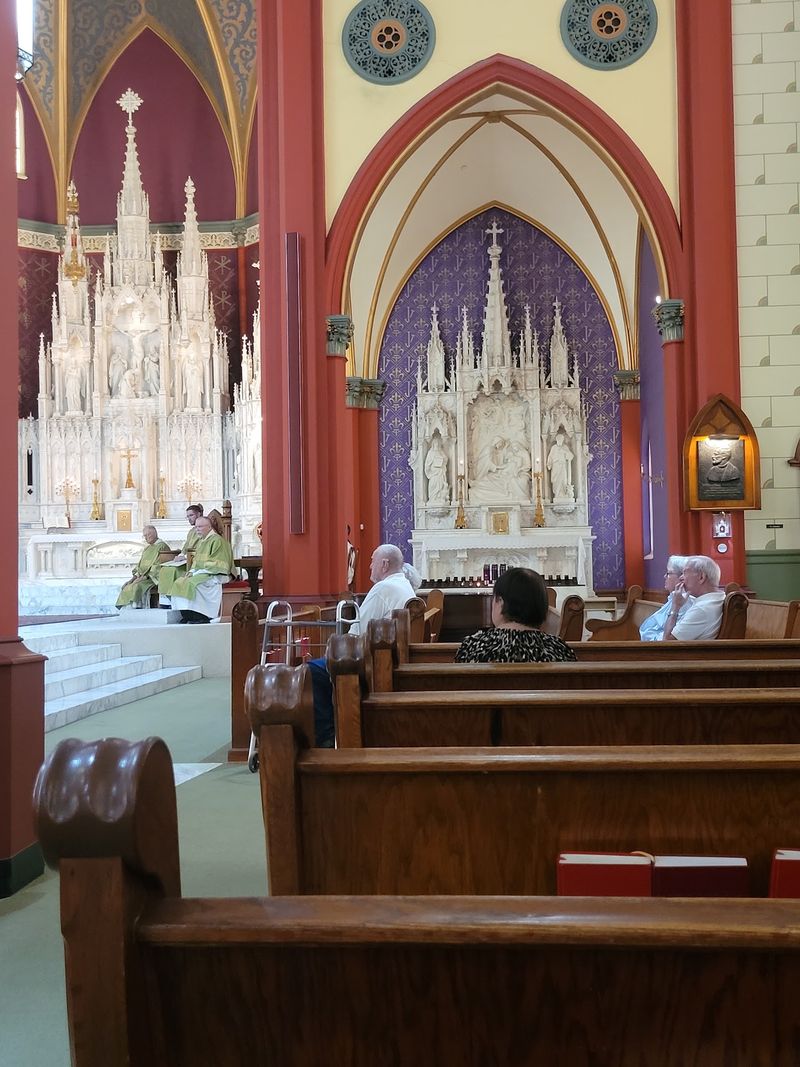
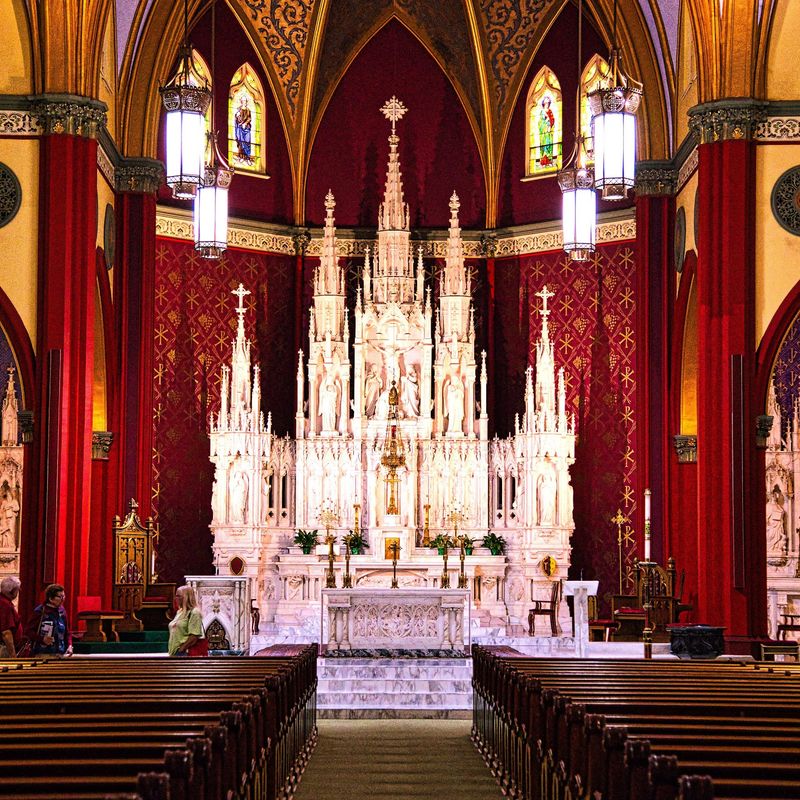
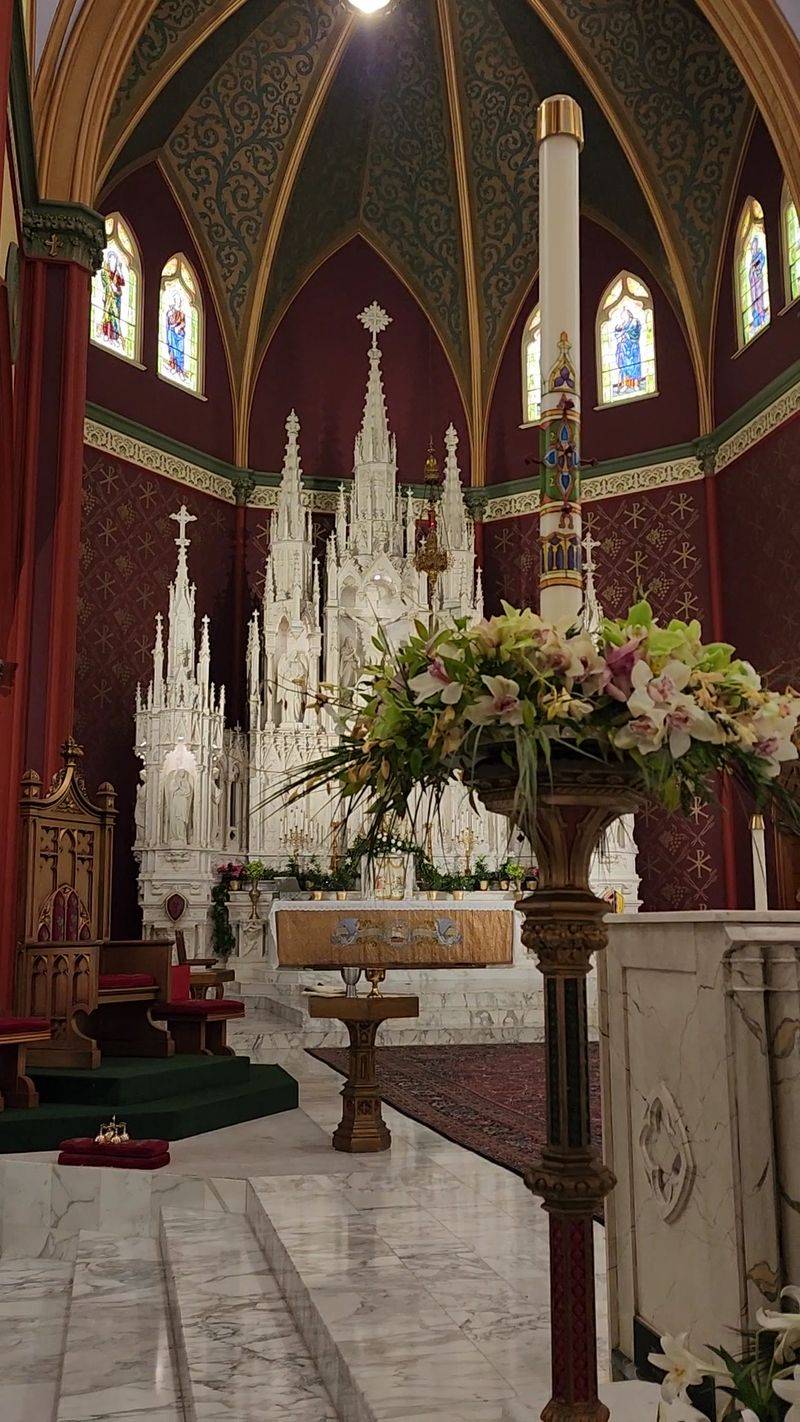
One visitor called it their favorite part of the whole building, and after seeing it, you’ll probably understand why. The altar at Holy Family is described as glorious, detailed, and intricate, made entirely of marble.
Up close, the craftsmanship invites slow looking. Carved details stack upon each other, drawing your eyes upward in the same way Gothic design is meant to do.
It’s the kind of piece that rewards a second and third glance.
Marble has a way of catching light differently than wood or painted surfaces. When the colored glow from the windows reaches the sanctuary, the stone can pick up soft tints that make the altar feel almost alive.
For first-timers, it often becomes the visual centerpiece that ties everything together. The aisles, arches, and pews all seem to lead your attention straight toward it.
If you’re visiting outside of Mass times, approach quietly and keep a respectful distance from the sanctuary area. You’ll still get a beautiful view from the pews, and sitting for a few minutes is often better than rushing forward anyway.
It’s a reminder that remarkable artistry doesn’t always live in big-city museums. Sometimes it’s waiting in downtown Tulsa.
Pointed Arches and Gothic Grandeur
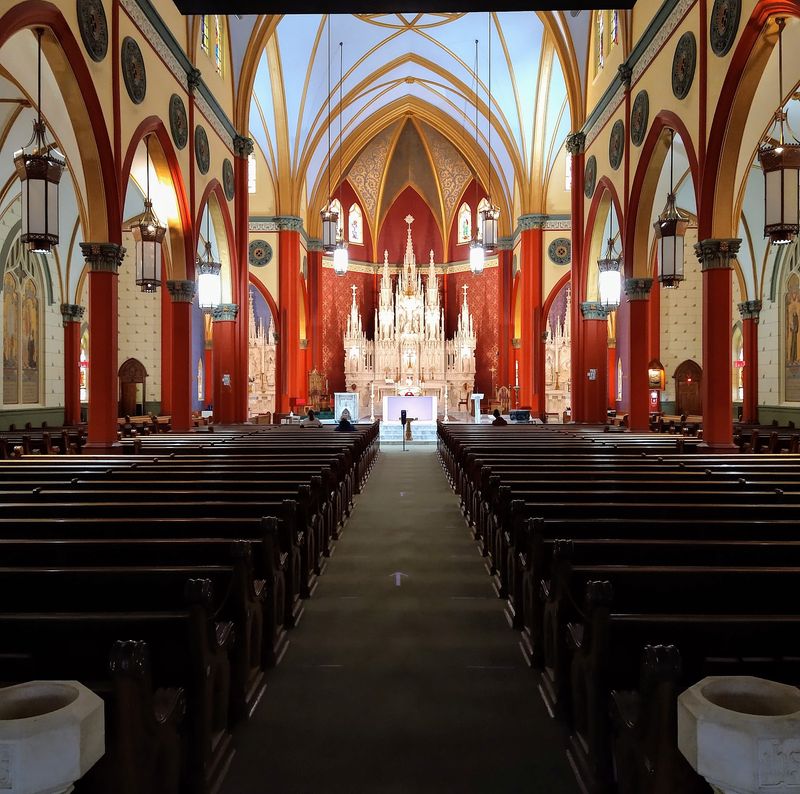
Tilt your head back. That’s the first instinct most people have after walking through the doors, and for good reason.
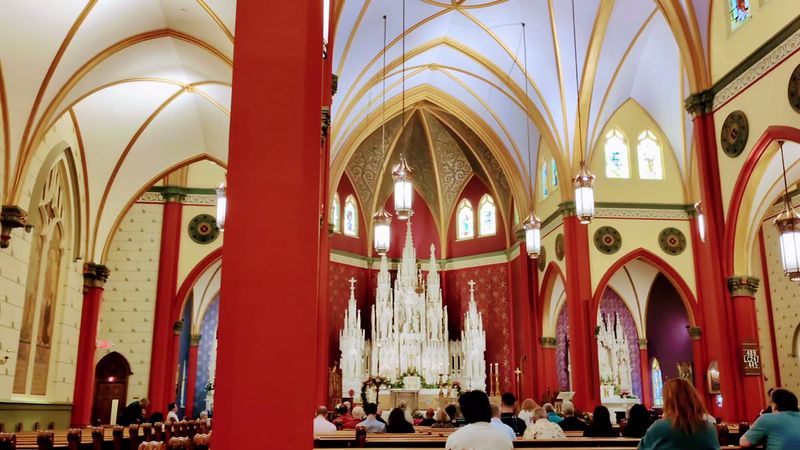
Visitors praise the cathedral’s beautiful Gothic architecture, and one even called it a must-see for the design alone. Pointed arches, tall lines, and a sense of vertical lift give the space its dramatic personality.
Gothic style was built to make people feel small in a good way. Ceilings pull the eye toward the heavens, and windows break up heavy walls with color.
Here in Oklahoma, that old-world vocabulary feels especially striking because it’s so different from the surrounding skyline.
Architecture lovers can easily spend time just tracing the lines. Notice how columns guide your gaze, how arches repeat in rhythm, and how the decoration grows richer near the front.
Guests also mention how well kept and organized everything looks. A clean, cared-for interior lets the design shine without distraction.
Fun thought for road-trippers: you could plan an entire architecture day in Tulsa, mixing Art Deco downtown with this Gothic gem. The contrast makes both styles stand out more, and it’s an easy way to see a different side of the city without leaving the state.
Music That Fills the Nave
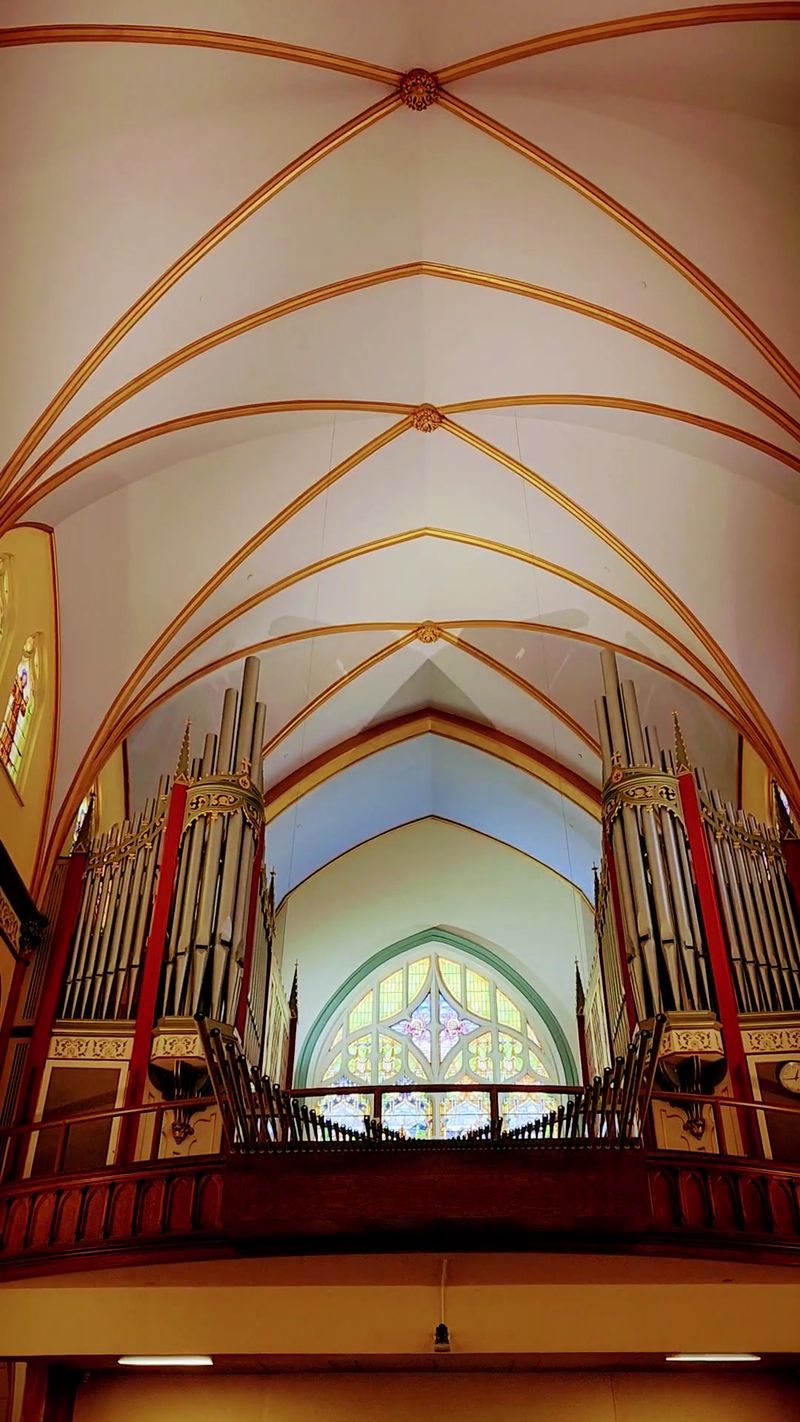
Sound behaves differently under high ceilings. Notes linger, voices blend, and even a single chord can feel enormous.
Music comes up again and again when people talk about this cathedral. Guests mention a beautiful choir, lovely singing, and music that matches the reverent tone of the liturgy.
One first-time visitor said hearing the organ at the 10 a.m. service made it their favorite of the day.
If you’re the kind of traveler who collects experiences instead of souvenirs, this is one to add to the list. Hearing an organ swell inside a stone Gothic space is something you feel in your chest as much as your ears.
Sunday mornings are a smart time to catch the full musical experience. Weekday Masses tend to be shorter and quieter, which suits a different kind of visit.
Please remember that the music is part of worship, not a concert. Arrive on time, silence your phone, and settle in quietly.
Even non-Catholic guests say they were moved by the ceremony. You don’t need to know every word to appreciate how the music and the architecture work together to create something genuinely memorable.
A Calm Pocket in the City
Stress has a funny way of slipping off your shoulders the moment the heavy doors close. Visitors keep using the same kinds of words here: peaceful, calm, sacrosanct, holy.
One traveler from Chicago noted how calm Tulsa felt compared to their home city, and the cathedral seemed to capture that feeling perfectly. Another described a deeply peaceful sensation while sitting inside.
That quiet is part of the attraction. In a world full of notifications and noise, a space designed for stillness can feel like a gift.
You don’t need a long visit, either. Even ten minutes in a pew can reset your whole afternoon.
Guests also describe a very reverent atmosphere, especially during special services. People treat the space with care, which helps keep the hush intact.
For travelers juggling a busy itinerary, consider building in a pause here between other downtown stops. It’s a natural breather that doesn’t require tickets or reservations.
And if you’re simply curious, that’s welcome too. Many people find that the calm stays with them long after they step back onto Boulder Avenue and rejoin the rhythm of the city outside.
Welcoming Clergy and Friendly Faces
Walking into an unfamiliar church can feel a little intimidating. Good news: visitors consistently say the people here make that nervousness disappear fast.
Guests describe the priest as nice and welcoming, and the staff and clergy as wonderful. Parishioners get plenty of praise too, with first-timers mentioning friendly people and a warm community spirit.
One person who wasn’t Catholic attended their very first Catholic service here and called the experience amazing, crediting the friendly crowd. Another said they felt thankful they ever walked through the doors.
There’s even a story of a priest continuing to hear confessions until the line was finished, a small detail that says a lot about the care shown here. Others mention there are plenty of times set aside for confession.
For groups exploring the faith, the parish has hosted dinners and tours, which one participant described as both fun and informative.
Hospitality like this turns a sightseeing stop into something more personal. You may arrive to look at windows and arches, but you’ll likely leave remembering a kind greeting or a helpful word just as much as the architecture.
Who Will Love a Visit Here
Families, history fans, architecture nerds, and quiet seekers all seem to find something to love. That broad appeal is one of the cathedral’s quiet strengths.
Parents will be glad to hear one visitor described it as very kid friendly. Little ones tend to enjoy spotting colors in the windows, and the welcoming crowd helps families relax.
Travelers passing through also find a home here. One guest said they attend Mass whenever they’re in town, while another, who was in Tulsa for work, praised the nice people and the good-size congregation.
Curious non-Catholics are welcome as well. Several visitors who don’t share the faith said the ceremony was beautiful and worth experiencing.
Architecture buffs should budget extra time. Between the marble altar, the colored light, and the Gothic lines, there’s plenty to study.
And for those looking for a spiritual home, a longtime parishioner suggested this is the place for anyone seeking a new parish or exploring the faith.
Whoever you are, the main ask is simple: be respectful. Treat it as the active worship space it is, and you’ll fit right in.
Special Seasons and Big Celebrations
Christmas here comes with a full house. One visitor reported that the cathedral was packed for Christmas Mass, though they were lucky enough to find seats.
Big holy days bring out the building’s grandest side. Another guest attended Easter Sunday Mass and described it as calm and wonderful, while someone else praised the Chrism Mass held the Tuesday before Easter as beautiful and deeply reverent.
If you’re planning around a holiday, arrive early. Crowds grow quickly, and finding a spot together as a group gets harder as start time approaches.
Seasonal services pair especially well with the architecture. Music, ceremony, and the glow of the space combine to create moments that stick in memory.
Not into crowds? Ordinary weekdays offer a totally different experience.
Shorter midday Masses and quieter hours let you take in the details without the bustle.
Either way works, and both are worth trying. A holiday visit shows you the cathedral at full volume, while a weekday stop reveals its peaceful heartbeat.
Many people find that seeing both gives them a fuller picture of what makes this downtown Tulsa landmark so special to the community.
Hours, Parking, and Practical Tips
Timing matters, since the doors follow a set schedule. On Sundays, hours run 7:30 a.m. to 1:30 p.m. and again from 4:30 to 6:30 p.m.
Monday hours are 11:30 a.m. to 1 p.m.
Tuesday through Friday, you’ll find two windows: 7 to 7:30 a.m. and 11:30 a.m. to 1 p.m. Saturdays run 8 to 8:30 a.m. plus 3 to 6 p.m.
Parking gets plenty of praise. Visitors call it excellent and say there’s ample room even for daily Mass, which is a relief in a downtown setting.
Need a restroom? One guest noted a clean bathroom in the back right corner.
Heads up on the exterior: some visitors mentioned outdoor renovation work during their trips. The inside remained beautiful, but the outside view may vary depending on when you go.
For questions about service times or tours, call +1 918-582-6247 or visit tulsacathedral.com before you head out. Schedules can shift around holidays, so a quick check saves surprises.
Dress respectfully, plan to arrive a few minutes early, and you’ll be set for a smooth, relaxed visit.
Worth the Detour Downtown
Sometimes the best trips are the ones that stay close to home. Holy Family Cathedral proves you don’t need a passport to stand beneath Gothic arches and watch colored light drift across the floor.
What makes it stick is the mix. There’s the gleaming marble altar, the soaring design, the music that fills the space, and a community that greets strangers like old friends.
Each piece is lovely on its own, but together they create something far bigger.
Visitors repeatedly say they hope to come back, and that sentiment feels earned. One summed it up simply as a beautiful cathedral in a beautiful city, which is hard to argue with.
For Oklahomans, it’s a reminder that remarkable places hide right in our own downtowns. For road-trippers, it’s an easy, meaningful stop that adds depth to any Tulsa itinerary.
So next time you’re in town, check the schedule, find a parking spot, and slip inside. Sit for a while.
Let the quiet settle in.
You might walk in curious and walk out with a new favorite corner of the state, one lit by century-old color and a whole lot of warmth.
Share this story