Before smartphones, smart watches, and calendar alerts, entire communities relied on something far simpler to organize their days: the ringing of church bells. In dozens of villages across Europe, that tradition has never stopped. Bells still call people to prayer, mark the noon hour, signal the end of the workday, and remind residents that some things are worth keeping exactly as they are. These are places where you can walk cobblestone streets, look up at a centuries-old tower, and hear the same chime that guided the lives of people hundreds of years before you arrived.
Some of these villages are famous; others are quietly tucked away in mountain valleys that most tourists never find. All of them share one remarkable quality: the local church tower still runs the show. Here are 14 villages where the bells have never really gone silent.
1. Hallstatt, Upper Austria, Austria
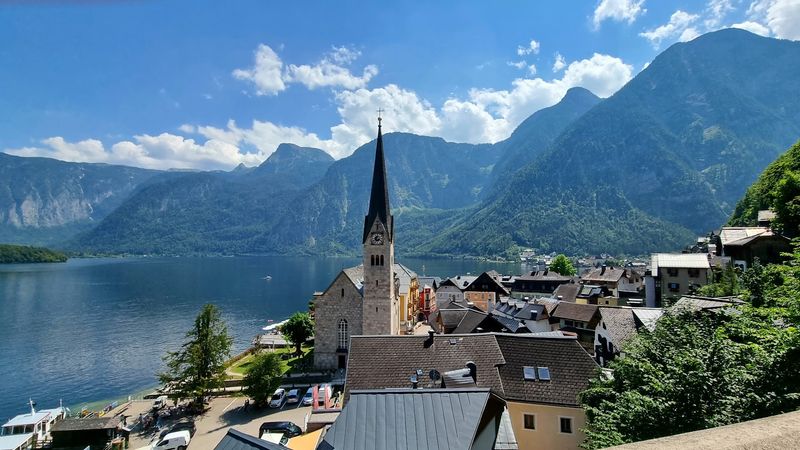
Few places on Earth pack as much history into such a small footprint as this lakeside village in the Dachstein Alps. The Catholic parish church here, officially called Mariä Himmelfahrt, dates to the late Gothic period and features a remarkable winged altar that has survived centuries of mountain winters.
The church bells echo off the surrounding peaks, creating a layered, almost amplified effect that carries across the entire village. Locals describe the late afternoon ringing as the moment the day genuinely begins to wind down, especially once the tourist crowds thin out.
The Corpus Christi Procession on Lake Hallstatt is one of the most distinctive religious customs in Austria, and the church bells play a central role in marking its rhythm. Hallstatt is proof that global fame and deep-rooted tradition can share the same narrow street without either one losing its character.
2. Eguisheim, Grand Est, France
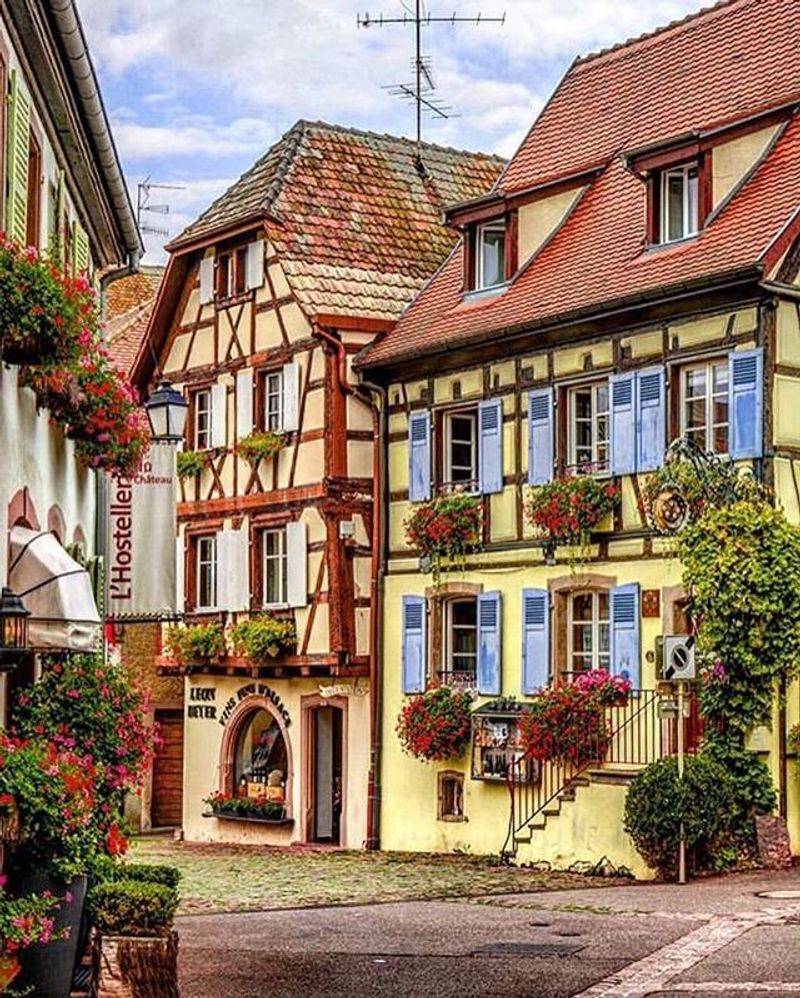
Built in concentric circles around a central square, Eguisheim is the kind of Alsatian village that architects study and tourists photograph obsessively. At its heart stands the Saint-Pierre-et-Paul Church, whose bell tower dates to 1220 and carries a Historic Monument designation that it has clearly earned.
The bells chime hourly from 8 AM to 7 PM, with special melodies reserved for noon and 6 PM, turning the square into a natural gathering point at predictable intervals throughout the day. A second bell system at St. Michel church houses 30 bells that play religious tunes and even the European anthem at scheduled times each afternoon.
Storks nest on rooftops and church steeples throughout the village, adding their own distinct calls to the daily soundtrack. Eguisheim was named France’s Favorite Village in 2013, and anyone who has heard its bells on a quiet morning will understand exactly why.
3. Gruyères, Canton of Fribourg, Switzerland
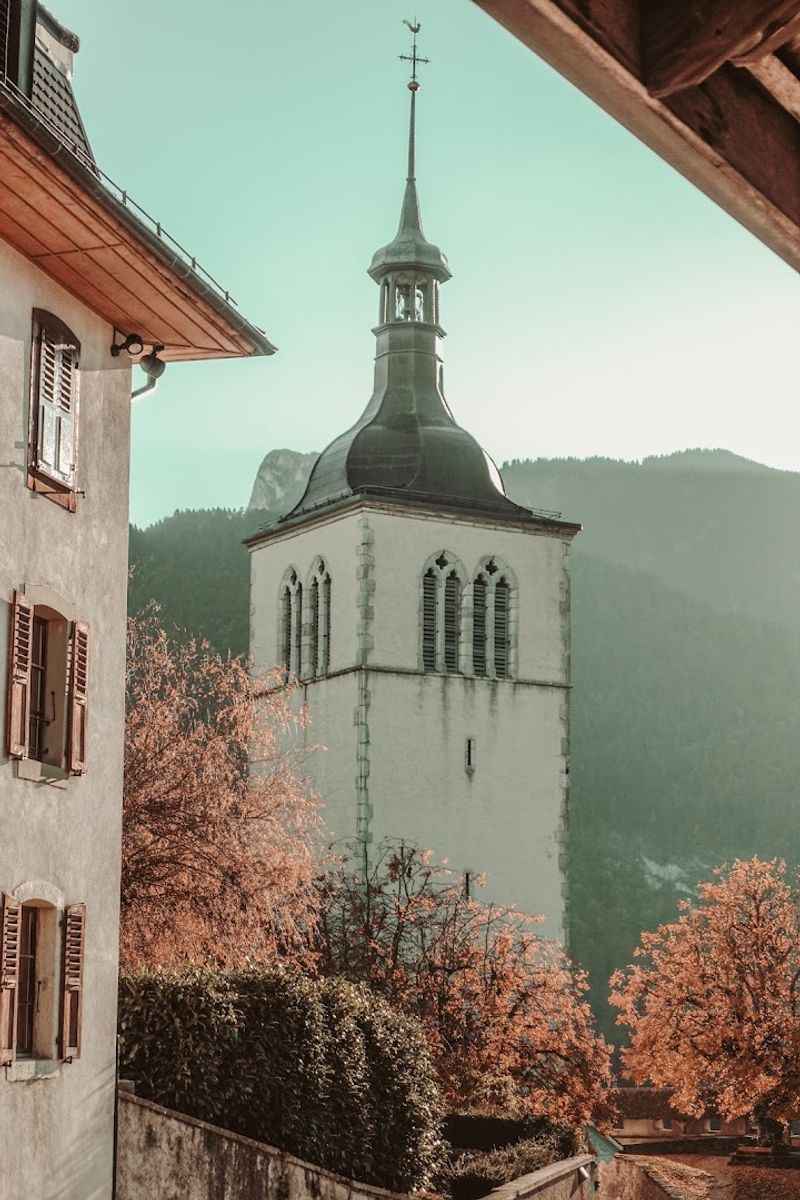
Most people arrive in Gruyères thinking about cheese and leave thinking about how a medieval hilltop village can feel this perfectly preserved. The car-free old center makes an immediate impression, and once the engine noise disappears, the nine bells of St. Theodulus Church take over as the primary timekeepers.
The church was founded in 1254 and has survived two devastating fires, in 1679 and 1856, each time being rebuilt with the bells restored to their rightful place in the distinctive bulbous tower. Swiss church bells traditionally ring every quarter hour and on the hour, and Gruyères follows that custom faithfully throughout the day.
Surrounding alpine pastures add a complementary layer of cowbells to the mix, so the village operates on a kind of natural double-bell system that nobody planned but everyone appreciates. The castle on the hill and the bells in the tower create a setting that feels genuinely medieval rather than reconstructed.
4. Bösingen, Canton of Fribourg, Switzerland
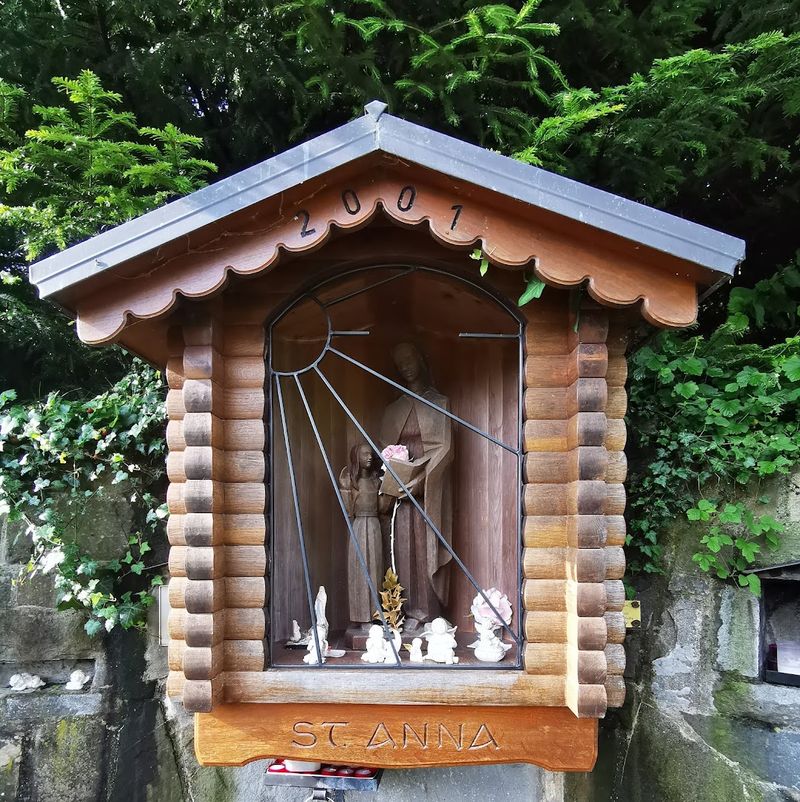
Not every village on this list made it here because of famous cheese or a UNESCO plaque. Bösingen earns its place through something quieter: it is a genuinely functioning rural community in the Canton of Fribourg where church traditions have never been treated as optional.
The local church bells still mark the hours and accompany village events, from routine weekday mornings to the more elaborate rhythms of religious celebrations throughout the year. In Swiss Catholic communities like this one, bell ringing is considered a form of civic participation, not just a religious formality.
Travelers who venture beyond the well-worn tourist trail into villages like Bösingen often describe the experience as encountering a Switzerland that the guidebooks rarely cover. The pace here is unhurried, the community connections are visible, and the bells overhead serve as a reliable reminder that some schedules are older and arguably more sensible than any digital calendar.
5. Fiss, Tyrol, Austria
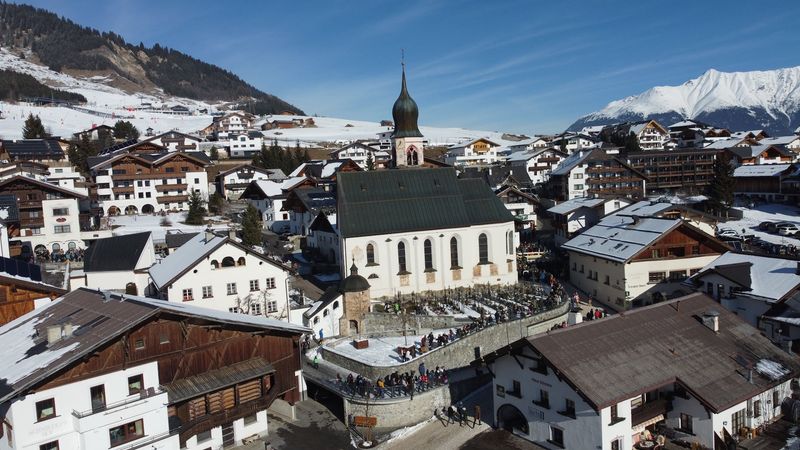
Three times a day, every single day, the bells of the Parish Church of St. John the Baptist and St. Sebastian ring out across the rooftops of Fiss at 7:00 AM, noon, and 6:00 PM. These are the Angelus hours, a Catholic tradition that has structured daily life in Tyrolean villages for centuries.
The church’s freestanding campanile bell tower is a visual landmark in its own right, with its upper Gothic half dating to around 1500 and its lower section reflecting later baroque additions from the early 18th century. Historically, these same bells were used to warn residents of approaching floods and fires, a practical function that gave them an authority well beyond religious observance.
Fiss sits in the upper Inn Valley with views that stretch across several mountain ranges, and the three daily bell ringings function as natural punctuation marks in a landscape that otherwise has no shortage of distractions. Residents who grew up hearing those chimes rarely describe them as interruptions.
6. Castelrotto (Kastelruth), South Tyrol, Italy
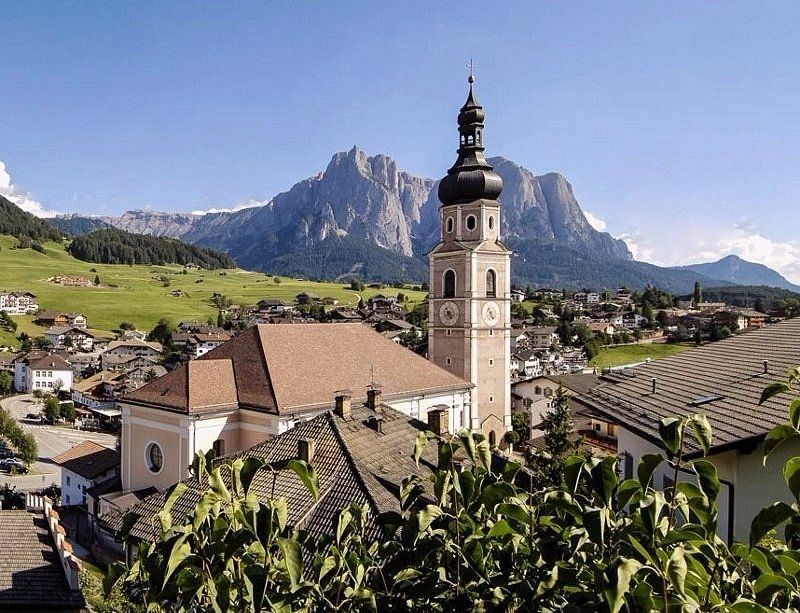
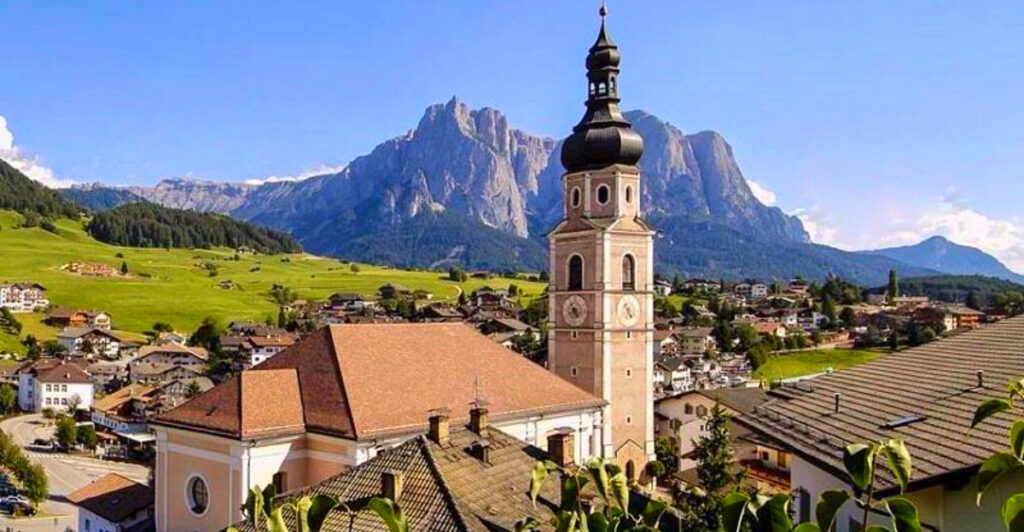
Standing 88 meters tall and visible from just about every corner of the village, the freestanding steeple of the Parish Church of Saints Peter and Paul is one of the most recognizable structures in all of South Tyrol. It is not just a landmark; it is an active timekeeper that rings on the hour from 6 AM to 10 PM without fail.
The tower houses nine bells, eight of which were cast in 1922 and one dating back to 1763, and locals consider them to have the most beautiful peal in the entire region. The steeple was rebuilt after a fire in 1753, and the bells inside have been ringing over Kraus Square ever since, summoning residents to Sunday Mass, festivals, and the ordinary passage of daily hours.
On Sunday mornings, villagers arrive in traditional attire for the 10 AM Catholic Mass, turning the square into a living display of South Tyrolean culture. Castelrotto does not perform its traditions for visitors; it simply lives them out loud, on schedule, every day.
7. Ortisei, South Tyrol, Italy
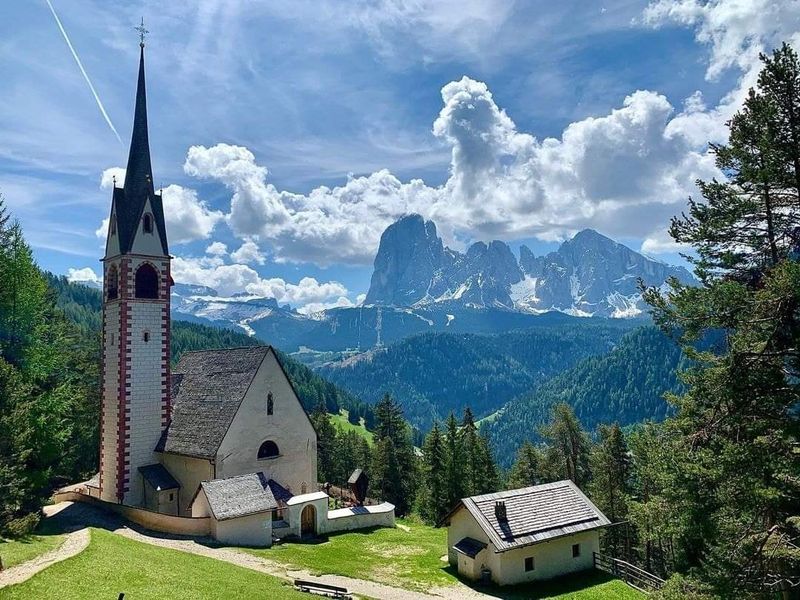
Ortisei carries three languages and one church bell schedule, which tells you a lot about how this South Tyrolean village manages to hold its identity together. The Parish Church of Saint Ulrich of Augsburg holds weekday Masses at 8:30 AM, Saturday services at 6:30 PM, and two Sunday Masses at 9 AM and 6:30 PM, conducted in German, Italian, and Ladin.
Each service brings the bells into action, and the pattern repeats reliably enough that regular visitors learn to plan their days around it without really trying. The annual Village Festival on the first Sunday after July 4th takes the bell ringing up considerably, with vigorous pealing at noon on Saturday officially launching the celebrations.
Church bells across the Trentino region have historically served as alarm signals for fires and approaching storms, a tradition that gave them a practical authority that purely decorative architecture never achieves. In Ortisei, the bells are cultural anchors as much as they are timekeepers, connecting a trilingual community to a shared daily rhythm.
8. St. Gilgen, Salzburg, Austria
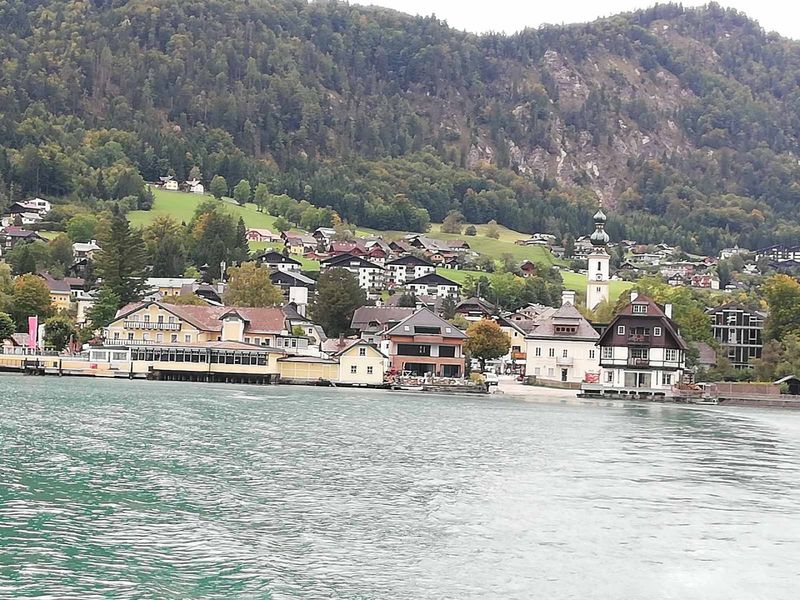
Waking up to church bells is not a marketing slogan in St. Gilgen; it is simply what mornings feel like on the shores of Wolfgangsee. The Parish Church of St. Aegidius traces its origins to the 14th century and received a full baroque renovation in the late 18th century, giving it the architectural elegance that now anchors the village visually.
Regular services run on Saturday evenings at 7 PM, Sunday mornings at 10:30 AM, and Wednesday evenings at 6 PM, each one announced by bells that carry clearly across the water. During the Advent season, traditional bellringers appear at village events, reinforcing the community’s consistent relationship with its own auditory customs.
St. Gilgen also holds a notable cultural connection as the birthplace of Mozart’s mother, adding another layer of historical depth to a village that already has plenty. The lake views are justifiably famous, but the bells overhead give the place its actual sense of rhythm.
9. Alpbach, Tyrol, Austria
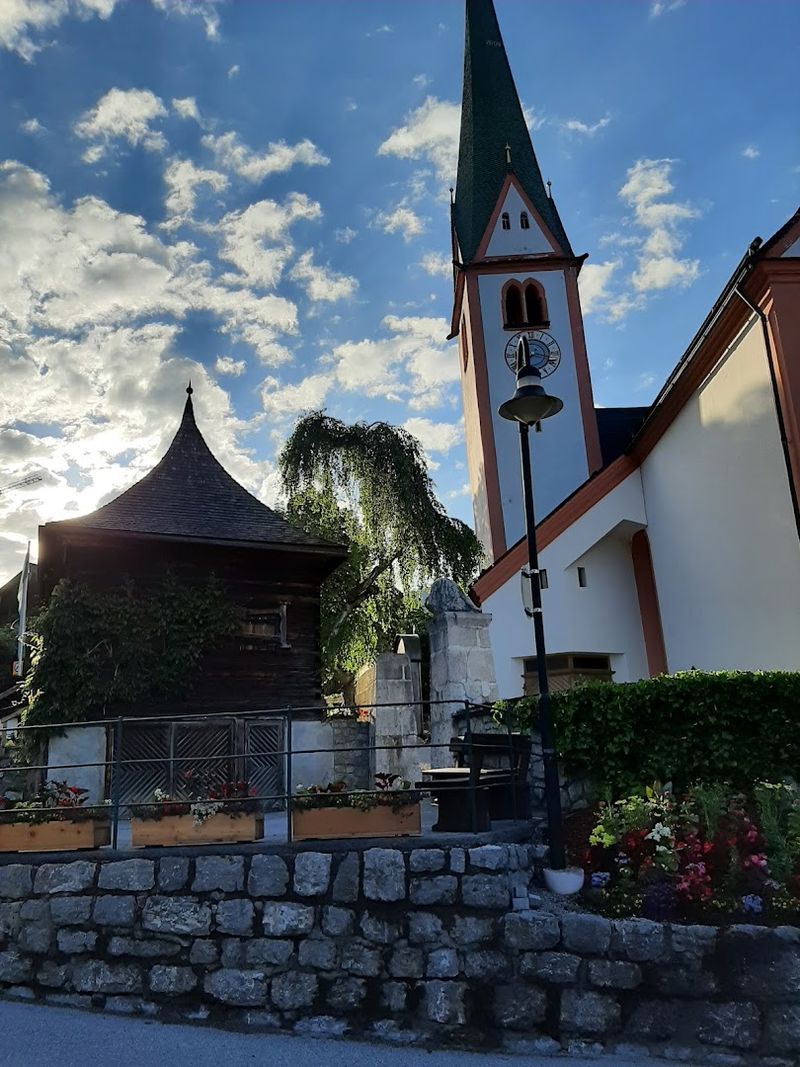
Alpbach has won Austria’s most beautiful village title multiple times, and the St. Oswald Catholic Church, first mentioned in records from 1369 and rebuilt in baroque style in 1720, plays no small part in that reputation. The steeple dates to 1420, making it one of the older standing structures in a village that takes its architectural heritage seriously.
Tyrolean bell-ringing tradition calls for chimes in the morning, at noon, and in the evening, and Alpbach follows that schedule with the consistency of a village that has never seen a reason to change it. Saturday evening services at 7 PM bring regular gatherings to the church, and the building stays open during daylight hours throughout the year for anyone who wants to step inside.
Locals in Tyrol describe the sound of familiar bells as a form of orientation, a way of knowing where you are and what time it is without looking at anything. In Alpbach, with its flower-filled balconies and unhurried pace, that kind of orientation feels genuinely useful.
10. Oberammergau, Bavaria, Germany
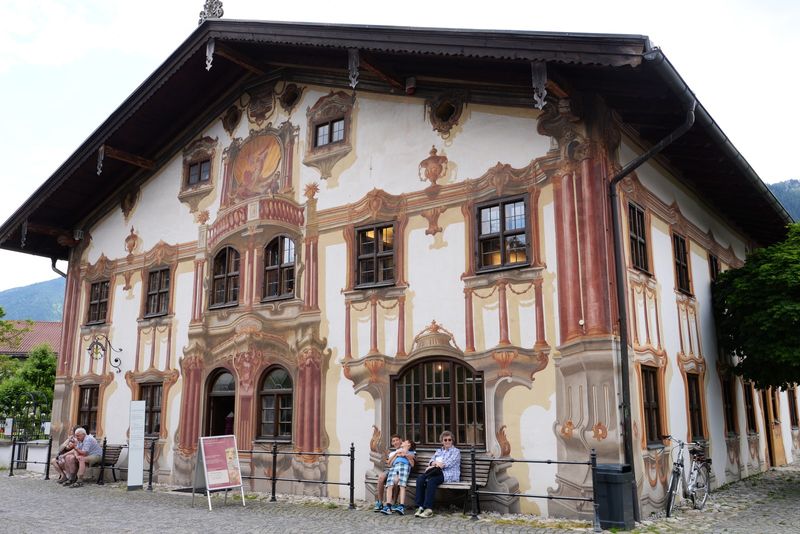
Every ten years, Oberammergau stages its famous Passion Play and the world pays attention. But between those performances, it operates as a working Bavarian village where the Catholic parish of St. Peter and Paul, consecrated in 1749, provides the daily soundtrack through its onion-domed bell tower.
Bavarian church bell customs are notably active, with bells often chiming every 15 minutes and performing full hourly peals throughout the day. Anecdotal records from the region suggest particularly prominent ringing at 6 AM, 11 AM, and 7 PM, timings that align with agricultural traditions that shaped village life long before tourism arrived.
The church interior is a showcase of baroque and rococo craftsmanship, and the painted house facades lining the streets outside add a visual layer that makes Oberammergau feel more like a stage set than a real town, until the bells remind you that real people have been living here on this schedule for centuries.
11. Maria Alm, Salzburg, Austria
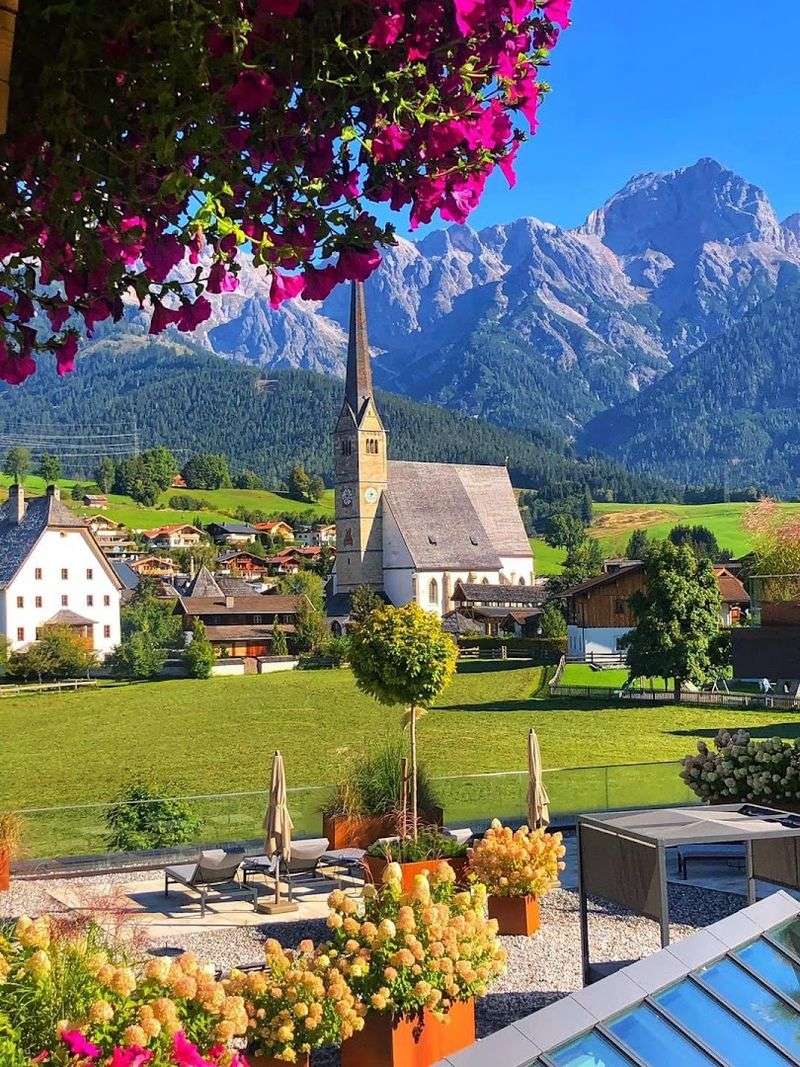
At 84 meters, the spire of the Pilgrimage Church in Maria Alm holds the record as the tallest in the entire Salzburg region, which means its bells travel a considerable distance before they stop echoing. The church is also recognized as one of the most significant Marian shrines in the Pinzgau area, drawing pilgrims and visitors throughout the year.
Morning bell ringing opens the daily rhythm in Maria Alm, and scheduled services follow on Sunday at 10:15 AM, Tuesday at 8:30 AM, and Thursday at 7 PM, with a period of adoration beginning at 6:30 PM before the evening Mass. Each service brings another round of chimes across the valley, creating a predictable and reassuring structure to the day.
Summer hikers and winter skiers both pass through this village at opposite ends of the calendar, and both groups encounter the same bells keeping the same schedule. That consistency is exactly the point: Maria Alm does not adjust its traditions to match the season.
12. Gimmelwald, Bernese Oberland, Switzerland
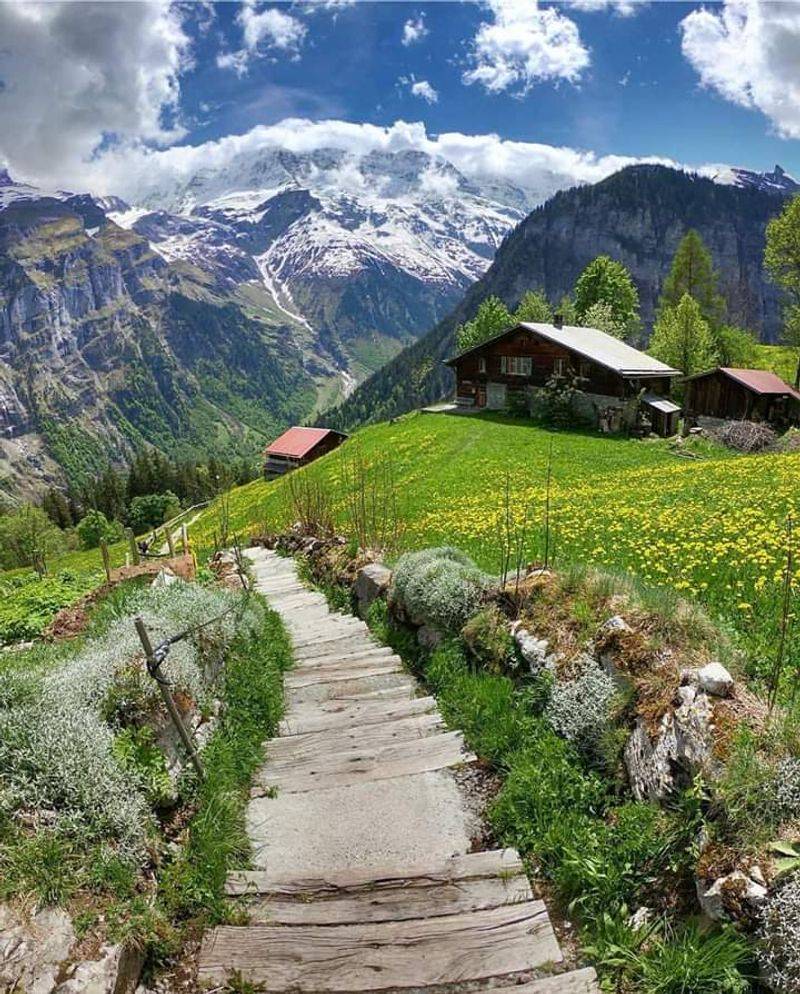
With roughly 100 permanent residents and zero cars allowed inside, Gimmelwald operates at a scale where every sound carries weight. The village sits high above the Lauterbrunnen Valley on a ledge that most visitors reach only by cable car, which immediately establishes that this is not a place built around convenience.
The primary bell tradition here is actually bovine: farmers hang large ceremonial cowbells under their eaves, ready for the seasonal movement of cattle to higher summer pastures. Historical records mention Lötschen bells brought across the mountains to nearby Lauterbrunnen, including one dated 1483 now held in the valley museum.
A community center hosts church services for residents, though Gimmelwald’s daily rhythm is more shaped by farming schedules and alpine weather patterns than by a formal bell tower program. The village earns its place on this list not for hourly chiming but for being one of the last places in Switzerland where traditional rural time-keeping, bells included, still genuinely matters.
13. Český Krumlov, South Bohemian Region, Czech Republic
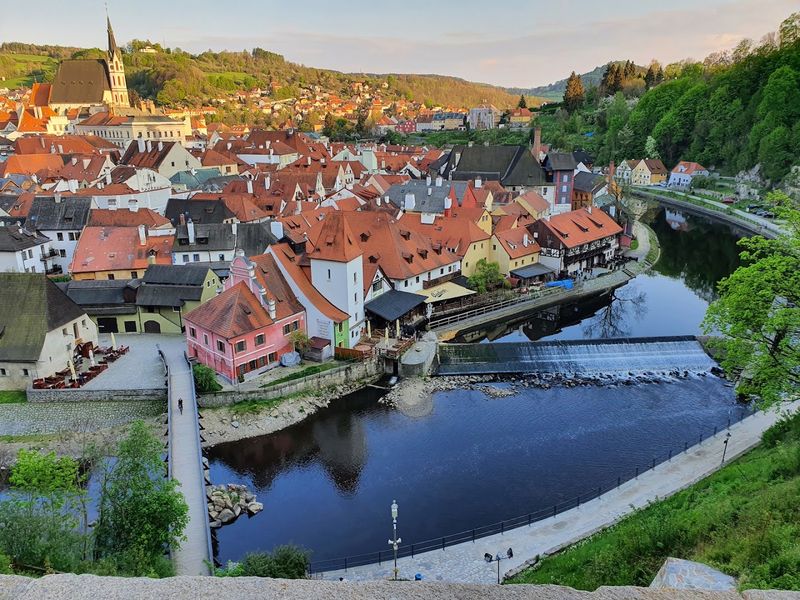
Český Krumlov’s historic center is a UNESCO World Heritage site, and its medieval layout has changed so little over the centuries that navigating it still requires the same mental map it would have in the 1400s. The late Gothic St. Vitus Church, built between 1407 and 1439, anchors the spiritual life of the community and hosts both religious ceremonies and classical music concerts.
The castle tower, a separate structure from the church, historically sent trumpeted fanfares across the town every hour between 9 AM and 4 PM from May to October, with a tower guard known as Terner Nazl responsible for both the fanfares and the ceremonial bell ringing on special occasions. The belfry was completed in 2021 with five bells, two of which date back to 1406.
This town operates on a scale slightly larger than the other villages on this list, but its preserved old-world rhythm and centuries-long commitment to marking time audibly make it a genuinely worthy entry. History here is not a museum exhibit; it is the operating system.
14. Monsaraz, Alentejo, Portugal
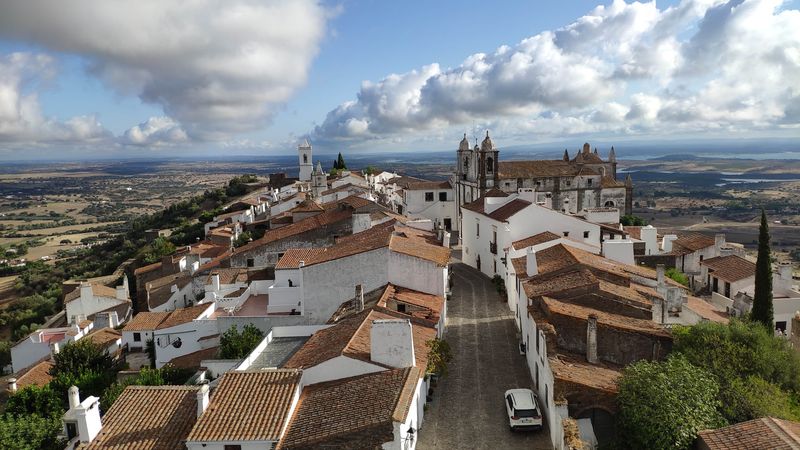
Built entirely inside medieval walls on a hilltop above the Alentejo plains, Monsaraz is one of Portugal’s most intact walled villages and takes that status seriously. The Parish Church of Nossa Senhora da Lagoa, a 16th-century Renaissance structure, sits at the spiritual center of a community that still organizes its week around religious services.
An imposing clock tower within the village houses a bell cast in 1692, and the church holds regular Eucharistic services Tuesday through Saturday at 7 PM and Sunday at 11:30 AM. The Rosary is recited daily from Tuesday to Saturday at 6:30 PM, with the bells marking each of these occasions as reliably as they have for generations.
At sunset, the bells echo across the empty ramparts and out over the Alqueva reservoir below, reaching a landscape so quiet that the sound travels for what feels like an impractical distance. Monsaraz proves that a village of just a few hundred residents can carry a sense of history that much larger cities spend fortunes trying to manufacture.
Share this story