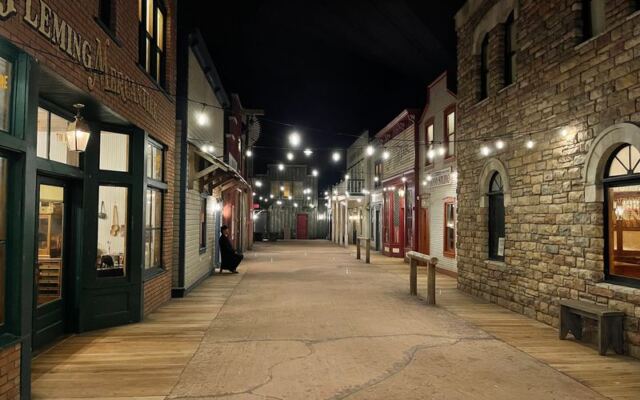
Somewhere in Oklahoma, tucked inside a building that looks modest from the outside, a full frontier town is waiting for you to walk its boardwalk streets. Most visitors show up expecting glass cases and old photographs, then find themselves standing inside a 14,000-square-foot replica of a 19th-century cattle town with 40-foot ceilings overhead.
The National Cowboy and Western Heritage Museum in Oklahoma City is that kind of place, the kind that quietly rewrites your idea of what a museum can be. Give it an afternoon and it will give you back a piece of American history you did not know you were missing.
Where the Museum Sits and What It Actually Is
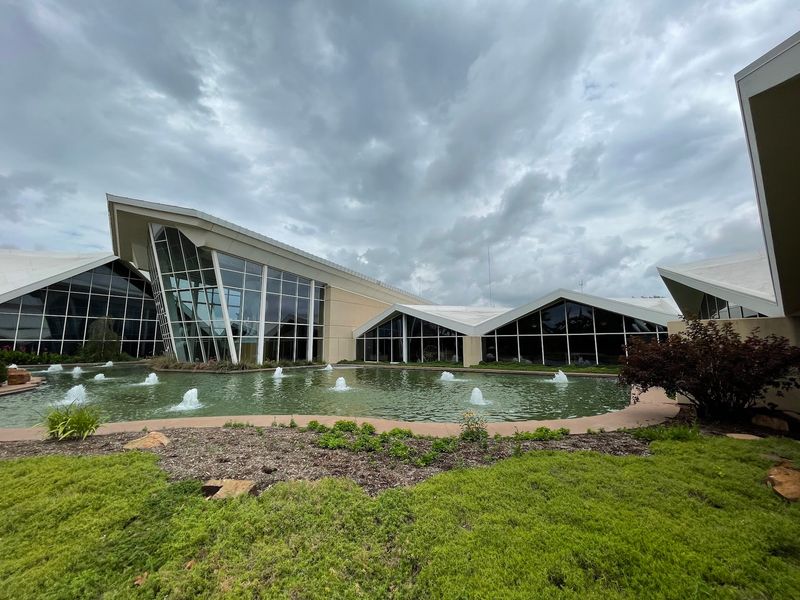
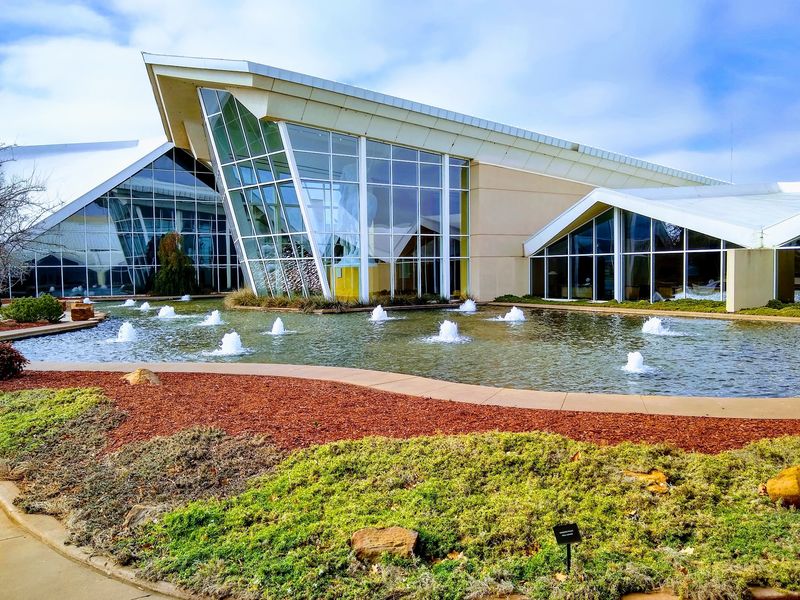
Planted along NE 63rd Street in Oklahoma City, the National Cowboy and Western Heritage Museum has been anchoring this corner of Oklahoma since 1955. From the parking lot, the building reads as solid and purposeful, a sprawling structure that hints at something serious happening inside without showing all its cards at the front door.
Formally described as a heritage museum, the institution documents and interprets the history and culture of the American West through dioramas, artifacts, fine art, and immersive environments. That description, while accurate, undersells the scale considerably.
Visitors routinely spend three hours or more working through the galleries and still leave feeling like they missed something worth a second trip.
The museum sits at the intersection of education and entertainment in a way that rarely feels forced. Families with teenagers, solo history enthusiasts, road-trippers passing through Oklahoma City, and international visitors all find something here that holds their attention.
The breadth of the collection, ranging from Native American cultural artifacts to Hollywood Western memorabilia, means the museum genuinely serves a wide audience rather than a narrow niche.
Prosperity Junction, the Frontier Town Frozen Inside Four Walls
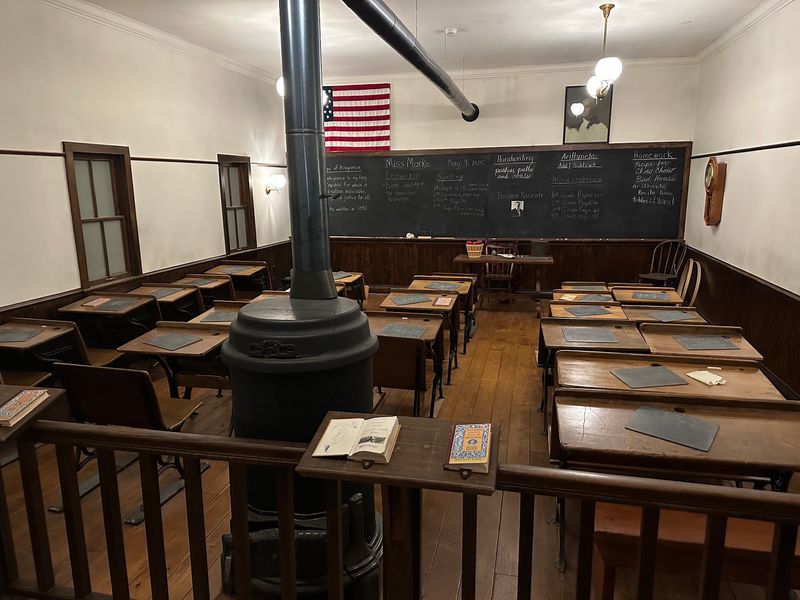
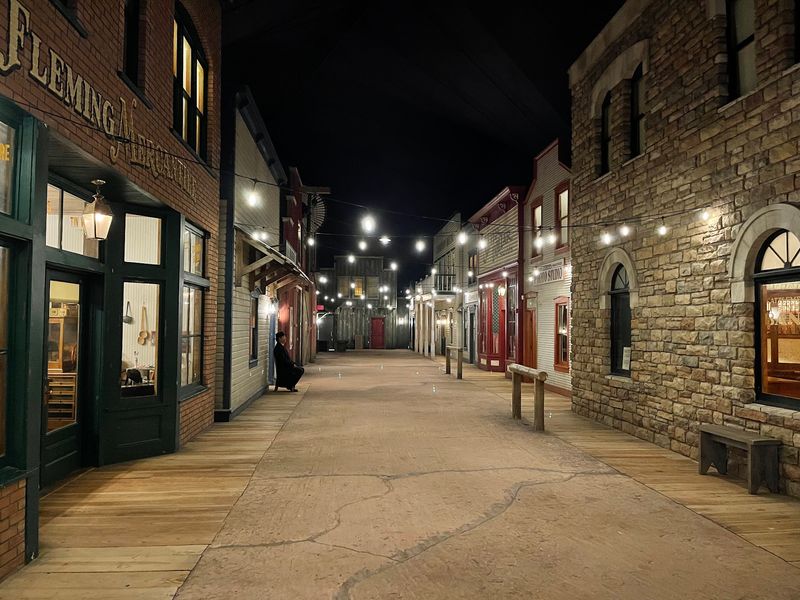
Walking into Prosperity Junction feels less like entering an exhibit and more like stepping through a door someone left open in 1889. The space covers 14,000 square feet under ceilings that climb 40 feet overhead, giving the replica prairie town enough room to breathe and feel genuinely inhabited rather than compressed into a diorama.
A fully realized church, a schoolhouse, a blacksmith shop, and an authentic saloon line the boardwalk streets. The lighting is kept deliberately low and warm, which deepens the sense that the calendar on the wall stopped turning over a century ago.
Visitors can walk the streets freely, peer into storefronts, and absorb the textures of daily frontier life without a velvet rope separating them from the story.
Reviewers consistently single out Prosperity Junction as the highlight of the entire museum, and the reasoning is easy to understand once you are standing inside it. No photograph or description fully captures the feeling of scale.
The 40-foot ceilings make the sky feel present even indoors, and the careful attention to period detail in every building facade rewards slow, unhurried exploration far more than a quick pass-through ever could.
The End of the Trail Sculpture and the Art That Commands Attention
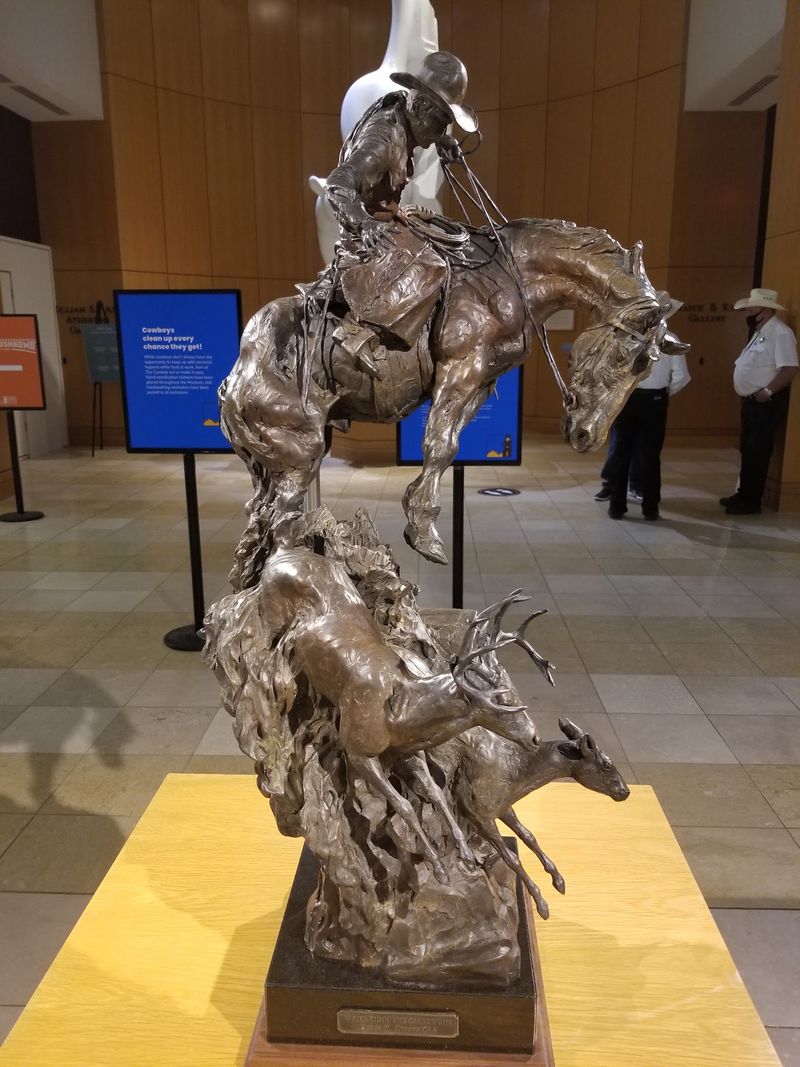
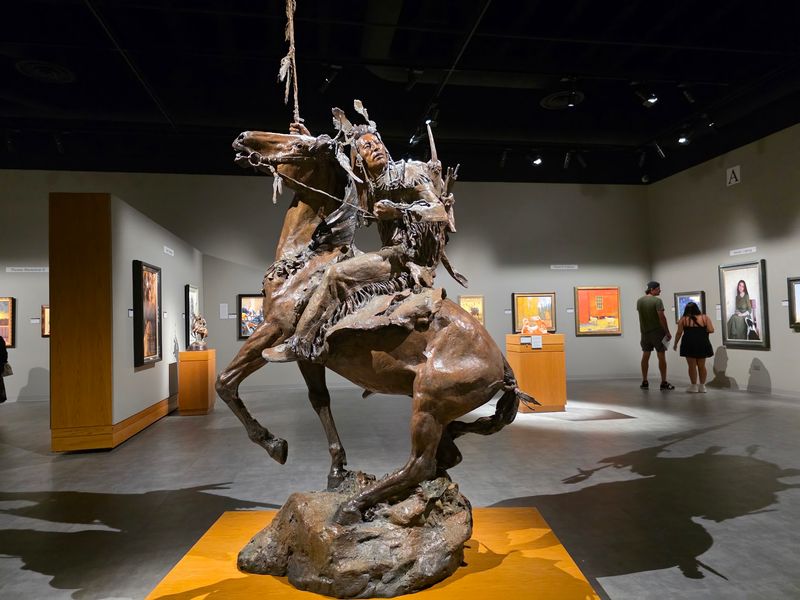
Few pieces of public sculpture stop a room the way James Earle Fraser’s The End of the Trail does. Standing before it for the first time, visitors describe a physical response, a kind of stillness that arrives before any conscious thought about the work’s historical meaning catches up.
The figure of a Native American warrior slumped forward on an exhausted horse carries weight that goes well beyond its considerable physical dimensions.
The museum’s art galleries extend far beyond this single centerpiece. Several works by Frederic Remington are on display, and the Western fine art collection spans painting, sculpture, and mixed media across multiple rooms.
The curation moves visitors through the collection in a way that feels conversational rather than encyclopedic, letting individual pieces breathe instead of crowding the walls with inventory.
Knowledgeable staff members circulate through the galleries and carry genuine enthusiasm for the collection. Visitors mention that casual conversations with docents regularly produce surprising details about specific works or artists that no wall label would ever include.
For anyone who considers themselves only mildly interested in Western art, the galleries have a habit of converting mild interest into genuine fascination before the visit is halfway finished.
Native American Artifacts and the Honest Telling of a Broader Story
One of the most refreshing qualities of this museum is its willingness to tell the full story of the American West rather than a simplified, comfortable version of it. The Native American artifact collection opens the narrative at the beginning, establishing Indigenous cultures as the foundational chapter of Western history rather than a footnote appended to a cowboy story.
Beadwork, ceremonial objects, clothing, and cultural items are presented with context that respects their origins and the communities they came from. Visitors who arrive expecting a one-sided frontier romance often leave with a more layered understanding of the period, and several reviewers have pointed to this section as the one that moved them most unexpectedly.
The museum’s approach of presenting history in chronological and cultural sequence, beginning with Native American heritage and moving forward through pioneer settlement and cowboy culture, gives the entire visit a coherent shape. Rather than jumping between disconnected showcases, the galleries build on each other in a way that feels like reading a well-structured book.
That editorial discipline is rarer in large heritage museums than it should be, and it makes the experience significantly more satisfying from start to finish.
Horses, Barbed Wire, and the Surprising Exhibits That Steal the Show
Not every standout exhibit at this museum announces itself with a dramatic name or a centerpiece sculpture. The section dedicated to horses and their equipment across different eras draws particular enthusiasm from visitors with an equestrian background, but it holds its own even for people who have never been near a stable.
Saddles, bridles, and working tack from different periods and regions of the American West are displayed with enough contextual information to make the evolution of horse culture genuinely interesting. The craftsmanship visible in older pieces tells its own story about the relationship between working cowboys and the animals they depended on every day.
Then there is the barbed wire collection, which sounds like a curiosity and turns out to be unexpectedly captivating. The exhibit traces the history and variety of barbed wire designs across the decades, and the sheer number of distinct styles on display reframes what most people assume was a simple, utilitarian product into something that shaped the entire economy and geography of the West.
Visitors who nearly walk past this section without stopping tend to be the same ones who mention it afterward as one of the details they keep thinking about. Sometimes the quieter exhibits carry the longest echo.
Hollywood Westerns and Rodeo History Under One Roof
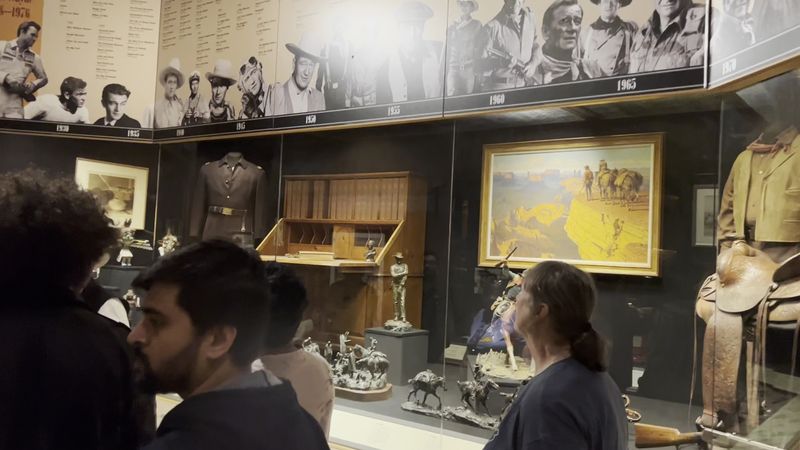
For visitors who grew up watching classic Western films or Saturday afternoon television serials, one section of the museum functions almost like a time machine tuned to a very specific frequency. Memorabilia, costumes, and artifacts connected to the legends of Hollywood Westerns occupy their own gallery space, and the collection spans enough ground to reward both casual fans and dedicated enthusiasts.
Gunsmoke and other iconic Western productions are represented here, giving the exhibit a pop-culture dimension that balances nicely against the more strictly historical galleries elsewhere in the building. Seeing the physical objects associated with characters that once felt larger than life has a grounding effect, making both the performers and the era feel more real and more human than the screen ever quite managed.
Rodeo history forms a separate but equally rich thread running through the museum. A dedicated rodeo section documents the sport’s evolution, its athletes, and its cultural significance to Western life.
Visitors who arrive during certain seasons may find portions of this section temporarily closed for exhibit installation or updates, so checking the museum’s current schedule before visiting is worth the extra step. The museum notes that the full rodeo history exhibit is particularly strong when operating at complete capacity.
Outdoor Space, Bronze Sculptures, and the Gardens Worth Lingering In
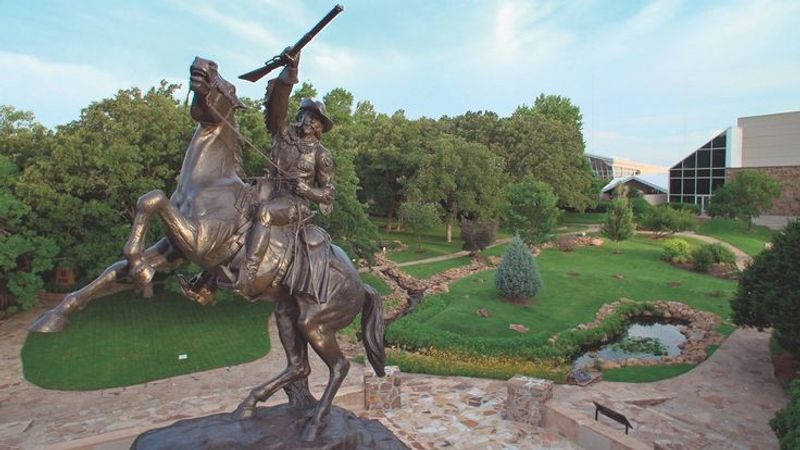
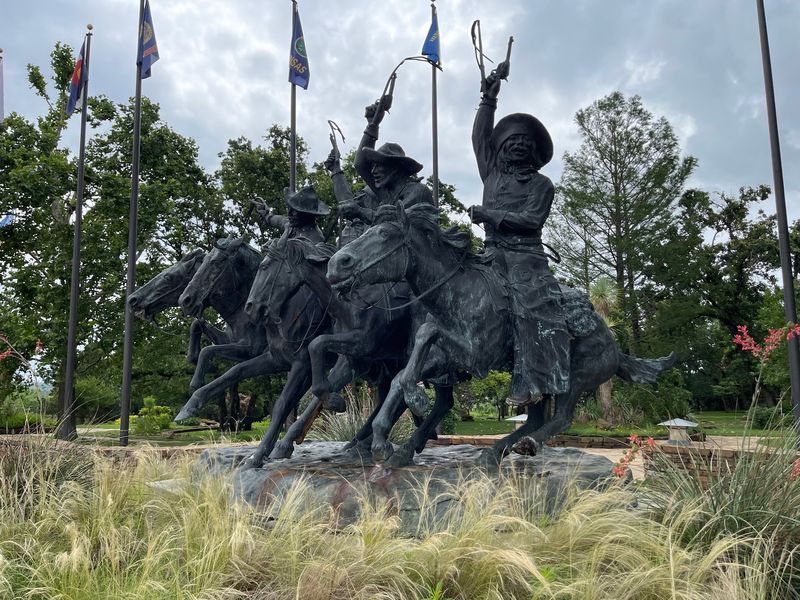
Beyond the interior galleries, the museum opens onto an outdoor environment that surprises visitors who came prepared only for an indoor experience. The grounds include water gardens stocked with koi fish, quiet paths between plantings, and a series of large bronze sculptures positioned across the landscape in a way that rewards unhurried walking.
The outdoor sculpture collection carries the same quality standard as the interior galleries, with pieces that range from intimate in scale to genuinely monumental. Standing beside a large bronze figure outdoors, with Oklahoma sky overhead and the sounds of the gardens nearby, creates a different kind of engagement than viewing sculpture under controlled museum lighting.
Both experiences are worth having, and the contrast between them adds texture to the overall visit.
Families with younger children will find the outdoor area especially valuable. The interactive space called Liichokoshkomo covers roughly 100,000 square feet and includes elements designed specifically for active, younger visitors who need room to move between moments of focused looking.
A playground is also available on the grounds. Several visitors mention regretting that they did not leave enough time for the gardens and outdoor exhibits, which is a reliable sign that the exterior of this museum deserves as much planning as the interior.
Immersive Experiences, Photo Booths, and the Interactive Side of the Visit
Museums that blend serious historical content with genuinely fun interactive elements are rarer than they should be, and this one manages the combination without letting either side undercut the other. The immersive experience, narrated by Tom Selleck, earns consistent praise from visitors across a wide age range and is described as worth the additional cost by nearly everyone who tries it.
A self-service cowboy photo booth uses AI technology to dress visitors in period-appropriate Western attire, adjusting the image to match the aesthetic of classic Western photography. The results are shareable and polished enough that visitors report their photos generating genuine enthusiasm from friends who were not on the trip.
For families with teenagers who might otherwise drift toward disengagement in a history museum, the photo booth functions as an unexpected bridge between the historical content and their own frame of reference.
Kids-focused scavenger hunt activities are distributed across the galleries, with multiple stations designed to keep younger visitors actively engaged rather than passively trailing adults through exhibits. The Annie Oakley Center offers additional programming suited to younger audiences.
Families visiting with a range of ages tend to find that the museum’s layered approach to interactivity means everyone leaves having enjoyed a slightly different version of the same visit.
Hours, Admission, Parking, and What to Know Before You Go
Planning a visit here is straightforward, which is a genuine relief for a museum of this size and complexity. The museum opens at 10 a.m.
Monday through Saturday, with Friday and Saturday hours extending to 8 p.m. Sunday hours run from noon to 5 p.m.
The extended Friday and Saturday evening hours make this a realistic option for visitors who want to combine the museum with other Oklahoma City plans on a weekend.
Parking is free and plentiful in the main lot directly outside the museum. On busy days when the primary lot fills up, an overflow lot operates with shuttle service running directly to the front door, so arriving during a peak period does not translate into a stressful start to the visit.
Visitors consistently mention that the logistics around arrival and parking are handled smoothly.
The admission fee draws occasional comment in reviews, but the consensus is clear: the price is considered well worth the experience by the overwhelming majority of visitors. Spending at least two to three hours inside is strongly recommended to do the collection justice, and many visitors find that two and a half hours still leaves them wishing for more time.
The museum’s website at nationalcowboymuseum.org carries current pricing and any special event information. Reaching the museum by phone is also possible at 405-478-2250.
Share this story