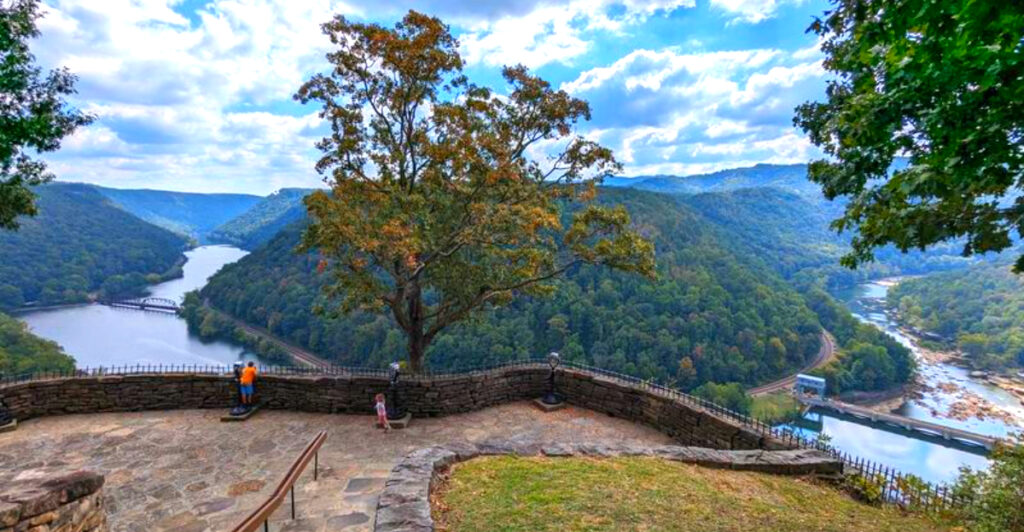
A stone overlook perched roughly 750 feet above the New River, sweeping Appalachian mountain views, waterfalls, historic trails, and a lodge sitting right on the cliff make this West Virginia state park far more than a quick roadside viewpoint. Hawks Nest State Park occupies a dramatic position on the rim of the New River Gorge, yet its main overlook is less than a minute’s walk from the parking area, delivering one of the park’s biggest rewards almost immediately.
There is plenty more waiting beyond that first view. Roughly eight miles of trails lead to waterfalls, historic bridges, old coal mine remnants, and quieter corners of the gorge, while seasonal jet boat tours reveal the canyon from water level. A cliffside lodge offers private balconies overlooking the landscape, and the park’s historic stone structures preserve the craftsmanship of the Civilian Conservation Corps crews who worked here during the Great Depression.
Here’s why Hawks Nest State Park deserves a place on any West Virginia road trip—and why one spectacular overlook can easily turn into an entire day exploring the New River Gorge.
Standing on the Edge: Address, Location, and First Impressions
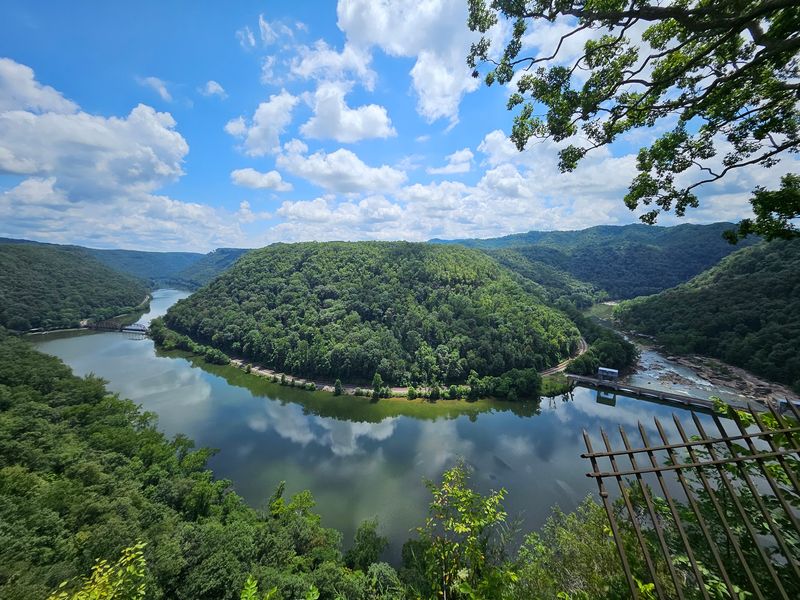
The address is 49 Hawks Nest Park Road, Ansted, WV 25812, tucked into Fayette County along the historic Midland Trail, U.S. Route 60. From the parking lot, the main overlook is less than a minute’s walk, which means the payoff arrives almost immediately.
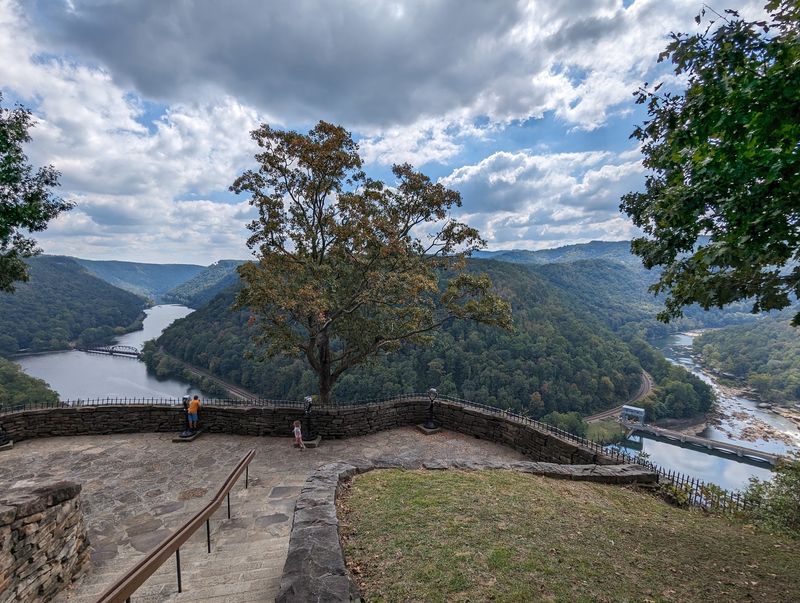
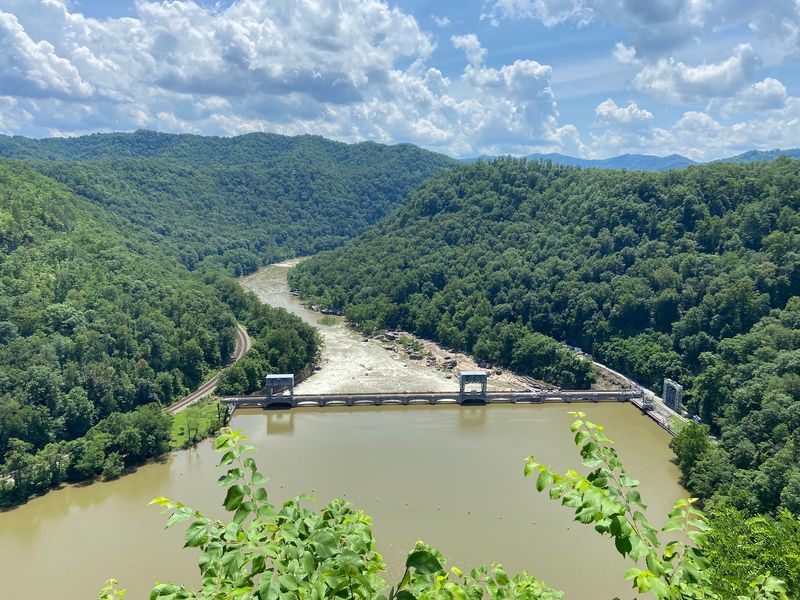
Hawks Nest State Park sits literally on the rim of the New River Gorge, with the primary overlook platform perched roughly 750 feet above the river below. The view from that stone-edged platform is genuinely disorienting in the best way possible. You look down and realize the trees beneath you are full-grown, the river is wide, and the canyon walls stretch further than your eyes can comfortably process.
On my first visit, I stood at that railing for a solid ten minutes without moving. The gorge does not reveal itself gradually here. It hits you all at once, immediate and enormous, like the mountain decided to skip the small talk entirely.
Ancient Ground: The Fascinating History Behind the Park’s Name
Long before this land became a state park, it was recognized by Native Americans as prime hunting and gathering territory. They also noticed the impressive osprey, often called fish hawks, that nested along the dramatic cliffs above the gorge. Those birds gave this place its enduring name: Hawks Nest.
The late 1800s brought the Chesapeake and Ohio Railway threading through the gorge, which disrupted the nesting patterns and scattered many of those original birds from their ancient perches. Then in 1934, the Hawks Nest Dam was completed, creating the calm surface of Hawks Nest Lake and generating hydroelectric power for the region’s growing industrial needs.
West Virginia acquired the land in 1935, establishing a modest roadside park of 51 acres. The Civilian Conservation Corps arrived shortly after and began shaping the park with their distinctive stonework, setting the foundation for everything that stands here today. The history runs deep, and the landscape quietly carries every chapter of it.
Carved in Stone: The Remarkable CCC Legacy You Can Still Touch
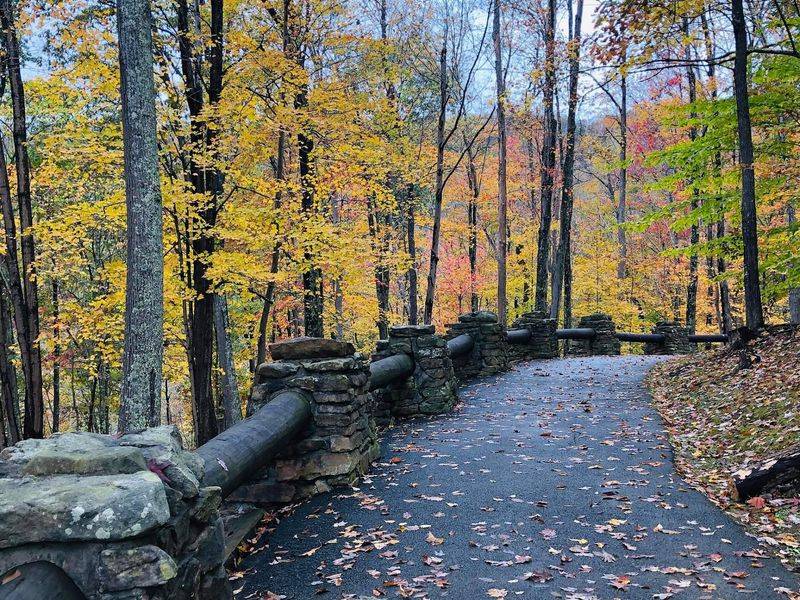
Few places in the American park system let you run your hand across history the way Hawks Nest does. The Civilian Conservation Corps worked here from 1935 to 1942, and their craftsmanship is everywhere you look. The stone retaining walls in the parking and picnic areas, the round tower-shaped restroom building across Route 60, the picnic shelters, and the original concession building all carry that unmistakable CCC fingerprint.
These were young men employed during the Great Depression, building public infrastructure with hand tools and an evident pride in precision. The stonework at the main overlook platform, in particular, has a solidity that feels almost defiant, as if it was built to outlast everything around it. Spoiler: it has.
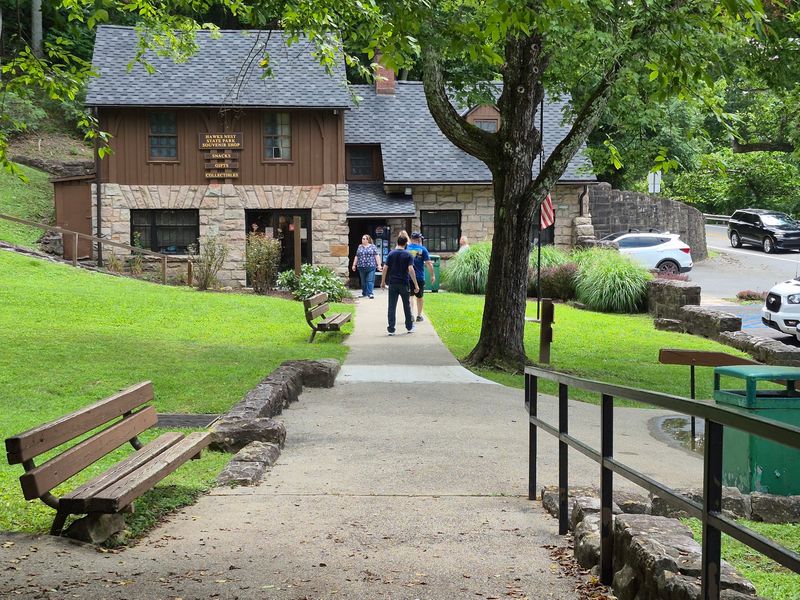
The original concession building now houses a gift shop and a small museum space, honoring the era that shaped the park. Standing inside, surrounded by pioneer artifacts and old photographs, you get a genuine sense of how much effort went into creating a place designed for everyone to enjoy freely.
Full Speed Ahead: What the Jet Boat Tour Reveals About the Gorge
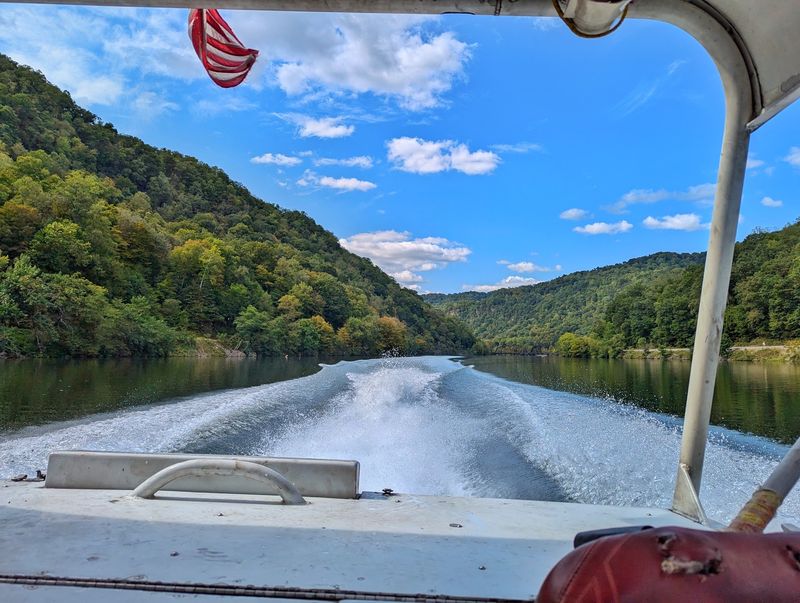
The jet boat tour at Hawks Nest Lake is the kind of activity that earns a permanent spot in your memory. Boarding at the marina after descending from the overlook, you are suddenly at river level, surrounded by canyon walls that were just a distant backdrop moments ago. The scale of the gorge becomes entirely real from this angle.
Guides on these tours are impressively knowledgeable, pointing out geological formations, historic bridge structures, and details about the Hawks Nest Dam as you cruise the calm water. The New River Gorge Bridge, which looms overhead from the overlook, appears in a completely different light from below, its steel arch framing the sky above you.
The boat moves fast enough to be exhilarating but slows at key points so passengers can actually absorb what they are seeing. Families, photographers, and curious visitors all seem equally captivated. Reviews consistently highlight the guides as friendly, sharp, and genuinely passionate about sharing the gorge’s story from the water up.
Trails Worth Every Step: Hiking Through the Gorge’s Hidden Corners
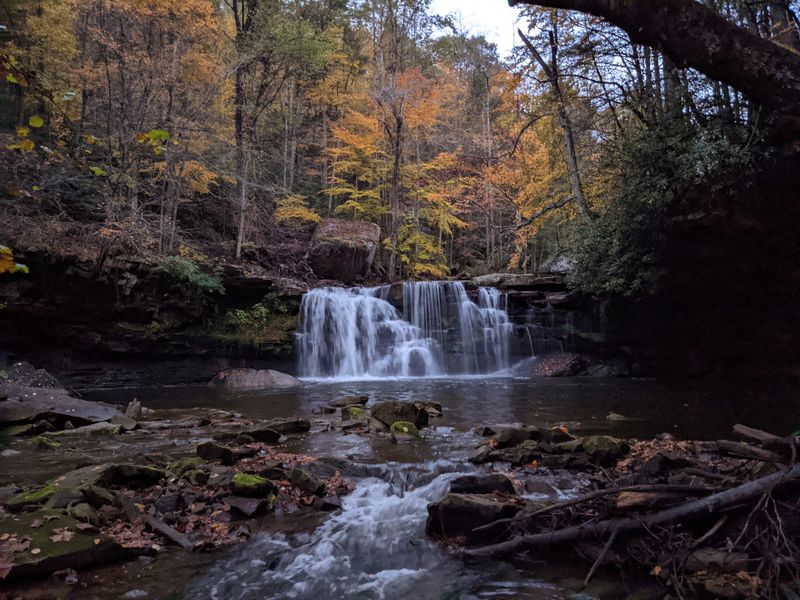
About eight miles of trails wind through Hawks Nest State Park, and each one offers a different relationship with the landscape. The Cliffside Trail runs along the gorge rim, delivering continuous overlooks of the New River and Hawks Nest Lake without requiring any serious elevation change. It is the kind of walk that makes you stop every hundred feet to look out through the trees.
The Hawks Nest Rail Trail is a gravel path stretching roughly 1.8 miles one way along Mill Creek. Along the way, you will find historic bridges, a 20-foot waterfall, and remnants of an old coal mine that operated here decades ago. It is flat, easy, and genuinely surprising in how much it packs into a short distance.
The Fisherman’s Trail follows the north shore of Hawks Nest Lake and ends near Turkey Creek Waterfall, while the GSYP Canyon Trail drops steeply to the New River for those wanting a more intense descent. Waterfall seekers, in particular, will find plenty of reasons to lace up their boots here.
Lover’s Leap: The Overlook With a Story Older Than the Park Itself
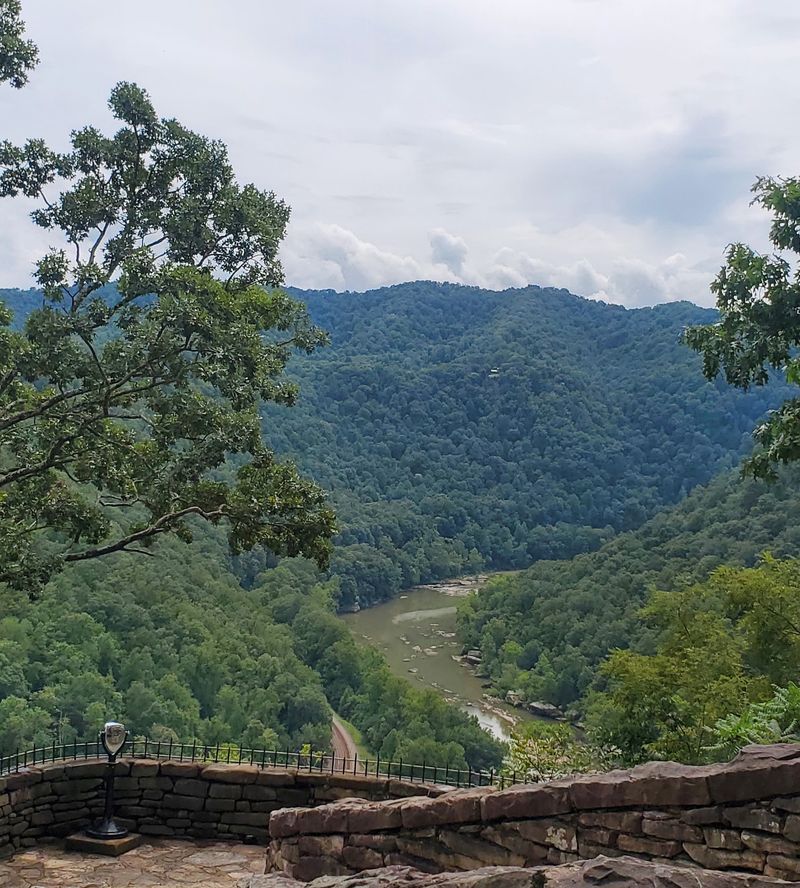
Behind the lodge, a trail leads up stone steps to one of the park’s most atmospheric viewpoints: Lover’s Leap. The name comes from a local legend about an Indigenous brave and a maiden whose love was forbidden. According to the story, they chose this cliff as the place where their spirits would remain together, bound permanently to the landscape.
Modern visitors come for different reasons, primarily the views, which are genuinely spectacular. From Lover’s Leap, you can see the New River, the marina below, and the broad sweep of the gorge in a direction slightly different from the main overlook. It feels more intimate, more quietly dramatic.
The trail itself is accessible but involves steps, so comfortable shoes are a practical choice. Couples tend to linger here longer than anywhere else in the park, and it is easy to understand why. The combination of an expansive view, a poignant backstory, and the sound of wind moving through the trees creates an atmosphere that is hard to replicate anywhere else on the property.
Seasonal Magic: Knowing When the Park Truly Shines
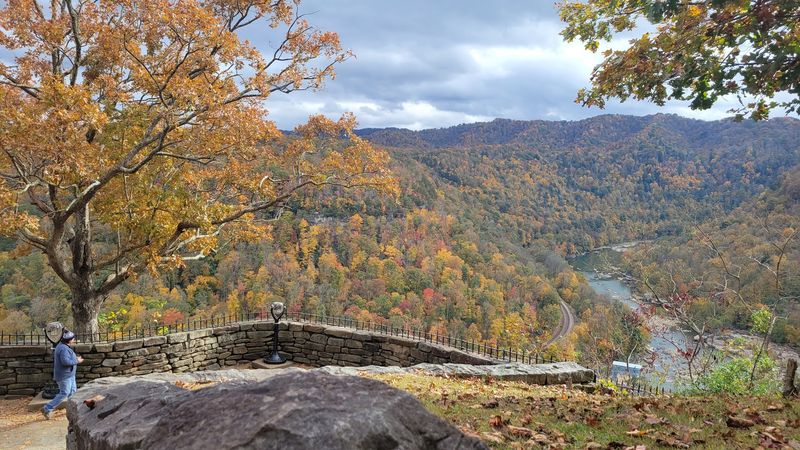
Hawks Nest State Park stays open year-round, and every season brings a genuinely different version of the same dramatic landscape. Summer is peak season for activities, with the jet boat tours running and the park trails at their most lush and accessible. Families fill the picnic areas, and the gorge hums with the kind of energy that comes from a lot of people realizing simultaneously that a place is exceptional.
Autumn, particularly mid-October, is when many regulars argue the park reaches its visual peak. The foliage transforms the gorge into something almost surreal, with layers of orange, gold, and red stacked down the canyon walls. Photographers tend to arrive early and stay late during this window.
Winter strips the trees bare and, counterintuitively, opens up even more of the gorge to view. Snow on the stone overlook walls and the quiet of an off-season morning create a completely different atmosphere, serene rather than spectacular. Each season makes a compelling case for itself, which is why many visitors come back more than once.
On the Water: Fishing, Boating, and Life at Hawks Nest Lake
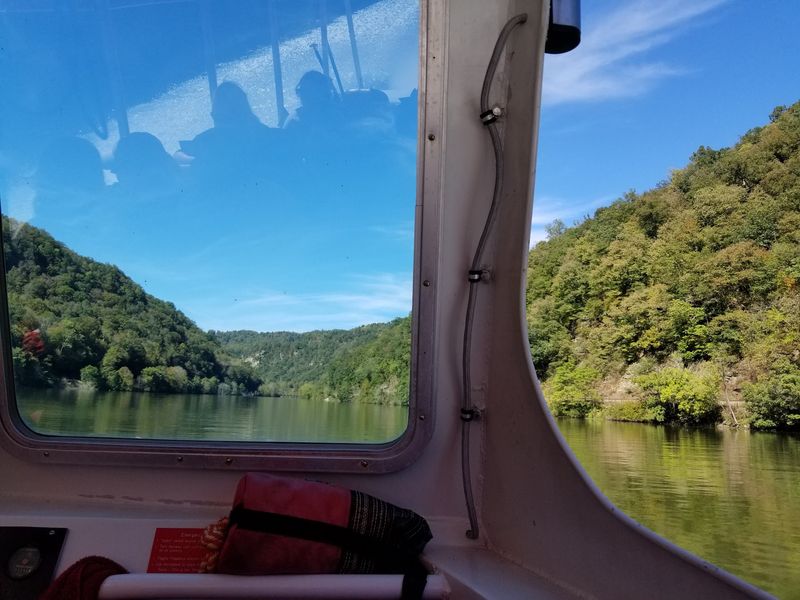
Hawks Nest Lake, formed by the 1934 dam on the New River, is a serious destination for anglers. Smallmouth bass are the main draw, with the lake earning a strong regional reputation for consistent catches. Catfish, muskie, and panfish round out the options, giving visiting anglers plenty of reason to spend a full day on the water.
Mill Creek, which runs along the park’s southeastern edge, gets stocked with trout in both spring and fall, adding a stream fishing option for those who prefer moving water to the calmer lake surface. Boat launch ramps at the marina make it straightforward to get a vessel into the water, and the gorge walls rising directly from the lake’s edge create one of the more visually striking backdrops you will find for a fishing trip anywhere in Appalachia.
Swimming is not permitted in the lake, but leisurely boating is a popular alternative. Gliding across the water with canyon walls surrounding you on both sides is a quietly spectacular experience that does not require any special skill or equipment beyond a boat and a calm morning.
The Lodge on the Cliff: Comfortable Stays With Unbeatable Views

The Hawks Nest Lodge sits right on the cliff, and that is not a figure of speech. Rooms with private balconies look directly out over the gorge, meaning your morning coffee can come with a view that most people only see from designated overlook platforms. The lodge has 31 rooms, and the architecture reflects its mid-century modern origins, updated thoughtfully during a renovation project that began in late 2020.
All rooms received refreshed fixtures and updated amenities during the renovation, and the property is now handicapped accessible throughout. The on-site restaurant serves breakfast, lunch, and dinner with the gorge as a constant backdrop. The pepper jack mac and cheese bites have developed a loyal following, and the salmon gets mentioned with genuine enthusiasm by people who clearly were not expecting to eat that well at a state park lodge.
For those who prefer sleeping closer to the ground, nearby Babcock and New River Gorge parks offer camping options. The park also offers Tentrr glamping sites, blending outdoor immersion with real mattresses and solar showers for visitors who want nature without the air mattress situation.
Beyond the Park Borders: What Else the New River Gorge Region Offers
Hawks Nest sits at the center of one of the most activity-dense outdoor regions in the eastern United States. The New River Gorge Bridge, located roughly seven to ten miles away, is an engineering landmark and the site of the annual Bridge Day festival, where BASE jumpers and rappellers take over the structure for one spectacular October Saturday each year.
Whitewater rafting on the New River is available through numerous outfitters operating nearby, with options ranging from mild floats to serious Class IV and V rapids. Rock climbing draws enthusiasts from across the country to the gorge’s ancient sandstone faces, and guided walks along the catwalk beneath the New River Gorge Bridge offer an unusual perspective on both the structure and the canyon.
Babcock State Park, about 18 miles away, is home to the iconic Glade Creek Grist Mill, a fully operational replica that ranks among the most photographed structures in West Virginia. Cathedral Falls near Gauley Bridge adds another waterfall worth chasing, making the surrounding region a full itinerary on its own without ever feeling repetitive.
Smart Visit Tips: Making the Most of Your Time at Hawks Nest
A few practical details go a long way at Hawks Nest. The main overlook is ADA accessible, meaning visitors of all mobility levels can reach the primary viewpoint without a challenging hike. Arriving earlier in the day, especially on fall weekends, helps secure good parking and a quieter experience at the most popular overlooks.
Binoculars are genuinely useful here. The gorge is wide, and details on the far canyon walls, including birds riding thermals and distant rock formations, reward a closer look. Sturdy shoes matter on the steeper trails, particularly the GSYP Canyon Trail, which drops aggressively toward the river and gets slippery after rain.
Dogs are welcome on leashes up to ten feet on the trails and in select lodge rooms, with an associated pet fee. Picking up a trail map at the park office before heading out saves time and prevents accidentally missing hidden highlights like Turkey Creek Waterfall or the old coal mine remnants along the rail trail. The gift shop near the overlook carries local souvenirs and a solid selection of regional books worth browsing before you leave.
Share this story