Somewhere along a quiet Oklahoma highway, a towering structure rises above the flat horizon and stops you cold. Not because it is new, but because someone decided it deserved a second look.
Across Oklahoma, a handful of communities have turned their agricultural landmarks into canvases for public art, and the stories behind those projects are more tangled, more interesting, and more honest than any single headline can capture. The real story stretches across three towns, three very different approaches, and one big question about where exactly the paint actually landed.
The headline blends three different Oklahoma mural stories
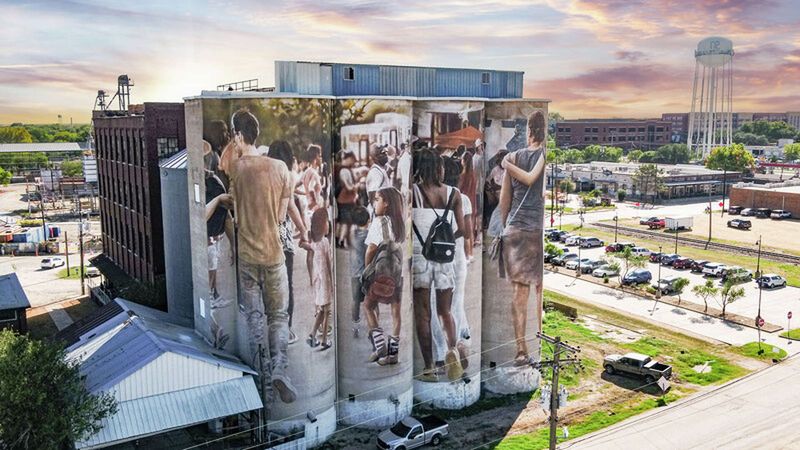
Headlines about painted grain elevators in tiny Oklahoma towns tend to arrive fully formed, confident, and just a little too tidy. Pull on the thread, though, and what unravels is not one story but three related ones, each with its own location, its own artwork, and its own level of documentation.
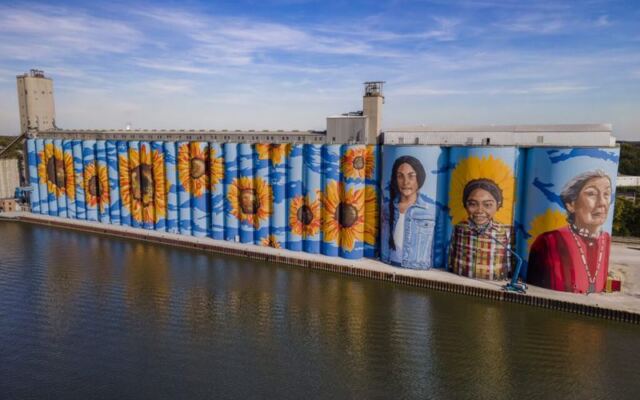
Ponca City is the strongest match for a literal grain-elevator mural. Ponca City Main Street’s project account describes a 2018 effort to paint the town’s historic Robin Hood Flour grain elevator, organized with a local muralist and backed by fundraising.
The project is documented. Whether every proposed phase reached completion is a detail worth confirming before treating it as settled fact.
Waukomis offers a different picture. The town has genuine agricultural and railroad roots, and it has a large mural connected to that history.
But the best-documented artwork sits on the wall of the Land Run Farmers Cooperative building, not on a grain elevator itself. That distinction matters when a headline implies painted elevators.
Tonkawa adds a third variation. The Mid-America Mural Project’s documentation describes a 125-foot downtown mural that includes a grain elevator as part of its imagery.
The elevator appears inside the painting. The available descriptions do not establish that anyone put paint on the actual structure standing in town.
None of that makes the underlying story less worth telling. Oklahoma’s agricultural infrastructure has inspired public art in genuinely creative ways, and the physical location of the paint, the completion status of each project, and the public access available at each site all shape what a traveler can actually experience.
Sorting those details out is the point of the investigation, not the end of the appeal.
Ponca City documented a plan for an actual grain-elevator mural
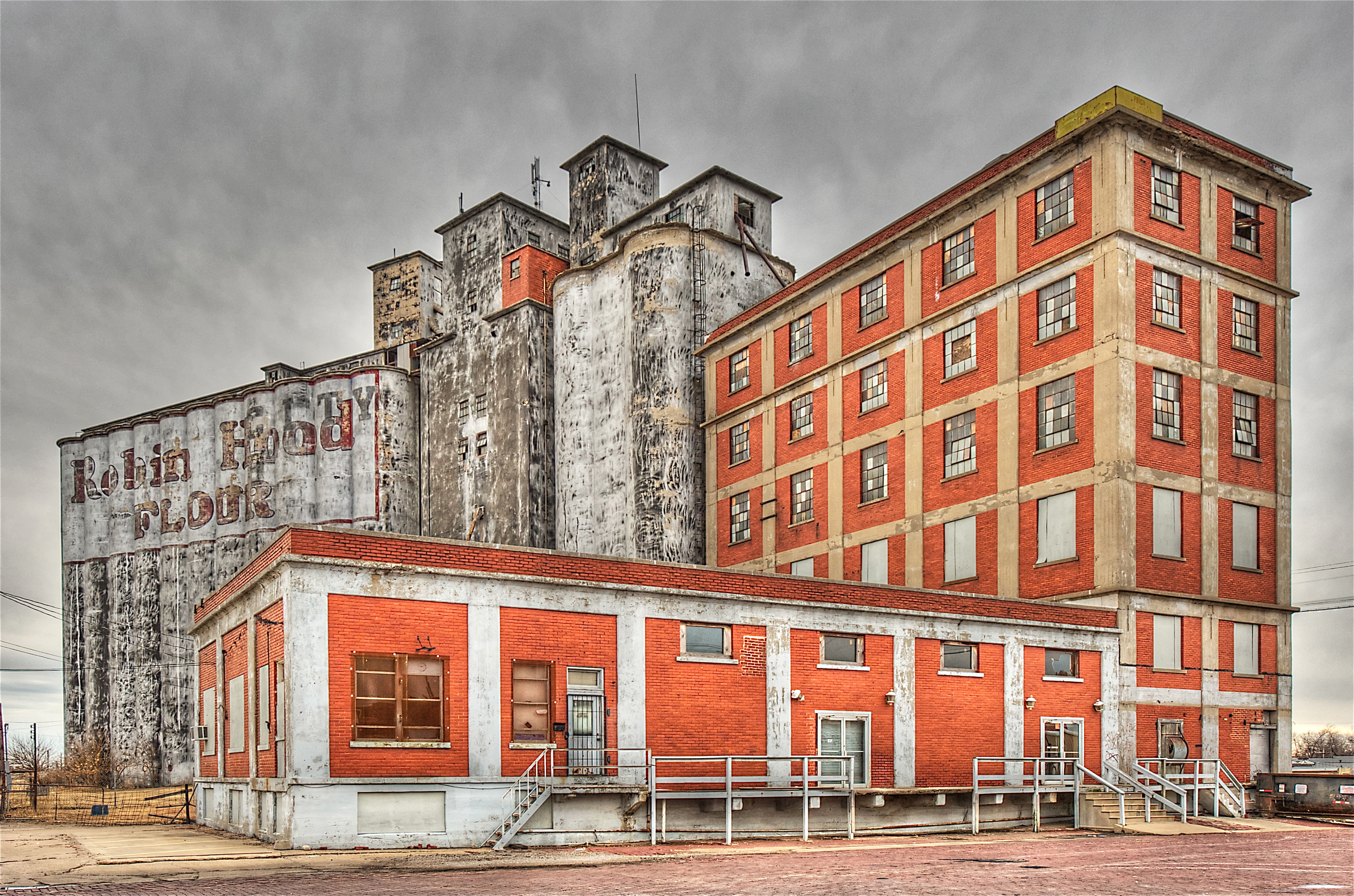
Of all the Oklahoma towns connected to this story, Ponca City comes closest to matching the headline’s literal claim. The historic Robin Hood Flour grain elevator that anchors the project is a real structure with a documented past, and the effort to paint it was organized, funded, and designed with a specific artist in mind.
Ponca City Main Street’s account of the project places its beginning in 2018. The organizing group worked with Oklahoma muralist Rick Sinnett, whose approach to large-scale public art is well established across the state.
The stated goal was straightforward: use public art to create a distinctive identity for the downtown district, turning a structure that might otherwise fade into the background into something people would actually seek out.
The financial picture that emerged from that planning process gives a sense of the project’s scale. Organizers estimated the mural work at approximately $100,000 after combining a private matching pledge, potential tourism funds, and private donations.
For context, a straight repainting of the structure had been quoted at roughly $250,000, which made the mural approach look like both an artistic and a practical choice.
Rick Sinnett’s work elsewhere in Oklahoma reinforces why organizers turned to him. The Oklahoma Arts Council identifies his “This Land” mural near Bricktown in Oklahoma City as a 100-by-128-foot work completed in 2014, placing it among the larger examples of painted industrial surfaces in the state.
His documented use of bold outlines, bright colors, and repeated patterns suited the scale of a grain elevator.
What the Ponca City Main Street account does not fully resolve is whether every proposed phase of the project reached completion. The page documents designs, fundraising milestones, and plans to extend the work to additional structures.
Treating all of that as a finished and confirmed mural requires current verification that the available sources alone do not supply. Ponca City is the strongest documented case, and it deserves that description precisely because the project was real, organized, and publicly stated.
Waukomis put agricultural history on a cooperative building
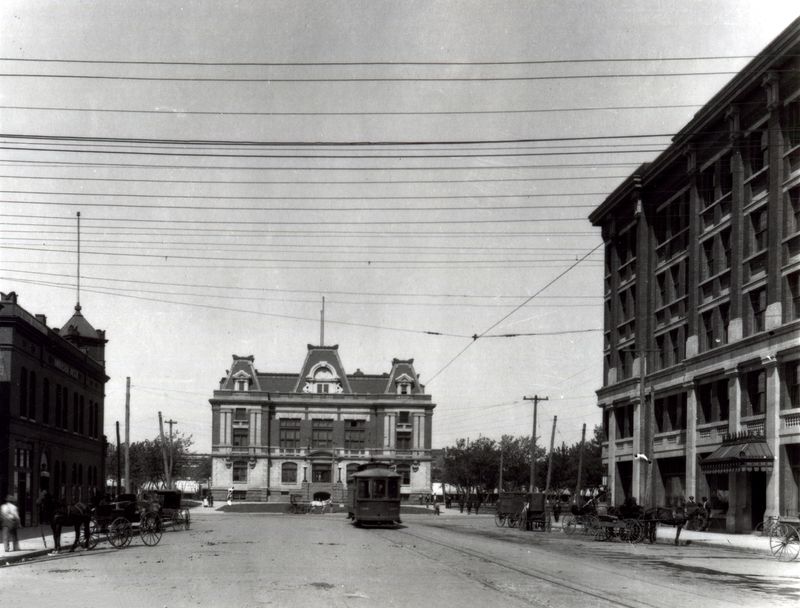
Waukomis is a small town with a 2020 census population of 1,346, and its connection to Oklahoma’s agricultural past runs deep enough that a mural project makes complete sense there. What matters for this investigation is exactly where the paint went.
The Oklahoma Historical Society’s entry on Waukomis lays out the town’s agricultural and railroad foundation in specific terms. By 1902, the town already had two flour-mill and grain-elevator companies operating.
By 1909, that number had grown to four elevators. The railroad that ran through town was not just a transportation link; it was the mechanism that connected local wheat farmers to distant markets, and the elevators were the physical nodes in that system.
That history is exactly what the town’s most documented mural addresses. The Land Run Farmers Cooperative mural, completed in 2011, covers the wall of the cooperative building and depicts railroad construction, a steam locomotive in motion, wheat harvesting in progress, and scenes tied to the Chisholm Trail.
Every element connects directly to the industries that built the town.
The distinction to hold onto is this: the mural is on the cooperative building, not on a grain elevator. A cooperative building and a grain elevator can occupy the same property or the same block, and both are part of the agricultural infrastructure.
But a mural painted on a co-op wall is not the same thing as a mural painted on the elevator structure itself. The Waukomis artwork is vivid, historically grounded, and worth seeing.
It just does not confirm the specific claim that the town’s elevators became painted landmarks.
Waukomis belongs in this comparison because it shows how a small Oklahoma town with genuine elevator history chose public art to tell that story. The location of the canvas is a detail, not a disqualification.
Tonkawa placed the grain elevator inside the image
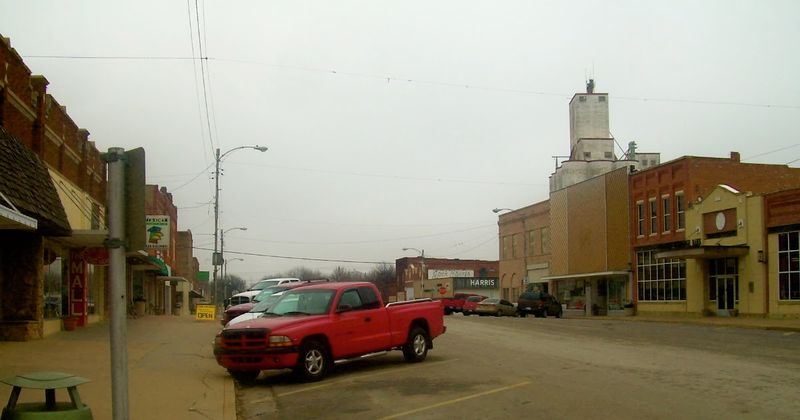
Tonkawa’s contribution to this comparison is the largest in physical scale and the most layered in historical content. A 125-foot outdoor mural in the town’s downtown area makes it impossible to miss, and the range of subjects it covers reflects a community that wanted its full story told, not just the agricultural chapter.
The Mid-America Mural Project documentation describes how the work came together through a process that involved local volunteers alongside visiting artists. That collaborative structure shaped the mural’s content: the imagery was researched and chosen with community input, which is why the finished work addresses subjects ranging from wheat farming and railroads to the Land Run and the Tonkawa Tribe’s history.
The mural does not reduce those histories to generic pioneer imagery. The Tonkawa Tribe’s experience of the Land Run and its consequences is treated as a distinct and specific part of the town’s story.
A grain elevator appears within the mural’s imagery. That detail connects the artwork to the broader comparison being made here.
But the available descriptions, including the city of Tonkawa’s visitor information and the town’s published visitor guide, do not establish that anyone applied paint to an actual elevator structure standing in town. The elevator exists in the painting.
Whether it also exists as a painted structure outside the painting is a separate question that the sources do not answer.
That distinction is not a technicality. It changes what a visitor would see and experience at the site.
A 125-foot mural on a building wall is a remarkable public artwork in its own right. Describing it accurately as a mural that depicts a grain elevator, rather than a mural painted on one, gives readers a clearer picture of what Tonkawa actually offers.
Why grain infrastructure becomes a landmark in the plains
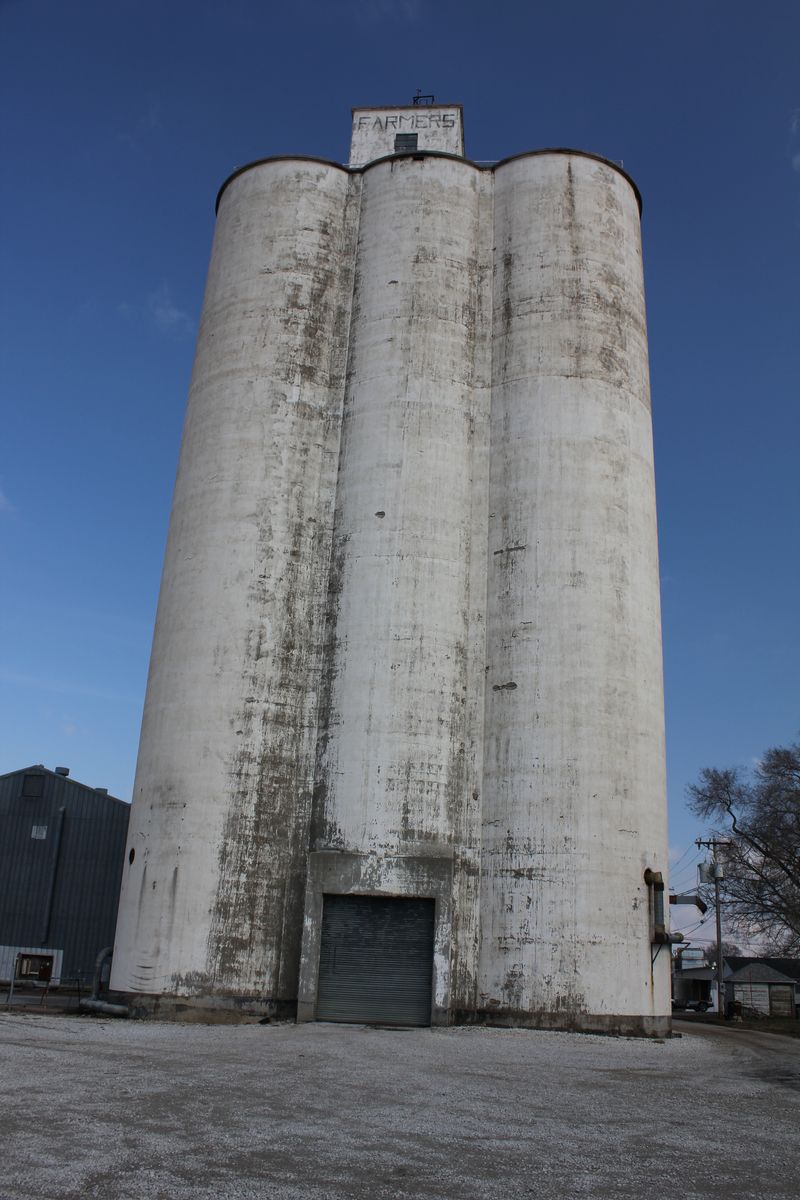
Stand on a flat stretch of Oklahoma highway and look in any direction. The horizon runs unbroken for miles, and almost nothing interrupts it except the occasional cluster of vertical shapes rising from a small town’s center.
Those shapes are almost always grain elevators, and their dominance over the landscape is not accidental.
National Park Service documentation on western Oklahoma grain facilities describes these structures as highly vertical, geometric forms whose scale creates a dramatic contrast with the surrounding plains. That contrast is what makes them visible from miles away and what gives them their landmark quality.
A traveler navigating by sight in flat country naturally orients toward the tallest thing on the skyline, and for most of Oklahoma’s agricultural communities, that thing has been a grain elevator for well over a century.
The historical importance of these structures goes beyond their silhouettes. The Waukomis example shows how quickly elevator infrastructure could define a town: two grain-elevator companies by 1902, four elevators by 1909, all tied directly to rail lines that moved wheat to distant processors and markets.
The elevator was not a secondary feature of agricultural life; it was the point where the harvest became commerce.
Oklahoma State University reports that approximately 80 percent of Oklahoma wheat moves through a network of grain elevators before being processed, exported, or held for later use. That figure places the structures firmly in the present, not just the past.
Many of the elevators that look like historic landmarks from the road are still active participants in Oklahoma’s agricultural economy.
That combination of visual prominence and continuing economic function explains why communities reach for these structures when they want to make a statement about identity. A mural on an elevator is visible to everyone passing through.
A mural on a cooperative building beside an elevator carries the same historical message but with a different reach. Both choices acknowledge that the elevator is already the landmark; the art just adds a layer of intention to something the landscape made prominent long ago.
Public art gives working history a civic identity
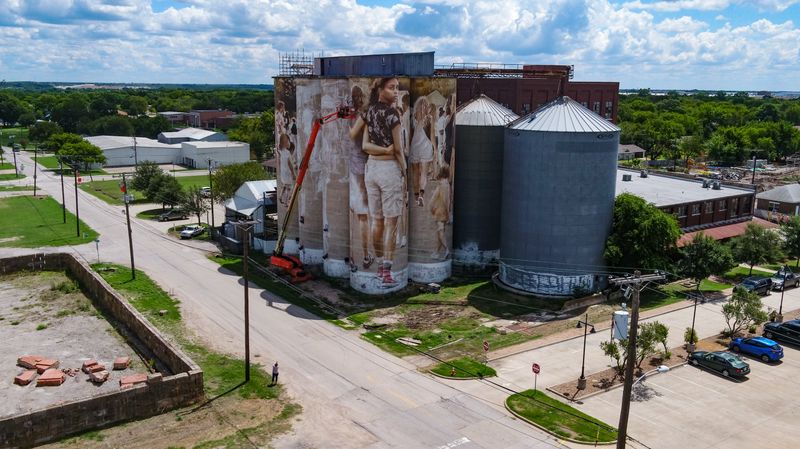
Every mural project covered in this comparison started with a version of the same question: what does this place want people to remember about it? The answers that came back were specific to each community, and the artwork reflects those differences.
Ponca City organizers were explicit about their aim. The Ponca City Main Street account describes the project as an effort to create a distinctive identity for the downtown district, using the Robin Hood Flour elevator as the canvas.
The revitalization framing was part of the pitch: a painted elevator would give the town something recognizable, something that communicated pride and presence to anyone driving through. Those are stated intentions, not measured outcomes.
Whether the project produced specific tourism numbers or economic returns is a separate question that the available sources do not answer with data.
Rick Sinnett’s documented approach to large-scale murals fits that kind of civic ambition well. The Oklahoma Arts Council’s record of his “This Land” mural shows a work spanning 12,800 square feet, using the bold outlines, bright colors, and repeated patterns that characterize his style.
At that scale, the visual effect on a surrounding streetscape is substantial regardless of whether visitor counts can be precisely tracked.
Tonkawa’s process leaned harder into community participation. The Mid-America Mural Project’s description emphasizes local volunteers working alongside visiting artists, with research and design shaped by the community’s own understanding of its history.
That approach produces a different kind of civic investment than a commissioned installation: the people who helped paint it have a stake in its survival.
A John Deere feature on rural murals notes community observations from Faulkton, South Dakota, about increased stopping and local pride following a mural project there. That example comes from another state and another community, so its observations cannot be transferred directly to Oklahoma.
What it does illustrate is a pattern: communities across the plains are making similar calculations about public art and civic identity, and the grain elevator keeps showing up as the preferred canvas.
See the art from authorized public spaces
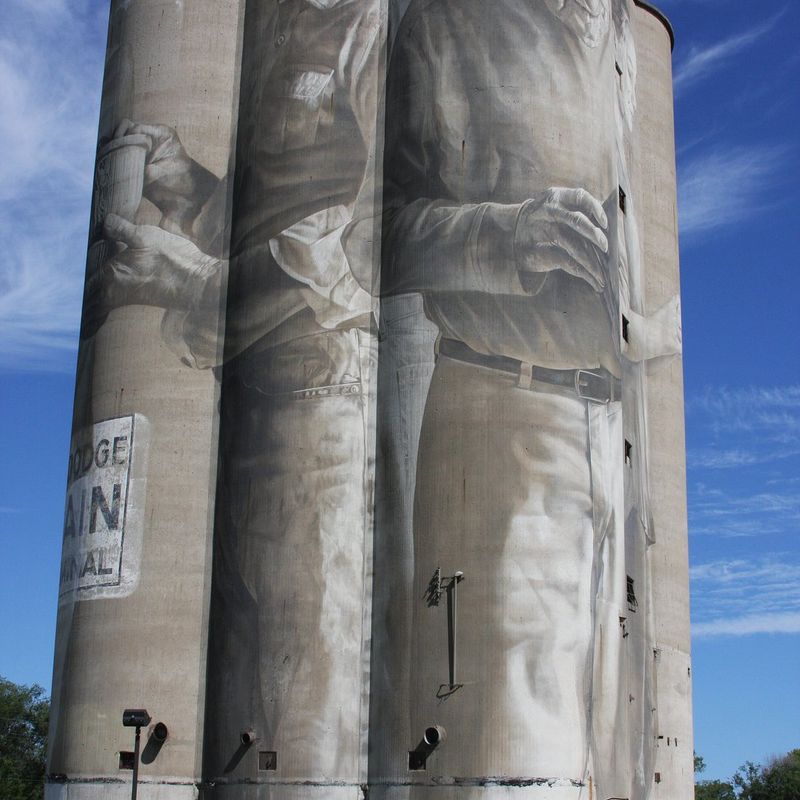
Planning a drive to see any of these murals requires one piece of information that maps and travel blogs often skip: whether the location actually offers a safe, authorized place to stand and look. Grain elevators are industrial workplaces, and the fact that one has artwork on it does not change the nature of the property or the hazards inside.
OSHA’s grain handling overview identifies the specific hazards that make these facilities dangerous for anyone who is not a trained worker: combustible grain dust, moving machinery, falls from height, hazardous atmospheres inside confined spaces, and the risk of grain engulfment. These are not edge-case concerns.
They are the documented reasons that grain facilities operate under strict safety requirements, and those requirements do not relax because the exterior wall has been painted.
The practical guidance for visitors is simple. Use public rights of way or areas that are explicitly designated for public viewing.
If a town has set up a viewing area or marked a spot along a public street where the mural is visible, use that. If no such designation exists, the public road shoulder is the appropriate place to stop.
Fences, railroad tracks, loading zones, and facility gates mark the boundary of private industrial property, and crossing those boundaries without authorization is trespassing regardless of what is painted on the wall.
Entry into bins, silos, catwalks, roofs, or any enclosed part of a grain facility is a separate and more serious matter. OSHA’s required controls for confined-space entry in grain handling include lockout of powered equipment, a body harness and lifeline, an outside observer, atmospheric testing, formal training, and a permit system.
Those are requirements for trained workers. They are not a checklist for visitors to improvise.
Oklahoma State University’s guidance on grain bin entrapment makes clear that an inactive appearance, an open gate, or a clean surface does not indicate that a facility is safe to enter. Industrial hazards can be present without any visible sign.
The artwork on the outside of a structure is worth seeing. Everything on the inside is for the people whose job it is to be there.
The verified story is a network of projects, not one town-wide transformation
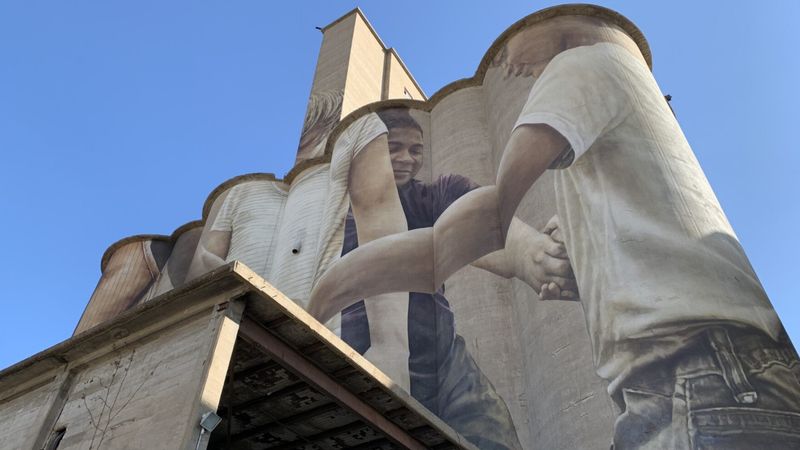
After sorting through the evidence, one conclusion holds up clearly: no single tiny Oklahoma town has been documented painting multiple grain elevators into a series of roadside murals available for public viewing. The headline’s premise combines at least three distinct stories into one, and each of those stories is more specific and more interesting when kept separate.
Ponca City’s documented project is the strongest match for the literal claim. The historic Robin Hood Flour elevator, the 2018 organizing effort, the artist, the fundraising, and the stated goals are all on record.
Whether every proposed phase reached completion requires current confirmation that the available sources do not supply on their own. That is a reason to verify, not a reason to dismiss the project.
Waukomis and Tonkawa represent a different category. Waukomis’s deep agricultural history and its cooperative-building mural show how a small town can use public art to honor elevator infrastructure without painting the elevator itself.
Tonkawa’s 125-foot community mural places a grain elevator inside the image as one element of a broader historical portrait. Both towns did something meaningful.
Neither one confirms the premise of the original headline.
What the National Park Service’s documentation of Oklahoma grain facilities reinforces is that these structures already function as landmarks before anyone picks up a brush. Their height, their geometry, and their contrast with the flat horizon make them visible for miles.
Public art adds intention and narrative to something the landscape already marked as significant. The most honest version of this story is a network of communities making different choices about how to honor the same kind of structure, and that version is worth the drive to see.
Share this story