Planet Earth is hiding some seriously wild secrets. There are places where giant lizards patrol volcanic hillsides, crocodiles outnumber tourists by the thousands, and ancient tortoises wander as if they missed the memo that millions of years have passed. These destinations do not just have interesting wildlife, they have the kind of wildlife that makes you double-check whether you accidentally time-traveled. From the reptile-ruled islands of Indonesia to the jaguar-patrolled wetlands of Brazil, this list covers 14 places where the prehistoric world is not a museum exhibit but a living, breathing reality.Pack your binoculars, charge your camera, and get ready for a journey through the wildest corners of our wonderfully ancient planet.
1. Kakadu National Park, Jabiru, Northern Territory, Australia
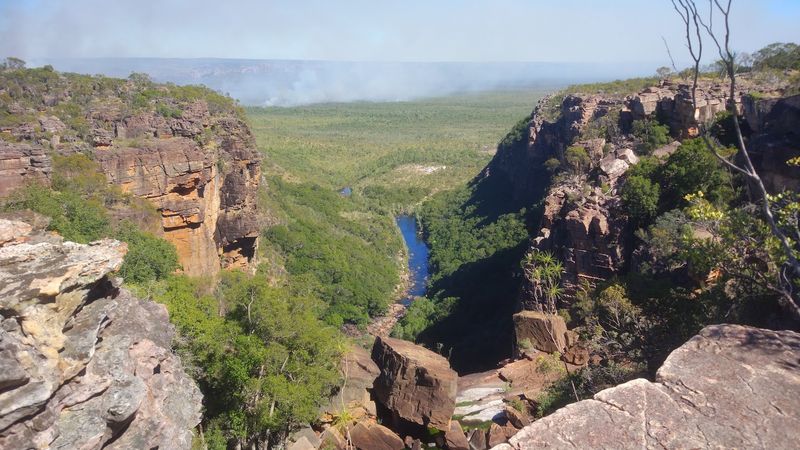
Saltwater crocodiles have been patrolling these waterways for roughly 65 million years, which means they were already ancient by the time most of the world’s current wildlife showed up. Kakadu National Park is their undisputed territory.
With an estimated population of around 10,000 saltwater crocodiles, the park’s rivers and billabongs are among the most crocodilian-dense environments on the planet. Beyond the reptiles, over one-third of Australia’s bird species live here, including the striking red-tailed black cockatoo.
Kakadu holds dual UNESCO World Heritage status for both its natural and cultural significance, with Aboriginal communities having called this land home for over 65,000 years. Towering sandstone escarpments, ancient rock art, and sprawling floodplains combine into a landscape that feels genuinely unchanged by time.
2. Tortuguero National Park, Tortuguero, Limón Province, Costa Rica
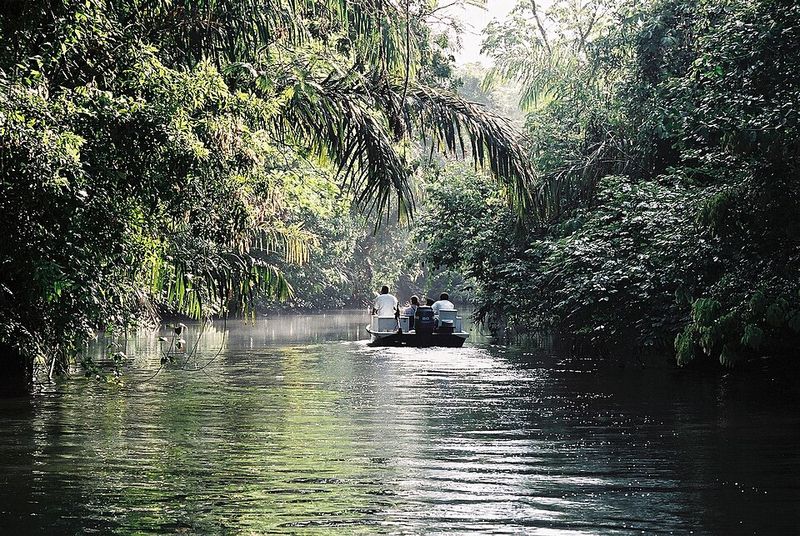
No roads lead to Tortuguero. You arrive by boat or small plane, which immediately signals that this place operates on its own terms, not yours. That sense of entering somewhere genuinely remote never quite leaves you.
The park protects the most important green sea turtle nesting site in the entire Western Hemisphere, with thousands of females returning between July and October to complete a ritual older than most civilizations. Leatherback, hawksbill, and loggerhead turtles also use these beaches.
Guided boat tours through the park’s freshwater canal network reveal spectacled caimans, crocodiles, howler monkeys, and over 440 bird species, including the great green macaw. The eleven distinct habitats packed into this compact park create a layered ecosystem where prehistoric-looking reptiles and vibrant tropical wildlife coexist in surprisingly close quarters.
3. Galápagos National Park, Puerto Ayora, Santa Cruz Island, Ecuador
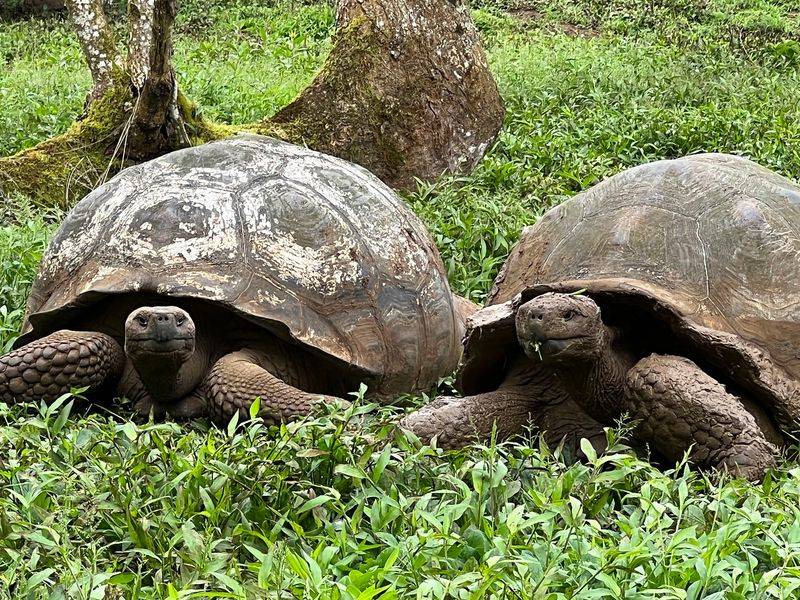
Giant tortoises move through the Galápagos highlands with a pace that suggests they have nowhere urgent to be, which makes sense when you consider that some individuals live well past 150 years. Time works differently here.
Marine iguanas, the only lizards on Earth that forage in the ocean, cluster on volcanic rock formations in large groups, looking every bit like miniature dragons surveying their domain. Flightless cormorants, blue-footed boobies, and Sally Lightfoot crabs add to the cast of creatures that seem engineered for a different era.
The wildlife here shows almost no fear of humans, a behavioral trait developed over centuries of isolation from natural predators. Black lava fields, stark volcanic coastlines, and fearless endemic species combine to create an environment that fascinates biologists and casual visitors alike, offering some of the most intimate wildlife encounters on the planet.
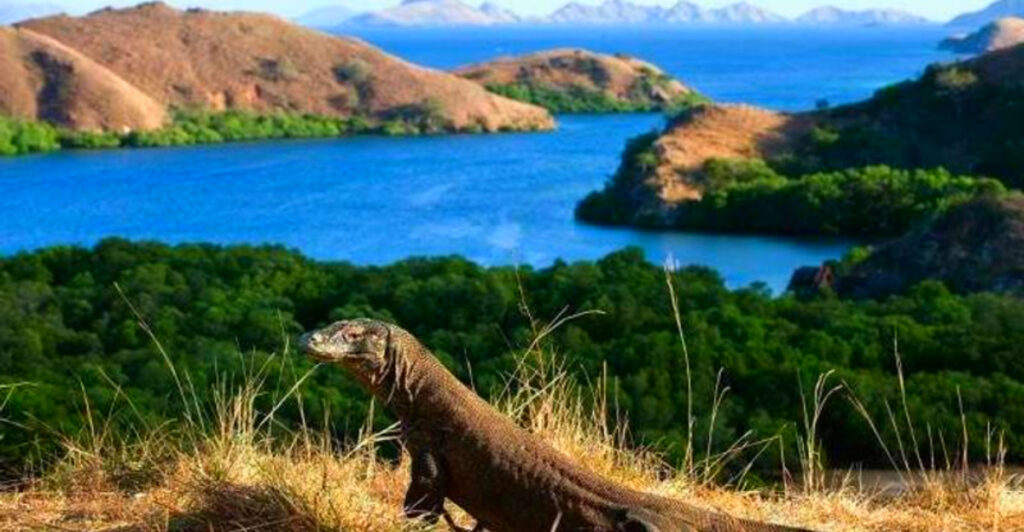
4. Komodo National Park, Labuan Bajo, East Nusa Tenggara, Indonesia
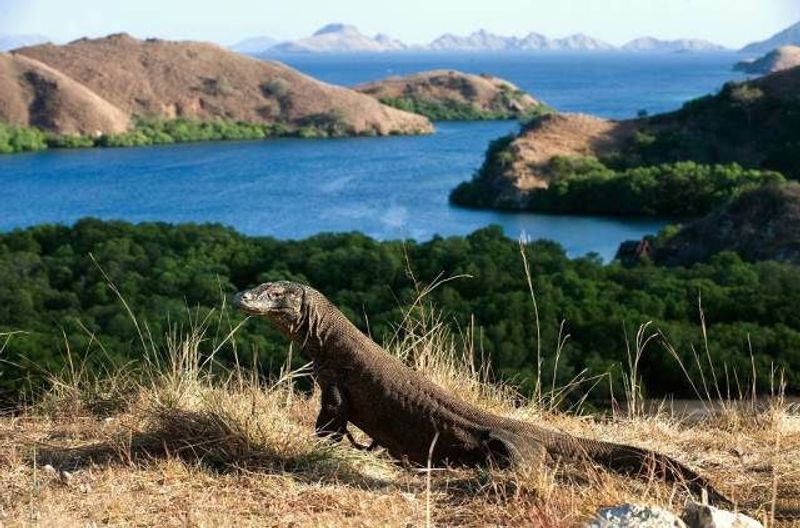
Earth’s largest living lizard does not hide, it struts. Komodo dragons roam the volcanic islands of Komodo, Rinca, and Padar with the unhurried confidence of creatures that have had no serious competition for millions of years.
These reptiles can reach three meters in length and weigh over 70 kilograms, placing them firmly in the category of animals you respect from a careful distance. Their forked tongues flick constantly, detecting prey from up to ten kilometers away using a refined sensory system.
The park itself covers 1,817 square kilometers of land and sea, offering dramatic terrain that ranges from steep volcanic hills to coral-rich waters with over a thousand fish species. Guided ranger tours are mandatory, which is honestly a smart rule when the local wildlife qualifies as an apex predator.
5. Everglades National Park, Homestead, Florida, USA
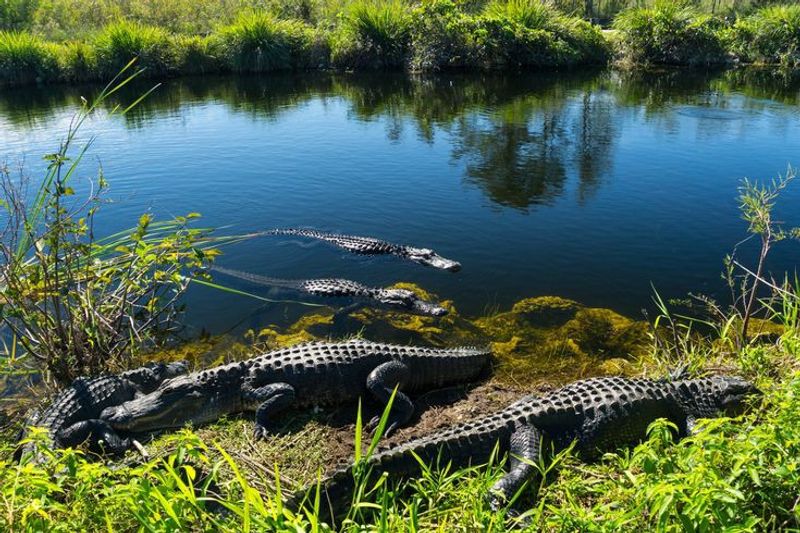
The Everglades is the only place on Earth where American alligators and American crocodiles share the same natural habitat. That single fact sets the tone for everything else you will encounter in this vast, watery wilderness.
Sawgrass marshes extend across enormous distances, broken up by tangled mangrove forests, shallow bays, and slow-moving waterways that have shaped this ecosystem for thousands of years. Roseate spoonbills, great egrets, and various heron species stalk the shallows with patient precision.
Airboat tours provide the most immersive way to cover the park’s sprawling interior, cutting through channels where alligators barely bother to move out of the way. The Florida panther, one of North America’s most critically endangered big cats, also roams these wilderness areas, though sightings are exceptionally rare. This UNESCO World Heritage Site rewards patience and curiosity in equal measure.
6. Okavango Delta, Maun, Botswana
Every year, the Okavango River travels thousands of kilometers from the Angolan highlands only to disappear into the sands of the Kalahari Desert, creating one of the world’s most extraordinary inland delta systems in the process.
The resulting landscape can expand from 6,000 to 15,000 square kilometers depending on seasonal flooding, sustaining elephants, lions, leopards, hippos, and over 450 bird species across a constantly shifting mosaic of channels and islands. Nile crocodiles glide through the waterways with practiced ease.
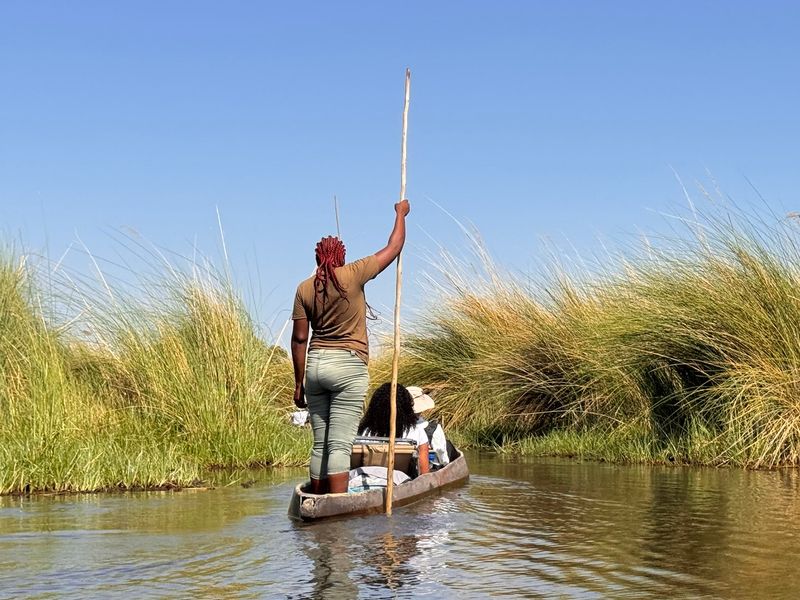
Exploring by mokoro, a traditional dugout canoe poled by a local guide, places visitors at water level among the lily pads and papyrus reeds, offering a perspective that game drives simply cannot match. The dry season from May to October concentrates wildlife around permanent water sources, making sightings frequent and often remarkably close.
7. Corcovado National Park, Puerto Jiménez, Puntarenas Province, Costa Rica
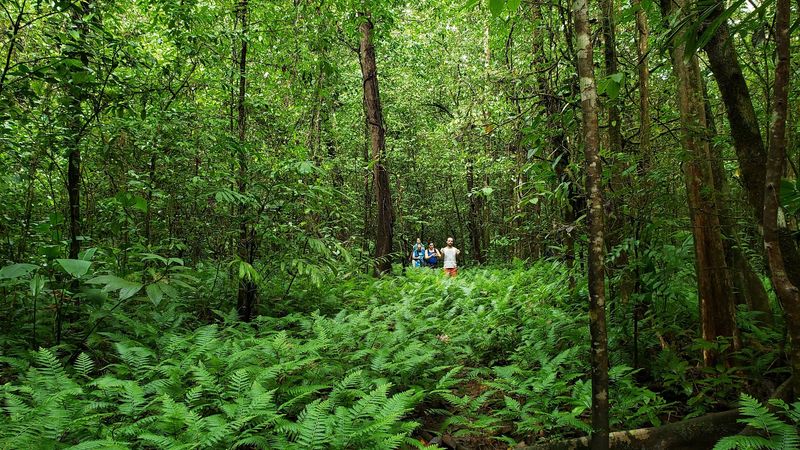
National Geographic once called Corcovado the most biologically intense place on Earth, and after spending time in its ancient rainforest, most visitors find that description hard to argue with.
Baird’s tapirs, creatures whose body plan has remained essentially unchanged for 35 million years, graze at dawn near the Sirena Ranger Station. Corcovado also holds the highest jaguar density in Costa Rica, though spotting one requires considerable luck and patience. Four monkey species, including spider, howler, squirrel, and white-faced capuchin, provide constant canopy activity overhead.
Massive emergent trees, some towering over the dense jungle canopy, create a layered forest that feels genuinely primeval. Scarlet macaws fly in mated pairs along remote beaches where rainforest meets the Pacific shoreline directly. Access requires planning, as visitor numbers are limited to protect the ecosystem, which only adds to the sense of entering somewhere truly special.
8. Yellowstone National Park, Wyoming, USA
Bison herds moving across Yellowstone’s open plains produce one of North America’s most genuinely stirring wildlife spectacles, a sight that evokes images of a continent that existed long before modern development changed everything.
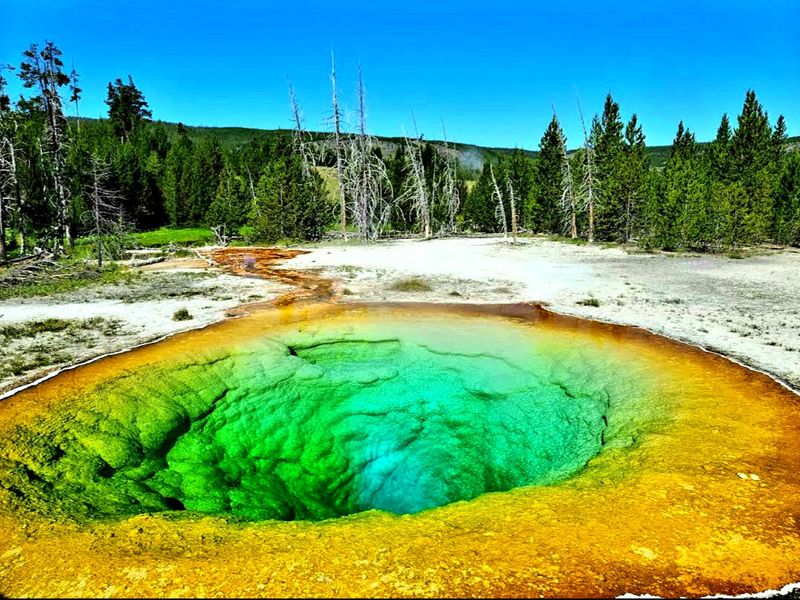
Yellowstone sits atop a supervolcano caldera, and the geothermal activity throughout the park serves as a constant reminder of the geological forces still shaping the landscape. Steaming geysers, colorful hot springs, and bubbling mudpots make the terrain feel genuinely otherworldly.
Grizzly bears, wolves, elk, and moose complete a predator-prey ecosystem that was carefully restored through decades of conservation work, including the celebrated wolf reintroduction program of 1995. The park covers over 2.2 million acres across Wyoming, Montana, and Idaho, making it large enough to sustain these wide-ranging species at viable population levels. As the world’s first national park, Yellowstone remains a benchmark for wilderness preservation globally.
9. Pantanal Matogrossense National Park, Poconé, Mato Grosso, Brazil
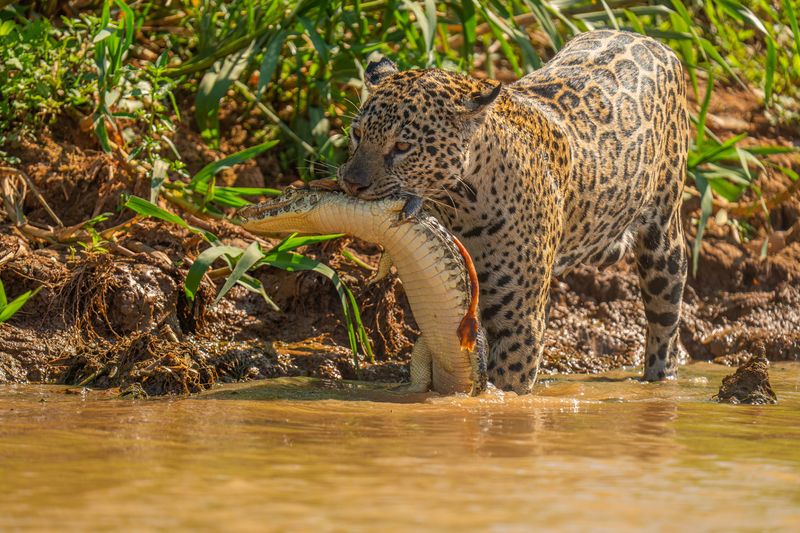
Ten million caimans. That is the estimated population of these ancient reptiles living across the Pantanal, making it one of the highest concentrations of crocodilians found anywhere on the planet.
The Pantanal also holds the world’s highest density of wild jaguars, with the riverbanks of the Cuiabá River offering some of the best big cat sightings available anywhere on Earth. Giant otters, capybaras, and hyacinth macaws round out a wildlife lineup that reads more like a greatest hits collection than a single ecosystem.
Seasonal flooding transforms the landscape between wet and dry seasons, reshaping waterways and concentrating animals around permanent water sources as conditions change. Boat safaris during the dry season from May to October deliver particularly concentrated wildlife encounters. This UNESCO World Heritage Site and Biosphere Reserve covers a sprawling tropical wetland that rewards visitors with genuine encounters at almost every turn.
10. Gunung Leuser National Park, Ketambe, Aceh, Indonesia
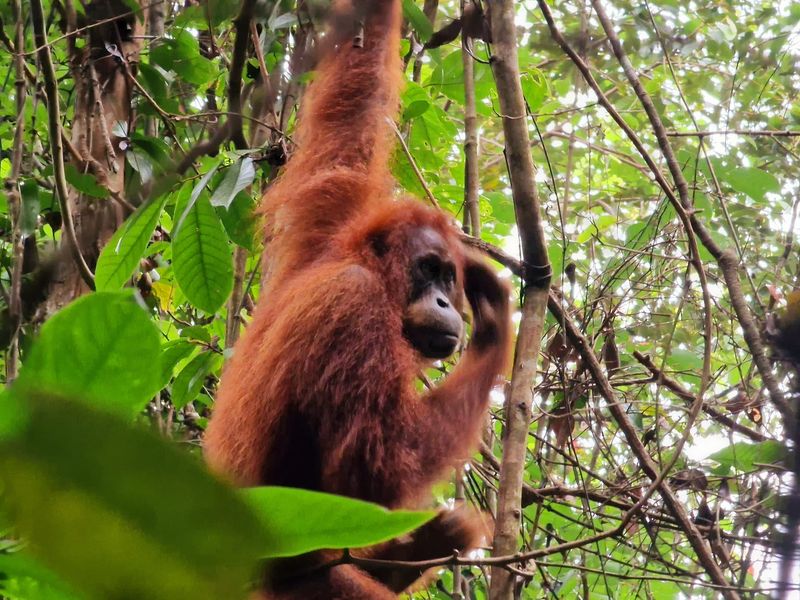
Gunung Leuser holds a distinction that no other place on Earth can claim: it is the only location where wild tigers, orangutans, elephants, and rhinos coexist in the same ecosystem. That single fact makes every other superlative about this park feel almost unnecessary.
Sumatran orangutans move through the ancient canopy with deliberate intelligence, their presence a reminder that this forest has supported complex primate life for an extraordinarily long time. Clouded leopards, sun bears, and siamangs also inhabit the dense jungle vegetation, adding further depth to an already remarkable community of species.
Giant buttress-rooted trees rise dramatically from the forest floor, creating a layered, cathedral-like environment that feels untouched by modern interference. Trekking from Ketambe leads directly into old-growth jungle where trees reach 60 meters overhead. With over 750 animal species and 10,000 plant species, this UNESCO World Heritage Site represents one of Southeast Asia’s most critical remaining wild places.
11. Ranganathittu Bird Sanctuary, Srirangapatna, Karnataka, India
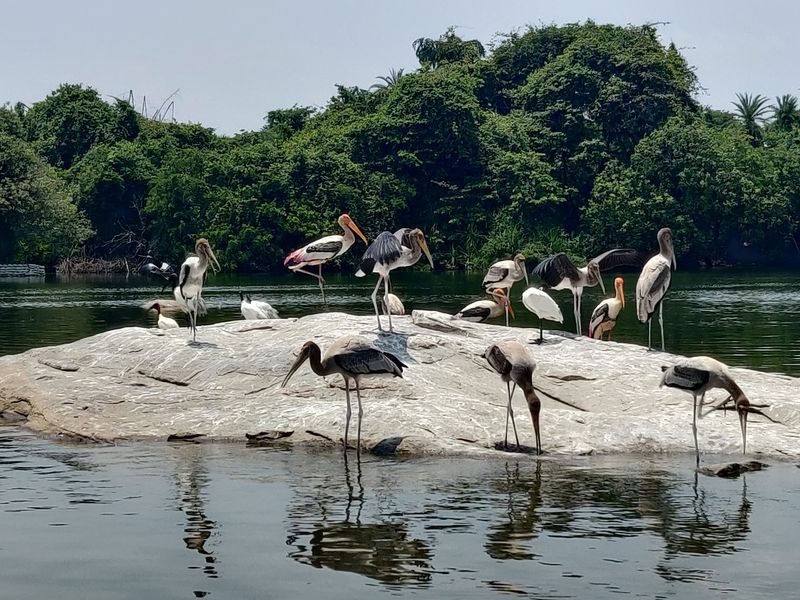
Rocky islands scattered across the Kaveri River might seem like an unlikely setting for one of India’s most vivid wildlife spectacles, but Ranganathittu Bird Sanctuary proves that great things come in compact packages.
Painted storks, spoonbills, open-billed storks, pelicans, cormorants, and darters crowd the small islets in dense nesting colonies, creating a level of avian activity that is genuinely difficult to process all at once. The sheer number of large waterbirds occupying such a small area gives the sanctuary an almost theatrical quality.
Below these busy colonies, mugger crocodiles bask motionlessly on the same rocky banks and muddy shorelines, their textured hides and ancient body plans contrasting sharply with the animated birdlife above them. Boat rides drift visitors quietly past both species, offering remarkably close views. Established in 1940, this compact sanctuary packs more prehistoric atmosphere per square kilometer than many destinations ten times its size.
12. Isimangaliso Wetland Park, St. Lucia, KwaZulu-Natal, South Africa
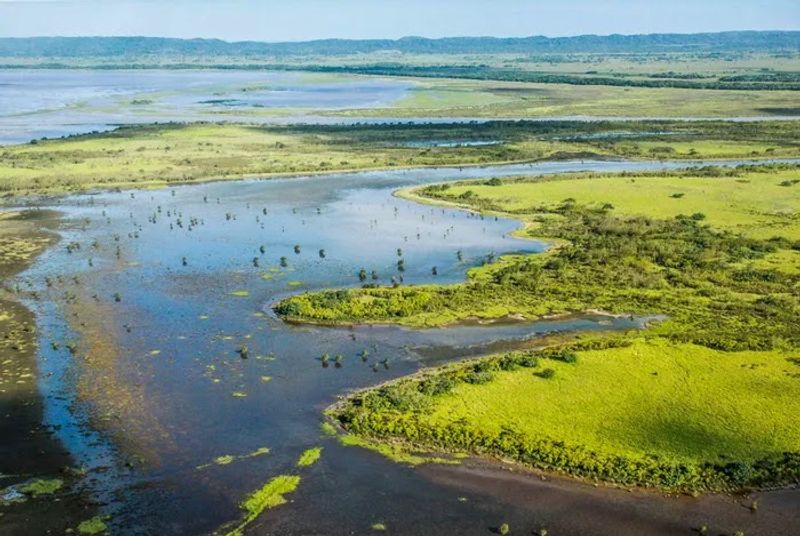
Over 800 hippos and more than 1,200 Nile crocodiles share the waters of Lake St. Lucia, an 80-kilometer-long estuary that sits at the heart of one of Africa’s most ecologically layered coastal parks.
iSimangaliso Wetland Park, whose Zulu name translates roughly to miracle and wonder, covers up to 325,000 hectares of marine, coastal, wetland, and terrestrial habitats along KwaZulu-Natal’s northeastern coastline. Coral reefs, towering coastal dunes, swamp forests, and papyrus wetlands all exist within the same protected boundary.
Leatherback and loggerhead sea turtles nest on the park’s pristine beaches each season, continuing a ritual that has played out along these shores for far longer than human memory extends. Black rhinos and elephants roam the forested interior, while over 530 bird species populate every habitat layer. Few African parks match this level of concentrated biodiversity across such varied terrain.
13. Los Haitises National Park, Sabana de la Mar, Dominican Republic
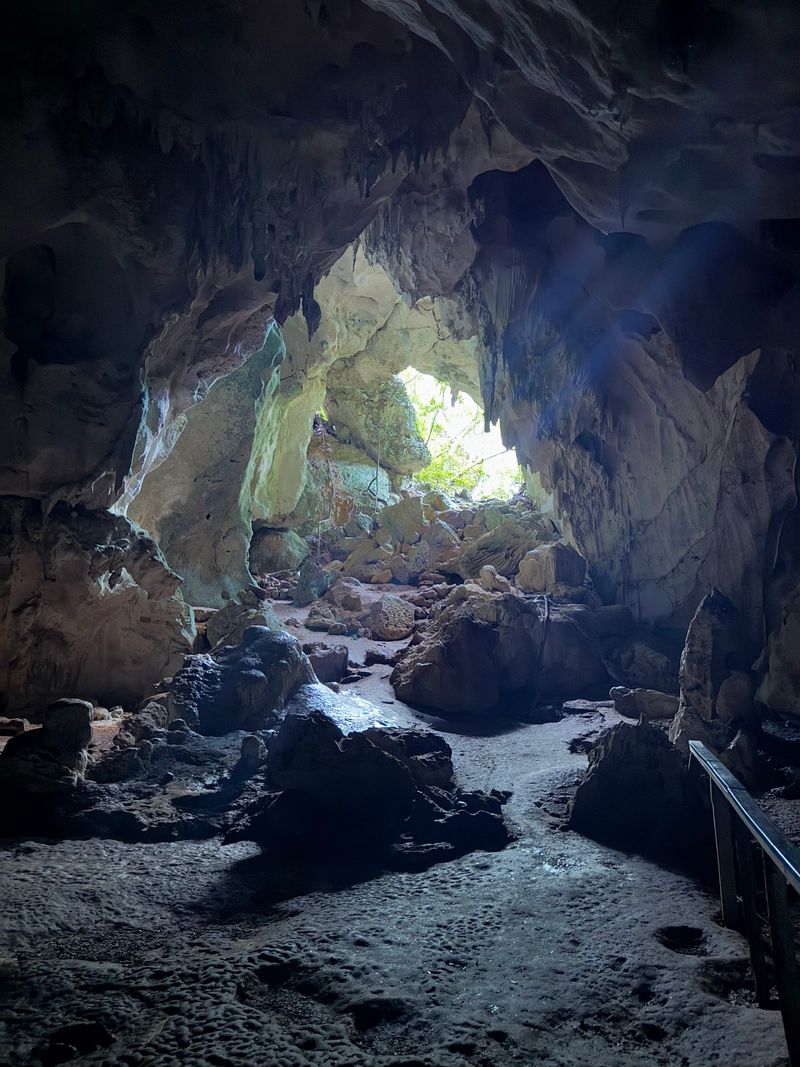
Few landscapes in the Caribbean look quite as geologically dramatic as Los Haitises, where cone-shaped limestone hills called mogotes rise sharply from sheltered bays, their steep sides draped in dense tropical vegetation.
These formations are remnants of an ancient coral reef, now standing as forested towers that create natural channels and hidden coves throughout the park. Extensive mangrove forests, among the largest in the Caribbean, line the waterways and provide critical habitat for reptiles and dozens of bird species, including frigatebirds, pelicans, herons, and the endemic Ridgway’s Hawk.
Hidden caves within the mogotes contain petroglyphs and pictographs left by the indigenous Taino people, connecting the park’s geological history with its human heritage. Manatees and bottlenose dolphins navigate the sheltered bay waters below the cliffs. Boat excursions reveal new formations and wildlife encounters around nearly every bend, making this compact Dominican park a genuinely surprising destination.
14. Kaziranga National Park, Golaghat, Assam, India
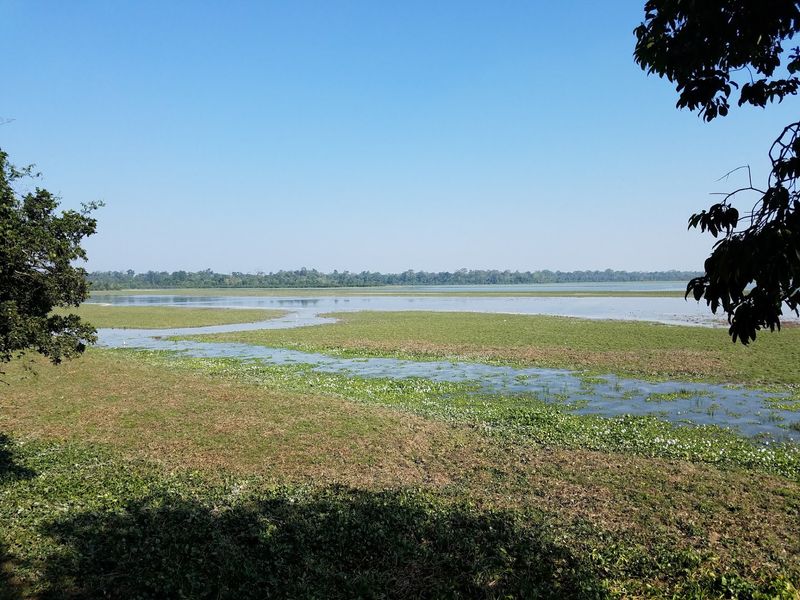
Two-thirds of the world’s entire population of greater one-horned rhinoceroses lives within the boundaries of Kaziranga National Park, making this UNESCO World Heritage Site in Assam arguably the most important rhino conservation area on the planet.
These animals, with their layered, armor-like skin and single prominent horn, look strikingly out of place in the modern world, which is precisely what makes every encounter feel extraordinary. Wild water buffalo with massive curved horns, large herds of Asian elephants, and eastern swamp deer share the park’s vast floodplains.
Kaziranga also holds the highest density of tigers among all protected areas worldwide, though the tall elephant grass makes sightings genuinely rare. Early morning jeep safaris, when mist rises over the Brahmaputra floodplains and silhouettes emerge from the grass, deliver some of the most atmospheric wildlife viewing available anywhere in South Asia.
Share this story