Imagine finding a place where every pathway feels like a sentence in a story you never want to finish. Hidden behind high stone walls in the heart of Wilmington, Delaware, there is a garden that carries a secret far more fascinating than its blooms.
A pioneering woman shaped this landscape at a time when most professional doors were slammed shut in her face, and the result is nothing short of extraordinary. The terraced grounds, classical statuary, and cascading marble staircase she left behind have outlasted nearly every obstacle thrown at them.
What you are about to read is the full story of a garden that almost vanished forever, the trailblazing architect who created it, and exactly why it deserves a spot on every nature lover’s travel list.
A Stroll Through Time in Wilmington’s Green Heart
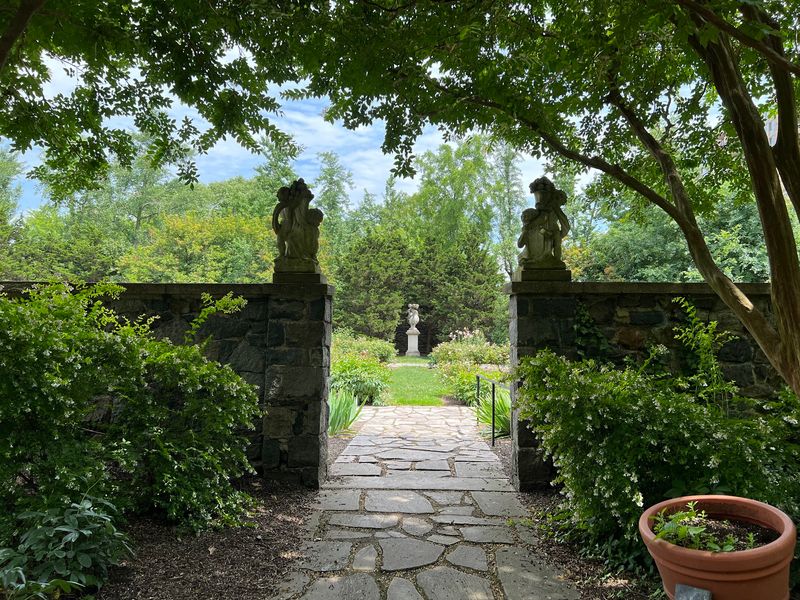
My adventure brought me to a truly enchanting destination, one that quietly holds a significant place in American landscape history. The Marian Coffin Gardens at Gibraltar sit at 1405 Greenhill Ave, Wilmington, DE 19806, tucked inside a residential neighborhood that gives almost no hint of the grandeur waiting beyond its stone perimeter walls.
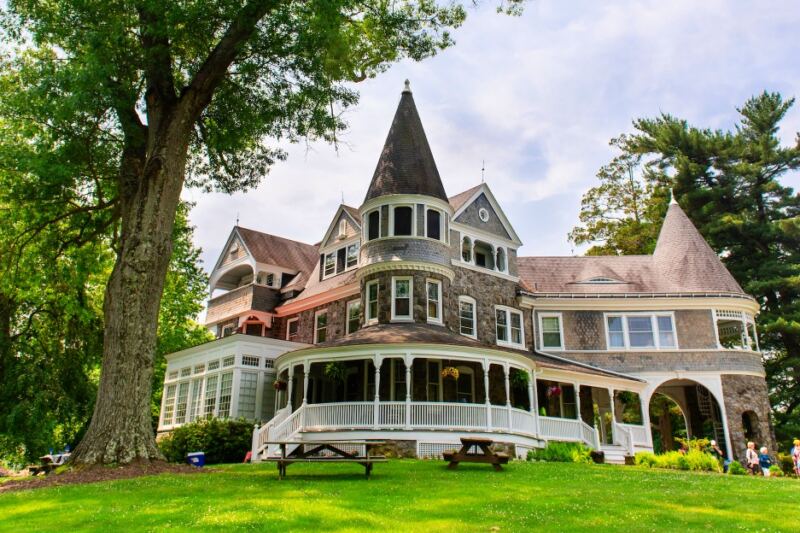
The estate itself traces its roots back to around 1840, when John Rodney Brinckle, a grandnephew of founding father Caesar Rodney, originally built the property. Hugh Rodney Sharp and his wife, Isabella Mathieu du Pont Sharp, purchased it in 1909 and began expanding it with new wings, a conservatory, a greenhouse, and a swimming pool.
Their foresight eventually led to commissioning Marian Coffin in 1916, a decision that would define the estate for over a century. Preservation Delaware, a non-profit dedicated to protecting historic sites, now stewards these grounds, keeping Coffin’s original vision accessible to all.
Arriving here, even on an ordinary Tuesday, feels quietly cinematic.
The Maverick Mind Behind the Masterpiece
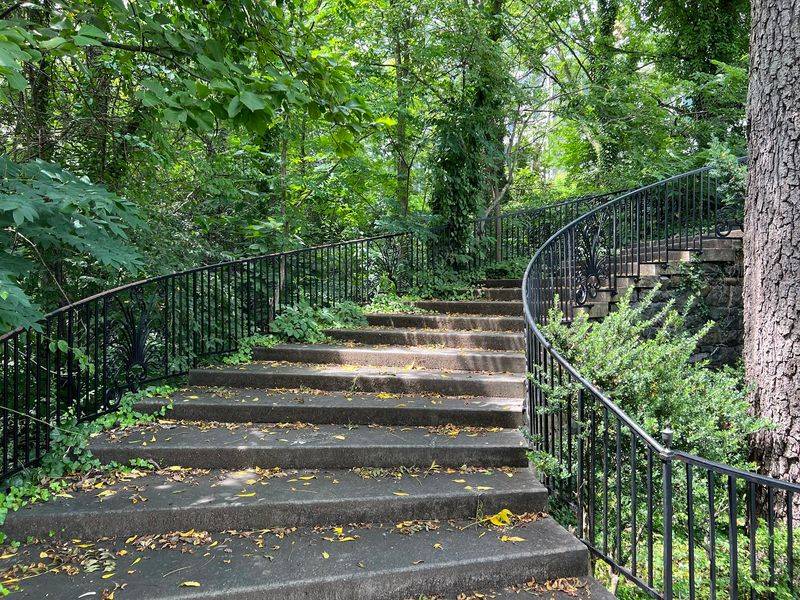
Few names in American landscape design carry as much quiet power as Marian Cruger Coffin. Born in 1876, she became one of the very first women to build a professional career in landscape architecture, a field that was almost entirely controlled by men at the time.
Her path was not straightforward. She enrolled at the Massachusetts Institute of Technology in 1901, joining a program where only four women were present.
After being turned down by established firms, she opened her own practice in New York City in 1905 and quickly earned a reputation for imaginative, finely proportioned designs.
Coffin became a Fellow of the American Society of Landscape Architects in 1918 and went on to design over 130 commissions for clients including the Fricks, Vanderbilts, and du Ponts. She also insisted on equal pay for her team, actively creating opportunities for women in the field.
Her career was, in the most literal sense, groundbreaking.
Terraces That Would Make Florence Jealous
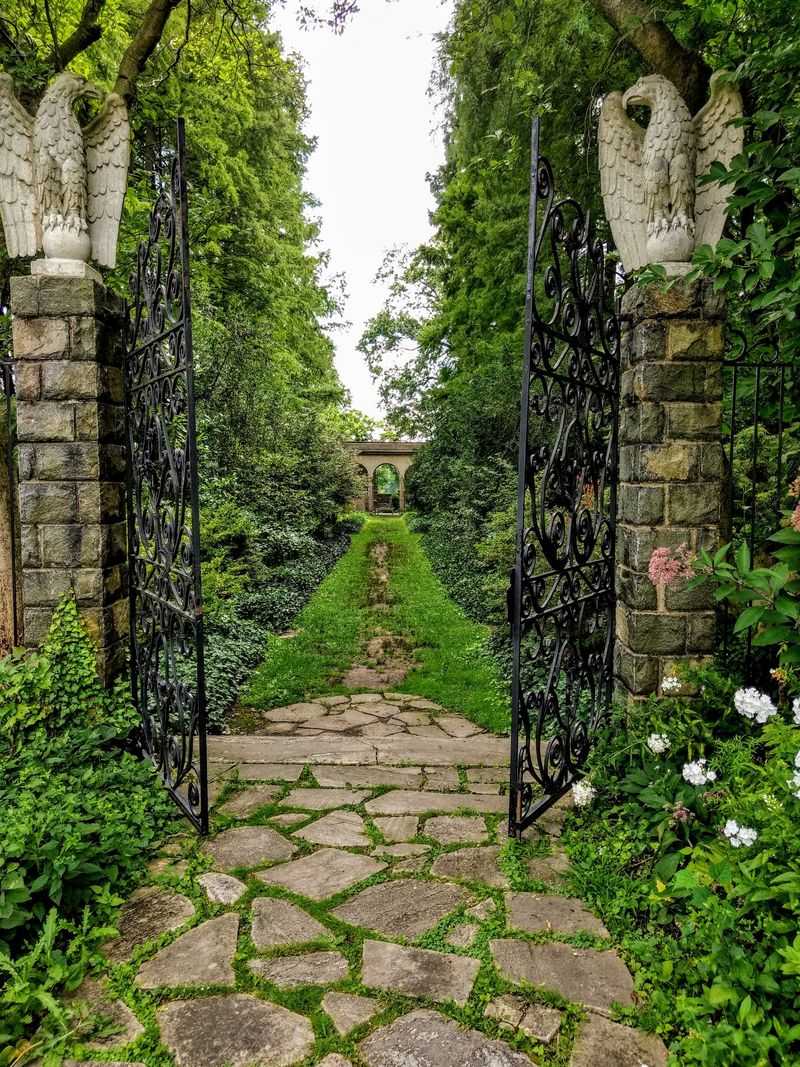
The moment you begin descending through the garden’s levels, the Italian Beaux-Arts inspiration becomes impossible to miss. Coffin envisioned the space not as a single open lawn but as a series of outdoor rooms and hallways, each carrying its own mood and purpose, all flowing together with deliberate elegance.
A dramatic thirty-foot drop connects the mansion terrace to the lower garden, bridged by three parallel terraces that cascade in a way that feels both grand and surprisingly intimate. The retaining walls are built from Brandywine granite, giving the structure a rugged permanence that contrasts beautifully with the soft seasonal plantings.
Coffin’s design philosophy centered on a clear axial relationship between the house and the garden, with every path, wall, and planting bed carefully proportioned to serve that connection. The result is a landscape that feels composed rather than accidental, like a piece of architecture you can actually walk through and smell.
The next layer of this story involves stone, marble, and a staircase worth every step.
The Marble Staircase That Steals Every Scene
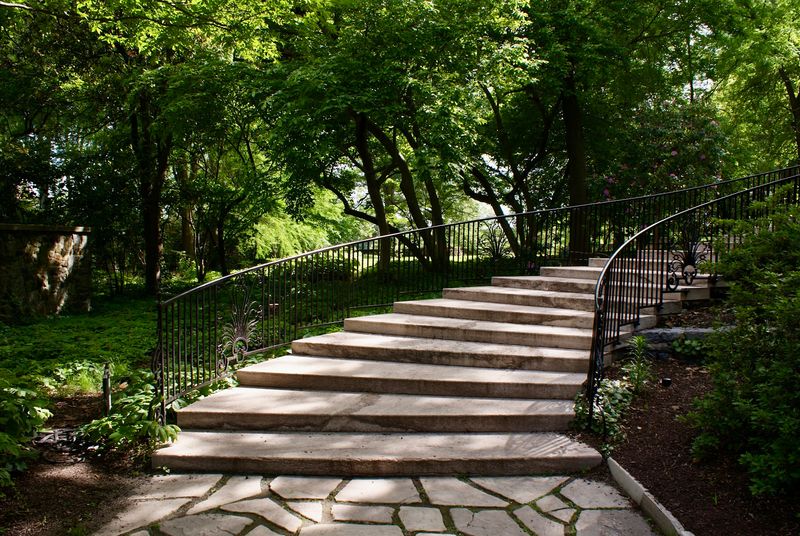
Of all the architectural moments within the Marian Coffin Gardens, the marble staircase is the one that stops visitors mid-stride. It curves gracefully downward from the mansion terrace to the main flower garden below, functioning as both a practical connector and a visual centerpiece that draws the eye through the entire composition.
Coffin understood that a staircase could be more than a way to move between levels. Here, it serves as an invitation, a sculpted gesture that says the best part is still ahead.
The sweeping curve creates a sense of theatrical arrival, especially when the surrounding flower beds are in full seasonal bloom.
Restoration teams used Coffin’s original 1916 plans to refurbish the staircase during the late 1990s revival project, ensuring that what visitors see today matches her intention as closely as possible. Running your hand along the cool marble railing on a warm spring afternoon is one of those small, quietly satisfying moments that stays with you long after you leave the garden behind.
Silent Guardians: The Statuary That Tells Its Own Story
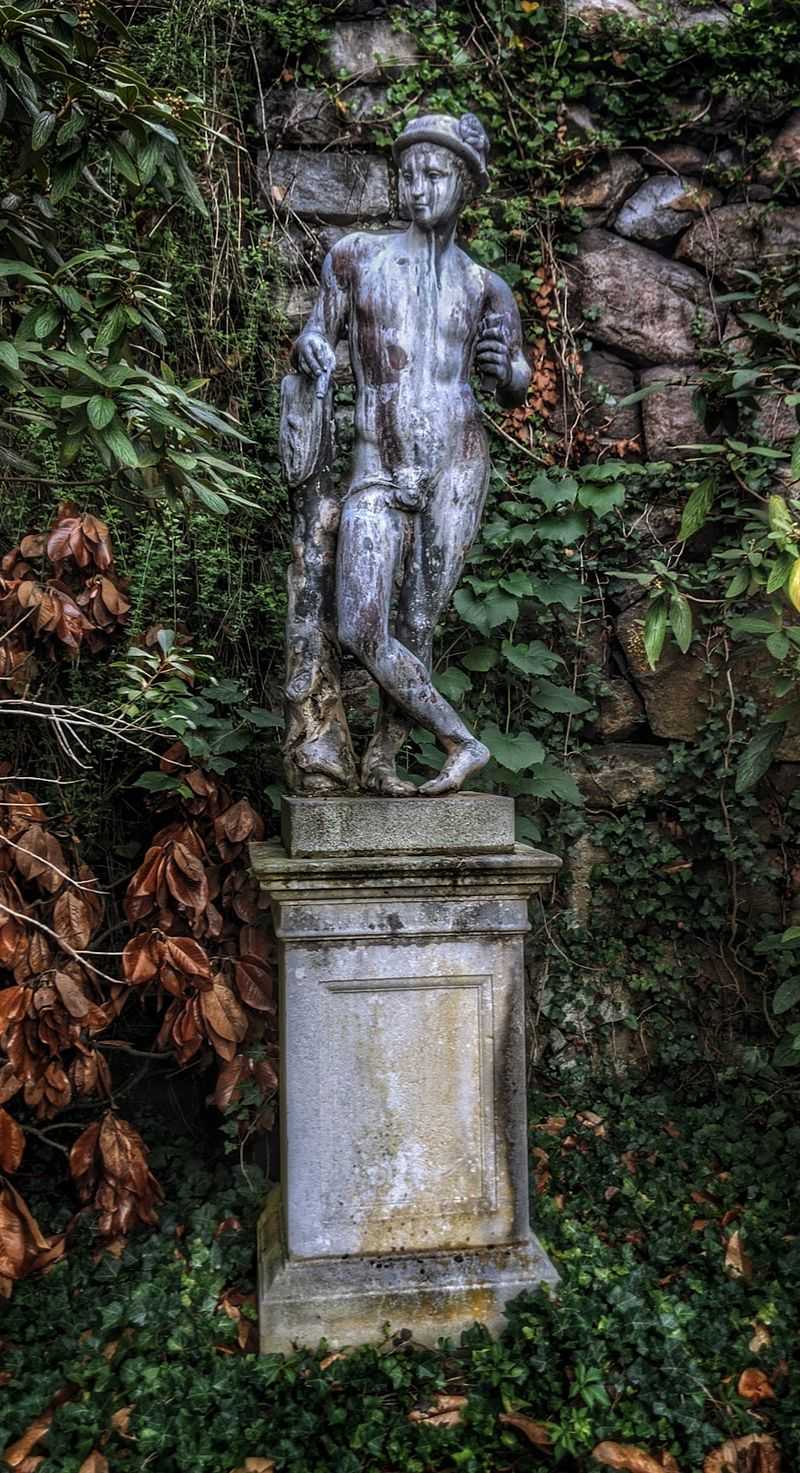
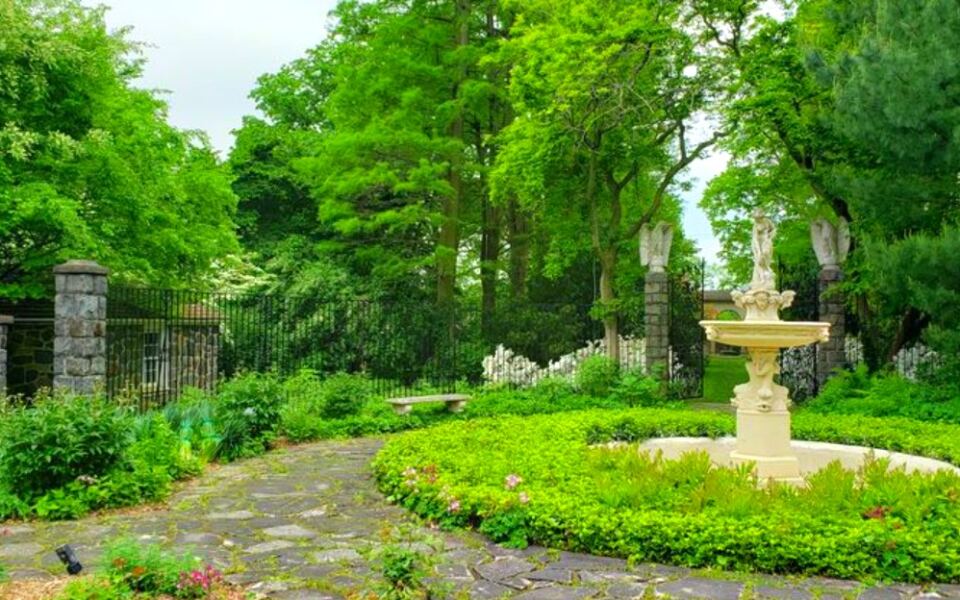
The statues at Gibraltar are not decoration in the casual sense. They are structural elements of Coffin’s design, placed at the ends of sight lines, within carved niches, and beside tranquil pools to create moments of pause and visual punctuation throughout the landscape.
Hugh and Isabella Sharp were avid world travelers who personally selected many of these marble figures during trips abroad. Coffin provided guidance on the types of pieces to seek and occasionally traveled alongside the Sharps to ensure each statue would integrate harmoniously with her overall scheme.
The result is a collection that feels curated rather than collected.
A restored Venus Bathing fountain anchors the main flower garden, adding a mythological dimension to the seasonal blooms surrounding it. The weathered patina on many of the figures gives them a sense of age and authenticity that no new installation could replicate.
Standing beside one of these figures on a quiet weekday morning, with birdsong as the only soundtrack, is genuinely one of the more memorable experiences the garden offers.
From Near Demolition to Full Revival
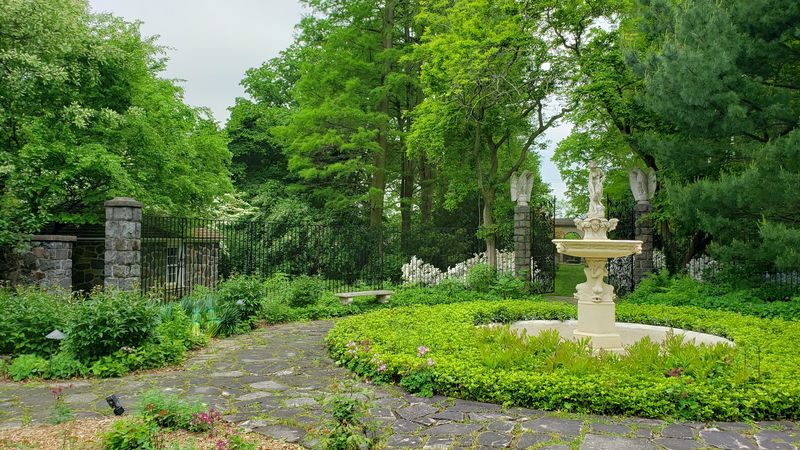
The story of how these gardens survived is almost as compelling as the story of how they were built. After Hugh and Isabella Sharp passed away, their son inherited the estate but did not share his parents’ devotion to it.
By the 1990s, both the mansion and gardens had fallen into serious disrepair, with overgrown vegetation swallowing many of Coffin’s carefully planned features.
By 1998, the property faced a recommendation for demolition, a prospect that alarmed preservationists across the region. Preservation Delaware, joined by local community groups, stepped in and launched a painstaking restoration effort beginning in 1999.
Researchers worked directly from Coffin’s original 1916 plans, replacing invasive growth with historically appropriate plantings and repairing statues, pathways, and architectural elements with careful attention to authenticity.
The conservatory was completely rebuilt, and the reflecting pool was restored to its intended splendor. Today, Gibraltar is described by preservation experts as the most accurately recreated example of Coffin’s landscape work anywhere in the country.
That kind of resurrection deserves more than a passing glance.
Water, Lotuses, and a Reflecting Pool With a Past
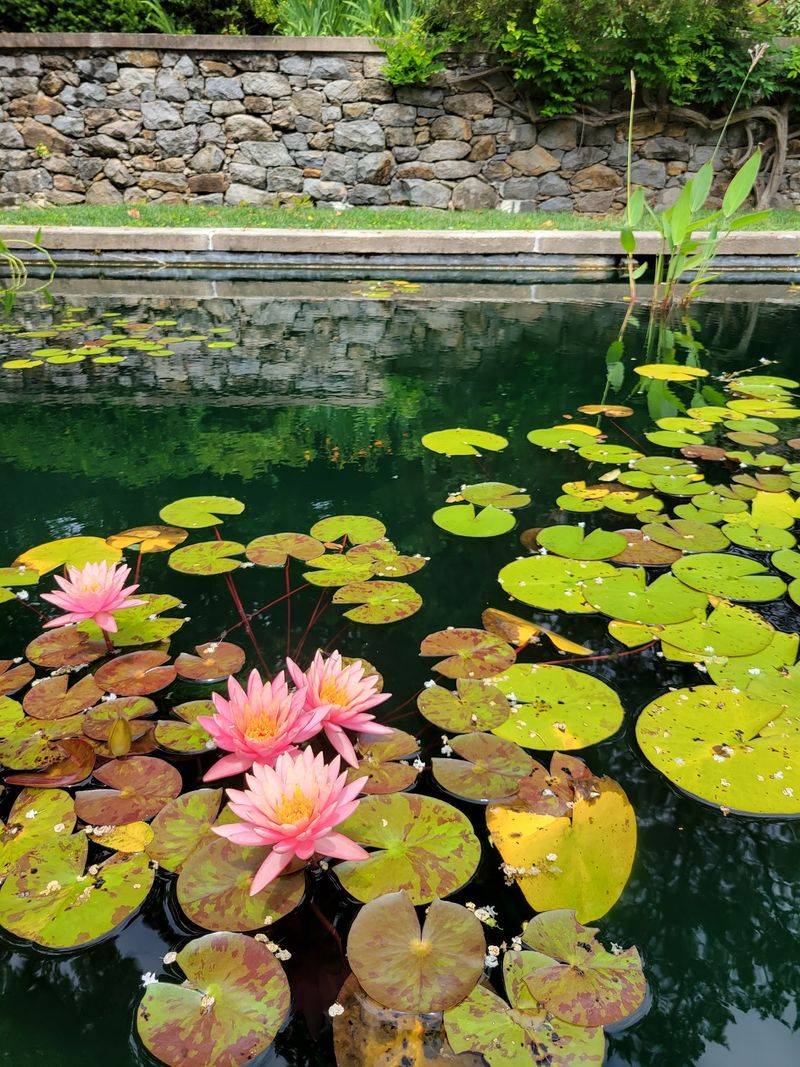
What was once a swimming pool installed by Hugh Rodney Sharp has been thoughtfully reimagined as one of the garden’s most peaceful features. The reflecting pool now shimmers with lotus blossoms, water lilies, and resident koi fish, creating a miniature aquatic ecosystem that attracts dragonflies, frogs, and the occasional curious visitor who simply sits and stares for longer than planned.
The transformation from lap pool to reflective water feature was a smart preservation choice, honoring the site’s history while aligning the space more closely with Coffin’s classical aesthetic. The still surface mirrors the surrounding foliage and sky, changing its mood entirely depending on the time of day and season.
Early morning visits are particularly rewarding here, when the light is low and the water surface catches the colors of the surrounding plantings in a way that feels almost painted. The gentle sounds of the water and the distant chirp of birds make this corner of the garden one of the most instinctively calming spots in all of Wilmington.
The towering trees nearby only add to that feeling.
The Bald Cypress Allee: A Cathedral of Living Wood
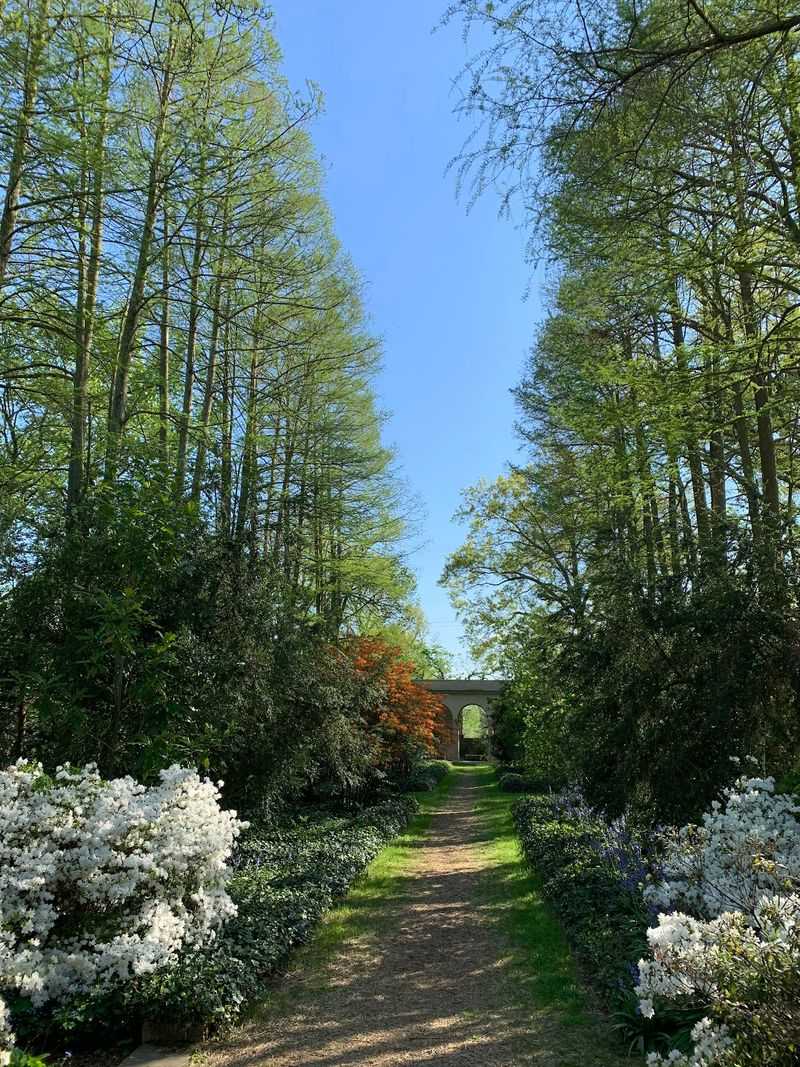
Few features in the Marian Coffin Gardens command attention quite like the Bald Cypress Allee. This 200-foot-long walkway is lined with towering bald cypress trees that were originally planted by the Sharps in the 1920s, and their scale today is genuinely impressive, creating a canopied corridor that feels both monumental and intimate at the same time.
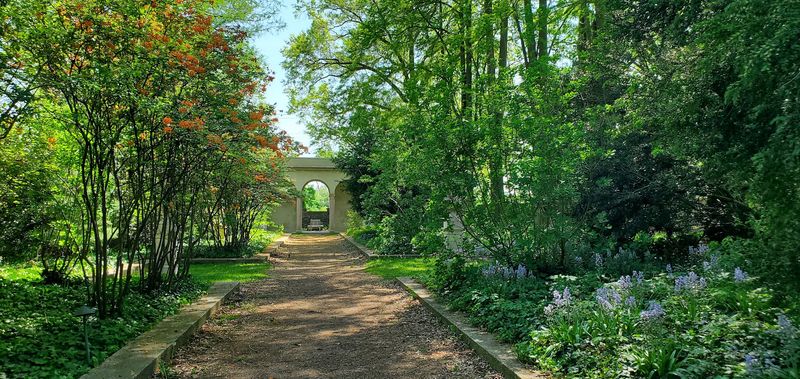
The allee guides both the eye and the footsteps toward a large fountain and the charming teahouse at its far end. The high colonnaded archways of the teahouse frame the view back down the avenue, offering one of the most photogenic vantage points on the entire property.
Restoration teams worked carefully to bring this historic avenue back to the condition Coffin would have recognized.
The interplay of dappled light filtering through the cypress branches changes with every passing cloud, making the allee a different experience at different times of day. Photographers tend to linger here, and it is easy to understand why.
The teahouse itself adds another quiet layer of history that rewards a closer look.
A Garden That Blooms in Every Season
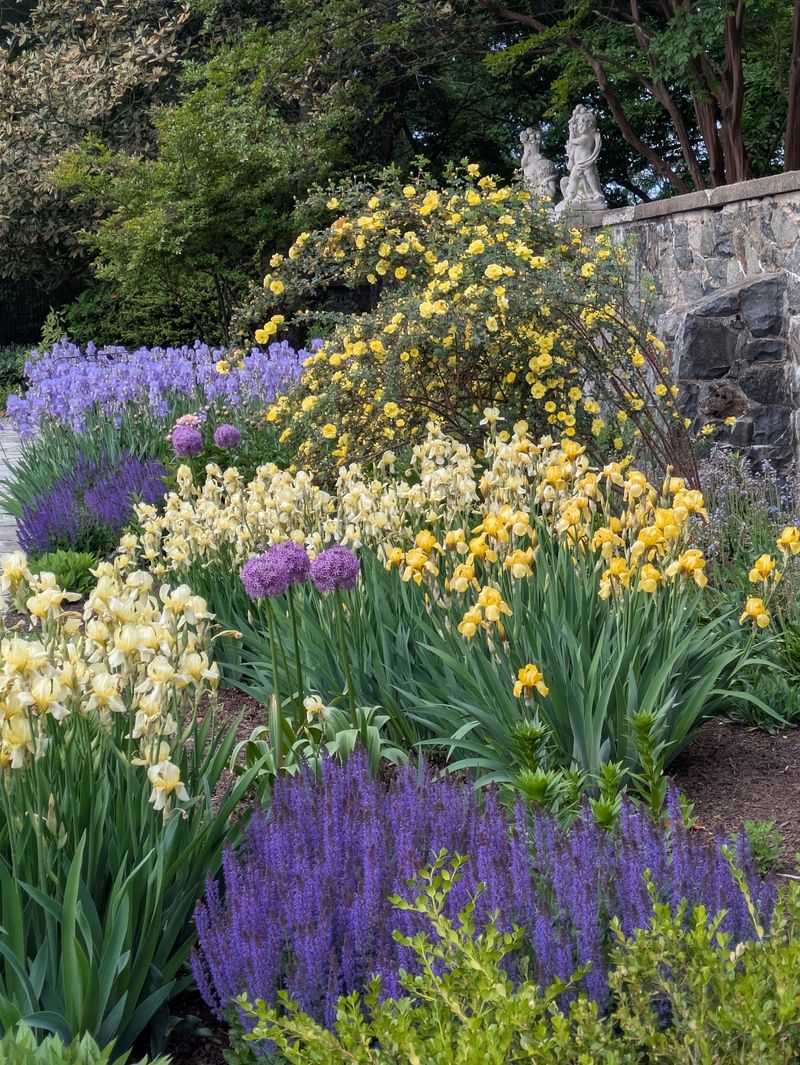
One of the most underrated qualities of these gardens is their refusal to peak at just one moment in the calendar. Coffin’s deep horticultural knowledge shaped a planting scheme that ensures something visually rewarding is always happening, regardless of when you visit.
Spring brings azaleas, magnolias, Spanish bluebells, and tulips, painting the terraces with vivid color. Late spring adds peonies and iris, both of which Coffin used extensively in her designs.
Early summer introduces fragrant roses, lamb’s ear, purple catmint, and water lilies, while midsummer delivers crape myrtles, Asian lilies, gladiolus, and the striking blackberry lily known botanically as Belamcanda chinensis.
Autumn softens the palette with warm foliage tones before the garden settles into its quieter winter state. Each seasonal shift reveals a different personality within the same structured framework, which is a testament to how thoughtfully the original planting plan was conceived.
Visitors who return in a different season often feel like they are seeing an entirely new garden, which is, frankly, one of the best reasons to come back.
Everything You Need to Know Before You Go
The practical details for visiting the Marian Coffin Gardens at Gibraltar are refreshingly straightforward. The gardens are open seven days a week from 8 AM to 7:35 PM, and admission is completely free, making this one of the most accessible historic landscapes in the entire Mid-Atlantic region.
Guided tours are available on select days for a modest fee, offering deeper context about Coffin’s design philosophy and the restoration story. Saturday tours require reservations, while weekday tours often welcome walk-ins.
The garden can be reached by phone at 302-322-7100, and more information is available at gibraltargardens.org.
Parking is available along Greenhill Avenue and West 14th Street, though it is limited, so arriving early is a practical move. Pets are not permitted inside the garden, and large groups and food are also not allowed.
Some of the original stone pathways have wider gaps between stones, so comfortable, sturdy footwear is a smart choice. A donation box is available on-site, and contributions go directly toward maintaining these irreplaceable grounds for future generations.
Share this story