Many people in the United States grew up eating what they thought was authentic Chinese food, but there’s a surprising truth behind some of the most popular dishes. A lot of the “Chinese” food served at American restaurants was actually created in the U.S., often adapted to suit local tastes.
These dishes can be delicious, but you won’t find them on menus in China. Here’s a look at 10 beloved American-Chinese foods that would likely confuse a chef in Beijing or Shanghai.
1. Crab Rangoon
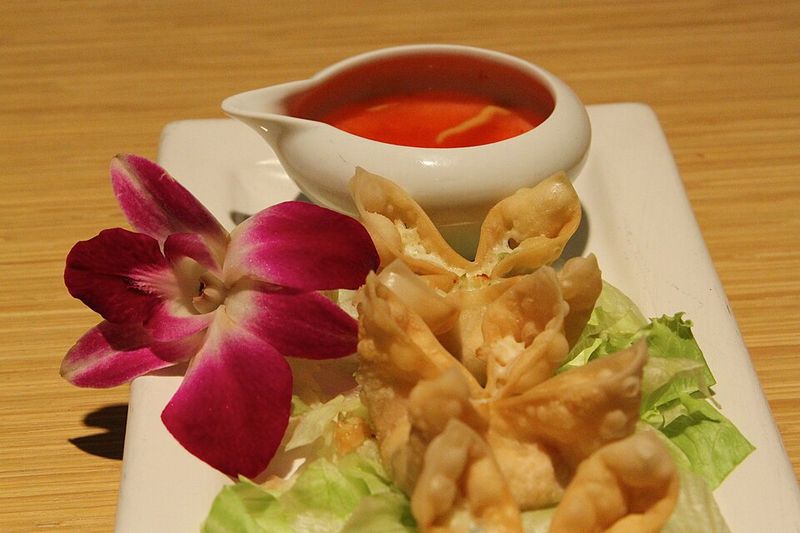
Crispy on the outside, creamy on the inside, crab rangoon is a fan favorite at American Chinese restaurants. The filling usually combines cream cheese with imitation crab, which is then wrapped in a wonton skin and deep-fried until golden.
It sounds indulgent because it absolutely is.
Here’s the fun part: cream cheese is not a traditional ingredient in Chinese cooking at all. Chinese cuisine rarely uses dairy products, so the idea of stuffing a wonton with cream cheese would seem very unusual to most people in China.
The dish is believed to have been invented in the United States, possibly at the Trader Vic’s restaurant chain in the 1950s.
Crab rangoon has become so popular in America that many people genuinely assume it’s a classic Chinese dish. Head to any city in China, though, and you’ll search menus in vain trying to find it.
2. Orange Chicken
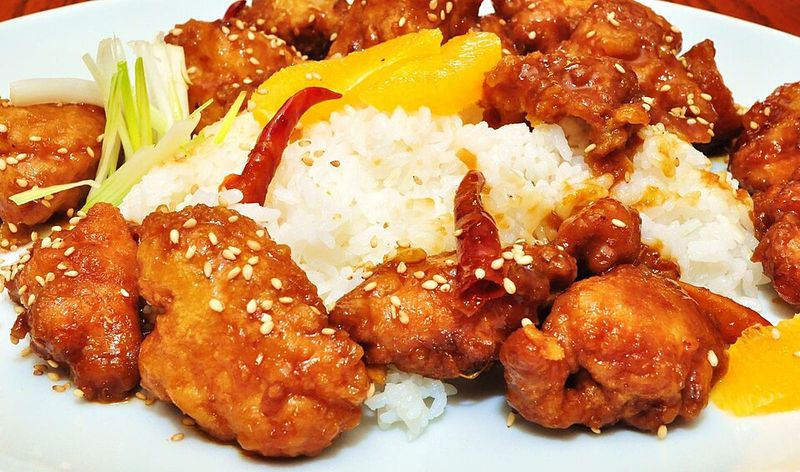
Sweet, sticky, tangy, and totally addictive, orange chicken is probably one of the most recognized dishes in American Chinese cuisine. Chunks of battered, fried chicken are tossed in a bright orange-flavored sauce that balances sweetness with a hint of citrus.
It’s comfort food at its finest.
The dish was created in 1987 by Chef Andy Kao at a Panda Express in Hawaii. It was designed specifically for American palates, which tend to favor sweeter, bolder flavors.
The sauce is far sweeter and thicker than anything you’d typically find in traditional Chinese cooking.
In China, citrus-flavored chicken dishes do exist, but they taste very different from the American version. The original Chinese inspirations are more savory and much less sweet.
Orange chicken as Americans know it, that glossy, caramelized fast-food version, is a genuinely American creation that has little resemblance to its distant Chinese cousins.
3. American-Style General Tso’s Chicken
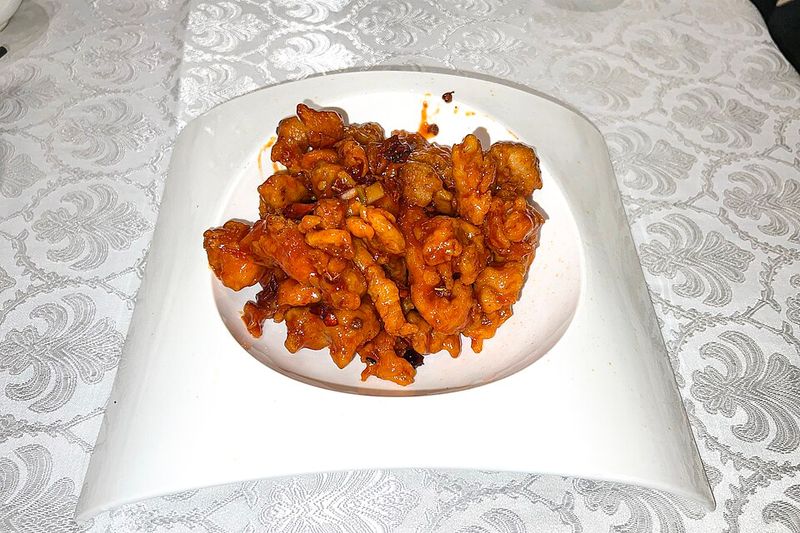
Named after a 19th-century Chinese military leader, General Tso’s Chicken sounds like it has deep historical roots. The reality is much more recent and much more American.
This dish of crispy fried chicken in a sweet, spicy, dark sauce was popularized in New York City during the 1970s.
Chef Peng Chang-kuei is often credited with creating an early version of the dish, but the sweet, heavily sauced American version evolved separately to appeal to U.S. diners. The documentary “The Search for General Tso” explored just how murky the dish’s origins really are.
Most food historians agree the American version is its own unique creation.
People in China are generally unfamiliar with General Tso’s Chicken as Americans know it. Some restaurants in major Chinese cities now serve it as a novelty for tourists, but it does not appear on traditional menus.
It remains a proudly American invention wearing a Chinese name.
4. Sesame Chicken
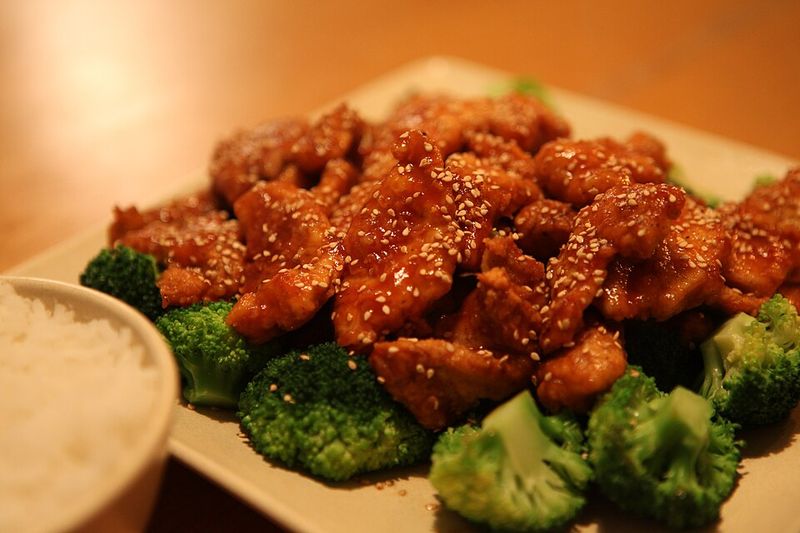
Sesame chicken looks a lot like General Tso’s Chicken, and the two are often confused. The key difference is the sauce: sesame chicken tends to be sweeter and milder, with a distinct toasted sesame flavor.
Both are deep-fried, sauced, and completely at home on an American Chinese takeout menu.
Sesame is used in Chinese cooking, particularly in northern China, but not in this specific sweet, deep-fried format. The American version leans heavily into sugar and a thick, glossy sauce that coats every piece of chicken generously.
That kind of sweetness is a hallmark of American Chinese cooking, not traditional Chinese cuisine.
Order sesame chicken in a restaurant in China and you might get something entirely different, perhaps a cold sesame noodle dish or a lightly dressed salad. The American version, with its crunchy battered chicken and syrupy sauce, simply does not exist there in the same way.
5. Chinese Chicken Salad
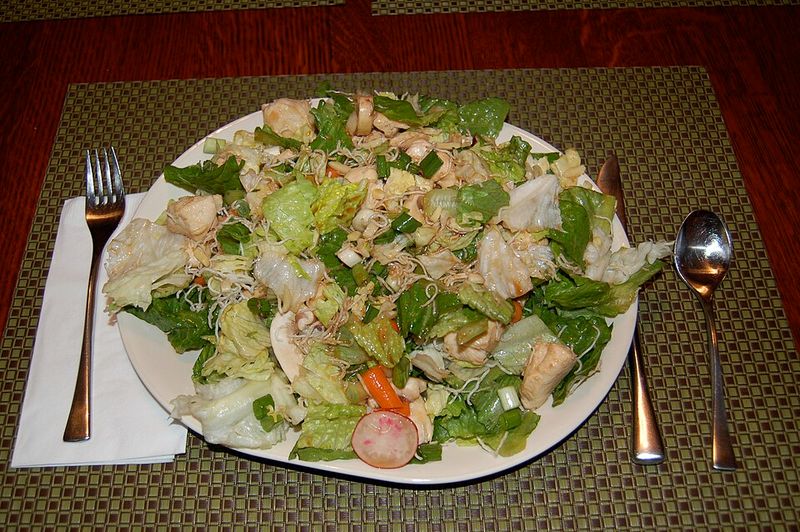
Walk into any casual American restaurant and you’ll likely find Chinese Chicken Salad on the menu. It’s a refreshing mix of shredded chicken, cabbage, mandarin oranges, crispy noodles, and sesame dressing.
The combination feels light and flavorful, and it’s been a staple of American dining since the 1960s.
Wolfgang Puck is often credited with popularizing a version of this salad at his restaurant Spago in Los Angeles. It caught on quickly because it combined familiar American salad ingredients with Asian-inspired flavors like sesame and soy.
The result was something entirely new, not a dish borrowed from China.
Traditional Chinese cuisine does include cold vegetable dishes and salads, but nothing quite resembles this version. The combination of mandarin oranges, crunchy wonton strips, and creamy sesame dressing is a thoroughly American creation.
You’d be hard-pressed to find anything similar on a restaurant menu in any Chinese city.
6. American-Style Egg Rolls
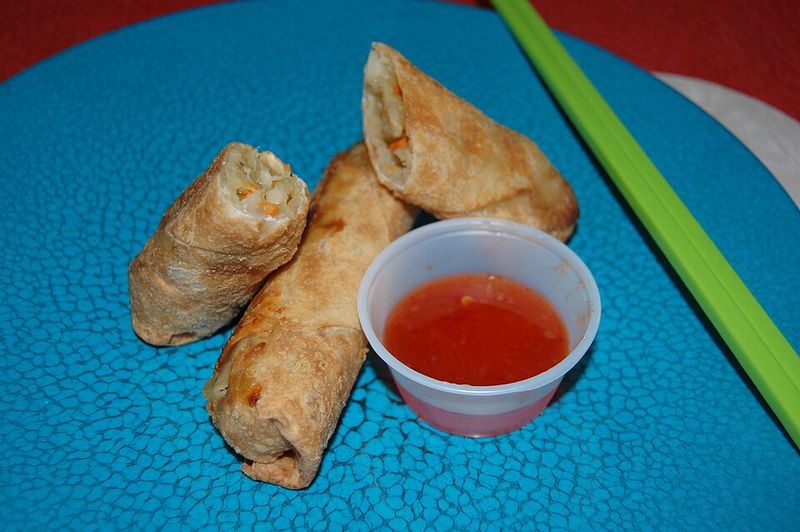
Egg rolls are one of the most ordered appetizers at American Chinese restaurants. Thick, crunchy, and filled with cabbage, pork, and sometimes shrimp, they come with packets of duck sauce and spicy mustard on the side.
They’re deeply satisfying and feel like a natural part of the Chinese food experience in America.
China does have spring rolls, which are thinner, lighter, and typically less greasy. The American egg roll is much bigger, with a thicker, chewier wrapper that gets extra crunchy when fried.
The filling and the wrapper are both quite different from the Chinese original. Duck sauce, that sweet orange condiment, is also an American invention with no equivalent in China.
The American egg roll evolved from Chinese spring roll traditions brought over by early immigrants, then changed significantly to suit American tastes. The thick-wrapped, heavily filled version you get at a takeout counter today is a genuinely American food, shaped by generations of Chinese-American cooks.
7. Fortune Cookies
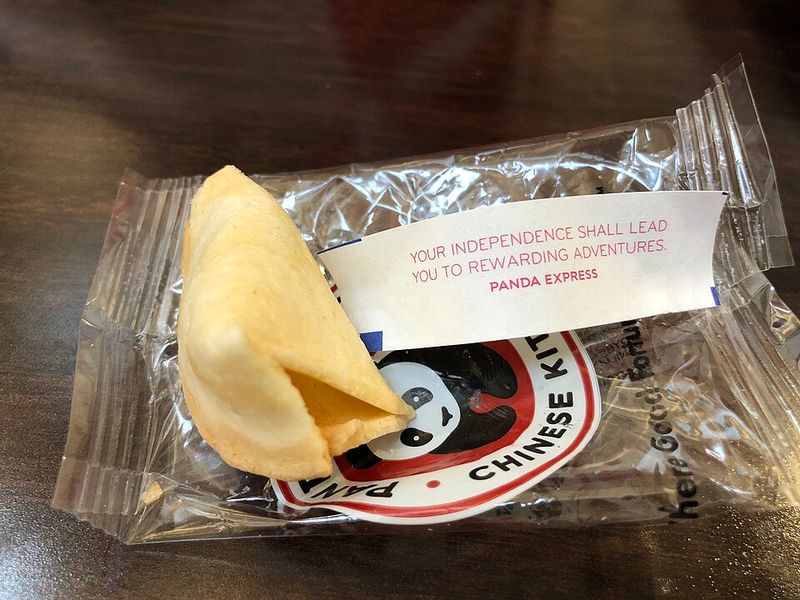
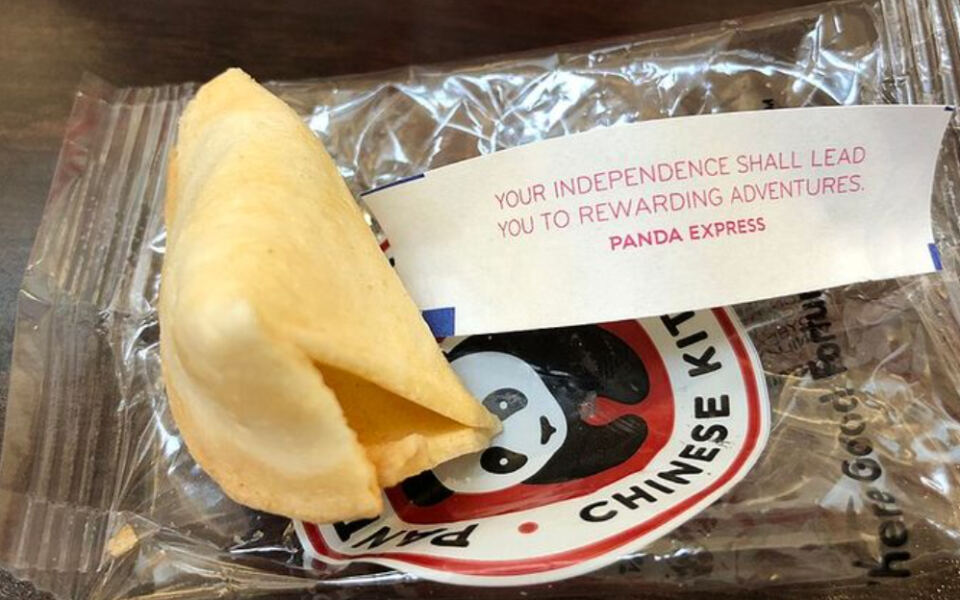
Ask anyone in China about fortune cookies and you’ll likely get a blank stare. These crispy, folded cookies with little paper messages inside are almost entirely an American invention.
Despite their association with Chinese restaurants in the U.S., they have almost no connection to Chinese culinary tradition.
The true origin is actually debated between Japanese and Chinese immigrants in California during the early 1900s. Some food historians credit a Japanese immigrant named Makoto Hagiwara, while others point to Chinese-American restaurateur David Jung.
Either way, China was not involved.
Fortune cookies became a staple in American Chinese restaurants after World War II and have stayed ever since. They are rarely found anywhere in mainland China.
If you showed up in a restaurant in Chengdu expecting one after your meal, the staff would probably have no idea what you were talking about.
8. American-Style Sweet and Sour Chicken
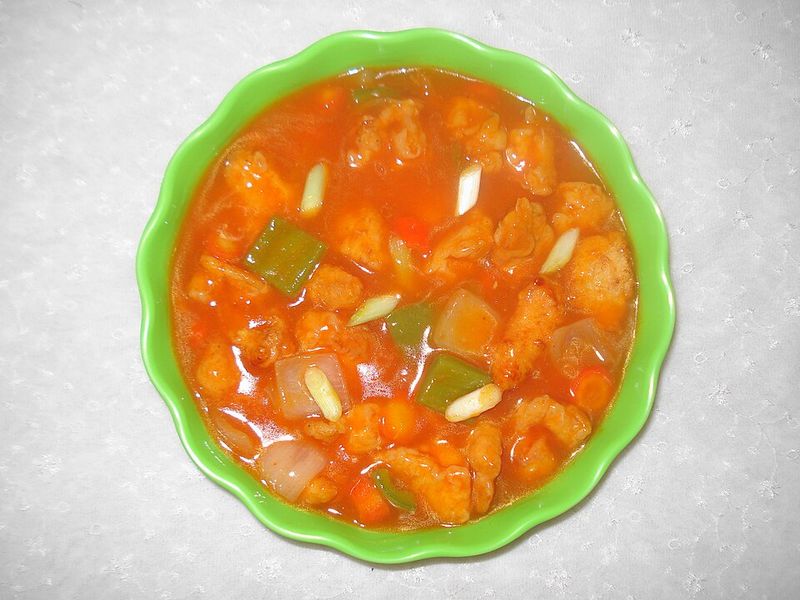
Bright red sauce, pineapple chunks, and battered chicken: American-style sweet and sour chicken is a vivid and unmistakable dish. The sauce is thick, sugary, and tangy, often made with ketchup, vinegar, and sugar.
It’s a staple of American Chinese takeout and has been for decades.
China does have sweet and sour dishes, most famously sweet and sour pork from Cantonese cuisine. However, the Chinese version is much more balanced in flavor, using less sugar and a lighter sauce.
The American version cranks up the sweetness and adds ingredients like maraschino cherries and canned pineapple that simply don’t appear in Chinese cooking.
The heavy use of ketchup in the sauce is a particular giveaway that this dish was adapted for American tastes. Many Chinese people visiting the U.S. are surprised by how sweet and intensely colored the dish is.
The American version has evolved so far from its origins that it’s essentially a new dish entirely.
9. American-Style Beef and Broccoli
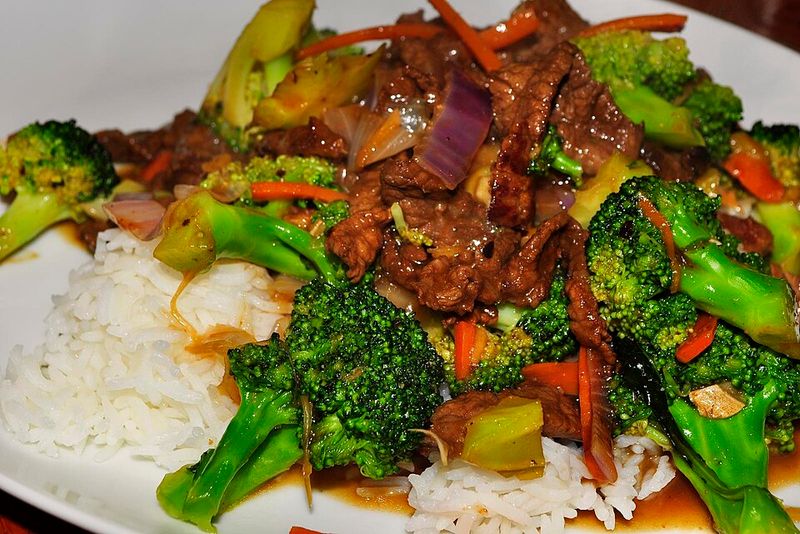
Beef and broccoli is one of the most ordered dishes at American Chinese restaurants, and it’s easy to see why. Tender slices of beef, bright green broccoli, and a savory brown sauce make for a hearty, satisfying meal.
It feels wholesome and balanced, which is part of its lasting appeal.
Broccoli as Americans know it is not commonly used in traditional Chinese cooking. Chinese cooks typically use Chinese broccoli, called gai lan, which has thinner stems, smaller florets, and a slightly more bitter flavor.
The American version substitutes Western broccoli because it was more readily available to early Chinese-American restaurant owners.
The dish likely evolved from Chinese-American communities adapting their cooking to local ingredients and customer preferences. The result is something that reads as Chinese but is shaped by American availability and taste.
In China, you’d find gai lan stir-fries, but the specific combination served at American takeout spots simply doesn’t have a direct equivalent there.
10. Chop Suey
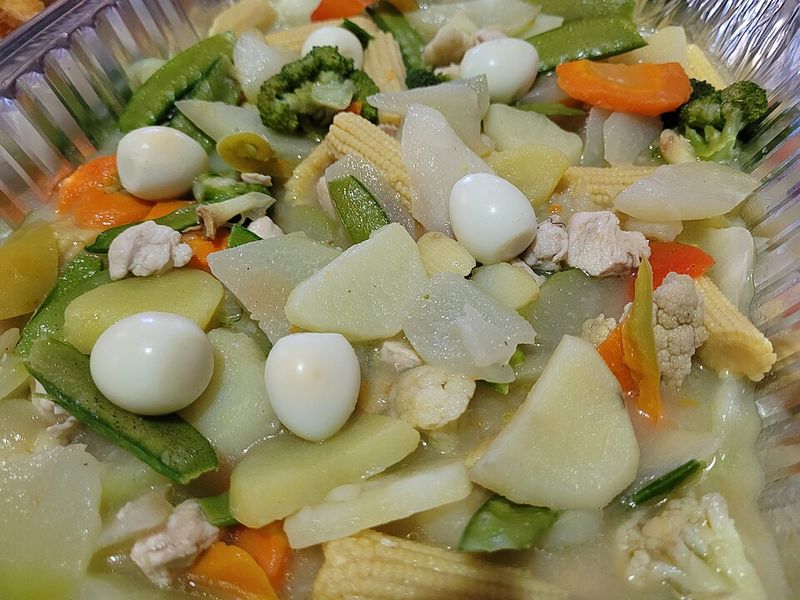
Chop suey was once the most famous Chinese dish in America, gracing restaurant menus from coast to coast throughout the early 20th century. A stir-fry of mixed vegetables, meat, and a light sauce served over rice or noodles, it seemed exotic and satisfying to American diners who were just discovering Chinese food.
The dish’s origin story is messy and debated, but most food historians agree it was invented in America, not China. One popular legend says it was created by Chinese laborers working on the transcontinental railroad, using leftover scraps of vegetables and meat.
Another story credits a Chinese diplomat’s visit to New York in the 1890s.
Whatever its true beginning, chop suey became a symbol of American Chinese food rather than authentic Chinese cuisine. Visit China today and you’ll find almost no trace of it on restaurant menus.
It remains a fascinating piece of culinary history, born from the immigrant experience in America.
Share this story