Montana is famous for its wide-open spaces and rugged mountain scenery, but the state has a darker side that most travel guides skip right over. Tucked behind those postcard-perfect landscapes are abandoned gold rush towns, a grim old prison, a battlefield frozen in time, and grand Victorian mansions with stories that guests still talk about long after checkout. Some of these places earned their reputations through documented history alone, while others have collected ghost legends the way old buildings collect dust. From a ghost town perched high in the mountains to a frontier hotel that has never quite let go of its past guests, Montana delivers genuine chills at every turn.
This list covers ten of the state’s most fascinating and unsettling destinations, each one worth a visit for its history, its legends, or simply the remarkable fact that it still exists at all. Read on, and prepare to see Montana in a completely different light.
1. Bannack State Park, Bannack, Montana
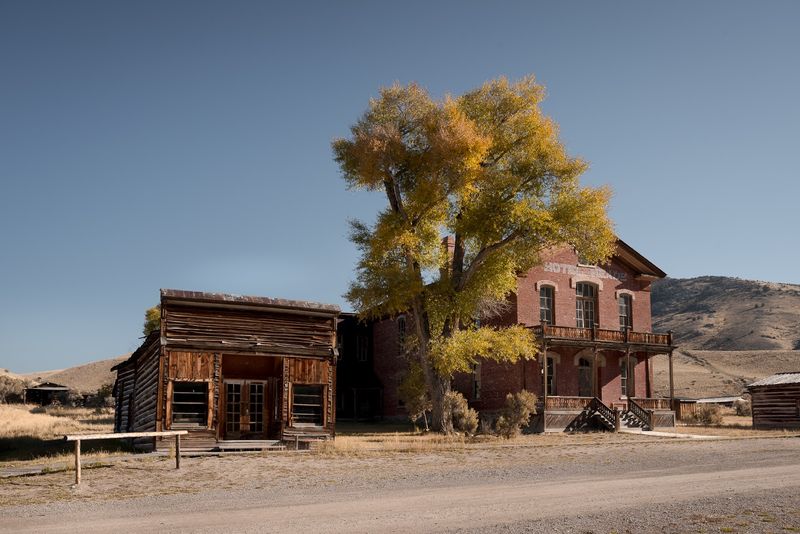
Montana’s very first territorial capital is now one of its most eerily quiet places, and that contrast alone is enough to stop visitors in their tracks. Gold was discovered along Grasshopper Creek on July 28, 1862, and within months a full frontier town had materialized out of virtually nothing.
By 1863, Bannack’s population had swelled past 3,000 people chasing fortunes in the hills. Today, more than 50 original log and frame structures still stand, including the old hotel, the schoolhouse, and the Masonic Hall, all preserved rather than restored.
Bannack Days, held every third weekend in July, brings the town back to life with reenactors and historic demonstrations. During winter months, the frozen dredge pond even draws ice skaters, offering a surprisingly cheerful contrast to the town’s otherwise haunting stillness.
Ghost stories and unexplained sightings have followed Bannack for decades, cementing its reputation as Montana’s most intriguing abandoned settlement. Walking its quiet dirt streets, it is genuinely hard to shake the feeling that the town never fully emptied out.
2. Old Montana Prison Museum, Deer Lodge, Montana, Deer Lodge, Montana
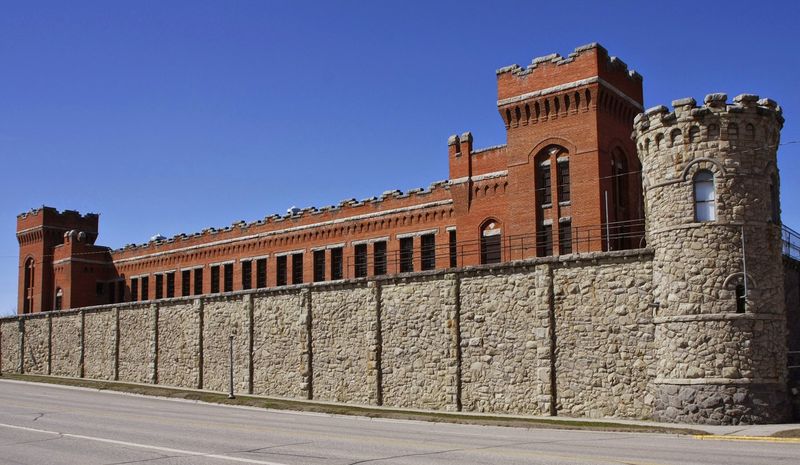
Few buildings in Montana communicate raw institutional authority quite like the Old Montana Prison in Deer Lodge, a fortress of stone and iron that operated for nearly a century before its doors finally closed in 1979. The sheer scale of the place is the first thing visitors notice, well before they step inside.
Tours lead through original cell blocks, past solitary confinement areas, and into exhibit spaces that document the daily realities of prison life across multiple decades. The preserved interiors are authentic rather than staged, which means the confined spaces, narrow corridors, and heavy iron fixtures are exactly as they were left.
History enthusiasts and paranormal fans both find plenty to engage with here, though the building’s documented past is unsettling enough on its own merits. A cell block that once housed hundreds of inmates now sits in near-total silence, and that contrast carries a weight that is difficult to describe.
The museum also covers notable escapes, riots, and the evolution of the Montana penal system, grounding the experience in concrete fact. For a place that earns its chills through genuine history rather than theatrical effects, the Old Montana Prison is hard to beat.
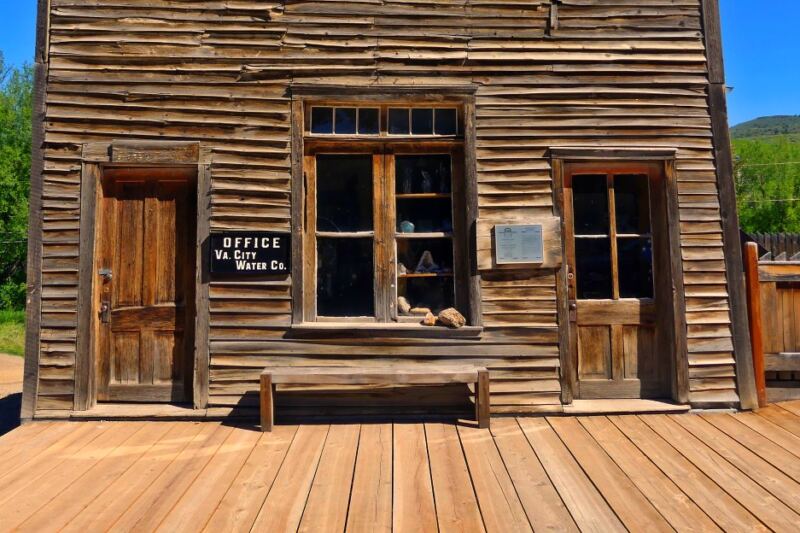
3. Virginia City, Virginia City, Montana
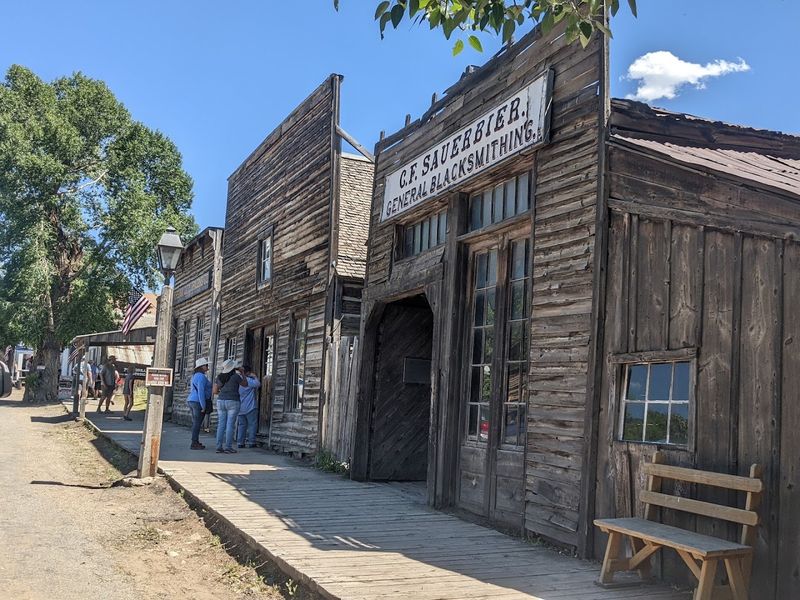
Gold was discovered in Alder Gulch on May 26, 1863, and Virginia City grew so fast that the broader area was nicknamed Fourteen-mile City within months of the strike. By mid-1864, roughly 5,000 people called the town home, and it served as Montana’s territorial capital from 1865 to 1875.
Early preservation efforts saved the original buildings from demolition, and today nearly half of the town’s almost 300 structures were built before 1900. Visitors can ride the Alder Gulch Shortline train to neighboring Nevada City, try gold panning, or catch a performance at the historic Opera House, which still houses a rare Cremona Player piano.
The town’s darker history runs parallel to all that charm. Virginia City was a hotbed for outlaws known as road agents, and the community’s response was the formation of the notorious Montana Vigilantes, whose activities left a permanent mark on the region’s legal history.
Ghost tours explore documented legends tied to specific buildings, including reports of a little girl haunting the Opera House costume shop and a shadowy figure at the Bonanza Inn. Virginia City earns its eerie reputation the old-fashioned way, through genuine history with a deeply unsettling edge.
4. Granite Ghost Town State Park, Philipsburg, Montana
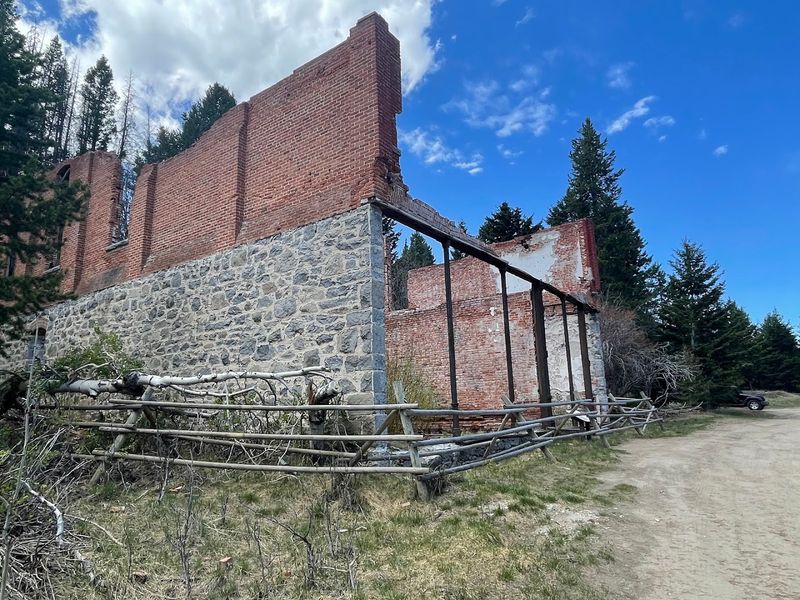
At 7,000 feet above sea level in the Flint Creek Range, Granite once held the title of the richest silver mine on Earth, a claim backed by a staggering $40,000,000 in silver extracted from the surrounding rock. The mine was discovered in 1872, relocated in 1875, and the town that grew around it was nothing short of extraordinary.
By 1890, more than 3,000 miners lived here, supported by 18 saloons, a library, a hospital, four churches, a local newspaper, and its own Chinatown. Then the Sherman Silver Purchase Act was repealed in 1893, silver prices collapsed, and the population dropped below 150 within a single year.
What remains today is a collection of stone ruins that refuse to disappear quietly. The multi-story facade of the Miners Union Hall still rises against the mountain sky, its interior floors long gone, open to the elements and unmistakably haunting.
Reaching the site requires a steep, narrow gravel road that gains 1,280 feet in elevation, and high-clearance vehicles are strongly recommended. The combination of remote access, dramatic ruins, and sudden historical abandonment makes Granite one of Montana’s most compelling ghost towns by a considerable margin.
5. Garnet Ghost Town, Drummond, Montana
Named after the ruby-colored semi-precious stones found in the surrounding hills, Garnet has a biography that reads like a cautionary tale about the boom-and-bust cycle of frontier mining. The town officially took the name Garnet in 1897, and by January 1898 its population had rocketed to nearly 1,000 residents.
At its peak, the community supported four hotels, thirteen saloons, a candy shop, a doctor’s office, and a school, which is a remarkable range of services for a settlement carved into a remote Montana mountainside. A devastating fire tore through the business district in 1912, and World War II eventually claimed the last of the permanent residents.
More than 30 historic buildings survive today, including wooden cabins, a saloon shell, and portions of a hotel, all available for self-guided exploration. The site is accessible year-round, though winter visits require a snowmobile or cross-country skis, which only adds to the adventure.
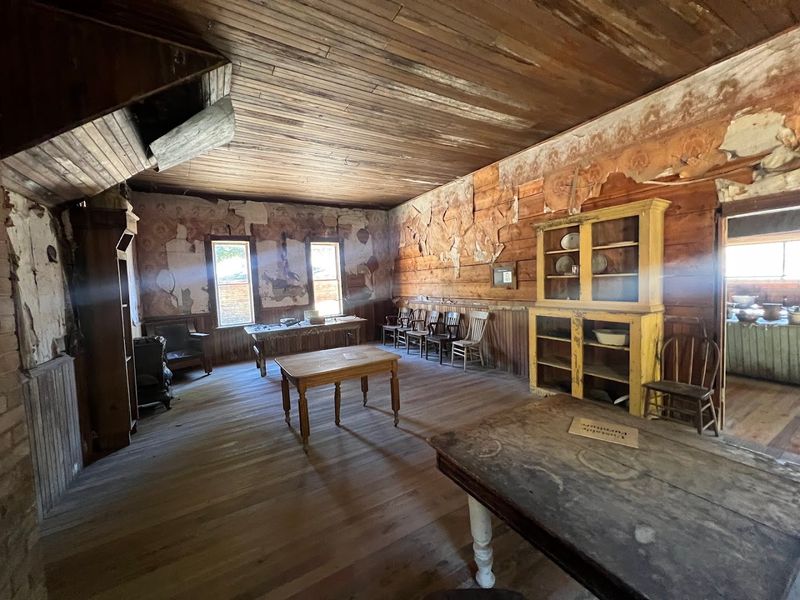
Garnet remains deliberately uncommercialized, and that absence of modern polish is exactly what makes it so unsettling. Cabins were left with furnishings still inside, as though residents simply walked out one morning and never came back.
6. Nevada City, Nevada City, Montana
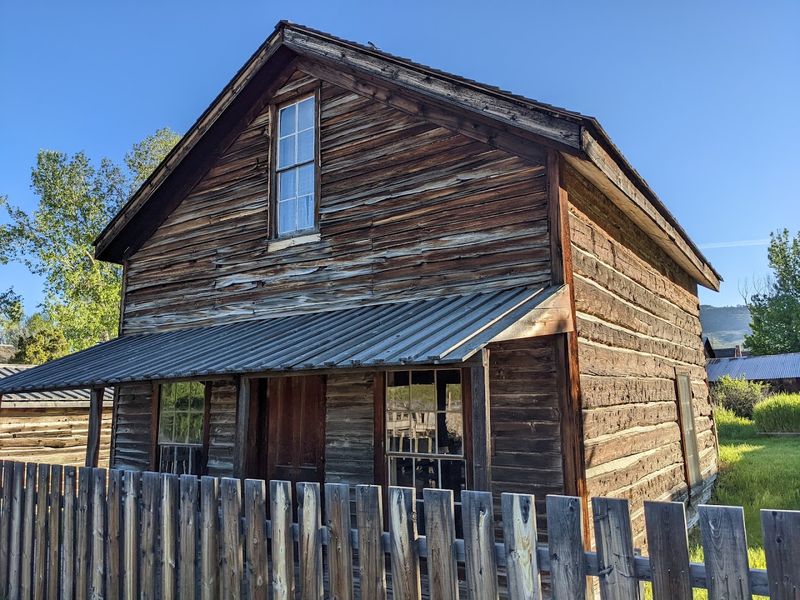
Just one mile down Alder Gulch from Virginia City, Nevada City shares the same gold rush origin story but adds a genuinely strange twist: many of its buildings were relocated from entirely different communities across Montana, assembled here like a puzzle made of other towns’ forgotten pieces.
The town’s original history is grim enough on its own. In December 1863, Nevada City’s main street served as the site of the trial and hanging of George Ives, an event that directly triggered the formation of the Montana Vigilantes.
Today, the State of Montana manages the site as an open-air museum, and visitors can explore the original jail where Ives was held alongside relocated structures like Sullivan’s Saddlery, which once served as the Indian Agency at Fort Benton. The Nevada City Museum and Music Hall houses one of the largest public collections of automated music machines in the United States, including a functioning Cremona Player piano that occasionally fills the quiet streets with unexpected sound.
Living history events during summer weekends bring interpreters in period costumes to the site, adding movement to a place that otherwise feels permanently suspended somewhere between preservation and abandonment. That tension is what makes Nevada City so quietly unsettling.
7. Grand Union Hotel, Fort Benton, Montana
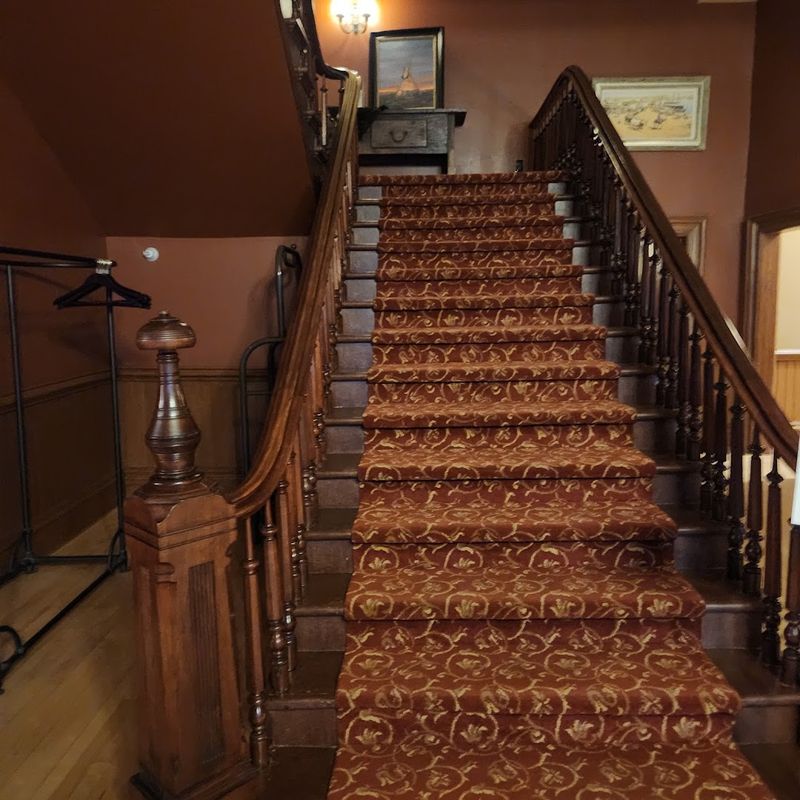
Montana’s oldest continuously operating hotel opened its doors in 1882, right at the peak of Fort Benton’s reign as the most important steamboat port in the American West. Architect Thomas Tweedy designed the building in Italianate style, complete with intricate brick corbelling, wrought iron balconies, and ornate chimneys that still define the riverfront skyline.
The arrival of the Northern Pacific Railway in 1883 hit Fort Benton’s commercial dominance hard, and the hotel cycled through periods of grandeur and neglect before a thorough restoration returned it to its original splendor. The lobby’s grand black walnut staircase and the carefully duplicated original front desk are both worth a long look on arrival.
Guest rooms blend Victorian furnishings with modern comforts, and a former saddle room now operates as a gift shop, which is exactly the kind of detail that makes old hotels so enjoyable to explore. The building also once contained a secret lookout room used to monitor gold shipments, a feature that adds a layer of frontier intrigue to every hallway.
Reports of unexplained footsteps and mysterious figures have circulated among staff and overnight guests for years. The Grand Union Hotel delivers its chills quietly, the way only a 140-year-old building with a long memory really can.
8. Moss Mansion Museum, Billings, Montana
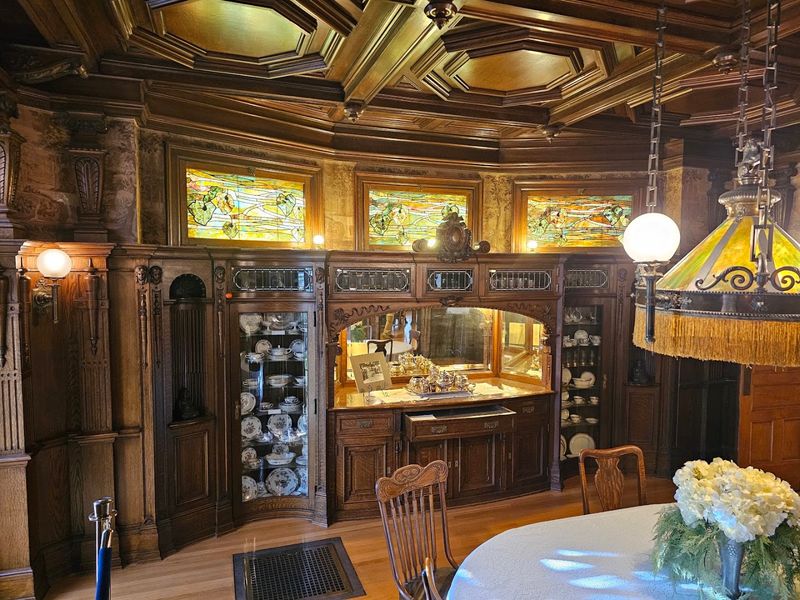
Designed by Henry Janeway Hardenbergh, the same architect responsible for the original Waldorf-Astoria and the Plaza Hotel in New York City, the Moss Mansion was never going to be a modest building. Completed in 1903 for entrepreneur Preston Boyd Moss and his family, this red sandstone landmark cost a fortune and announced Billings’ prosperity to anyone who passed by.
The Moss family lived here until 1984, and several members experienced profound personal loss within these walls, including the passing of their five-year-old daughter Virginia from diphtheria. That history gives the mansion a weight that guided tours do not shy away from discussing.
Seasonal ghost tours run throughout October, and staff members share accounts of unexplained voices, laughter, and footsteps reported in rooms with no visible occupants. Apparitions of a young girl believed to be Virginia Moss have been described in multiple areas of the house, and a female voice said to sing softly in the Billiards Room has been reported by more than one visitor.
Murder mystery dinners and themed evening events round out the mansion’s calendar, offering structured ways to engage with its more mysterious reputation. The historical rooms provide a genuinely compelling backdrop for these stories, whether or not one believes a word of them.
9. Copper King Mansion, Butte, Montana
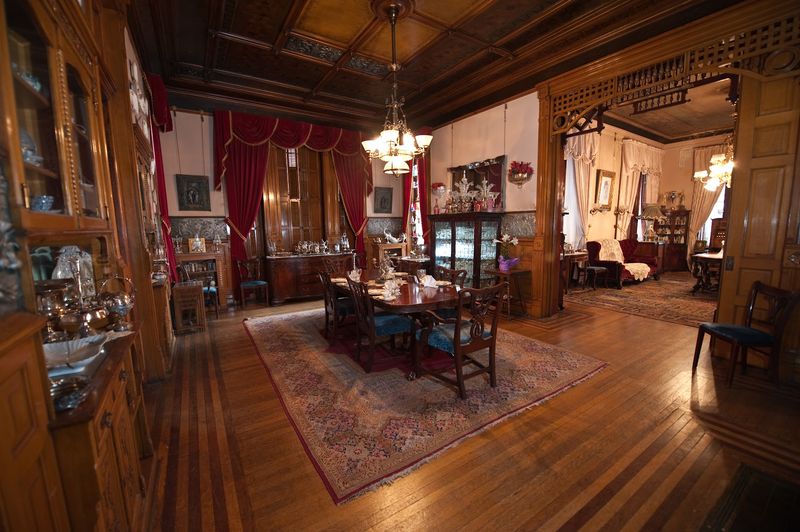
William Andrews Clark spent an estimated half a million dollars building his Butte mansion between 1884 and 1888, which reportedly represented about half a day’s income for the copper magnate at the time. That particular detail says everything about the scale of wealth that Montana’s mining industry generated at its peak.
The 34-room Romanesque Revival structure is loaded with imported materials, including hand-carved woodwork in ash, oak, walnut, bird’s-eye maple, cherry, and mahogany. Nine fireplaces imported from Europe, frescoed ceilings, parquet floors, and stained-glass panels possibly crafted by Louis Comfort Tiffany fill nearly every room with elaborate detail.
The mansion’s grand oak staircase, intricately carved with birds and flowers, took four years to complete and was disassembled and shipped to the 1904 World’s Fair in St. Louis for display. Today the building operates as a bed and breakfast, and overnight guests can stay in rooms that once belonged to members of the Clark family.
Paranormal enthusiasts frequently request specific rooms with reputations for unusual activity, arriving with cameras and equipment in hopes of an encounter. Staff and guests have reported unexplained noises in empty rooms for years, adding a persistently eerie undercurrent to one of Montana’s grandest historic homes.
10. Little Bighorn Battlefield National Monument, Crow Agency, Montana
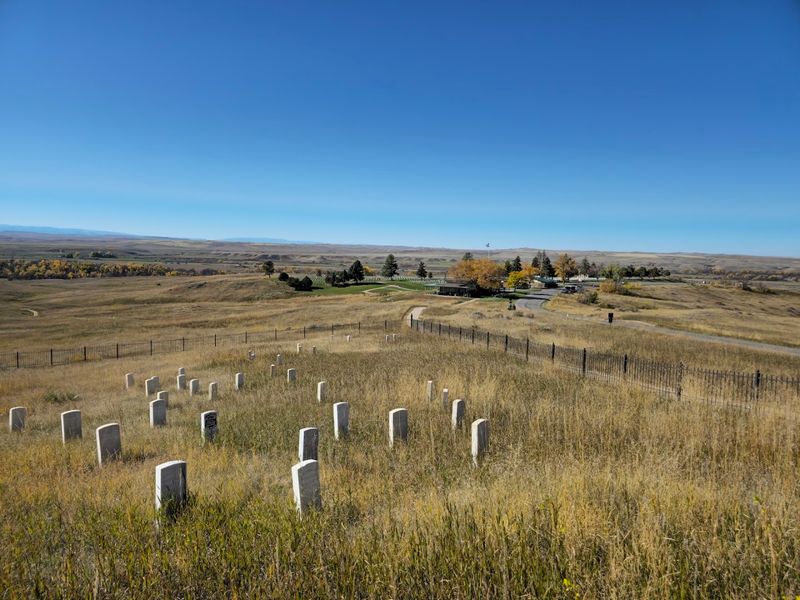
On June 25 and 26, 1876, the rolling hills of the Little Bighorn Valley became the site of one of the most consequential military engagements in American history, when Lt. Col. George Custer’s 7th Cavalry clashed with a formidable alliance of Lakota, Northern Cheyenne, and Arapaho warriors. The outcome was decisive, and the landscape has carried that weight ever since.
A 4.5-mile tour road connects the main battlefield to the Reno-Benteen Battlefield, while the Deep Ravine Trail and Reno-Benteen Entrenchment Trail offer self-guided walks through specific sites of intense fighting. White marble markers scattered across the hills each indicate where a U.S. soldier fell, creating a visual record of the battle’s geography that no exhibit could replicate.
The Indian Memorial, with its circular design and the names of warriors inscribed on its walls, ensures the site acknowledges both sides of the conflict with equal weight. Custer National Cemetery, also located within the monument, adds another layer of quiet remembrance to the experience.
Ranger programs run during summer months, and a cell phone audio tour provides both soldier and warrior perspectives on the battle. Visitors consistently describe the site as profoundly moving, which may be the most honest endorsement any historic battlefield can receive.
Share this story