Nebraska’s frontier history is still remarkably easy to experience, from well-preserved forts and pioneer landmarks to iconic rock formations that guided generations of westward travelers. Across the state, historic sites tell the stories of settlers, soldiers, Native peoples, and the trails that helped shape the American West.
These 10 destinations offer a chance to step into Nebraska’s past through authentic places that have stood the test of time. Whether you’re a history enthusiast or planning a scenic road trip, each provides a memorable glimpse into the state’s frontier heritage.
1. Fort Robinson State Park, Crawford, Nebraska
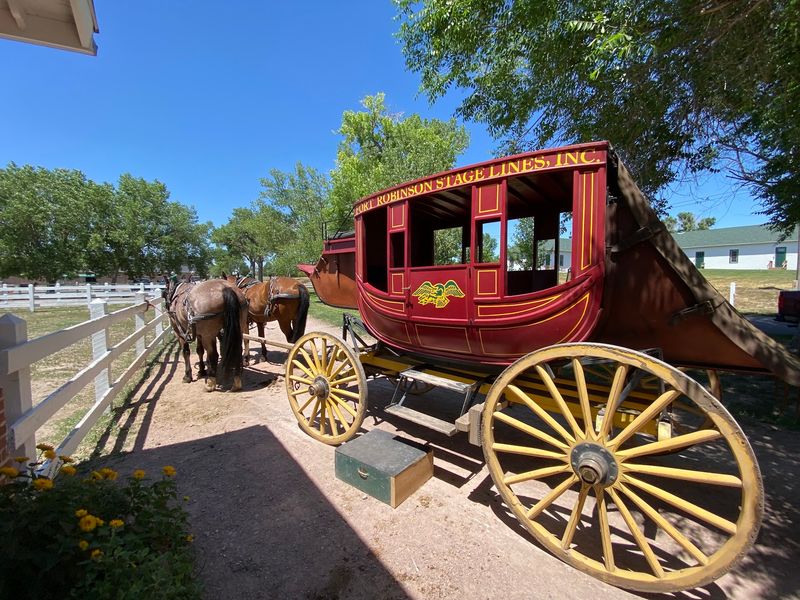
A former U.S. Army fort that stayed active from 1874 all the way to 1948, Fort Robinson has more layers of history packed into one location than most places three times its size.
The park covers 22,000 acres in Nebraska’s northwestern panhandle, and the landscape alone tells you something big happened here. Pine-covered bluffs rise above wide open plains, and bison and longhorn cattle still graze across the grounds.
The fort’s story includes some of the most significant moments in frontier history. Oglala Sioux Chief Crazy Horse surrendered here in 1877. The Buffalo Soldiers, the famed African American cavalry regiments, were headquartered at Fort Robinson from 1885 to 1907.
Many of the original buildings have been restored, and some are available as lodging for overnight visitors. The Nebraska State Historical Society runs a museum inside the old headquarters building.
Horseback riding, jeep tours, and stagecoach rides give visitors a hands-on way to explore the grounds. Few places in the entire country let you sleep inside a piece of frontier history quite like this one does.
2. Chimney Rock State Historic Site, Bayard, Nebraska
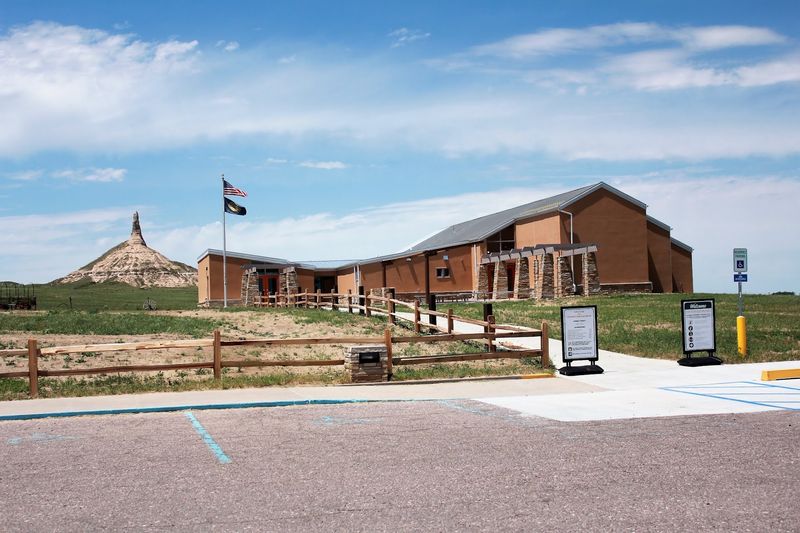
Thousands of emigrants kept their eyes on this slender rock spire for days before they ever reached it, using it as proof that the endless Great Plains were finally coming to an end.
Chimney Rock rises nearly 300 feet above the North Platte River valley and sits at 4,226 feet above sea level. On clear days, travelers on the Oregon, California, and Mormon Pioneer Trails could spot it from 30 to 40 miles away, making it the most recognized landmark along the entire western migration route.
More emigrant diaries mention Chimney Rock than any other natural feature on the trail. Thousands of travelers carved their names into the rock, leaving behind a record of just how many people passed through this stretch of Nebraska.
The Ethel and Christopher J. Abbot Visitor Center, operated by History Nebraska, features museum exhibits, artifacts, and an interactive display where visitors can try packing a frontier wagon. A short one-mile trail leads to a closer vantage point of the rock itself.
Nebraska’s 2006 state quarter even features a covered wagon passing by Chimney Rock, cementing its status as the face of westward expansion.
3. Courthouse And Jail Rocks, Bridgeport, Nebraska
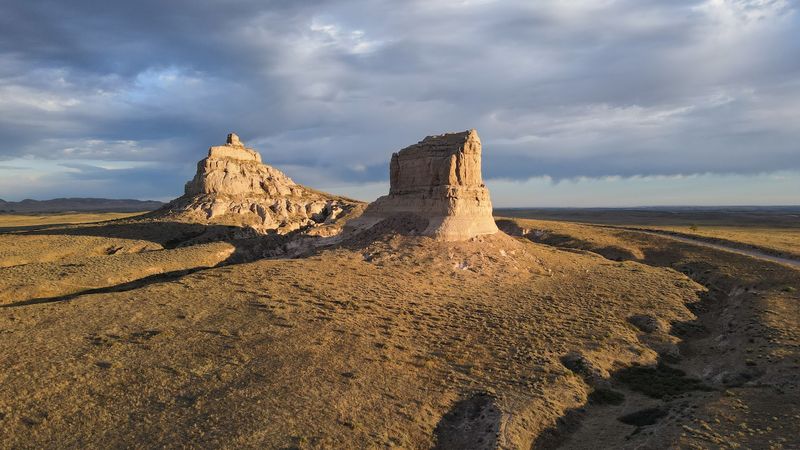
Long before GPS and road signs, a pair of massive sandstone formations near Bridgeport served as the frontier’s version of a landmark so obvious that even exhausted travelers could not miss it.
Courthouse Rock and Jail Rock rise more than 240 feet above Pumpkin Creek and were first documented by explorer Robert Stuart in 1812. Pioneer journals from the 1800s describe them as resembling an old castle or a proud palace rising from nowhere. The name “Courthouse” stuck after 1837, when travelers compared it to the St. Louis courthouse, and the smaller formation next door naturally became “Jail.”
The Oregon-California Trail, Mormon Trail, Pony Express Trail, and Sidney-Deadwood Trail all ran near these formations, making this area a crossroads for nearly every major 19th-century migration route.
Unlike many historic sites, this one remains completely undeveloped. There are no fences, no crowds, and no modern additions blocking the view. A short informal trail leads toward the base of Courthouse Rock, and a historical marker at the parking area covers the geology and significance.
The nearby Pioneer Trails Museum in Bridgeport adds helpful context for anyone who wants the full story before heading out to see the rocks in person.
4. Fort Kearny State Historical Park, Kearney, Nebraska
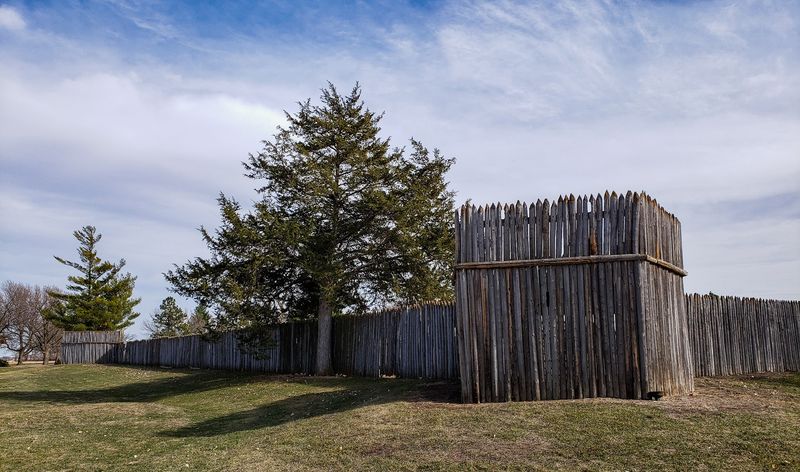
Every major trail heading west in the 1800s eventually funneled through one spot on the south bank of the Platte River, and Fort Kearny was there waiting with supplies, soldiers, and news from back east.
Established in 1848 and originally called Fort Childs, the post was renamed in honor of General Stephen Watts Kearny. Its job was to protect and supply emigrants on the Oregon, California, and Mormon Trails. By the 1860s, it had also become a home station for the Pony Express and a key freighting hub.
The fort was never attacked, but its soldiers organized multiple military campaigns and helped guard workers building the Union Pacific Railroad. It was decommissioned in 1871 as overland emigration slowed.
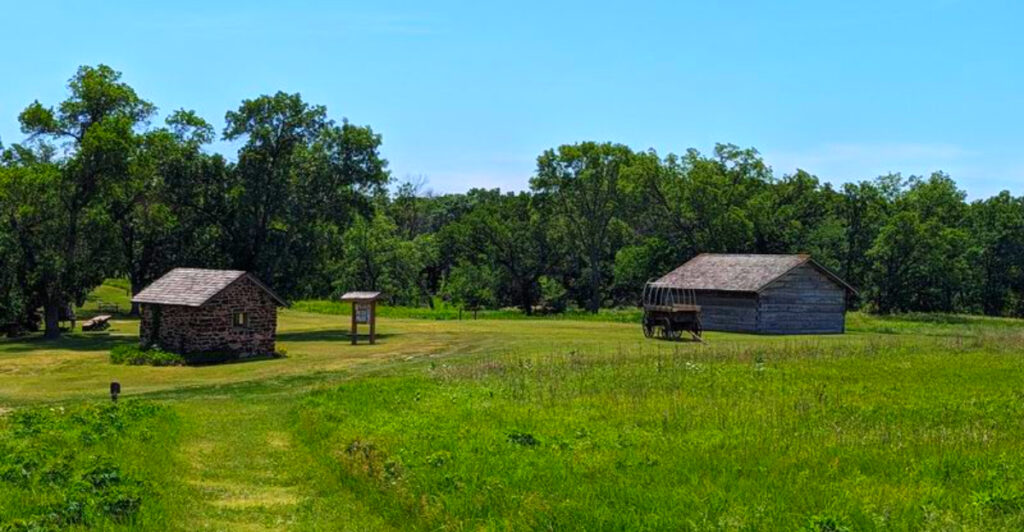
Today, the 40-acre historical park features reconstructed sod and adobe buildings, including a stockade, powder magazine, and blacksmith shop. Walking paths connect these structures across the open parade grounds.
The visitor center holds trail-era artifacts, maps, and films covering the fort’s history. On special occasions, living history demonstrations bring the post to life. The adjacent 186-acre recreation area offers wildlife viewing and seasonal views of the sandhill crane migration along the Platte River.
5. Fort Hartsuff State Historical Park, Elyria, Nebraska
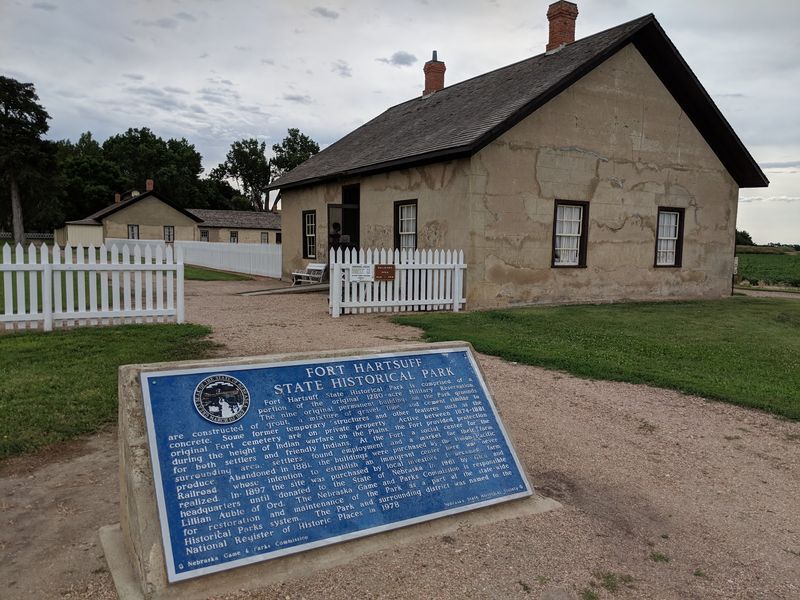
Most frontier forts in Nebraska exist as foundations and fence posts, but Fort Hartsuff is the rare exception where you can actually walk into the original buildings and see what daily life looked like in 1875.
Established in 1874 in the quiet North Loup Valley near Elyria, the fort was built to protect settlers and the Pawnee Tribe from potential Teton Sioux raids. Nine major structures, including the post headquarters, officers’ quarters, barracks, hospital, stable, and guardhouse, were built using a unique lime-concrete mixture called grout. That unusual construction method is the main reason they are still standing today.
Duty here was considered relatively comfortable. Soldiers hosted dances for local settlers, and the fort served as both a social hub and a market for nearby farmers during the grasshopper plague of 1874.
The fort was abandoned in 1881 once the need for military protection faded. Today, the 1,280-acre park is restored to its 1870s appearance, complete with furnished buildings, a gravel path around the parade grounds, and a white picket fence.
Living history presentations on major summer holidays bring staff in period dress to demonstrate daily soldier and settler life, making this one of Nebraska’s most authentic frontier experiences.
6. Buffalo Bill Ranch State Historical Park, North Platte, Nebraska
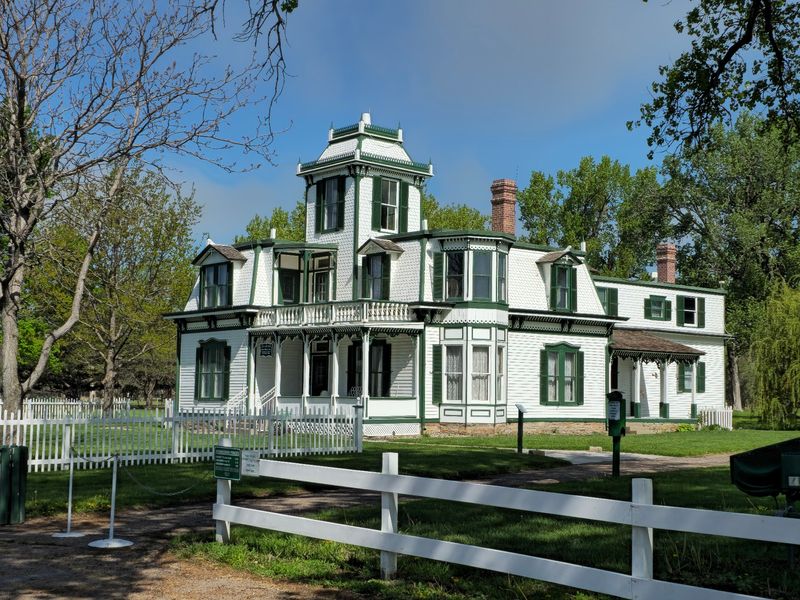
William F. Cody was a Pony Express rider, army scout, buffalo hunter, and eventually one of the most famous entertainers in the world, and his home base was a sprawling ranch outside North Platte, Nebraska.
Cody established Scout’s Rest Ranch in 1878, starting with 160 acres and eventually expanding to as many as 7,000 acres. He named it Scout’s Rest as a nod to his military scouting career and his plan to use it as a personal retreat between his famous Wild West shows.
The centerpiece of the 25-acre historical park is Cody’s restored 1886 French Second Empire-style Victorian mansion, which cost $3,900 to build and is filled with period furnishings and Buffalo Bill memorabilia. The original barn now displays antique carriages and artifacts from his traveling Wild West shows, which toured the United States and Europe starting in 1883 and featured performers like Annie Oakley and Chief Sitting Bull.
The ranch was designated a National Historic Landmark in 2021 for Cody’s role in creating the Wild West entertainment movement. The grounds are open year-round, while the mansion and outbuildings are open seasonally.
Few places in Nebraska blend genuine frontier history with larger-than-life personality quite as well as this one.
7. Ash Hollow State Historical Park, Lewellen, Nebraska
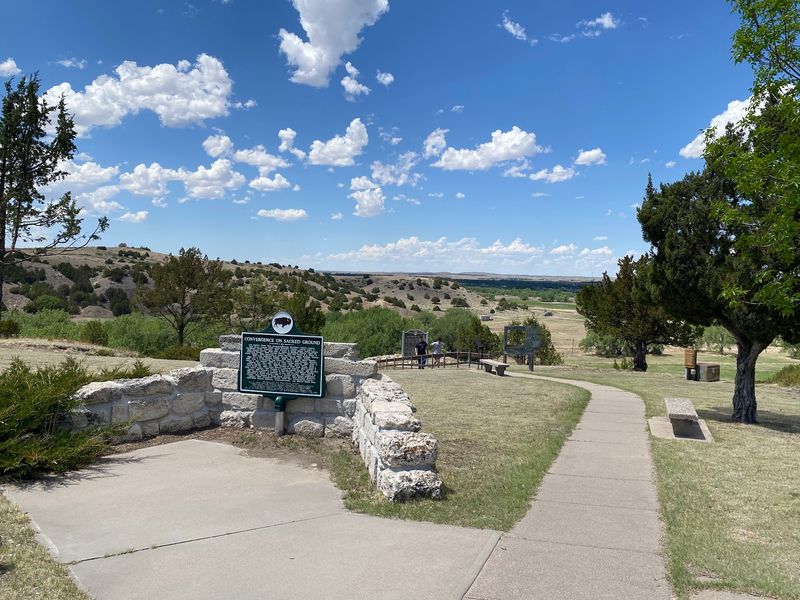
There is a hill at Ash Hollow called Windlass Hill, and it caused more frontier anxiety than almost any other single feature on the entire Oregon Trail route.
Wagons had to be carefully lowered down this steep incline using ropes and rough-locked wheels, and the deep ruts they carved into the hillside are still visible today. That alone makes Ash Hollow worth a visit, but the park offers far more than one dramatic slope.
Located south of Lewellen along Highway 26, this 1,000-acre park has been a stopping point for humans since at least 8000 B.C., based on charred remains found in Ash Hollow Cave. Native American tribes used the valley for encampments long before the Pawnee and Lakota Sioux fought over it, and later it became a key rest stop on the Oregon, California, and Mormon Trails.
Travelers stopped here for fresh spring water, wood, and grass for their livestock after difficult crossings of the open plains. The park today includes a visitor center covering geology, paleontology, and Native American history, plus a historic stone schoolhouse, a sod house, Ash Hollow Cave, and nine miles of hiking trails.
Horseback riding and wildlife viewing round out the options for visitors with more time to explore.
8. Boot Hill Cemetery, Ogallala, Nebraska
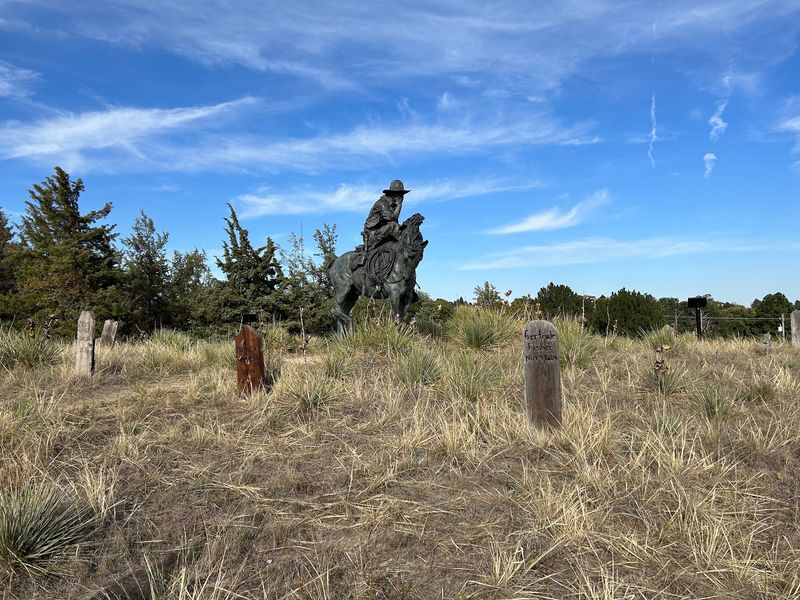
Ogallala earned the nickname “the town too tough for Texans” during the 1870s and 1880s, and Boot Hill Cemetery is where that reputation left its most permanent mark.
During its peak cattle-driving years, Ogallala was the northern terminus of the Texas Trail, with over one million head of cattle driven through between 1870 and 1885. The town’s permanent population hovered around 100 to 200 people, yet historical records show at least 14 to 17 violent confrontations during the Texas Trail era. One notable occupant of Boot Hill was “Rattlesnake Ed” Worley, who lost his life over a nine-dollar bet in a Monte game. In July 1879, three cowhands were laid to rest in a single day.
The name Boot Hill comes from the frontier tradition of describing those who passed away in a fight as having “died with their boots on.” Bodies were typically placed in canvas sacks in shallow graves marked with wooden headboards.
Today, the hilltop site overlooks the South Platte River Valley and includes a historical marker and a bronze Trail Boss statue. While some remains were moved to other cemeteries over the years, the unknown and unclaimed still rest here.
The cemetery is open year-round from sunrise to sunset, and the view from the hill alone makes it worth the stop.
9. Toadstool Geological Park, Harrison, Nebraska
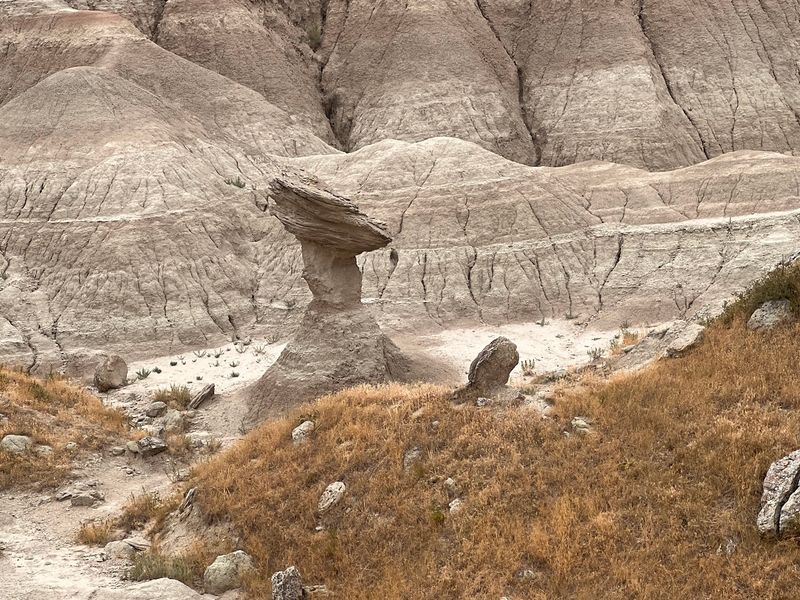
About 30 million years ago, the area around Harrison, Nebraska was a warm, humid floodplain. Today, it looks like another planet entirely.
Toadstool Geological Park sits inside the Oglala National Grassland in far northwestern Nebraska and presents a badlands landscape unlike anything else in the state. The formations are built from sandstone, clay, and volcanic ash, shaped over millions of years by wind and water erosion. Harder sandstone caps sit on top of softer clay pedestals, creating the distinctive mushroom-like shapes the park is named for.
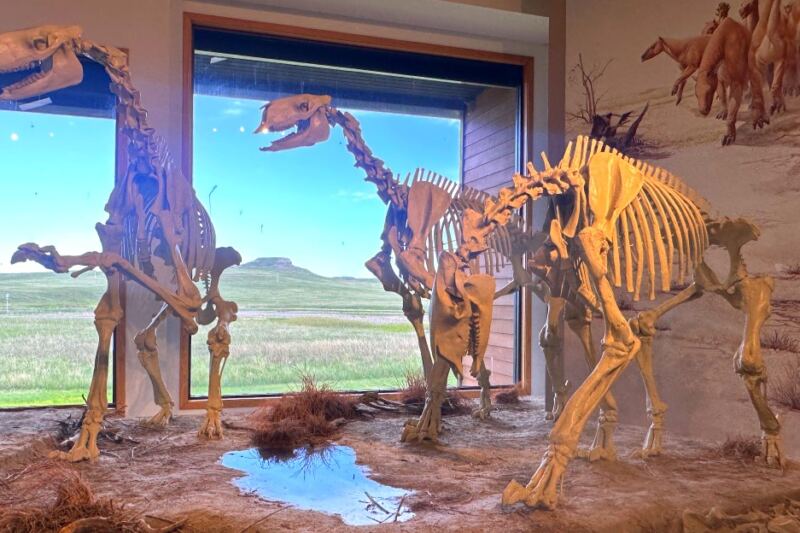
Beyond the unusual geology, the park is a significant paleontological site. Fossils of three-toed horses, giant tortoises, ancient rhinos, camels, and saber-toothed cats have been found here, and some fossil footprints are visible along the trails. Fossil collection is strictly prohibited to protect these resources.
The park offers multiple hiking options, including a one-mile Fossil Loop Trail with interpretive signs, a three-mile Bison Trail connecting to the Hudson-Meng Education and Research Center, and a five-mile Great Plains Trail loop. A reconstructed sod house on the grounds provides a glimpse into early homesteader life.
The park is open 24 hours a day year-round and allows primitive camping, though visitors should bring their own water since none is available on site.
10. Rock Creek Station State Historical Park, Fairbury, Nebraska
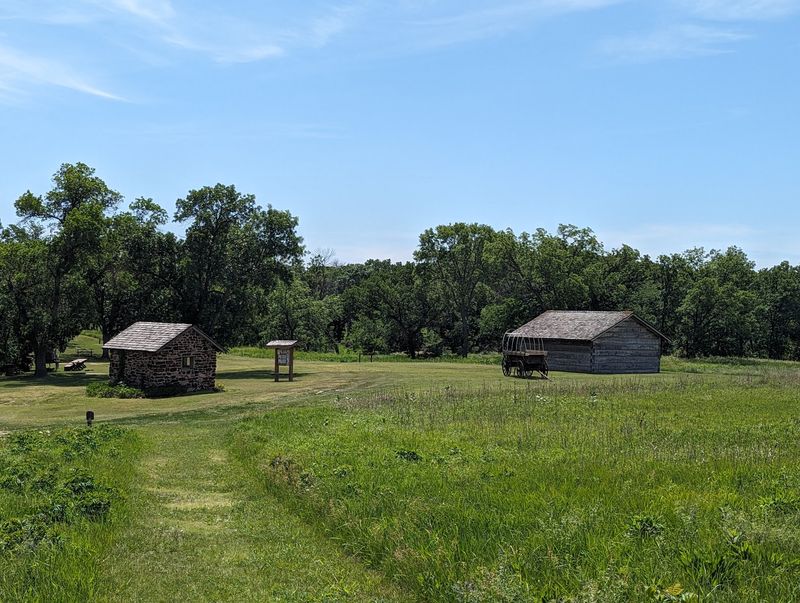
Over 1,600 feet of deep wagon ruts are pressed into the hillsides at Rock Creek Station, carved there by thousands of emigrant wagons that rolled through this southeastern Nebraska stop on their way west.
The station was established in 1857 by S.C. Glenn as a supply center and campground along the Oregon and California Trails. David McCanles purchased the property in 1859 and added a toll bridge across Rock Creek. By 1861, the East Ranch portion had been sold to the operators of the Pony Express, turning it into a relay station for riders carrying mail across the country.
The site also holds a place in Wild West lore. James Butler “Wild Bill” Hickok worked here as an assistant station tender in 1861, and a notable shootout at the station became part of the legend surrounding his frontier reputation.
Today, the 350-acre park features reconstructed ranch cabins, a bunkhouse, a post office, and a toll bridge. An interpretive center and museum display artifacts recovered during excavations. Four miles of horse trails and equestrian camping areas are available for riders.
During special events like Rock Creek Trail Days in June, the park hosts living history programs including mule-pulled wagon rides and a buffalo stew cookout, giving visitors a genuinely hands-on frontier experience.
Share this story