Somewhere in Massachusetts, people put chow mein noodles and gravy on hamburger buns. In Illinois, a sandwich comes buried under French fries and cheese sauce.
And in Mississippi, pig ears are a longtime sandwich filling.
These aren’t novelty foods created for social media. They’re regional traditions with histories stretching back decades, and some started as inexpensive meals for factory workers and coal miners.
Across 12 states, you’ll find sandwiches filled with everything from fried bologna and livermush to pastrami paired with sausage. Each has a story behind its unusual ingredients.
One even inspired Elvis Presley to fly from Memphis to Denver in the middle of the night, reportedly just to satisfy a sandwich craving.
1. Massachusetts: The Chow Mein Sandwich
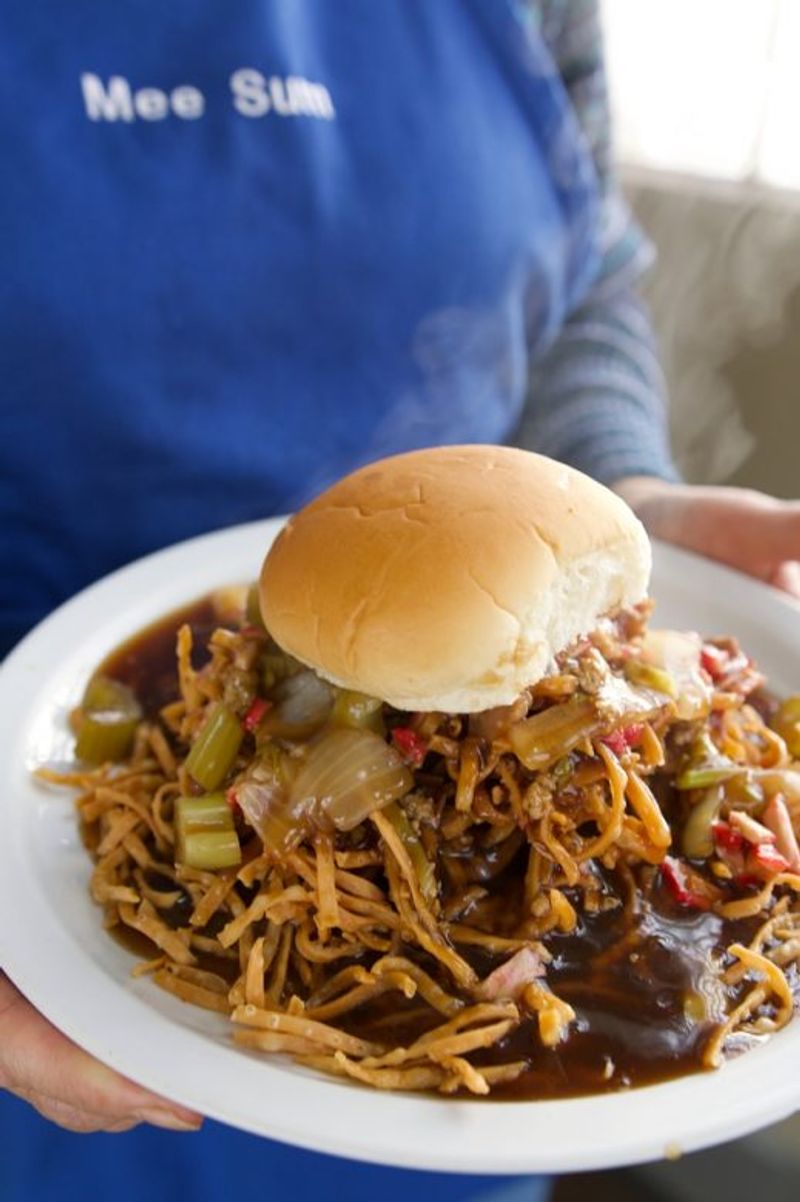
Noodles on a bun might sound like a mix-up in the kitchen, but Fall River locals call it lunch. The chow mein sandwich piles crispy noodles, vegetables, and brown gravy onto a plain hamburger bun.
The dish grew out of the city’s Chinese-American restaurants in the 1930s and 1940s. Mill workers wanted something cheap and filling, and the gravy was adjusted to suit New England tastes.
A Cantonese immigrant named Frederick Wong opened the Oriental Chow Mein Company in 1926. His company supplied local restaurants with crispy noodles and later sold them with gravy mix under the Hoo-Mee brand.
Ordering comes with its own vocabulary. Ask for it strained if you want no vegetables, or unstrained if you want the full mix.
Some spots add chicken, beef, or shrimp.
Outside southeastern Massachusetts, this sandwich is rare, so grab one while you are in town.
2. Mississippi: The Pig Ear Sandwich
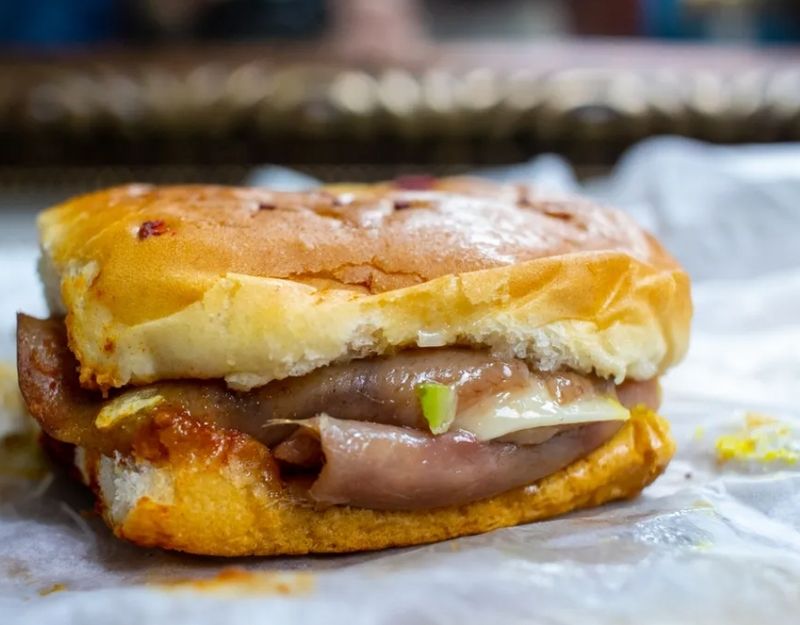
Here is a fun question for your next road trip quiz: which Jackson restaurant has sold pig ear sandwiches for generations? The answer is the Big Apple Inn, a small spot with a big reputation.
The recipe keeps things simple. Cooked pig ears go on a soft bun with mustard, cabbage, and a splash of hot sauce.
Outsiders sometimes hesitate before the first bite. Locals, however, see nothing strange about it at all.
The sandwich reflects a long Southern habit of wasting nothing. Cooks turned less popular cuts of meat into affordable meals that families could count on.
The Big Apple Inn also holds an important place in Jackson’s civil rights history, which adds extra meaning to a visit. Many travelers stop by for both the food and the story.
Bring a small appetite and order two, since the sandwiches are modest in size and easy on the wallet.
3. Illinois: The Horseshoe Sandwich
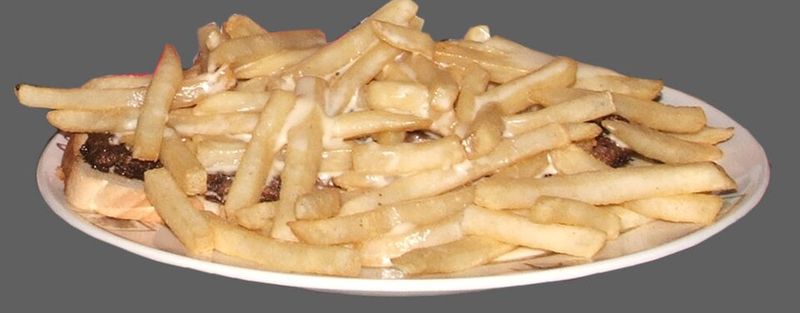
Forget picking this one up with your hands. Springfield’s horseshoe sandwich is an open-faced meal that requires a fork, a knife, and some patience.
Thick toast forms the base, usually Texas toast. Next comes meat, often ham or a hamburger patty, followed by a pile of French fries and a generous pour of cheese sauce.
The dish was created in 1928 at the Leland Hotel by chef Joe Schweska and Steve Tomko. According to local lore, the original ham slice was shaped like a horseshoe, the fries stood in for nails, and the hot metal platter played the role of an anvil.
Restaurants across central Illinois now guard their own cheese sauce recipes. Many trace back to Welsh rarebit.
Not feeling that hungry? Ask for a ponyshoe, the smaller version with one slice of toast and a single portion of meat.
4. Virginia: The Sailor Sandwich
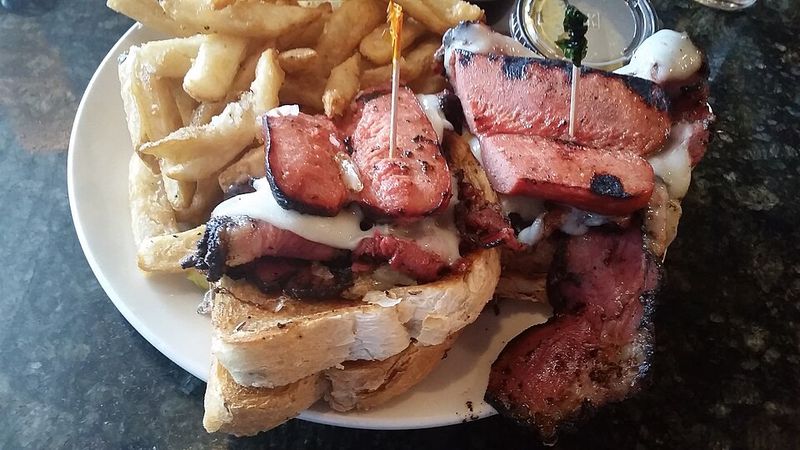
Navy students during World War II gave Richmond one of its proudest deli traditions. The story starts at the New York Deli, a local fixture since 1929.
Young men from the Navy V-12 program at the University of Richmond kept ordering the same combination. It had no name yet, but it soon became known as the Sailor Sandwich.
Inside, you will find hot pastrami, grilled knackwurst sausage, and Swiss cheese on rye bread. Most people add mustard.
Pastrami and knackwurst rarely share a sandwich anywhere else. The pairing blends a German-style sausage with a classic Jewish deli meat, and somehow the two get along just fine.
Several Richmond delis now serve their own versions. Fans like to compare them and argue over which shop does it best.
Hungry travelers should plan on one sandwich per person, because portions are hearty and sharing rarely goes as planned.
5. Nebraska: The Runza
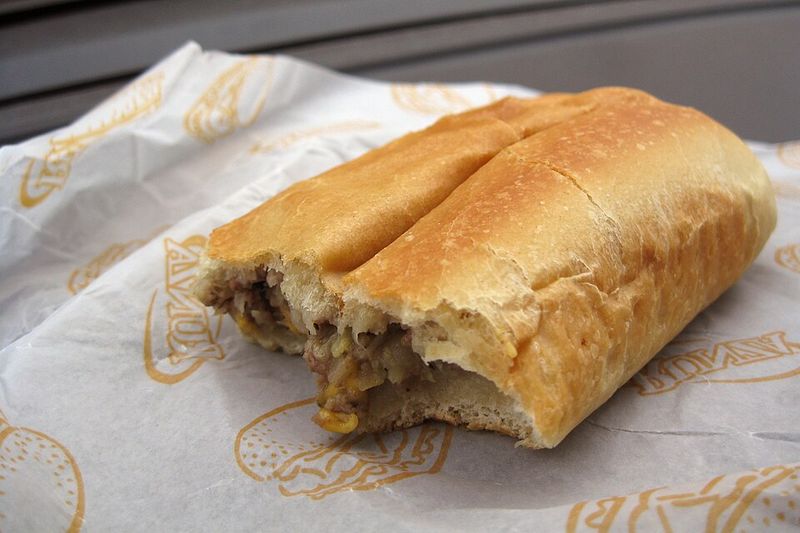
Some sandwiches stack their fillings. Nebraska’s Runza hides them inside baked dough, like a lunch with a secret.
Each rectangular pocket holds seasoned ground beef, cabbage, and onions. The bread is soft and yeasty, and the whole thing travels well in a lunch bag.
The recipe came with Volga German immigrants who settled in Nebraska in the late 1800s and early 1900s. Families made these stuffed breads at home for decades before anyone sold them.
That changed in 1949. Sally Everett opened the first Runza restaurant in Lincoln and later trademarked the name.
Similar pastries go by the name bierock in Kansas and other German Russian communities. The rectangular Runza, though, belongs to Nebraska.
Football fans grab them before Cornhusker games, and the restaurant chain now has locations across the state. Try one with a side of crinkle fries for the full local experience.
6. New Jersey: The Pork Roll, Egg, and Cheese
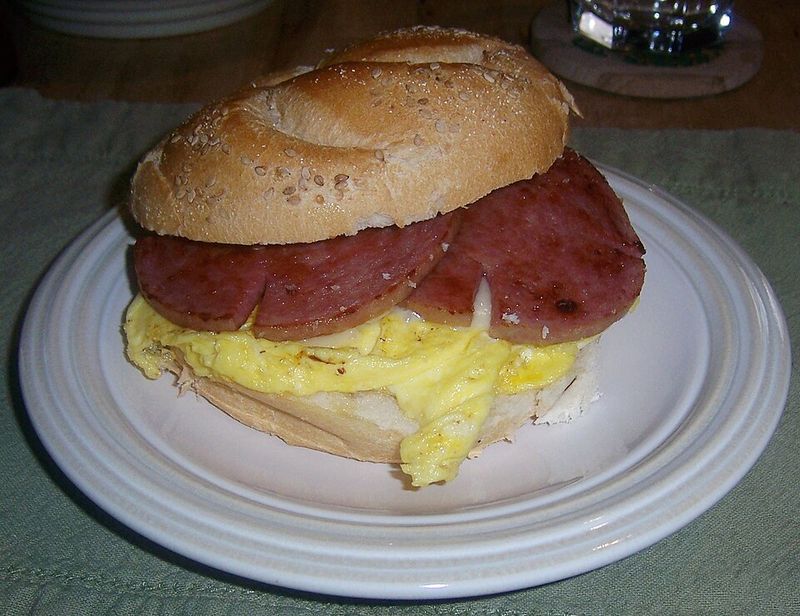
Ask a room full of New Jersey residents what this meat is called, and you might start a friendly argument. North Jersey says Taylor ham.
South Jersey says pork roll.
The sandwich itself is simple. Grilled slices of the meat are layered with egg and cheese on a Kaiser roll or bagel.
John Taylor created the product in Trenton in 1856 and called it Taylor’s Prepared Ham. After the Pure Food and Drug Act of 1906, it no longer fit the legal definition of ham, so the label changed to pork roll.
Many northern residents never switched, and the debate has carried on for generations.
Diners, delis, and bagel shops across the state serve this sandwich all day. A quick tip for ordering: listen to what the locals call it, then use the same name.
Many people add salt, pepper, and ketchup, often shortened to SPK on menus.
7. West Virginia: The Pepperoni Roll
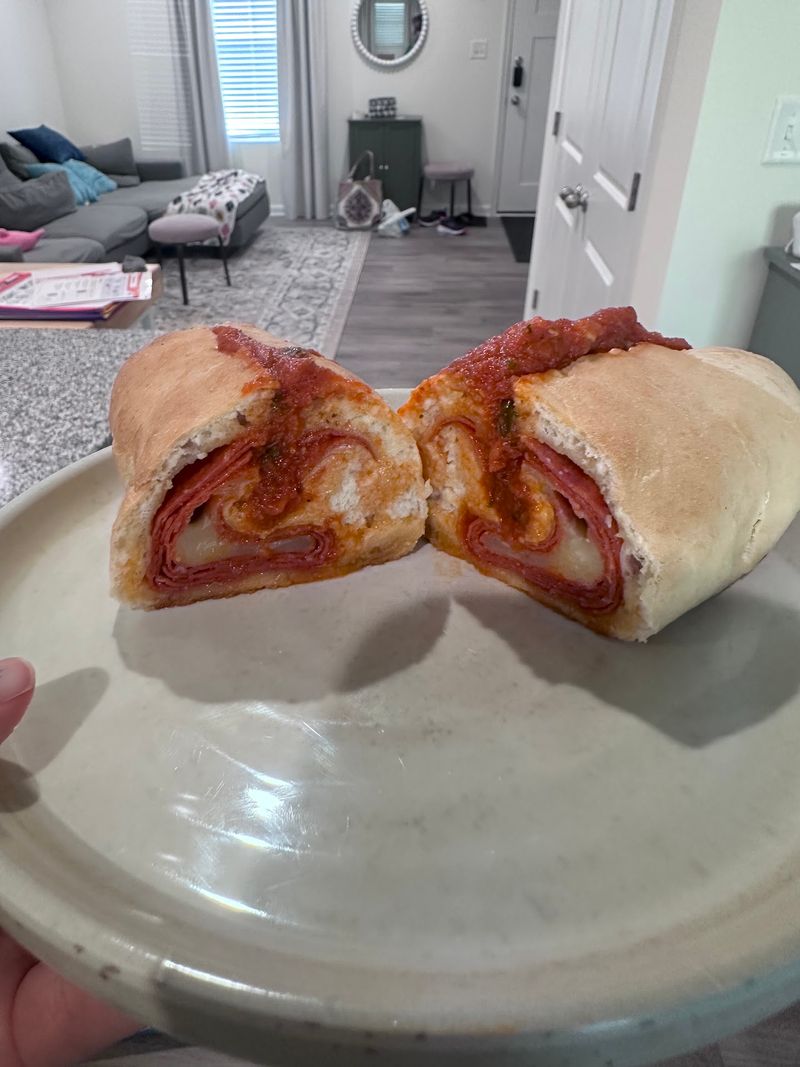
Coal miners needed lunches that could survive a long day underground without a fridge. West Virginia’s answer was the pepperoni roll.
The idea is simple. Pepperoni sticks or slices are baked inside soft white bread, and some versions include cheese.
Italian immigrants who worked the mines in north-central West Virginia often carried bread and pepperoni separately. Giuseppe Argiro, a former miner, combined the two at his Fairmont bakery sometime between 1927 and 1938.
His creation needed no refrigeration and fit easily into a lunch pail. That made it a hit with mining families.
Today, the pepperoni roll shows up in bakeries, grocery stores, school cafeterias, and gas stations throughout the state. Some shops add peppers or sauce.
Road trippers should buy a few extra. They make an easy snack for the drive, and comparing bakeries quickly becomes part of the fun.
8. Pennsylvania: The Pittsburgh French Fry Sandwich
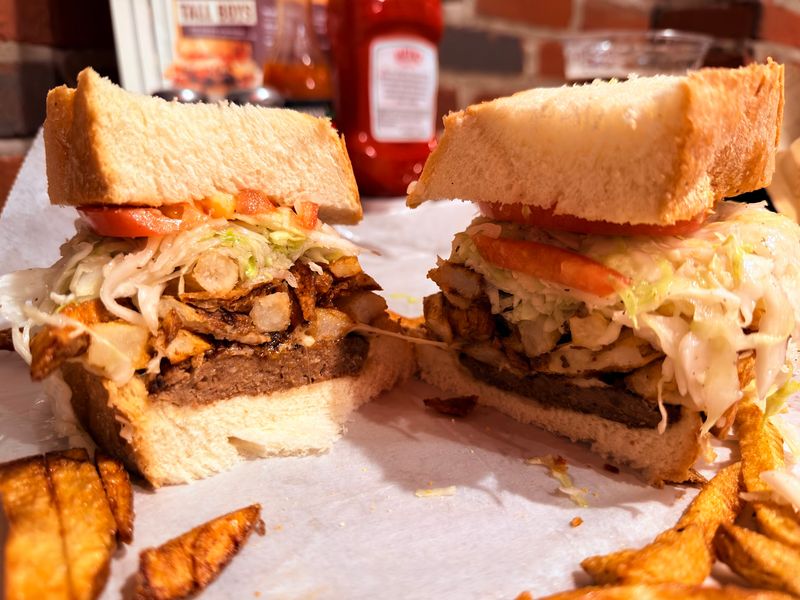
Why keep the fries on the side when they can go right inside the sandwich? Pittsburgh asked that question in 1933 and never looked back.
Joe Primanti started with a sandwich cart in the Strip District. His customers were truck drivers and warehouse workers on late-night and early-morning shifts.
These workers had little time and only one free hand. Packing the whole meal between two slices of bread solved the problem.
A classic Primanti Bros. sandwich holds grilled meat, cheese, hand-cut fries, vinegar coleslaw, and tomato on thick Italian bread. Popular meats include capicola, pastrami, and steak.
The chain has grown well beyond its first location. Still, many visitors make a point of eating at the original Strip District shop.
Grab plenty of napkins and hold the sandwich firmly. The stack is tall, and the fries do not always stay put.
9. Tennessee: The Fried Bologna Sandwich
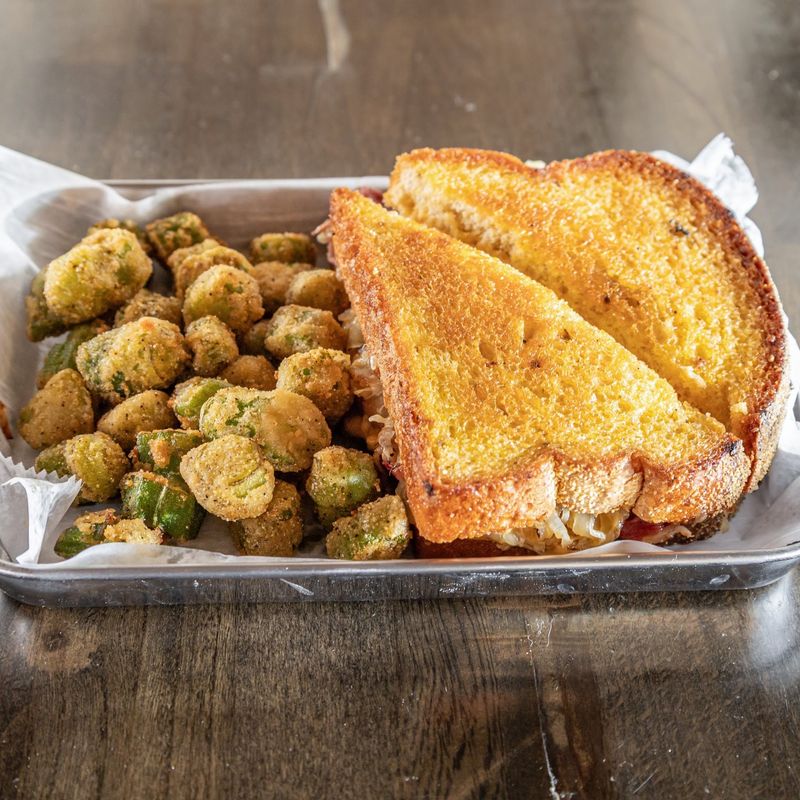
Bologna rarely gets respect, yet Tennessee treats it like a headliner. The secret is cutting it thick and frying it.
Cooks brown the slices on a griddle until the edges curl. Many make a small cut in the center so the meat lies flat.
The finished slice goes on white bread or a bun. Popular toppings include mustard, cheese, pickles, and onion.
Barbecue joints in Memphis and beyond even smoke whole bologna logs before slicing. That twist turns a lunchbox basic into a menu favorite.
The sandwich started as an inexpensive meal during hard times. Families kept making it, and the nostalgia stuck.
Look for it at small diners, gas station grills, and neighborhood barbecue spots. Prices tend to be friendly, and portions are filling.
Ordering one is a good way to taste Southern comfort food without spending much.
10. South Dakota: The Pheasant Sandwich
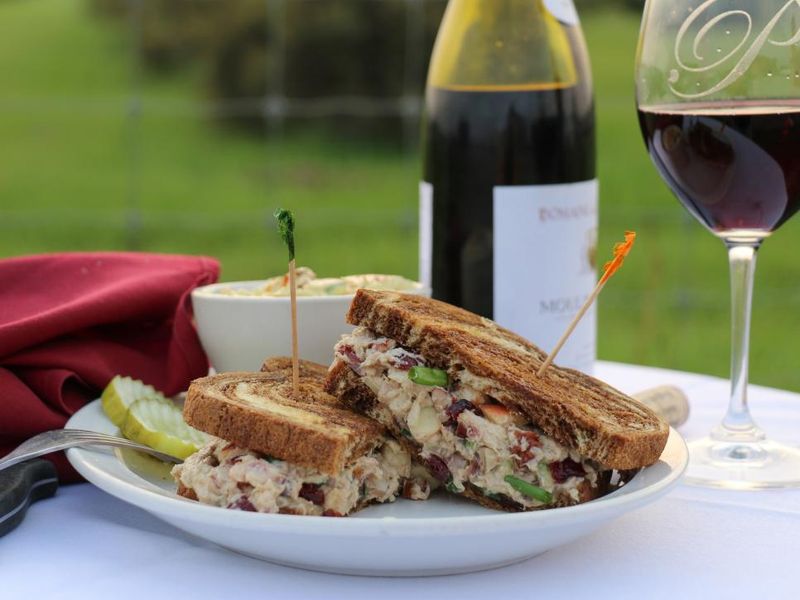
In December 1943, volunteers in Aberdeen began handing sandwiches to soldiers passing through on trains. Their chosen filling was pheasant salad.
The Red Cross and USO canteen served hundreds of thousands of troops during World War II. Area farmers donated pheasants to keep the kitchen supplied.
Wartime rationing made ingredients tight. The salad mixed chopped pheasant with hard-cooked eggs, carrots, onion, celery, pickle relish, and mayonnaise.
The canteen closed in 1946, but the recipe stayed in local kitchens. It became a symbol of the town’s generosity.
South Dakota is famous for pheasant hunting, and the bird is the state bird. Aberdeen still offers versions of the sandwich to visiting hunters during the fall season.
History fans can learn more at local museums. Pairing a sandwich with that story makes a stop in Aberdeen surprisingly meaningful.
11. Ohio: The Polish Boy
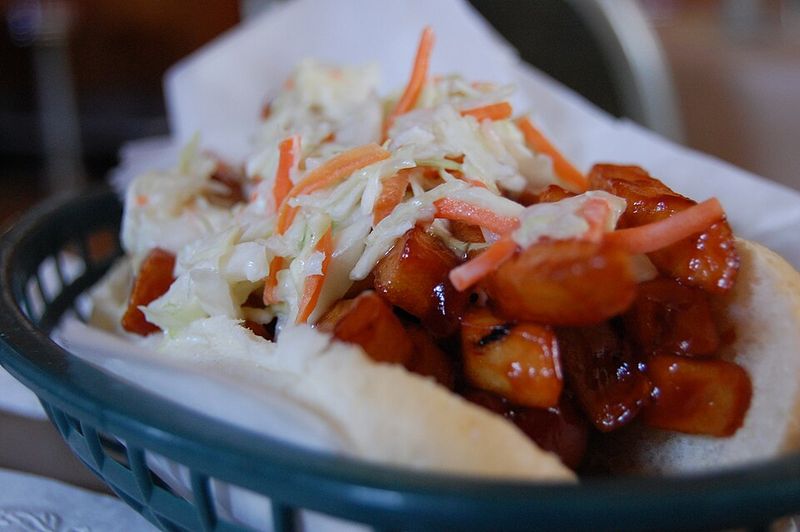
One sausage, one bun, and somehow an entire dinner on top. Cleveland’s Polish Boy does not believe in holding back.
A smoked kielbasa goes into the bun first. Then come French fries, coleslaw, and a heavy coat of barbecue sauce.
Many credit Virgil Whitmore, a barbecue restaurant owner in the Mount Pleasant neighborhood, with inventing it in the 1940s. He reportedly combined ingredients already in his kitchen.
Neighborhood rib houses kept the sandwich popular for decades. Freddie’s Southern Style Rib House became one of the best-known spots for it.
The name may suggest a basic Polish sausage sandwich. In reality, it is a Cleveland invention through and through.
Eating one neatly is nearly impossible, so most people use a fork for the toppings first. Ask for extra napkins, and maybe skip the white shirt that day.
12. Colorado: The Fool’s Gold Loaf
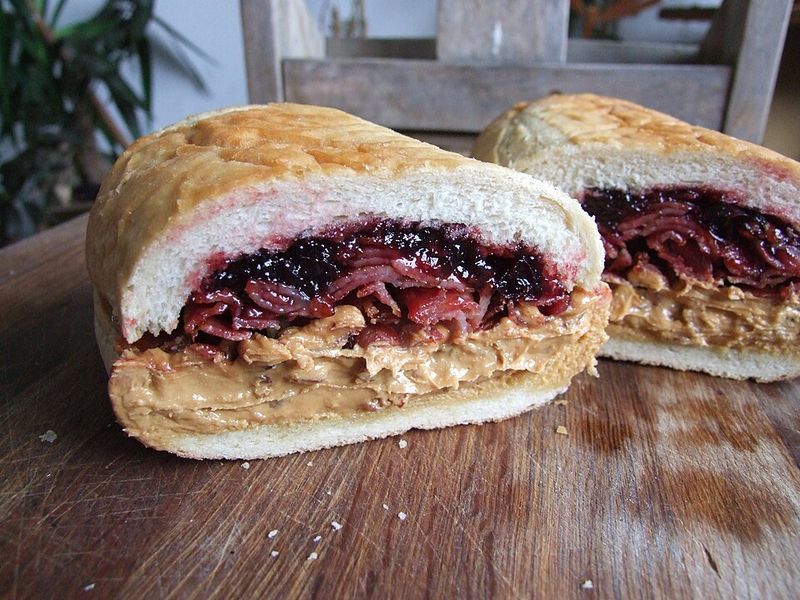
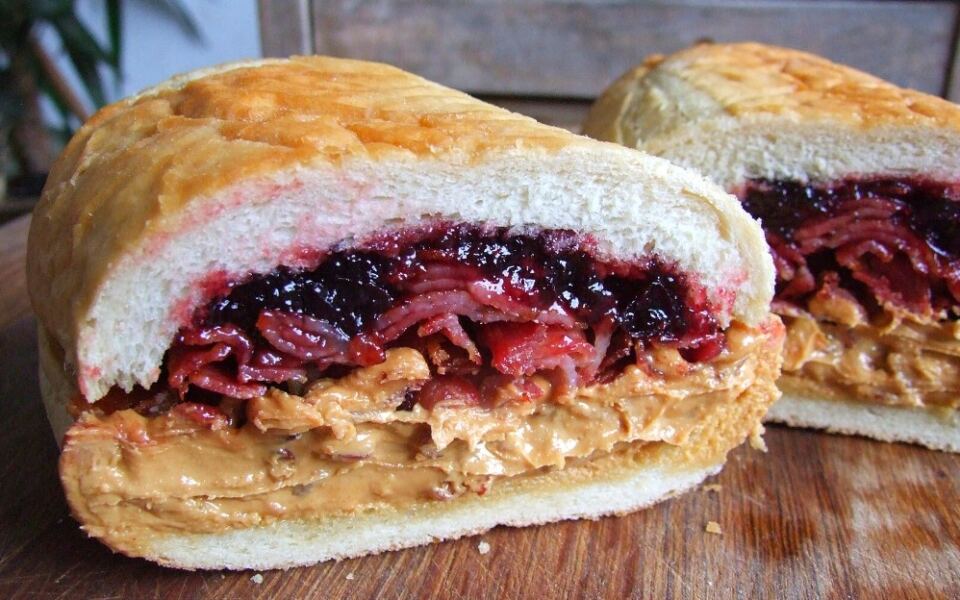
On February 1, 1976, Elvis Presley flew his private jet from Memphis to Denver for a sandwich. The sandwich was the Fool’s Gold Loaf.
The Colorado Mine Company restaurant served it. Owners Cindy and Buck Scott and chef Nick Andurlakis are linked to its creation.
The recipe is wild. A whole loaf of bread is hollowed out and filled with a jar of peanut butter, a jar of blueberry preserves, and a pound of bacon.
According to the story, Elvis and his friends had 22 loaves delivered to the airport hangar. They ate for about two hours, then flew home.
The restaurant is gone now, but the legend lives on. Home cooks still recreate the loaf for parties and fan gatherings.
Plan to share if you try it. One loaf can feed a small crowd, even a crowd of Elvis fans.
Share this story