Switzerland sells a staggering amount of chocolate every year, and most visitors head straight for the nearest shiny gold box. That is a fine plan, but it skips some of the country’s best work.
Swiss bakers have spent centuries perfecting walnut tarts, honey biscuits, pear breads, and tiny cream-filled cookies that rarely get the spotlight. Many of these sweets belong to one specific town or valley, and locals defend their versions with serious pride.
Some show up every morning at the corner shop, while others only appear around holidays. A few even come with their own museum, workshop, or centuries-old building attached.
In the list below, you will find twelve bakery specialties, the regions that made them famous, and the exact shops where you can try them. You will also pick up quick history bits, ordering tips, and souvenir ideas that travel well in a suitcase.
Consider it a sweet map of Switzerland that goes well beyond the candy aisle, with plenty of reasons to plan a slower trip and a bigger appetite.
1. Zuger Kirschtorte at Treichler, Zug, Canton of Zug
Few cakes can point to their exact birthplace, but this one has an address. Pastry chef Heinrich Höhn created the Zuger Kirschtorte in Zug in 1915, and Treichler now operates in the building tied to that invention.
The cake is built like a careful puzzle. Crisp nut meringue layers sit on either side of a cherry-soaked sponge, all held together with buttercream.
The top gets a dusting of powdered sugar and a criss-cross pattern pressed in by hand. Toasted almond flakes cover the sides.
Treichler does more than sell slices. A small museum inside tells the story of the cake, including how it became famous well beyond central Switzerland.
Visitors can grab a table in the café and order a piece with coffee. Many also buy a boxed cake to take home, since it travels better than you might expect.
Plan your stop for the afternoon, when the café is relaxed. Then stroll down to Lake Zug, which is only a few minutes away on foot.
2. Basler Läckerli at Läckerli Huus, Basel, Basel-Stadt
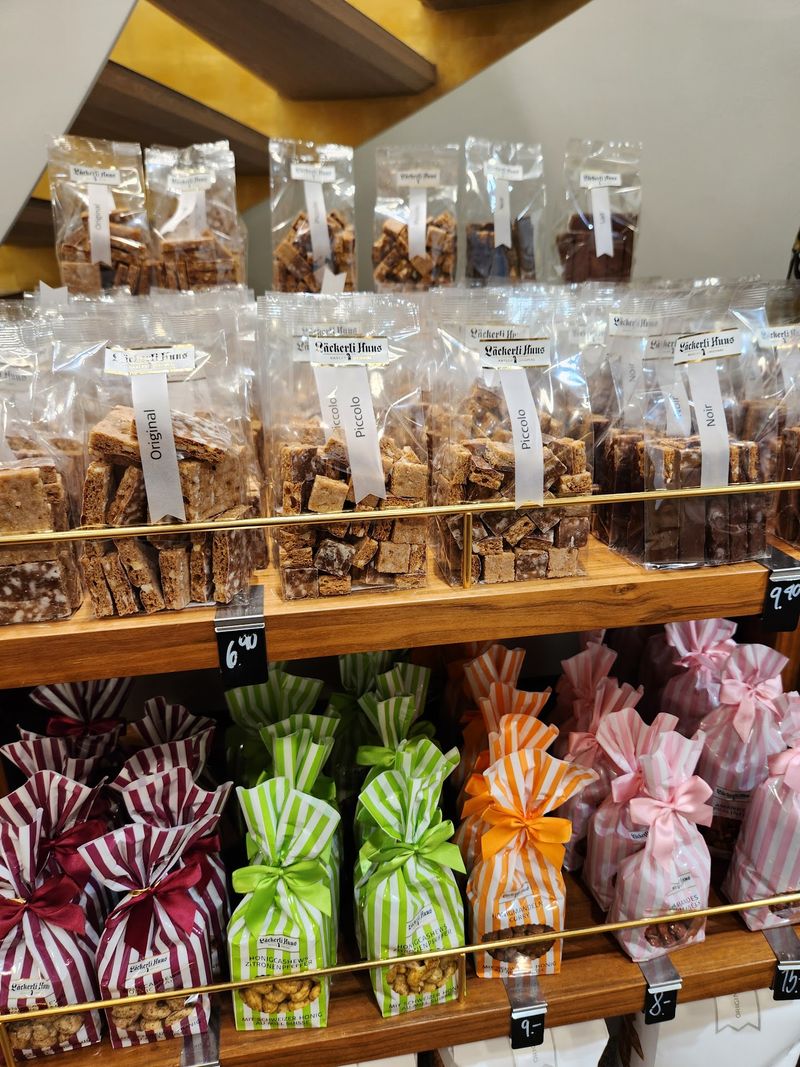
Don’t let the plain rectangle fool you. Basler Läckerli packs honey, hazelnuts, almonds, candied orange and lemon peel, and warm spices into one small, sugar-glazed biscuit.
The recipe has roots in Basel going back more than 700 years. Local spice merchants helped make it possible, since they traded the exotic ingredients the biscuit needs.
Läckerli Huus is the name most Swiss connect with this treat. Its shop on Gerbergasse sits in the historic Old Town, close to the main shopping streets.
Inside, you’ll find Läckerli in classic form plus newer flavors. The shop also sells collectible tins with Basel scenes printed on them, which make great gifts.
Here’s a fun bonus for hands-on travelers. Läckerli Huus offers bookable workshops where you can bake and decorate your own batch.
The biscuits are firm and keep for weeks, so they survive long trips in a backpack. Buy a few extra, because family members tend to ask for seconds once the tin is open.
3. Appenzeller Biber at BÖHLI, Appenzell, Appenzell Innerrhoden
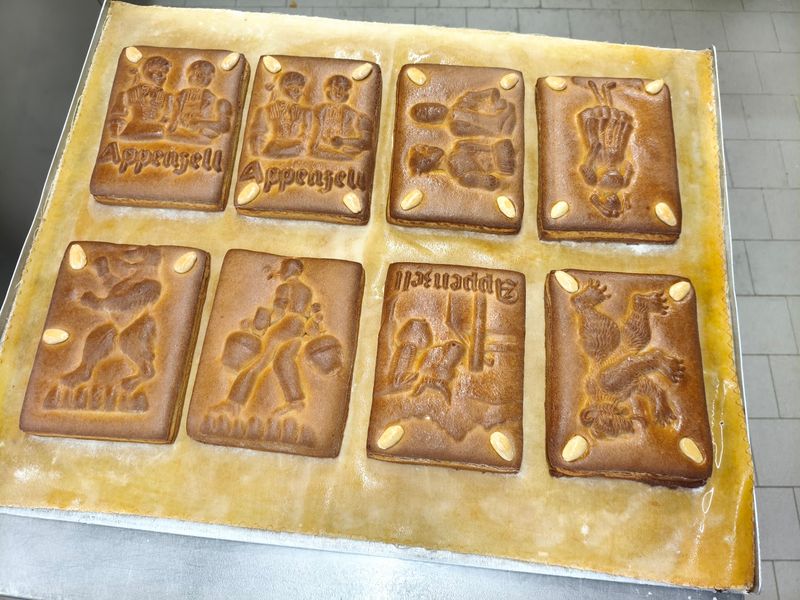
Appenzell has a cheese that gets all the headlines, yet its bakers have a quieter star. Appenzeller Biber is a honey gingerbread wrapped around a sweet almond filling.
What makes it stand out is the decoration. Bakers press the dough into carved wooden molds, leaving pictures of local scenes, animals, or traditional figures on top.
Some molds are very old and treated almost like family treasures. The designs often show cows, herders, or the colorful costumes of the region.
BÖHLI AG Bäckerei-Confiserie is a well-known place to buy them in the village. The shop offers Biber in many sizes, from snack bars to large decorated pieces meant for gifting.
Small Biberli are perfect for hikers who want a sturdy treat in their pocket. The larger ones look nice enough to display before anyone cuts into them.
Try one with afternoon coffee for the classic local pairing. Then wander the main street, where the painted building fronts make the trip worth the extra calories.
4. Luxemburgerli at Confiserie Sprüngli, Zürich, Canton of Zürich
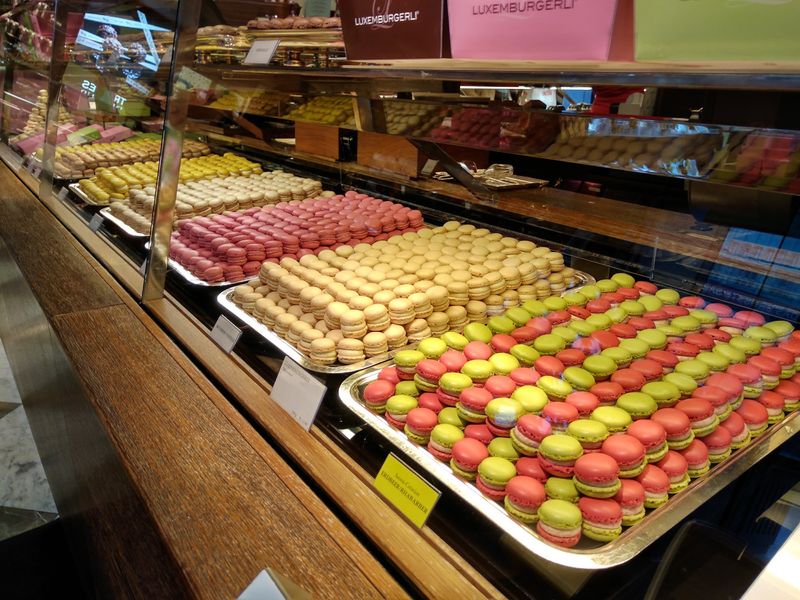
Size isn’t everything, and Luxemburgerli prove it one tiny bite at a time. These miniature sandwich confections are smaller than a regular macaron, with two light shells and a creamy filling in between.
Their story crosses borders. A confectioner brought the recipe from Luxembourg to Zürich in the 1950s, which explains the name.
Confiserie Sprüngli at Paradeplatz is the classic place to buy them. The shop has been part of Zürich life since 1836 and sits on one of the city’s most famous squares.
Flavors rotate, but you’ll usually see vanilla, raspberry, chocolate, and lemon. Seasonal options appear throughout the year, so regulars keep coming back.
A practical tip worth remembering: Luxemburgerli are fresh products. Sprüngli suggests eating them within a few days and keeping them cool.
That makes them better for a treat now than a souvenir for next month. Grab a small box, find a seat in the upstairs café, and sample several flavors without feeling too guilty.
5. Berner Haselnusslebkuchen at Confiserie Eichenberger, Bern, Canton of Bern
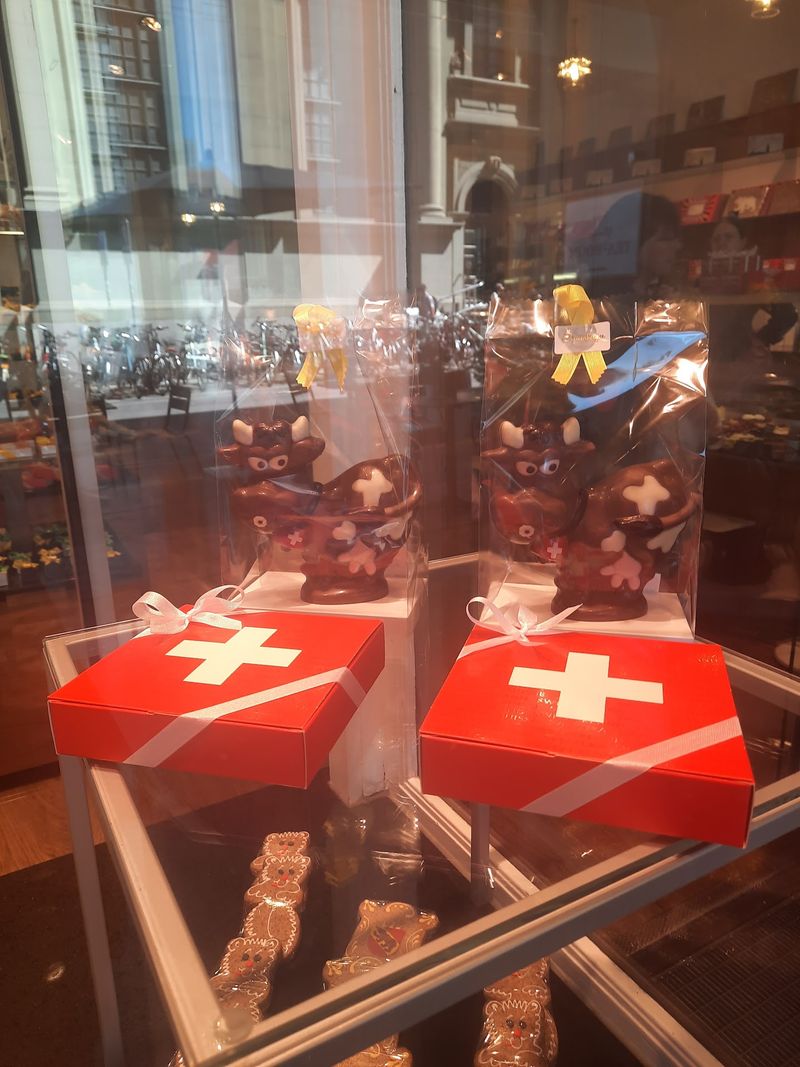
Bern has bears in its coat of arms, and sometimes on its gingerbread too. The Berner Haselnusslebkuchen is a dense hazelnut cake, often topped with a white sugar picture of the city’s famous animal.
Visitors expecting soft, spongy gingerbread are in for a surprise. Ground hazelnuts make up a big share of the dough, so each piece is firm, rich, and very nutty.
Confiserie Eichenberger on Kramgasse is closely linked with this Bernese specialty. The family business has been baking it for generations.
The location helps, too. The shop sits under the long stone arcades of Bern’s Old Town, a UNESCO World Heritage Site.
That means a pastry stop fits neatly into sightseeing. The Zytglogge clock tower is just a short walk away, so you can watch the hourly show with a snack in hand.
Lebkuchen comes in many sizes, from small squares to big decorated slabs. Order one with a personal message in icing if you want a gift that feels truly local.
6. Einsiedler Schafbock at Schefer, Einsiedeln, Canton of Schwyz
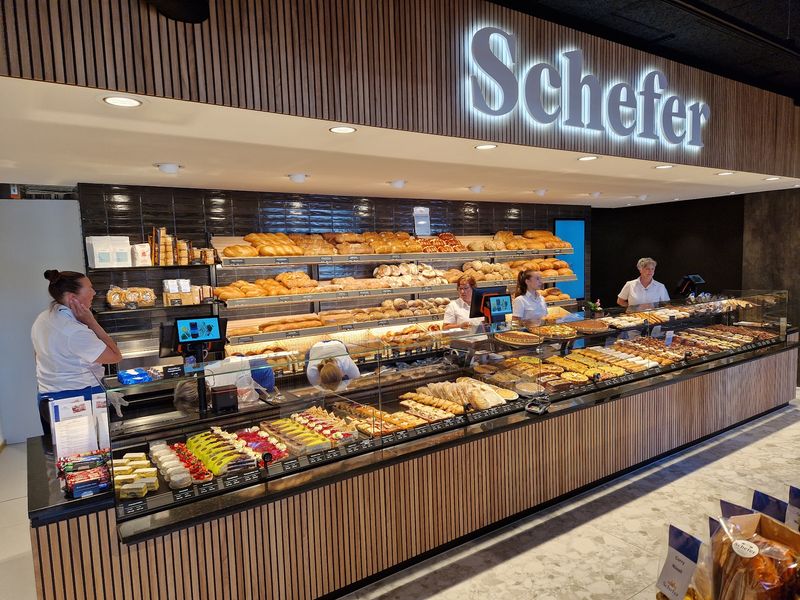
Pilgrims have traveled to Einsiedeln for over a thousand years, and many leave with the same snack. The Einsiedler Schafbock is a firm anise biscuit tied closely to this small town in the Canton of Schwyz.
Its name means ram, and the biscuit is often shaped with traditional figures. Bakers press the dough into wooden molds, much like other old Swiss recipes.
The flavor is simple and clear. Anise does most of the talking, with honey and flour handling the rest.
Schefer at Bahnhofplatz is a handy stop for trying one. You can step off the train and have a Schafbock in hand within minutes.
The biscuit is quite hard, so locals often dunk it in coffee or tea. Small bites are wise if you want your teeth to stay on good terms with you.
After your snack, walk up to the grand Einsiedeln Abbey. Its huge square and Baroque church give the humble biscuit a memorable backdrop and a story worth sharing.
7. Birnenbrot at Hotel Klarer, Zuoz, Graubünden
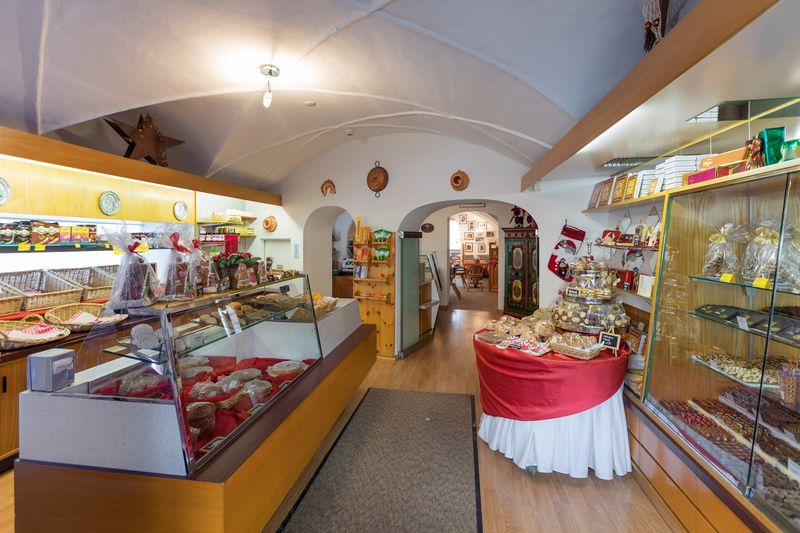
Pear bread sounds like something your grandmother would bake on a slow Sunday, and that’s exactly the point. Birnenbrot is a dense loaf packed with dried pears, often joined by nuts, raisins, figs, and warm spices.
Mountain families relied on dried fruit to get through long winters. Birnenbrot turned those stored pears into something worth celebrating.
The filling is usually wrapped in a thin layer of bread dough. Each slice shows a dark, fruity center surrounded by a pale crust.
Here’s where Hotel Klarer earns a second spot on this list. The Zuoz bakery offers both light and dark versions of Birnenbrot alongside its famous nut tarts.
Try both to compare. The darker style usually carries more fruit and spice, while the lighter one tastes milder.
Birnenbrot is a strong pick for anyone who prefers fruit over frosting. It also lasts well, so a loaf can fuel several days of hiking around the Engadin valley without going stale.
8. Cremeschnitte at Café Brändle, Unterägeri, Canton of Zug
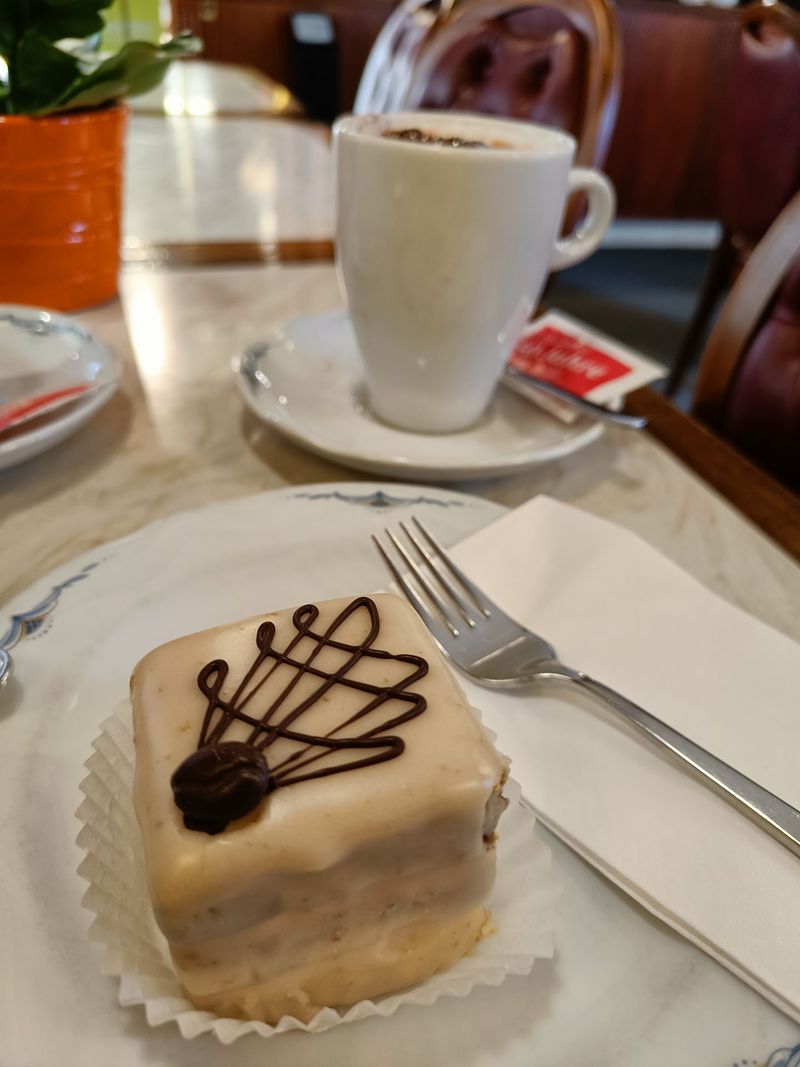
Ask a Swiss grandparent to name a café classic, and Cremeschnitte will likely top the list. The recipe is simple: layers of puff pastry stacked with vanilla cream and finished with a thin sheet of icing.
Simple does not mean easy, though. Getting clean layers that hold together takes practice, and good bakers are quietly proud of theirs.
Fair warning: eating one neatly is a skill few people master. Many locals tip the slice on its side before cutting, which keeps the cream from escaping.
Café Brändle in Unterägeri includes Cremeschnitte among its patisserie specialties. The family-run confectionery has been making sweets in the Ägeri Valley since 1971.
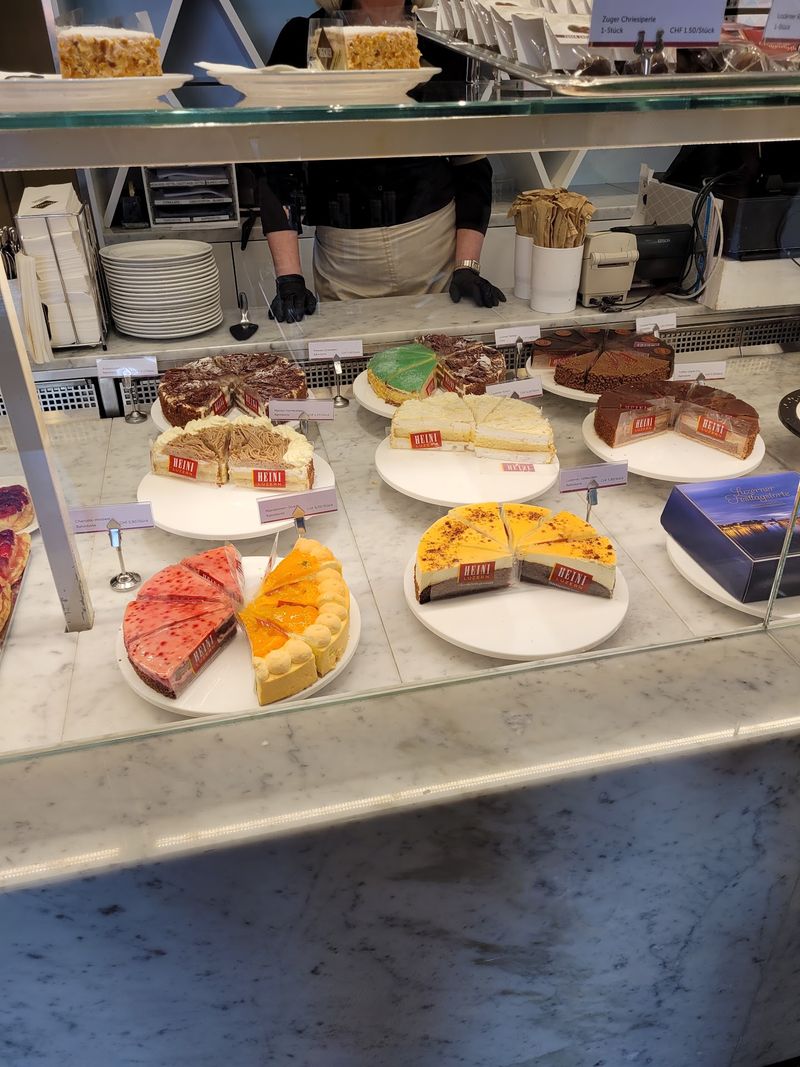
The display case also holds fruit tarts and other traditional desserts. That makes it tempting to order two items and share.
Lake Ägeri sits close by, so a walk along the shore pairs nicely with a pastry break. It’s a calm, local spot that sees fewer tour buses than the big cities.
9. Swiss Fruit Tartlets at Confiserie Bachmann, Lucerne, Canton of Lucerne
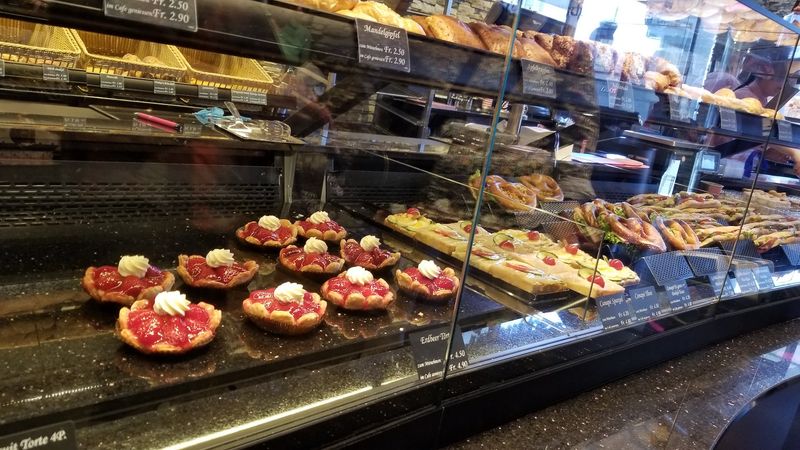
Swiss bakers treat fruit tartlets like tiny works of geometry. Every berry, apricot half, or kiwi slice sits in its place on top of a crisp pastry base and smooth cream.
Seasons decide what you’ll find. Strawberries and cherries rule early summer, while plums and apples take over as autumn arrives.
Many Swiss families buy fruit tarts for weekend coffee gatherings. A small tartlet is the personal-size version, so nobody has to fight over the last slice.
Confiserie Bachmann at Schwanenplatz is a convenient place to try them. The shop sits in one of Lucerne’s busiest sightseeing areas, near the lake and the historic center.
The family business dates back to 1897 and offers a wide spread of patisserie. Fruit tartlets share space with cakes, pralines, and sandwiches.
Take yours to go and walk to the Chapel Bridge, only minutes away. Eating a tartlet with a view of the water beats sitting indoors, especially on a clear day.
10. Traditional Swiss Pastries at Bäckerei KULT, Basel, Basel-Stadt
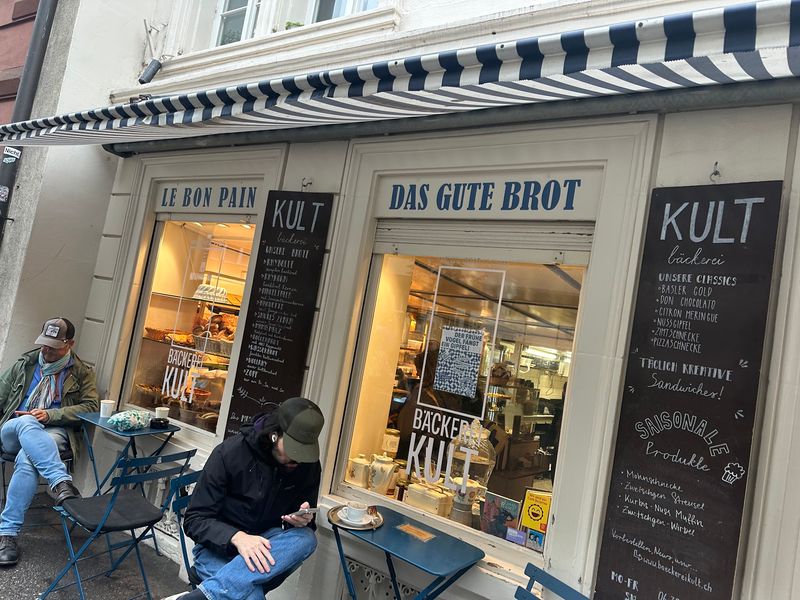
Since 1726, someone has been baking at this Basel address. That kind of track record gives even a plain morning roll a little extra respect.
Bäckerei KULT runs its bakery on Riehentorstrasse in Kleinbasel, the part of the city across the Rhine from the Old Town. The team mixes that long history with modern artisan methods.
Expect slow-fermented doughs, careful shaping, and a menu that shifts with the day. The sweet selection often includes items like Gipfeli, the Swiss version of a croissant, plus nut pastries and fruit-filled bakes.
Because the lineup changes, it pays to ask staff what came out of the oven most recently. They’re usually happy to point you to a favorite.
Arrive early for the best choice. Popular items can sell out before lunch, especially on weekends.
KULT is a great reminder that Swiss baking isn’t only about fancy cakes. Sometimes the best souvenir is simply a well-made pastry eaten on a bench beside the Rhine.
11. Swiss Patisserie at Confiserie Bachmann, Lucerne, Canton of Lucerne
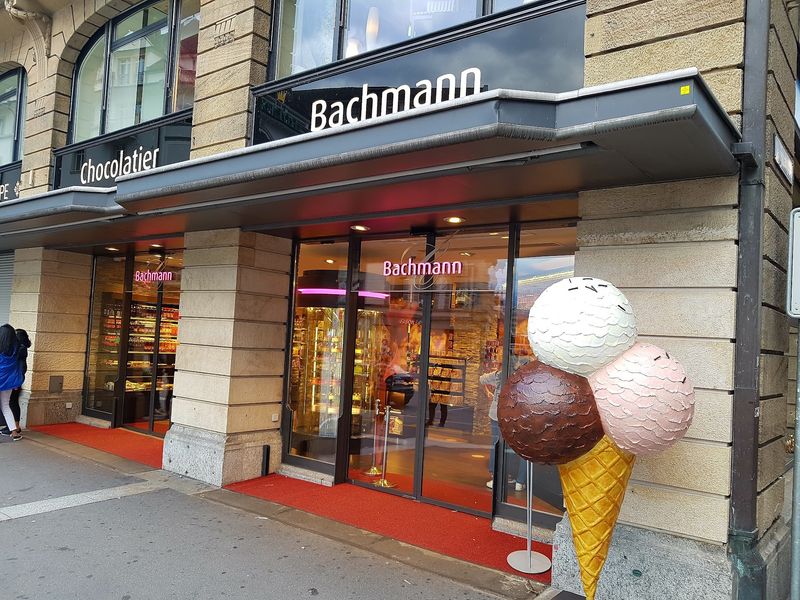
Can’t choose just one dessert? Confiseur Bachmann AG in the Tribschen area of Lucerne is built for indecisive sweet tooths.
The bakery and café sit at the company’s production site on Werkhofstrasse. Much of what Bachmann sells across its Lucerne shops is made right here.
That means the daily assortment is large. Breads, pastries, cakes, and confectionery fill the counters, mixing time-tested favorites with newer creations.
Look for Swiss classics like Luzerner Lebkuchen, nut croissants, and seasonal tarts. Bachmann is also known for creative cakes that look almost too tidy to cut.
Tribschen is a quieter neighborhood than the tourist-packed lakefront, which makes the café a relaxed spot for a longer break. Locals stop in for breakfast and weekend treats.
A smart plan is to visit near the end of your trip. You can sample a little of everything, then pick up final souvenirs in one place.
It’s a sweet closing note that shows how much Switzerland offers beyond the chocolate bar.
12. Bündner Nusstorte at Hotel Klarer, Zuoz, Graubünden
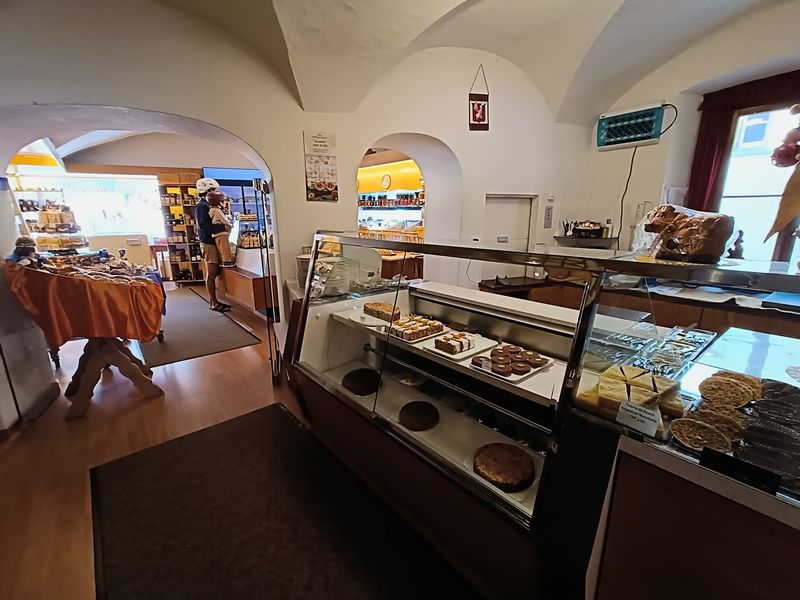
Back in 1926, an Engadin baker named Fausto Pult had a nutty idea that stuck. He wrapped a filling of caramelized sugar, cream, and chopped walnuts inside a buttery shortcrust shell, and the modern Bündner Nusstorte was born.
Pult showed his creation at the Mustermesse trade fair in Basel in 1934. After that, the tart became a proud symbol of the Canton of Graubünden.
Older nut cakes did exist in the 1800s, but bakers mixed the nuts right into the dough. One popular theory says Graubünden confectioners picked up ideas while working in Venice for centuries.
Hotel Klarer in Zuoz is a fitting place to try one. The hotel, restaurant, and bakery share an Engadin building that dates back to 1565, right on the village square.
Zuoz is known for its well-preserved center and grand patrician houses, so a walk before dessert is easy to justify. Order a slice with coffee or tea, as locals do.
A whole tart also keeps well for days. That makes it one of the smartest edible souvenirs in the Alps.
Share this story