Kansas has a longer relationship with flight than most people realize. Wichita alone built so many aircraft that it earned the nickname “Air Capital of the World,” and that is just one chapter in a story that stretches from a young girl in Atchison dreaming about the sky to rockets pointed at the stars. The state’s aviation history covers record-breaking pilots, world-class manufacturers, and machines that changed the course of history. Whether you are a lifelong aviation fan or someone who simply thinks airplanes are cool, Kansas has a surprisingly rich trail of museums, memorials, and historic sites worth tracking down.
This list covers 13 places across the state where that story comes alive, from a restaurant where you can watch military helicopters land while eating a burger, to a space museum that takes the whole adventure to another level entirely.
1. Kansas Aviation Museum, Wichita, Kansas
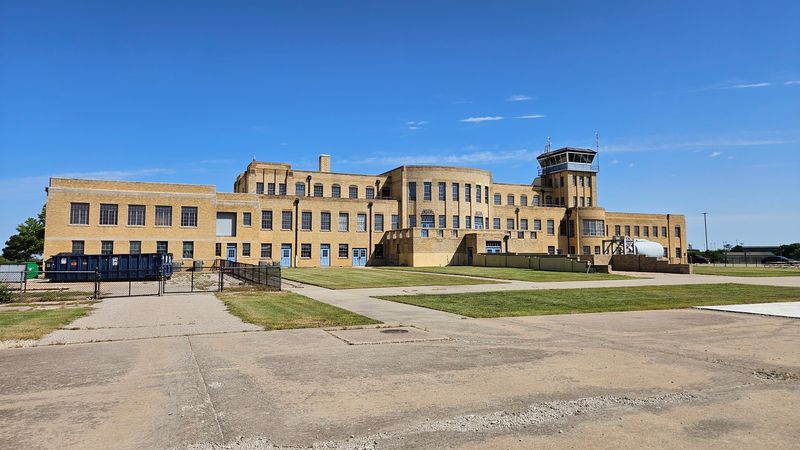
Art Deco architecture and aviation history make an unexpectedly great pair, and this Wichita landmark proves it. The building opened in 1935 as Wichita’s municipal airport terminal and served that role until 1954, after which it sat vacant for years before volunteers brought it back to life as a museum in 1991.
Inside, exhibits trace the full arc of Kansas aviation, covering local manufacturers, pioneering aviators, and planes that were actually built in the city. The collection includes a B-52 Bomber, a KC-135, and biplanes from the 1920s and 1930s.
Newer exhibits highlight the “Women of Aviation” and the “Rip Gooch Black Aviators” collection, adding important stories that deserve recognition. Visitors can also climb the original control tower for 360-degree views of the city, McConnell Air Force Base, and Spirit AeroSystems, all while listening to live air traffic control communications.
2. B-29 Doc Hangar, Education & Visitors Center, Wichita, Kansas
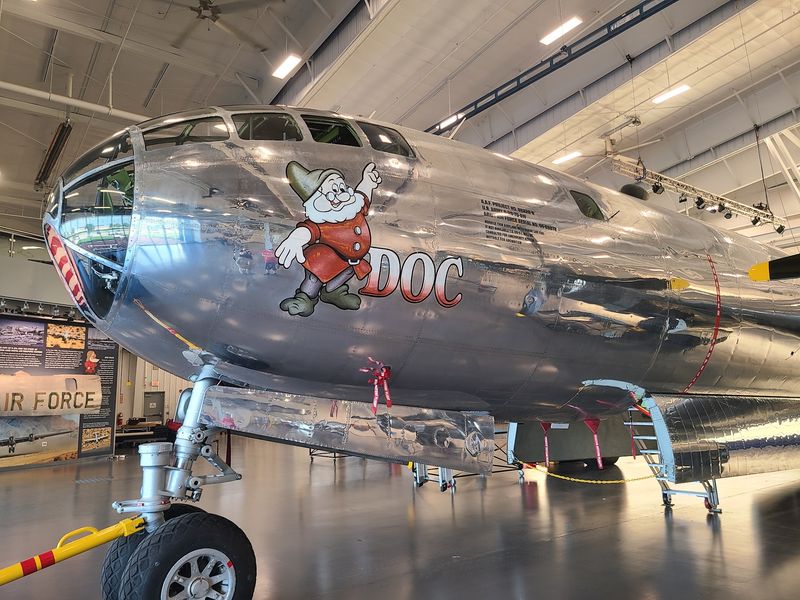
Only two airworthy B-29 Superfortresses exist anywhere in the world, and one of them lives in Wichita. “Doc,” serial number 44-69972, was built at the Boeing plant here in 1944, later used as a bombing target at China Lake, California, and then painstakingly restored by volunteers at that same Boeing facility before returning to flight on July 17, 2016.
The B-29 program was the most expensive project of World War II, with design and production costs reaching $3 billion, which gives some context to the scale of what visitors are looking at inside this hangar.
On scheduled days, guests can climb aboard for an up-close look inside the aircraft. Even on regular visit days, watching volunteers perform ongoing maintenance on this legendary bomber makes the stop feel genuinely active rather than like a simple static display.
3. Exploration Place, Wichita, Kansas
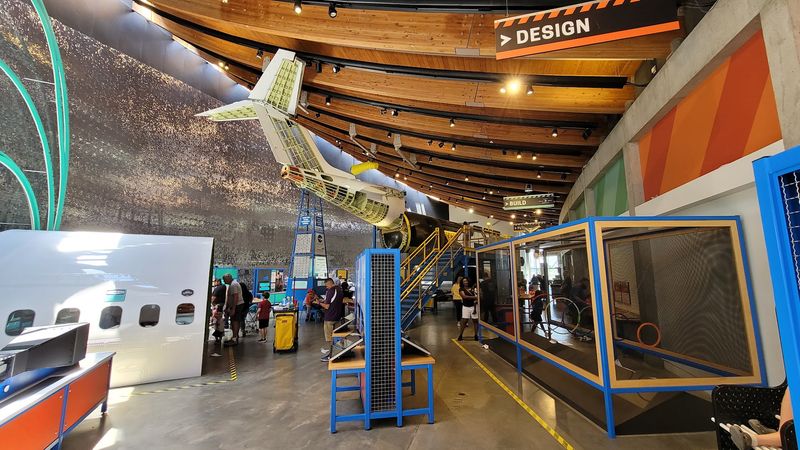
Most aviation museums show you what was built. Exploration Place asks you to think about how it gets built in the first place. The “Design Build Fly” exhibit takes Wichita’s manufacturing heritage and turns it into a hands-on engineering experience across 5,100 square feet with nearly 50 interactive elements.
Visitors can design an airplane seat, test landing gear, try riveting a wing, and explore a full-size Textron business jet cockpit and cabin. The exhibit is unique to Wichita and covers aviation from the initial design phase all the way through to flight.
An outdoor companion, the Textron Aviation Flight Adventure, is anticipated to open in Fall 2025 and is believed to be the first playground of its scale worldwide dedicated to aviation themes. It features a Beechcraft Staggerwing biplane sculpture, an explorable Cessna Citation jet, and a 40-foot rocket climbing structure with views across the Arkansas River campus.
4. Stearman Field Bar & Grill, Benton, Kansas
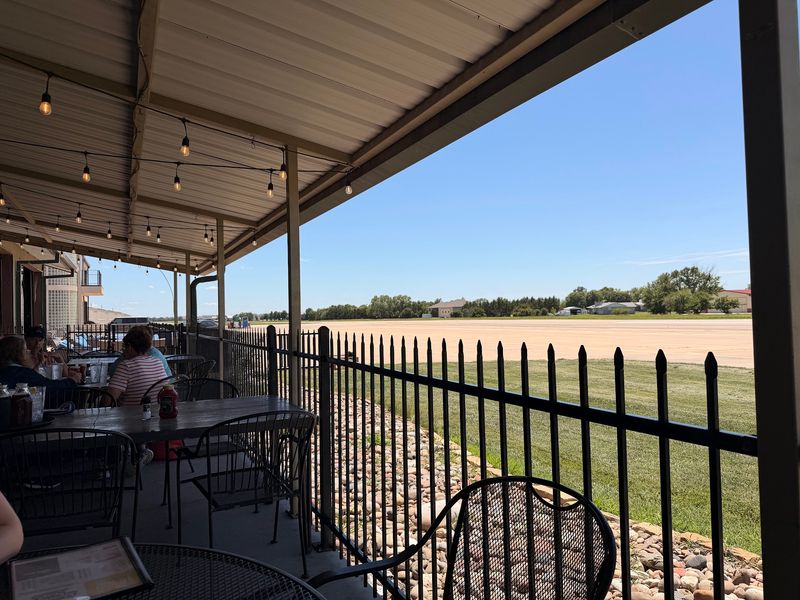
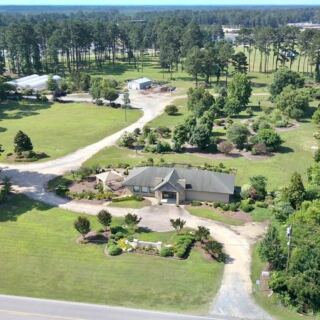
Not many restaurants can honestly say the runway is part of the ambiance, but this one earns that claim. The Stearman Field Bar and Grill sits directly beside Lloyd Stearman Field Airport in Benton, and the aircraft activity, ranging from private planes to Blackhawks, Chinooks, and World War II-era biplanes, happens remarkably close to the outdoor patio.
The menu keeps the aviation theme going with items like Pilot’s Fried Pickles, Bi-Plane Cheeseburgers, and Bomber Chicken Nachos, which makes the whole experience feel committed rather than gimmicky. Aviation-themed decor, including model planes and photographs of classic aircraft, fills the interior.
The airfield itself is named for aviation pioneer Lloyd Stearman, whose military trainer aircraft gained wide recognition. History buffs may also appreciate knowing the field served as a primary filming location for “The Gypsy Moths” (1969), a skydiving film starring Burt Lancaster and Gene Hackman.
5. Amelia Earhart Hangar Museum, Atchison, Kansas
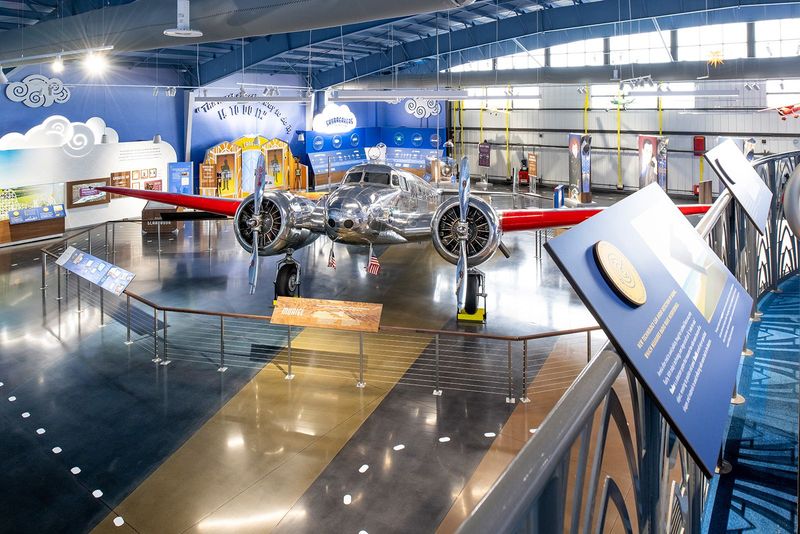
The centerpiece of this museum is a genuine rarity. “Muriel” is the world’s last surviving Lockheed Electra 10-E, the same model Amelia Earhart flew on her final journey, and it sits inside a 17,000-square-foot hangar designed with Art Deco details that nod to the golden age of aviation. The museum opened to the public on February 1, 2023.
“Muriel” is named for Amelia’s younger sister, Grace Muriel Earhart Morrissey, which gives the aircraft a personal connection that goes beyond the historic. The museum’s 14 interactive exhibits let visitors step into a full-scale cockpit replica, compare instrument panels, and test their riveting skills.
A digitized scrapbook explores the stories of women who influenced Earhart throughout her life. The museum is actively pursuing affiliation with the Smithsonian Institution, which signals just how seriously the aviation and museum communities regard what Atchison has built here.
6. Amelia Earhart Birthplace Museum (Ninety-Nines), Atchison, Kansas
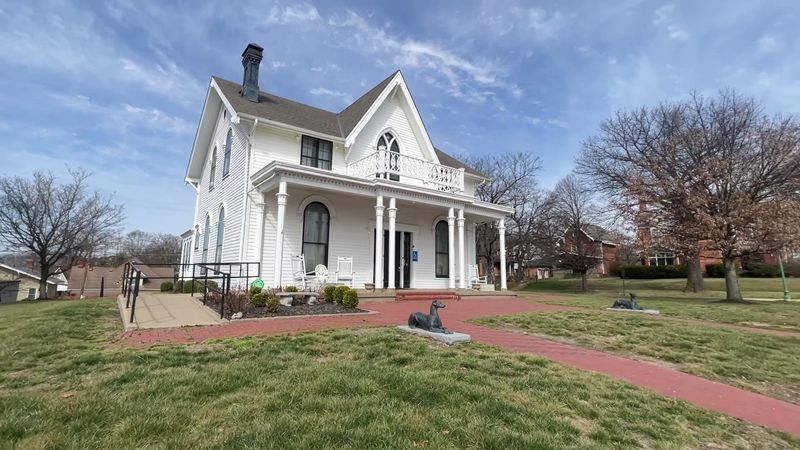
Before the transatlantic crossings and the world records, there was a house on a bluff above the Missouri River in Atchison. Amelia Earhart was born here on July 24, 1897, and the home has been carefully restored to reflect its turn-of-the-century condition, giving visitors a look at the environment where she spent part of her childhood with her grandparents.
The property is owned and operated by The Ninety-Nines Inc., the international organization of women pilots that Earhart helped establish in 1929 and for which she served as its first president. That connection makes the site more than a historic house tour.
The museum offers a personal, human-scale counterpoint to the larger Earhart attractions nearby. Rather than focusing on record-setting flights, it asks visitors to consider who Earhart was before the world knew her name, which turns out to be a quietly compelling question.
7. International Forest of Friendship, Atchison, Kansas
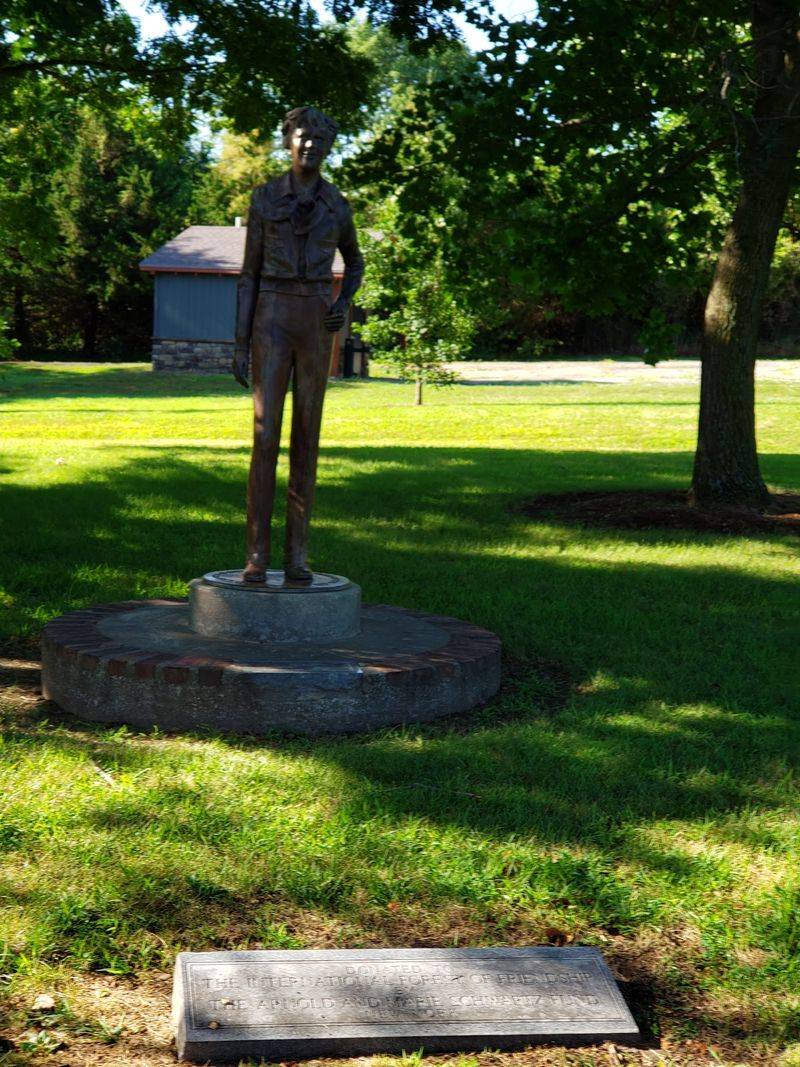
A living memorial that spans continents is a bold concept, and this Atchison landmark pulls it off. Established in 1976 as a bicentennial project through a partnership between the City of Atchison, The Ninety-Nines Inc., and Kansas State University’s Kansas Forest Service, the forest grows on a gentle slope overlooking Lake Warnock.
Trees representing all 50 American states and more than 35 countries grow throughout the grounds, and granite plaques along the winding pathways recognize over 1,500 aviation and aerospace notables, including Charles Lindbergh, Sally Ride, and the Wright Brothers. A life-size bronze statue of Amelia Earhart overlooks the whole site.
One of the most remarkable features is a “Moon Tree,” grown from a seed that traveled to the moon aboard Apollo 14, surrounded by an Astronaut’s Memorial. In 1976, “Memory Lane,” one of the original paths, became the first designated National Recreation Trail in Kansas.
8. Amelia Earhart One Acre Earth Portrait, Atchison, Kansas
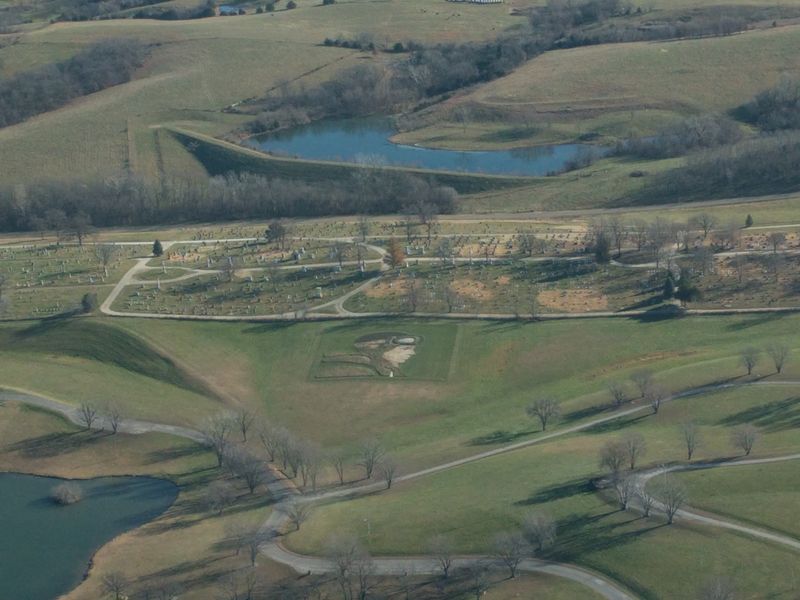
Kansas artist Stan Herd had a specific challenge in 1997: how do you honor a pilot who spent her career looking down at the earth from above? His answer was to carve Earhart’s portrait directly into the landscape on a hillside overlooking Warnock Lake, creating a 42,000-square-foot earthwork made from permanent plantings, stone, grasses, and other natural materials.
This was Herd’s first permanent earthwork, constructed using tractors, plows, lawn mowers, and weed eaters. The scale of it means the portrait is best appreciated from a dedicated viewing deck on a nearby hilltop, which frames the whole piece properly.
As a companion to Atchison’s two Earhart museums, this site adds a genuinely unexpected dimension to the town’s aviation tribute. It is not a typical monument, and that unusual quality makes it one of the more memorable stops on any Kansas aviation road trip.
9. Combat Air Museum, Topeka, Kansas
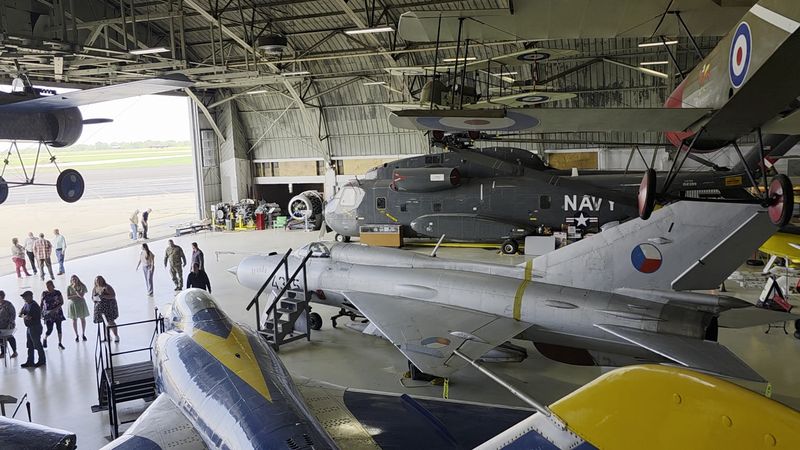
Forbes Field has been associated with military aviation since World War II, and the Combat Air Museum keeps that history front and center. Originally established in 1976 as the Kansas Wing of “Yesterday’s Air Force” and reorganized as the Combat Air Museum in 1979, the institution now holds over 40 aircraft covering a full century of flight.
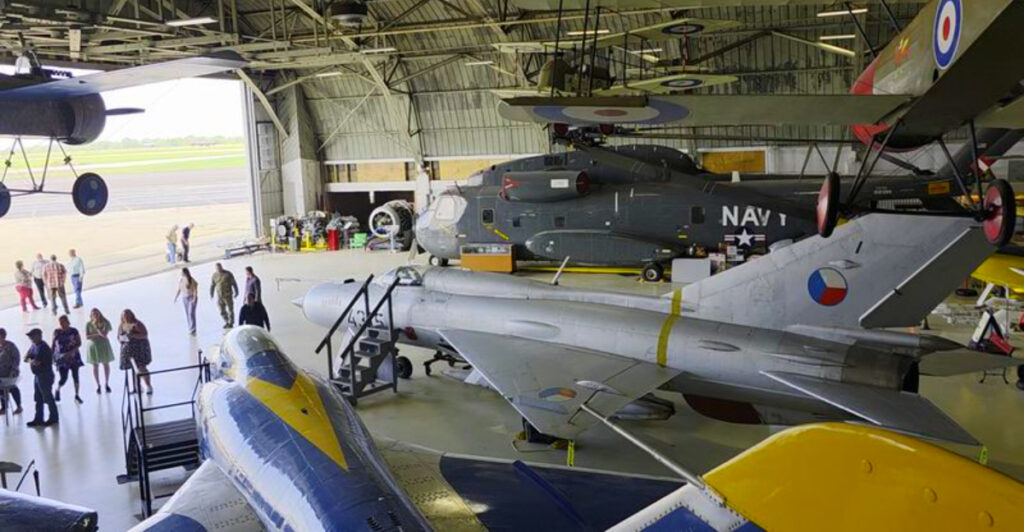
The collection ranges from World War I replicas to Cold War jets, with standout aircraft including a Grumman F-14A Tomcat, a Douglas C-47D Skytrain nicknamed “Kilroy,” and a Lockheed EC-121T Warning Star. A World War II German POW Period Room and flight simulators round out the exhibits beyond the aircraft themselves.
Because the museum sits on an active airfield, visitors often witness real flying activity from Air Force fighter aircraft and Army helicopter operations happening just outside. That combination of historic collection and present-day aviation makes the Combat Air Museum feel unusually alive for a history museum.
10. American Flight Museum, Topeka, Kansas
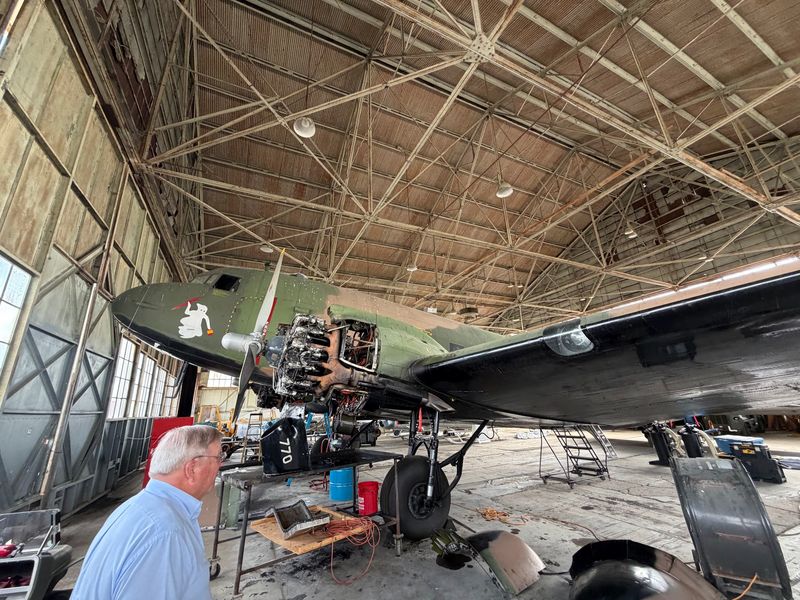
Founded in 1997, this Topeka institution describes itself as a “flying air museum,” which means the aircraft here are meant to be kept in the air, not just preserved behind barriers. The mission centers on acquiring historical aircraft to both fly and exhibit at events across the country, giving the collection a purpose beyond display.
The most significant aircraft in the collection is a Douglas AC-47 Gunship, meticulously restored in the markings of the aircraft where Sgt. John L. Levitow earned the Congressional Medal of Honor during the Vietnam War. That specific historical connection gives this particular plane a story worth knowing before you walk in.
The broader inventory includes a British BAC-111, four UH-1H Hueys, a T-6, T-28, CJ-6, Yak 52, Cub, two T-41s, a C-182, and a Navion. The museum runs on volunteer effort, and opportunities to help range from aircraft maintenance to working in the gift shop.
11. Coffeyville Aviation Heritage Museum, Coffeyville, Kansas
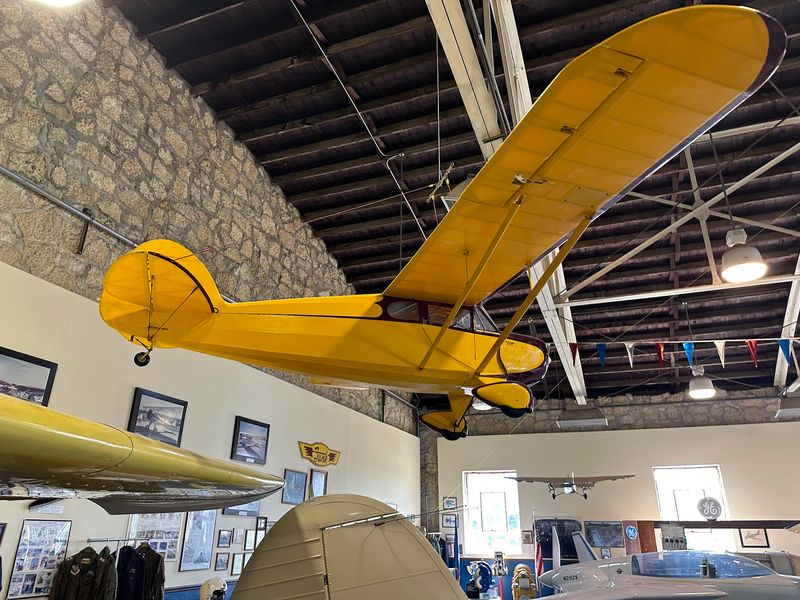
The building itself is part of the story at this Coffeyville museum. The hangar dates to the 1930s and was constructed as a Works Progress Administration project, making it the only remaining structure from the former Pfister Park Airport, which operated from 1933 to 1960. That history gives the space a character that newer museum buildings simply cannot replicate.
Inside, displays cover memorabilia from the Coffeyville Air Base and pay tribute to local aviation pioneers. A standout exhibit focuses on Funk Airplanes, designed by brothers Joe and Howard Funk. The Funk Aircraft Company produced 232 aircraft in Coffeyville between 1941-1942 and 1945-1947, and approximately 200 of the over 300 Funk planes ever built remain airworthy today.
Those surviving aircraft gather for an annual reunion in Coffeyville each September, which is worth timing a visit around. Admission is free, and guided tours can be arranged through the Coffeyville Area Chamber of Commerce.
12. Mid-America Air Museum, Liberal, Kansas
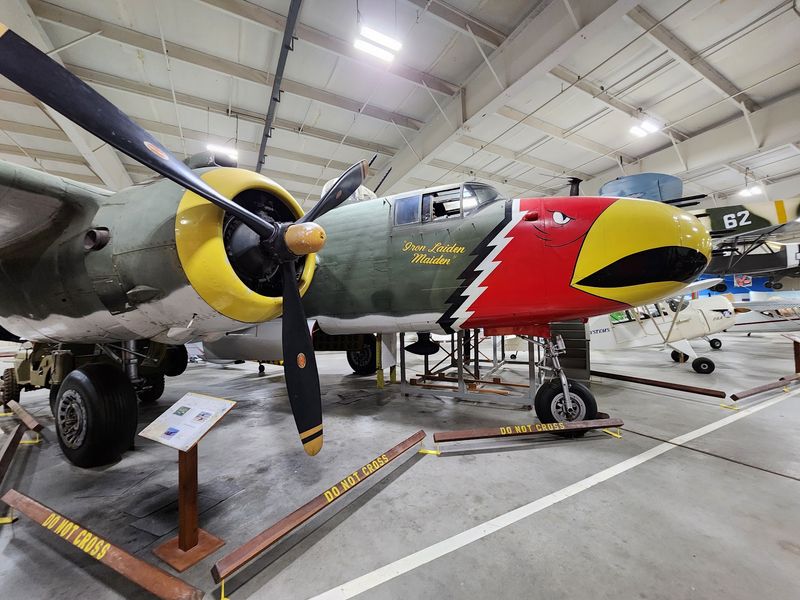
Southwest Kansas is a long drive from almost everywhere, but more than 100 aircraft waiting at the end of the road makes a persuasive argument for making the trip. The Mid-America Air Museum in Liberal holds the title of the largest aircraft museum in Kansas and ranks among the largest in the entire United States.
The 80,000-square-foot building was originally a Beechcraft assembly plant where models like the Musketeer, Baron, Duchess, and Sundowner were manufactured. Before that, the site served as the Liberal Army Air Field, a B-24 Liberator training base during World War II responsible for training nearly one-third of all B-24 command pilots.
Notable aircraft include a North American B-25 Mitchell, a North American F-86 Sabre, and a Bell H-13 Sioux, the helicopter model famous from the television series M.A.S.H. Visitors can sit inside select aircraft, explore a Hall of Aviation Science, and engage with a dedicated kid zone featuring interactive displays.
13. Cosmosphere, Hutchinson, Kansas
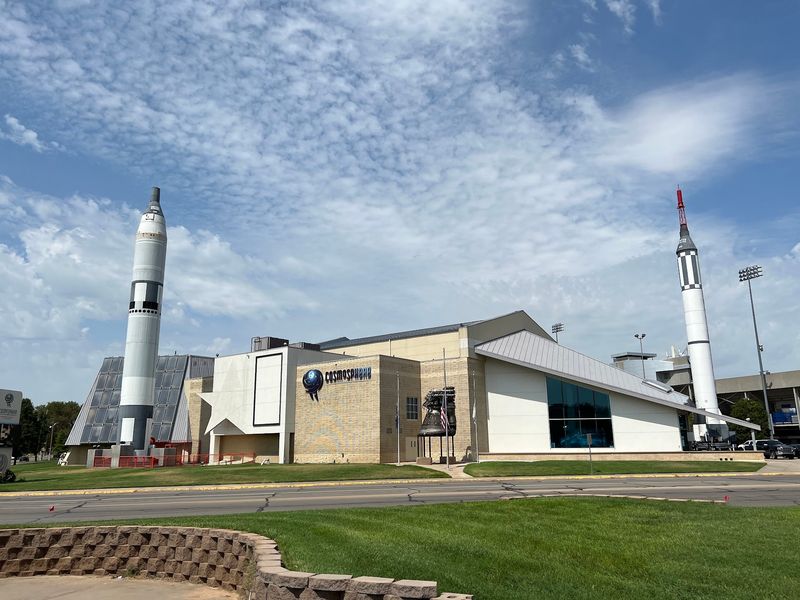
Kansas aviation history does not stop at the atmosphere, and the Cosmosphere in Hutchinson makes that point with one of the most extensive collections of American and Russian space artifacts in the world. The museum traces the same fascination with engineering, speed, and exploration that turned Kansas into a center of flight, and then follows it all the way into orbit.
Interactive exhibits let visitors dock a spacecraft, experience the interior of a flight capsule, and run mission control for a simulated rocket launch. The Gemini Docking Simulation tests flight skills, while the Rocket Launch Simulator lets guests experiment with hydrogen and oxygen ratios to launch a mock rocket. A World-Class Planetarium and a two-story Dome Theater add to the range of experiences.
Younger visitors have the “CosmoKids” STEAM learning experience available, and residents of Reno County receive free admission to the Hall of Space. As a finale to a Kansas aviation road trip, it is hard to top a museum that literally points upward.
Share this story