Long before highways and GPS, a dirt path stretching across the Kansas prairie carried an entire nation westward. The Santa Fe Trail was one of the busiest and most important trade routes in 19th-century America, connecting Missouri to New Mexico and passing through some of the most historically rich land in the country.
Kansas holds a remarkable stretch of that route, where you can still see the actual grooves left by wagon wheels, visit military forts that protected travelers, and stand in spots where major decisions about America’s future were made. From the eastern edge of the state near Kansas City all the way to the Colorado border, these 13 stops tell the full story of life on the trail, covering trading posts, mission schools, natural landmarks, battlefield sites, and preserved wagon ruts that have survived more than 150 years.
Grab your road trip playlist and get ready to travel back in time.
1. Shawnee Indian Mission State Historic Site
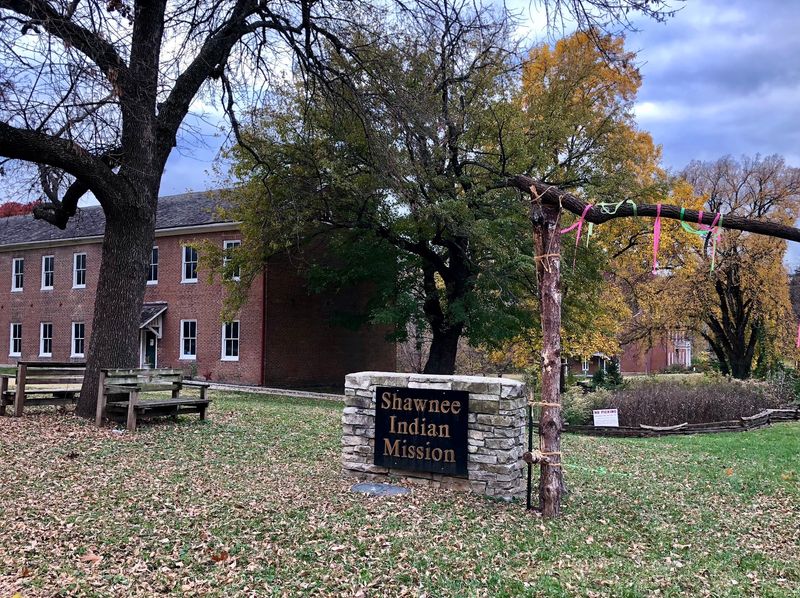
Three buildings have stood here since the 1800s, and that alone makes this one of the most substantial historic stops near the eastern end of the Kansas trail corridor.
Originally established as a school for Native American children, the mission later served as a territorial capital and functioned as a supply point for travelers on both the Santa Fe and Oregon trails.
A visit here introduces a more complicated side of westward expansion, including the sweeping changes imposed on Indigenous communities as migration accelerated across the plains.
The site operates as an active Kansas state historic site with regular visitor hours, making it an accessible first chapter for anyone tracing the trail from east to west. History rarely starts with a simple story, and this place makes no attempt to pretend otherwise.
2. Mahaffie Stagecoach Stop & Farm Historic Site
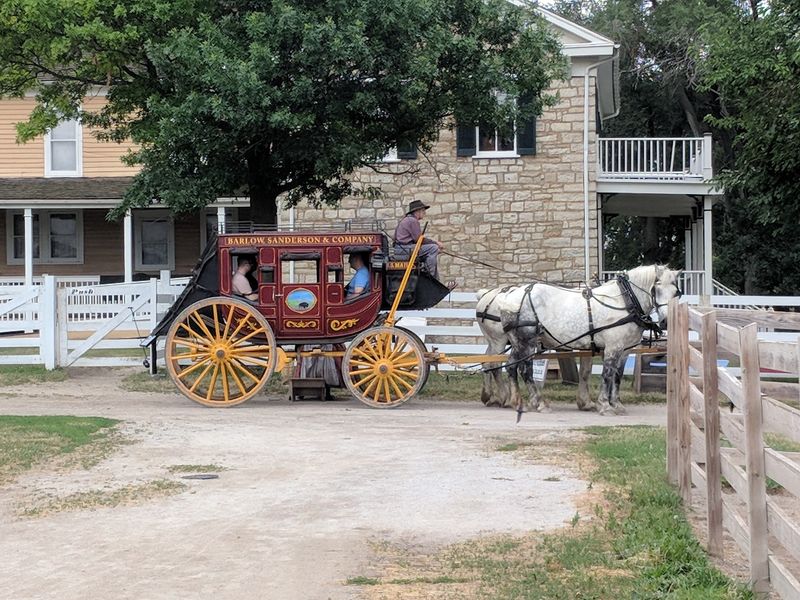
Recognized as the only surviving authentic stagecoach stop on the Santa Fe Trail preserved as a public historic site, Mahaffie is the kind of place that makes the trail era genuinely easy to picture.
James and Lucinda Mahaffie ran their stone farmhouse as a working stagecoach station during the 1860s, feeding passengers and swapping out horse teams before the journey pushed westward.
The original 1865 limestone farmhouse still stands, and the site offers living-history programs, a Heritage Center with exhibits, and an Agricultural Heritage Barn completed in 2014.
Visitors can even ride in reproduction Concord-style stagecoaches, which is one of the more memorable ways to understand just how bumpy and slow cross-country travel actually was before the railroad arrived. The Mahaffie family began serving travelers as early as 1858.
3. Gardner Junction Park
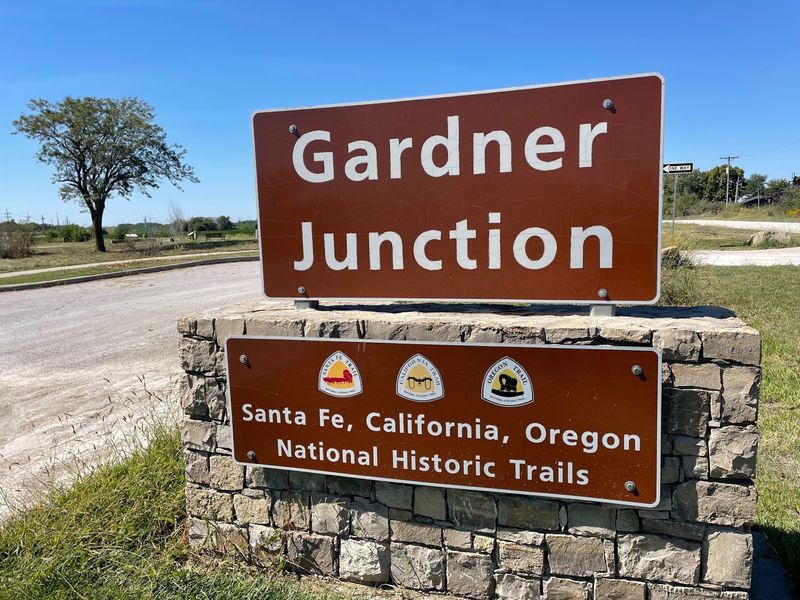
Not every historic crossroads gets a park, but this one absolutely deserved one. Gardner Junction Park marks the exact spot where westbound travelers had to choose between the Santa Fe Trail and the routes leading to Oregon and California.
Dedicated in the summer of 2008, the park features a 400-foot paved walking path lined with wayside exhibits, and the landscaping includes six species of native grasses and roughly 30 types of wildflowers chosen to reflect the prairie those early travelers actually crossed.
A red-roofed shade structure anchors the site with orientation panels that highlight key points along the National Historic Trails.
The park is owned by the City of Gardner and is recognized by the National Park Service. Pairing it with the nearby Gardner Historical Museum turns a quick stop into a genuinely informative half-day outing.
4. Gardner Historical Museum
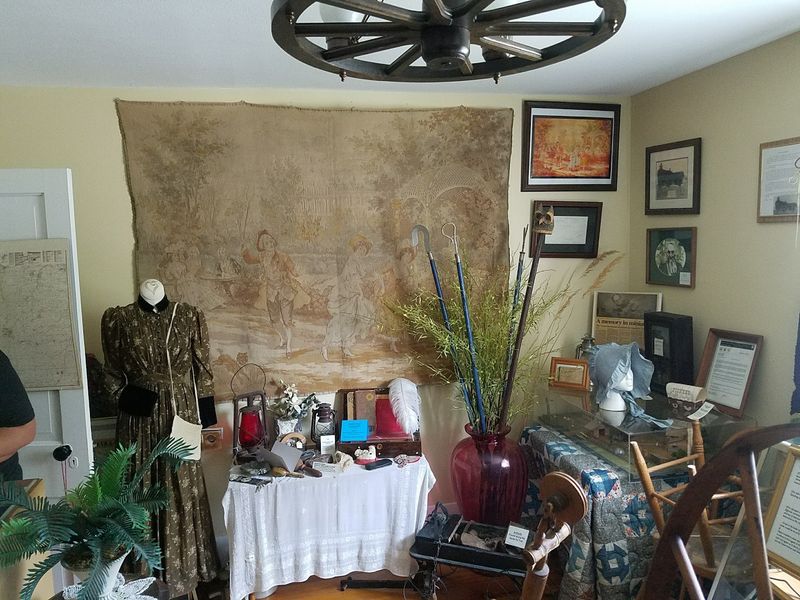
Housed inside an 1893 residence on West Main Street, this small museum delivers the kind of human-scale detail that a roadside marker simply cannot fit on a single plaque.
Its exhibits trace Gardner’s evolution as a community, with particular attention to its position near the junction of three major overland trails. Period rooms and a well-organized historical timeline give visitors a clear sense of what daily life looked like when wagon trains were still a common sight on the horizon.
Kansas Tourism specifically highlights this museum as a recommended stop on the official Santa Fe Trail itinerary, and for good reason.
Visiting here before heading out to explore actual trail remnants in the area pays off considerably, since the context it provides transforms an ordinary-looking field into something worth stopping the car for. Think of it as the instruction manual for everything you are about to see outside.
5. Black Jack Battlefield
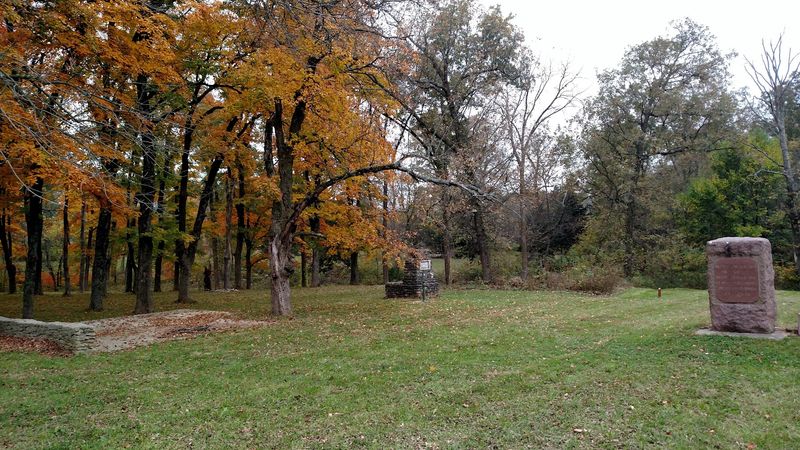
History took a sharp turn here in 1856, when abolitionist John Brown led his forces against Henry Clay Pate in what became known as the Battle of Black Jack, one of the key confrontations of the Bleeding Kansas era.
The Santa Fe Trail crossed this very property, which means the landscape carries two distinct layers of history at once, one tied to westward trade and one tied to the national crisis over slavery that was tearing the country apart.
Visitors can walk trails through open prairie and read interpretive panels that explain both stories without glossing over the tension between them.
The battlefield is preserved and accessible, offering a quieter and more reflective experience than a typical museum visit. Few places along the Kansas trail route force you to think as hard about what westward expansion actually cost the people living through it.
6. Kaw Mission State Historic Site
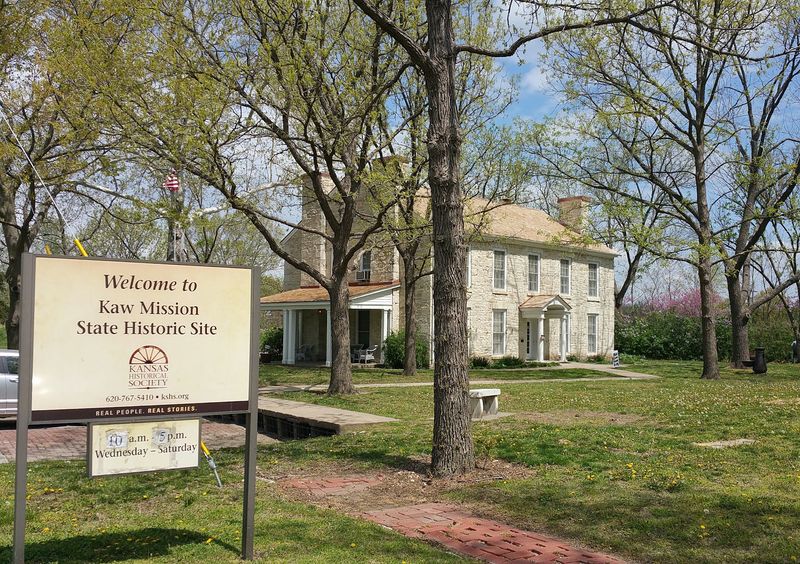
Council Grove’s trail history runs deeper than wagon trains and supply runs, and the Kaw Mission is where that broader story gets told properly.
Established in 1850 as a school for Kaw children, the mission served approximately 30 Kaw boys between 1851 and 1854. The Kanza people, who gave Kansas its name, had been forcibly relocated to a diminished reservation in this area in 1846, and the mission reflects the complicated relationship between Indigenous communities and the expanding American frontier.
Today the building operates as a museum under the Kansas Historical Society, displaying Kaw leather craft, beadwork, textiles, photographs, Santa Fe Trail artifacts, and period furniture.
An eight-minute introductory video called “The Original Kansans” provides a useful overview before exploring the exhibits. The site also functions as Council Grove’s official visitor information center and sits at the northern end of the scenic Neosho River Riverwalk.
7. Post Office Oak
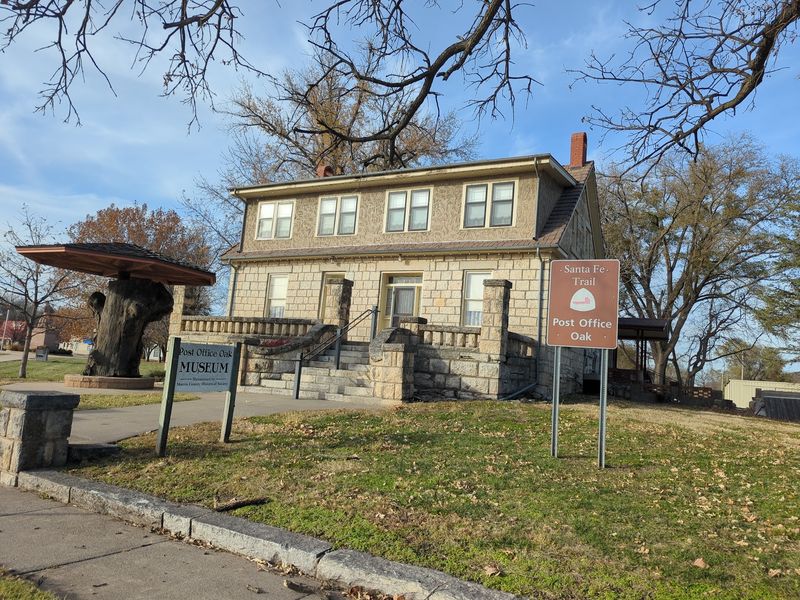
Before telegraphs, before postal routes, and long before email, travelers on the Santa Fe Trail invented their own communication system at a large oak tree in Council Grove.
Between 1828 and 1847, people heading west would leave letters and messages in a cache at the base of the tree, trusting that someone heading east would carry the news along. The tree earned the name Post Office Oak, and the practice was as practical as it was inventive.
The original tree did not survive, falling in 1990, but its preserved stump still stands on Main Street as a marker of that clever workaround.
Adjacent to the site, an 1864 stone house now operates as a museum run by the Morris County Historical Society. A visit here typically takes 30 minutes or less, but combined with Council Grove’s other landmarks, it rounds out the town’s role as a living outdoor museum of trail-era life.
8. Pawnee Rock State Historic Site
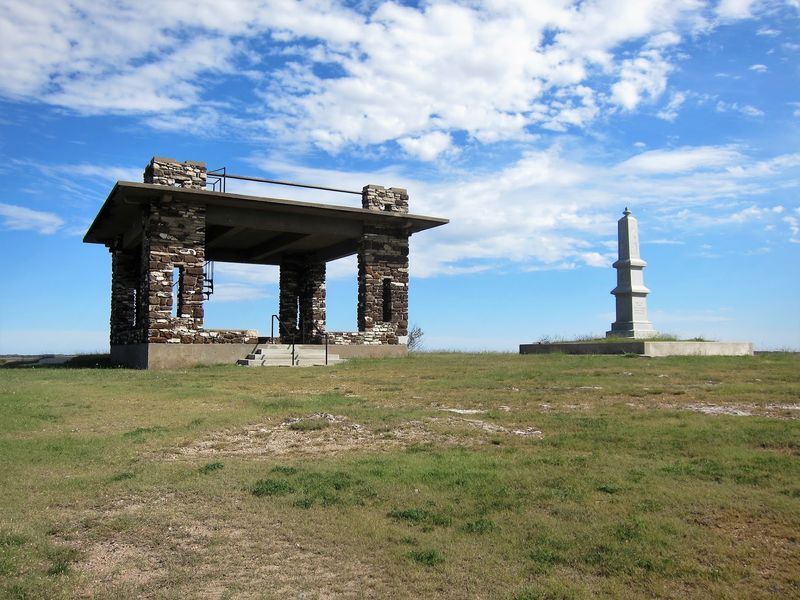
Rising 50 to 60 feet above the surrounding prairie, Pawnee Rock was one of the most recognized landmarks on the entire Santa Fe Trail, and travelers noted it in journals, letters, and diaries throughout the trail’s active years.
The sandstone formation served as a reference point marking roughly the halfway stage of the journey, and Native American tribes including the Comanche, Kiowa, Arapaho, and Cheyenne used it as a vantage point for spotting buffalo herds and approaching wagon trains.
During the 1870s, railroad crews quarried sections of the rock’s top for gravel, reducing its original height considerably.
Today visitors can climb to a pavilion and take in a 360-degree view of the Arkansas River Valley that makes the importance of any elevated landmark in flat open country immediately obvious. The site is managed by the Kansas Historical Society.
9. Santa Fe Trail Center
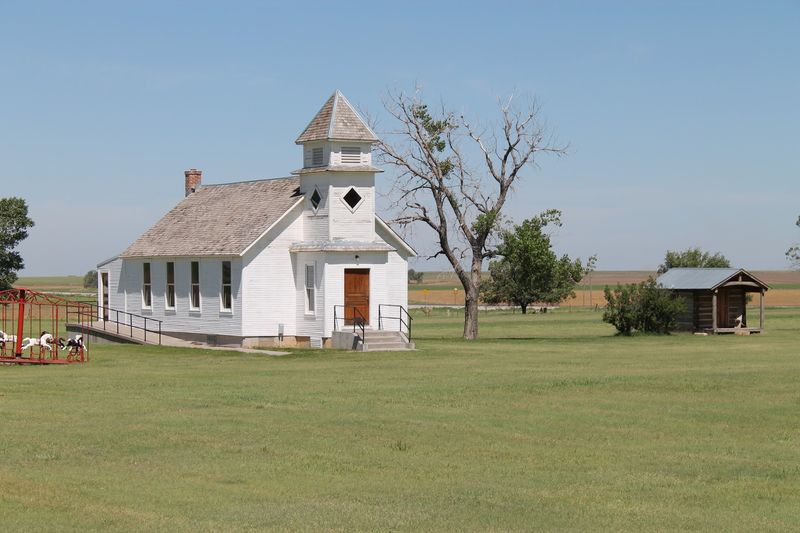
Before heading out to stare at depressions in a field and wonder what exactly you are looking at, the Santa Fe Trail Center near Larned is the stop that gives everything else context.
The museum and research library cover the full trail era, beginning with a full-sized mounted bison named Wally, then moving through exhibits on American Indians, mountain trappers, Santa Fe traders, and the broader settlement of the central Kansas plains.
The outdoor museum is a particular highlight, featuring reproductions of a sod house, a dugout, a one-room schoolhouse, a limestone cooling house, a Santa Fe Railroad Depot, and the Escue Chapel, the first church built by African-American parishioners in the community.
Located two miles west of Larned and four miles from Fort Larned, the center offers docent-led group tours by advance reservation and a well-stocked gift shop carrying books, jewelry, pottery, and Kansas memorabilia.
10. Fort Larned National Historic Site
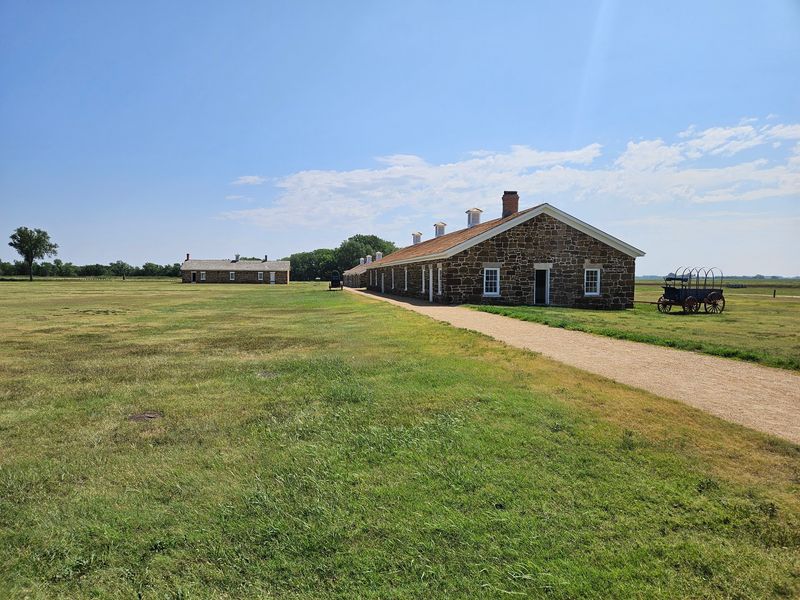
Nine original sandstone buildings still stand at Fort Larned, making it one of the most completely preserved military posts from the Indian Wars era anywhere in the country. That is not a small distinction.
Established in 1859, the fort protected mail coaches, freight wagons, and travelers on the Santa Fe Trail while also serving as a site for treaty negotiations and the distribution of annuities to Plains nations. Buffalo Soldiers, homesteaders, Hispanic teamsters, hide hunters, and railroad workers all passed through here.
Visitors can explore the grounds via self-guided tours using the NPS App, join ranger-led tours, or follow the History and Nature Trail around the fort’s perimeter.
Living-history programs, reenactments, and weapons demonstrations run regularly throughout the year. Admission is free, and the visitor center includes a museum and an audiovisual orientation program.
Kansas Tourism recommends pairing this stop directly with the nearby Santa Fe Trail Center.
11. Santa Fe Trail Tracks
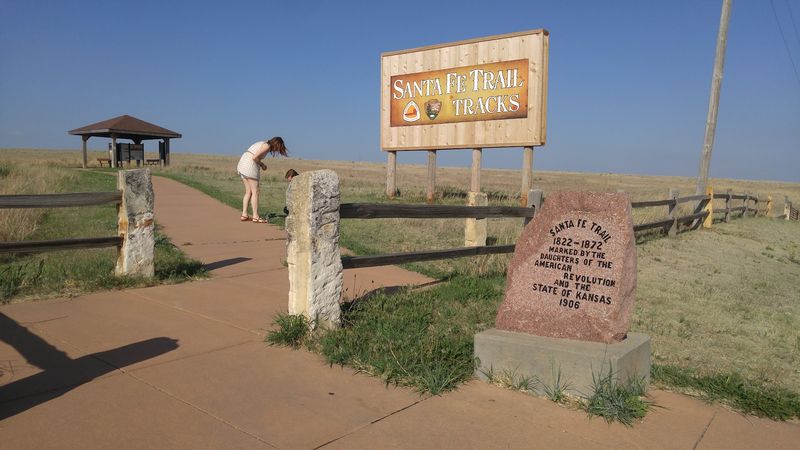
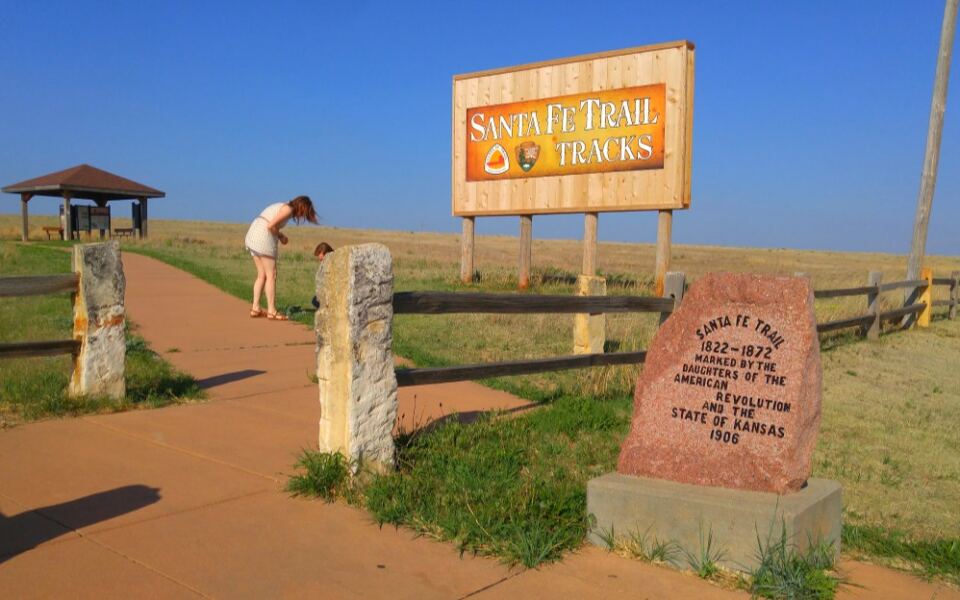
West of Dodge City, the old trail suddenly becomes one of the most tangible things you can stand next to in Kansas. The National Park Service identifies this area as containing some of the finest surviving examples of Santa Fe Trail ruts anywhere along the route.
Decades of horses, oxen, mules, and heavily loaded freight wagons crossing the same ground created broad, unmistakable swales that the prairie has held onto for well over a century.
A walkway and interpretive signs allow visitors to examine the ruts up close rather than squinting across an unmarked field from a parking area.
The combination of clear physical evidence and solid interpretive information makes this one of the more satisfying stops for anyone who wants proof that the trail was real and not just a line on a historical map. The landscape here does the storytelling on its own.
12. Boot Hill Museum
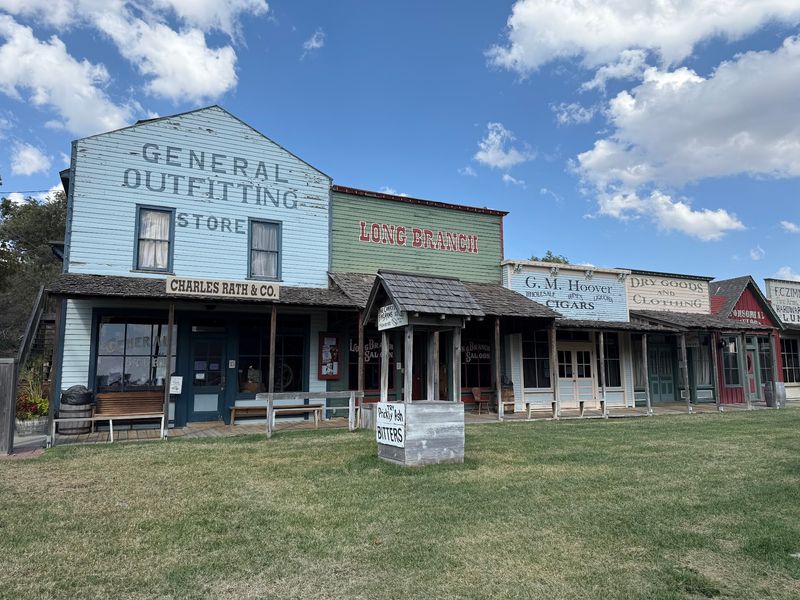
Dodge City’s Wild West reputation tends to overshadow something important: the Santa Fe Trail came first, and heavy trail traffic shaped the area long before cattle drives made the town famous.
Boot Hill Museum sits on the original site of the historic Boot Hill Cemetery and brings the 1870s and 1880s to life through a replica of Historic Front Street, first constructed in 1958. The museum holds a collection of more than 60,000 objects, photographs, and documents focused primarily on Dodge City’s history from the 1870s through the 1920s.
Summer visitors can catch performances by the World Famous Boot Hill Museum Gunfighters at high noon and 6 p.m., or enjoy the Long Branch Variety Show featuring Miss Kitty, singing bartenders, and can-can dancers.
Recent 2020 renovations added a new building with interactive exhibits covering Plains peoples and early Dodge City history. The museum is ADA-compliant and holds official certification as a Santa Fe National Historic Trail site.
13. Point of Rocks
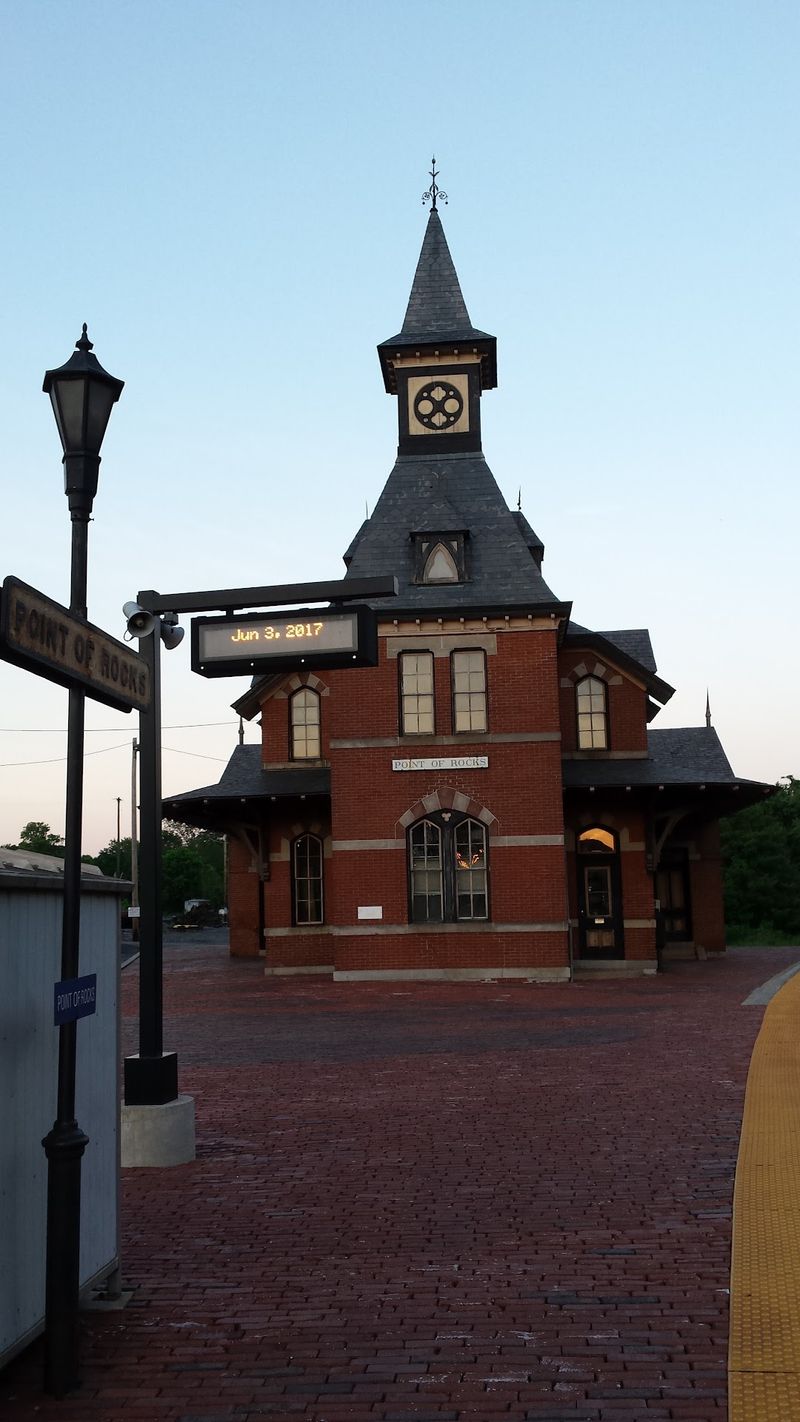
At the far southwestern corner of Kansas, near the borders of both Colorado and Oklahoma, the landscape changes completely and the trail reaches one of its most dramatic natural landmarks.
Point of Rocks rises above the Cimarron National Grassland, an expanse of more than 100,000 protected acres through which approximately 23 miles of the historic Santa Fe Trail still pass. Travelers once used the rocky prominence as a lookout point, and wagon ruts remain visible in sections of the grassland today.
Modern development largely disappears from view here, leaving an open horizon that still suggests the scale of what early travelers faced on their way toward Santa Fe.
As a final stop on a Kansas trail road trip, Point of Rocks earns its place not through elaborate interpretation but through sheer geography. The land itself carries the history, and standing on that rock makes it easy to understand why this spot mattered.
Share this story