A postman who collected stones on his daily route. A road inspector who hid a kingdom in a forest ravine.
A poet who answered a ruined orchid collection with giant concrete flowers. None of them had a movie budget, and none of them asked for permission.
Each one simply kept building until an ordinary patch of land turned into something that follows its own rules. The places on this list are real, and you can visit every one of them.
You will find stone monsters, mosaic houses, concrete jungles, and a castle with a dragon on top. Some are free to enter, some need a timed ticket, and a few can only be seen on a guided tour.
Each entry shares the maker’s story, what you will see on the grounds, and the practical details that help you plan a visit. Ready to meet the dreamers who built worlds with their own hands?
The first stop is a palace in France that took one mail carrier 33 years to finish.
1. Palais Idéal du Facteur Cheval, Hauterives, Drôme, France
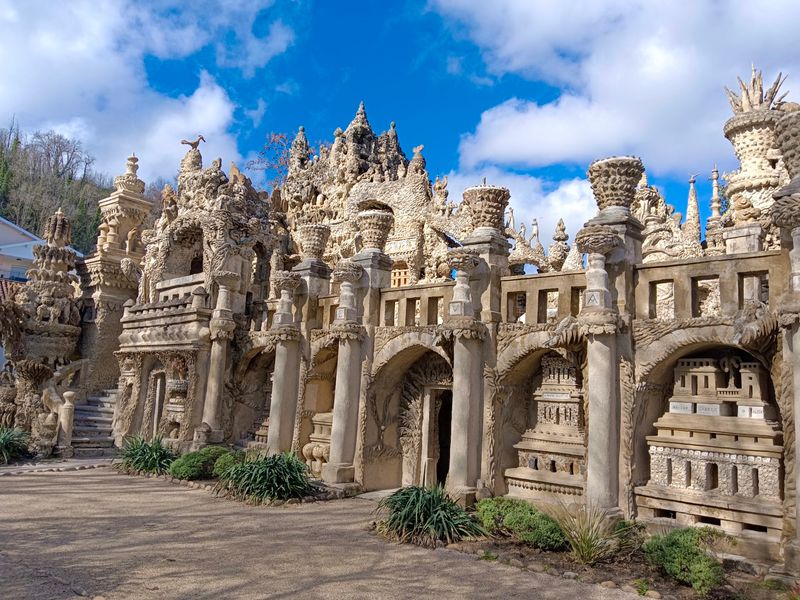
Ferdinand Cheval delivered mail on foot, and every stone he tripped over became a building block. He had no architectural training, yet he spent 33 years turning his finds into a palace.
The facades are crowded with towers, temples, grottoes, and carved animals. Every wall seems to hold one more surprise than the last.
Capacity is limited, so timed reservations are recommended. The palace stays open for most of the year.
Restoration work happens from time to time. That suits a building that has needed care for generations.
Plan on a slow visit, because the details reward close attention. Look for the small inscriptions Cheval added himself.
Wear shoes with good grip, since some passages are narrow and the steps are uneven.
2. Rock Garden of Chandigarh, Chandigarh, India
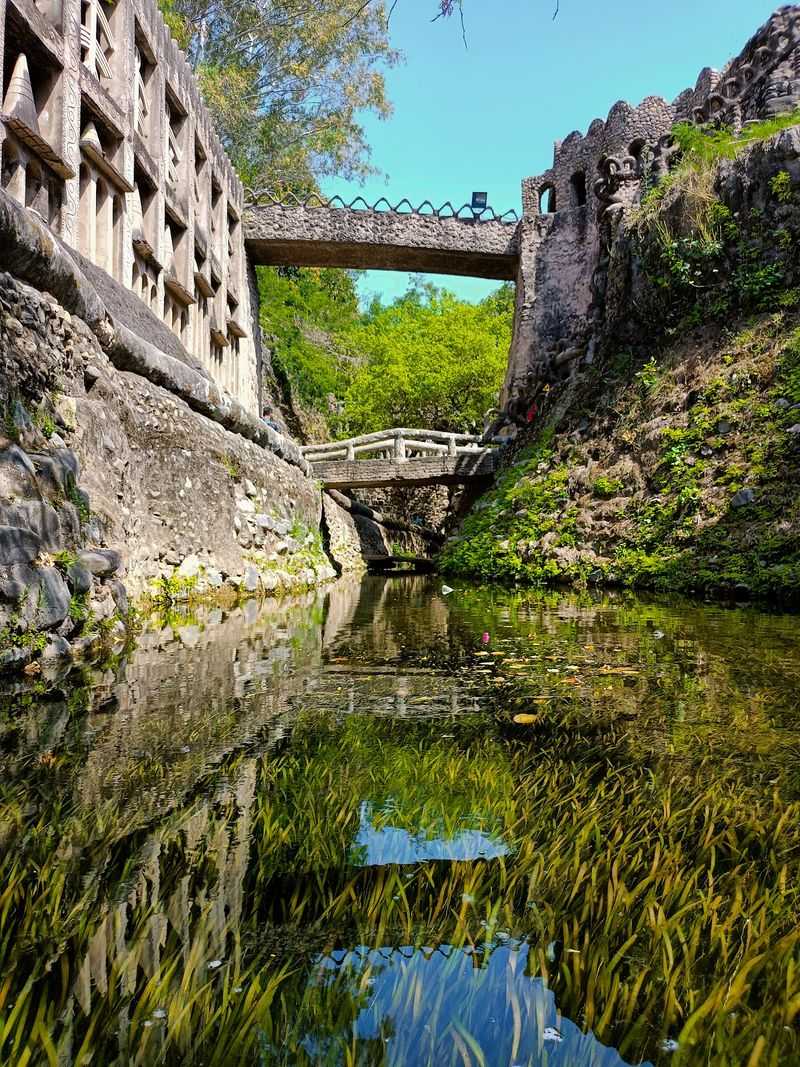
Nek Chand had a day job as a road inspector and a secret hobby that broke the rules. Starting in 1957, he hauled demolition waste into a protected forest ravine and built a hidden kingdom.
He worked in secrecy for 18 years. Broken tiles, bangles, ceramics, and electrical parts became thousands of figures, including dancers, musicians, and animals.
Officials found the site in 1976, and it became a public space. It now covers roughly 35 acres and 14 connected chambers, with courtyards, waterfalls, and a king’s palace.
Summer hours run from 9:00 AM to 7:00 PM, and winter hours end at 6:00 PM. Adults pay INR 30 and children pay INR 10.
Weekends get crowded, and the winding paths are narrow, so a slow pace works best.
3. Giardino dei Tarocchi, Capalbio, Tuscany, Italy
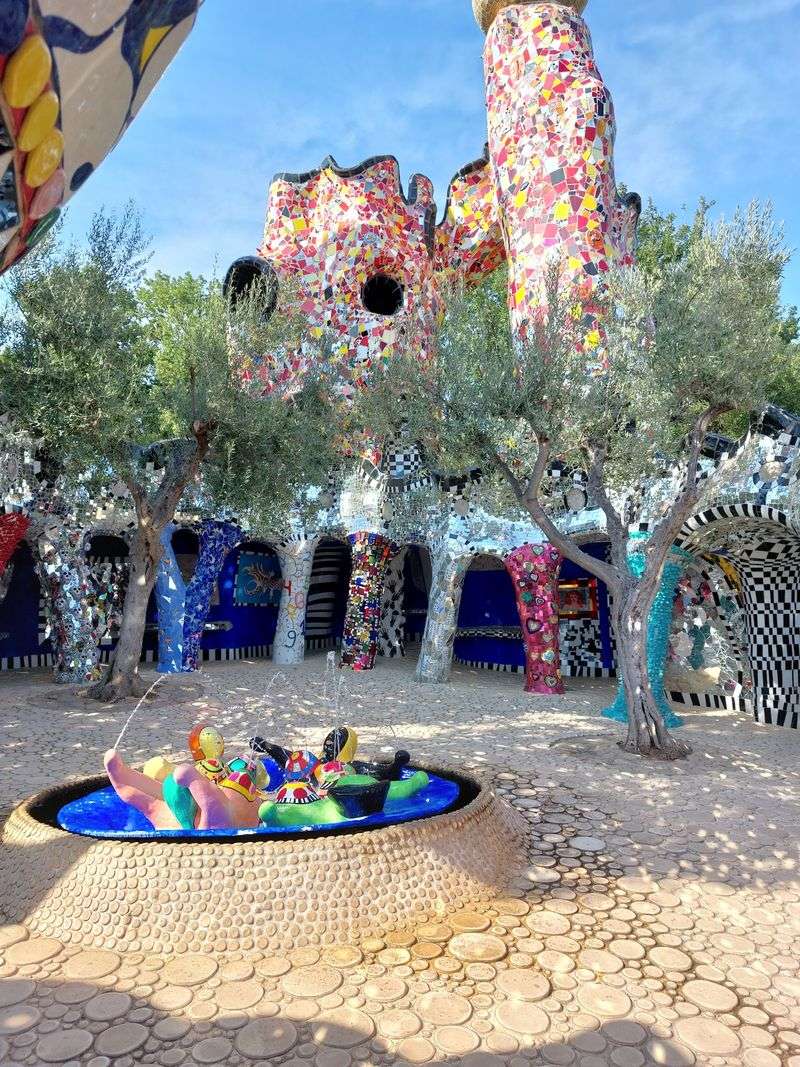
Niki de Saint Phalle once moved into her own artwork. The Empress sculpture holds a fully equipped apartment, and she lived there for several years while the garden took shape.
The project ran from 1979 until its opening in 1998. It holds 22 monumental sculptures based on the major arcana of tarot, covered in mirrors and custom ceramic tiles.
Many of the figures can be entered. Her husband Jean Tinguely added kinetic and metal pieces, including the working mechanisms inside the Magician.
The garden opens seasonally from April through October. Timed tickets are usually needed, so buy them online early.
Adults pay €14, and children under 7 enter free. Dogs are not allowed, and the paths include slopes and steps.
4. La Scarzuola, Montegabbione, Umbria, Italy
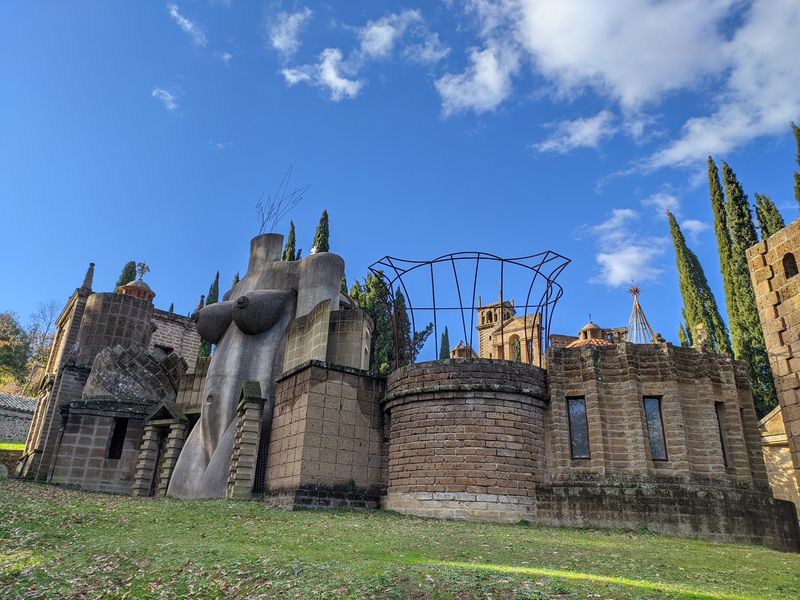
Tomaso Buzzi bought a crumbling 13th-century Franciscan monastery in 1956 and called his plan an autobiographical architectural machine. He wanted a city that works as a stage for human behavior.
The ideal city rose between 1958 and his death in 1981. It holds seven theatrical scenes, a temple of Apollo, a coliseum, and a butterfly-shaped water theater.
Many parts are left unfinished on purpose. A concrete head with empty eyes is one example.
The site is still a private home, run by Buzzi’s nephew Marco Solari. Visits require a reservation and last about an hour and a half with a guide.
Solari often leads the tour himself. Bring comfortable shoes, because the route includes stairs and uneven paths.
5. Sacro Bosco, Bomarzo, Lazio, Italy
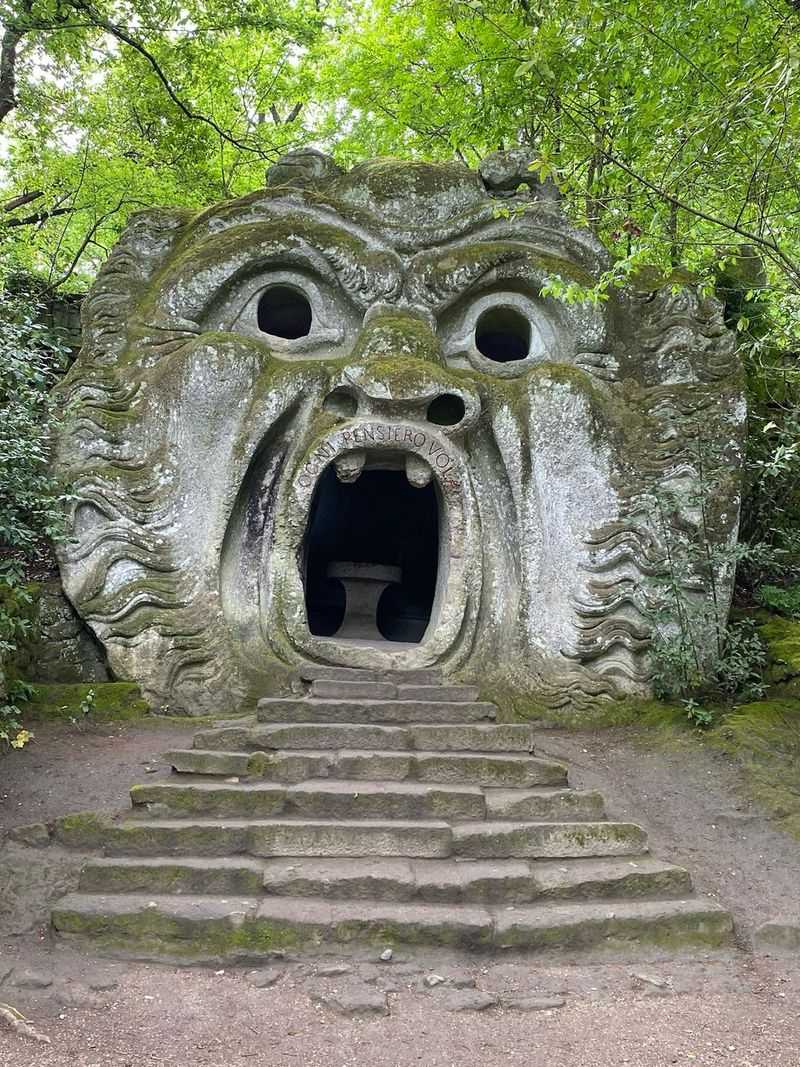
One carved mouth here is big enough to walk into. It belongs to Orcus, the most famous of more than 30 monumental sculptures cut from volcanic rock.
Prince Vicino Orsini commissioned the park in the mid-16th century. Architect Pirro Ligorio designed it after the loss of Orsini’s wife, Giulia Farnese.
Formal gardens of that era valued symmetry. Bomarzo ignores it and offers a giant turtle, a war elephant, and a struggling Hercules instead.
The Leaning House is built on a slope and tilts the balance of anyone inside.
The park is open daily except Christmas Day. From April through August, hours run from 8:30 AM to 7:00 PM.
Adults pay €13, and children aged 4 to 13 pay €8. You can wander the wooded paths freely.
6. Maison Picassiette, Chartres, Centre-Val de Loire, France
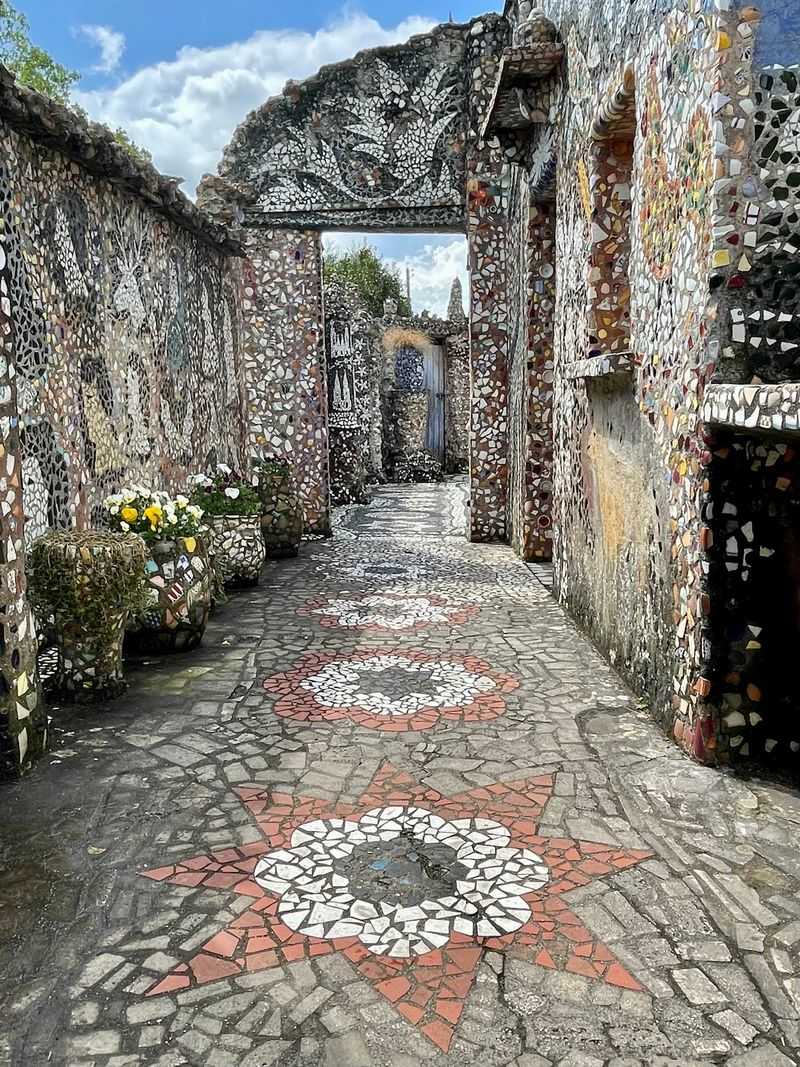
His nickname is a joke about picking up plates. Raymond Isidore worked as a cemetery sweeper and started collecting pottery shards on his walks in 1938.
Over nearly three decades, he covered his house and garden in mosaics. Even the kitchen table, bed, and sewing machine got the treatment.
The designs include flowers, birds, biblical scenes, portraits of his wife, and landmarks copied from postcards. He also built a chapel and a summer house in the garden.
In all, about 15 tons of recycled material went into the project.
The house is open from April through October, closed Tuesdays and Sunday mornings. Adults pay about €9.
Because the interior is fragile, you view it from outside through open doors and windows. The site is a 30-minute walk from Chartres station.
7. Bishop Castle, Rye, Colorado
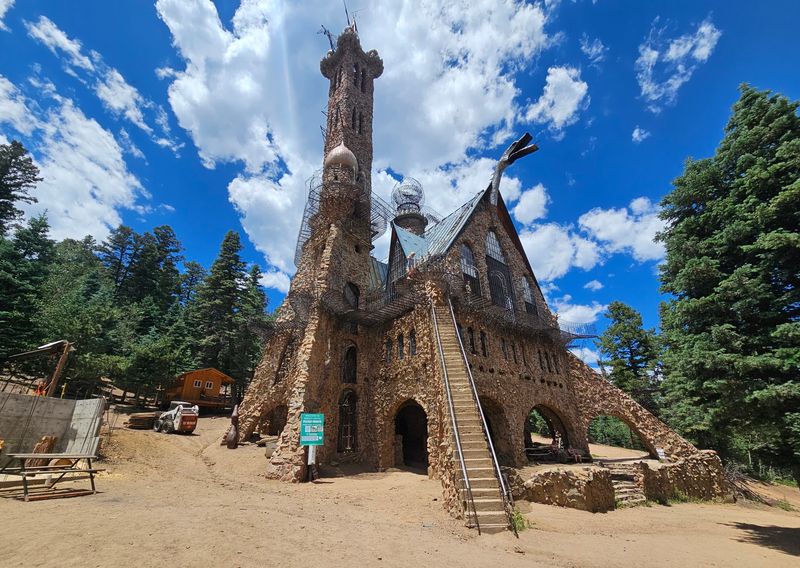
It started as a plan for a family cabin. In 1969, 25-year-old Jim Bishop was told to clear rocks from his land, and a stone cottage grew into a fortress.
He built it mostly alone, funded by his welding business. Three main towers reach up to 160 feet.
A stainless steel dragon coils around one tower. Inside you will find a grand ballroom, a chapel, turrets, iron bridges, and many staircases.
Entry is on a donation basis, and the castle is open daily from sunrise to sunset. There are no official tours, though Bishop often chats with visitors.
Signs warn that the stairs and high platforms are unfinished, so watch your step. Most visitors arrive by car, and restrooms are basic.
8. Jardín Escultórico Edward James, Las Pozas, Xilitla, San Luis Potosí, Mexico
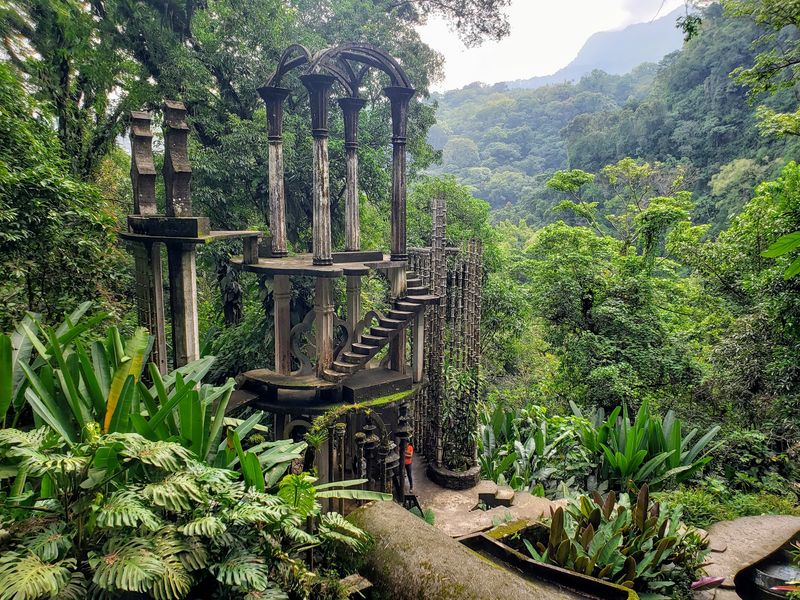
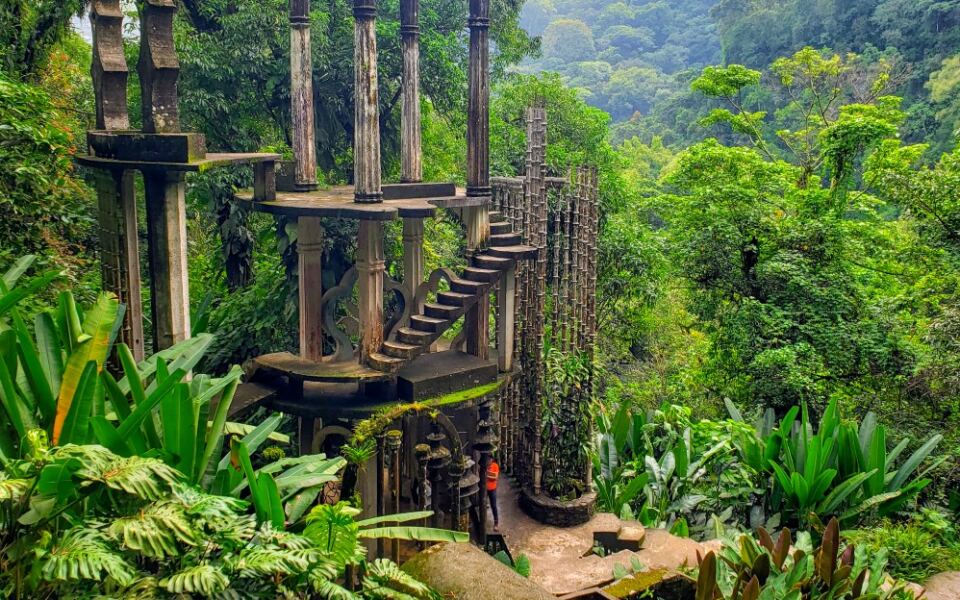
A frost in 1962 wiped out Edward James’s orchid collection, and he answered with concrete. The British poet and arts patron began building a garden that frost could never touch.
Over 150 local carpenters, masons, and gardeners helped him. Today more than 28 structures stand within a nine-hectare sculpture garden.
Some doors lead nowhere, and some staircases end in open air. One house, La Casa de Tres Pisos que Podrían Ser Cinco, holds five levels inside three stories.
The site is open Wednesday through Monday and closed Tuesdays. Visits include a 90-minute guided tour in groups of up to 25 people.
Book ahead, arrive 10 minutes early with photo ID, and wear comfortable shoes for the terrain.
9. Salvation Mountain, Niland, California
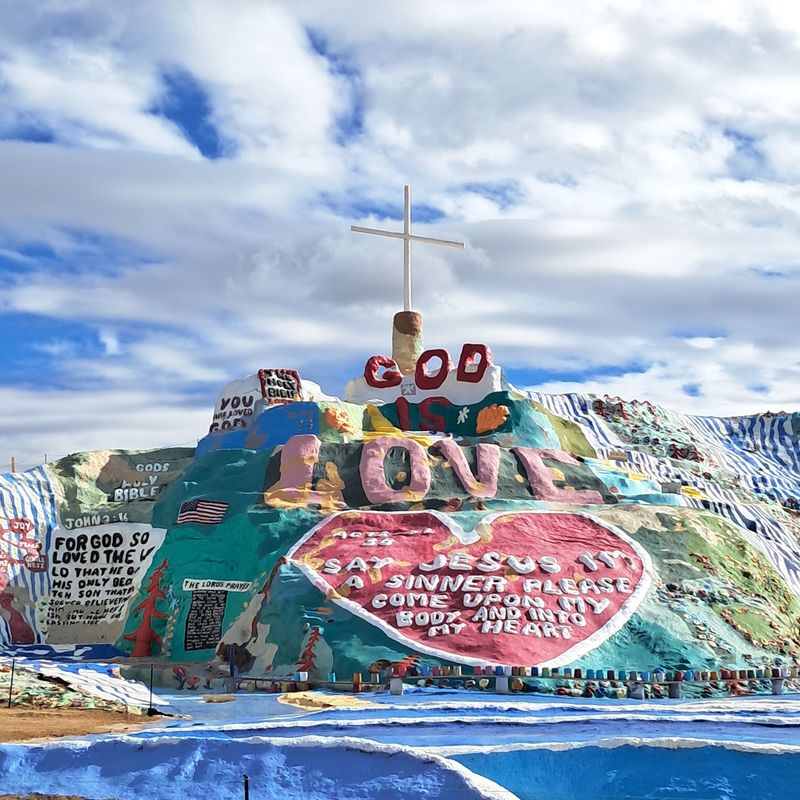
Half a million gallons of donated paint went onto this hill. Leonard Knight, a self-taught artist, spent over 30 years on it, after an earlier hot air balloon with the same message failed in 1984.
The message is God Is Love, painted across a mountain of adobe clay and straw. Old telephone poles and tires form part of the foundation.
The hill stands about 50 feet tall and 150 feet wide. Visitors walk a Yellow Brick Road made of painted tires, then explore caves, tunnels, and a tree of life.
Entry is free from sunrise to sunset every day. Volunteers have kept up the art since Knight passed in 2014.
There are no facilities, so bring water and sun protection.
10. Philadelphia’s Magic Gardens, Philadelphia, Pennsylvania
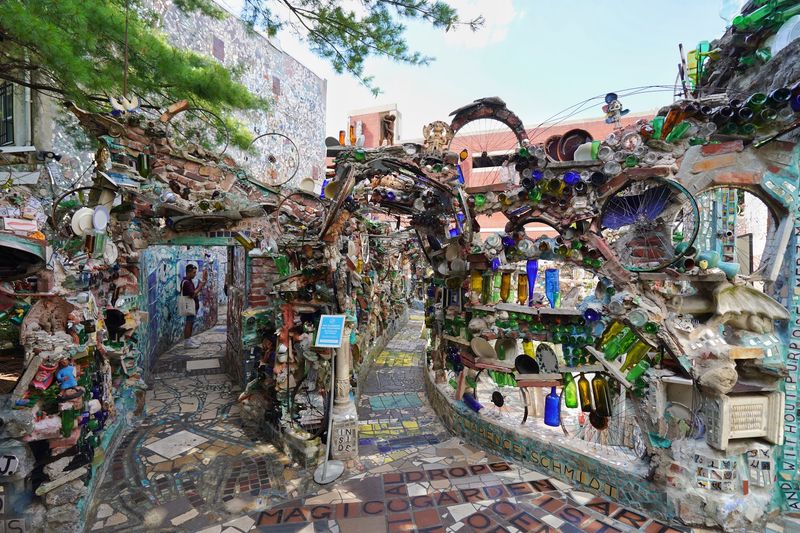
Bathroom fixtures count as art supplies here. Isaiah Zagar began making mosaic murals in the early 1960s and started the Magic Gardens in 1994 on vacant lots.
The complex covers over 3,000 square feet of linked indoor and outdoor space. Broken plates, glass bottles, bicycle spokes, and folk art statues fill nearly every surface.
Tunnels and grottos lead to a two-level outdoor garden. Personal stories and philosophical lines are set into the mosaics.
The museum is open Wednesday through Monday, from 10:00 AM to 6:00 PM. Adult admission is $15, with discounts for seniors, students, military, and children.
Book ahead, since popular time slots can sell out. Photography is allowed, so bring a camera.
11. Cosanti, Paradise Valley, Arizona
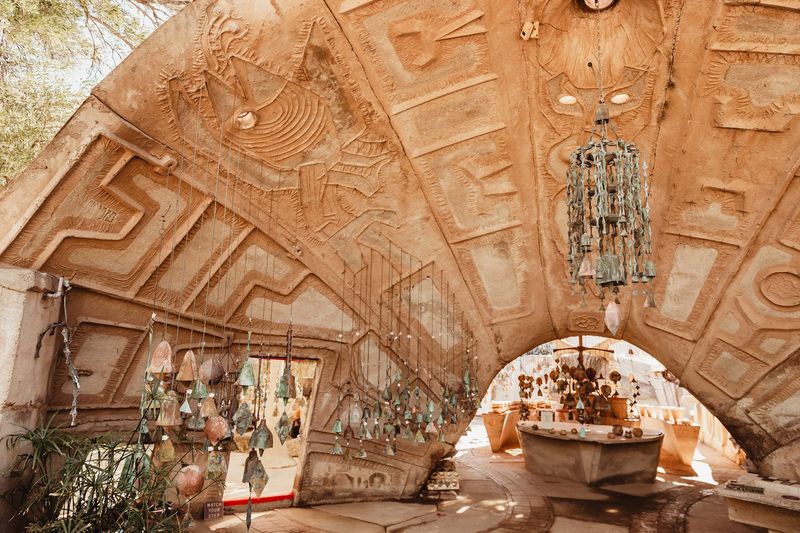
Bells pay the bills at this architectural laboratory. Paolo Soleri began building Cosanti in the mid-1950s as his home and workshop, and the foundry still produces bronze and ceramic bells.
He called his philosophy arcology, a blend of architecture and ecology. The buildings use passive solar design and local materials.
Many forms were made by earth-casting. Soleri sculpted shapes in the soil and poured concrete over them.
You will find semi-underground dwellings, an outdoor amphitheater, and studios where artisans work.
Self-guided visits are available daily, typically from 9:00 AM to 5:00 PM, and guided tours go deeper into the building methods. Entry is generally free, with donations welcome.
The gallery shop sells bells. Paths include gentle slopes.
12. Arcosanti, Mayer, Arizona
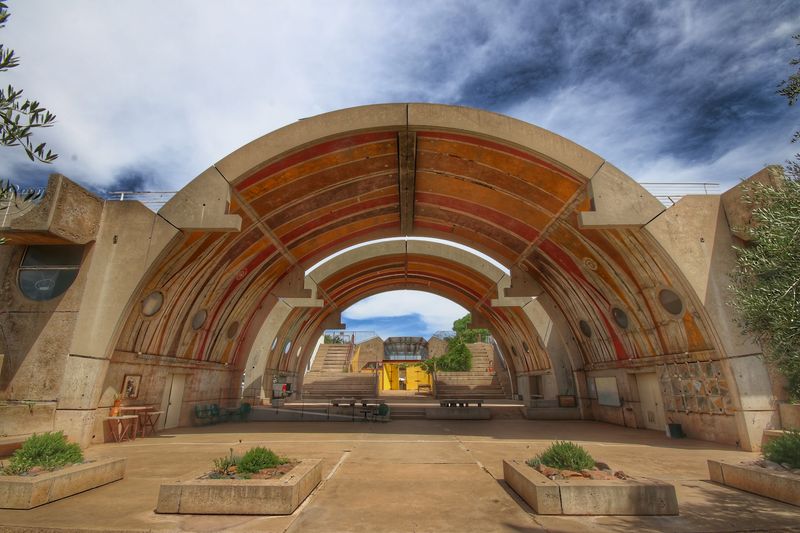
This experimental town is still being built, mostly by volunteers. Paolo Soleri began Arcosanti in 1970 as a prototype of his arcology idea.
The goal is a compact, self-sufficient community with a small environmental footprint. It spans 25 acres of raw concrete and natural terrain.
Structures include a large ceramic apse, a bronze foundry, a textile studio, homes, and shared spaces. Passive solar heating and cooling shape the design, and walkways keep cars out of the way.
People still live and work here. Guided tours run daily and last about one hour, covering interior and exterior spaces, the foundry, and the ceramics studio.
Some public areas can be explored alone, though a tour adds context. Workshops and events are held throughout the year.
13. Fusterlandia, Havana, Cuba
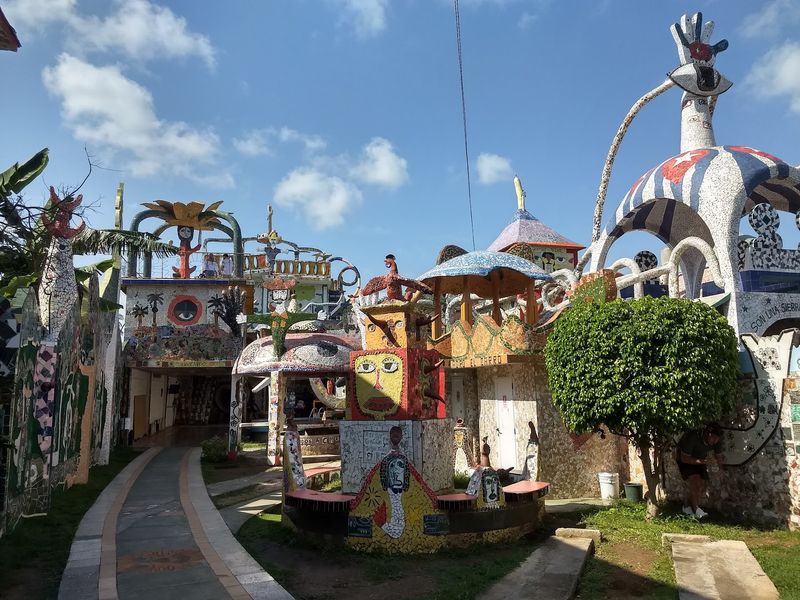
Some call José Fuster the Picasso of the Caribbean. In 1994 he started tiling his own house in the fishing neighborhood of Jaimanitas, and the neighbors soon joined in.
Inspired by Gaudí’s Park Güell, he expanded the project into more than 80 houses and public structures. Walls, benches, bus stops, and lampposts all carry mosaics.
Fish, mermaids, revolutionary heroes, and abstract patterns fill the streets. His home, Casa de Fuster, holds his studio and gallery.
Work never stops, as Fuster and his team keep adding new pieces. Walking the neighborhood costs nothing, though the gallery sells his art.
Visitors usually reach Jaimanitas from central Havana by taxi or tour bus. Daytime hours are regular, and residents live among the artwork.
14. Jardins Artigas, La Pobla de Lillet, Catalonia, Spain
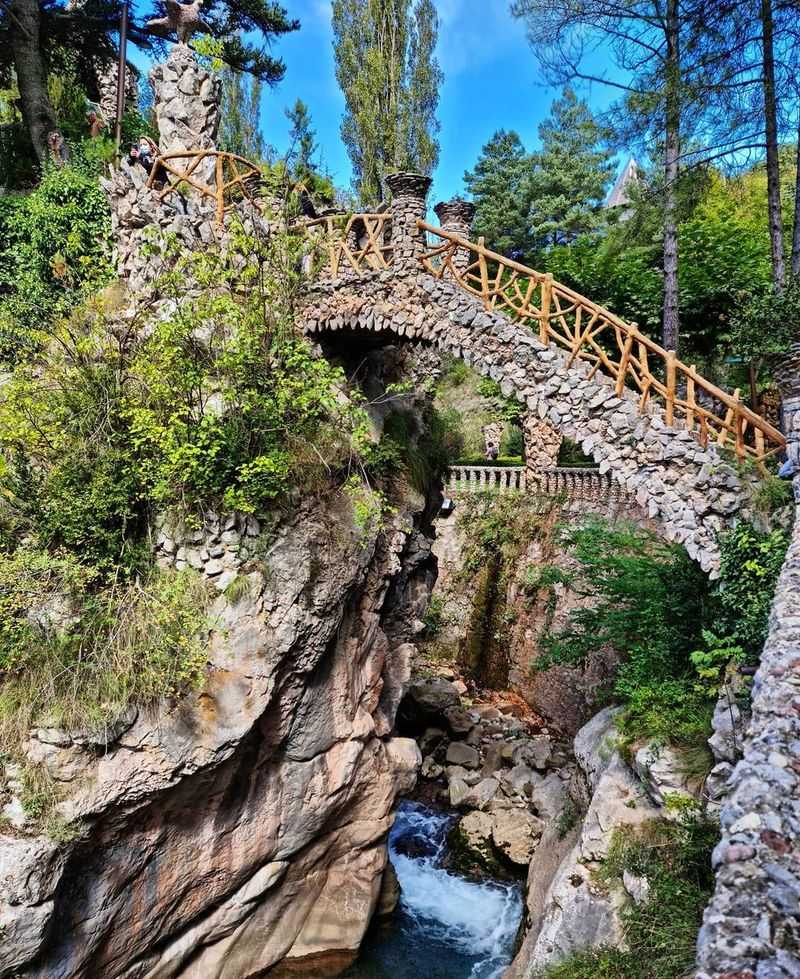
Gaudí built this garden as a thank-you note. Between 1905 and 1906 he designed it for Joan Artigas i Alart, the textile industrialist who hosted him during work on the nearby Catllaràs chalet.
He sent workers from Park Güell to help, so the two sites share a style. The design uses local stone and existing plants beside the Llobregat river.
Highlights include La Glorieta viewpoint, La Cova grotto with catenary arches, and the Bridge of Arches. The Lion Fountain sends water from a stone lion’s mouth.
A self-guided walk takes around 45 minutes, and the stairs are uneven. The gardens were restored in the 1990s and reopened in 1992.
Winter hours are limited to weekends and holidays, and the tourist office can arrange guided tours.
Share this story