Some swimming pools were built for exercise, and others were built to show off. Long before splash pads and plastic slides, cities and millionaires poured money into indoor pools lined with marble, gold mosaics, and stained glass.
A few of these places were meant for wealthy guests, while others were public baths where ordinary families came to wash, learn to swim, and even dance on a floor laid over an empty pool. Many of them nearly vanished, but neighbors, cities, and preservation groups stepped in to save them.
Today, some still welcome swimmers, while others let you look but not touch the water. In the list ahead, you will visit a pool tiled with real gold leaf, an Ottoman bath from the 1500s, and a Paris pool that sits inside an apartment building.
You will also learn which ones you can actually swim in, when to go, and what rules to expect. Grab your towel and keep reading, because the history of swimming turns out to be far fancier than most of us were ever told.
1. Piscine Château-Landon, Paris, France
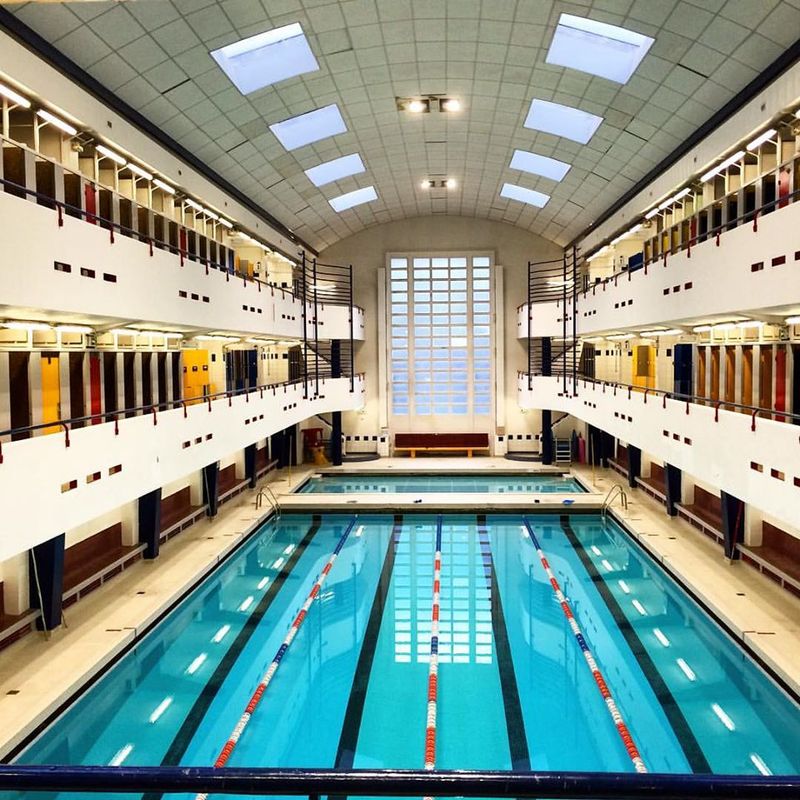
France got its very first public heated indoor pool in 1884, and it still stands near the Gare de l’Est. Architect Lucien-Dieudonné Bessières designed it, and early water came heated from nearby factories in La Villette.
Trains changed everything in the 1920s. Railway expansion forced a rebuild between 1925 and 1927, shrinking the basin from 42 meters to 25 meters.
The new look followed the ocean liner style, with changing cabins stacked in two-story galleries under a huge glass roof. Picture a ship, minus the seasickness.
Problems with the vaulted ceiling closed the pool in 2018. A 14 million euro renovation finished on February 23, 2026, keeping historic details while improving energy use.
Today there is a main pool and a smaller learning pool. Check the schedule for aquagym, baby swimming, and prenatal classes during its extended hours.
2. Bramley Baths, Leeds, England, United Kingdom
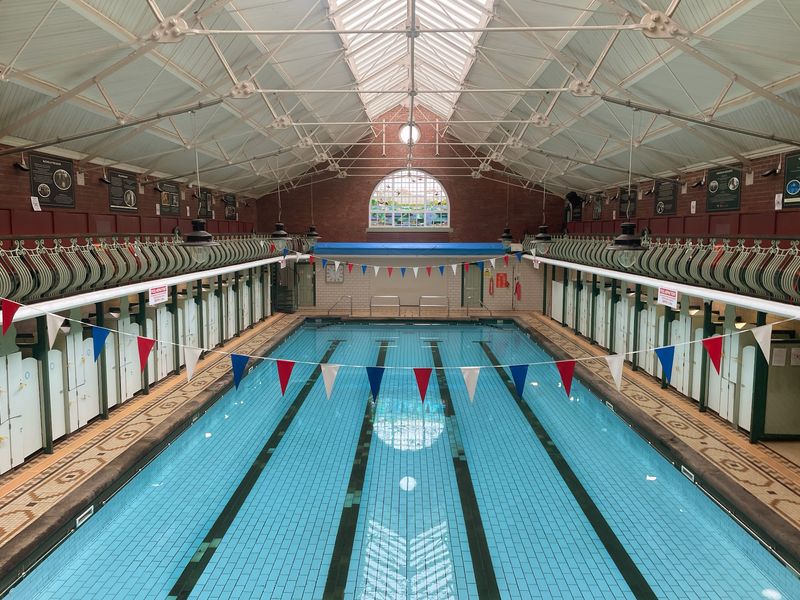
Leeds once had eight public bathhouses, built partly to fight a cholera outbreak. Only one Edwardian survivor remains, and it opened in 1904 on the site of the old Globe Foundry.
Its tall chimney, made from 8,000 Kirkstall bricks, is still a local landmark. Inside you will find stained glass, period tiles, an oak reception booth, and poolside changing cubicles.
Talk about a flexible building. During the hard years of the 1920s, workers drained the pool in winter and laid a dance floor over it.
The baths later hosted wrestling, roller skating, galas, and swimming lessons. In 2011 the council planned to close it, so residents formed the Friends of Bramley Baths.
The group took over in 2013 with a 25-year lease. A Blue Plaque arrived in 2023, and new plans include a coffee shop and roof upgrades.
3. Rudas Thermal Bath, Budapest, Hungary
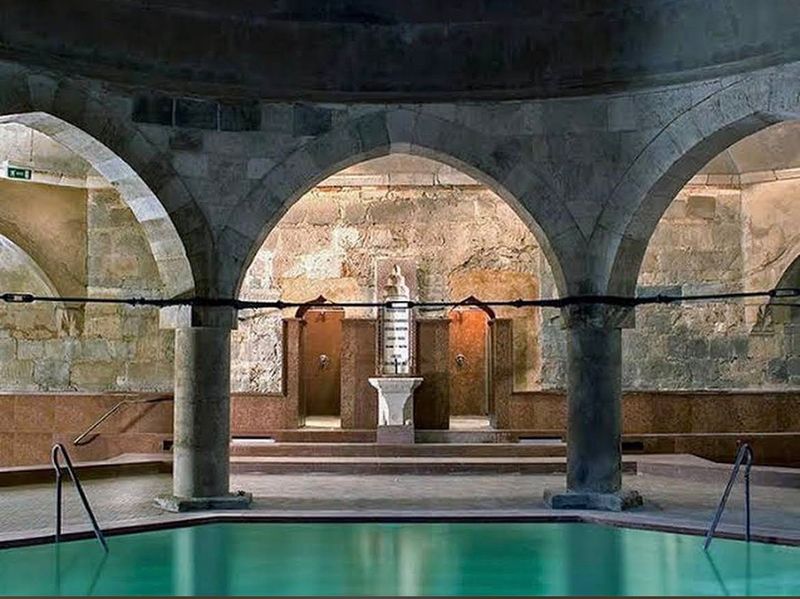
Mustafa Pasha founded this bathhouse in 1550, back when Buda was under Ottoman rule. Almost five centuries later, its octagonal thermal pool still sits under the original domed roof.
Eight pillars hold up that dome, and colored star-shaped openings let daylight in. Smaller corner pools range from about 28 to 42 degrees Celsius, so you can pick your comfort level.
Three springs called Hungaria, Attila, and Juventus feed the water. Locals have long used it for sore joints.
Newer additions include an indoor swimming pool from 1896 and a 2014 renovation with saunas and steam rooms. The rooftop pool offers views of the Danube and Elizabeth Bridge.
Plan ahead for the Turkish bath section. Tuesdays are women only, many weekday mornings are men only, and evenings and weekends are mixed, with late sessions on Fridays and Saturdays.
4. Newcastle City Baths, Newcastle upon Tyne, England, United Kingdom
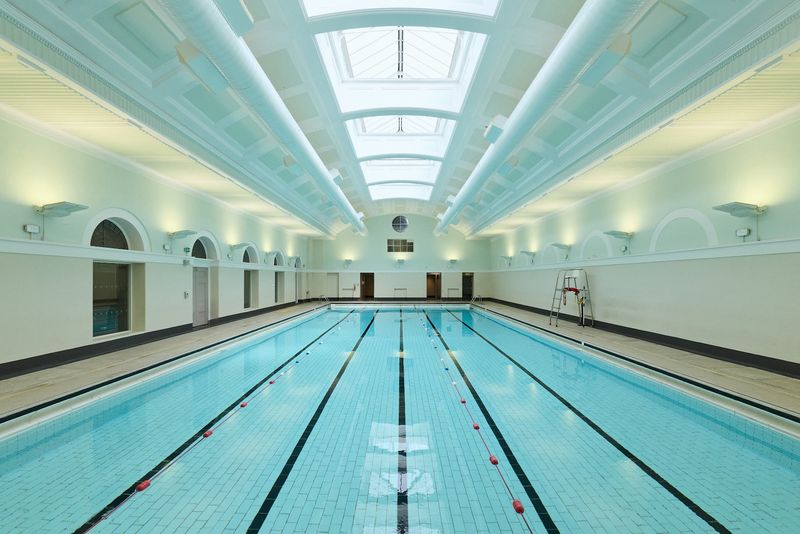
November 7, 1928, was opening day for a building that treated swimming like serious civic business. Architects Nicholas and Dixon-Spain gave it a neo-Georgian front with tall Doric columns and Art Deco touches.
Originally there were two pools, Turkish baths, and a flat for the manager. The Turkish baths used a clever system that sent fresh filtered air at set temperatures into each hot room.
Winter brought surprises. Staff sometimes covered the pools for dances and boxing matches.
Budget cuts threatened the site in 2013, but a campaign called Save Newcastle Turkish Baths fought back. A 7.5 million pound restoration followed, turning one pool into a gym while keeping a smaller pool for swimmers.
Swimming returned in 2020, and the Turkish baths reopened in 2024. GLL took charge in 2026, and it remains one of only 11 historic Turkish baths still operating in Britain.
5. Piscine des Amiraux, Paris, France
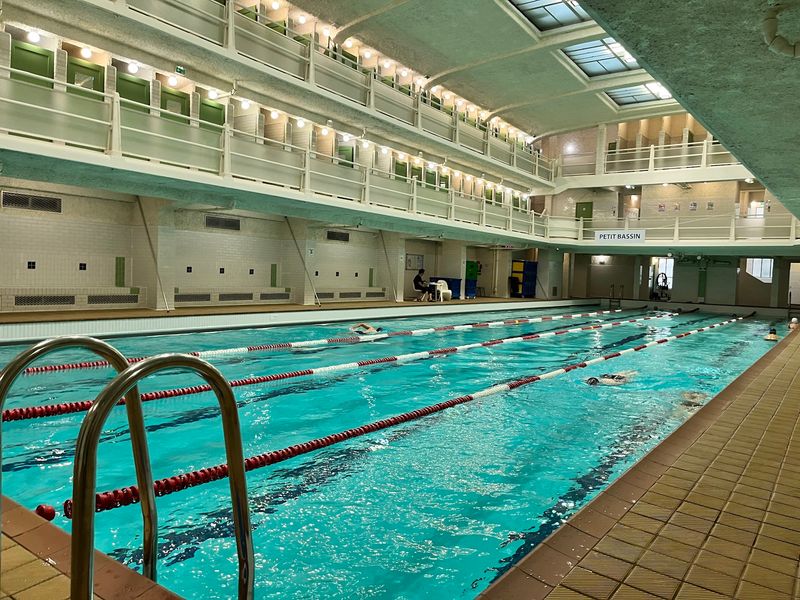
Fans of the movie Amélie may already know this pool, since it appears in the film. Few guess that it sits inside a social housing building in the 18th arrondissement.
Architect Henri Sauvage built the project between 1922 and 1927, and the pool opened in 1930. His stepped design gave every apartment a balcony while the pool got light through an inner courtyard and glass roof.
The basin stretches 33 meters. Rows of changing cabins line the corridors above it, and the walls wear beveled white tiles just like the Paris Metro.
A restoration from 2013 to 2017 brought back the original colors and improved energy use. The building has been a listed historic monument since 1993.
One quirky detail stands out. Cabins have no regular locks, so an attendant opens them for you, which means you should keep track of your number.
6. Marshall Street Leisure Centre, London, England, United Kingdom
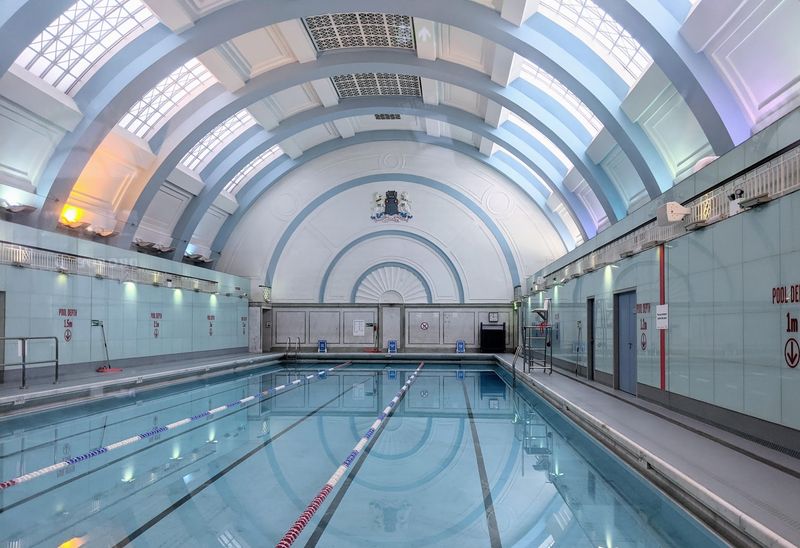
White Sicilian marble lines the main pool, and green Swedish marble covers the walls at each end. Not bad for a public pool in the middle of Soho.
Public baths stood on this spot from 1850, but the current building opened in 1931 as the Westminster Public Baths. Architects Alfred and Kenneth Cross, a father and son team, designed it.
A barrel-vaulted roof stretches overhead and lets in natural light. Sculptor Walter Gilbert once added a bronze fountain showing a child with two dolphins at the shallow end.
History here goes beyond laps. During World War II, servicemen, including US paratroopers, trained in the building.
The baths closed in 1997 and sat empty for years. A 25 million pound redevelopment reopened them in 2010 with a gym, studios, and spa, while protecting the marble and roof that make swimming here such a treat.
7. Roman Pool at Hearst Castle, San Simeon, California, USA
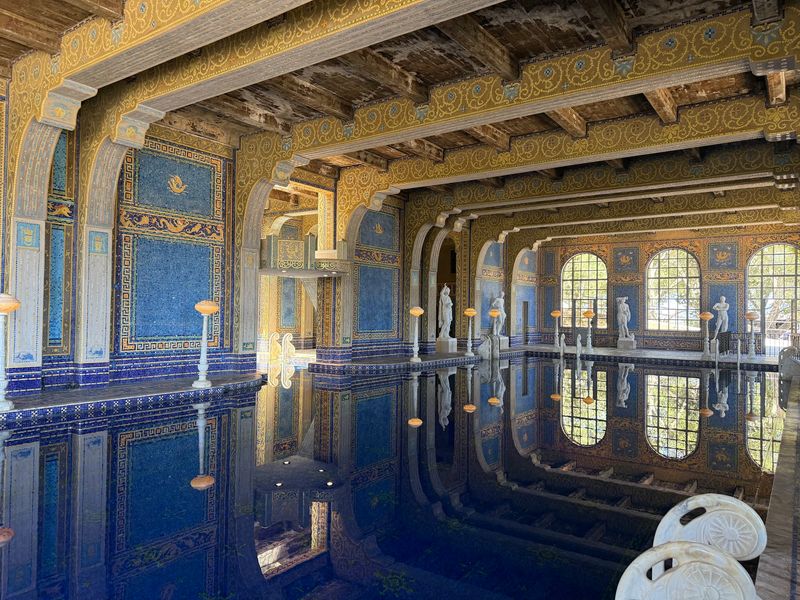
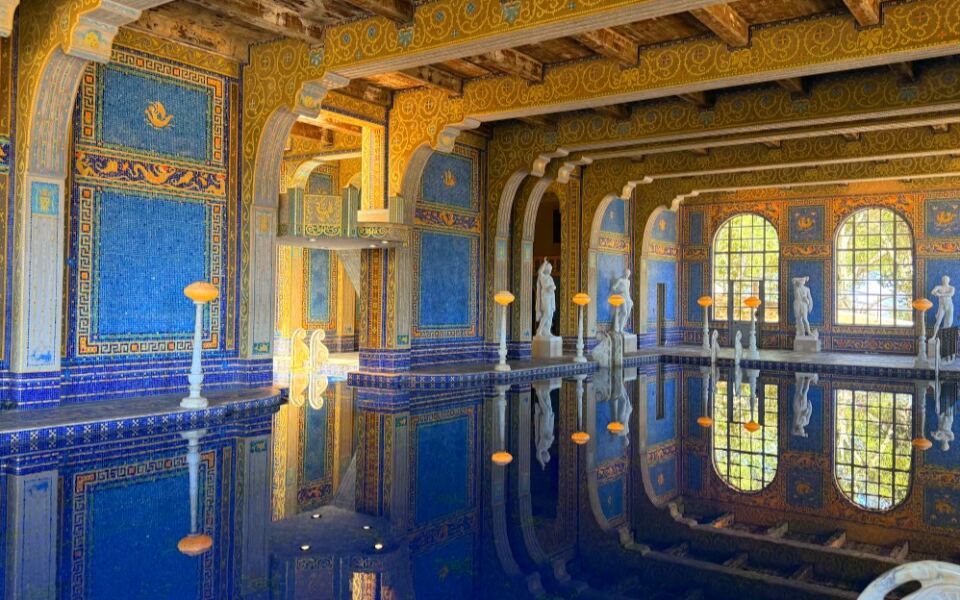
Roughly two million tiny glass tiles cover this room from floor to ceiling, and some of them contain real 22 to 24 karat gold leaf. Architect Julia Morgan built the Roman Pool for William Randolph Hearst between 1927 and 1934.
Her design borrowed ideas from the Baths of Caracalla and a 5th-century tomb in Ravenna, Italy. Muralist Camille Solon created the mosaic patterns, which include mermaids, sea creatures, and stars.
Eight marble statues of Roman gods and heroes stand around the water. The pool holds about 205,000 gallons and reaches 10 feet deep.
Regular visitors cannot swim here, sadly. You can see it as the final stop on several castle tours.
Members of The Foundation at Hearst Castle sometimes get rare swim events, usually priced around 950 dollars for about 20 guests. Book a tour early, since spots fill quickly.
8. Irgalmasok Veli Bej Bath, Budapest, Hungary
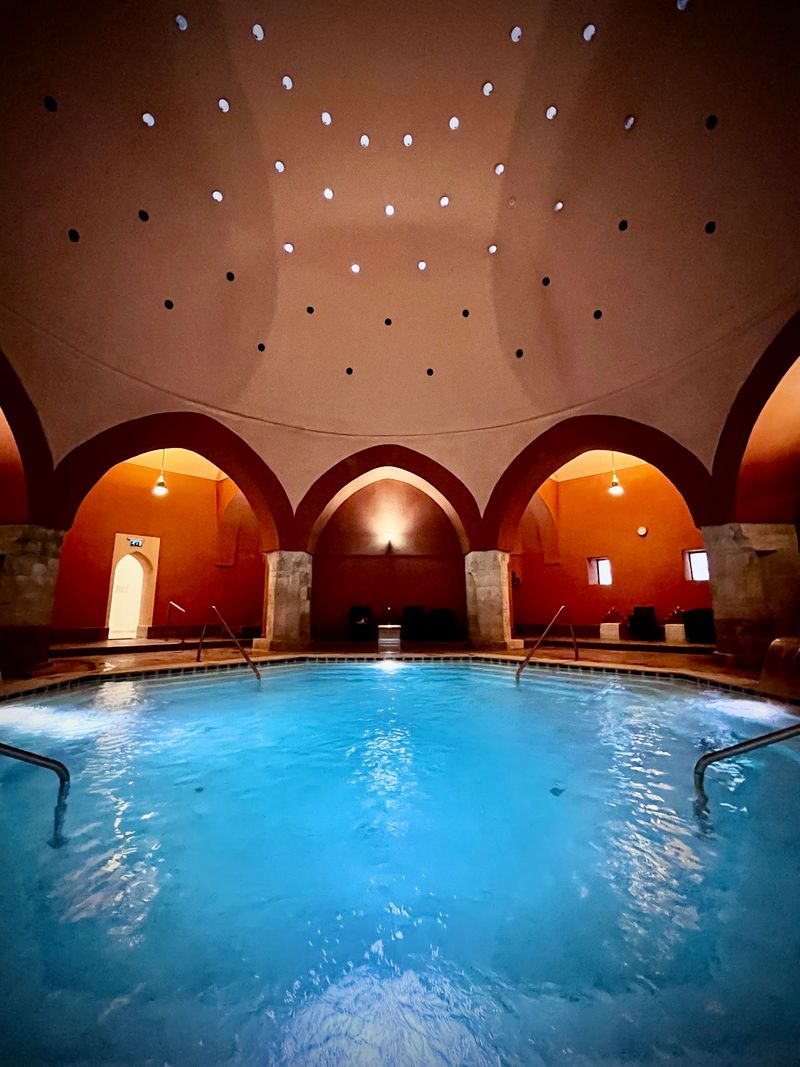
Only about 80 guests are allowed inside at once, which makes this the calmest historic bath in Budapest. Sokollu Mustafa Pasha built it between 1574 and 1575.
Its stone dome even survived the fighting during the recapture of Buda in 1686. Beneath that dome sits a large octagonal pool with four smaller pools set at different temperatures.
Since 1806, the Order of Brothers Hospitallers has managed the bath, and it sits within their hospital grounds. A long restoration from 2001 to 2012 added saunas, steam baths, a small jacuzzi, and a Kneipp walking pool.
Rules matter here. Nobody under 14 may enter, swimwear is required, and photos are banned.
Tickets are sold only at the door, with no advance booking. Arrive early, and remember the bath closes daily between noon and 3 PM.
9. Piscine Édouard Pailleron, Paris, France
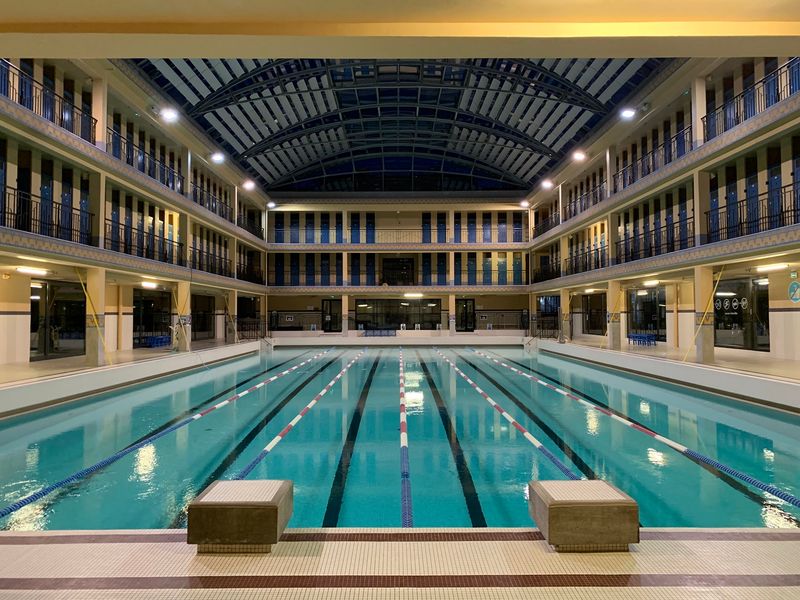
Lucien Pollet clearly had a thing for pools, since he also designed the famous Piscine Molitor. His 1933 creation in the 19th arrondissement uses bold geometric shapes with a concrete and brick front.
The main basin measures 33 by 15 meters. Two levels of old changing cabins wrap around it, though today they are kept for looks rather than use.
The pool closed in 1990, and the next door ice rink followed in 1996. Architect Marc Mimram led a renovation that wrapped up in October 2006.
His team restored the historic basin and added a vaulted glass roof. A modern wing brought a paddling pool, a round children’s pool, and a jacuzzi.
Night owls, take note. Late sessions are part of the schedule, and the wellness area includes saunas and hammams for a full afternoon out.
10. Ironmonger Row Baths, London, England, United Kingdom
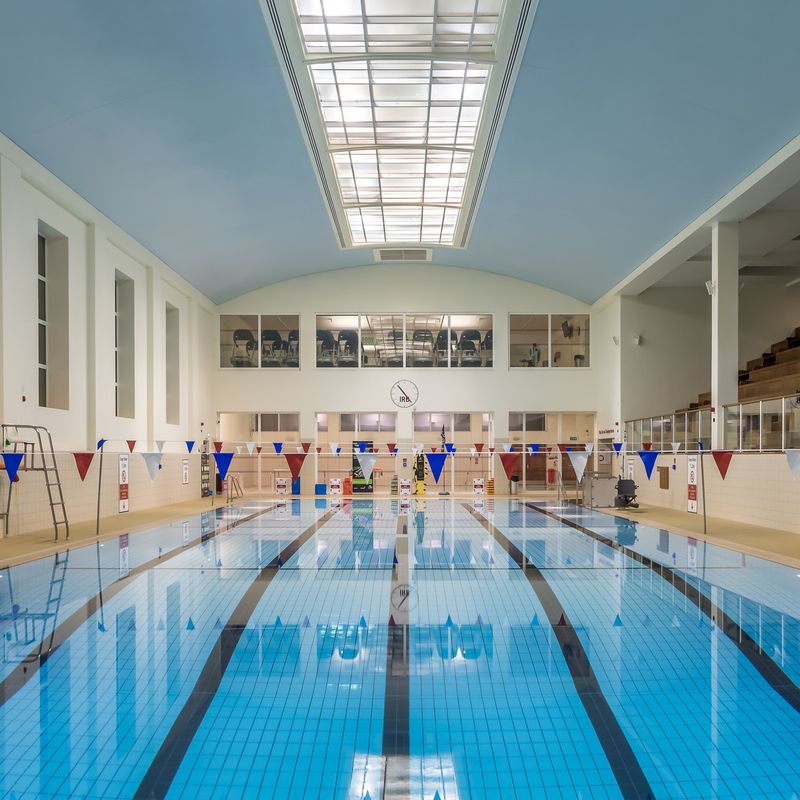
Olympic divers once trained in this Islington pool. The Highgate Diving Club, home of Brian Phelps, called it home from just after World War II until the late 1960s.
The story began in 1931 with a wash house and slipper baths. Few local homes had bathrooms, so people came here for a hot soak and to do laundry.
By 1938 the complex added a main pool, a children’s pool, and Turkish baths. The main pool runs 100 feet with five lanes.
A 16 million pound renovation from 2010 to 2012 added a wheelchair lift, easy access steps, and a movable floor in the teaching pool. The outside, built like a Roman Renaissance palace, barely changed.
A fire in 2021 hit the basement spa. Repairs finished in January 2024, and the three hot rooms and plunge pool are open again.
11. Lukács Thermal Bath and Swimming Pool, Budapest, Hungary
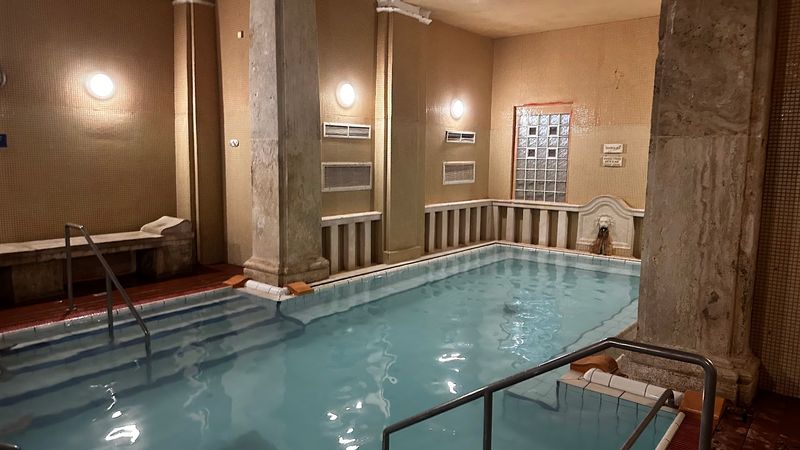
Marble thank-you notes cover the courtyard walls here. Patients from around the world placed these Gratitude Tablets after crediting the water with helping them heal.
Knights of the Order of Saint John ran healing centers on this site as far back as the 12th century. During Ottoman times, the springs also powered mills that ground grain.
Fülöp Palotay bought the baths in 1884 and added a spa hotel and hydrotherapy department. The current neo-Baroque building dates from the 1920s, with a drinking hall built in 1937.
Indoors, three thermal pools sit at roughly 32, 36, and 40 degrees Celsius. Two outdoor pools stay cooler for actual laps.
Locals outnumber tourists, so it tends to stay relaxed. The layout can be confusing, so grab a map at the entrance before heading to the saunas.
12. Berkeley City Club Pool, Berkeley, California, USA
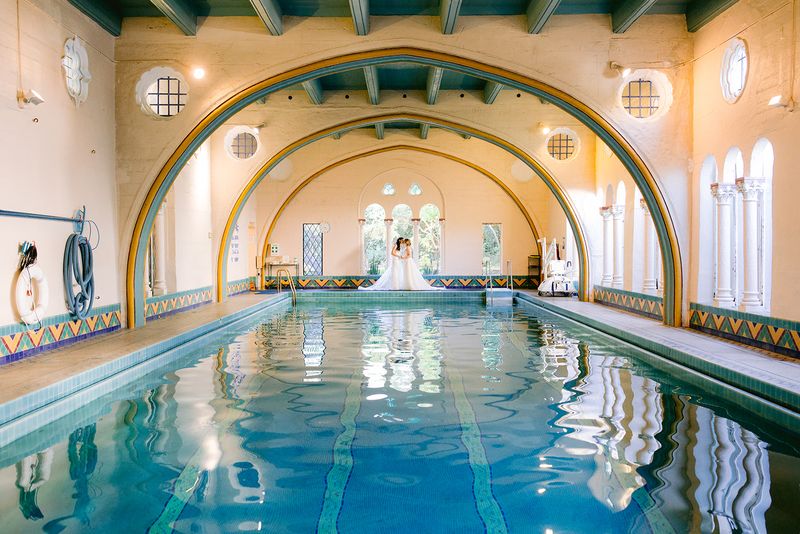
Locals nicknamed this building Julia’s Little Castle, and the name fits. Julia Morgan, California’s first licensed female architect, finished it in just 11 months, opening it in 1930.
It began as the Berkeley Women’s City Club, a place for professional women to meet and stay. Men were welcomed as members starting in 1965.
The pool room, called the Plunge, is the largest space in the building. Leaded glass windows, arches, and concrete beams made to look like wood give it an old European style.
Look down for the best details. Tiles show seahorses, shells, fish, and bubbles along the 25-yard pool.
Swimming is mostly limited to members and hotel guests, so booking a room is the easiest way in. A pool lift helps guests with disabilities, and conservancy work keeps the tiles and filters in good shape.
13. Victoria Baths, Manchester, England, United Kingdom
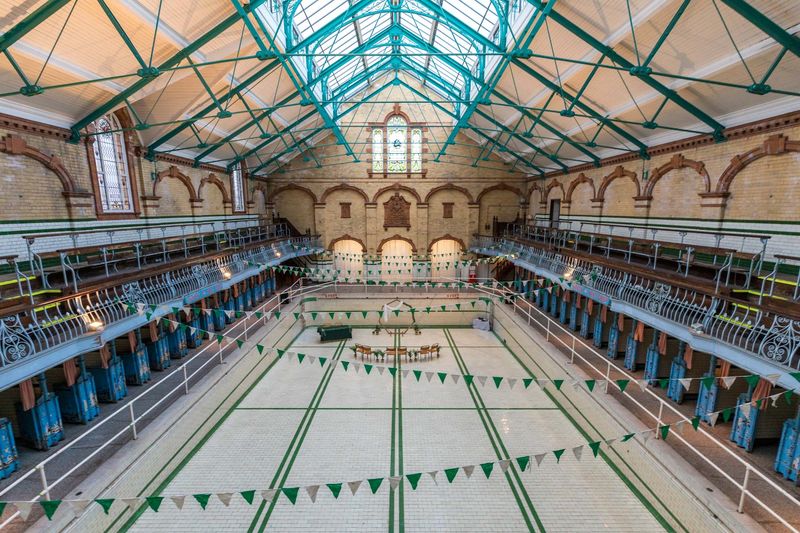
Manchester opened this decorated bathhouse in 1906, and city leaders spared no expense. Colorful stained glass, detailed tiles, and polished fittings filled the building.
Three pools were built, and each had a purpose. They were split by gender and by class, showing how society worked over a century ago.
Regular swimming no longer happens here. Instead, the building has become a heritage attraction run with lots of help from volunteers.
Visitors can join guided tours and special events to explore the pool halls and Turkish bath rooms. Fairs, markets, and film shoots also use the space, so check the calendar before you go.
Why visit a pool you cannot swim in? Few places explain public bathing history better, and the tilework alone is worth the trip.
Bring a camera and comfortable shoes for climbing the galleries.
14. Turkish Baths Harrogate, Harrogate, England, United Kingdom
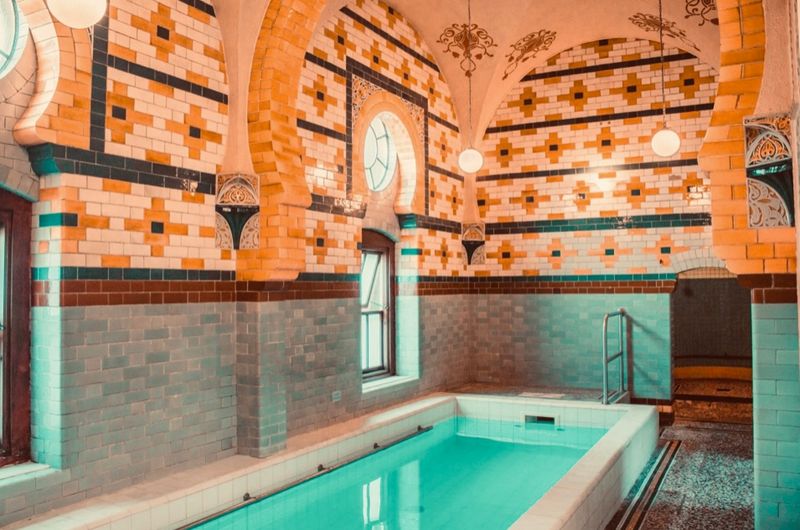
Victorian Britain loved a good spa trip, and Harrogate built one of the fanciest. These Turkish Baths opened in 1897 when the town was a popular health resort.
Islamic design inspired the interiors. Colorful glazed tiles, rounded arches, and patterned floors make each room look carefully planned.
Do not pack racing goggles. This is not a lap pool but a series of hot rooms followed by a cold plunge, the way Victorians bathed.
Guests move through the rooms one by one, starting warm and moving hotter before cooling off. The full circuit takes a while, so leave plenty of time.
Sessions are scheduled and often split into mixed and single-gender times. Booking ahead is smart on weekends, and spa treatments can be added if you want a longer visit.
Share this story