Public libraries are more than just places to borrow books. Across the United States, some library buildings are true works of art, blending history, architecture, and community spirit into spaces that make you want to stay all day.
From grand Beaux-Arts landmarks to bold modern designs, these buildings tell the story of their cities. Whether you are a book lover, an architecture fan, or just someone looking for a cool place to explore, this list covers fifteen U.S. cities where the public library itself is worth the trip.
Each one offers something genuinely different, and a few of them might completely change the way you think about what a library can be.
Stephen A. Schwarzman Building, New York City, New York
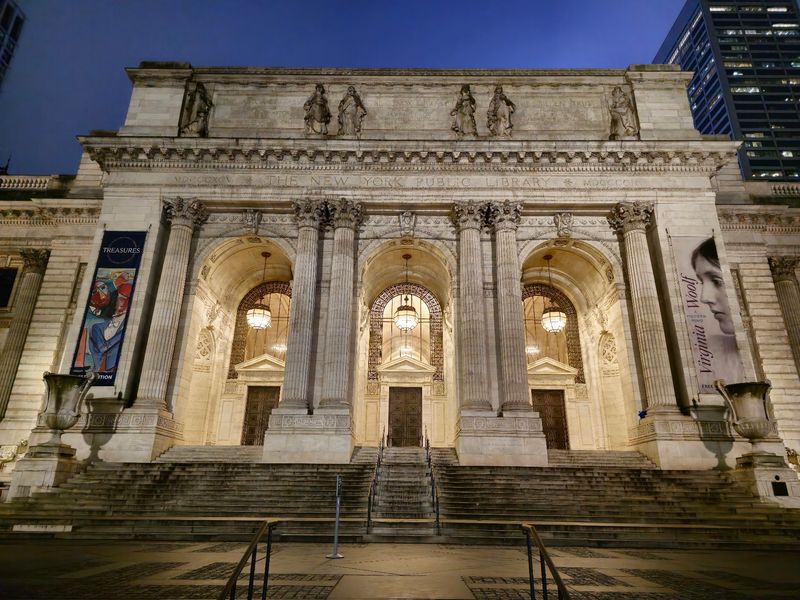
Few buildings in New York City stop pedestrians in their tracks quite like the Stephen A. Schwarzman Building on Fifth Avenue.
Completed in 1911, this Beaux-Arts masterpiece features a white Vermont marble exterior, sweeping staircases, and the two famous marble lions nicknamed Patience and Fortitude guarding the entrance.
Inside, the Rose Main Reading Room stretches nearly two city blocks in length and rises 52 feet high, with painted ceilings and rows of long wooden tables lit by bronze lamps. The room has been carefully restored and remains one of the most breathtaking interior spaces in the entire country.
Admission is free, and the building sits in Midtown Manhattan between 40th and 42nd Streets, making it easy to reach by subway. Rotating exhibitions on history, art, and literature are regularly held throughout the year, giving visitors a fresh reason to return.
Boston Public Library Central Library, Boston, Massachusetts
Opened in 1895, the McKim Building of the Boston Public Library holds the distinction of being the first large free municipal library in the United States. Its Italian Renaissance design, crafted by architect Charles Follen McKim, draws immediate comparisons to the grand palazzos of Europe, right in the heart of Copley Square.
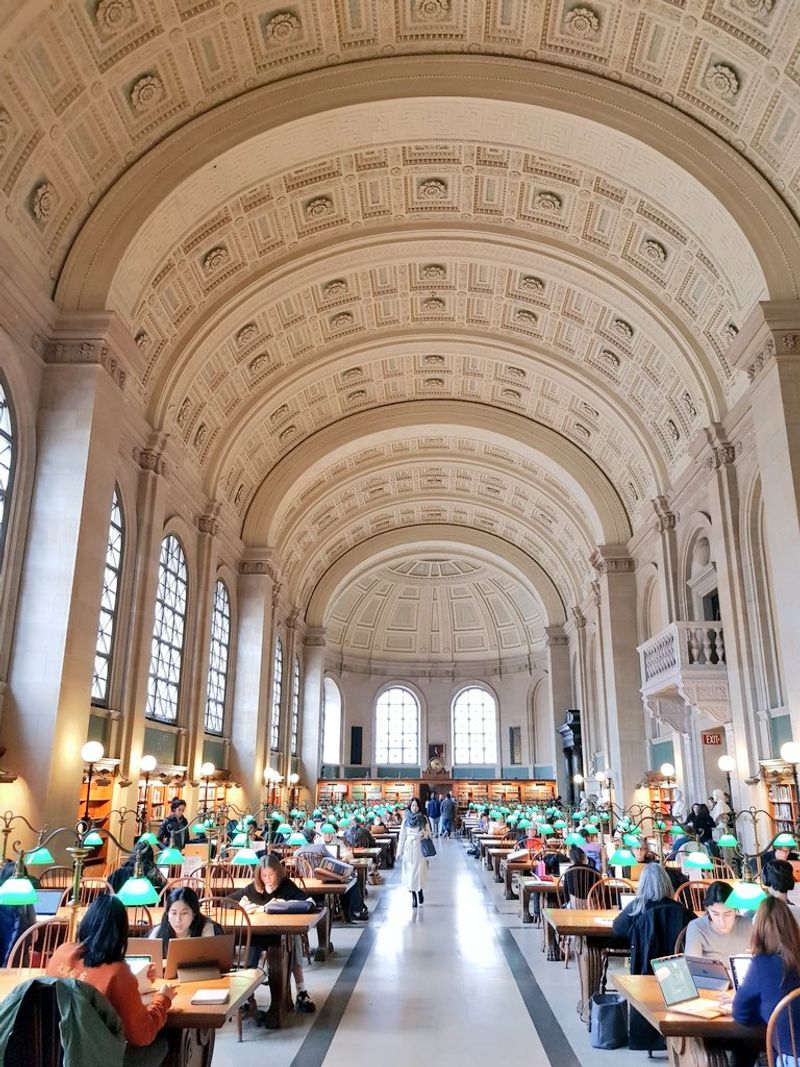
The interior is just as impressive. Bates Hall, the main reading room, features barrel-vaulted ceilings and green-shaded reading lamps that cast a warm, focused light across long oak tables.
The library also houses original murals by John Singer Sargent and a central courtyard modeled after the Palazzo della Cancelleria in Rome.
Visitors can walk through the courtyard any day of the week at no cost. The library connects to a newer Johnson Building addition from 1972, giving the complex both historic grandeur and modern functionality.
It remains one of the most visited cultural landmarks in all of New England.
Los Angeles Central Library, Los Angeles, California
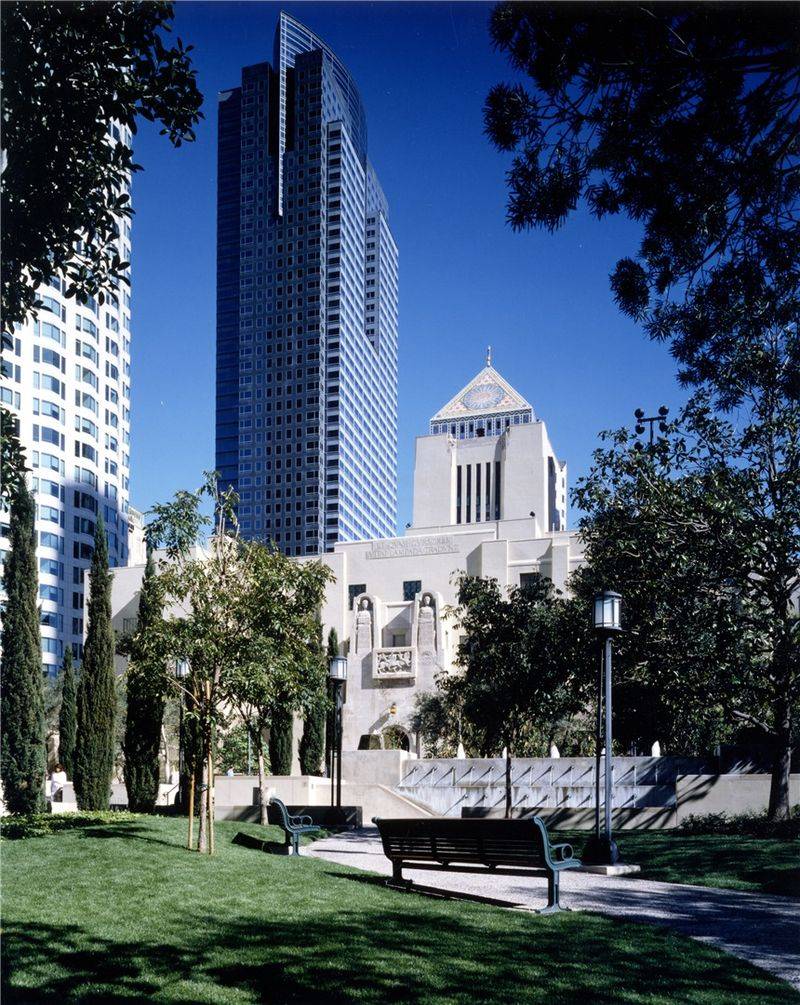
The Los Angeles Central Library is one of the most visually distinctive public buildings on the West Coast. Designed by Bertram Goodhue and completed in 1926, the building blends Spanish Colonial Revival and Egyptian Revival styles into a look that feels entirely its own.
The pyramid-shaped tower topped with a tiled mosaic and a torch sculpture is instantly recognizable across the downtown skyline.
After a serious fire in 1986 damaged the building significantly, the city undertook a major restoration and expansion project. The result is a complex that now holds over 2.1 million items and includes the Tom Bradley Wing, a soaring modern atrium that connects seamlessly to the historic original structure.
Inside, four painted murals by Dean Cornwell depict the history of California and line the rotunda with rich color and detail. Free tours are available, and the library sits within walking distance of Pershing Square in downtown Los Angeles.
Seattle Central Library, Seattle, Washington
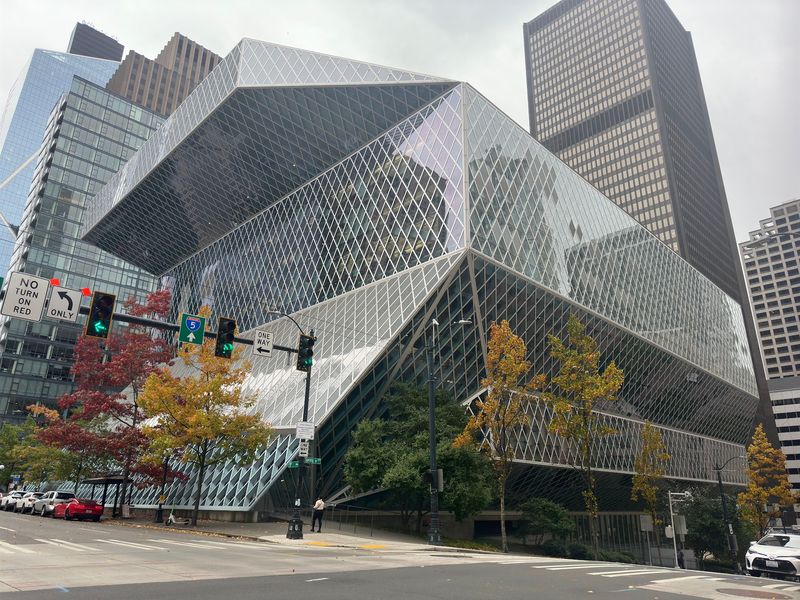
If you have never seen a building that looks like it was designed by someone who genuinely loved geometry, the Seattle Central Library will make an impression. Opened in 2004 and designed by Dutch architect Rem Koolhaas along with the firm LMN Architects, the building wraps itself in a diamond-patterned glass and steel mesh that shifts appearance depending on the light and angle.
Inside, the structure is organized around a series of platforms and spiraling book stacks that allow the entire nonfiction collection to flow continuously from floor to floor without interruption. The fourth floor reading room is bathed in bright natural light filtered through the red-tinted glass ceiling, creating a space that feels unlike any other library interior in the country.
The building won the American Institute of Architects Honor Award and has been featured in architecture publications worldwide. It sits in downtown Seattle and is open to the public six days a week.
Salt Lake City Main Library, Salt Lake City, Utah
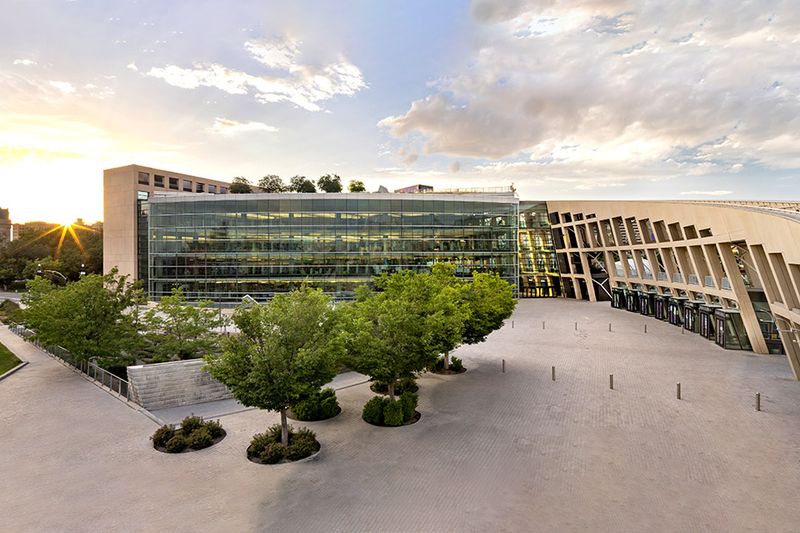
Opened in 2003 and designed by Moshe Safdie, the Salt Lake City Main Library is one of the most celebrated public buildings in the Mountain West. Its defining feature is a dramatic curved glass wall that sweeps along the south side of the building, creating a crescent-shaped public promenade that rises five stories and opens onto rooftop terraces with views of the Wasatch Mountains.
The design intentionally blurs the line between the library and the surrounding city. Street-level retail spaces, an urban room open to the public even when the library is closed, and a rooftop garden make the building feel like a civic living room rather than a traditional institutional space.
Inside, natural light floods the reading areas through the curved glass wall, reducing the need for artificial lighting during daytime hours. The library won the American Institute of Architects Utah Design Award and remains a point of civic pride in Salt Lake City.
San Diego Central Library, San Diego, California
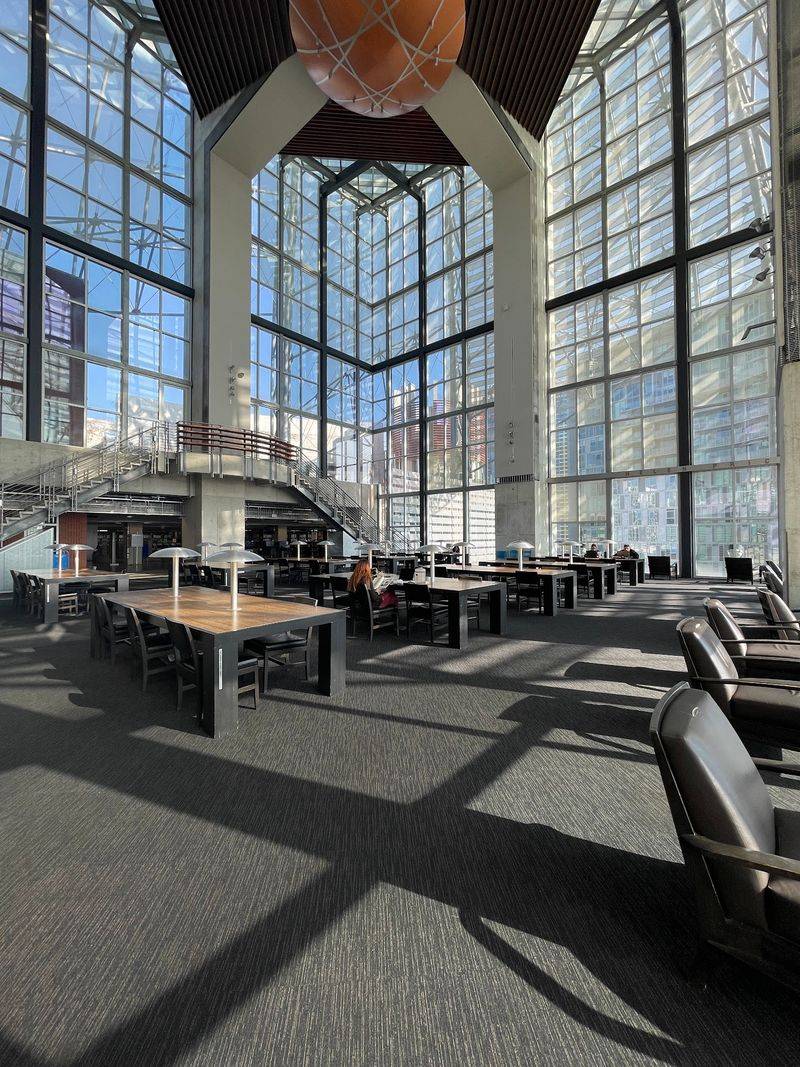
San Diego’s Central Library, which opened in 2013, is one of the newer entries on this list, and it makes a strong case for modern civic architecture. Designed by Tucker Sadler Architects and Dominy and Associates, the building rises nine stories in the East Village neighborhood of downtown San Diego and is topped with a distinctive steel mesh dome that has quickly become a recognizable part of the city skyline.
The dome sits above the ninth floor, which houses a charter high school, a rooftop terrace, and a reading room with panoramic views of the bay and the surrounding city. The lower floors contain the main library collections, a children’s area, and a 350-seat auditorium used for public events and performances throughout the year.
The building earned LEED Gold certification for its environmentally sustainable design. Free parking is available in the attached garage, which is a notable convenience for a downtown San Diego location.
Kansas City Central Library, Kansas City, Missouri
Kansas City’s Central Library might have the most photographed exterior of any library in the country. The south parking garage wall facing 10th Street is designed to look like a giant bookshelf, with 22 oversized book spines stretching across the facade.
Titles were selected by Kansas City readers and include works ranging from children’s classics to American literature and local history.
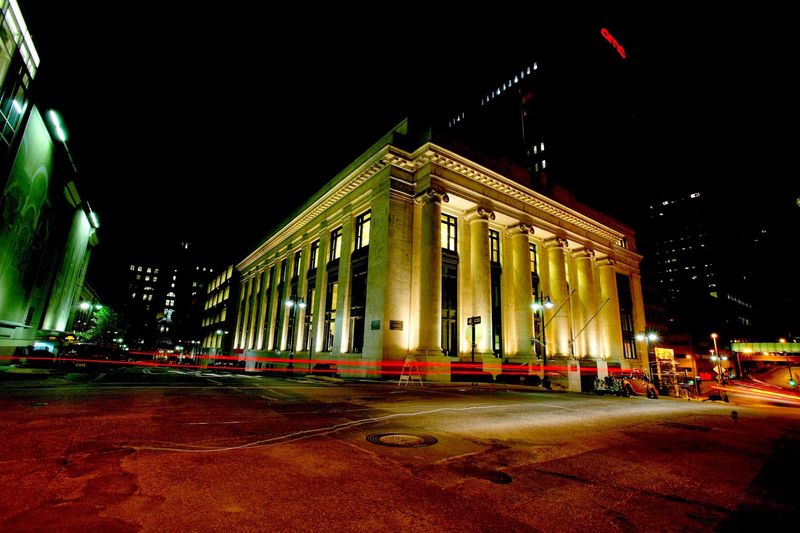
The library itself occupies a restored 1906 Beaux-Arts bank building, and the interior reflects that history beautifully. The Great Hall, which was once the bank’s main lobby, features soaring ceilings, ornate plasterwork, and a mezzanine level that now serves as a reading area.
The combination of playful exterior and elegant historic interior gives the library a personality that is genuinely hard to match.
The building sits in downtown Kansas City and hosts an active schedule of public programs, film screenings, and author events. Admission is free and the library is open seven days a week.
St. Louis Central Library, St. Louis, Missouri
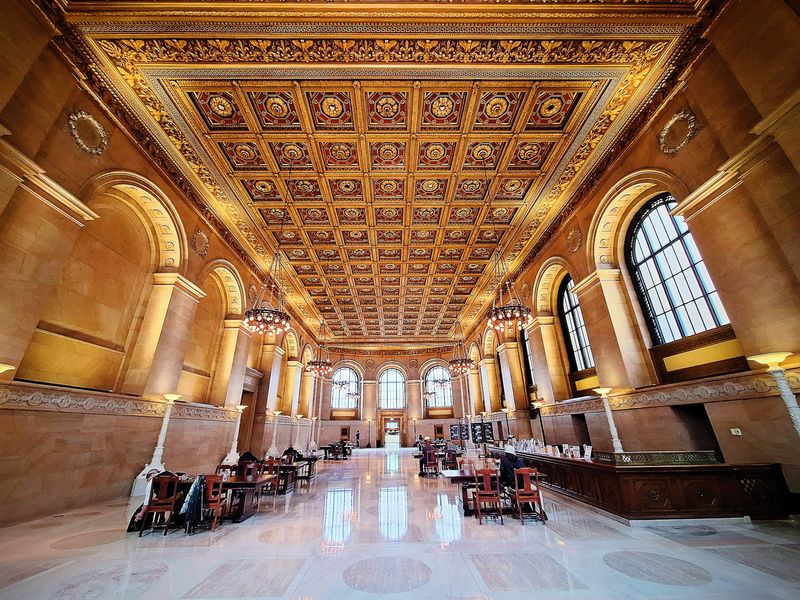
Built in 1912 and designed by Cass Gilbert, who also designed the U.S. Supreme Court building and the Woolworth Building in New York, the St. Louis Central Library is a Beaux-Arts landmark that stands as one of the finest examples of civic architecture in the Midwest.
The limestone exterior is detailed with carved ornamentation, arched windows, and a grand central entrance that sets a serious tone before you even step inside.
A major renovation completed in 2012 restored the building’s historic interiors while adding modern amenities and a new glass-enclosed wing. The renovation uncovered original decorative elements that had been hidden for decades, including ornate ceiling details and tile work in the main hall.
The library holds a significant collection of genealogical records and Missouri history materials, making it a destination for researchers as well as casual visitors. It is located in the Grand Center arts district and is free and open to the public.
Indianapolis Central Library, Indianapolis, Indiana
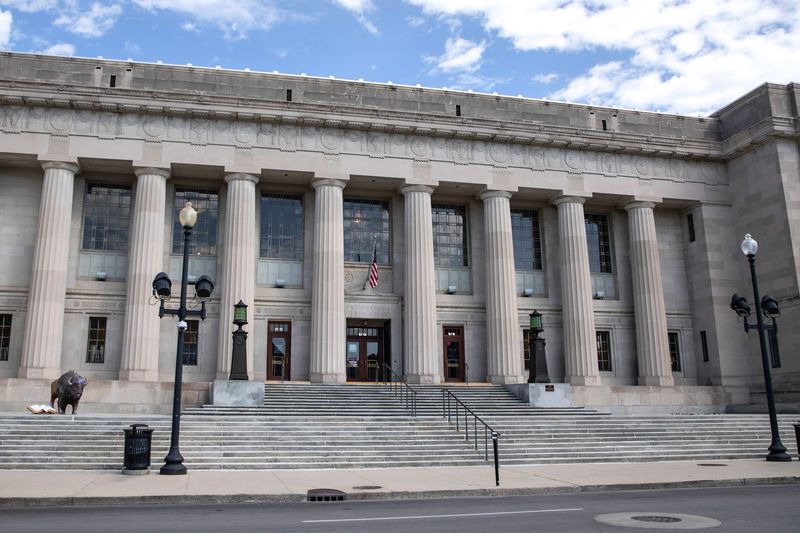
The Indianapolis Central Library is a study in how to connect the past and the present without losing either one. The original 1917 Beaux-Arts building, designed by Paul Philippe Cret, features a grand columned facade and an interior rotunda that has been carefully preserved.
A major expansion completed in 2007 added a striking glass-and-steel wing that wraps around the historic structure without overpowering it.
The new wing includes a dramatic glass atrium that floods the space with natural light and provides a visual connection between old and new. Together, the two buildings cover an entire city block in downtown Indianapolis and offer over 400,000 square feet of space for collections, programs, and community events.
The library system is one of the busiest in Indiana, and the Central Library serves as its flagship. Public parking is available nearby, and the building is within walking distance of several downtown Indianapolis attractions, including Monument Circle and the Indiana Statehouse.
Martin Luther King Jr. Memorial Library, Washington, D.C.
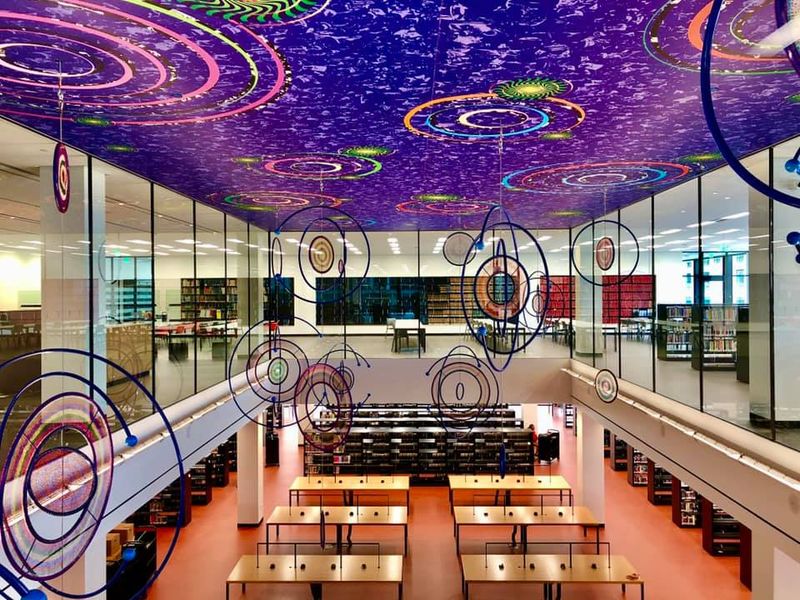
Opened in 1972 and designed by Ludwig Mies van der Rohe, one of the most influential architects of the 20th century, the Martin Luther King Jr. Memorial Library is the only Mies van der Rohe-designed public library in the United States. The building is a classic example of his International Style, featuring a flat roof, a steel frame, and floor-to-ceiling glass walls that give the structure a clean, open, and transparent appearance.
After decades of deferred maintenance, the library underwent a major renovation that was completed in 2020. The project was led by the firms Mecanoo and OTJ Architects, who restored the historic exterior while completely reimagining the interior with modern, flexible spaces, a rooftop terrace, and a new cafe.
A large mural honoring Dr. Martin Luther King Jr. is prominently displayed inside. The library is located in Penn Quarter in downtown Washington, D.C., and is free and open to the public six days a week.
Detroit Public Library Main Library, Detroit, Michigan
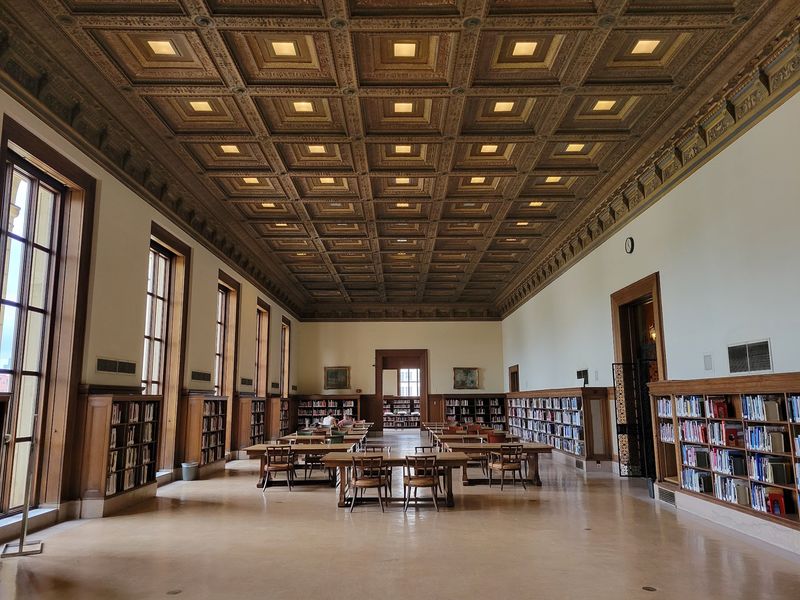
The Detroit Public Library Main Library on Woodward Avenue has been anchoring the city’s cultural corridor since it opened in 1921. Designed by Cass Gilbert in an Italian Renaissance style, the building features a white Vermont marble facade, arched windows, and detailed carved ornamentation that gives it a formal elegance that still commands attention over a century later.
Inside, the Adam Strohm Hall reading room is one of the most beautiful interior library spaces in the Midwest, with high ceilings, tall windows, and classical detailing throughout. The library also holds the Burton Historical Collection, one of the most significant archives of Detroit and Michigan history in existence, including rare maps, manuscripts, and photographs.
A painted frieze running along the exterior depicts figures representing the arts, sciences, and commerce. The library sits across from the Detroit Institute of Arts and the Detroit Historical Museum, making the surrounding block one of the densest concentrations of cultural institutions in the city.
Milwaukee Central Library, Milwaukee, Wisconsin
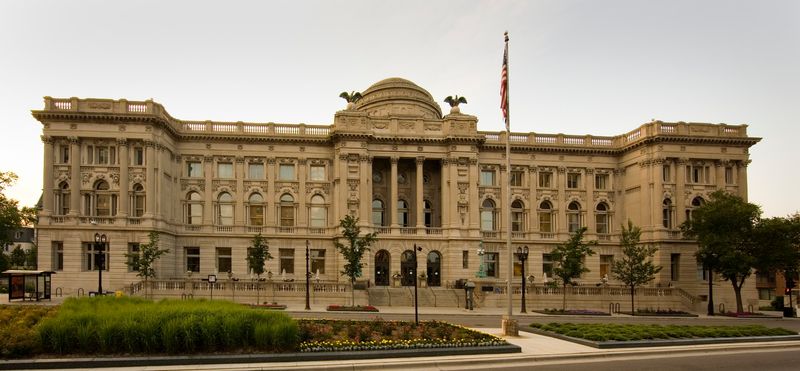
Completed in 1898 and designed by Ferry and Clas, the Milwaukee Central Library is one of the finest Beaux-Arts public buildings in the upper Midwest. The limestone facade is richly detailed with columns, carved reliefs, and large arched windows, and the building is capped by a prominent central dome that is visible from several blocks away along Wisconsin Avenue.
The interior is just as carefully considered as the exterior. The main reading room beneath the dome features a coffered ceiling, marble floors, and ornate balconies that ring the upper level.
Original woodwork and decorative ironwork have been preserved throughout the building, giving the space a sense of craftsmanship that is increasingly rare in public buildings.
The library underwent restoration work to address structural and mechanical systems while preserving its historic character. It sits in the heart of downtown Milwaukee, close to the Milwaukee Art Museum and the Pabst Mansion, making it an easy addition to a day of cultural exploration in the city.
Austin Central Library, Austin, Texas
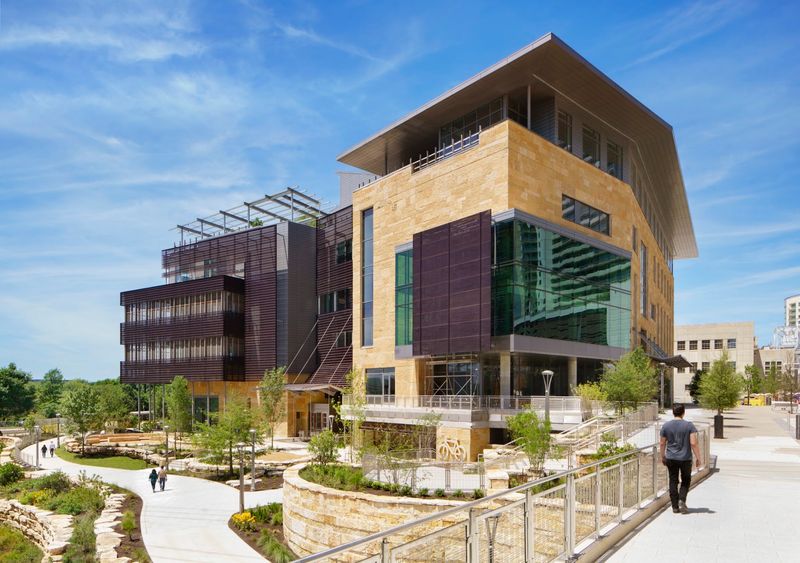
Austin’s Central Library, which opened in 2017, is one of the most environmentally thoughtful public library buildings in the country. Designed by Lake|Flato Architects and Shepley Bulfinch, the six-story building sits along Shoal Creek in downtown Austin and was designed from the ground up to earn LEED Platinum certification, the highest level of green building recognition available.
The rooftop is home to a butterfly garden, a reading terrace, and a seed library, reflecting Austin’s strong outdoor culture. Inside, a floor-to-ceiling reading porches on every level face the creek and the surrounding parkland, pulling the outside landscape into the library experience in a way that feels genuinely connected to the city’s character.
The building also features a 350-seat auditorium, a cafe, a rooftop garden with native plants, and a technology petting zoo where visitors can try out new devices. It has been recognized nationally as a model for 21st-century public library design.
Minneapolis Central Library, Minneapolis, Minnesota
The current Minneapolis Central Library building opened in 2006 and was designed by Cesar Pelli, the architect behind the Petronas Towers in Kuala Lumpur and the World Financial Center in New York. The building occupies a full city block on Hennepin Avenue in downtown Minneapolis and features a glass-wrapped exterior with a stepped roofline that responds to the surrounding urban grid.
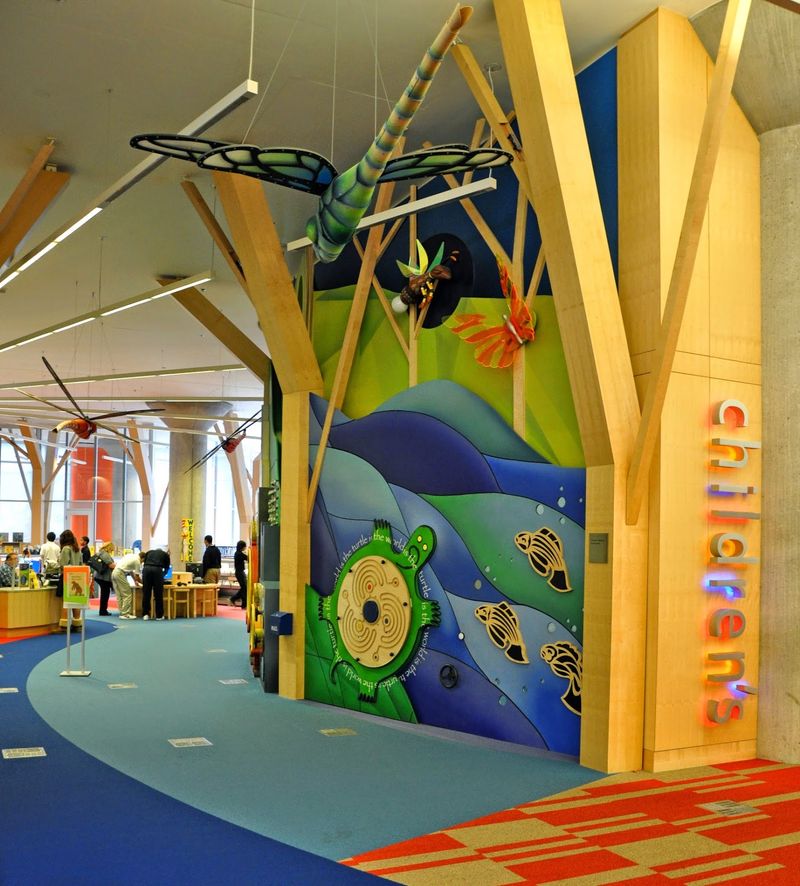
Inside, a skylit atrium connects the main floor reading areas to upper levels, and large windows throughout the building provide views of the city streets below. The children’s library is particularly well regarded, featuring dedicated programming spaces and a design that makes the area welcoming for young readers and their families.
The building replaced an older Carnegie-era structure and was designed to serve as a civic anchor for a revitalizing stretch of Hennepin Avenue. It holds an extensive digital media collection alongside traditional book and periodical holdings, and hosts regular public events, author talks, and community programs throughout the year.
San Francisco Main Library, San Francisco, California
San Francisco’s Main Library opened in 1996 and was designed by the firms Pei Cobb Freed and Partners along with Simon Martin-Vegue Winkelstein Moris. The building sits in the city’s Civic Center district, directly across from City Hall, and its granite and glass exterior was designed to echo the classical architecture of the surrounding civic buildings while introducing a clearly contemporary form.
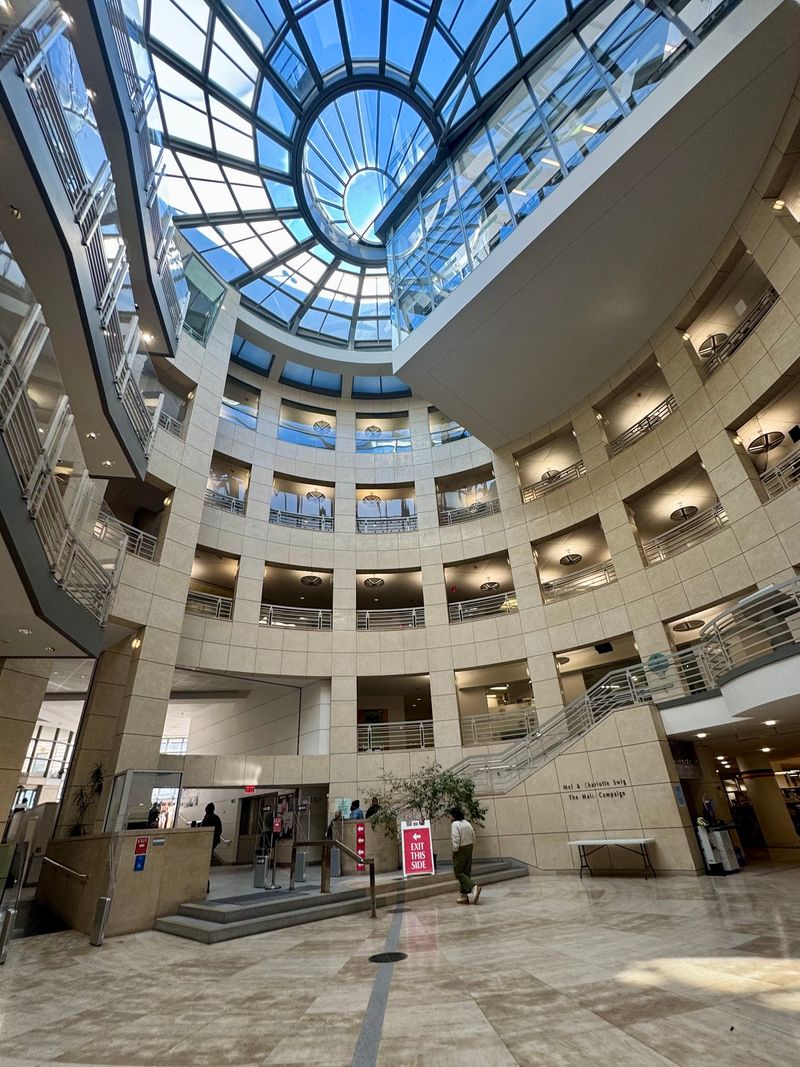
The interior centers on a five-story skylit atrium that draws natural light deep into the building and provides a dramatic vertical focal point. Spiral staircases connect the floors, and the upper levels offer partial views of City Hall’s dome through the windows.
The library holds dedicated centers for San Francisco history, LGBTQ history, and materials in multiple languages reflecting the city’s diverse population. A branch of the Friends of the San Francisco Public Library operates a bookstore inside the building.
The Main Library is free, open six days a week, and serves as the flagship of a 28-branch system.
Share this story